

Exam Code: Certified MuleSoft Developer II
Exam Name: Certified MuleSoft Developer II
Certification Provider: Salesforce
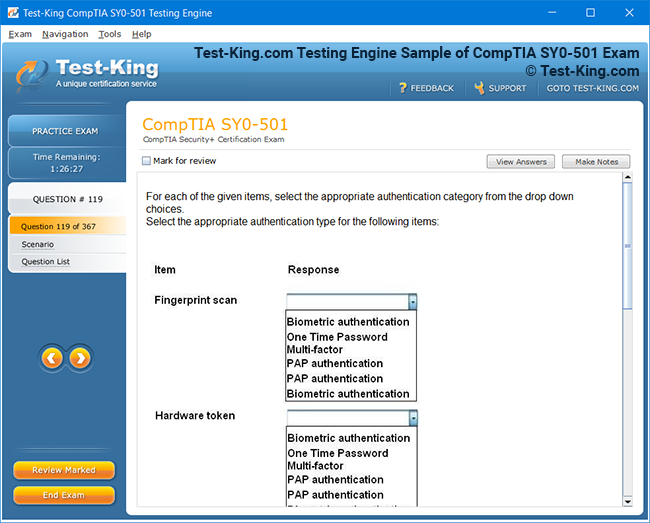
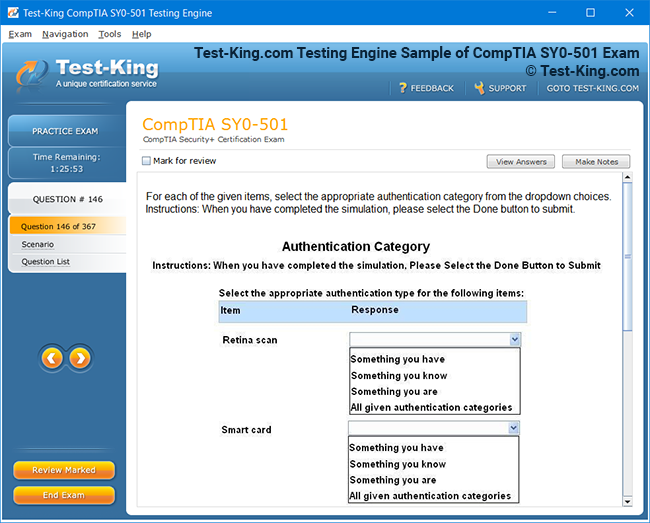
Product Screenshots
Frequently Asked Questions
How can I get the products after purchase?
All products are available for download immediately from your Member's Area. Once you have made the payment, you will be transferred to Member's Area where you can login and download the products you have purchased to your computer.
How long can I use my product? Will it be valid forever?
Test-King products have a validity of 90 days from the date of purchase. This means that any updates to the products, including but not limited to new questions, or updates and changes by our editing team, will be automatically downloaded on to computer to make sure that you get latest exam prep materials during those 90 days.
Can I renew my product if when it's expired?
Yes, when the 90 days of your product validity are over, you have the option of renewing your expired products with a 30% discount. This can be done in your Member's Area.
Please note that you will not be able to use the product after it has expired if you don't renew it.
How often are the questions updated?
We always try to provide the latest pool of questions, Updates in the questions depend on the changes in actual pool of questions by different vendors. As soon as we know about the change in the exam question pool we try our best to update the products as fast as possible.
How many computers I can download Test-King software on?
You can download the Test-King products on the maximum number of 2 (two) computers or devices. If you need to use the software on more than two machines, you can purchase this option separately. Please email support@test-king.com if you need to use more than 5 (five) computers.
What is a PDF Version?
PDF Version is a pdf document of Questions & Answers product. The document file has standart .pdf format, which can be easily read by any pdf reader application like Adobe Acrobat Reader, Foxit Reader, OpenOffice, Google Docs and many others.
Can I purchase PDF Version without the Testing Engine?
PDF Version cannot be purchased separately. It is only available as an add-on to main Question & Answer Testing Engine product.
What operating systems are supported by your Testing Engine software?
Our testing engine is supported by Windows. Andriod and IOS software is currently under development.
Top Salesforce Exams
- Certified Agentforce Specialist
- ADM-201 - Administration Essentials for New Admins
- Certified Revenue Cloud Consultant
- Certified Data 360 Consultant
- Certified Business Analyst
- Certified Data Cloud Consultant
- Certified Sales Cloud Consultant
- Certified Platform Administrator II
- Certified Data Architect
- Certified Sharing and Visibility Architect
- Certified Service Cloud Consultant - Salesforce Certified Service Cloud Consultant
- Certified Platform App Builder
- Certified OmniStudio Developer
- Certified Tableau Desktop Foundations
- Certified Integration Architect
- Certified Development Lifecycle and Deployment Architect
- Certified Tableau Consultant
- Certified Marketing Cloud Email Specialist
- Health Cloud Accredited Professional
- Public Sector Solutions Accredited Professional
- Certified Platform Developer II
- Certified Platform Identity and Access Management Architect
- Certified Sharing and Visibility Designer
- Certified Associate
- Certified Platform Sharing and Visibility Architect
- CRT-450 - Salesforce Certified Platform Developer I
- Certified OmniStudio Consultant
- Field Service Lightning Consultant
- Certified AI Specialist
- Financial Services Cloud Accredited Professional
- Certified CPQ Specialist
- Certified Marketing Cloud Administrator
- Certified Tableau Server Administrator
- Certified Tableau Data Analyst
- Certified Platform Developer
- Certified Marketing Cloud Engagement Administrator
Exam Breakdown: What to Expect in the Certified MuleSoft Developer II Exam
In today’s rapidly evolving integration ecosystem, proficiency in designing, developing, and deploying complex MuleSoft applications has become indispensable for organizations seeking seamless data flow across disparate systems. The Certified MuleSoft Developer II credential offered by Salesforce serves as a hallmark of advanced competency, demonstrating not only technical acumen but also a deep understanding of enterprise integration patterns and API-led connectivity. Unlike foundational certifications, this designation underscores the ability to navigate intricate integration scenarios, implement best practices in API design, and troubleshoot multi-faceted application landscapes with precision.
Understanding the Significance of the MuleSoft Developer II Certification
The examination itself is designed to gauge both theoretical knowledge and practical expertise. It is not merely a test of memorization but an evaluation of analytical prowess, problem-solving skills, and the capacity to implement solutions in real-world environments. Candidates are expected to exhibit an understanding of MuleSoft's Anypoint Platform, its core components, and how these can be leveraged to address diverse business requirements efficiently. This certification is highly regarded within Salesforce's ecosystem, serving as a differentiator for professionals aiming to secure roles in integration architecture, advanced development, and enterprise solution design.
Exam Objectives and Knowledge Domains
The Certified MuleSoft Developer II examination evaluates proficiency across multiple knowledge domains, encompassing both design and operational aspects of MuleSoft applications. Candidates are expected to demonstrate fluency in creating reusable assets, applying API specifications, and implementing effective error handling mechanisms. A crucial part of the evaluation involves the ability to analyze business requirements and translate them into scalable integration solutions.
Understanding the architecture of Mule applications is imperative. This includes a deep comprehension of flows, subflows, message processors, connectors, and error handling strategies. Additionally, mastery of DataWeave transformations, batch processing, and the use of various connectors to integrate with databases, SaaS platforms, and on-premises systems is essential. Candidates must also be proficient in implementing security policies, managing API versions, and leveraging the Anypoint Exchange to create modular, maintainable assets. The exam rewards those who can approach integration not just as a technical task but as a disciplined practice of aligning technology with strategic business goals.
The exam also probes familiarity with runtime manager operations, including deployment strategies, monitoring, and troubleshooting. Knowledge of hybrid deployments and cloud-native considerations is increasingly important, as enterprise clients often utilize a combination of cloud and on-premises environments. Proficiency in debugging complex issues, analyzing logs, and optimizing performance is considered essential for candidates aspiring to attain this certification.
Exam Format and Question Patterns
The Certified MuleSoft Developer II exam is structured to assess both conceptual understanding and practical application. Unlike foundational certifications that may rely heavily on multiple-choice questions, this exam integrates scenario-based questions requiring candidates to analyze, design, and propose solutions for real-world integration challenges. For example, a candidate may be presented with a business problem involving multiple data sources with differing schemas and be asked to outline the most efficient integration approach using MuleSoft tools.
The questions often require comprehension of nuanced technical concepts, such as asynchronous processing, error propagation, and exception strategies. Candidates must also demonstrate proficiency in evaluating trade-offs between different design patterns, deciding when to leverage batch processing versus streaming, or determining optimal connector usage for performance efficiency. These questions are crafted to mimic the type of decision-making required in enterprise projects, thereby ensuring that those who succeed possess both theoretical knowledge and applied skills.
Time management is critical, as the exam typically consists of a significant number of questions with varying complexity. Candidates must be adept at prioritizing questions that test higher-order thinking while ensuring that foundational concepts are not overlooked. The nuanced phrasing of questions demands careful attention, as minor differences in terminology can alter the expected approach or solution. Success on this exam requires not just knowledge but a disciplined analytical mindset capable of navigating ambiguity and deriving optimal solutions.
Core Competencies Evaluated
A central theme of the examination is the ability to implement best practices in API-led connectivity. Candidates are expected to demonstrate the creation of experience, process, and system APIs that are reusable, modular, and aligned with enterprise architecture principles. They must understand the importance of clear API documentation, semantic versioning, and the implications of backward compatibility when modifying existing APIs.
Data transformation skills are also heavily evaluated. Using MuleSoft’s DataWeave language, candidates must perform complex transformations, handle nested data structures, and integrate diverse data formats such as JSON, XML, CSV, and flat files. The exam emphasizes the ability to handle edge cases gracefully, including null handling, type conversion, and conditional logic in transformations. Understanding of batch processing and parallelization strategies is essential for ensuring efficient and scalable integration solutions.
Error handling and exception management form another critical component. Candidates must be able to design global and local error handling strategies that provide meaningful feedback, maintain transaction integrity, and ensure system resilience. This includes proficiency in configuring error scopes, leveraging try-catch blocks, and implementing appropriate logging and alerting mechanisms.
Security considerations are embedded throughout the evaluation. Candidates should be able to implement authentication, authorization, and data protection strategies within MuleSoft applications. This includes securing APIs using OAuth 2.0, JWT policies, client credentials, and ensuring that sensitive data is encrypted during transit and at rest.
Real-World Scenarios and Practical Application
The exam is unique in its focus on practical application. Rather than isolated questions, many are presented as scenarios that mimic real enterprise challenges. For instance, a scenario might involve integrating a legacy ERP system with modern SaaS applications, requiring candidates to identify optimal connectors, transformation strategies, and error handling mechanisms. Another scenario could involve optimizing an existing API to handle high-throughput data streams without degrading performance.
Candidates are often expected to articulate the rationale behind their design choices. This means understanding the trade-offs between different approaches, such as using synchronous versus asynchronous processing or deciding between direct connector implementation versus leveraging message queues. The ability to provide justifiable, strategic solutions distinguishes top performers from those with only superficial knowledge.
Monitoring and operational management scenarios are also included. Candidates may be asked how to deploy applications across hybrid environments, manage versioning, and troubleshoot performance bottlenecks. These questions assess the candidate’s ability to anticipate operational challenges and implement robust, maintainable solutions that align with enterprise standards.
Preparation Strategies and Recommended Mindsets
Preparing for the Certified MuleSoft Developer II exam demands a multi-faceted approach. Candidates must blend theoretical understanding with extensive hands-on practice, as rote memorization alone is insufficient. Engaging with real-world projects, exploring Anypoint Studio features deeply, and practicing DataWeave transformations in diverse contexts are essential strategies. Additionally, reviewing MuleSoft documentation, participating in community forums, and leveraging official Salesforce training materials help solidify understanding of complex concepts.
A key mindset for success involves viewing integration challenges holistically. Candidates should cultivate the ability to anticipate downstream impacts of their design decisions, recognize potential pitfalls, and balance performance with maintainability. Analytical thinking, coupled with meticulous attention to detail, is critical for navigating the nuanced questions that populate the exam. Additionally, developing familiarity with monitoring tools, performance metrics, and deployment pipelines enhances readiness for operational questions.
Understanding subtle distinctions between similar concepts is often pivotal. For instance, distinguishing between choice routers and scatter-gather patterns, or understanding the implications of different error propagation mechanisms, can be the difference between a correct and an incorrect response. Candidates should train themselves to parse complex scenarios, identify underlying requirements, and select solutions that reflect both technical excellence and strategic foresight.
Prerequisites and Core Knowledge Areas
Achieving the Certified MuleSoft Developer II credential requires a robust foundation in integration concepts, practical experience with MuleSoft tools, and a comprehensive understanding of enterprise-grade architecture. Candidates entering this examination are expected to have prior exposure to MuleSoft fundamentals and the ability to navigate Anypoint Studio with dexterity. A practical understanding of connectors, flows, subflows, and DataWeave transformations forms the bedrock of readiness. Equally important is the familiarity with Salesforce’s ecosystem, particularly in scenarios that demand seamless integration between cloud-based services and on-premises systems.
The exam presupposes knowledge of API-led connectivity principles, which emphasize the separation of system, process, and experience layers to promote reusable and maintainable integration patterns. Mastery of this concept allows candidates to construct scalable applications capable of supporting complex enterprise workflows. Additionally, awareness of integration pitfalls, such as redundant API calls, excessive data transformations, and inefficient routing strategies, provides a significant advantage, as candidates are expected to identify and mitigate such issues in scenario-based questions.
Key Skills and Competencies
The MuleSoft Developer II examination evaluates candidates on multiple technical competencies. Among these is the ability to design flows that are both efficient and resilient. This encompasses understanding the orchestration of message processors, routing components, and error-handling mechanisms. Candidates must demonstrate an ability to balance synchronous and asynchronous processing, applying the most appropriate pattern based on performance requirements and system constraints. The capacity to troubleshoot and resolve intricate issues is crucial, as enterprise applications often operate under high-volume, heterogeneous conditions where small inefficiencies can propagate into larger operational challenges.
Data transformation is another area of focus. Proficiency in DataWeave is essential, as candidates will encounter scenarios requiring the manipulation of complex nested structures, conditional logic, and aggregation of disparate data sources. Beyond technical proficiency, candidates must understand the implications of transformations on data integrity, performance, and downstream systems. This knowledge ensures that the solutions devised not only functionally meet requirements but are also sustainable and maintainable in production environments.
Error handling and exception management form a critical component of the skillset. Candidates are expected to implement global and local error handling strategies, configure custom exception mappings, and log errors in a way that facilitates rapid troubleshooting and compliance with enterprise governance standards. Understanding the nuances of error propagation, rollback strategies, and transaction boundaries allows candidates to design applications that are robust and reliable under varying operational conditions.
Real-World Application and Problem Solving
A significant portion of the examination assesses the candidate’s ability to translate business requirements into functional and optimized solutions. For example, candidates may be presented with a scenario in which a legacy database must be integrated with multiple cloud-based applications, each with distinct data formats and performance requirements. In such cases, candidates are expected to select appropriate connectors, design efficient flows, and apply transformations that maintain data consistency while minimizing latency. The ability to anticipate potential bottlenecks and implement preventive measures distinguishes successful candidates from those with only theoretical knowledge.
Problem-solving in the context of the exam also involves the application of best practices in API design. Candidates must understand the importance of modular design, reusability, and clear versioning. Questions often require candidates to evaluate trade-offs between immediate functional requirements and long-term maintainability, encouraging strategic thinking and foresight. The application of these principles ensures that the integration solutions crafted during the examination reflect enterprise-grade quality and scalability.
Security and governance are embedded throughout the evaluation, reflecting the real-world importance of protecting sensitive data and maintaining compliance. Candidates must demonstrate knowledge of authentication and authorization mechanisms, including OAuth, JWT, and client credential flows. They should also be capable of implementing policies that secure APIs, enforce data masking, and ensure compliance with regulatory standards. This competency ensures that certified professionals can design integrations that are not only functional but also secure and compliant.
Prerequisite Knowledge in Anypoint Platform
Familiarity with MuleSoft’s Anypoint Platform is a prerequisite for the examination. Candidates should be comfortable navigating the studio interface, deploying applications, and configuring connectors for a variety of endpoints. This includes cloud applications, databases, and legacy systems. Proficiency in the use of Anypoint Exchange to create and reuse assets is also critical. The examination often includes scenarios where candidates must leverage existing assets to solve integration challenges efficiently, demonstrating both technical skill and strategic resource utilization.
Understanding deployment and runtime management is essential for candidates aspiring to achieve certification. This involves knowledge of hybrid deployment models, including cloud and on-premises environments, and the implications of each approach on monitoring, scalability, and performance. Candidates are expected to troubleshoot runtime issues, analyze logs, and optimize performance while maintaining adherence to enterprise standards. The ability to navigate these operational challenges is often tested through scenario-based questions that reflect the complexities of real-world environments.
Advanced Data Integration Competencies
Complex data integration is a recurring theme in the exam. Candidates must demonstrate expertise in combining and transforming data from multiple heterogeneous sources. This includes relational and non-relational databases, cloud-based applications, and flat file structures. Mastery of DataWeave allows candidates to perform transformations efficiently, while also applying logic to handle exceptions, null values, and conditional operations. The ability to design batch processing and streaming pipelines that handle high-volume data flows is a distinctive competency evaluated during the examination.
Candidates are also expected to understand the performance implications of their integration designs. This involves selecting appropriate connectors, optimizing flow execution, and minimizing redundant processing steps. By demonstrating a nuanced understanding of efficiency, candidates exhibit the capacity to develop solutions that are not only correct but also scalable and performant. Evaluators often craft questions to test the candidate’s ability to recognize potential bottlenecks and optimize solutions accordingly, reflecting real-world operational challenges.
Analytical Thinking and Scenario-Based Challenges
Analytical thinking underpins success in the Certified MuleSoft Developer II examination. Candidates must parse complex scenarios, identify the core integration requirements, and select solutions that balance performance, maintainability, and security. Scenario-based questions often present ambiguous conditions, requiring candidates to make informed decisions based on their understanding of integration principles and best practices. The capacity to interpret requirements accurately and apply technical knowledge judiciously is a hallmark of successful candidates.
For instance, a scenario may involve integrating multiple APIs with differing data models while ensuring consistent data flow and error handling. Candidates are expected to propose a solution that leverages reusable assets, efficient transformations, and robust exception management. In doing so, they demonstrate both technical proficiency and strategic problem-solving capabilities. The evaluation rewards candidates who can synthesize knowledge across multiple domains and apply it cohesively, reflecting the interdisciplinary nature of enterprise integration work.
Strategies for Mastering Core Knowledge
Preparation for the examination necessitates a disciplined approach to mastering core knowledge areas. Candidates are encouraged to engage with hands-on exercises that replicate real-world challenges, reinforcing both technical skill and conceptual understanding. Reviewing official Salesforce training materials, participating in MuleSoft community forums, and exploring advanced documentation are all critical components of preparation. Additionally, building mock projects that simulate complex integration scenarios allows candidates to apply theoretical knowledge in a practical context.
A successful mindset involves not only acquiring knowledge but also developing the ability to think critically and strategically. Candidates must cultivate an awareness of the implications of their design choices, anticipate potential challenges, and propose solutions that are both functional and sustainable. By integrating technical expertise with analytical thinking, candidates position themselves to navigate the nuanced challenges presented in the examination effectively.
Exam Sections and Detailed Breakdown
The Certified MuleSoft Developer II examination demands not only theoretical comprehension but also an extensive demonstration of practical capabilities. Its structure is designed to evaluate candidates on multiple dimensions of integration expertise, encompassing API design, application orchestration, data transformation, security implementation, and operational management. Unlike introductory evaluations, this examination delves into nuanced scenarios that mimic complex enterprise environments, requiring the application of knowledge with precision, foresight, and strategic reasoning.
One prominent domain tested involves the architecture and construction of Mule applications. Candidates are expected to exhibit a thorough understanding of flows and subflows, illustrating how these components interact to manage message processing effectively. The orchestration of message processors, routers, and exception strategies is critical, and scenarios often challenge candidates to determine optimal patterns for specific business requirements. Understanding synchronous versus asynchronous processing, evaluating the implications of batch jobs, and implementing efficient error propagation mechanisms are frequently assessed to gauge advanced operational skill.
Data transformation and manipulation constitute another essential area. Candidates must demonstrate expertise in DataWeave, handling complex nested structures, integrating multiple disparate sources, and applying conditional transformations. The ability to manage variations in input data formats, such as JSON, XML, CSV, and proprietary structures, is crucial. Examiners often present scenarios requiring candidates to harmonize these data sets in a manner that preserves data integrity, ensures scalability, and minimizes processing overhead. Furthermore, candidates are expected to anticipate edge cases, including null handling, type mismatches, and optional fields, applying robust logic to maintain application stability.
API design is central to the examination, reflecting the growing importance of reusable, modular, and maintainable integration solutions. Candidates must demonstrate proficiency in creating system, process, and experience APIs that adhere to API-led connectivity principles. This includes evaluating trade-offs between tightly coupled and loosely coupled designs, managing semantic versioning, and ensuring backward compatibility. Scenario-based questions may challenge candidates to refactor existing APIs, optimize resource utilization, or implement governance policies to align with enterprise standards. The ability to articulate design rationale and anticipate future extensibility is a distinguishing factor in performance.
Security and compliance considerations permeate many questions. Candidates are expected to implement authentication mechanisms such as OAuth 2.0, JWT, and client credentials, applying these appropriately to protect sensitive data and enforce access controls. Additionally, questions may require the implementation of policies for encryption, masking, and secure transmission, ensuring compliance with regulatory frameworks. Understanding how security measures intersect with performance, maintainability, and usability allows candidates to design solutions that are both safe and efficient.
Operational management and deployment scenarios frequently appear, emphasizing the candidate’s ability to maintain applications in hybrid environments that combine cloud and on-premises systems. Candidates must demonstrate competence in deploying applications, monitoring performance, managing logs, and troubleshooting issues proactively. Examiners may present hypothetical incidents, asking candidates to identify root causes, optimize flows, and propose mitigation strategies. Familiarity with runtime manager tools, alerts, and operational dashboards is essential to respond to these scenarios effectively.
Performance optimization is another focal area. Candidates may be asked to improve throughput, reduce latency, or enhance reliability under high-volume workloads. This includes evaluating connector selection, refining flow orchestration, and employing batch processing and parallelization strategies judiciously. Analytical thinking is required to assess trade-offs between speed, reliability, and maintainability, ensuring solutions are both functional and sustainable in production environments.
Scenario-based questions are often multifaceted, combining several of the aforementioned competencies into a single challenge. For instance, a question might present a situation where multiple APIs must integrate with a legacy ERP system while maintaining data security and high throughput. Candidates are required to synthesize knowledge of flows, transformations, error handling, and API design to propose a coherent, optimal solution. The ability to articulate decision-making rationale is as important as the technical solution itself, reflecting real-world demands where collaboration and justification of architectural choices are paramount.
Monitoring, logging, and debugging scenarios test the candidate’s operational insight. Questions may describe performance degradation, intermittent failures, or unexpected data anomalies. Candidates must demonstrate systematic problem-solving skills, identifying potential bottlenecks, evaluating error propagation, and suggesting corrective actions. Understanding the interplay between connectors, message processors, and transformations allows candidates to pinpoint issues efficiently and implement sustainable solutions.
Connectivity and integration scenarios often challenge candidates to combine heterogeneous systems. This may include integrating SaaS platforms, databases, messaging queues, and legacy systems with varying protocols and authentication schemes. Candidates must select the most appropriate connectors, configure transformations accurately, and apply routing logic to ensure seamless data flow. Attention to details, such as handling large payloads, pagination, and transactional integrity, is critical to achieving successful outcomes in both the exam and practical applications.
Error handling strategies are tested extensively, as resilient integration solutions depend on robust exception management. Candidates may be asked to design global error handlers, implement localized try-catch mechanisms, or configure fallback strategies. These questions evaluate understanding of transaction boundaries, propagation behavior, and the impact of exceptions on downstream systems. The ability to anticipate failures and implement comprehensive recovery strategies reflects advanced competence and is a hallmark of a certified developer.
DataWeave transformations are often embedded within complex, scenario-based questions. Candidates are expected to manipulate multi-level arrays, nested objects, and variable structures while applying conditional logic, aggregations, and type conversions. The focus is on producing transformations that are efficient, readable, and maintainable, aligning with best practices for enterprise-grade integration. Evaluators also assess the candidate’s ability to foresee edge cases, such as missing fields, inconsistent data types, or optional values, ensuring robustness in real-world applications.
Advanced routing scenarios require candidates to determine optimal use of choice routers, scatter-gather patterns, and parallel processing strategies. Questions may present a dataset that requires dynamic routing based on content or multiple endpoints requiring concurrent processing. Candidates must balance efficiency, maintainability, and reliability, selecting routing approaches that minimize latency while preserving data integrity. Analytical evaluation of trade-offs is emphasized, reflecting challenges faced in enterprise integration projects.
API governance and asset reuse are integral to the exam. Candidates are expected to leverage Anypoint Exchange to create reusable modules, components, and templates that align with organizational standards. Scenario questions may require candidates to refactor existing assets to promote reusability, enforce consistent design patterns, and reduce technical debt. Understanding the long-term impact of design decisions on maintainability and scalability is critical, as exam evaluators emphasize solutions that demonstrate foresight and enterprise-level thinking.
Deployment scenarios frequently test understanding of environment-specific considerations, including hybrid deployments, cloud-based orchestration, and on-premises runtime management. Candidates must demonstrate proficiency in deploying, monitoring, and scaling applications across different environments while maintaining performance and reliability. Questions may involve identifying bottlenecks, optimizing resource allocation, or proposing modifications to accommodate high-traffic workloads. This domain emphasizes practical operational insight in addition to technical proficiency.
Scenario-based performance evaluation is another recurring theme. Candidates may be asked to improve throughput, minimize latency, or enhance reliability under specified constraints. This requires knowledge of flow optimization, connector selection, batch processing, and parallelization. Evaluators expect candidates to apply both theoretical understanding and practical experience to achieve measurable improvements. Critical thinking, systematic analysis, and strategic reasoning underpin success in these scenarios.
Troubleshooting complex integration issues is a major component. Candidates are presented with conditions where flows fail intermittently, transformations produce unexpected results, or API responses are inconsistent. Responses require identification of root causes, formulation of corrective actions, and anticipation of downstream impacts. Understanding the interdependencies between components, data formats, and connectors is essential to address such challenges effectively.
Security scenarios test the candidate’s ability to implement appropriate access controls, encryption, and data protection measures. Questions may present scenarios involving multiple authentication schemes, sensitive data, and compliance requirements. Candidates are expected to recommend and configure solutions that secure data while maintaining functional performance. This includes knowledge of OAuth, JWT, client credentials, and encryption strategies. Awareness of performance implications and potential vulnerabilities is also assessed.
Analytical problem-solving forms the backbone of the examination. Candidates must evaluate multiple solution paths, weigh trade-offs, and select strategies that optimize performance, maintainability, and compliance. Scenario-based questions often combine multiple dimensions, requiring synthesis of knowledge across API design, data transformation, security, error handling, and operational management. Candidates who approach problems holistically, applying both technical skill and strategic insight, demonstrate mastery aligned with enterprise requirements.
The examination also evaluates adaptability in unpredictable scenarios. Candidates may encounter incomplete or ambiguous requirements, reflecting real-world situations where assumptions must be validated, and solutions iteratively refined. The ability to interpret, clarify, and navigate such ambiguity is critical. Successful candidates exhibit both flexibility and rigor, applying structured reasoning to derive solutions that are accurate, efficient, and sustainable.
Deployment, operational monitoring, and logging questions assess readiness to manage production-grade systems. Candidates are expected to understand how runtime behavior impacts performance, identify bottlenecks through log analysis, and propose modifications that optimize resource utilization. These tasks require both familiarity with Anypoint Platform tools and the ability to synthesize operational insights into actionable solutions.
Study Strategies and Resources
Preparing for the Certified MuleSoft Developer II examination demands a comprehensive and structured approach that combines theoretical knowledge with practical expertise. Candidates must embrace a multifaceted strategy that balances reading, hands-on experimentation, scenario analysis, and continual reinforcement of concepts. Mastery of the Anypoint Platform, an in-depth understanding of API-led connectivity, and familiarity with Salesforce integration principles form the cornerstone of effective preparation. A disciplined approach, incorporating diverse learning methodologies, is essential to navigate the complexities presented in advanced integration scenarios.
One of the most effective strategies involves immersive hands-on practice within Anypoint Studio. Candidates should replicate realistic business requirements by constructing flows, subflows, and transformations that integrate multiple systems, including SaaS applications, databases, and legacy systems. Experimenting with connectors, exploring DataWeave transformations, and simulating error-handling scenarios allows candidates to internalize best practices and anticipate operational challenges. This practical engagement not only reinforces theoretical concepts but also develops intuition for selecting the most efficient and maintainable solutions.
Scenario-based learning is another indispensable strategy. Candidates should examine hypothetical situations that mirror the intricacies of enterprise integration. For instance, integrating multiple APIs with divergent data formats, designing batch processing pipelines to handle large volumes of data, or implementing robust error-handling mechanisms to ensure resilience under failure conditions provides a realistic approximation of exam challenges. Evaluating trade-offs, such as synchronous versus asynchronous processing or scatter-gather versus choice routing patterns, strengthens analytical thinking and decision-making skills.
Leveraging official Salesforce training materials and MuleSoft documentation provides a comprehensive understanding of platform capabilities. These resources often include in-depth explanations of architecture, connectors, transformations, and runtime management. By reviewing these materials, candidates gain insights into advanced patterns, best practices, and optimization strategies. Furthermore, the documentation frequently highlights nuanced behaviors of components and connectors, which are often tested in examination scenarios to assess candidate comprehension at a granular level.
Engaging with the MuleSoft community offers additional benefits. Interaction with forums, discussion groups, and knowledge-sharing platforms exposes candidates to a breadth of practical challenges and innovative solutions. Learning from the experiences of seasoned developers enhances understanding, reveals common pitfalls, and provides novel approaches to integration challenges. Candidates benefit from observing problem-solving methodologies, troubleshooting strategies, and performance optimization techniques that have been validated in real-world projects.
Structured mock projects are highly recommended as a preparation tool. By simulating complex enterprise scenarios, candidates can apply their skills in designing, implementing, and monitoring integrations. These projects may involve integrating multiple SaaS platforms, orchestrating workflows across heterogeneous systems, and applying governance policies to maintain compliance. Documenting the rationale behind each design decision reinforces strategic thinking and aligns with the analytical expectations of the examination. This practice cultivates both technical proficiency and a disciplined approach to problem-solving.
Time management plays a pivotal role in effective preparation. Candidates should allocate dedicated periods for studying core topics, hands-on experimentation, and review of scenario-based exercises. Breaking down study activities into manageable segments encourages consistent progress while preventing cognitive fatigue. Additionally, reviewing previously attempted exercises, analyzing errors, and refining solutions ensures continuous improvement and reinforces retention of critical concepts.
Focusing on recurring themes in the examination can enhance preparedness. Areas such as error handling, DataWeave transformations, batch processing, and API versioning frequently appear in scenario-based questions. Deepening expertise in these domains allows candidates to approach questions with confidence, recognizing patterns and applying established solutions. Understanding subtle nuances, such as the distinctions between parallel processing and scatter-gather routing, is essential for achieving optimal results.
Analytical thinking is paramount. Candidates should practice interpreting complex requirements, identifying underlying objectives, and evaluating multiple solution paths. This involves weighing trade-offs related to performance, maintainability, and security. Scenario questions often present ambiguous or incomplete conditions, necessitating critical judgment and decision-making grounded in best practices. Developing this cognitive agility ensures candidates can navigate the nuanced challenges of the examination effectively.
Familiarity with monitoring and operational tools is also crucial. Candidates should explore runtime management dashboards, logging mechanisms, and performance metrics within the Anypoint Platform. Understanding how to identify bottlenecks, trace message flows, and diagnose integration failures equips candidates with practical skills applicable to both the examination and real-world projects. Scenario questions frequently test these operational insights, evaluating the candidate’s ability to maintain robust and resilient integrations under varying conditions.
Security and compliance knowledge should be integrated into all preparation activities. Candidates must understand authentication protocols, including OAuth 2.0 and JWT, implement encryption strategies, and design access controls for APIs. Reviewing security policies, simulating policy enforcement in practice exercises, and applying governance principles ensures readiness for scenario-based questions that assess the ability to safeguard data and adhere to regulatory standards.
Adopting a reflective learning approach enhances preparation effectiveness. Candidates should review each practice scenario, analyze decision-making processes, and identify opportunities for improvement. This reflection cultivates deeper comprehension, reinforces retention, and strengthens the ability to articulate design rationale during the examination. Understanding the reasoning behind each solution fosters a more profound grasp of best practices and develops strategic thinking skills essential for complex integration challenges.
Integrating diverse resources maximizes preparation breadth. In addition to official documentation and training modules, candidates should explore online tutorials, video demonstrations, and technical blogs. Exposure to varied perspectives, problem-solving techniques, and practical tips broadens understanding and reveals creative approaches to integration challenges. Engaging with multiple media formats also accommodates different learning styles, promoting retention and comprehension of complex topics.
Developing proficiency in advanced DataWeave transformations is a strategic priority. Candidates should practice manipulating nested data structures, applying conditional logic, performing aggregations, and handling edge cases. Exercises involving data harmonization across multiple formats, integration of disparate sources, and implementation of error handling within transformations build both technical skill and confidence. Mastery of these competencies is frequently evaluated in scenario-based questions that emphasize practical application and problem-solving.
Error-handling exercises should encompass both localized and global strategies. Candidates must simulate exceptions, design recovery mechanisms, and analyze propagation effects within flows. Practicing logging, alerting, and fallback procedures reinforces understanding of transaction integrity, resilience, and maintainability. Scenario-based questions often combine these elements, requiring the candidate to synthesize multiple skills into coherent solutions that reflect enterprise-level rigor.
Focusing on API design patterns and asset reuse strengthens readiness. Candidates should explore system, process, and experience APIs, practice modular design, and consider long-term maintainability. Exercises involving refactoring existing APIs to enhance reusability and compliance with best practices reinforce conceptual understanding. Scenario-based questions may evaluate the candidate’s ability to justify design decisions, ensuring solutions are efficient, scalable, and aligned with organizational standards.
Simulation of real-world operational challenges is invaluable. Candidates should replicate high-volume integrations, implement monitoring dashboards, and troubleshoot performance issues. Exercises that simulate hybrid deployments, latency-sensitive operations, and complex data orchestration develop both technical acumen and practical insight. Familiarity with Anypoint Platform tools for deployment, monitoring, and management enhances the candidate’s ability to respond effectively to operational questions in the examination.
Time-bound practice tests can refine decision-making and pacing skills. Candidates should simulate examination conditions, tackling multiple complex scenarios within a restricted timeframe. This exercise develops stamina, focus, and the ability to prioritize questions based on complexity and point value. Reviewing answers post-exercise, analyzing errors, and refining strategies strengthens preparation and builds confidence.
Analytical evaluation of trade-offs is central to mastery. Candidates should consider performance implications, maintainability, scalability, and security when proposing solutions. Exercises that challenge decision-making in ambiguous scenarios cultivate judgment, resilience, and strategic thinking. Scenario-based practice encourages candidates to apply knowledge holistically, integrating multiple competencies into coherent solutions that reflect enterprise-level sophistication.
Hands-on exploration of connectors and integration patterns enhances both skill and intuition. Candidates should practice integrating SaaS platforms, databases, and legacy systems, experimenting with different connector configurations and observing operational effects. Understanding nuances such as rate limits, transaction boundaries, and error propagation informs decision-making during the examination. Scenario questions often test this practical knowledge, requiring candidates to select optimal connectors and configurations for specific integration challenges.
Developing a structured revision plan consolidates learning. Candidates should schedule periodic reviews of key concepts, practice exercises, and scenario analyses to reinforce retention. Emphasis on recurring examination themes, such as batch processing, error handling, and API design, ensures comprehensive preparedness. Reflective analysis of practice results allows candidates to identify strengths, address weaknesses, and refine problem-solving strategies.
Incorporating collaborative learning enhances understanding. Engaging with peers to discuss scenarios, compare approaches, and critique solutions provides new perspectives and fosters deeper comprehension. Collaborative exercises may include joint problem-solving, peer review of flows and transformations, and discussion of design trade-offs. This approach mirrors real-world enterprise collaboration and cultivates both technical skill and strategic insight.
Practice Scenarios and Real-World Applications
The Certified MuleSoft Developer II examination places a strong emphasis on practical application, requiring candidates to demonstrate proficiency through realistic integration challenges. Candidates are expected to translate complex business requirements into robust and maintainable solutions that leverage the full capabilities of MuleSoft’s Anypoint Platform. Mastery of API-led connectivity, advanced DataWeave transformations, error handling, and operational management are tested through scenario-based questions that simulate real-world enterprise environments.
One common scenario involves integrating multiple SaaS applications with legacy on-premises systems. Candidates may be asked to design flows that extract data from disparate sources, transform it into a unified format, and route it to multiple endpoints while ensuring data integrity and performance. This scenario evaluates the ability to select appropriate connectors, configure transformations efficiently, and implement modular flows that are reusable across various processes. Understanding trade-offs, such as synchronous versus asynchronous processing or parallel execution, is essential for designing an optimal solution.
Data transformation exercises are central to scenario-based evaluation. Candidates may encounter nested JSON objects, XML files, and CSV datasets that require harmonization and aggregation. Applying DataWeave expressions to perform complex mappings, conditional operations, and type conversions is essential. Additionally, candidates must anticipate and handle edge cases such as missing values, optional fields, and inconsistent data structures. The scenarios test not only technical competence but also the ability to think strategically about scalability, maintainability, and performance.
Error handling is another critical element in real-world applications. Candidates are often presented with flows where multiple exceptions can occur across different connectors and subflows. Designing robust error-handling strategies requires knowledge of global and local error scopes, rollback mechanisms, and logging practices. Candidates must ensure that failures are captured appropriately, data consistency is maintained, and fallback mechanisms are implemented where necessary. Scenario-based questions may present cascading failures or intermittent connectivity issues, assessing the candidate’s ability to anticipate and resolve complex operational problems.
Routing and orchestration challenges frequently appear in the examination. Candidates may be asked to implement dynamic routing based on content, execute parallel processing using scatter-gather patterns, or optimize choice routers for efficiency. Scenarios may involve coordinating multiple APIs, batching data for high-volume processing, and ensuring reliable message delivery. Understanding performance implications, maintaining modularity, and adhering to best practices in flow design are critical to achieving successful outcomes.
API design and governance are evaluated through scenarios that require modularity, reuse, and maintainability. Candidates may need to refactor existing APIs into system, process, and experience layers, ensuring alignment with API-led connectivity principles. Questions often test the ability to enforce versioning, backward compatibility, and security policies while maintaining clarity and efficiency. Articulating design rationale and understanding the impact of decisions on long-term enterprise architecture are essential components of successful responses.
Operational management is frequently tested through scenarios involving deployment, monitoring, and troubleshooting. Candidates may be asked to simulate high-volume transactions, identify bottlenecks in flow execution, or monitor runtime metrics to detect anomalies. Understanding hybrid deployment considerations, cloud versus on-premises performance implications, and resource optimization strategies is crucial. Scenario-based questions evaluate the candidate’s ability to maintain operational reliability while ensuring performance, security, and compliance.
Security implementation scenarios assess the candidate’s ability to protect sensitive data and enforce access control policies. Candidates may be required to apply OAuth 2.0, JWT, and client credential flows, implement encryption strategies, or enforce data masking policies. Scenarios often present conflicting requirements between security, performance, and usability, challenging candidates to select solutions that balance these considerations while adhering to enterprise standards. Knowledge of security best practices, potential vulnerabilities, and mitigation strategies is crucial for addressing these challenges effectively.
Performance optimization exercises are embedded in real-world scenarios. Candidates may need to improve throughput, minimize latency, and ensure reliability under high-load conditions. This requires evaluation of connector selection, flow orchestration, batch processing, and parallelization strategies. Analytical thinking, systematic problem-solving, and strategic decision-making are emphasized, as candidates must propose solutions that are both technically sound and operationally sustainable.
Advanced integration scenarios often combine multiple competencies into a single challenge. For example, candidates may be asked to integrate disparate data sources, apply complex transformations, implement robust error handling, enforce security policies, and optimize performance simultaneously. Successful responses require the candidate to synthesize knowledge across architecture, API design, data transformation, routing, and operational management. The ability to manage complexity and maintain clarity in design demonstrates mastery at an enterprise level.
Troubleshooting scenarios require candidates to identify the root cause of failures, propose corrective measures, and anticipate downstream impacts. These situations may involve intermittent API failures, transformation errors, or unexpected behavior due to connector limitations. Candidates must apply both technical expertise and analytical reasoning to resolve issues efficiently. Understanding interdependencies between connectors, flows, and transformations allows candidates to diagnose problems accurately and implement sustainable solutions.
Batch processing and high-volume data management are often tested through scenario-based questions. Candidates may need to design flows that handle large datasets efficiently, applying parallelization, aggregation, and error recovery mechanisms. Consideration of memory utilization, transaction boundaries, and performance trade-offs is essential. Scenarios frequently require candidates to ensure that processing is both reliable and scalable while maintaining data integrity across multiple endpoints.
Hybrid integration challenges evaluate the candidate’s ability to manage flows across cloud and on-premises environments. Scenarios may involve deploying applications in mixed architectures, configuring endpoints with varying authentication mechanisms, and monitoring runtime performance. Candidates must understand how environmental differences affect flow execution, error handling, and performance. Addressing these challenges demonstrates operational maturity and practical readiness for enterprise-grade integration tasks.
Simulation of legacy system integration is a recurring theme. Candidates may be presented with scenarios requiring the extraction, transformation, and loading of data from outdated databases, mainframes, or proprietary applications. Ensuring compatibility, data consistency, and performance while leveraging modern API-led practices is critical. These scenarios test both creativity and technical skill, as candidates must design innovative solutions that bridge old and new technologies effectively.
Data harmonization exercises emphasize the candidate’s ability to unify information from diverse sources. Scenarios may present inconsistencies in schema, data types, or value formats, requiring candidates to apply transformations, validations, and aggregation logic. Mastery of DataWeave, careful consideration of edge cases, and foresight regarding downstream processing are key factors in developing reliable and maintainable solutions.
Error recovery and fallback strategies are tested through cascading failure scenarios. Candidates must implement flows that handle partial failures gracefully, retry mechanisms, and alternate routing strategies. Ensuring minimal disruption to the overall process while maintaining data integrity is essential. Scenario-based questions assess the candidate’s ability to design resilient and fault-tolerant integrations that can withstand operational anomalies.
Complex routing logic is often evaluated in integration exercises. Candidates may be asked to route messages dynamically based on content, execute parallel processing, or optimize choice and scatter-gather patterns. Balancing efficiency, maintainability, and performance is crucial. Understanding the operational implications of routing decisions, including resource utilization and message ordering, allows candidates to design robust and scalable integrations.
Security enforcement scenarios test the candidate’s ability to apply policies consistently across flows and endpoints. Candidates may need to configure access controls, enforce authentication protocols, or implement encryption for sensitive data. Scenarios often present trade-offs between usability and security, requiring candidates to reason critically and select appropriate solutions. Knowledge of regulatory requirements, potential vulnerabilities, and mitigation strategies ensures solutions are both compliant and effective.
Operational monitoring and logging exercises emphasize the candidate’s ability to maintain visibility into running integrations. Scenarios may involve detecting anomalies, analyzing logs, and identifying bottlenecks. Candidates are expected to propose optimizations, corrective measures, and preventive strategies. This practical knowledge demonstrates the ability to manage production-grade systems, ensuring reliability, performance, and maintainability.
API versioning and governance scenarios test the candidate’s ability to manage the lifecycle of integrations. Candidates may be asked to enforce version control, ensure backward compatibility, and maintain reusable assets. Understanding how design decisions affect long-term maintainability, extensibility, and compliance is essential. Scenario-based questions emphasize the importance of strategic planning in API and integration management.
Career Benefits, Tips, and Post-Certification Opportunities
Achieving the Certified MuleSoft Developer II credential offered by Salesforce is not merely a milestone in technical mastery; it represents a significant lever for professional advancement, recognition, and strategic influence within enterprise integration landscapes. Candidates who earn this certification demonstrate a sophisticated understanding of API-led connectivity, advanced DataWeave transformations, robust error handling, and operational proficiency across hybrid environments. These competencies position certified professionals as highly desirable contributors to complex integration projects, bridging the gap between technical implementation and business value delivery.
The career trajectory following certification often involves a marked expansion of responsibilities. Certified professionals are frequently entrusted with designing enterprise-grade integrations, optimizing performance across interconnected systems, and establishing best practices in API governance. Their insights are valued in planning sessions where the interplay between cloud applications, legacy databases, and SaaS platforms must be harmonized. These roles often include mentorship of junior developers, architecture reviews, and leadership in cross-functional integration initiatives. The certification signals to employers a capacity for strategic thinking, operational foresight, and technical sophistication.
Post-certification opportunities extend into specialized domains such as hybrid integration architectures, large-scale API management, and advanced operational monitoring. Professionals with this credential are often called upon to orchestrate complex workflows that involve multiple endpoints, dynamic routing, and high-volume batch processing. Their expertise in designing resilient, reusable, and maintainable assets contributes to enterprise agility, ensuring that integrations remain scalable, efficient, and aligned with organizational objectives. This capacity to manage multifaceted integration landscapes differentiates certified developers in competitive job markets.
Advanced problem-solving is a core advantage of achieving this credential. Candidates demonstrate the ability to analyze intricate business requirements, deconstruct them into manageable integration tasks, and implement solutions that optimize performance while maintaining security and compliance. Employers recognize that certified professionals are equipped to anticipate potential bottlenecks, implement effective error recovery strategies, and maintain transactional integrity across diverse systems. The ability to navigate these complexities is invaluable in ensuring uninterrupted operations and fostering trust in enterprise integration initiatives.
Networking and professional visibility are additional benefits of certification. Salesforce and MuleSoft ecosystems provide access to communities of practice where certified developers can exchange knowledge, collaborate on innovative projects, and remain informed about evolving best practices. Participation in these communities enhances professional reputation, promotes continuous learning, and opens avenues for collaborative problem-solving. Engaging with peers in such forums encourages exposure to novel techniques, uncommon integration scenarios, and creative approaches to performance optimization.
Salary and compensation considerations are positively influenced by certification. Certified MuleSoft Developer II professionals often command higher remuneration due to their demonstrated proficiency and ability to contribute strategically to integration initiatives. Organizations recognize the value of these credentials in reducing operational risk, enhancing system reliability, and ensuring efficient integration practices. Beyond monetary benefits, the credential often accelerates career progression, enabling professionals to transition into architecture, consultancy, or senior technical leadership roles.
Preparation for leveraging post-certification opportunities involves maintaining and expanding technical expertise. Continuous engagement with Anypoint Platform features, exploring advanced connectors, and experimenting with complex DataWeave transformations ensures that skills remain current. Professionals are encouraged to simulate real-world scenarios, incorporating error handling, batch processing, and hybrid deployment practices to refine operational competence. This ongoing practice reinforces problem-solving acuity and prepares certified developers to address emerging integration challenges with confidence.
Strategic application of knowledge acquired during certification enhances professional influence. Certified developers can design reusable assets, enforce API governance, and optimize workflows to align with organizational goals. Understanding how technical decisions impact business outcomes enables professionals to advocate for solutions that are both technically sound and strategically advantageous. This dual capacity to execute and advise underscores the value of the certification in enterprise contexts, reinforcing the professional’s role as a trusted technical advisor.
Mentorship and knowledge transfer are natural extensions of certification. Professionals often contribute to organizational growth by training colleagues, reviewing integration designs, and promoting adherence to best practices. Sharing insights about error handling, DataWeave optimization, API design, and deployment strategies elevates team capability and fosters a culture of excellence. This knowledge dissemination not only enhances organizational performance but also solidifies the certified professional’s reputation as an expert and leader.
Operational leadership and monitoring expertise gained through certification enables professionals to ensure continuity and resilience in enterprise applications. Understanding runtime behaviors, analyzing performance metrics, and proactively identifying anomalies allows certified developers to maintain high availability and reliability. Scenario-based practice during preparation cultivates the ability to anticipate potential disruptions, implement mitigations, and optimize flows for both speed and reliability. These competencies are critical for sustaining confidence in integration platforms and ensuring seamless business operations.
Advanced troubleshooting capabilities developed through certification are particularly valuable in high-stakes environments. Professionals can diagnose complex issues involving multi-layered integrations, multiple data formats, and diverse endpoints. Their analytical skills enable them to trace errors across flows, transformations, and connectors, identify root causes, and implement durable solutions. This problem-solving proficiency enhances organizational resilience and reduces downtime, contributing to strategic operational objectives.
Certification also reinforces adherence to security and compliance standards. Professionals are adept at implementing OAuth, JWT, client credential flows, and encryption strategies. They can design access controls, enforce data masking, and ensure compliance with industry regulations. This expertise ensures that integration solutions are not only functional but also secure, protecting sensitive information and mitigating operational risk. Certified developers serve as custodians of both technical integrity and regulatory adherence within enterprise ecosystems.
Engagement with continuous learning opportunities maintains the relevance of certification. Professionals are encouraged to explore evolving features in Anypoint Platform, emerging integration patterns, and innovative approaches to performance optimization. Staying abreast of technological trends and participating in advanced training cultivates adaptability and prepares certified developers for increasingly sophisticated integration challenges. This commitment to lifelong learning ensures that the certification remains a dynamic asset throughout the professional’s career.
Innovation in integration practices is often fostered by the insights gained during certification. Certified developers are capable of proposing novel solutions to complex challenges, such as optimizing batch processing pipelines, implementing adaptive error-handling mechanisms, and designing scalable API networks. Their understanding of the interplay between technical efficiency, business objectives, and operational resilience allows them to contribute strategically to enterprise initiatives, shaping the evolution of integration ecosystems.
Strategic thinking is further reinforced through exposure to real-world scenario-based preparation. Candidates learn to evaluate multiple solution paths, balance competing requirements, and anticipate downstream effects of design decisions. This analytical acumen translates directly into professional effectiveness, enabling certified developers to manage complexity, mitigate risk, and deliver solutions that align with organizational priorities. Their ability to synthesize technical and strategic considerations establishes them as invaluable contributors to enterprise integration endeavors.
Collaboration and cross-functional engagement are enhanced by certification. Professionals often coordinate with business analysts, project managers, and IT architects to translate requirements into executable integration flows. Their ability to communicate complex technical concepts, justify design decisions, and align solutions with strategic goals ensures effective collaboration. Certification underscores both competence and credibility, facilitating productive interaction across teams and departments.
Long-term career growth is significantly impacted by the credential. Certified MuleSoft Developer II professionals often progress into architecture, consultancy, or senior technical leadership roles. Their expertise in designing, implementing, and optimizing integrations positions them to oversee enterprise-level initiatives, mentor teams, and influence organizational strategy. This trajectory underscores the transformative potential of certification, extending beyond technical mastery to strategic and leadership impact.
The professional recognition associated with certification enhances credibility in client-facing or collaborative environments. Organizations rely on certified professionals to guide integration strategy, implement best practices, and ensure operational excellence. The certification serves as a testament to the individual’s expertise, reliability, and commitment to continuous improvement. This recognition extends both within and beyond organizational boundaries, fostering opportunities for consulting, thought leadership, and professional influence.
Certification also provides a foundation for pursuing additional specialized credentials and advanced professional development opportunities. Professionals can explore related certifications in API management, cloud architecture, or enterprise integration strategy, further broadening expertise and career potential. Continuous skill expansion ensures that certified developers remain competitive, adaptive, and capable of addressing increasingly sophisticated enterprise challenges.
The culmination of preparation, certification, and applied expertise results in a professional profile distinguished by technical mastery, strategic acumen, and operational insight. Certified MuleSoft Developer II professionals contribute measurable value to organizations, ensuring reliable integrations, efficient workflows, and secure operations. Their ability to navigate complex scenarios, implement innovative solutions, and guide teams positions them as pivotal actors in the evolution of enterprise integration ecosystems.
The combination of technical skill, strategic insight, and operational competence gained through certification fosters confidence in professional capabilities. Candidates and employers alike recognize the comprehensive preparation and advanced proficiency required to achieve this credential. Certified professionals are equipped to manage complex integrations, mentor colleagues, and drive innovation, enhancing both personal career prospects and organizational success.
Conclusion
Certification also cultivates a mindset of continuous improvement, encouraging professionals to seek innovative solutions, optimize processes, and enhance operational efficiency. The skills and insights gained enable certified developers to approach integration challenges holistically, balancing technical, operational, and strategic considerations. This mindset ensures sustained relevance, adaptability, and impact in an ever-evolving technological landscape.
Ultimately, achieving the Certified MuleSoft Developer II credential offers not only technical validation but also a gateway to professional growth, strategic influence, and enterprise leadership. It empowers developers to navigate complex integration scenarios, optimize performance, enforce security, and mentor teams. The recognition, credibility, and opportunities associated with this certification solidify its value as a transformative milestone in a professional’s career trajectory.