

Exam Code: Certified OmniStudio Developer
Exam Name: Certified OmniStudio Developer
Certification Provider: Salesforce
Corresponding Certification: Salesforce Certified OmniStudio Developer
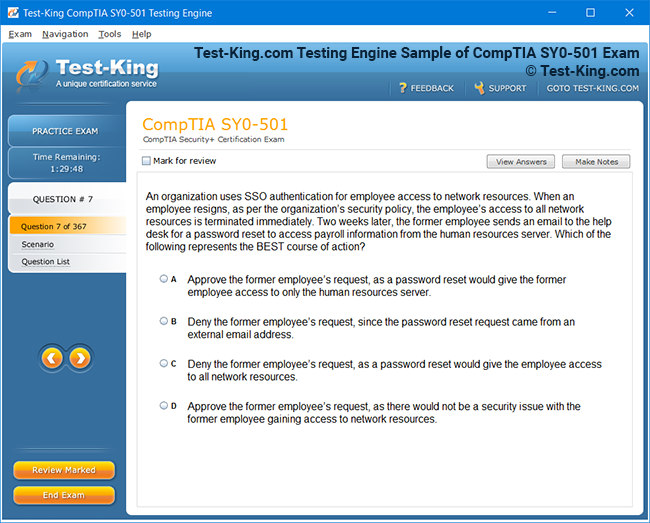
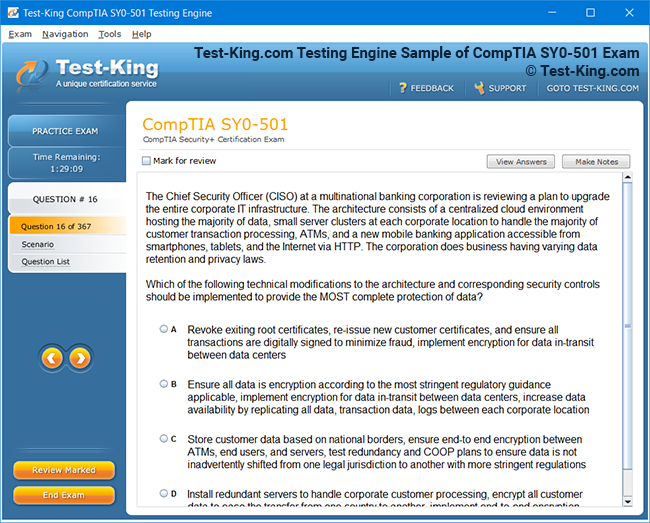
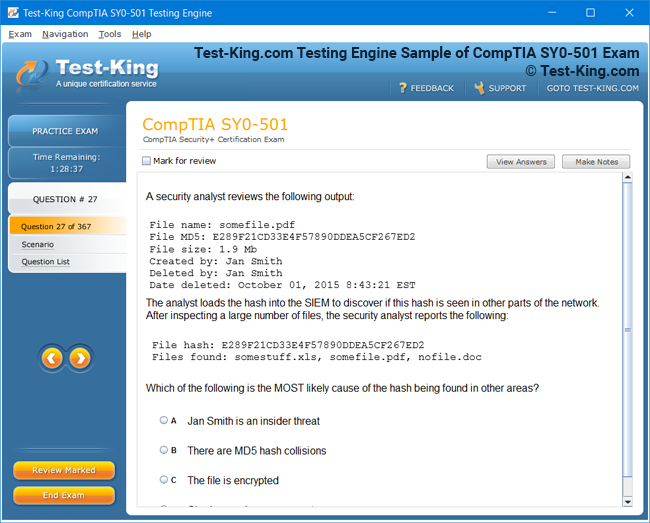
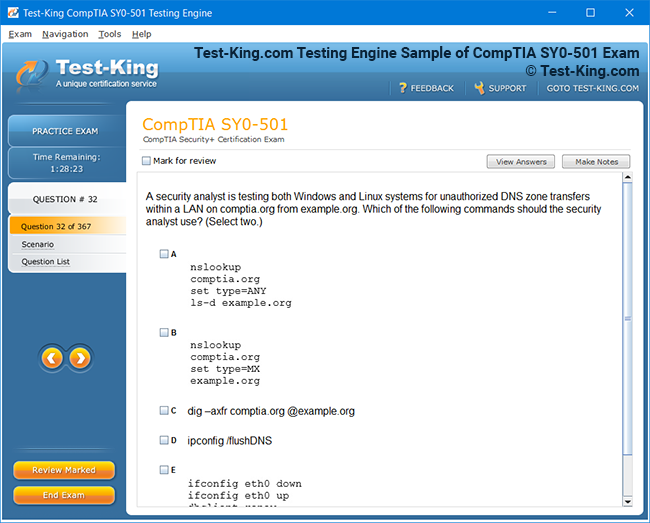
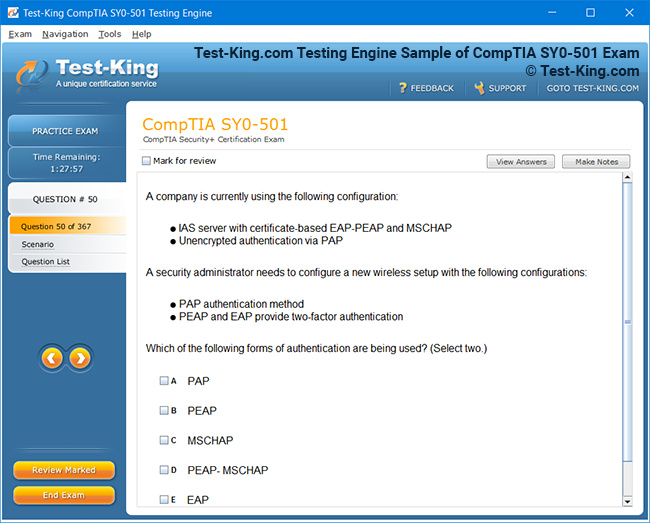
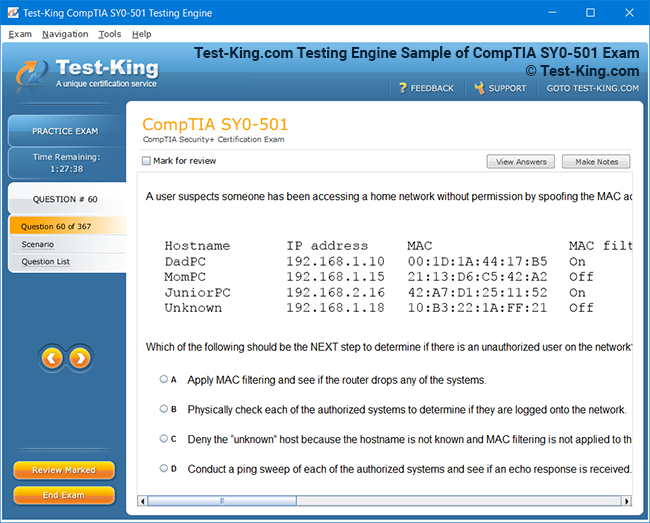
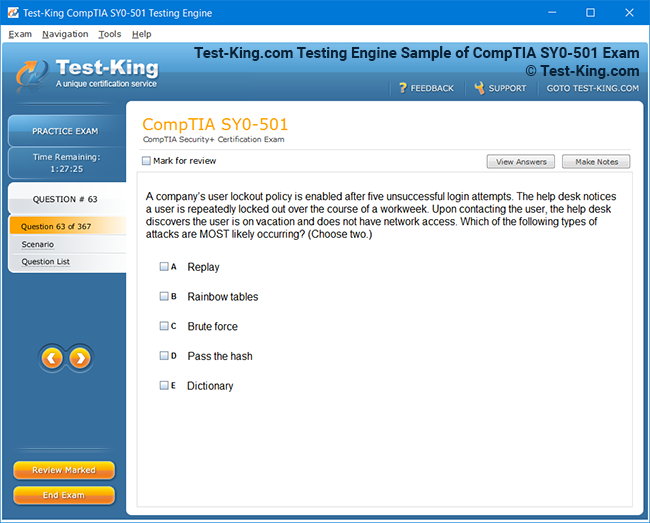
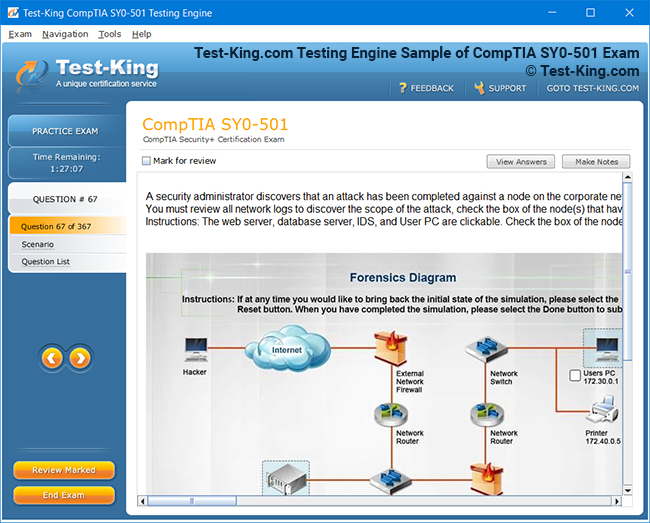
Product Screenshots
Frequently Asked Questions
How can I get the products after purchase?
All products are available for download immediately from your Member's Area. Once you have made the payment, you will be transferred to Member's Area where you can login and download the products you have purchased to your computer.
How long can I use my product? Will it be valid forever?
Test-King products have a validity of 90 days from the date of purchase. This means that any updates to the products, including but not limited to new questions, or updates and changes by our editing team, will be automatically downloaded on to computer to make sure that you get latest exam prep materials during those 90 days.
Can I renew my product if when it's expired?
Yes, when the 90 days of your product validity are over, you have the option of renewing your expired products with a 30% discount. This can be done in your Member's Area.
Please note that you will not be able to use the product after it has expired if you don't renew it.
How often are the questions updated?
We always try to provide the latest pool of questions, Updates in the questions depend on the changes in actual pool of questions by different vendors. As soon as we know about the change in the exam question pool we try our best to update the products as fast as possible.
How many computers I can download Test-King software on?
You can download the Test-King products on the maximum number of 2 (two) computers or devices. If you need to use the software on more than two machines, you can purchase this option separately. Please email support@test-king.com if you need to use more than 5 (five) computers.
What is a PDF Version?
PDF Version is a pdf document of Questions & Answers product. The document file has standart .pdf format, which can be easily read by any pdf reader application like Adobe Acrobat Reader, Foxit Reader, OpenOffice, Google Docs and many others.
Can I purchase PDF Version without the Testing Engine?
PDF Version cannot be purchased separately. It is only available as an add-on to main Question & Answer Testing Engine product.
What operating systems are supported by your Testing Engine software?
Our testing engine is supported by Windows. Andriod and IOS software is currently under development.
Top Salesforce Exams
- Certified Agentforce Specialist
- ADM-201 - Administration Essentials for New Admins
- Certified Data 360 Consultant
- Certified Revenue Cloud Consultant
- Certified Business Analyst
- Certified Data Architect
- Certified Data Cloud Consultant
- Certified Sales Cloud Consultant
- Certified Sharing and Visibility Architect
- Certified Service Cloud Consultant - Salesforce Certified Service Cloud Consultant
- Certified Development Lifecycle and Deployment Architect
- Certified Platform Identity and Access Management Architect
- Certified Platform Administrator II
- Certified OmniStudio Developer
- Certified Tableau Desktop Foundations
- Certified Integration Architect
- Certified Tableau Consultant
- Certified Platform App Builder
- Certified Marketing Cloud Email Specialist
- Health Cloud Accredited Professional
- Certified Platform Developer II
- Public Sector Solutions Accredited Professional
- Certified Marketing Cloud Engagement Administrator
- Certified Sharing and Visibility Designer
- Certified Identity and Access Management Architect
- CRT-450 - Salesforce Certified Platform Developer I
- Certified Platform Sharing and Visibility Architect
- Field Service Lightning Consultant
- Certified Associate
- Certified OmniStudio Consultant
- Certified Marketing Cloud Consultant
- Certified AI Specialist
- Certified CPQ Specialist
- Financial Services Cloud Accredited Professional
- Certified Marketing Cloud Administrator
- Certified Tableau Server Administrator
- Certified Platform Developer
A Complete Guide to the Certified OmniStudio Developer Exam: What You Need to Know
Salesforce OmniStudio has emerged as a cornerstone for enterprises striving to create agile, highly responsive, and customer-centric applications. For professionals seeking to validate their expertise in orchestrating complex digital processes, the Certified OmniStudio Developer exam is a quintessential credential. Unlike conventional Salesforce certifications, this exam focuses on an intricate combination of declarative configuration and integration skills, making it ideal for developers who aspire to bridge the gap between technical mastery and business acumen.
Understanding the OmniStudio Developer Certification
The examination tests a candidate’s proficiency in constructing seamless user experiences and robust integrations using OmniStudio tools. These include FlexCards, OmniScripts, Integration Procedures, and DataRaptors. Each component serves a distinct purpose yet harmonizes to enable dynamic, interactive applications capable of meeting enterprise requirements. For instance, FlexCards encapsulate reusable UI elements that present contextual information, while OmniScripts guide users through complex business processes using step-based interactions. Integration Procedures facilitate high-performance data orchestration, and DataRaptors allow structured extraction and manipulation of Salesforce data. A certified professional is expected to demonstrate not only conceptual knowledge but also practical insight into leveraging these components efficiently.
Understanding the significance of certification requires an appreciation of its impact on career trajectory. A Certified OmniStudio Developer stands out in the competitive Salesforce ecosystem, signaling to employers that the individual possesses advanced problem-solving capabilities, nuanced comprehension of platform tools, and the ability to implement solutions that are both scalable and maintainable. The credential serves as an assurance of competency in a domain that increasingly demands precision and innovation.
Eligibility and Prerequisites
Aspiring candidates often wonder what it takes to be eligible for the exam. While there are no mandatory prerequisites, it is highly recommended that candidates possess prior experience in Salesforce development, particularly in declarative tools and integration strategies. Familiarity with the Salesforce platform, including Apex, Lightning components, and data modeling, provides a strong foundation. Moreover, hands-on exposure to OmniStudio’s suite of tools ensures that candidates can navigate scenario-based questions with confidence.
Individuals preparing for this certification are encouraged to explore practical exercises in a sandbox environment. This approach not only enhances understanding of theoretical concepts but also develops an intuitive sense of application flow, component interaction, and error resolution. The combination of practical engagement and theoretical study equips aspirants to handle questions that often simulate real-world challenges, rather than purely abstract knowledge.
Exam Structure and Objectives
The Certified OmniStudio Developer exam is designed to evaluate a spectrum of skills, ranging from conceptual understanding to practical implementation. It encompasses multiple-choice questions, scenario-based problems, and real-world case studies. Each question aims to gauge a candidate’s ability to design, deploy, and troubleshoot OmniStudio components in complex enterprise contexts. The exam covers four primary domains: FlexCards, OmniScripts, Integration Procedures, and DataRaptors, with each domain contributing a weighted portion of the total assessment.
FlexCards, as a domain, tests the ability to create reusable components that consolidate and display data efficiently. Questions may present a scenario requiring the design of a card that pulls data from multiple sources while maintaining responsive design principles. OmniScripts, on the other hand, focus on guiding users through multi-step processes. Candidates must demonstrate proficiency in conditional branching, step management, and error handling within these scripts. Integration Procedures assess knowledge of orchestrating data operations across Salesforce and external systems, emphasizing performance optimization and procedural sequencing. DataRaptors evaluate a candidate’s ability to extract, transform, and load data into Salesforce objects effectively while maintaining data integrity.
Beyond these domains, the exam often includes situational problems that require synthesis of multiple components. For instance, a scenario may require combining a FlexCard with an OmniScript and an Integration Procedure to automate a customer onboarding workflow. Such questions test the ability to integrate components harmoniously, ensuring that data flow, user interaction, and system performance align with best practices.
Core Concepts Tested in the Exam
To excel in the Certified OmniStudio Developer exam, candidates must internalize several core concepts that recur across questions. One such concept is the principle of reusability. Components designed for one process should ideally be adaptable for other processes without redundant development effort. This principle not only enhances efficiency but also reflects enterprise-level standards for maintainable architecture.
Another essential idea is data orchestration. OmniStudio components often interact with multiple data sources simultaneously, including Salesforce objects, external APIs, and third-party systems. A developer must understand how to sequence these interactions to avoid latency, data inconsistency, or transaction failures. Integration Procedures and DataRaptors play a pivotal role in ensuring that data is handled accurately, efficiently, and securely.
Conditional logic and branching are also recurrent themes. OmniScripts, in particular, challenge candidates to implement decision points that respond dynamically to user inputs or system states. Mastery of these concepts involves recognizing patterns in user behavior and translating them into executable logic that enhances user experience without compromising system integrity.
Additionally, error handling and exception management are critical skills. The exam frequently probes how candidates would respond to failed integrations, missing data, or unexpected user actions. Effective error handling not only ensures process continuity but also reflects a developer’s foresight in anticipating real-world operational challenges.
Exam Blueprint and Syllabus Deep Dive
The Certified OmniStudio Developer exam is structured to evaluate a candidate’s comprehensive understanding of OmniStudio tools, their orchestration, and real-world implementation in enterprise contexts. Unlike other certifications that prioritize memorization, this assessment emphasizes applied knowledge, problem-solving capabilities, and the ability to integrate multiple components into seamless solutions. For aspirants, understanding the exam blueprint is essential to allocate time effectively and identify areas requiring deeper focus. The examination encompasses four primary domains, each testing distinct yet interrelated skills: FlexCards, OmniScripts, Integration Procedures, and DataRaptors. The weighting of these domains is designed to reflect their significance in practical application, encouraging candidates to prioritize conceptual clarity over superficial recall.
FlexCards are central to the assessment, challenging candidates to create reusable, modular UI components that present dynamic data effectively. Questions may require designing a card that consolidates information from multiple Salesforce objects while ensuring the interface remains responsive and accessible. Practical scenarios often include constraints such as conditional visibility, user role-specific content, or integration with external data sources, highlighting the need for both technical acumen and thoughtful design. Beyond visual representation, the exam evaluates the candidate’s ability to leverage FlexCards for operational efficiency, demonstrating how these components can reduce redundancy, simplify maintenance, and enhance user engagement.
OmniScripts represent another critical domain, focusing on orchestrating step-based processes that guide users through complex workflows. The exam evaluates candidates on their ability to implement branching logic, prefill data, handle errors gracefully, and ensure process efficiency. Scenario-based questions often present intricate workflows, requiring careful mapping of user actions, decision points, and backend interactions. Candidates must demonstrate proficiency in combining multiple OmniScript elements, such as screens, steps, actions, and conditions, to deliver an intuitive experience while maintaining data accuracy. The examination also probes advanced concepts like reusability of sub-flows, modular design, and dynamic data population, emphasizing practical problem-solving over rote knowledge.
Integration Procedures are tested to assess orchestration of data across internal and external systems with minimal latency and maximum reliability. Candidates are expected to understand sequential and parallel processing, error handling, and performance optimization. Scenarios may involve multiple service calls, complex transformations, or coordination between Salesforce and external APIs. Questions often simulate real-world enterprise challenges, requiring the candidate to design procedures that handle data dependencies while preserving system integrity. A deep understanding of Integration Procedures ensures that developers can implement solutions that scale, accommodate dynamic requirements, and reduce operational overhead.
DataRaptors constitute the final primary domain, examining proficiency in extracting, transforming, and loading data efficiently within Salesforce. Candidates are tested on mapping strategies, data relationships, and conditional transformations. Questions may present situations in which multiple objects require synchronization, nested data extraction, or complex conditional logic to populate fields accurately. Mastery of DataRaptors entails not only technical knowledge but also the ability to anticipate exceptions, validate data integrity, and implement error-handling mechanisms that prevent systemic failures. Together with Integration Procedures, DataRaptors form the backbone of data orchestration in OmniStudio, ensuring seamless interaction between user interfaces and backend systems.
Understanding the weighting and interaction of these domains provides insight into how candidates should structure their preparation. FlexCards and OmniScripts often account for a larger proportion of the assessment due to their direct impact on user experience, while Integration Procedures and DataRaptors evaluate operational robustness and efficiency. The interconnection between these components is also a recurring theme, emphasizing that a successful developer must not only excel in individual domains but also understand how to synthesize them into coherent solutions.
Preparation Strategies and Study Plan
Preparing for the Certified OmniStudio Developer exam requires more than casual familiarity with Salesforce or general development experience. It demands a meticulous approach that balances theoretical understanding with practical proficiency in OmniStudio components. The exam evaluates the ability to create seamless, efficient, and integrated solutions using FlexCards, OmniScripts, Integration Procedures, and DataRaptors, and preparation must reflect this multi-dimensionality. Aspiring developers benefit from a structured plan that emphasizes hands-on practice, scenario simulation, and conceptual mastery.
A foundational step in preparation involves assessing one’s existing knowledge and experience. Candidates with prior exposure to declarative tools and Salesforce administration will have a head start, whereas those new to OmniStudio may need to dedicate additional time to understand the platform’s architecture and component interplay. Establishing a baseline helps determine which areas require intensive focus, ensuring that study efforts are efficient and targeted.
Building a Practical Study Routine
Constructing a practical study routine begins with segmenting the core domains of the exam into manageable topics. FlexCards should be approached by exploring their design, data sources, conditional visibility, and reusability. Creating sample cards in a sandbox environment allows candidates to internalize how information can be aggregated and presented effectively. The ability to visualize and implement cards dynamically is crucial, as many exam questions involve designing solutions that consolidate multiple data sources while maintaining a user-centric interface.
OmniScripts require a combination of logical reasoning and technical dexterity. Studying these scripts involves understanding step-based workflows, prefilled data elements, branching logic, and error handling. Practicing sub-flows and modular design enables candidates to recognize patterns in complex processes and apply them effectively. Realistic scenarios, such as guiding a customer through a service request process or configuring multiple conditional paths, help solidify understanding. These exercises cultivate analytical thinking, ensuring that the candidate can approach scenario-based questions methodically.
Integration Procedures demand familiarity with data orchestration across internal Salesforce objects and external APIs. Candidates must practice designing procedures that handle sequential and parallel operations, manage data dependencies, and anticipate potential failures. Simulated exercises involving multiple data sources and transformation requirements develop the ability to implement efficient, reliable workflows. Understanding the nuanced behavior of each component under different conditions is a key determinant of exam success.
DataRaptors form the backbone of data extraction, transformation, and loading within OmniStudio. Preparing for this domain involves practicing mappings, conditional transformations, and error mitigation. Complex scenarios that require synchronizing nested objects or handling large datasets help candidates appreciate the importance of planning and validation. By constructing these exercises in a sandbox, candidates gain the confidence to answer scenario-based questions with clarity and precision.
Hands-On Practice and Real-World Simulations
Practical experimentation is essential for internalizing OmniStudio concepts. Candidates who rely solely on theoretical study often struggle with scenario-based questions, which constitute a substantial portion of the exam. A sandbox environment enables learners to create FlexCards, OmniScripts, Integration Procedures, and DataRaptors from scratch, testing different configurations and understanding component interactions. These exercises also illuminate potential pitfalls and edge cases, fostering a problem-solving mindset that mirrors real-world development challenges.
Engaging in full-scale simulations, where multiple components are combined to achieve complex workflows, prepares candidates for the integrative questions often encountered on the exam. For example, a simulation may involve creating a FlexCard that displays dynamic customer information, linked to an OmniScript that guides a service process, with data orchestrated via Integration Procedures and transformed through DataRaptors. Practicing such comprehensive scenarios develops fluency in component interplay and enhances confidence under timed conditions.
Recommended Study Materials and Resources
Candidates often ask which resources provide the most effective preparation. Salesforce’s official study guides and Trailhead modules are invaluable for structured learning, as they cover both conceptual and practical aspects of OmniStudio. Complementing these resources with community forums, blogs, and professional discussion groups allows candidates to encounter diverse perspectives, learn from shared experiences, and discover solutions to uncommon challenges. Videos and webinars can also illustrate advanced techniques, providing visual reinforcement of key concepts.
Many aspirants inquire whether third-party study aids are necessary. While additional resources can offer supplementary practice, their effectiveness depends on the candidate’s engagement with hands-on exercises. Reading or watching content passively is insufficient; learners must actively implement what they encounter in a sandbox to internalize procedural knowledge and develop adaptive problem-solving skills.
Time Management and Scheduling
Effective preparation hinges on disciplined time management. Candidates should allocate daily or weekly study blocks, balancing review of theoretical material with practical exercises. Repetition and incremental complexity help reinforce understanding without causing cognitive fatigue. For example, dedicating specific periods to FlexCards creation, OmniScripts branching logic, Integration Procedures orchestration, and DataRaptors mapping ensures comprehensive coverage of all domains.
Time management during the exam is equally critical. Scenario-based questions often require careful analysis, and candidates benefit from practicing strategies that allow rapid identification of key requirements, potential challenges, and optimal solutions. Exercises that simulate timed conditions help build the mental stamina necessary to navigate the exam efficiently, reducing errors caused by stress or rushed judgment.
OmniStudio Components Explained
OmniStudio is a sophisticated suite within the Salesforce ecosystem that empowers developers to design and implement intricate, user-centric applications while maintaining a high level of scalability and efficiency. At the heart of the Certified OmniStudio Developer exam are four key components: FlexCards, OmniScripts, Integration Procedures, and DataRaptors. Mastery of these components is indispensable not only for passing the exam but also for excelling in real-world enterprise scenarios. Each component possesses unique characteristics and functionality, yet they are deeply interconnected, forming a cohesive framework for orchestrating seamless digital experiences.
FlexCards are the visual embodiment of data presentation and interaction. They allow developers to create modular, reusable UI elements that encapsulate information from multiple data sources, providing a dynamic and contextual view for end users. These cards are not merely aesthetic; they are functional tools that streamline decision-making by presenting relevant information efficiently. Candidates are often tested on the ability to design FlexCards that balance clarity with data density, ensuring that essential information is accessible without overwhelming the user. Advanced questions may include designing conditional visibility, role-based content display, or integrating FlexCards with other OmniStudio components to create end-to-end solutions.
OmniScripts, in contrast, focus on orchestrating processes rather than displaying information. They guide users through complex workflows, leveraging step-based interactions that can include branching, prefilled data, validation rules, and error handling. The exam often presents scenarios requiring the creation of multi-step OmniScripts that adapt dynamically to user inputs. Developers are expected to construct efficient paths that minimize friction while ensuring data integrity. Mastery of OmniScripts involves not only understanding the individual steps but also the interrelationships between steps, actions, and conditional elements, allowing for flexible, maintainable processes that can accommodate varied business requirements.
Integration Procedures serve as the engine behind data orchestration, enabling the seamless movement of information across Salesforce objects, external APIs, and third-party systems. These procedures are designed for high-performance execution, often involving sequential or parallel operations, data transformations, and error mitigation strategies. Candidates must demonstrate an understanding of how to construct robust procedures that handle complex dependencies while maintaining system integrity. Scenario-based questions frequently challenge developers to design Integration Procedures that optimize data flow, prevent latency, and ensure accurate synchronization across multiple endpoints.
DataRaptors complement Integration Procedures by providing structured mechanisms for extracting, transforming, and loading data within Salesforce. They are particularly valuable for mapping complex relationships between objects, performing conditional transformations, and ensuring that data integrity is maintained throughout processes. The exam tests a candidate’s ability to implement DataRaptors effectively, often requiring solutions that combine nested data structures, multi-object updates, and precise field mappings. Understanding DataRaptors entails anticipating potential exceptions, validating outcomes, and applying best practices to avoid systemic errors. Together with Integration Procedures, DataRaptors form a critical backbone for orchestrated workflows, ensuring that both front-end interactions and back-end operations are synchronized flawlessly.
Practice Questions and Real-World Scenarios
Successfully navigating the Certified OmniStudio Developer exam requires more than theoretical knowledge; it necessitates proficiency in applying concepts to practical scenarios. The exam heavily emphasizes real-world applications, challenging candidates to integrate FlexCards, OmniScripts, Integration Procedures, and DataRaptors into coherent solutions that address complex business requirements. Practicing scenario-based questions allows candidates to develop analytical thinking, problem-solving skills, and intuitive understanding of component interactions, which are essential for exam success and professional competence.
A common scenario involves creating a comprehensive workflow for customer onboarding. Candidates may be asked to design a FlexCard that aggregates and displays customer information from multiple Salesforce objects, integrate an OmniScript to guide the user through verification steps, orchestrate data processing through an Integration Procedure, and update records via a DataRaptor. Such scenarios test the ability to analyze requirements, identify appropriate components, and ensure seamless data flow. Practicing these exercises in a sandbox environment is invaluable, as it cultivates familiarity with component behavior, dependencies, and potential errors that can arise in real-world implementations.
Converting Questions into Practical Understanding
Exam questions often present multiple-choice or scenario-based prompts that appear abstract but can be transformed into actionable practice exercises. For example, a question may ask about pre-populating data fields in an OmniScript based on previous steps or external inputs. Converting this question into a sandbox exercise allows candidates to explore conditional logic, prefilled elements, and data mappings in practice. By simulating the scenario, learners develop both confidence and procedural insight, which significantly improves their ability to tackle similar questions during the exam.
Another typical scenario involves conditional FlexCard rendering based on user roles or data attributes. A question may present a situation in which certain information should only be visible to specific user profiles. Practicing this in a sandbox enables candidates to explore dynamic binding, role-based visibility, and efficient component reuse. Such exercises not only prepare candidates for exam questions but also mirror real-world development challenges, reinforcing the relevance of each component’s functionality.
Handling Multi-Component Integrations
Exam scenarios frequently require orchestrating multiple OmniStudio components in tandem. Candidates may encounter prompts asking them to integrate a FlexCard, an OmniScript, an Integration Procedure, and a DataRaptor into a single workflow that achieves a business objective such as claim processing, service onboarding, or lead management. Successful implementation relies on understanding data flow, error handling, and conditional logic across components. Practicing multi-component integrations helps learners anticipate potential failures, ensure data consistency, and optimize process efficiency.
A common inquiry among candidates involves sequencing operations correctly. In real-world scenarios, executing Integration Procedures before populating data in OmniScripts may be necessary to ensure accurate prefilled information. Practicing this sequence and verifying outcomes in a sandbox cultivates procedural intuition, enabling candidates to approach exam questions methodically. Similarly, designing a FlexCard to dynamically reflect changes from an Integration Procedure or DataRaptor reinforces the interconnectedness of components and emphasizes the importance of holistic thinking.
Error Handling and Troubleshooting Scenarios
Candidates frequently encounter exam prompts that simulate errors or exceptional conditions. For instance, an Integration Procedure may fail due to missing API data, or a DataRaptor may encounter inconsistent object relationships. Practicing these error scenarios teaches candidates how to anticipate failures, implement validation rules, and design fallback mechanisms. Effective error handling is critical not only for passing the exam but also for ensuring robust and resilient real-world applications.
OmniScripts often include branching logic that can lead to unexpected outcomes if not carefully constructed. Candidates benefit from creating exercises that simulate multiple user paths, unexpected inputs, and conditional exceptions. These exercises develop critical thinking skills and an appreciation for thorough testing before deployment. Similarly, FlexCards can be tested under varying data conditions to ensure that dynamic content is displayed accurately and intuitively across all possible scenarios.
Enhancing Analytical Thinking Through Practice
One of the key skills evaluated by the exam is analytical thinking—the ability to interpret a scenario, identify requirements, and select optimal solutions using appropriate OmniStudio components. Practicing scenario-based questions enhances this skill, as candidates learn to break down complex workflows into discrete steps, map data dependencies, and anticipate potential obstacles. Exercises such as designing a customer support escalation workflow or a subscription management process provide hands-on experience in synthesizing multiple components effectively.
Candidates often ask how to prioritize tasks when confronted with multifaceted scenarios. A recommended strategy involves first identifying the critical data elements, then determining the sequence of component execution, and finally validating the workflow under simulated conditions. This systematic approach minimizes errors, reduces rework, and mirrors real-world development practices, reinforcing both exam preparedness and professional competence.
Addressing Frequently Asked Questions
Candidates frequently inquire about the best approach to scenario-based questions that involve multiple components. The key is decomposition: breaking the scenario into individual tasks, mapping each task to an appropriate component, and understanding how data and processes flow between components. Practicing this decomposition in a sandbox allows candidates to anticipate interactions, validate assumptions, and develop robust solutions.
Another common question concerns the handling of conditional logic in complex workflows. Candidates should practice implementing OmniScripts with branching conditions, FlexCards with dynamic visibility rules, and DataRaptors with conditional transformations. Understanding how these components interact under varying conditions ensures that solutions are both flexible and resilient.
Many aspirants ask how to simulate integration points with external systems. While the exam may not test specific API calls, understanding how Integration Procedures manage sequential and parallel processes, handle responses, and mitigate errors is crucial. Practicing these interactions conceptually and in a controlled sandbox environment prepares candidates for scenario-based questions that simulate real-world integration challenges.
Candidates also wonder how to approach error-prone scenarios. Practicing exercises where data inconsistencies, missing fields, or system failures are intentionally introduced helps develop troubleshooting skills. Anticipating potential points of failure, implementing validation rules, and designing fallback mechanisms are all essential skills that translate directly to exam performance and professional efficacy.
Another frequently asked question involves balancing speed and accuracy during practice. Candidates should simulate timed conditions to develop efficiency without compromising accuracy. Rehearsing complete workflows under time constraints helps internalize component behavior, improves decision-making speed, and reduces cognitive fatigue during the exam.
A common concern is the repetition of scenarios. Practicing variations of the same workflow, such as modifying conditional paths, changing data sources, or introducing additional steps, enhances adaptability. This method ensures that candidates are prepared for the unexpected and can apply core concepts flexibly, a skill that is invaluable both for the exam and in enterprise deployments.
Candidates often inquire about integrating multiple DataRaptors and Integration Procedures in a single scenario. Practicing these exercises emphasizes understanding dependencies, ensuring sequential or parallel execution, and maintaining data integrity. This preparation fosters confidence in handling exam questions that combine multiple layers of complexity.
Finally, aspirants frequently ask about leveraging sandbox experimentation for exam preparation. Building full-scale workflows, testing edge cases, and simulating error conditions provide the most effective preparation. The tactile experience of constructing, observing, and refining OmniStudio components reinforces conceptual understanding and develops a practical skill set that ensures success during the examination.
Post-Certification Benefits and Career Growth
Achieving the Certified OmniStudio Developer credential represents a significant milestone in a Salesforce professional’s career. Beyond validating technical expertise, the certification symbolizes mastery of designing and implementing sophisticated, integrated digital solutions using FlexCards, OmniScripts, Integration Procedures, and DataRaptors. The exam demonstrates an individual’s capacity to orchestrate workflows that are efficient, scalable, and user-centric, signaling to employers and peers that the certified professional possesses both analytical acuity and practical competence. The impact of certification extends far beyond the credential itself, influencing career advancement, project opportunities, and professional credibility in a competitive ecosystem.
Certified professionals are often entrusted with high-impact projects that require end-to-end solution design. Organizations value developers who can translate business requirements into actionable workflows, optimize user experiences, and ensure seamless integration of disparate systems. A deep understanding of OmniStudio components allows certified developers to architect solutions that reduce redundancy, enhance process efficiency, and maintain data integrity. Employers recognize that certified developers bring foresight, discipline, and a problem-solving mindset, attributes that are increasingly indispensable in fast-paced, technology-driven environments.
Career Opportunities and Advancement
One of the most immediate benefits of certification is the enhancement of career prospects. Certified OmniStudio Developers often gain access to senior technical roles, solution architect pathways, and leadership positions within Salesforce implementation teams. Organizations that rely on OmniStudio to automate and streamline processes prefer professionals who have demonstrated verified competence, as this reduces the need for extensive training and oversight. Consequently, certification can accelerate promotions, increase responsibilities, and improve compensation prospects.
Aspiring developers frequently ask how the certification affects consulting opportunities. The credential is highly regarded among Salesforce consulting firms, which seek experts capable of delivering complex, integrated solutions for clients across diverse industries. Certified professionals can leverage this recognition to secure client-facing roles, lead project teams, and consult on intricate workflows involving multiple OmniStudio components. The certification signals both technical proficiency and an ability to bridge the gap between business objectives and technological execution, making certified developers highly sought after in consulting contexts.
Networking and Professional Community
Another frequently discussed benefit involves the professional network cultivated through certification. Salesforce provides a robust community of certified professionals who share insights, best practices, and collaborative opportunities. Engaging with this community allows developers to exchange knowledge, discover novel approaches to common challenges, and remain abreast of evolving best practices. Many aspirants ask how to leverage community engagement effectively. Participation in forums, webinars, and local or virtual events fosters continuous learning, builds professional relationships, and can open doors to collaborative projects or mentorship opportunities.
Continuous Learning and Skill Maintenance
Certification also encourages ongoing professional development. OmniStudio, like the broader Salesforce ecosystem, evolves rapidly, introducing new features, enhancements, and optimized workflows regularly. Certified developers are expected to maintain proficiency and adapt to these advancements. Engaging with Trailhead modules, webinars, and advanced tutorials allows professionals to update their skill set, ensuring that they can leverage new tools effectively. Candidates often inquire about the best way to sustain their expertise. A combination of hands-on experimentation, knowledge sharing, and keeping up with platform releases ensures that certified professionals remain at the forefront of technological innovation.
Applying Certification in Real-World Projects
Certified OmniStudio Developers frequently apply their knowledge in projects that require integration of multiple components to achieve complex business objectives. For instance, designing a customer onboarding workflow may involve creating a FlexCard to display account information, an OmniScript to guide the user through verification steps, an Integration Procedure to synchronize external data, and a DataRaptor to update Salesforce objects efficiently. Professionals who have undergone rigorous preparation for the exam are adept at anticipating challenges, mitigating errors, and optimizing performance across all components. This practical expertise is invaluable in real-world projects, where seamless execution and minimal disruption are paramount.
Many candidates ask how certification prepares them for troubleshooting in enterprise environments. The exam emphasizes scenario-based questions that simulate real-world challenges, including conditional logic errors, integration failures, and complex data transformations. By practicing these scenarios during preparation, certified developers develop intuition for diagnosing problems, identifying root causes, and implementing corrective measures quickly. This capacity for proactive problem-solving distinguishes certified professionals from their peers and contributes significantly to organizational efficiency.
Frequently Asked Questions
Candidates often inquire about the long-term impact of certification on career growth. The credential provides recognition of technical mastery and positions professionals for roles that demand advanced problem-solving skills, leadership, and cross-functional collaboration. Certified developers are more likely to be entrusted with high-visibility projects and complex workflows, which can accelerate career progression.
Another common question concerns the applicability of certification across industries. OmniStudio is leveraged in diverse sectors, including finance, healthcare, telecommunications, and insurance. The credential demonstrates that a developer can implement scalable, integrated solutions regardless of the specific domain. Certified professionals are therefore versatile and highly adaptable, capable of applying their expertise to a wide range of business challenges.
Many aspirants ask how to balance certification with ongoing career responsibilities. The exam preparation process itself cultivates discipline, time management, and analytical skills, which are transferable to professional tasks. Maintaining certification involves continuous learning, experimenting with new platform features, and staying connected with the Salesforce community. By integrating these practices into their routine, professionals enhance both their immediate performance and long-term career trajectory.
Candidates frequently inquire about the advantages in consulting versus in-house roles. Certified developers have the flexibility to pursue either path. In consulting, the credential signals credibility to clients and expands the range of projects a professional can lead. In corporate settings, it positions individuals as subject matter experts capable of optimizing internal workflows, mentoring team members, and driving innovation. The versatility afforded by certification enables professionals to align career decisions with personal interests and market opportunities.
Another common question involves the interplay between certification and technical specialization. While OmniStudio certification validates expertise in specific components, the skills acquired—data orchestration, conditional logic, workflow optimization—are transferable to broader Salesforce development and integration contexts. Certified professionals can apply their knowledge in Lightning components, Apex, or cross-cloud integrations, enhancing their overall technical portfolio and opening avenues for multi-disciplinary projects.
Aspiring developers often ask about the credibility of certification in the global Salesforce ecosystem. The credential is recognized internationally and serves as a benchmark for expertise in OmniStudio. Professionals holding the certification are viewed as capable of managing complex workflows, integrating multi-source data, and designing user-centric applications at scale. This recognition fosters professional confidence and enhances employability in multinational organizations.
Candidates also ask about leveraging certification for mentorship or leadership. Certified developers often guide less experienced team members, provide training on best practices, and influence architecture decisions. The credential signals mastery and reliability, making certified professionals natural candidates for advisory or leadership roles within projects or organizations.
A common inquiry is how certification affects salary prospects. While compensation varies by region and role, certified OmniStudio developers generally command higher remuneration due to their validated skill set, ability to execute complex workflows, and contribution to organizational efficiency. The combination of technical proficiency, practical experience, and recognized certification positions professionals to negotiate competitive compensation packages.
Finally, many aspirants ask how to maximize the long-term value of certification. Engaging in continuous learning, participating in the community, mentoring peers, applying knowledge in challenging projects, and staying current with OmniStudio advancements ensures that the credential remains meaningful. Over time, this approach not only enhances career growth but also solidifies professional reputation, positioning certified developers as leaders in Salesforce solution development.
Conclusion
Achieving the Certified OmniStudio Developer credential represents more than technical validation; it is a gateway to professional advancement, industry recognition, and practical mastery of enterprise-grade workflows. Certified professionals gain access to high-impact projects, consulting opportunities, leadership roles, and a vibrant professional community, all while enhancing analytical and problem-solving capabilities. The skills acquired extend beyond the exam, enabling developers to design, implement, and optimize complex workflows using FlexCards, OmniScripts, Integration Procedures, and DataRaptors effectively. Maintaining proficiency through continuous learning ensures long-term career growth, adaptability across industries, and sustained professional relevance. Ultimately, the certification empowers developers to navigate the Salesforce ecosystem with confidence, transforming theoretical knowledge into impactful, real-world solutions that advance both organizational goals and personal career trajectories.