

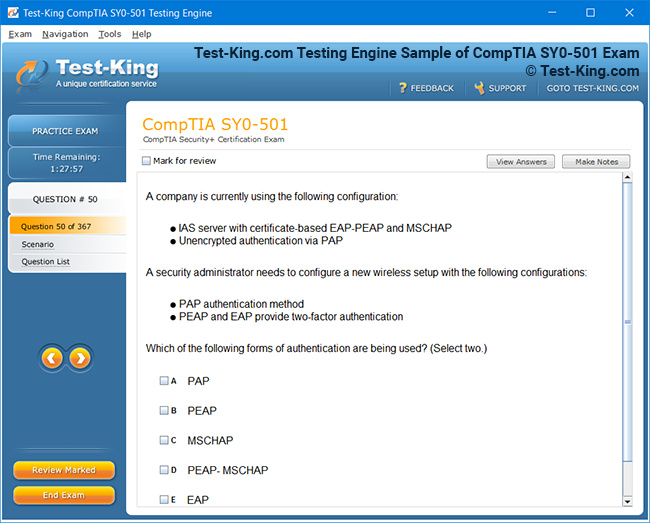
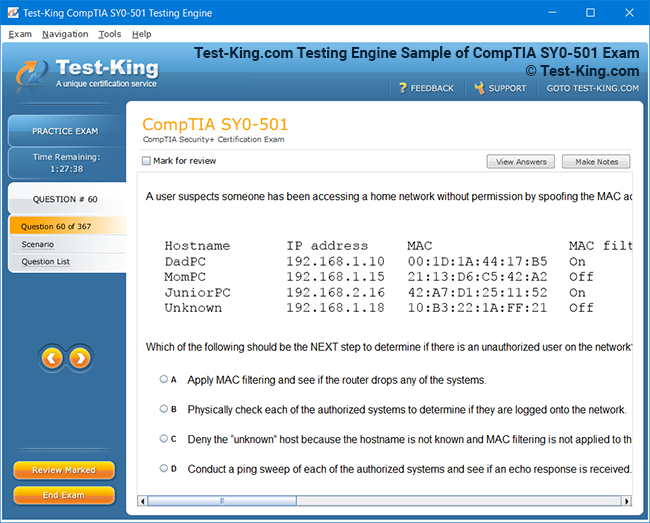
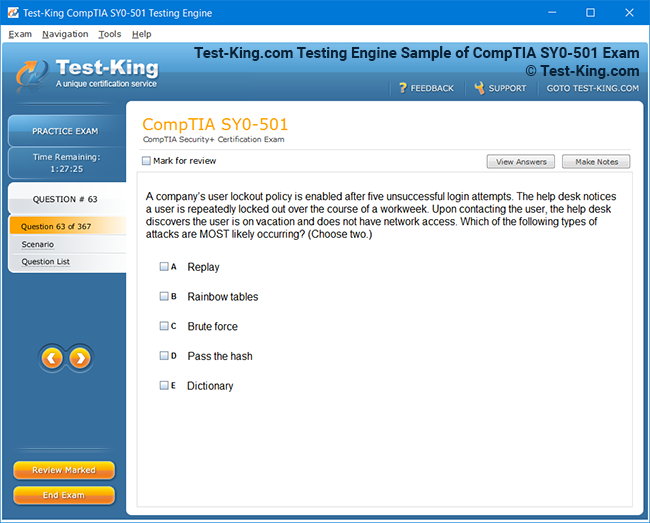
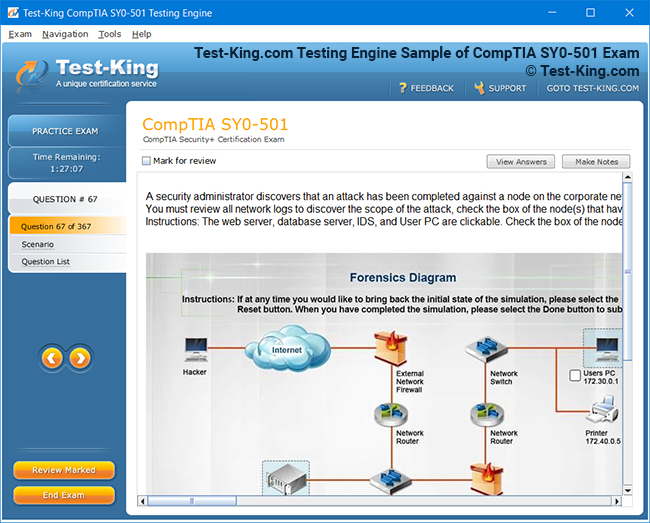
Product Screenshots
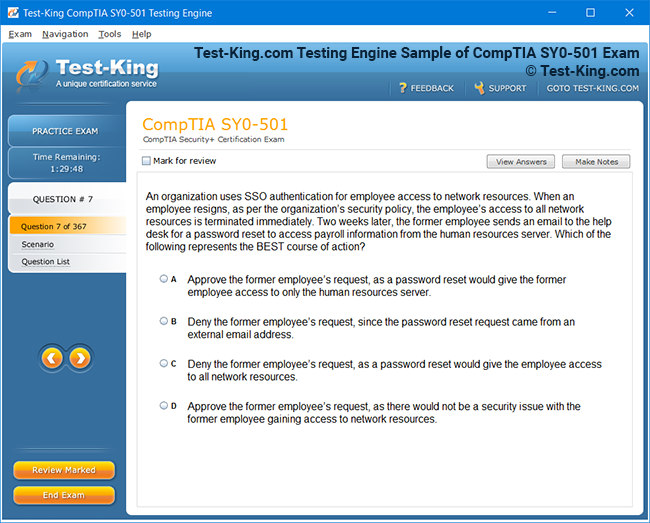
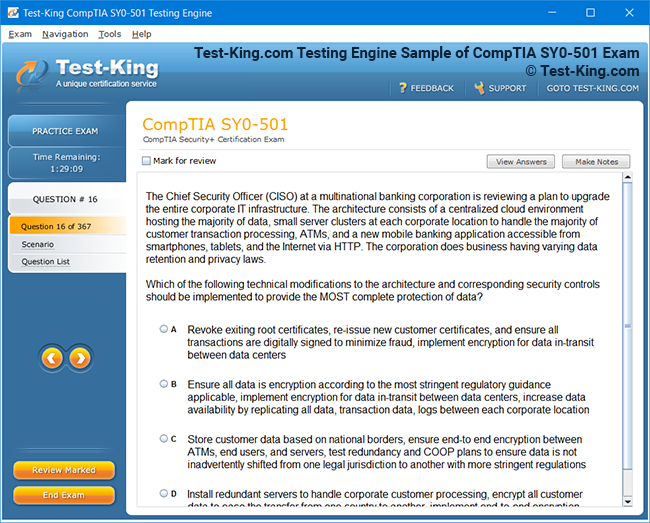
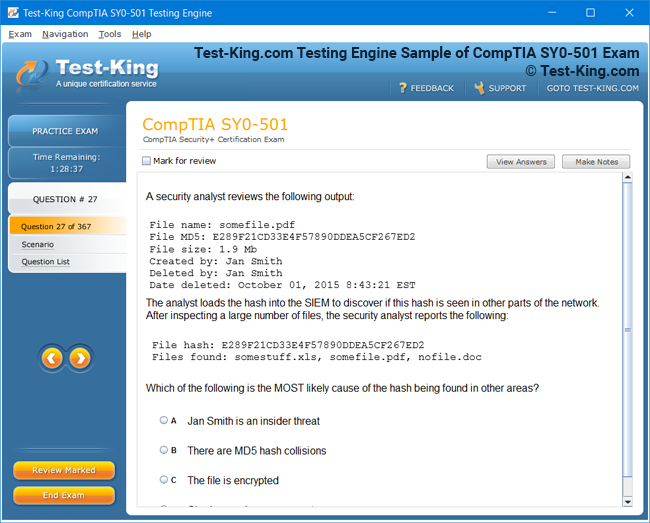
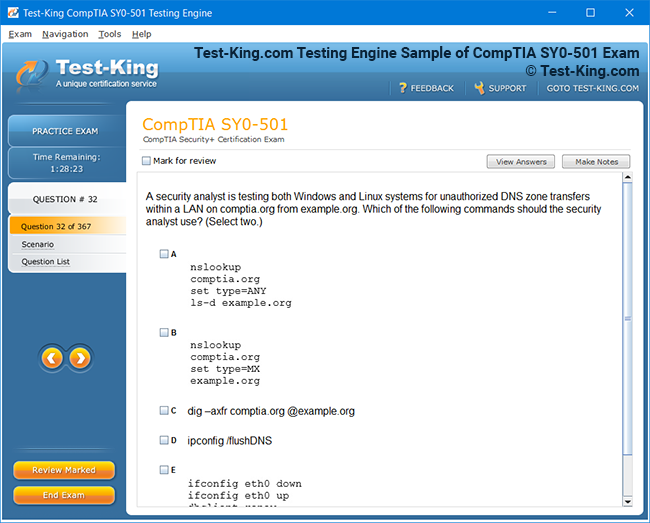
Frequently Asked Questions
How can I get the products after purchase?
All products are available for download immediately from your Member's Area. Once you have made the payment, you will be transferred to Member's Area where you can login and download the products you have purchased to your computer.
How long can I use my product? Will it be valid forever?
Test-King products have a validity of 90 days from the date of purchase. This means that any updates to the products, including but not limited to new questions, or updates and changes by our editing team, will be automatically downloaded on to computer to make sure that you get latest exam prep materials during those 90 days.
Can I renew my product if when it's expired?
Yes, when the 90 days of your product validity are over, you have the option of renewing your expired products with a 30% discount. This can be done in your Member's Area.
Please note that you will not be able to use the product after it has expired if you don't renew it.
How often are the questions updated?
We always try to provide the latest pool of questions, Updates in the questions depend on the changes in actual pool of questions by different vendors. As soon as we know about the change in the exam question pool we try our best to update the products as fast as possible.
How many computers I can download Test-King software on?
You can download the Test-King products on the maximum number of 2 (two) computers or devices. If you need to use the software on more than two machines, you can purchase this option separately. Please email support@test-king.com if you need to use more than 5 (five) computers.
What is a PDF Version?
PDF Version is a pdf document of Questions & Answers product. The document file has standart .pdf format, which can be easily read by any pdf reader application like Adobe Acrobat Reader, Foxit Reader, OpenOffice, Google Docs and many others.
Can I purchase PDF Version without the Testing Engine?
PDF Version cannot be purchased separately. It is only available as an add-on to main Question & Answer Testing Engine product.
What operating systems are supported by your Testing Engine software?
Our testing engine is supported by Windows. Andriod and IOS software is currently under development.
Top Dell Exams
- D-PST-DY-23 - Dell PowerStore Deploy 2023
- D-PST-DS-00 - Dell PowerStore Design
- D-PE-FN-01 - Dell PowerEdge Foundations v2
- D-MSS-DS-23 - Dell Midrange Storage Solutions Design 2023
- D-DP-FN-01 - Dell Data Protection Management Foundations v2
- D-PDD-DY-01 - Dell PowerProtect Data Domain Deploy v2
- D-NWR-DY-01 - Dell NetWorker Deploy
- D-PVM-OE-01 - Dell PowerMax Operate Version 2
- D-ISM-FN-01 - Dell Information Storage and Management Foundations
- D-PVM-DS-01 - Dell PowerMax Design v2
- D-UN-DY-23 - Dell Unity Deploy 2023
Comprehensive Overview of the Dell Data Science Foundations Exam (D-DS-FN-23)
The Dell Data Science Foundations exam, designated as D-DS-FN-23, represents a pivotal credential for individuals seeking to establish a strong foothold in the field of data science. This certification is designed to validate a candidate’s foundational knowledge of data science principles, methodologies, and essential tools. Unlike advanced or specialized certifications, the D-DS-FN-23 focuses on ensuring that learners acquire a robust understanding of core concepts, including data manipulation, statistical analysis, basic machine learning, and data visualization techniques. The examination acts as a gateway for aspirants who aim to build a comprehensive data science skillset that can be applied across diverse industries, from finance and healthcare to technology and logistics.
Understanding the Dell Data Science Foundations Exam
The exam’s primary objective is to assess both theoretical understanding and practical proficiency. Candidates are expected to demonstrate their ability to comprehend data structures, analyze datasets, and draw meaningful insights. While the exam does not delve into highly intricate algorithms or deep learning frameworks, it emphasizes the importance of a structured approach to problem-solving and the ability to work with real-world datasets efficiently. This approach reflects Dell’s commitment to fostering practical competencies alongside theoretical knowledge.
The format of the D-DS-FN-23 exam is meticulously structured to evaluate a candidate’s mastery across multiple domains. It typically encompasses multiple-choice questions, scenario-based problem-solving tasks, and situational analyses that mimic real-life data challenges. Each question is designed to test the candidate’s understanding of core data science principles and their capacity to apply these principles in practical contexts. This design ensures that candidates not only recall factual information but also demonstrate analytical thinking, logical reasoning, and the ability to interpret results from datasets accurately.
Candidates preparing for the Dell Data Science Foundations exam are encouraged to familiarize themselves with a wide spectrum of topics. These include understanding different types of data, preprocessing techniques, basic statistical concepts such as mean, median, variance, and standard deviation, and fundamental visualization tools. Additionally, the exam evaluates knowledge of data manipulation libraries, introductory programming skills, and the capacity to leverage simple algorithms for predictive analytics. Proficiency in these areas equips candidates with the foundational skills necessary to progress into more advanced domains of data science in the future.
One of the distinctive features of the D-DS-FN-23 exam is its emphasis on practical application. While theoretical knowledge forms the bedrock of the examination, candidates are expected to demonstrate the ability to implement solutions to data problems. This includes tasks such as cleaning messy datasets, handling missing values, normalizing or standardizing data, and using visualization tools to represent data effectively. By focusing on these practical competencies, the certification ensures that learners are prepared to contribute meaningfully in real-world data projects, bridging the gap between academic knowledge and professional application.
Another critical aspect of the exam is its alignment with contemporary data science practices. Dell has structured the D-DS-FN-23 to mirror the evolving landscape of data analysis and decision-making. Candidates are introduced to fundamental concepts in data ethics, governance, and security, which are increasingly crucial in modern data-driven environments. Understanding these concepts ensures that certified individuals are not only capable of performing technical tasks but also aware of the broader implications of their work, including privacy considerations, responsible use of data, and compliance with regulatory standards.
The D-DS-FN-23 examination also serves as a benchmark for assessing a candidate’s readiness for further specialization in data science. By focusing on foundational skills, it prepares learners to undertake more advanced certifications or professional roles that require deeper expertise in machine learning, artificial intelligence, big data analytics, or predictive modeling. This progressive pathway reflects Dell’s educational philosophy, which emphasizes a structured learning journey that begins with core competencies before advancing to specialized domains.
Candidates often inquire about the ideal preparation strategy for the Dell Data Science Foundations exam. A comprehensive approach involves a combination of study materials, hands-on exercises, and self-assessment tests. Utilizing sample datasets to practice data cleaning, visualization, and analysis reinforces theoretical understanding. Additionally, engaging with community forums, attending webinars, and reviewing case studies can enhance conceptual clarity and provide insights into practical applications of foundational data science principles. Regular self-assessment ensures that learners can identify gaps in knowledge and reinforce weak areas effectively before attempting the exam.
The examination also requires familiarity with specific tools and programming languages commonly used in data science. While the D-DS-FN-23 does not demand expert-level programming skills, basic proficiency in languages such as Python or R, along with experience in using libraries for data manipulation and visualization, is advantageous. Understanding spreadsheet applications, SQL for data querying, and introductory statistical software can further strengthen a candidate’s practical capabilities. Mastery of these tools enables examinees to approach questions with confidence, demonstrating both conceptual knowledge and applied skill.
A notable element of the Dell Data Science Foundations exam is its focus on analytical thinking. Candidates are presented with scenarios that require interpreting data, identifying trends, and suggesting actionable insights. These exercises assess not only the technical aptitude of examinees but also their ability to think critically and communicate findings effectively. Analytical thinking is central to data science, as it allows professionals to derive meaningful conclusions from raw data and support decision-making processes in business, research, or operational contexts.
In preparing for the D-DS-FN-23 examination, it is beneficial to understand the weightage of different domains within the exam. While statistical concepts and data analysis form a significant portion, other areas such as data visualization, ethical considerations, and introductory machine learning techniques also carry importance. Familiarity with these distributions allows candidates to allocate study time efficiently, ensuring balanced preparation across all essential topics. Additionally, reviewing past questions or practice exercises can provide insight into the type and complexity of scenarios likely to be encountered during the exam.
The Dell Data Science Foundations exam is not merely an evaluation tool but also a credential that signals competence to employers. Certification demonstrates that an individual possesses a solid understanding of fundamental data science principles, can analyze and interpret data responsibly, and is capable of applying foundational methods to real-world problems. For organizations seeking talent with verified knowledge in data handling, this credential serves as a reliable indicator of capability, fostering trust and professional credibility for certified individuals.
A significant consideration for prospective candidates is time management during the exam. The D-DS-FN-23 includes questions that range from straightforward factual recall to complex problem-solving scenarios. Effective time management ensures that candidates can address each question thoroughly, applying critical thinking where necessary, without feeling rushed or overwhelmed. Practicing timed exercises and mock exams can help learners develop strategies for pacing, prioritizing questions, and allocating sufficient time for analytical tasks.
It is also pertinent to note the continuous evolution of the data science field and its implications for the exam content. Dell ensures that the D-DS-FN-23 exam remains relevant by incorporating emerging trends and foundational shifts in data analysis. Candidates are therefore encouraged to stay abreast of updates in statistical techniques, visualization methods, and introductory machine learning approaches. Engaging with recent publications, online resources, and professional discussions can supplement preparation and provide a contemporary perspective on data science practices.
Understanding the examination environment is another crucial aspect of preparation. Candidates should familiarize themselves with the digital platforms or testing interfaces used for the D-DS-FN-23 exam. Navigating the interface efficiently, understanding question navigation, and managing technical functionalities contribute to a smoother exam experience. Being comfortable with the environment minimizes stress and allows candidates to focus entirely on demonstrating their knowledge and analytical skills.
Dell’s commitment to fostering a comprehensive understanding of data science is reflected in the design of the D-DS-FN-23. Beyond technical skills, the exam emphasizes problem-solving aptitude, the ethical application of data, and an analytical mindset. Candidates emerge with a well-rounded foundation that prepares them for various professional contexts, from performing basic exploratory data analysis to supporting decision-making through informed insights. This holistic approach ensures that learners are equipped to meet both technical and strategic demands in their future careers.
Aspiring candidates frequently ask about the level of difficulty of the Dell Data Science Foundations exam. While the exam is designed for foundational knowledge, its combination of conceptual questions and applied scenarios requires thoughtful preparation. Success depends on a candidate’s ability to integrate theoretical understanding with practical skills, reason logically, and apply fundamental principles to realistic data situations. Therefore, a systematic study plan, consistent practice, and engagement with practical exercises are essential to achieve a satisfactory outcome.
Finally, the certification journey with the D-DS-FN-23 serves as a stepping stone toward lifelong learning in data science. By mastering foundational principles and developing analytical competencies, candidates position themselves for advanced studies, professional growth, and diverse career opportunities. Dell’s emphasis on practical applicability, ethical considerations, and structured learning ensures that certified individuals are not only proficient in core concepts but also prepared to navigate the evolving landscape of data science with confidence and acumen.
Exploring Key Domains and Competencies
The Dell Data Science Foundations exam, labeled D-DS-FN-23, provides a structured framework for evaluating a candidate’s mastery of essential data science concepts. This examination delves into multiple domains that form the bedrock of effective data analysis and interpretation. Candidates are expected to demonstrate proficiency in data collection, preprocessing, visualization, statistical understanding, and introductory predictive modeling. By focusing on these fundamental areas, the exam ensures that learners acquire a versatile skillset applicable across diverse analytical environments, including business intelligence, healthcare analytics, and technological research.
The first critical domain addressed by the exam is data acquisition and understanding. Candidates must recognize different types of data such as structured, unstructured, and semi-structured datasets, each with unique characteristics and challenges. Understanding the sources and formats of data is vital because the quality of analysis is directly influenced by the nature of the underlying information. The exam also emphasizes the importance of metadata, data dictionaries, and documentation, ensuring that examinees can comprehend not only the datasets themselves but also the context and meaning of the information they contain.
Data preprocessing is another pivotal area evaluated in the D-DS-FN-23 examination. This domain covers essential techniques such as handling missing data, correcting inconsistencies, normalizing values, and encoding categorical variables. Candidates are expected to understand how these preprocessing steps impact the accuracy and reliability of subsequent analyses. The examination often presents scenarios where examinees must identify preprocessing errors or propose strategies to enhance data quality. This practical component underscores Dell’s focus on ensuring candidates are adept at preparing real-world datasets for meaningful interpretation.
Statistical knowledge forms a significant portion of the D-DS-FN-23 exam, as it underpins much of data science practice. Candidates must demonstrate familiarity with descriptive statistics, including measures of central tendency and variability, and comprehend inferential statistics such as hypothesis testing and correlation analysis. Understanding distributions, probabilities, and sampling techniques is also essential, as these concepts provide the foundation for drawing conclusions from data and evaluating uncertainty. The exam evaluates not only the theoretical understanding of these concepts but also the capacity to apply them in practical analytical scenarios.
Data visualization is another integral domain within the Dell Data Science Foundations exam. Candidates are assessed on their ability to present information effectively using graphical representations. This includes understanding appropriate chart types for different datasets, principles of visual clarity, and techniques for highlighting key trends. Visualization is not merely decorative; it is an analytical tool that facilitates interpretation, communication, and decision-making. The exam may present datasets and require examinees to identify optimal visualization strategies or interpret insights from provided charts, demonstrating both technical understanding and analytical acumen.
An introductory understanding of predictive modeling is incorporated into the examination to ensure candidates are aware of the broader applications of data science. While the D-DS-FN-23 does not require mastery of advanced algorithms, candidates are expected to comprehend basic concepts such as linear regression, decision trees, and classification techniques. These models illustrate how patterns in historical data can be utilized to anticipate future outcomes. The exam may include scenario-based questions in which candidates must suggest appropriate modeling approaches or interpret model outputs, reinforcing the application of theoretical knowledge to practical contexts.
Another area of focus is the ethical use of data. The D-DS-FN-23 examination places significant emphasis on responsible data handling, privacy considerations, and regulatory compliance. Candidates are introduced to concepts such as data anonymization, secure storage practices, and the ethical implications of algorithmic decision-making. Understanding these principles is essential in modern data-driven environments, as decisions based on data can have far-reaching consequences for individuals, organizations, and society at large. The exam tests candidates’ ability to recognize ethical dilemmas and propose solutions that uphold integrity and legal standards.
Candidates preparing for the D-DS-FN-23 exam often inquire about the types of questions encountered. The examination blends multiple-choice queries with scenario-driven questions that simulate real-world data challenges. Examinees may be presented with datasets containing anomalies, missing entries, or contradictory information, requiring analytical judgment to determine the most appropriate preprocessing steps or interpretations. This approach evaluates not only factual recall but also problem-solving capabilities, logical reasoning, and the ability to synthesize information to draw actionable conclusions.
Practical familiarity with data science tools is also integral to the D-DS-FN-23 examination. Candidates benefit from experience with spreadsheet applications, SQL for querying datasets, and programming languages such as Python or R. Within these platforms, knowledge of libraries and packages for data manipulation, visualization, and basic analytics enhances the candidate’s ability to address scenario-based questions effectively. While advanced coding skills are not mandatory, competence in using these tools for practical tasks reinforces the applied nature of the examination.
Time management during the exam is an essential consideration. Candidates must balance the need for careful analytical thinking with the constraints of allotted time. The D-DS-FN-23 includes questions that vary in complexity, ranging from simple conceptual inquiries to multi-step analytical challenges. Effective time allocation ensures that examinees can navigate all questions thoughtfully, minimizing errors that arise from hasty responses. Regular practice with timed exercises and mock exams can significantly enhance a candidate’s confidence and efficiency in handling the full breadth of the examination.
Another characteristic of the Dell Data Science Foundations exam is its focus on interpreting results accurately. Candidates must be able to analyze data outputs, identify meaningful patterns, and make informed recommendations. This skill is tested through practical exercises that present examinees with datasets or visualizations, asking them to extract key insights. Such tasks cultivate analytical thinking, enabling candidates to transform raw data into structured knowledge that can inform decision-making processes in professional environments.
Preparation strategies for the D-DS-FN-23 exam are multifaceted. Candidates are encouraged to adopt a blend of theoretical study, hands-on practice, and self-assessment exercises. Engaging with sample datasets to perform preprocessing, visualization, and basic modeling reinforces conceptual understanding. Reviewing case studies provides practical perspectives on how foundational data science skills are applied across industries. Additionally, participating in online forums, webinars, or study groups can enhance comprehension by exposing candidates to varied problem-solving approaches and perspectives.
The D-DS-FN-23 exam also emphasizes pattern recognition and analytical deduction. Examinees may encounter questions that require comparing datasets, identifying anomalies, or proposing corrective actions based on observed trends. Developing the ability to discern subtle patterns, understand relationships between variables, and interpret statistical outputs is crucial for success. This analytical rigor ensures that candidates are equipped to tackle real-world data challenges, where insights are seldom immediately apparent and must be derived through careful examination and logical reasoning.
Dell’s focus on foundational proficiency means that the D-DS-FN-23 is designed to establish a coherent baseline of knowledge. Candidates who succeed in this examination demonstrate readiness to pursue more advanced certifications or professional roles in data science. The exam’s structure fosters a progressive learning journey, ensuring that foundational skills such as data manipulation, statistical reasoning, and visualization are firmly grasped before candidates advance to complex topics like machine learning, deep learning, or big data analytics.
The practical orientation of the exam is reflected in scenario-driven questions, which simulate realistic data challenges. Candidates may be asked to clean datasets with missing or inconsistent entries, select appropriate visualization techniques to highlight trends, or apply elementary predictive models to forecast outcomes. These exercises assess applied competence and reinforce the importance of methodological rigor, accuracy, and clarity in data interpretation. By integrating practical tasks with conceptual understanding, the examination ensures that candidates are equipped for both academic and professional contexts.
An often overlooked aspect of the D-DS-FN-23 exam is its focus on communication of analytical findings. Candidates must not only derive insights but also express them clearly and coherently. Effective communication involves structuring results logically, selecting appropriate visual aids, and framing conclusions in a manner accessible to both technical and non-technical audiences. This skill is invaluable in professional settings, where data-driven recommendations must influence decisions, guide strategies, and justify operational actions.
Candidates are also evaluated on their ability to understand and interpret diverse data types. The examination may include structured tabular data, unstructured textual data, or simple time-series datasets. Competence in recognizing the characteristics and limitations of different data forms is critical for accurate analysis. Examinees must identify relevant features, handle anomalies appropriately, and apply suitable analytical techniques for each type of data, demonstrating versatility and methodological discernment.
A notable feature of the D-DS-FN-23 is its reinforcement of logical problem-solving. Candidates are expected to approach challenges methodically, breaking down complex tasks into manageable steps. This structured approach enhances both accuracy and efficiency, enabling examinees to navigate unfamiliar scenarios with confidence. Logical reasoning is particularly relevant when interpreting statistical outputs, selecting modeling techniques, or deciding upon preprocessing strategies, as each decision must be justified by sound analytical rationale.
Ethical considerations remain an underpinning theme throughout the exam. Candidates are introduced to contemporary concerns regarding data privacy, security, and responsible usage. Questions may present hypothetical situations involving sensitive information or potential bias in datasets, requiring candidates to identify appropriate safeguards and ethical practices. This emphasis ensures that certified individuals are not only technically competent but also mindful of the broader implications of data-driven decisions on individuals, communities, and organizations.
Finally, the Dell Data Science Foundations exam emphasizes continuous learning and adaptability. The field of data science is dynamic, with emerging methodologies, software tools, and analytical paradigms evolving rapidly. Candidates who approach the exam with curiosity and an eagerness to integrate new knowledge are better positioned to maintain relevance in professional contexts. The D-DS-FN-23 thus serves as both an assessment of current competence and a foundation for ongoing growth in analytical, technical, and strategic capabilities.
Core Principles and Practical Applications
The Dell Data Science Foundations exam, identified as D-DS-FN-23, is a carefully curated assessment that evaluates foundational knowledge, analytical acuity, and applied competencies in data science. This credential is designed to equip candidates with the essential understanding of data structures, statistical methods, and analytical strategies necessary to interpret and leverage data effectively. Unlike advanced certifications, this examination emphasizes conceptual clarity alongside practical problem-solving, ensuring that learners acquire a versatile foundation suitable for various professional environments including technology, healthcare, finance, and operational analytics.
A primary focus of the D-DS-FN-23 examination is data comprehension and acquisition. Candidates must recognize the diversity of data types, ranging from structured tabular formats to unstructured text, and semi-structured forms such as JSON or XML. Understanding the sources, limitations, and inherent biases in datasets is crucial, as these factors influence the reliability of analyses and subsequent insights. The exam evaluates the candidate’s capacity to identify data anomalies, assess the quality of information, and discern the relevance of different datasets for specific analytical objectives.
Data preprocessing constitutes a critical component of the examination. This domain addresses essential tasks including managing missing values, normalizing and scaling data, encoding categorical variables, and rectifying inconsistencies. Candidates are expected to demonstrate proficiency in transforming raw data into analyzable formats, understanding how preprocessing choices affect downstream analyses. Scenario-based questions may challenge examinees to propose preprocessing strategies or troubleshoot issues in datasets, reinforcing the practical dimension of foundational data science skills.
Statistical proficiency is central to the D-DS-FN-23 exam. Candidates are evaluated on descriptive statistics, such as central tendency, dispersion, and variability measures, and on inferential statistics including hypothesis testing, correlation, and regression concepts. Understanding probability distributions, sampling techniques, and confidence intervals forms the backbone of analytical reasoning, enabling candidates to draw robust conclusions from datasets. The examination emphasizes the ability to apply these statistical methods to real-world scenarios rather than merely recalling theoretical formulas.
Visualization is another domain of significant importance within the exam. Candidates must demonstrate the ability to convey insights effectively through graphical representations. This includes selecting appropriate chart types, understanding visual hierarchy, and employing visualization to elucidate trends or anomalies. The exam may present a dataset and request the examinee to identify suitable visualization techniques or interpret findings from provided graphics. Visualization serves as a bridge between data comprehension and actionable insight, reinforcing the communicative aspect of data science.
Introductory predictive modeling is incorporated to expose candidates to the foundational concepts of forecasting and classification. The D-DS-FN-23 emphasizes understanding models such as linear regression, logistic regression, and decision trees. Candidates are expected to interpret model outputs, identify the limitations of simple models, and suggest suitable analytical approaches for given scenarios. While the examination does not demand mastery of complex algorithms, exposure to predictive modeling ensures that learners understand the broader applications of data science and the principles behind data-driven decision-making.
Ethical and regulatory considerations are woven into the fabric of the examination. Candidates must recognize the importance of data privacy, security, and responsible usage. Questions may present ethical dilemmas, such as handling sensitive information or mitigating bias in data collection and analysis. The ability to navigate these considerations responsibly reflects a candidate’s readiness to operate in professional settings where ethical decision-making and compliance with standards are paramount. This focus ensures that learners understand not only the mechanics of data science but also the societal implications of their work.
The D-DS-FN-23 exam places significant emphasis on analytical reasoning and problem-solving. Candidates encounter scenario-driven questions that simulate real-world challenges. These may include detecting inconsistencies in data, proposing preprocessing techniques, interpreting statistical summaries, or recommending suitable analytical approaches. Such exercises assess critical thinking and the capacity to synthesize information into actionable conclusions. By integrating problem-solving with conceptual understanding, the exam ensures that candidates are prepared to tackle practical challenges in diverse professional contexts.
Proficiency in data science tools is another integral aspect of preparation. Candidates benefit from familiarity with programming languages such as Python and R, spreadsheet applications, and database querying using SQL. Knowledge of libraries for data manipulation, visualization, and basic analytics reinforces practical competence. While the examination does not require advanced coding expertise, the ability to navigate these tools effectively enables candidates to address applied questions confidently and efficiently, reflecting the practical orientation of the certification.
Time management is crucial during the examination. The D-DS-FN-23 includes a mixture of straightforward conceptual questions and complex, multi-step analytical problems. Effective pacing ensures that candidates allocate sufficient attention to each question without rushing, allowing for accurate analysis and interpretation. Practicing timed exercises and mock examinations can enhance both efficiency and confidence, equipping candidates to handle the breadth and depth of the examination content with composure.
Interpretation of results constitutes a vital competency tested in the D-DS-FN-23 exam. Candidates must analyze outputs from statistical tests, visualizations, and simple predictive models to identify trends, anomalies, and actionable insights. The capacity to discern subtle patterns and draw meaningful conclusions is critical, particularly when datasets contain noise, missing values, or conflicting information. Analytical rigor and attention to detail enable examinees to transform raw data into structured knowledge that supports decision-making processes effectively.
A central aspect of the Dell Data Science Foundations examination is pattern recognition. Candidates are presented with scenarios where identifying relationships between variables, spotting anomalies, or detecting trends is essential. Developing this ability enhances problem-solving aptitude and supports accurate interpretation of datasets. Exercises in pattern recognition also cultivate logical reasoning skills, which are transferable to broader analytical challenges in professional settings.
Practical application is continuously reinforced through scenario-based questions. Examinees may be tasked with preprocessing a dataset, selecting appropriate visualizations, or suggesting analytical approaches for specific business problems. These tasks highlight the interconnectedness of foundational concepts, demonstrating how statistical knowledge, visualization skills, and data preprocessing collectively contribute to comprehensive analysis. By simulating real-world tasks, the examination ensures that learners are prepared for the practical demands of data science roles.
Effective communication of analytical findings is emphasized throughout the examination. Candidates must not only derive insights but also present them coherently to stakeholders. This involves logical structuring of results, appropriate use of visual aids, and framing conclusions in an accessible manner. Clear communication is essential in professional contexts where data-driven recommendations inform strategic decisions, justify operational adjustments, or guide research initiatives. The D-DS-FN-23 ensures that candidates develop both technical and communicative proficiency.
Understanding diverse data types and their implications for analysis is another key competency. Candidates may encounter structured data, textual data, or simple time-series information within the examination. Recognizing the characteristics, limitations, and suitable analytical techniques for each type ensures accurate interpretation and robust decision-making. Examinees must identify relevant variables, manage anomalies, and choose appropriate methodologies tailored to the specific nature of the data, reflecting methodological discernment and adaptability.
Logical problem-solving is reinforced through scenario-driven questions. Candidates are expected to decompose complex challenges into manageable steps, allowing for structured and accurate analysis. This approach is particularly relevant when interpreting statistical outputs, selecting preprocessing strategies, or determining appropriate visualization techniques. Developing systematic reasoning skills enables examinees to approach unfamiliar tasks with confidence, ensuring that analytical processes are both rigorous and replicable.
Ethical considerations remain a central theme of the examination. Candidates are introduced to contemporary issues such as bias in algorithms, responsible use of personal data, and secure data storage practices. Hypothetical scenarios may challenge examinees to identify ethical breaches or propose mitigation strategies. Mastery of these considerations ensures that certified individuals operate responsibly, balancing technical proficiency with societal and organizational accountability.
The D-DS-FN-23 examination also emphasizes adaptability and continuous learning. Data science is an evolving field, with emerging methodologies, analytical frameworks, and tools. Candidates who cultivate curiosity and maintain engagement with current trends are better prepared to adapt to novel analytical challenges. The examination encourages a mindset of ongoing skill development, reinforcing the importance of foundational knowledge as a springboard for more advanced learning and professional growth.
Preparation strategies for the D-DS-FN-23 involve a combination of study, practice, and applied exercises. Candidates benefit from hands-on engagement with sample datasets, performing preprocessing, visualization, and basic modeling tasks. Reviewing case studies exposes learners to practical applications across various domains, enhancing conceptual understanding. Engaging in discussions, webinars, and professional forums further enriches preparation by exposing candidates to diverse perspectives and problem-solving approaches.
The examination evaluates the ability to synthesize information from multiple domains. Candidates may need to integrate statistical analysis, preprocessing methods, and visualization strategies to derive insights from a dataset. This holistic approach ensures that learners appreciate the interconnected nature of foundational data science skills, reinforcing practical application and comprehensive analytical thinking.
The Dell Data Science Foundations exam is designed to cultivate competence across theoretical understanding, practical application, ethical judgment, and communication. By encompassing these dimensions, the D-DS-FN-23 credential prepares candidates for entry-level data science roles, providing a robust foundation for future specialization. Candidates who succeed in this examination demonstrate the ability to approach data challenges methodically, interpret results accurately, and communicate findings effectively, reflecting the breadth and depth of the certification’s objectives.
Finally, scenario-driven questions foster an experiential understanding of data science principles. Candidates are tasked with addressing real-world analytical challenges, applying preprocessing, visualization, and statistical methods in a cohesive manner. These exercises reinforce practical competencies while testing analytical judgment, logical reasoning, and methodological rigor. Through this immersive approach, the Dell Data Science Foundations exam equips learners with skills and insights that are immediately applicable in professional and research environments.
Integral Concepts and Applied Skills
The Dell Data Science Foundations exam, denoted as D-DS-FN-23, embodies a comprehensive evaluation of essential competencies in data science, emphasizing practical application alongside theoretical understanding. This examination is structured to assess candidates’ grasp of foundational principles, analytical reasoning, and ability to interpret datasets effectively. The certification ensures that examinees acquire a versatile knowledge base suitable for professional environments including business intelligence, scientific research, and operational analytics, while also preparing them for further advanced learning in the field of data science.
A principal focus of the D-DS-FN-23 examination is the understanding of diverse data types and structures. Candidates are expected to identify structured, unstructured, and semi-structured data, comprehend their sources, and recognize the implications of data quality on analysis. The examination evaluates the ability to discern relevant variables, detect inconsistencies, and assess the reliability of datasets. This foundational understanding is critical, as accurate interpretation and decision-making depend on the integrity and context of the underlying data.
Data preprocessing is emphasized as a core competency. Examinees are required to demonstrate techniques for managing missing or anomalous values, normalizing data, and encoding categorical variables. Proficiency in these preprocessing steps ensures that datasets are appropriately formatted for analysis, mitigating errors and improving the reliability of derived insights. Scenario-based questions may challenge candidates to identify preprocessing strategies for complex or imperfect datasets, reinforcing the practical application of these essential skills.
Statistical knowledge forms another central domain. Candidates must be adept at descriptive statistics including mean, median, mode, variance, and standard deviation, as well as inferential methods such as correlation, regression, and hypothesis testing. Understanding probability distributions, sampling methods, and confidence intervals is crucial for interpreting data and assessing the validity of conclusions. The D-DS-FN-23 examination evaluates both conceptual understanding and the application of these statistical techniques to real-world problems, highlighting the importance of analytical precision.
Visualization techniques are a critical aspect of the examination. Candidates are assessed on their ability to present data effectively using appropriate graphical representations. This includes selecting suitable chart types, emphasizing clarity and interpretability, and highlighting trends or anomalies. Examinees may encounter scenarios requiring the interpretation of visualizations or the selection of optimal approaches for presenting insights. Mastery of visualization reinforces the ability to communicate analytical findings effectively to both technical and non-technical audiences, bridging comprehension with actionable insight.
Introduction to predictive modeling is incorporated to provide candidates with an understanding of forecasting and classification principles. The D-DS-FN-23 exam evaluates knowledge of elementary models such as linear regression, logistic regression, and decision trees, emphasizing interpretation and appropriate application rather than algorithmic complexity. Candidates are expected to understand the limitations and assumptions of these models, interpret results accurately, and select suitable modeling approaches for given data scenarios. This foundational exposure prepares learners for future exploration of advanced machine learning techniques.
Ethical and regulatory considerations are interwoven throughout the examination. Candidates must demonstrate awareness of data privacy, security protocols, and responsible usage practices. Questions may present hypothetical scenarios requiring ethical decision-making, such as handling sensitive information or addressing potential biases in datasets. Understanding these principles ensures that certified individuals can apply their knowledge responsibly in professional contexts, balancing technical proficiency with ethical accountability.
Analytical reasoning is rigorously tested through scenario-driven questions. Examinees encounter practical challenges requiring the integration of statistical, preprocessing, and visualization skills to derive insights. This approach evaluates critical thinking, logical reasoning, and the ability to synthesize information from multiple sources. By presenting realistic datasets with inherent imperfections, the examination mirrors real-world analytical demands and reinforces the importance of meticulous interpretation.
Proficiency with essential data science tools is also integral to the examination. Candidates benefit from familiarity with spreadsheet applications, SQL for querying, and programming languages such as Python or R. Knowledge of libraries for data manipulation, visualization, and basic analytics enhances practical competence. While advanced coding expertise is not mandatory, effective utilization of these tools supports accurate and efficient problem-solving, reflecting the applied nature of the D-DS-FN-23 certification.
Time management is a critical factor during the exam. The D-DS-FN-23 includes a mixture of simple conceptual questions and complex analytical scenarios. Candidates must balance speed with accuracy, ensuring that each question receives sufficient attention for thorough analysis. Practicing timed exercises and mock tests helps develop efficient strategies, improving both confidence and performance under exam conditions.
Interpretation of analytical results is a key competency evaluated by the examination. Candidates must extract meaningful insights from statistical summaries, visualizations, and predictive outputs. The ability to recognize patterns, detect anomalies, and derive actionable conclusions is essential for effective decision-making. Scenario-based questions reinforce the integration of multiple analytical techniques, encouraging examinees to apply a systematic approach to problem-solving.
Pattern recognition is emphasized as a foundational skill. Candidates may be presented with datasets where identifying correlations, trends, or outliers is necessary to answer questions accurately. This capability supports logical reasoning and strengthens analytical judgment, ensuring that learners can approach novel challenges with methodological clarity. Developing proficiency in pattern recognition enables candidates to transform raw data into structured, interpretable insights that inform practical decision-making.
The examination also focuses on the practical integration of foundational skills. Candidates may be required to perform preprocessing, select visualization techniques, and apply basic statistical methods within a single scenario. This holistic approach reinforces the interconnected nature of data science principles, demonstrating how multiple competencies converge to produce meaningful analysis. Practical exercises reflect the realities of professional work, where analytical tasks rarely occur in isolation and require multifaceted application.
Communication of analytical findings is a critical element of the D-DS-FN-23 exam. Candidates must present results coherently, ensuring that insights are understandable and actionable. Effective communication involves logical structuring of conclusions, appropriate use of visualizations, and framing recommendations in a manner accessible to varied audiences. Developing this skill is essential for professional effectiveness, as data-driven decisions rely on clear articulation of analytical outcomes.
Understanding the implications of diverse data types is central to the examination. Candidates encounter structured tables, textual datasets, and time-series data, requiring adaptation of analytical methods to suit each type. Accurate interpretation necessitates identifying relevant features, addressing anomalies, and selecting appropriate techniques for each dataset. This adaptability is crucial for navigating the complex and varied data environments commonly encountered in professional practice.
Logical problem-solving is continuously reinforced throughout the exam. Candidates are expected to approach complex challenges methodically, breaking tasks into manageable steps. This approach supports accuracy and efficiency, enabling examinees to handle unfamiliar scenarios confidently. Developing systematic reasoning skills is particularly valuable when interpreting statistical outputs, selecting preprocessing methods, or determining visualization strategies, ensuring methodological rigor.
Ethical and professional considerations remain integral to the examination. Candidates are introduced to challenges related to data bias, privacy protection, and secure handling of sensitive information. Hypothetical scenarios test the ability to identify potential ethical violations and propose responsible actions. Mastery of these considerations ensures that certified individuals operate with integrity, balancing technical skill with ethical and societal awareness.
Adaptability and lifelong learning are emphasized in the context of the D-DS-FN-23 exam. Data science is a dynamic field, with evolving analytical methods, software tools, and methodologies. Candidates who cultivate curiosity and a proactive learning mindset are better equipped to navigate emerging challenges. The examination reinforces the notion that foundational knowledge serves as a platform for ongoing professional development, supporting growth in both technical and strategic competencies.
Preparation strategies for the D-DS-FN-23 are multifaceted, blending theoretical study with hands-on practice and applied exercises. Working with sample datasets for preprocessing, visualization, and basic modeling enhances conceptual understanding and practical proficiency. Reviewing case studies provides real-world context, demonstrating how foundational data science skills are applied across industries. Engaging in discussions, webinars, and professional forums exposes candidates to diverse analytical approaches, enriching preparation and perspective.
The examination assesses the ability to synthesize knowledge across domains. Candidates integrate statistical understanding, preprocessing techniques, visualization, and introductory modeling to generate insights. This comprehensive evaluation ensures that learners appreciate the interdependent nature of data science competencies and are capable of addressing complex analytical challenges holistically.
Dell’s approach to the Data Science Foundations exam ensures that candidates gain competence in multiple dimensions: technical understanding, analytical reasoning, practical application, ethical awareness, and communication skills. Success in the D-DS-FN-23 examination signals readiness for professional roles requiring foundational data science proficiency, as well as preparation for more advanced studies. Certified individuals emerge equipped to navigate real-world analytical tasks with confidence, accuracy, and integrity.
Scenario-driven questions reinforce experiential learning, challenging candidates to apply foundational knowledge to practical problems. Tasks may involve preprocessing datasets, creating visualizations, interpreting statistical results, or selecting appropriate analytical methods. This approach cultivates applied competence, analytical rigor, and problem-solving aptitude. By simulating professional challenges, the examination prepares learners to transition seamlessly from theoretical knowledge to practical implementation in diverse organizational contexts.
Foundational Principles, Analytical Competencies, and Real-World Applications
The Dell Data Science Foundations exam, designated D-DS-FN-23, represents a critical benchmark for individuals seeking to establish robust skills in data science. This credential is meticulously crafted to assess foundational knowledge, analytical acumen, and the practical application of data-driven methodologies. Candidates who undertake this examination are evaluated on their understanding of data structures, statistical reasoning, preprocessing techniques, visualization, and introductory predictive modeling. Unlike advanced certifications, the D-DS-FN-23 prioritizes conceptual clarity and applied competence, preparing learners for diverse professional environments such as technological innovation, healthcare analytics, financial modeling, and operational intelligence.
A fundamental element of the D-DS-FN-23 examination is understanding diverse data types. Candidates are expected to identify structured, semi-structured, and unstructured datasets, comprehend their sources, and assess the implications of data quality on subsequent analyses. Mastery of metadata interpretation, identification of anomalies, and evaluation of dataset reliability are pivotal. Understanding these concepts ensures that candidates can approach analytical tasks with a clear awareness of the contextual limitations and opportunities inherent in the data, thereby enhancing the accuracy and relevance of derived insights.
Data preprocessing constitutes a central competency. Examinees must demonstrate proficiency in techniques such as handling missing values, correcting inconsistencies, encoding categorical variables, and normalizing or standardizing numerical features. Proper preprocessing transforms raw datasets into analyzable formats, reducing the risk of skewed results or misleading conclusions. Scenario-based questions often simulate real-world data challenges, requiring candidates to identify preprocessing steps or rectify errors in datasets. This practical emphasis reflects Dell’s commitment to ensuring candidates are prepared for applied analytical work.
Statistical understanding is a critical domain in the examination. Candidates are assessed on descriptive statistics including measures of central tendency, dispersion, and variability, as well as inferential methods such as correlation analysis, hypothesis testing, and simple regression modeling. Knowledge of probability distributions, sampling techniques, and confidence intervals is essential for interpreting data with accuracy and for evaluating the reliability of conclusions. The D-DS-FN-23 emphasizes application of these statistical concepts to realistic datasets, requiring candidates to translate theory into actionable insights.
Visualization skills are integral to the D-DS-FN-23 examination. Candidates must be able to select appropriate chart types, understand visual hierarchy, and employ graphical representations to highlight trends, anomalies, or patterns. Visualization is more than an aesthetic choice; it is a vital analytical tool for communicating insights effectively. Examinees may be asked to interpret provided visualizations or recommend optimal approaches for representing complex datasets, reinforcing the role of clarity and interpretability in professional analytics.
Introduction to predictive modeling is also incorporated to acquaint candidates with elementary forecasting and classification techniques. Models such as linear regression, logistic regression, and decision trees are included, emphasizing interpretation and practical application rather than algorithmic complexity. Candidates are expected to understand the assumptions and limitations of these models, evaluate outputs critically, and determine appropriate methods for specific analytical scenarios. This foundational exposure serves as a stepping stone for future engagement with advanced machine learning and artificial intelligence applications.
Ethical and regulatory considerations remain central throughout the examination. Candidates must demonstrate an understanding of data privacy, secure handling practices, and responsible data usage. Hypothetical scenarios may test the ability to navigate ethical dilemmas, such as managing sensitive information or mitigating bias in datasets. Understanding and applying these principles ensures that candidates operate with integrity and compliance, reflecting contemporary professional standards in data-driven environments.
Analytical reasoning is rigorously assessed through scenario-based questions. Examinees may encounter complex datasets requiring the integration of statistical, preprocessing, and visualization skills to generate insights. These exercises test critical thinking, logical deduction, and the ability to synthesize information from multiple sources. By simulating real-world data challenges, the examination ensures candidates can approach analytical tasks methodically, balancing accuracy with efficiency.
Proficiency with data science tools enhances performance in the D-DS-FN-23 examination. Candidates benefit from familiarity with spreadsheet applications, SQL for data querying, and programming languages such as Python or R. Knowledge of libraries for data manipulation, visualization, and basic analysis reinforces applied competence. While mastery of advanced coding is not mandatory, effective utilization of these tools allows candidates to implement solutions confidently and efficiently, reflecting the practical orientation of the certification.
Time management is crucial during the examination. The D-DS-FN-23 encompasses both straightforward conceptual questions and complex, multi-step analytical problems. Candidates must allocate sufficient time to analyze each question thoroughly while maintaining a pace that allows completion of the entire examination. Practicing timed exercises, engaging with mock exams, and developing systematic approaches to question-solving enhance both efficiency and confidence, enabling candidates to navigate the breadth and depth of the exam effectively.
Interpretation of analytical results is a key competency. Candidates are required to extract meaningful insights from statistical summaries, visualizations, and basic predictive outputs. The ability to identify patterns, detect anomalies, and draw actionable conclusions is vital for effective decision-making. Scenario-driven questions reinforce the integration of multiple analytical techniques, encouraging candidates to apply methodical reasoning and structured problem-solving.
Pattern recognition is emphasized as a foundational skill. Examinees encounter datasets requiring identification of correlations, trends, or irregularities. Developing proficiency in recognizing subtle relationships between variables enhances logical reasoning and supports accurate analytical judgment. Mastery of pattern recognition enables candidates to transform raw datasets into structured, interpretable insights, fostering practical decision-making capabilities.
Practical integration of foundational skills is consistently reinforced. Candidates may be tasked with preprocessing datasets, selecting visualization techniques, and applying statistical methods within a single scenario. This holistic approach underscores the interconnected nature of data science competencies and reflects professional analytical workflows, where multiple skills converge to solve real-world problems efficiently.
Effective communication of analytical findings is critical. Candidates must present insights in a manner that is coherent, structured, and actionable. This involves logical framing of conclusions, use of appropriate visualization, and articulation of recommendations accessible to both technical and non-technical audiences. Competence in this area is essential for professional success, as data-driven decisions often rely on the clarity and persuasiveness of communicated results.
Understanding diverse data types and adapting analytical methods accordingly is another examined competency. Candidates may encounter structured tables, textual data, or time-series datasets. Selecting suitable methodologies, handling anomalies, and identifying relevant variables ensures accurate and meaningful analysis. Adaptability in analytical approaches reflects the complexity and variety of real-world data environments.
Logical problem-solving is a continuous focus. Candidates are expected to approach complex tasks systematically, breaking them down into manageable steps. This structured methodology ensures precision and efficiency in addressing unfamiliar scenarios. Developing systematic reasoning skills is particularly relevant when interpreting statistical outputs, determining preprocessing methods, or choosing visualization strategies.
Ethical and professional considerations are integral to the examination. Candidates may face scenarios highlighting algorithmic bias, privacy concerns, or data security risks. The ability to propose responsible and compliant solutions demonstrates readiness to operate in professional environments. Ethical competence ensures that certified individuals balance technical skill with societal responsibility, maintaining integrity in all data-related tasks.
Adaptability and continuous learning are encouraged. The D-DS-FN-23 recognizes the dynamic nature of data science, including evolving analytical methodologies, emerging tools, and shifting industry standards. Candidates who cultivate curiosity and engage with contemporary trends are better equipped to navigate emerging challenges and maintain professional relevance. Foundational knowledge gained through this examination serves as a platform for future specialization and advanced analytical exploration.
Preparation strategies are multifaceted. Candidates benefit from blending theoretical study with applied exercises, including working with sample datasets, performing preprocessing, visualization, and basic modeling tasks. Reviewing case studies provides insight into practical applications across industries. Participation in professional forums, webinars, and discussions exposes candidates to diverse problem-solving strategies, enhancing understanding and fostering analytical agility.
Synthesis of knowledge across domains is essential. Candidates integrate statistical understanding, preprocessing techniques, visualization skills, and introductory predictive modeling to derive comprehensive insights. This holistic approach ensures that learners recognize the interconnectedness of foundational competencies, equipping them to address complex analytical challenges with confidence and methodological precision.
Dell’s D-DS-FN-23 exam cultivates competence across multiple dimensions, including technical understanding, practical application, analytical reasoning, ethical awareness, and effective communication. Candidates who successfully navigate this examination demonstrate readiness for entry-level data science roles, as well as the capacity to pursue advanced studies or professional specialization. The credential signifies the ability to approach data challenges methodically, interpret results accurately, and communicate findings with clarity, reflecting the comprehensive objectives of the certification.
Scenario-driven exercises reinforce applied learning. Candidates are tasked with real-world challenges, combining preprocessing, visualization, and statistical methods within cohesive tasks. This experiential approach develops practical competence, analytical rigor, and problem-solving aptitude. By simulating professional tasks, the examination ensures that learners are prepared to transition from foundational knowledge to applied data science practice in a variety of organizational contexts.
Integrated Concepts, Analytical Proficiency, and Applied Practice
The Dell Data Science Foundations exam, identified as D-DS-FN-23, is designed to evaluate essential knowledge, analytical aptitude, and practical skills in the evolving domain of data science. The examination emphasizes foundational competencies that are crucial for interpreting, processing, and communicating data effectively. Candidates are assessed on their understanding of data structures, preprocessing techniques, statistical reasoning, visualization methods, and introductory predictive modeling. This certification establishes a robust knowledge base for professional practice in technology, research, finance, healthcare, and operational analytics while also preparing learners for advanced studies in data science.
A core aspect of the D-DS-FN-23 examination is the comprehension of diverse data types and sources. Candidates are expected to recognize structured, semi-structured, and unstructured data, understanding how these forms impact analysis and interpretation. Mastery of metadata evaluation, anomaly detection, and assessment of dataset reliability is emphasized, as the quality and context of data directly influence the accuracy of insights. Examinees are trained to approach analytical challenges with a methodical awareness of both the limitations and the potential of datasets, enhancing decision-making capabilities.
Data preprocessing is a pivotal competency within the examination. Candidates are required to manage missing values, normalize or standardize numerical data, encode categorical variables, and correct inconsistencies. These tasks transform raw information into analyzable formats, reducing errors and enhancing the reliability of subsequent analyses. Scenario-driven questions often challenge candidates to propose preprocessing strategies or troubleshoot imperfect datasets, reinforcing practical understanding and analytical judgment. This applied focus ensures readiness for real-world data science tasks.
Statistical knowledge forms another cornerstone of the D-DS-FN-23 exam. Candidates must demonstrate proficiency in descriptive statistics such as mean, median, mode, variance, and standard deviation, alongside inferential methods including correlation, hypothesis testing, and regression modeling. Understanding probability distributions, sampling methods, and confidence intervals is crucial for accurate interpretation and assessment of data reliability. The examination emphasizes practical application of statistical methods, requiring candidates to extract insights and make informed decisions based on quantitative analysis.
Visualization skills are a critical element assessed in the D-DS-FN-23 examination. Candidates must select appropriate chart types, structure visual information effectively, and highlight trends, patterns, or anomalies. Visualization serves as both an analytical tool and a communication medium, facilitating understanding of complex datasets. Examinees may be asked to interpret provided visualizations or recommend effective approaches for presenting findings. Mastery of visualization supports clear communication of analytical results, enhancing the ability to influence decisions and convey insights to diverse audiences.
Introductory predictive modeling is incorporated to introduce candidates to elementary forecasting and classification techniques. Linear regression, logistic regression, and decision trees are emphasized, with a focus on interpretation and practical application rather than algorithmic complexity. Candidates are expected to understand model assumptions, evaluate outputs, and determine suitable analytical methods for specific scenarios. Exposure to predictive modeling provides a foundation for future exploration of advanced machine learning and artificial intelligence methodologies, highlighting the broader applicability of data science.
Ethical and regulatory considerations permeate the D-DS-FN-23 examination. Candidates must recognize the importance of data privacy, responsible usage, and secure handling practices. Scenario-based questions may present dilemmas involving sensitive information, bias in datasets, or compliance issues, requiring examinees to propose appropriate solutions. This focus ensures that certified individuals are equipped to navigate professional environments ethically, balancing technical expertise with legal and societal responsibilities.
Analytical reasoning and problem-solving are rigorously evaluated through scenario-driven questions. Candidates may encounter datasets requiring integration of preprocessing, statistical analysis, and visualization to derive actionable insights. These exercises assess logical reasoning, critical thinking, and the ability to synthesize information across multiple domains. By simulating real-world analytical challenges, the examination prepares learners to approach data problems methodically, ensuring precise and reliable conclusions.
Proficiency with essential data science tools enhances performance in the examination. Candidates benefit from experience with spreadsheet applications, SQL for querying, and programming languages such as Python or R. Familiarity with libraries for data manipulation, visualization, and basic analytics supports practical competence. While advanced coding skills are not mandatory, effective utilization of these tools enables candidates to address applied questions efficiently and accurately, reflecting the examination’s emphasis on real-world applicability.
Time management is an essential skill during the D-DS-FN-23 examination. The mix of conceptual, analytical, and scenario-driven questions requires candidates to balance accuracy with efficiency. Proper pacing ensures that each question receives appropriate attention, reducing the likelihood of errors from rushed analysis. Practicing timed exercises and mock exams improves both speed and confidence, preparing candidates to handle the breadth of content successfully under examination conditions.
Interpretation of analytical results is another key competency. Candidates must extract meaningful insights from statistical summaries, visualizations, and basic predictive models. The ability to detect patterns, anomalies, and significant relationships within datasets is central to decision-making. Scenario-based exercises reinforce the integration of multiple techniques, encouraging methodical reasoning and application of structured analytical approaches.
Pattern recognition is emphasized as a foundational skill. Examinees may encounter datasets where identification of correlations, trends, or outliers is essential. Developing this skill strengthens logical reasoning and enhances analytical judgment. Recognizing subtle relationships within data allows candidates to transform raw information into structured, interpretable insights that inform practical decision-making in professional contexts.
Practical application of integrated skills is continuously reinforced. Candidates may be tasked with performing preprocessing, visualization, and statistical analysis within a single scenario. This holistic approach demonstrates the interconnectedness of foundational competencies and mirrors the collaborative nature of professional data science work. Applied exercises ensure that learners are prepared to address multifaceted analytical challenges effectively and efficiently.
Effective communication of findings is a critical component of the D-DS-FN-23 examination. Candidates must present results coherently and persuasively, using logical structuring and visual aids to convey insights clearly. This skill ensures that data-driven recommendations can influence decisions, guide strategies, and support organizational objectives. Developing strong communication abilities complements technical proficiency and enhances professional impact.
Understanding diverse data types and selecting appropriate analytical techniques is integral. Candidates encounter structured tables, textual datasets, and time-series information, requiring adaptability and methodological discernment. Properly handling anomalies, identifying relevant features, and selecting suitable methods ensures meaningful and accurate analysis, reinforcing readiness for real-world scenarios.
Logical problem-solving is emphasized throughout the examination. Candidates are expected to decompose complex tasks into manageable steps, enhancing accuracy and efficiency. Systematic reasoning is particularly important when interpreting statistical outputs, determining preprocessing strategies, or selecting visualization methods. Developing this approach ensures methodological rigor and confidence when addressing novel analytical challenges.
Ethical and professional considerations remain central. Candidates may face scenarios highlighting bias, data privacy, or compliance concerns. The ability to identify potential ethical breaches and propose responsible solutions reflects preparedness for professional practice. Ethical competence ensures that certified individuals balance technical skill with integrity and societal responsibility.
Adaptability and lifelong learning are encouraged. Data science is a rapidly evolving field with emerging methodologies, tools, and standards. Candidates who cultivate curiosity and actively engage with contemporary trends are better positioned to maintain relevance and navigate new challenges. Foundational knowledge acquired through the D-DS-FN-23 examination serves as a platform for continuous professional development and advanced analytical exploration.
Preparation strategies are multifaceted. Candidates benefit from combining theoretical study with hands-on practice, including working with sample datasets for preprocessing, visualization, and introductory modeling. Reviewing case studies provides insight into practical applications across industries. Participating in professional discussions, webinars, and forums exposes learners to diverse problem-solving approaches and perspectives, enhancing analytical skill and confidence.
The examination also emphasizes the synthesis of knowledge across domains. Candidates integrate statistical understanding, preprocessing techniques, visualization skills, and predictive modeling to derive comprehensive insights. This holistic evaluation ensures that learners appreciate the interdependent nature of foundational competencies and are capable of addressing complex analytical challenges methodically.
Scenario-driven exercises reinforce applied learning. Candidates are tasked with challenges that require integration of multiple skills, including cleaning datasets, visualizing trends, interpreting statistical outputs, and selecting analytical approaches. This practical orientation develops analytical rigor, problem-solving capability, and applied competence. By simulating professional tasks, the examination prepares learners to transition from conceptual understanding to practical implementation seamlessly.
Conclusion
The Dell Data Science Foundations exam (D-DS-FN-23) offers a rigorous yet accessible assessment of essential competencies in data science. By evaluating skills in data comprehension, preprocessing, statistical reasoning, visualization, predictive modeling, and ethical application, the examination ensures that candidates acquire a well-rounded foundation. Scenario-driven questions foster analytical reasoning, pattern recognition, and applied problem-solving, while emphasis on communication and professional standards prepares learners for real-world challenges. Success in the D-DS-FN-23 exam signifies mastery of foundational data science principles, readiness for entry-level professional roles, and a strong platform for advanced learning and specialization in the dynamic field of data science.