

Exam Code: GE0-803
Exam Name: GCP8-System Consultant Voice Platform
Certification Provider: Genesys
Corresponding Certification: GCP8-CVP
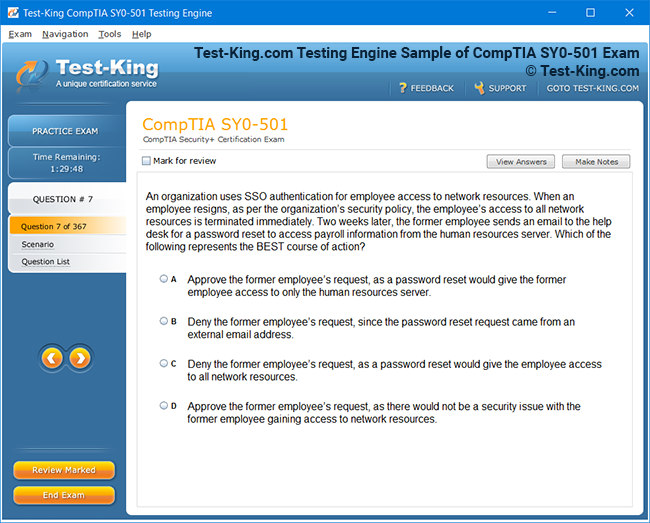
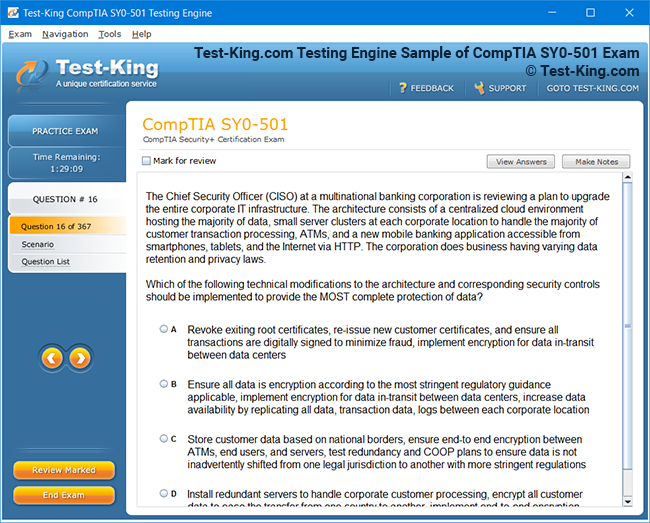
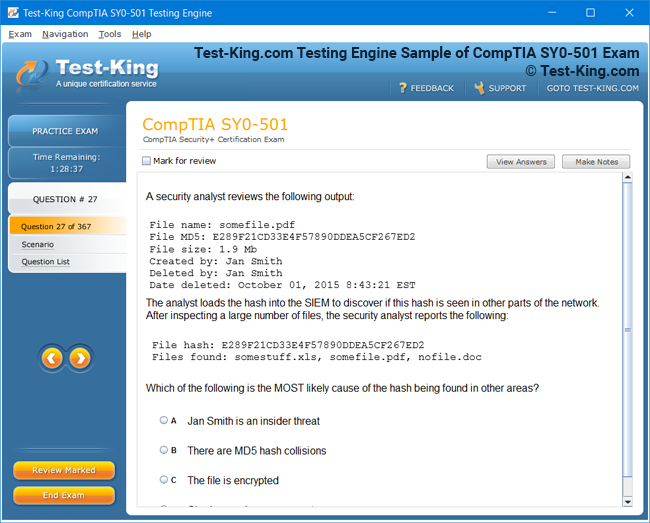
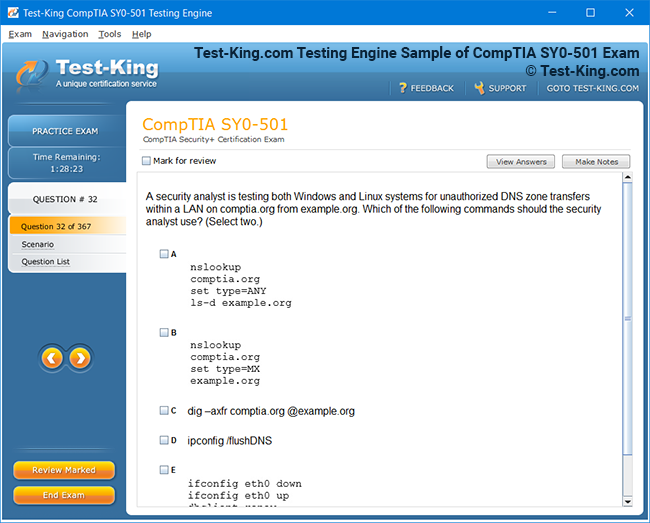
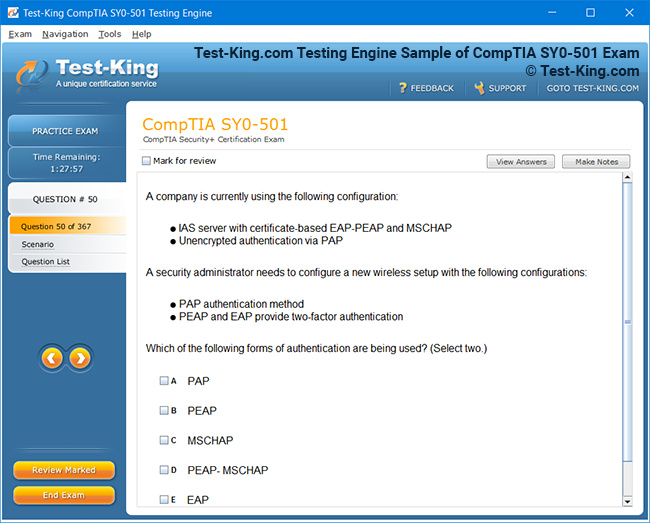
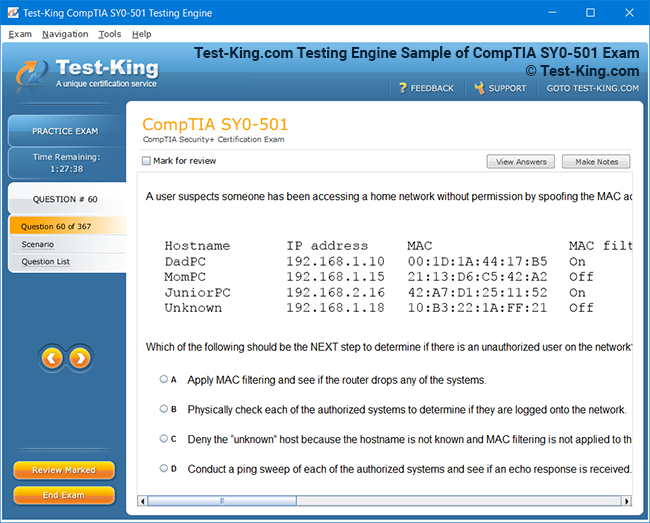
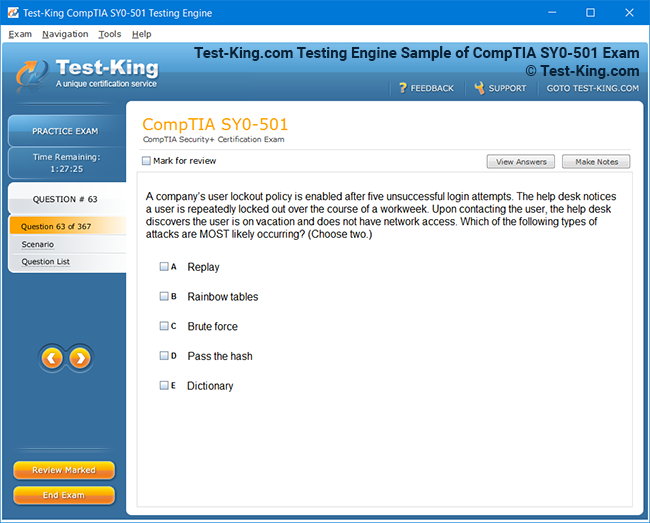
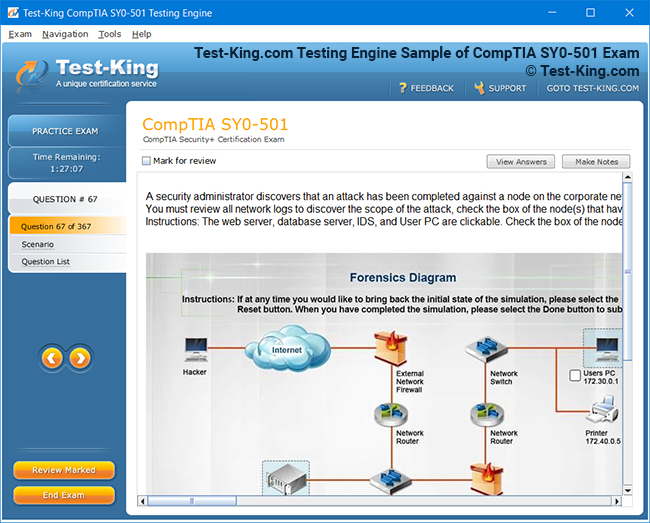
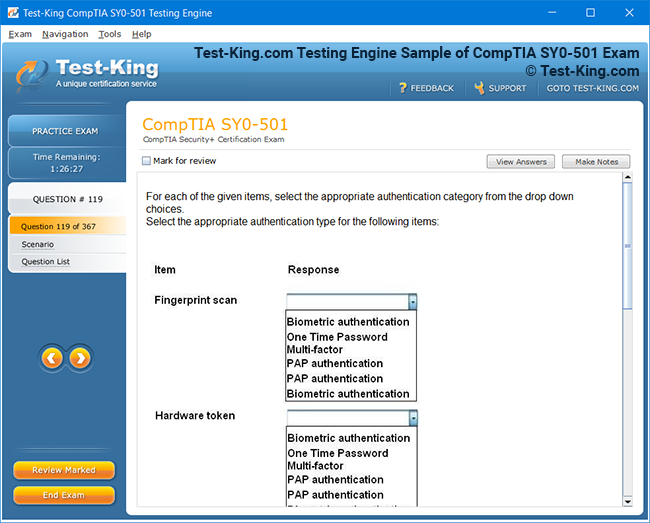
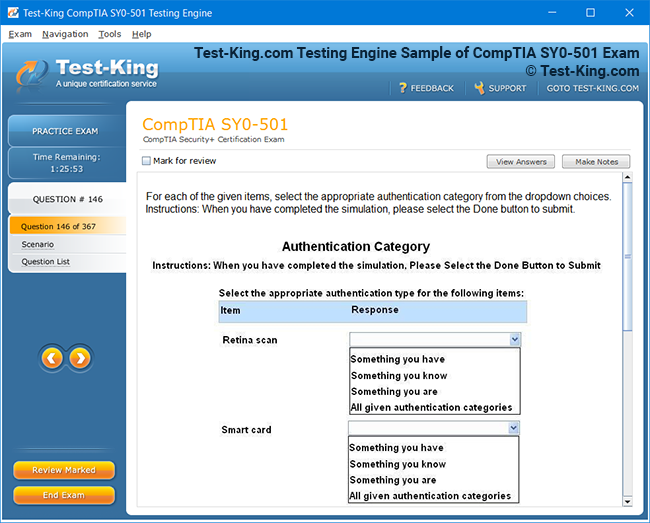
Product Screenshots
Frequently Asked Questions
How can I get the products after purchase?
All products are available for download immediately from your Member's Area. Once you have made the payment, you will be transferred to Member's Area where you can login and download the products you have purchased to your computer.
How long can I use my product? Will it be valid forever?
Test-King products have a validity of 90 days from the date of purchase. This means that any updates to the products, including but not limited to new questions, or updates and changes by our editing team, will be automatically downloaded on to computer to make sure that you get latest exam prep materials during those 90 days.
Can I renew my product if when it's expired?
Yes, when the 90 days of your product validity are over, you have the option of renewing your expired products with a 30% discount. This can be done in your Member's Area.
Please note that you will not be able to use the product after it has expired if you don't renew it.
How often are the questions updated?
We always try to provide the latest pool of questions, Updates in the questions depend on the changes in actual pool of questions by different vendors. As soon as we know about the change in the exam question pool we try our best to update the products as fast as possible.
How many computers I can download Test-King software on?
You can download the Test-King products on the maximum number of 2 (two) computers or devices. If you need to use the software on more than two machines, you can purchase this option separately. Please email support@test-king.com if you need to use more than 5 (five) computers.
What is a PDF Version?
PDF Version is a pdf document of Questions & Answers product. The document file has standart .pdf format, which can be easily read by any pdf reader application like Adobe Acrobat Reader, Foxit Reader, OpenOffice, Google Docs and many others.
Can I purchase PDF Version without the Testing Engine?
PDF Version cannot be purchased separately. It is only available as an add-on to main Question & Answer Testing Engine product.
What operating systems are supported by your Testing Engine software?
Our testing engine is supported by Windows. Andriod and IOS software is currently under development.
Top Genesys Exams
- GCP-GCX - Genesys Cloud CX Certified Professional - Consolidated
- GCX-GCD - Genesys Cloud CX: Developer
- GCP-GC-ARC - Genesys Cloud Architect Certified Specialist
- GC-AI-DB - Genesys Cloud: AI - Digital Bots & Knowledge
- GCP-GC-ADM - Genesys Cloud Certified Professional - Contact Center Admin
- GCP-GC-IMP - Genesys Cloud Certified Professional - Implementation
- GCP-GC-REP - Genesys Cloud Certified Professional - Reporting and Analytics
- GCX-ARC - Genesys Cloud CX: Architect
- GCX-WFM - Genesys Cloud CX: WEM - Workforce Management Certified Specialist
Exam Blueprint Breakdown: GE0-803 Topics and Weightage Explained
The GE0-803 exam, also known as the GCP8-System Consultant Voice Platform assessment, is designed to validate the skills of professionals working with Genesys voice technologies. Candidates are expected to demonstrate proficiency in designing, configuring, and implementing voice solutions that integrate seamlessly with customer interaction channels. This examination is not merely a theoretical evaluation but also a reflection of real-world application, emphasizing practical knowledge alongside conceptual understanding. Individuals pursuing this certification are often tasked with deploying voice platforms in environments that demand scalability, reliability, and adaptability to diverse business requirements. The exam challenges candidates to exhibit a holistic comprehension of both the technical and operational aspects of voice systems within the Genesys ecosystem.
Overview of the Genesys GCP8-System Consultant Voice Platform Exam
The primary focus areas of the GE0-803 exam revolve around system architecture, solution design, configuration management, troubleshooting, and operational efficiency. Candidates must understand the intricacies of voice routing, telephony protocols, network requirements, and the integration of Genesys solutions with complementary platforms. A successful candidate demonstrates not only technical mastery but also the ability to anticipate operational challenges, optimize performance, and deliver a robust, user-centric voice solution.
Core Concepts and System Architecture
Understanding the architecture of the Genesys voice platform is fundamental for the GE0-803 exam. The system architecture encompasses components such as media servers, telephony interfaces, interaction routing engines, and reporting modules. Media servers handle the real-time processing of voice interactions, ensuring clarity and minimal latency. Telephony interfaces connect the platform to various Public Switched Telephone Network (PSTN) configurations or Voice over Internet Protocol (VoIP) systems. Interaction routing engines are responsible for intelligently directing calls based on business rules, agent availability, and customer context.
A critical part of system architecture knowledge includes recognizing the interdependencies between hardware, software, and network infrastructure. Candidates must appreciate the necessity of redundancy, fault tolerance, and load balancing to prevent service disruption. Additionally, understanding how these elements contribute to scalability is essential, especially in organizations that experience fluctuating call volumes or seasonal spikes in interactions. The capacity to design a resilient architecture, capable of maintaining high availability even under stress, is a central competency evaluated in the exam.
Solution Design Principles
Effective solution design requires a synthesis of technical knowledge and business acumen. The GE0-803 examination expects candidates to translate business requirements into scalable voice solutions. This involves selecting appropriate components, configuring call flows, and integrating third-party applications to enhance functionality. Solution design also includes anticipating operational challenges, such as system latency, security vulnerabilities, and compliance with regulatory standards governing voice communications.
A candidate might be asked to design a system that accommodates multiple geographic locations, supports multiple languages, or integrates with Customer Relationship Management platforms. Such designs necessitate careful planning of network bandwidth, codec selection, and protocol compatibility. By adhering to solution design principles, system consultants can ensure that voice platforms deliver seamless customer experiences, maintain high levels of reliability, and offer flexibility for future enhancements.
Voice Routing and Interaction Management
Routing of voice interactions is a core component of the GCP8-System Consultant role. Candidates must demonstrate expertise in configuring routing strategies that prioritize efficiency, reduce wait times, and match customers with the most suitable agents. Interaction management encompasses defining skill groups, service levels, and routing algorithms that respond dynamically to changing workloads.
Genesys routing engines allow for sophisticated configurations, including priority-based routing, time-of-day routing, and context-aware routing that considers customer history. System consultants must understand how to leverage these capabilities to optimize the flow of interactions. Additionally, knowledge of Interactive Voice Response systems, call queuing mechanisms, and escalation protocols is essential. Mastery of these concepts ensures that the voice platform supports both operational goals and superior customer satisfaction.
Configuration and Deployment Best Practices
The configuration of a Genesys voice platform extends beyond simple parameter adjustments. It requires a structured approach that integrates system settings, telephony interfaces, and user permissions. Candidates need to demonstrate the ability to configure voice components in accordance with best practices, ensuring security, maintainability, and performance optimization.
Deployment considerations include creating environment-specific configurations, conducting pre-deployment testing, and validating system performance under load. Knowledge of version control, change management processes, and documentation standards is crucial. By adhering to these practices, consultants reduce the risk of configuration errors, enhance maintainability, and provide clear guidance for ongoing system administration.
Troubleshooting and Issue Resolution
Problem-solving and troubleshooting are essential skills evaluated in the GE0-803 exam. Candidates are expected to identify, diagnose, and resolve issues that may arise during the operation of the voice platform. Common challenges include call quality degradation, misrouted interactions, system latency, and integration failures.
Effective troubleshooting begins with systematic analysis. Consultants are trained to examine logs, monitor performance metrics, and utilize diagnostic tools to pinpoint the root cause of issues. For example, identifying packet loss in a VoIP deployment requires understanding network traffic patterns, codec configurations, and hardware performance. Similarly, resolving misrouted calls may involve auditing routing scripts, reviewing skill group definitions, and validating IVR configurations. The ability to resolve issues promptly minimizes customer impact and maintains the integrity of the platform.
Operational Efficiency and Monitoring
Maintaining operational efficiency is an ongoing responsibility for system consultants. Monitoring tools and analytics provide insights into call volumes, agent performance, and system health. By analyzing this data, consultants can implement proactive measures to optimize workflows, balance workloads, and predict potential bottlenecks.
Operational efficiency also involves understanding capacity planning, resource allocation, and redundancy strategies. Consultants are expected to anticipate periods of high activity, ensure sufficient bandwidth, and configure failover mechanisms to maintain service continuity. Regular audits and performance reviews help identify areas for improvement, allowing organizations to fine-tune their voice platforms for maximum reliability and customer satisfaction.
Security Considerations and Compliance
The security of voice platforms is a critical concern in modern contact centers. Candidates must be well-versed in authentication protocols, encryption methods, and access control policies. Ensuring compliance with industry regulations, such as data protection laws and telecommunication standards, is equally important.
Genesys solutions provide mechanisms for secure data transmission, call recording protection, and role-based access. System consultants must configure these mechanisms correctly to prevent unauthorized access and ensure that sensitive customer information remains protected. Knowledge of compliance requirements, including privacy legislation and organizational policies, is essential to deliver secure, legally compliant voice solutions.
Integration with Complementary Systems
Voice platforms rarely operate in isolation. Integration with Customer Relationship Management systems, workforce management tools, and analytics platforms is a key competency assessed in the GE0-803 exam. Consultants must understand how to configure APIs, establish data flows, and synchronize information across systems.
Effective integration ensures that agents have access to relevant customer data in real-time, enhancing service quality and operational efficiency. It also allows organizations to generate comprehensive reports, analyze trends, and make informed decisions about staffing, call routing, and process improvements. Candidates who master integration techniques are well-positioned to deliver value beyond basic voice functionalities.
Emerging Trends and Advanced Capabilities
The voice platform landscape is evolving rapidly, with emerging technologies shaping the capabilities expected of a system consultant. Candidates are encouraged to explore innovations such as artificial intelligence-driven interactions, natural language processing, and omnichannel integration. Understanding these trends enables consultants to design forward-looking solutions that remain relevant as customer expectations evolve.
Advanced capabilities, such as predictive routing, sentiment analysis, and intelligent call distribution, require a blend of technical knowledge and strategic thinking. By integrating these functionalities, consultants can enhance both the efficiency of operations and the quality of customer experiences. Staying abreast of these developments ensures that voice platforms continue to meet organizational goals in a competitive landscape.
Detailed Examination of Voice Platform Components and Functionality
The GE0-803 exam, associated with the GCP8-System Consultant Voice Platform, requires candidates to demonstrate an in-depth understanding of the components that constitute a fully functional voice platform within the Genesys ecosystem. At its core, the voice platform is a complex orchestration of media servers, telephony interfaces, routing engines, and integration modules, each contributing to seamless interaction handling. Candidates are expected to recognize not only the individual functionalities of these components but also the intricate interplay between them. Understanding this interrelation is essential for designing, deploying, and troubleshooting solutions that deliver both reliability and performance.
Media servers form the heart of the voice platform, managing real-time voice processing with minimal latency. They handle audio encoding, decoding, and session management, ensuring the clarity of interactions even under substantial load. A thorough comprehension of media server capabilities, including redundancy mechanisms and fault tolerance strategies, is crucial for ensuring uninterrupted service. Telephony interfaces, whether connected to traditional PSTN circuits or modern VoIP gateways, enable the platform to interact with external networks. Candidates must understand signaling protocols, codec selection, and network topologies to ensure seamless integration and optimal call quality.
Interaction Routing and Intelligent Call Management
Interaction routing represents a pivotal competency within the GE0-803 exam blueprint. Candidates are expected to design routing strategies that efficiently direct calls based on skill sets, service level objectives, and real-time operational metrics. The voice platform's routing engine allows the implementation of sophisticated algorithms that dynamically adjust to changing workloads and customer priorities. Understanding time-based routing, priority routing, and context-aware routing is essential for ensuring interactions are handled efficiently while maintaining high levels of customer satisfaction.
Interactive Voice Response systems play a significant role in guiding customers through preliminary options before reaching agents. Candidates should be adept at configuring IVR prompts, designing decision trees, and integrating data retrieval mechanisms to provide a smooth, automated first-contact experience. Properly configured IVR systems not only reduce agent load but also enhance operational efficiency by resolving straightforward inquiries without human intervention. Additionally, knowledge of call escalation mechanisms and fallback strategies is essential to maintain service quality in unexpected scenarios.
Configuration Management and Deployment Strategies
Effective configuration management is fundamental for the success of any voice platform implementation. Candidates for the GE0-803 exam must understand how to establish and maintain configurations that align with operational requirements and industry best practices. This involves setting up system parameters, user roles, and access controls in a manner that promotes security, maintainability, and performance optimization. Proper configuration ensures that the platform operates consistently across environments and facilitates troubleshooting when issues arise.
Deployment strategies require careful planning and execution. System consultants are expected to prepare pre-deployment environments, conduct rigorous testing, and validate performance under simulated load conditions. Considerations such as bandwidth allocation, failover configurations, and version compatibility must be addressed to prevent service disruption. A methodical approach to deployment ensures a smooth transition from development to production, minimizing downtime and providing end users with a reliable communication platform.
Troubleshooting and Diagnostic Techniques
The ability to diagnose and resolve issues is a hallmark of proficiency in the GCP8-System Consultant role. Candidates must demonstrate systematic problem-solving skills to address common challenges such as call quality degradation, routing anomalies, and integration failures. Effective troubleshooting involves analyzing system logs, monitoring performance metrics, and applying diagnostic tools to isolate the root cause of problems.
For instance, addressing audio distortion in a VoIP deployment requires examining network latency, packet loss, and codec configurations. Misrouted interactions may indicate errors in skill group definitions, IVR scripts, or routing rules. Understanding these interdependencies allows consultants to implement corrective measures efficiently, restoring optimal platform functionality and minimizing the impact on business operations. This practical knowledge is tested extensively in the GE0-803 examination, reflecting real-world demands of system consultancy.
Security Protocols and Regulatory Compliance
Ensuring the security of voice platforms is increasingly critical in modern contact centers. Candidates are expected to implement robust authentication, encryption, and access control mechanisms to safeguard sensitive communication data. Knowledge of regulatory requirements, such as data protection laws and telecommunication compliance standards, is essential to guarantee that voice interactions are both secure and legally compliant.
Role-based access control, secure transmission protocols, and encrypted call recording are common practices that candidates must configure correctly. Additionally, understanding organizational security policies and industry-specific compliance frameworks enables consultants to design voice solutions that mitigate risks, prevent unauthorized access, and maintain operational integrity. The GE0-803 exam evaluates candidates on their ability to apply these practices in real-world scenarios, ensuring that security considerations are not overlooked in system design and deployment.
Integration with Business Applications
Voice platforms operate most effectively when integrated with complementary business systems. Candidates must be proficient in linking the platform to Customer Relationship Management tools, workforce management software, and analytics platforms. Proper integration ensures that agents have access to relevant customer data, enabling personalized service and efficient interaction handling.
Integration involves establishing API connections, synchronizing data flows, and validating the accuracy and timeliness of shared information. Successful integration enhances reporting capabilities, supports data-driven decision-making, and optimizes operational workflows. Understanding the nuances of system interoperability, data exchange protocols, and integration troubleshooting is essential for delivering cohesive, high-functioning voice solutions that meet organizational goals.
Advanced Voice Platform Features and Innovation
Emerging technologies continue to redefine the expectations placed on system consultants. Candidates are encouraged to explore advanced capabilities, such as artificial intelligence-assisted routing, sentiment analysis, and omnichannel customer engagement. These innovations enhance the efficiency and responsiveness of voice platforms while providing insights that inform strategic decision-making.
Predictive routing allows the system to anticipate customer needs and direct interactions to the most suitable agent. AI-driven analytics can identify patterns in customer behavior, optimize staffing levels, and reduce wait times. Integration with omnichannel platforms ensures a unified view of customer interactions, enabling seamless transitions between voice, chat, and other communication channels. Mastery of these capabilities demonstrates a forward-thinking approach to system consultancy, reflecting the evolving landscape of customer experience management.
Performance Monitoring and Capacity Planning
Operational efficiency relies heavily on continuous performance monitoring. Candidates must be adept at interpreting system metrics, analyzing call volumes, and evaluating agent performance to maintain optimal functionality. Monitoring tools provide insights that enable proactive adjustments to workload distribution, network utilization, and resource allocation.
Capacity planning is a critical component of long-term operational strategy. Consultants must forecast interaction volumes, anticipate peak periods, and configure systems to accommodate variable workloads. Implementing redundancy measures, load balancing, and failover mechanisms ensures high availability and prevents service interruptions. A proactive approach to monitoring and capacity management allows organizations to sustain high levels of customer satisfaction and operational resilience.
Common Challenges and Practical Solutions
Candidates preparing for the GE0-803 examination must be familiar with typical challenges encountered in voice platform implementations. These include managing call spikes, resolving integration conflicts, maintaining call quality, and adapting to evolving business requirements. Understanding the root causes of these issues and applying practical solutions is a critical competency for system consultants.
For example, call spikes can be mitigated by implementing dynamic routing rules, expanding capacity through cloud-based resources, or adjusting agent schedules. Integration conflicts may require API adjustments, data validation, or reconfiguration of business applications. Maintaining high call quality involves ongoing monitoring of network performance, codec selection, and infrastructure optimization. System consultants must be able to address these challenges efficiently to ensure consistent, high-quality service delivery.
Advanced Configuration and Operational Strategies for Genesys Voice Platforms
The GE0-803 exam, focused on the GCP8-System Consultant Voice Platform, evaluates candidates on their ability to configure, optimize, and maintain sophisticated voice solutions within the Genesys ecosystem. Mastery of advanced configuration practices is critical, as the voice platform operates as a dynamic environment where every parameter and module contributes to seamless customer interaction. Candidates are expected to demonstrate proficiency in creating configurations that are both resilient and adaptable, supporting business objectives while mitigating potential operational risks.
System configuration in the context of the voice platform encompasses numerous components, including media servers, telephony gateways, call routing engines, and user management frameworks. Each element requires careful adjustment to align with organizational workflows, service level agreements, and anticipated interaction patterns. Consultants must apply principles that ensure scalability, maintainability, and security, all while maintaining operational efficiency. Advanced configuration techniques involve not just initial setup but ongoing adaptation to evolving business requirements, peak interaction periods, and technology updates.
Media Server Management and Optimization
Media servers form the central backbone of voice operations, responsible for encoding, decoding, and transporting audio streams with minimal latency. Candidates must be adept at configuring media server parameters to optimize performance under varied conditions, such as fluctuating call volumes or multi-location deployments. Key considerations include redundancy configurations, load distribution, and fault tolerance strategies, which ensure continuous availability even in the event of hardware or network anomalies.
Monitoring and tuning media servers requires a deep understanding of audio codecs, session management, and network protocol behavior. Consultants are expected to analyze metrics such as packet loss, jitter, and latency, and implement corrective measures to maintain superior call quality. Advanced optimization may also involve integrating media servers with cloud infrastructure to enhance scalability and provide geographic redundancy. Mastery of these practices ensures that voice interactions remain clear, uninterrupted, and responsive under all operational scenarios.
Telephony Interface Configuration and Network Considerations
The telephony interface is the bridge connecting the Genesys voice platform to external communication networks, whether traditional PSTN lines or modern VoIP systems. Successful candidates demonstrate proficiency in configuring signaling protocols, call routing pathways, and network topologies to maximize performance and reliability. Understanding the interplay between network infrastructure and telephony interfaces is essential for mitigating common issues such as call drops, audio distortion, or delayed signaling.
Consultants must consider network bandwidth allocation, codec compatibility, and quality of service parameters when designing telephony interfaces. Redundant connections and failover strategies provide resilience against unexpected outages, while careful monitoring ensures early detection of network congestion or configuration anomalies. The ability to design and maintain robust telephony integrations is a critical skill evaluated in the GE0-803 exam, reflecting the real-world requirements of large-scale voice platform deployments.
Intelligent Call Routing and Skill-Based Distribution
Interaction routing remains a central pillar of operational efficiency within the voice platform. Candidates must demonstrate the ability to implement intelligent routing mechanisms that match customer interactions with agents possessing the appropriate skills and availability. The voice platform enables sophisticated routing logic, including time-based distribution, priority handling, and context-aware decisions informed by customer history or interaction type.
Skill-based routing involves the creation of agent profiles, service level objectives, and routing hierarchies that ensure each interaction reaches the most qualified representative. Dynamic adjustments to routing logic based on real-time metrics, such as queue length or agent occupancy, enhance operational responsiveness. Consultants must also be able to configure escalation protocols and fallback procedures to address high-load situations or unanticipated call patterns, ensuring consistent service quality across all scenarios.
Interactive Voice Response Design and Optimization
Interactive Voice Response systems are integral to guiding customers through initial contact pathways before reaching live agents. Effective IVR design reduces agent workload, enhances self-service capabilities, and improves the overall customer experience. Candidates are expected to demonstrate the ability to create IVR scripts, design decision trees, and integrate database queries to provide relevant information during automated interactions.
Optimization of IVR systems involves balancing automation with user experience, ensuring that prompts are concise, logically sequenced, and accessible to diverse customer populations. Consultants must be able to troubleshoot IVR failures, misdirected calls, or latency issues, employing systematic diagnostic methods to restore functionality. Understanding the nuances of IVR integration with routing engines, call queues, and external data sources is essential for delivering an efficient, high-performing voice solution.
System Monitoring and Performance Analytics
Operational excellence requires continuous monitoring and analysis of platform performance. Candidates must be adept at utilizing monitoring tools to track call volumes, agent activity, system health, and network performance. This information enables proactive adjustments to workloads, identification of bottlenecks, and prediction of resource requirements.
Performance analytics provides insights into interaction trends, agent efficiency, and customer behavior, informing strategic decisions regarding staffing, routing rules, and platform enhancements. Consultants are expected to interpret these metrics accurately, identify anomalies, and implement corrective measures to optimize service delivery. Knowledge of performance monitoring extends to capacity planning, where consultants forecast peak periods and configure systems to accommodate variable interaction loads without compromising quality.
Troubleshooting Complex Operational Challenges
The ability to identify and resolve issues rapidly is a hallmark of the GCP8-System Consultant role. Candidates must be capable of diagnosing complex problems, ranging from call quality degradation to routing misconfigurations and integration failures. Troubleshooting requires a systematic approach, combining log analysis, performance monitoring, and scenario replication to isolate root causes.
For example, resolving intermittent audio distortion may involve examining network latency, codec mismatches, or server load imbalances. Addressing misrouted calls could require auditing routing rules, validating agent skill sets, or adjusting IVR scripts. Consultants must develop practical solutions that restore functionality while minimizing disruption to business operations. The exam assesses not only theoretical knowledge but also the candidate's ability to apply problem-solving skills to real-world operational scenarios.
Security Architecture and Compliance Implementation
Voice platforms handle sensitive customer data, making security and regulatory compliance paramount. Candidates are expected to configure robust security measures, including authentication protocols, role-based access controls, and encryption of both signaling and media streams. Awareness of relevant regulations, such as data protection laws and telecommunication standards, is essential for maintaining compliance.
Consultants must integrate security measures into platform configurations without compromising performance. This includes ensuring that encrypted communications do not introduce latency, access control policies do not restrict operational flexibility, and logging mechanisms provide both accountability and traceability. Effective security implementation protects customer information, maintains organizational integrity, and demonstrates adherence to industry best practices, which is a critical aspect of the GE0-803 examination.
Integration with Enterprise Applications
A functional voice platform requires seamless integration with enterprise applications such as Customer Relationship Management systems, workforce management tools, and analytics software. Candidates must demonstrate the ability to establish these integrations, ensuring real-time access to customer data, synchronized workflows, and accurate reporting.
Integration strategies may involve configuring APIs, mapping data fields, and validating synchronization processes. Properly integrated systems enhance agent efficiency, improve reporting accuracy, and enable data-driven decision-making. Consultants must also troubleshoot integration errors, ensuring that data flows remain consistent and reliable across platforms. Mastery of these integrations reflects the candidate's capacity to deliver holistic voice solutions that extend beyond basic telephony functionality.
Emerging Technologies and Intelligent Features
The evolution of voice platforms has introduced advanced capabilities that leverage artificial intelligence, predictive analytics, and omnichannel engagement. Candidates are encouraged to explore these innovations, including intelligent call distribution, sentiment analysis, and automated workflow recommendations. Such capabilities enhance both operational efficiency and customer experience.
AI-driven routing, for example, can predict customer needs and direct interactions to the most suitable agent, while sentiment analysis provides insights into caller emotions, informing escalation and response strategies. Integration with omnichannel platforms ensures consistent customer experiences across voice, chat, and other communication channels. Candidates must be capable of configuring, monitoring, and troubleshooting these advanced features, demonstrating a forward-looking approach to system consultancy.
Operational Resilience and Redundancy Planning
Ensuring uninterrupted service is a fundamental responsibility of system consultants. Candidates must be proficient in designing redundancy and failover mechanisms, implementing load balancing strategies, and conducting disaster recovery planning. These measures protect the voice platform from unexpected outages, hardware failures, or network disruptions.
Redundancy planning may involve multiple media servers, geographically distributed telephony interfaces, and automated failover configurations. Load balancing ensures equitable distribution of interactions across available resources, maintaining performance during peak periods. Disaster recovery strategies provide a roadmap for restoring service quickly and effectively in the event of catastrophic failure. Mastery of operational resilience principles ensures that the voice platform continues to function reliably under all circumstances.
Comprehensive Insights into Voice Platform Design and Operational Excellence
The GE0-803 exam, associated with the GCP8-System Consultant Voice Platform, requires candidates to demonstrate mastery over designing, configuring, and optimizing complex voice solutions within the Genesys ecosystem. A critical focus is the ability to translate organizational requirements into resilient, high-performing voice systems that deliver consistent customer experiences. Candidates are evaluated on both conceptual understanding and practical application, reflecting real-world challenges that system consultants face in dynamic operational environments.
At the core of the voice platform is a combination of interdependent modules including media servers, telephony interfaces, routing engines, and integration layers. Media servers facilitate audio processing, ensuring clarity and low latency, while telephony interfaces connect the platform to PSTN or VoIP networks. Routing engines direct interactions intelligently based on agent skills, availability, and business rules, and integration layers synchronize the voice platform with enterprise applications to enhance functionality. Understanding the orchestration of these components is essential for achieving operational excellence.
Advanced Media Server Configuration and Monitoring
Media servers serve as the fulcrum of voice processing operations. Candidates must demonstrate the ability to configure these servers for optimal performance, including adjustments for audio codec selection, session management, and real-time processing efficiency. Redundancy mechanisms and failover configurations are essential considerations to maintain uninterrupted service, particularly during high call volumes or network fluctuations.
Monitoring media server performance involves analyzing latency, jitter, and packet loss metrics to identify potential bottlenecks or quality degradation. Consultants are expected to implement corrective measures, such as adjusting load balancing or optimizing network paths, to maintain a seamless communication experience. Advanced understanding of cloud-based media server deployment is also relevant, allowing scalability and geographic redundancy that ensures continuous availability across distributed environments.
Telephony Integration and Network Architecture
Telephony interfaces are vital in bridging the voice platform with external networks. Candidates must understand signaling protocols, call routing, and network topologies to design reliable and efficient integrations. PSTN and VoIP configurations require careful planning of bandwidth, codec compatibility, and quality of service parameters to ensure uninterrupted and high-quality communication.
Network architecture considerations include redundancy, load distribution, and failover planning. A well-designed network minimizes the risk of call drops, latency, and congestion-related quality issues. Consultants must also address security considerations within network design, including encryption and access control, to protect sensitive customer information while maintaining operational efficiency. These competencies are assessed in the GE0-803 exam through scenarios that simulate real-world deployment challenges.
Interaction Routing and Skill-Based Call Distribution
Routing interactions effectively is a cornerstone of operational efficiency in voice platforms. Candidates must configure routing engines to distribute calls based on agent skills, availability, and priority levels. Advanced routing techniques include time-of-day rules, overflow handling, and context-aware decision-making based on customer history or interaction type.
Skill-based distribution ensures that calls reach the most appropriate agent, improving first-contact resolution rates and overall customer satisfaction. Consultants must also implement escalation procedures and fallback mechanisms to handle peak loads or unexpected system conditions. Mastery of routing logic enables organizations to optimize agent utilization, balance workloads, and maintain high levels of service performance under varying conditions.
Interactive Voice Response Design and Optimization
The Interactive Voice Response system is an essential component for automating initial customer interactions. Candidates are expected to design IVR menus, decision trees, and data retrieval scripts that guide callers efficiently while minimizing frustration. Effective IVR design reduces agent workload and enhances self-service capabilities, improving operational efficiency.
Optimization of IVR systems involves ensuring concise prompts, logical navigation, and accessibility for diverse customer populations. Consultants must also be able to troubleshoot misrouted interactions, latency issues, and integration errors between IVR systems and routing engines. A well-designed IVR complements routing strategies, creating a cohesive and responsive voice platform that enhances the customer experience.
Configuration Management and Operational Best Practices
Advanced configuration management is critical to ensure the stability, security, and maintainability of the voice platform. Candidates must demonstrate proficiency in setting system parameters, user roles, permissions, and operational policies. Proper configuration ensures consistent performance across environments, facilitates troubleshooting, and supports future scalability.
Operational best practices include environment-specific configuration, version control, and rigorous testing prior to deployment. Consultants are expected to validate system performance under simulated loads and document configurations for ongoing maintenance. Adherence to structured configuration practices minimizes the likelihood of errors, supports operational resilience, and ensures compliance with organizational and regulatory standards.
Troubleshooting Complex Platform Challenges
Problem-solving is a core competency for system consultants, requiring the ability to address issues such as call quality degradation, routing anomalies, and integration failures. Effective troubleshooting involves systematic analysis of logs, performance metrics, and operational workflows to identify root causes.
For example, resolving intermittent call distortion may involve examining network latency, server load, and codec configurations, while misrouted interactions may require auditing skill groups, routing rules, and IVR scripts. Consultants must implement practical solutions that restore platform functionality and minimize business disruption. The GE0-803 exam evaluates candidates’ ability to apply these diagnostic techniques under scenarios that replicate real-world operational complexity.
Security Implementation and Compliance Adherence
Voice platforms handle sensitive customer information, making security and compliance paramount. Candidates are expected to configure authentication protocols, access controls, and encryption mechanisms to protect communications. Understanding regulatory requirements, such as privacy legislation and industry standards, ensures that systems meet compliance obligations.
Consultants must integrate security measures without impairing performance, balancing protection with operational efficiency. This includes encrypted transmission, secure call recording, and role-based access control. Proper documentation and audit procedures further reinforce compliance, enabling organizations to demonstrate adherence to legal and regulatory mandates while safeguarding customer data.
Integration with Enterprise Systems and Analytics
Effective voice platforms operate in conjunction with broader enterprise systems, including Customer Relationship Management software, workforce management tools, and analytics platforms. Candidates must be capable of integrating these systems to enable real-time data access, streamline workflows, and enhance reporting capabilities.
Integration requires configuration of APIs, data synchronization, and validation of information flows. A well-integrated environment allows agents to access relevant customer information promptly, enhancing service quality and operational efficiency. Consultants must also resolve integration issues to maintain data integrity and ensure consistent functionality across interconnected platforms.
Advanced Functionalities and AI Integration
Emerging technologies have introduced advanced capabilities within voice platforms, including artificial intelligence, predictive analytics, and omnichannel integration. Candidates are encouraged to explore these innovations to enhance operational efficiency and elevate customer experiences.
AI-assisted routing predicts customer needs and directs interactions to the most suitable agents, while sentiment analysis provides insights into customer emotions and informs escalation strategies. Omnichannel integration ensures seamless transitions between voice, chat, and other channels, maintaining a unified customer experience. System consultants must configure, monitor, and troubleshoot these advanced features to deliver sophisticated, future-proof voice solutions.
Performance Optimization and Capacity Planning
Ensuring optimal performance requires continuous monitoring and proactive capacity planning. Candidates must analyze system metrics such as call volumes, agent activity, and server performance to identify potential bottlenecks or inefficiencies. By leveraging these insights, consultants can adjust workloads, optimize routing logic, and reallocate resources to maintain smooth operations.
Capacity planning involves forecasting interaction volumes, anticipating peak periods, and configuring redundancy and failover mechanisms. Consultants must implement load balancing strategies and maintain high availability to support uninterrupted service. Operational resilience and efficiency depend on these practices, enabling organizations to consistently meet service level objectives and deliver superior customer experiences.
Operational Challenges and Strategic Solutions
Candidates are expected to address recurring challenges encountered in voice platform management. Common issues include call spikes, integration conflicts, routing anomalies, and system performance degradation. Understanding these challenges and implementing effective solutions is critical for maintaining high-quality service.
Call spikes can be mitigated through dynamic routing, cloud-based scalability, and optimized agent scheduling. Integration conflicts may require API adjustments, data validation, or configuration modifications. Maintaining consistent call quality involves monitoring network performance, adjusting server parameters, and ensuring redundancy. Consultants must approach each challenge with strategic, evidence-based solutions to uphold operational integrity and enhance user experience.
In-Depth Analysis of Operational Excellence and Voice Platform Management
The GE0-803 exam, centered on the GCP8-System Consultant Voice Platform, evaluates a candidate's ability to configure, deploy, and maintain sophisticated voice solutions that support enterprise communication needs. This exam emphasizes both theoretical knowledge and practical expertise, testing how effectively candidates can design, implement, and optimize voice platforms to meet business objectives. Mastery in this domain requires an understanding of system components, routing strategies, security protocols, integration mechanisms, and performance monitoring techniques.
At the foundation of a robust voice platform are media servers, telephony interfaces, routing engines, and integration layers. Media servers process voice streams in real-time, ensuring clarity and minimizing latency, while telephony interfaces provide connectivity to PSTN or VoIP networks. Routing engines intelligently direct interactions to the most suitable agents based on skills, availability, and contextual data. Integration layers allow synchronization with Customer Relationship Management systems, workforce management tools, and analytics platforms, ensuring cohesive operations and enhanced agent productivity. Knowledge of how these components interact is essential to achieving operational excellence in a Genesys environment.
Media Server Performance and Scalability
Media servers form the nucleus of voice processing infrastructure. Candidates are expected to configure and monitor these servers to achieve peak performance and resilience. Advanced considerations include session management, codec selection, and handling simultaneous call volumes. Redundancy, failover strategies, and geographic distribution are critical to maintaining uninterrupted service during hardware failures or network disruptions.
Performance monitoring requires attention to metrics such as jitter, latency, and packet loss. Consultants must be able to implement corrective measures, including load redistribution, server tuning, and network optimization. Cloud-based deployment of media servers provides additional flexibility, allowing systems to scale dynamically in response to increased interaction loads while ensuring consistent call quality across multiple locations. Mastery of these concepts is essential for the GE0-803 examination, reflecting real-world operational demands.
Telephony Interfaces and Network Reliability
Telephony interfaces are the conduit through which the voice platform communicates with external networks. Candidates must demonstrate proficiency in configuring signaling protocols, call routing, and network topologies. Ensuring compatibility with PSTN and VoIP systems, as well as optimizing bandwidth allocation, are fundamental skills required for high-performing voice deployments.
Network reliability is achieved through redundancy, load balancing, and failover mechanisms. By designing resilient network pathways and maintaining quality of service parameters, system consultants can prevent call drops, minimize latency, and sustain superior audio quality. Security considerations, including encryption and access control, must also be addressed to safeguard sensitive communications while preserving operational efficiency. These competencies are critical for maintaining enterprise-grade voice platform performance.
Interaction Routing and Dynamic Call Distribution
Routing interactions effectively is essential for operational efficiency and customer satisfaction. Candidates are required to configure routing engines to direct calls based on agent skills, availability, priority levels, and historical interaction data. Advanced routing techniques include time-of-day rules, overflow handling, and context-sensitive routing that adapts to real-time operational metrics.
Skill-based routing ensures that interactions reach the most qualified agents, enhancing first-contact resolution and overall service quality. Escalation paths and fallback procedures must be defined to handle peak load conditions or unexpected system behaviors. Proficiency in designing and maintaining dynamic routing rules is a core competency tested in the GE0-803 exam, reflecting the demands of managing high-volume, mission-critical contact centers.
Interactive Voice Response Design and Troubleshooting
Interactive Voice Response systems streamline initial customer interactions by guiding callers through menus, prompts, and automated processes. Candidates are expected to design IVR flows that provide clear navigation, efficient self-service options, and integration with back-end databases to deliver relevant information. Optimized IVR design reduces agent workload, shortens interaction times, and enhances the overall customer experience.
Troubleshooting IVR issues involves identifying misrouted calls, prompt sequencing errors, and integration failures with routing engines or databases. Consultants must systematically analyze these problems and implement corrective measures that restore functionality without disrupting ongoing operations. Understanding the synergy between IVR systems and routing engines is crucial for delivering coherent, high-performing voice platforms.
Configuration Management and Operational Standards
Advanced configuration management is essential for sustaining stable and secure voice operations. Candidates must establish system parameters, user roles, access permissions, and operational policies that align with best practices. Proper configuration facilitates maintenance, supports scalability, and ensures reliable performance across varied environments.
Operational standards encompass version control, environment-specific settings, and thorough pre-deployment testing. Consultants are responsible for validating configurations under simulated loads, documenting system parameters, and applying structured change management practices. Adherence to these standards minimizes errors, promotes resilience, and allows for rapid adaptation to evolving business needs.
Troubleshooting Complex Platform Scenarios
Effective problem-solving is a critical skill for system consultants. Candidates must demonstrate the ability to identify and resolve issues ranging from call quality degradation and routing anomalies to integration failures and system latency. Troubleshooting involves analyzing logs, monitoring performance metrics, and systematically isolating root causes.
For example, intermittent audio issues may stem from network congestion, misconfigured codecs, or overloaded media servers. Misrouted calls could result from errors in routing rules, IVR scripts, or skill group definitions. Consultants are expected to implement practical, targeted solutions that restore functionality while minimizing business impact, reflecting the real-world operational requirements of a Genesys voice platform.
Security Architecture and Compliance
Voice platforms process sensitive customer information, making security and regulatory compliance vital. Candidates are required to implement robust authentication mechanisms, access controls, and encryption protocols to protect communications. Awareness of legal and regulatory frameworks, including privacy laws and telecommunication standards, is essential to ensure compliance.
Security implementation must balance protection with operational efficiency. Encrypted transmissions, secure call recording, and role-based access control are critical for safeguarding information while maintaining system performance. Regular audits, documentation, and adherence to organizational policies reinforce compliance and demonstrate operational integrity, key competencies assessed in the GE0-803 examination.
Integration with Enterprise Ecosystems
A well-functioning voice platform interacts seamlessly with enterprise systems, including Customer Relationship Management solutions, workforce management tools, and analytics software. Candidates must establish integrations that enable real-time data access, streamline workflows, and enhance reporting and decision-making.
Integration involves configuring APIs, mapping data fields, and validating synchronization processes to ensure consistency and accuracy. Properly integrated systems allow agents to access customer information promptly, improving interaction quality and operational efficiency. Consultants must also troubleshoot integration issues, maintain data integrity, and ensure continuous interoperability between platforms.
Advanced Functionalities and AI-Driven Enhancements
Emerging technologies are transforming voice platforms, introducing capabilities such as artificial intelligence, predictive routing, sentiment analysis, and omnichannel engagement. Candidates must be capable of leveraging these innovations to improve operational efficiency, enhance customer experiences, and provide actionable insights.
AI-assisted routing predicts customer needs and directs interactions to the most appropriate agents, while sentiment analysis evaluates emotional cues to inform escalation strategies. Omnichannel integration ensures a cohesive customer journey across voice, chat, and digital channels. Consultants must configure, monitor, and troubleshoot these advanced functionalities, demonstrating the ability to implement forward-looking, sophisticated voice solutions.
Performance Monitoring and Capacity Management
Maintaining optimal platform performance requires continuous monitoring and proactive capacity management. Candidates are expected to analyze metrics such as call volumes, agent activity, server load, and network performance to identify bottlenecks and inefficiencies. This information guides workload distribution, routing optimization, and resource allocation.
Capacity planning ensures the platform can handle peak interaction volumes, including redundancy and failover configurations to maintain service continuity. Load balancing strategies, server scaling, and network optimization are essential components of performance management. By applying these practices, consultants ensure high availability, operational resilience, and consistent delivery of quality service across all interaction channels.
Addressing Operational Challenges and Strategic Adaptation
Candidates must be proficient in addressing operational challenges commonly encountered in voice platform management. These include handling sudden spikes in call volume, resolving integration conflicts, maintaining high call quality, and adapting to changing business requirements. Identifying root causes and implementing practical solutions is crucial for sustaining platform performance.
Dynamic routing, cloud-based scalability, and optimized agent scheduling can mitigate call spikes, while API adjustments and configuration fine-tuning address integration issues. Network optimization and redundancy measures maintain call quality during peak periods or hardware failures. Consultants are expected to deploy strategic solutions that balance operational efficiency, customer satisfaction, and system reliability, reflecting the complex responsibilities of a GCP8-System Consultant.
Comprehensive Mastery of Genesys Voice Platform Operations and Best Practices
The GE0-803 exam, focused on the GCP8-System Consultant Voice Platform, assesses a candidate’s expertise in designing, configuring, and optimizing voice solutions within complex organizational environments. Candidates are expected to demonstrate proficiency in integrating voice technologies with enterprise systems, configuring advanced routing strategies, maintaining security and compliance, and implementing operational best practices that ensure high availability and superior customer experiences. Success in this examination reflects both theoretical knowledge and practical application, highlighting the consultant’s ability to meet the demands of dynamic communication landscapes.
A robust understanding of the voice platform includes knowledge of media servers, telephony interfaces, routing engines, IVR systems, and integration modules. Media servers process real-time audio streams, ensuring minimal latency and consistent clarity, while telephony interfaces connect the platform to PSTN or VoIP networks with efficiency and reliability. Routing engines intelligently distribute calls based on skill sets, priorities, and historical interaction data. Integration with enterprise applications such as Customer Relationship Management tools and analytics platforms ensures a unified workflow and informed decision-making, enabling agents to deliver personalized and effective customer interactions.
Advanced Media Server Optimization and Monitoring
Media servers form the backbone of voice processing, and candidates must demonstrate the ability to optimize server performance under varying operational conditions. Configuration involves selecting appropriate codecs, managing sessions, and implementing redundancy and failover mechanisms to prevent service disruptions. Geographically distributed servers enhance resilience and allow for load balancing across multiple locations, ensuring consistent service quality even during periods of high demand.
Monitoring media servers requires careful attention to performance metrics such as latency, jitter, packet loss, and server load. Consultants must analyze these indicators to identify potential issues and implement corrective actions, such as adjusting bandwidth allocation, optimizing routing paths, or redistributing workloads. Proficiency in cloud-based media server deployment is also valuable, as it provides additional scalability and flexibility to handle fluctuating interaction volumes without compromising quality or performance.
Telephony Interfaces and Network Architecture Management
Telephony interfaces provide the essential connection between the voice platform and external communication networks. Candidates must be able to configure signaling protocols, manage call routing, and ensure compatibility with both PSTN and VoIP systems. Network topology design is critical, including considerations for bandwidth allocation, quality of service, redundancy, and failover mechanisms.
Network reliability is a core aspect of operational excellence. Consultants must implement strategies that prevent call drops, latency, and signal degradation. Security considerations must also be integrated into network design, ensuring encrypted transmission, access control, and compliance with regulatory standards. Effective management of telephony interfaces and network architecture ensures a robust foundation for all voice platform operations.
Intelligent Interaction Routing and Skill-Based Distribution
Routing interactions efficiently is essential for both operational efficiency and customer satisfaction. Candidates must configure routing engines to direct calls based on agent expertise, availability, and interaction priority. Advanced routing techniques include time-of-day rules, overflow handling, and context-aware routing that leverages historical customer data and behavioral analytics.
Skill-based distribution ensures that each interaction reaches the agent most capable of resolving the inquiry. Escalation paths and fallback mechanisms are critical for handling peak load conditions or unexpected system failures. Mastery of dynamic routing logic enables organizations to maintain high service levels, optimize agent productivity, and provide seamless experiences for customers across all interaction types.
Interactive Voice Response Design and Troubleshooting
Interactive Voice Response systems are pivotal in guiding customers through initial interactions and enabling self-service options. Candidates are expected to design IVR flows that provide logical navigation, concise prompts, and integration with back-end databases to deliver accurate and timely information. Well-designed IVR systems reduce agent workload, shorten call handling times, and enhance overall customer satisfaction.
Troubleshooting IVR challenges involves analyzing misrouted calls, prompt sequencing errors, or integration issues with routing engines or external data sources. Consultants must apply systematic diagnostic methods to restore functionality while minimizing operational impact. An effective IVR system works in tandem with routing engines and other platform components, ensuring cohesive and efficient interaction management.
Configuration Management and Operational Best Practices
Advanced configuration management ensures that the voice platform remains stable, secure, and adaptable to changing business needs. Candidates must establish system parameters, define user roles, configure permissions, and implement policies that promote operational efficiency. Proper configuration facilitates maintenance, supports scalability, and enhances performance consistency across environments.
Operational best practices encompass version control, pre-deployment testing, and thorough documentation. Consultants must validate configurations under simulated load conditions, monitor performance, and apply structured change management processes. Adherence to these standards reduces errors, supports operational resilience, and ensures that the voice platform can evolve in response to shifting business requirements.
Troubleshooting Complex Operational Challenges
Problem-solving is a critical skill for system consultants. Candidates must demonstrate the ability to diagnose and resolve issues such as call quality degradation, routing anomalies, integration failures, and system latency. Troubleshooting involves log analysis, performance monitoring, and scenario replication to identify root causes.
For instance, resolving intermittent audio distortion may require examination of network latency, codec configurations, and server loads. Misrouted interactions could stem from errors in skill group definitions, routing rules, or IVR scripts. Consultants must develop and implement effective solutions that restore functionality quickly while minimizing impact on ongoing operations, reflecting the practical realities of managing a high-performance voice platform.
Security Implementation and Regulatory Compliance
Security and compliance are paramount in voice platform operations due to the sensitive nature of customer data. Candidates must implement robust authentication methods, role-based access controls, and encryption protocols to protect communications. Understanding applicable regulatory frameworks, including privacy laws and telecommunications standards, is essential for ensuring compliance.
Security measures must be integrated without compromising performance. Encrypted call transmission, secure call recording, and access control policies protect data while maintaining operational efficiency. Regular audits, documentation, and adherence to organizational policies reinforce compliance, demonstrating the consultant’s commitment to operational integrity and industry standards.
Integration with Enterprise Systems and Analytics
A well-functioning voice platform is seamlessly integrated with enterprise applications such as Customer Relationship Management systems, workforce management tools, and analytics platforms. Candidates must configure integrations that provide real-time data access, synchronize workflows, and enable actionable reporting.
Integration involves setting up APIs, mapping data fields, and validating data synchronization to ensure accuracy and reliability. Properly integrated platforms allow agents to access relevant customer information quickly, improving interaction outcomes and operational efficiency. Consultants must also troubleshoot integration challenges to maintain consistent and dependable performance across all systems.
Emerging Technologies and AI-Enhanced Capabilities
Emerging technologies have introduced advanced functionalities within voice platforms, including artificial intelligence, predictive analytics, sentiment analysis, and omnichannel engagement. Candidates are expected to leverage these innovations to enhance operational efficiency and deliver superior customer experiences.
AI-assisted routing predicts customer needs and directs interactions to the most appropriate agents, while sentiment analysis evaluates emotional cues to inform escalation decisions. Omnichannel integration ensures seamless transitions between voice, chat, and other communication channels, providing a unified and personalized customer journey. Mastery of these technologies demonstrates a forward-thinking approach to voice platform consultancy and operational optimization.
Performance Monitoring and Capacity Planning
Sustaining optimal performance requires continuous monitoring and proactive capacity planning. Candidates must analyze metrics such as call volumes, agent utilization, server performance, and network conditions to identify bottlenecks and inefficiencies. Insights derived from monitoring inform workload distribution, routing adjustments, and resource allocation strategies.
Capacity planning involves forecasting interaction volumes, anticipating peak periods, and configuring redundancy and failover mechanisms to maintain uninterrupted service. Load balancing, server scaling, and network optimization are crucial to ensuring consistent service levels. Consultants who excel in performance management ensure that voice platforms meet organizational goals while maintaining reliability and operational resilience.
Addressing Operational Challenges and Strategic Solutions
Candidates must be proficient in resolving operational challenges common to enterprise voice platforms. These challenges include managing high call volumes, resolving integration conflicts, maintaining call quality, and adapting to evolving business requirements. Identifying root causes and implementing effective solutions is crucial for sustaining operational integrity.
Dynamic routing, cloud-based scalability, and optimized agent scheduling mitigate call spikes, while configuration adjustments and API tuning resolve integration issues. Network optimization and redundancy planning ensure call quality remains high even during peak periods. Strategic solutions that balance operational efficiency, customer satisfaction, and system reliability are essential for the success of a GCP8-System Consultant.
Conclusion
The GE0-803 exam demands comprehensive knowledge of the Genesys GCP8-System Consultant Voice Platform and its practical application in enterprise environments. Candidates must demonstrate proficiency in media server management, telephony interface configuration, interaction routing, IVR optimization, security implementation, system integration, and performance monitoring. Advanced technologies, including AI-assisted routing and omnichannel engagement, add complexity and opportunity for strategic enhancement of voice platforms.
Achieving certification reflects the candidate’s ability to design, deploy, and maintain robust, scalable, and secure voice solutions that meet organizational goals and elevate customer experiences. Mastery of operational best practices, problem-solving techniques, and emerging technologies ensures that consultants are equipped to manage the evolving landscape of enterprise voice communications with confidence and expertise. Success in the GE0-803 examination signals readiness to handle complex deployments, optimize operational performance, and contribute to the strategic success of customer interaction platforms within the Genesys ecosystem.