

Exam Code: GCP-GC-ADM
Exam Name: Genesys Cloud Certified Professional - Contact Center Admin
Certification Provider: Genesys
Corresponding Certification: GCP-GC
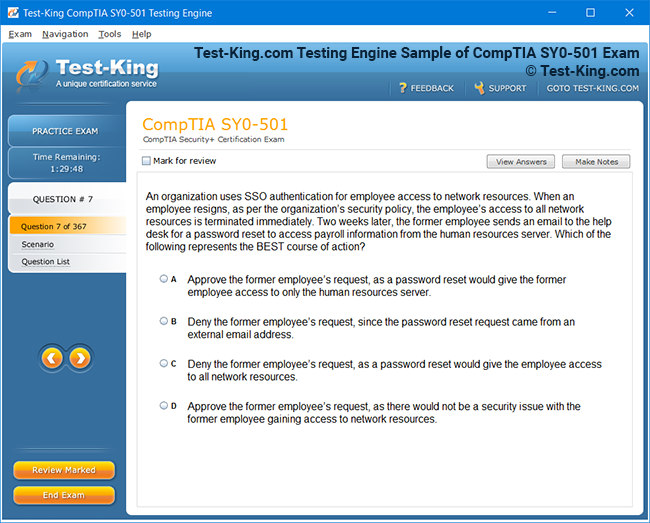
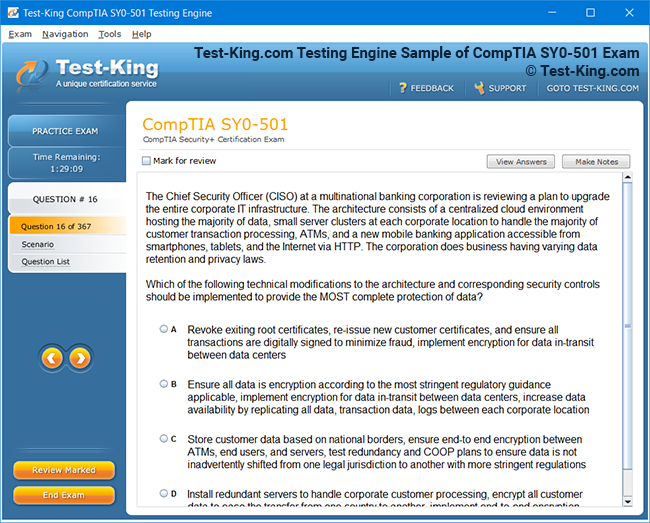
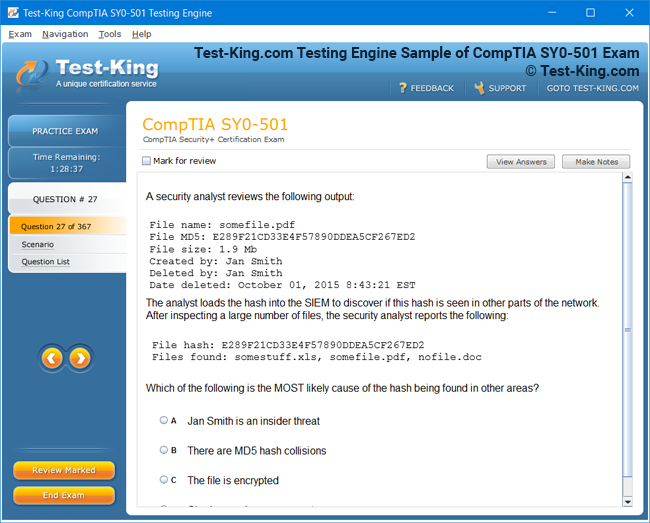
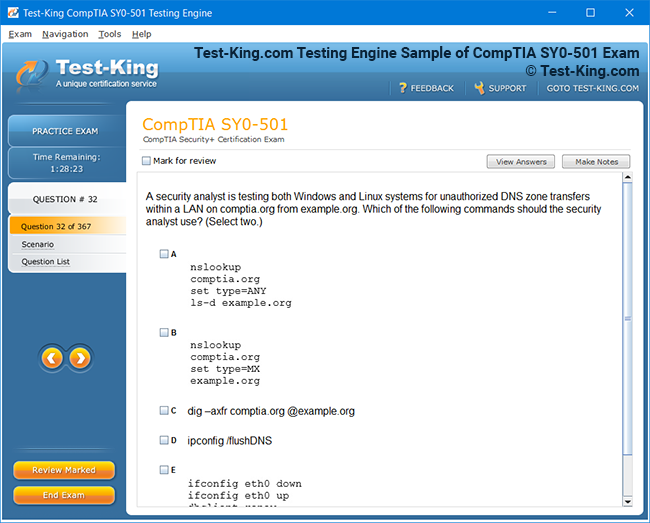
Product Screenshots
Frequently Asked Questions
How can I get the products after purchase?
All products are available for download immediately from your Member's Area. Once you have made the payment, you will be transferred to Member's Area where you can login and download the products you have purchased to your computer.
How long can I use my product? Will it be valid forever?
Test-King products have a validity of 90 days from the date of purchase. This means that any updates to the products, including but not limited to new questions, or updates and changes by our editing team, will be automatically downloaded on to computer to make sure that you get latest exam prep materials during those 90 days.
Can I renew my product if when it's expired?
Yes, when the 90 days of your product validity are over, you have the option of renewing your expired products with a 30% discount. This can be done in your Member's Area.
Please note that you will not be able to use the product after it has expired if you don't renew it.
How often are the questions updated?
We always try to provide the latest pool of questions, Updates in the questions depend on the changes in actual pool of questions by different vendors. As soon as we know about the change in the exam question pool we try our best to update the products as fast as possible.
How many computers I can download Test-King software on?
You can download the Test-King products on the maximum number of 2 (two) computers or devices. If you need to use the software on more than two machines, you can purchase this option separately. Please email support@test-king.com if you need to use more than 5 (five) computers.
What is a PDF Version?
PDF Version is a pdf document of Questions & Answers product. The document file has standart .pdf format, which can be easily read by any pdf reader application like Adobe Acrobat Reader, Foxit Reader, OpenOffice, Google Docs and many others.
Can I purchase PDF Version without the Testing Engine?
PDF Version cannot be purchased separately. It is only available as an add-on to main Question & Answer Testing Engine product.
What operating systems are supported by your Testing Engine software?
Our testing engine is supported by Windows. Andriod and IOS software is currently under development.
Top Genesys Exams
- GCP-GCX - Genesys Cloud CX Certified Professional - Consolidated
- GCP-GC-ARC - Genesys Cloud Architect Certified Specialist
- GCP-GC-ADM - Genesys Cloud Certified Professional - Contact Center Admin
- GCX-GCD - Genesys Cloud CX: Developer
- GCX-WFM - Genesys Cloud CX: WEM - Workforce Management Certified Specialist
- GC-AI-DB - Genesys Cloud: AI - Digital Bots & Knowledge
- GCP-GC-IMP - Genesys Cloud Certified Professional - Implementation
- GCP-GC-REP - Genesys Cloud Certified Professional - Reporting and Analytics
- GCX-ARC - Genesys Cloud CX: Architect
Study Tips and Preparation Strategy for the GCP-GC-ADM Certification Exam
Preparing for the GCP-GC-ADM exam requires a meticulous blend of theoretical knowledge, practical experience, and strategic study methods. The exam assesses candidates on their expertise in administering the Genesys Cloud contact center platform, requiring a thorough understanding of system configurations, user management, routing strategies, reporting, and troubleshooting techniques. Success in this examination is not merely a result of rote memorization but hinges upon a deep comprehension of platform functionalities and the ability to apply that knowledge in realistic scenarios.
Comprehensive Preparation Approach for the Genesys Cloud Certified Professional - Contact Center Admin Exam
A structured preparation approach begins with the identification of critical domains within the certification objectives. These include understanding the architecture of the Genesys Cloud environment, proficiently managing users and roles, configuring interaction routing and work assignments, ensuring service level agreements are met, and employing reporting tools to monitor and optimize performance. Allocating dedicated time to each domain helps candidates create a balanced study schedule that mitigates the risk of weak areas adversely affecting overall performance.
One of the most effective strategies involves combining theoretical study materials with hands-on practice. The official Genesys Cloud documentation provides detailed explanations of functionalities, platform capabilities, and administrative workflows. Candidates are encouraged to create study notes summarizing essential points, highlighting nuances, and noting practical examples that illustrate how features are implemented. This not only reinforces retention but also builds the mental framework necessary for rapid problem-solving during the exam.
Practical experience is indispensable for this certification. Candidates should explore the Genesys Cloud interface through sandbox environments or trial accounts whenever possible. By simulating real-world scenarios such as configuring queues, designing routing strategies, or assigning roles with varying permissions, aspirants develop an intuitive understanding of the platform. This experiential knowledge is crucial because many exam questions are scenario-based, testing the ability to apply theoretical concepts rather than just recall facts.
Time management during preparation is another pivotal aspect. A gradual progression from foundational concepts to more advanced functionalities allows for cumulative learning. Starting with user and role management, candidates can gain confidence in navigating the platform, then advance toward complex interaction routing and analytics features. Scheduling regular review sessions ensures concepts are reinforced, minimizing forgetfulness and enhancing long-term retention. Integrating short, focused study intervals with breaks improves cognitive absorption and reduces burnout.
Understanding the types of questions encountered in the exam is equally important. The GCP-GC-ADM exam comprises multiple-choice and scenario-based queries that evaluate both knowledge and practical judgment. Scenario-based questions often present a context with multiple variables, requiring candidates to determine the most effective administrative action. Practicing with sample questions and previous exam experiences sharpens analytical thinking and prepares candidates to interpret ambiguous scenarios efficiently.
A valuable method for reinforcing knowledge is teaching or discussing topics with peers or study groups. Articulating concepts aloud helps identify gaps in understanding and solidifies memory retention. Discussions can reveal alternative methods for configuring features, managing interactions, or optimizing performance metrics, broadening the candidate’s perspective. Even solitary learners can replicate this method by explaining concepts to imaginary scenarios or writing explanatory notes, thereby reinforcing comprehension.
Additionally, integrating visual learning tools enhances memory retention. Flowcharts depicting routing strategies, diagrams illustrating permission hierarchies, and graphical representations of analytics dashboards create mental anchors that simplify recall. Visual tools also facilitate understanding of complex configurations by presenting information in a structured, digestible format. When combined with repetitive practice, these tools strengthen both cognitive recognition and application skills.
A nuanced aspect of exam preparation lies in mastering the nuances of Genesys Cloud platform updates and changes. The platform evolves continuously, introducing new features and retiring deprecated functionalities. Candidates must maintain awareness of the latest developments to ensure that their preparation aligns with the current exam objectives. Following official release notes, subscribing to technical forums, and reviewing update documentation allows aspirants to stay informed about critical changes and adopt updated best practices in their study routines.
Incorporating analytical and problem-solving exercises into preparation is equally beneficial. These exercises can include identifying optimal routing strategies for various contact scenarios, resolving hypothetical user access issues, or interpreting data from performance dashboards. Engaging with such exercises not only enhances practical skills but also develops the critical thinking required to select the best solution when multiple correct approaches exist.
Stress management and mental readiness also play a crucial role in exam success. Preparing for a high-stakes certification can evoke anxiety, which may impede cognitive performance. Techniques such as meditation, brief physical activity, and structured rest periods contribute to improved concentration and retention. Equally important is practicing under timed conditions to simulate the exam environment, training the mind to function efficiently under pressure.
Effective note-taking is a cornerstone of retention. Candidates should maintain a dynamic study journal containing concise explanations, key steps in workflows, and tips for resolving common administrative issues. Over time, these notes evolve into a personalized reference guide, which can be invaluable during final reviews. Highlighting recurring patterns in configuration tasks, interaction flows, and permission hierarchies facilitates quick recollection during the exam.
Prioritizing hands-on practice over mere theoretical reading ensures candidates gain familiarity with the platform’s operational intricacies. Exploring different modules such as interaction routing, queues, and dashboards allows candidates to observe the interplay between system components. Understanding these interdependencies is critical because many exam questions present complex scenarios requiring insight into multiple facets of the platform simultaneously.
Another key strategy is self-assessment. Candidates should periodically test their knowledge through quizzes, practice exams, or mock scenarios. Self-assessment identifies areas requiring additional focus and helps candidates gauge readiness. Reviewing incorrect answers thoroughly ensures that misunderstandings are corrected and prevents repetition of mistakes. This iterative learning process strengthens both knowledge and confidence, which are essential for optimal exam performance.
Maintaining a consistent study schedule is vital. Fragmented preparation often leads to superficial learning, whereas a disciplined, progressive schedule allows for deeper understanding. Allocating specific time blocks for different competencies, interspersed with revision sessions, balances the learning load. Candidates should ensure that each session includes active engagement with the platform, problem-solving, and reflection on previously studied topics.
Candidates should also familiarize themselves with the exam’s format and logistics. Understanding the number of questions, time allocation, scoring methodology, and types of permissible resources mitigates surprises on the exam day. Preparation should extend beyond knowledge acquisition to include logistical readiness, such as ensuring a stable testing environment and minimizing potential disruptions during online or in-person exams.
Engaging with online communities and forums can provide valuable insights. Many experienced Genesys Cloud administrators share tips, highlight challenging exam topics, and discuss real-world scenarios. Exposure to such collective knowledge enriches a candidate’s understanding of complex configurations, unusual use cases, and best practices. While relying solely on forums is insufficient, supplementing formal study with community insights creates a more holistic preparation experience.
Finally, candidates should cultivate adaptive learning strategies. Recognizing which methods yield the best retention—be it visual aids, hands-on exercises, discussions, or reading—allows candidates to optimize their study routine. Flexibility in adapting strategies to suit individual learning styles ensures sustained engagement and maximizes comprehension.
Mastering Key Administrative Concepts and Exam Readiness Techniques
To achieve excellence in the GCP-GC-ADM certification, candidates must cultivate a profound comprehension of the platform’s administrative architecture and operational intricacies. The exam evaluates not only factual knowledge but also the aptitude to interpret scenarios and apply optimal solutions efficiently. This necessitates a dual approach of conceptual understanding combined with immersive practical experience.
Understanding user and role management is fundamental to administrative mastery. Administrators must be capable of creating, modifying, and deactivating user accounts with precision, ensuring that permissions align with organizational policies. Recognizing subtle distinctions between roles, the cascading effects of permissions, and the implications of role inheritance is critical. Exam questions frequently present scenarios where incorrect assignment of roles could disrupt workflows or create compliance vulnerabilities. Practicing these configurations within a sandbox environment builds an intuitive grasp of the hierarchy and prevents errors during assessment.
Interaction routing represents another cornerstone of preparation. Candidates should explore routing strategies comprehensively, including skills-based routing, priority assignments, and queue configurations. The ability to map customer requirements to optimal routing paths ensures efficient handling of interactions. Scenario-based questions often challenge candidates to optimize routing for peak efficiency, requiring an analytical approach that balances service level objectives with agent capabilities. Engaging in exercises that simulate dynamic call volumes, varied interaction types, and escalations hones decision-making skills essential for exam success.
Proficiency in managing queues and work assignments is indispensable. Administrators must understand how to configure multiple queues, prioritize interactions, and apply conditional routing to meet performance benchmarks. Familiarity with tools for monitoring queue performance, identifying bottlenecks, and reallocating resources effectively reinforces operational agility. Candidates should practice interpreting metrics, adjusting configurations in real time, and predicting the impact of changes on overall system performance. This iterative learning reinforces both theoretical knowledge and practical dexterity.
Analytics and reporting constitute a critical dimension of preparation. The exam assesses the ability to extract insights from interaction data, evaluate agent performance, and make data-driven decisions. Candidates should explore dashboard configurations, report generation, and metric analysis, understanding the implications of each parameter. Scenario-based questions may require candidates to identify trends, propose solutions for declining performance, or ensure compliance with service-level agreements. Mastery of analytics enhances not only exam readiness but also real-world administrative competency.
Troubleshooting and problem-solving skills are essential for navigating the unpredictable nature of contact center operations. Candidates must develop the capacity to diagnose issues ranging from user access errors to routing anomalies. Practicing systematic troubleshooting methodologies, such as isolating variables, reviewing logs, and testing configurations incrementally, fosters analytical precision. Exam scenarios often present complex challenges that require candidates to choose the most effective solution among several plausible options, emphasizing the importance of methodical reasoning.
Time management remains a pivotal aspect of both preparation and exam execution. Allocating dedicated intervals for studying each administrative domain ensures balanced coverage and prevents neglect of challenging areas. Incorporating microlearning sessions focused on specific functionalities, followed by practical exercises, reinforces retention while maintaining engagement. Periodic review of previously studied topics consolidates knowledge and strengthens recall under exam conditions. Equally, simulating timed exam conditions prepares candidates for efficient navigation and reduces anxiety during the actual assessment.
Understanding the interconnectivity of platform modules enhances strategic thinking. Genesys Cloud functionalities are not isolated; user management, routing, analytics, and queues interact in nuanced ways. Candidates should explore these relationships to anticipate the cascading effects of administrative decisions. Scenario-based exercises illustrating complex interactions between modules cultivate foresight and operational intelligence, equipping candidates to tackle multifaceted questions confidently.
Familiarity with compliance standards and security protocols is another dimension that cannot be overlooked. Administrators must understand how to implement access controls, enforce data privacy measures, and ensure system integrity. The exam may present hypothetical situations involving compliance challenges, requiring candidates to identify potential risks and apply preventive measures. Practicing these scenarios sharpens judgment and reinforces the importance of maintaining operational integrity while meeting organizational objectives.
Developing a systematic study journal supports knowledge consolidation. Candidates should document key insights, configuration steps, troubleshooting workflows, and scenario analyses in an organized manner. Over time, this journal becomes a personalized reference, facilitating rapid review and reinforcing memory through repetition. Including reflective notes on common pitfalls, patterns in exam questions, and practical observations enhances the depth and retention of knowledge.
Peer discussions and collaborative learning contribute significantly to preparation. Engaging with other candidates or experienced administrators exposes learners to alternative strategies, clarifies misunderstandings, and introduces novel perspectives on platform management. Even self-learners benefit from simulated discussions by verbalizing solutions to hypothetical problems, thereby strengthening conceptual clarity and confidence.
Visual aids provide a valuable cognitive scaffold for mastering complex configurations. Flowcharts representing routing paths, diagrams illustrating permission hierarchies, and schematics of queue interactions enhance comprehension. Visual representations facilitate quick recall and simplify intricate processes, enabling candidates to interpret scenarios effectively during the exam. Combining these tools with practical exercises maximizes both understanding and application skills.
Maintaining awareness of the latest platform updates is crucial. Genesys Cloud continuously evolves, with new features, enhancements, and deprecated functionalities introduced regularly. Candidates should review release notes and update documentation to ensure their preparation aligns with the current operational environment. Integrating these updates into study routines not only reinforces exam readiness but also equips administrators with contemporary operational knowledge.
Adaptive learning techniques enhance efficiency and engagement. Candidates should identify methods that yield optimal retention, whether through visual learning, hands-on exercises, scenario analysis, or reflective writing. Flexibility in approach allows learners to tailor study routines to their cognitive preferences, sustaining motivation and reinforcing comprehension. Iterative adaptation ensures persistent alignment with both individual learning strengths and evolving exam requirements.
Integrating mock exams into preparation provides invaluable practice. Simulated assessments recreate the conditions of the actual exam, including timing constraints, question formats, and scenario complexity. Analyzing performance in these exercises highlights strengths, identifies weaknesses, and guides targeted revision. Additionally, repeated exposure to mock scenarios reduces cognitive load during the real exam, promoting calmness and confidence.
Candidates must also develop strategic approaches to scenario-based questions. These often present multifaceted problems requiring balanced judgment. By practicing diverse scenarios involving user management, routing optimization, queue adjustments, and performance analysis, candidates cultivate an instinctive ability to identify the most effective solution. Emphasis on critical thinking over rote memorization enhances performance and prepares candidates for the nuanced challenges of the exam.
Balancing preparation with cognitive and physical wellness is essential. Adequate sleep, regular physical activity, and structured breaks optimize focus and retention. Mental readiness, combined with rigorous study and hands-on practice, enhances the capacity to absorb and apply complex information. Preparing under realistic conditions, including simulated high-pressure scenarios, reinforces resilience and ensures candidates are equipped to perform efficiently on exam day.
The exploration of real-world administrative scenarios adds depth to preparation. Candidates should consider diverse operational contexts, such as handling fluctuating call volumes, integrating omnichannel interactions, and ensuring agent efficiency. Understanding practical implications of administrative decisions fosters situational awareness, enabling candidates to approach exam questions with confidence and insight.
Leveraging analytical exercises strengthens both knowledge and practical application. Interpreting interaction data, assessing performance metrics, and recommending improvements cultivates analytical acuity. Exam questions often require candidates to deduce trends, optimize configurations, and resolve performance issues based on data interpretation. Regular engagement with such exercises bridges the gap between theoretical knowledge and applied problem-solving, enhancing both competence and confidence.
In-Depth Methods for Mastering Administrative Functions and Scenario-Based Challenges
Achieving mastery of the GCP-GC-ADM certification requires a comprehensive understanding of both the theoretical constructs and practical applications of the Genesys Cloud platform. Candidates must cultivate a balance between memorization of key administrative processes and the ability to apply concepts in multifaceted scenarios. The exam evaluates proficiency in user and role management, interaction routing, queue optimization, analytics interpretation, and troubleshooting, demanding a thorough grasp of both system architecture and operational workflows.
A critical element of preparation involves advanced exploration of user and role management. Candidates should focus on the nuanced implications of permission assignments, understanding how combinations of roles influence access and system behavior. Exam questions frequently present scenarios where multiple roles intersect, challenging candidates to anticipate the effects of administrative decisions on operational efficiency and compliance. Practicing role configuration in a controlled environment strengthens the ability to implement complex hierarchies and maintain organizational standards.
Interaction routing is an area that necessitates both analytical reasoning and practical dexterity. Administrators must not only understand the available routing strategies but also develop the skill to apply them under varying conditions. This includes configuring skills-based routing, priority assignments, conditional workflows, and failover mechanisms. Exercises that simulate high-volume contact situations, multiple communication channels, and escalation scenarios cultivate the critical thinking required to optimize routing efficiency. Engaging with hypothetical challenges allows candidates to evaluate the impact of routing decisions on both service levels and agent performance.
Queue management and work assignment practices require meticulous attention to detail. Candidates should explore methods for creating and managing multiple queues, assigning interactions efficiently, and balancing workloads to maintain service quality. Scenario-based exercises should include examining the effects of adjusting queue thresholds, redistributing tasks among agents, and evaluating performance metrics to ensure optimal operation. Understanding how different modules interact, including the interplay between routing strategies and agent availability, enhances the ability to solve complex problems quickly.
Analytical skills are indispensable for interpreting data derived from platform dashboards and reports. Administrators are expected to generate meaningful insights from historical and real-time metrics, enabling them to recommend improvements or adjust configurations proactively. The exam may present situations where agents are underperforming or service levels are declining, requiring candidates to apply analytical reasoning to identify root causes and implement effective solutions. Repeated practice in reading dashboards, understanding metrics, and predicting operational outcomes develops both competence and confidence.
Troubleshooting exercises play a pivotal role in refining operational readiness. Candidates must adopt systematic methods for identifying and resolving user access issues, routing failures, or configuration errors. Scenario-based questions often require a logical sequence of diagnostic steps, testing the candidate’s ability to isolate problems and implement corrective actions without causing further disruption. Practicing these sequences ensures that administrators can navigate complex problem sets efficiently, reducing response time and maintaining system stability.
Incorporating timed practice sessions strengthens exam endurance and cognitive agility. Simulating the constraints of a real exam environment enables candidates to develop effective pacing strategies, ensuring that time is allocated appropriately to each question. Additionally, timed exercises reduce exam anxiety by familiarizing candidates with the pressure of completing multiple scenario-based problems within limited intervals. These exercises also enhance decision-making speed and accuracy, which are critical during high-stakes assessments.
Exploration of scenario-based challenges enhances the ability to apply theoretical knowledge pragmatically. Candidates should simulate real-world operational environments, adjusting user permissions, routing strategies, queue distributions, and performance monitoring. Through repeated exposure to diverse scenarios, aspirants gain insight into the cause-and-effect relationships within the platform, learning to anticipate potential conflicts and proactively design solutions. This experiential knowledge is invaluable for answering exam questions that present layered operational complexities.
Developing a structured study journal contributes to knowledge retention and efficient review. Documenting key procedures, configuration steps, troubleshooting workflows, and reflective notes on scenario outcomes creates a personalized reference resource. The act of writing reinforces comprehension, while organized notes facilitate rapid review before the exam. Recording observations on recurring problem types, common misconfigurations, and effective strategies also builds a repository of practical wisdom that supports both exam preparation and real-world administration.
Engaging with collaborative learning opportunities enriches understanding. Candidates benefit from discussing administrative challenges, configuration strategies, and scenario interpretations with peers or mentors. These exchanges illuminate alternative approaches, clarify misunderstandings, and introduce novel insights into system management. Even solitary learners can replicate this process by simulating peer discussions, verbalizing solutions to hypothetical problems, or engaging in reflective self-assessment.
Visual representation techniques reinforce comprehension of intricate workflows. Diagrams illustrating routing hierarchies, permission inheritance, queue interactions, and escalation paths create mental scaffolds that simplify complex concepts. By pairing visual tools with practical exercises, candidates develop a holistic understanding of platform dynamics, facilitating swift and accurate responses during scenario-based assessments. Visual cognition enhances memory retention and operational agility, particularly when navigating multifaceted configurations.
Staying informed about platform updates is essential for ensuring exam relevance. Genesys Cloud continually introduces new features, optimizations, and workflow modifications. Candidates must regularly review release notes, documentation, and technical advisories to incorporate current functionalities into their study routines. Awareness of platform evolution not only enhances exam preparedness but also ensures administrators remain capable of managing contemporary operational environments effectively.
Adopting adaptive learning strategies optimizes study efficiency. Candidates should identify methods that yield the highest retention, whether through hands-on practice, visual aids, scenario simulations, or reflective journaling. Flexibility in approach ensures sustained engagement, maximizes comprehension, and allows learners to adjust techniques in response to changing study needs or knowledge gaps. Iterative adaptation of strategies strengthens both conceptual understanding and practical application capabilities.
Self-assessment and performance review are vital for refining readiness. Candidates should regularly evaluate their progress through quizzes, mock exams, and scenario-based exercises. Analyzing performance outcomes identifies strengths and highlights areas requiring further attention. Revisiting incorrect responses, understanding underlying causes, and implementing corrective strategies reinforce learning and prevent recurring errors. This cyclical process cultivates both competence and confidence, essential for success in high-pressure examinations.
Cognitive and physical preparation enhances overall readiness. Maintaining a structured routine that incorporates adequate rest, physical activity, and focused study sessions improves concentration and information retention. Preparing under realistic conditions, including simulated high-pressure scenarios, equips candidates to handle the mental demands of the actual exam efficiently. Sustaining cognitive vitality ensures that complex problem-solving and rapid decision-making remain achievable even under time constraints.
Exploring real-world operational contexts deepens preparation. Candidates should simulate challenges such as handling peak interaction volumes, integrating omnichannel communications, and ensuring agent efficiency and satisfaction. Understanding the practical implications of administrative choices develops situational awareness, enabling candidates to approach exam questions with both strategic insight and operational foresight.
Mastering efficiency optimization enhances performance across administrative functions. Candidates should investigate methods for streamlining workflows, minimizing resource bottlenecks, and aligning system configurations with performance objectives. Scenario exercises can include identifying inefficient routing paths, rebalancing workload distributions, or recalibrating service level monitoring protocols. Practicing these exercises sharpens analytical acumen and prepares candidates for questions requiring optimal decision-making under dynamic conditions.
Advanced troubleshooting exercises refine both analytical reasoning and technical agility. Candidates should engage with multifaceted problem scenarios involving simultaneous system errors, complex routing misconfigurations, or conflicting permission hierarchies. Systematic approaches, including isolating variables, testing interventions sequentially, and interpreting outcomes critically, cultivate precision in problem-solving. Familiarity with these exercises ensures that candidates can navigate exam challenges confidently and efficiently.
Optimizing Skills and Scenario-Based Mastery for the GCP-GC-ADM Certification
Attaining proficiency in the GCP-GC-ADM certification necessitates a refined blend of practical skills, theoretical insight, and strategic problem-solving. Candidates must engage with the Genesys Cloud platform not only to comprehend its operational framework but also to anticipate the multifaceted interactions that occur across administrative, routing, and analytic functionalities. Exam questions are often constructed to evaluate the depth of understanding in real-world operational scenarios, making hands-on experience indispensable alongside structured study.
User and role management constitutes a foundational domain for exam readiness. Candidates should explore the nuanced distinctions between roles, the cascading impact of permission assignments, and the implications of role inheritance on organizational efficiency. Practicing these configurations in a controlled environment reinforces understanding of complex hierarchies, allowing administrators to manage user access securely while maintaining operational continuity. Scenario-based questions frequently present challenges where improper role assignment can result in workflow disruptions, highlighting the importance of both precision and foresight in administrative decisions.
Interaction routing forms a pivotal component of exam preparation. Administrators must be adept at configuring skills-based routing, priority hierarchies, conditional workflows, and escalation mechanisms to ensure efficient handling of interactions. Engaging in exercises that simulate high-volume periods, diverse communication channels, and complex escalation scenarios develops critical thinking and operational intuition. By evaluating the impact of routing choices on service levels and agent efficiency, candidates cultivate the ability to identify the most effective solutions under constrained conditions.
Queue optimization is another area requiring meticulous attention. Candidates must understand methods to structure multiple queues, assign interactions efficiently, and monitor performance metrics to maintain optimal operational standards. Scenario exercises might involve reallocating tasks, adjusting queue thresholds, or predicting outcomes based on dynamic workloads. Integrating these practices into preparation enhances the capacity to navigate complex scenarios, which are commonly reflected in exam questions.
Proficiency in analytics and reporting is vital for translating operational data into actionable insights. Administrators are expected to generate, interpret, and act upon performance dashboards, historical metrics, and real-time reports. Exam questions may present situations requiring candidates to identify performance trends, troubleshoot declining efficiency, or recommend configuration adjustments based on data analysis. Repeated practice in analyzing metrics and drawing informed conclusions cultivates both analytical acumen and practical decision-making skills.
Advanced troubleshooting is central to operational competence and exam success. Candidates should engage with scenarios involving misconfigured routing, access conflicts, and queue anomalies. Adopting a structured methodology for isolating variables, testing solutions sequentially, and interpreting outcomes ensures effective problem resolution. Scenario-based exercises that mimic real-world disruptions develop the precision and confidence necessary to address complex challenges, reinforcing readiness for the dynamic problem sets presented in the examination.
Time management in both preparation and execution of the exam is essential. Structured study schedules, incorporating focused sessions on user management, routing, queue optimization, analytics, and troubleshooting, allow balanced mastery across all exam objectives. Integrating microlearning intervals with practical exercises maintains engagement and reinforces retention. Simulating timed exam conditions familiarizes candidates with pacing strategies, ensuring efficiency when answering scenario-based questions under time constraints.
Developing adaptive learning strategies enhances preparation efficiency. Candidates should identify methods that optimize retention, including hands-on practice, scenario simulations, visual aids, and reflective journaling. Flexibility in learning techniques ensures engagement is sustained, knowledge gaps are addressed dynamically, and comprehension is deepened. Iterative refinement of study strategies allows candidates to tailor preparation to evolving understanding and emerging exam demands.
Scenario-based exercises play a critical role in cultivating decision-making skills. Candidates should simulate diverse operational contexts, including fluctuations in interaction volumes, omnichannel communications, and agent availability. By repeatedly practicing these scenarios, candidates develop the ability to anticipate system behavior, manage interactions efficiently, and resolve conflicts with minimal disruption. This immersive approach ensures that theoretical knowledge is reinforced through practical application, preparing candidates to respond confidently to complex exam questions.
Documenting insights and observations in a structured study journal reinforces learning. Recording procedures for configuration, troubleshooting workflows, scenario outcomes, and reflective notes builds a personalized reference guide. Regular review of this journal strengthens memory retention, clarifies understanding, and provides a convenient tool for final exam preparation. Including analysis of common pitfalls, patterns in question types, and strategies for optimal performance enhances both knowledge depth and practical readiness.
Engaging with collaborative learning opportunities, whether through study groups, online communities, or mentorship, enriches preparation. Candidates benefit from shared experiences, diverse problem-solving approaches, and exposure to unconventional scenarios. Peer discussions elucidate complex concepts, clarify misconceptions, and offer alternative strategies for efficient platform administration. For solitary learners, verbalizing solutions to hypothetical problems or simulating dialogue enhances cognitive processing and strengthens conceptual clarity.
Visual learning techniques improve comprehension of intricate system workflows. Diagrams representing routing hierarchies, permission inheritance, escalation paths, and queue interactions serve as cognitive scaffolds for understanding complex concepts. Pairing visual tools with practical exercises reinforces operational knowledge and accelerates recall during scenario-based assessments. Visual representations allow candidates to conceptualize relationships among modules, improving efficiency and accuracy in both study and exam performance.
Staying informed about platform updates is essential to ensure preparation aligns with the current operational environment. Genesys Cloud frequently introduces new features, optimizations, and workflow changes. Reviewing release notes, documentation, and technical advisories integrates these updates into study routines, reinforcing exam relevance and operational proficiency. Awareness of evolving platform functionalities enables candidates to address exam questions reflecting the most current administrative practices.
Self-assessment is vital for evaluating readiness. Candidates should utilize quizzes, mock exams, and scenario-based exercises to gauge understanding and identify areas for improvement. Analyzing incorrect responses, understanding underlying causes, and revisiting challenging topics reinforces learning. This iterative process cultivates both knowledge retention and problem-solving capability, ensuring candidates approach the exam with confidence and competence.
Balancing cognitive preparation with physical wellness enhances overall effectiveness. Adequate rest, physical activity, and structured breaks improve focus, information retention, and mental acuity. Practicing under conditions that simulate exam pressure, including timed scenarios and complex problem sets, equips candidates to perform efficiently and maintain clarity of thought throughout the assessment.
Operational simulations strengthen situational awareness. Candidates should engage with exercises reflecting real-world challenges, such as fluctuating call volumes, integration of omnichannel communications, and dynamic agent availability. Practicing in such contexts reinforces an understanding of system interdependencies, prepares candidates to anticipate potential conflicts, and cultivates the ability to respond swiftly and effectively to complex scenarios.
Efficiency optimization in administrative workflows further enhances readiness. Candidates should explore strategies to streamline configuration processes, minimize bottlenecks, and align operational settings with performance objectives. Exercises can include recalibrating routing logic, balancing workload distributions, or adjusting performance monitoring protocols. Regular practice in optimizing system performance sharpens analytical skills and equips candidates to select the most effective approaches in both exam and real-world scenarios.
Deepening analytical skills is crucial for interpreting metrics and translating data into actionable insights. Candidates should engage with exercises that require evaluation of dashboard trends, performance patterns, and historical data to inform operational adjustments. Scenario-based questions may present declining service levels or agent performance challenges, necessitating a methodical approach to identify root causes and implement corrective measures. Repeated exposure to such exercises strengthens the ability to analyze, interpret, and act decisively.
Deep Operational Knowledge and Proficiency for the GCP-GC-ADM Certification
Preparing for the GCP-GC-ADM certification requires a meticulous approach that combines theoretical understanding, practical application, and strategic problem-solving. Candidates must delve into the intricacies of the Genesys Cloud platform, comprehending both its foundational architecture and the subtleties of advanced administration. Success in the exam demands mastery of user management, routing techniques, queue optimization, analytics interpretation, and troubleshooting, alongside the ability to navigate complex, scenario-based challenges with clarity and precision.
User and role management forms the bedrock of administrative competence. Candidates must develop the ability to create, modify, and assign users and roles in ways that preserve organizational efficiency while enforcing security protocols. Understanding the cascading effects of role assignments, permission hierarchies, and access limitations is crucial. Scenario exercises allow candidates to simulate situations in which role misconfigurations could disrupt operational workflows, highlighting the importance of accuracy and foresight. Practicing these operations repeatedly strengthens both conceptual understanding and practical agility, enabling confident decision-making during exam questions that test multifaceted user access scenarios.
Interaction routing is a pivotal domain requiring analytical reasoning and practical expertise. Administrators must be proficient in configuring skills-based routing, priority-based assignments, and conditional workflows. Additionally, they must understand escalation paths, overflow strategies, and failover mechanisms. Exercises that replicate high-volume interactions, omnichannel communications, and dynamic routing conditions cultivate critical thinking and enhance operational intuition. Evaluating the impact of routing adjustments on service levels, agent productivity, and customer satisfaction provides candidates with the experiential insight necessary to navigate complex scenario questions effectively.
Queue management and work assignment practices demand meticulous attention to detail. Candidates should explore strategies for constructing and balancing multiple queues, assigning interactions efficiently, and monitoring key performance indicators. Scenario-based exercises can include dynamically adjusting queue thresholds, redistributing workload among agents, and predicting system responses to fluctuating demand. Practicing these exercises reinforces the understanding of system interdependencies and prepares candidates to solve intricate operational challenges that commonly appear on the exam.
Analytics and reporting skills are essential for interpreting operational data and making informed decisions. Administrators must be capable of extracting insights from dashboards, generating reports, and analyzing historical and real-time metrics to optimize performance. Exam questions may require identifying trends, diagnosing inefficiencies, and recommending adjustments to maintain service level agreements. Repeated engagement with analytical exercises strengthens both interpretive skills and data-driven decision-making abilities, ensuring candidates can approach questions confidently and accurately.
Advanced troubleshooting is central to operational effectiveness and exam readiness. Candidates should practice diagnosing complex issues, including routing errors, access conflicts, queue imbalances, and configuration inconsistencies. A structured methodology that isolates variables, tests potential solutions sequentially, and evaluates results ensures effective problem resolution. Scenario-based exercises replicating real-world challenges develop the precision and confidence necessary to address multifaceted problems, reinforcing readiness for questions that assess critical thinking and operational judgment.
Time management is crucial for both preparation and exam execution. Candidates should design structured study routines that allocate dedicated intervals to each administrative domain, balancing foundational knowledge with advanced topics. Integrating microlearning sessions with practical exercises ensures deep understanding while maintaining engagement. Simulated timed exam exercises prepare candidates to allocate attention effectively across multiple questions, enhancing speed, accuracy, and confidence under pressure.
Adaptive learning strategies enhance preparation efficiency and retention. Candidates should determine which approaches—visual aids, hands-on exercises, scenario simulations, or reflective writing—yield optimal comprehension and adjust study techniques accordingly. Flexibility in learning fosters engagement, addresses knowledge gaps dynamically, and reinforces both practical and conceptual understanding. Iterative refinement of study methods allows candidates to evolve their preparation in response to emerging insights, enhancing operational competence.
Scenario-based exercises cultivate real-world decision-making capabilities. Candidates should simulate operational contexts such as peak call volumes, omnichannel integrations, and varying agent availability. Repeated exposure to these scenarios builds situational awareness and develops the capacity to anticipate system responses, manage resources effectively, and implement solutions with minimal disruption. This hands-on experience bridges theoretical knowledge and practical application, preparing candidates for complex exam questions that evaluate multidimensional operational challenges.
Documenting insights and processes in a study journal reinforces knowledge retention and serves as a personalized reference. Recording configuration steps, troubleshooting workflows, scenario outcomes, and reflective observations provides a structured repository for revision. Reviewing patterns in question types, common pitfalls, and effective strategies strengthens memory and enhances readiness for scenario-based assessments. Regularly updating this journal allows candidates to consolidate learning and maintain alignment with current platform functionalities.
Engaging in collaborative learning opportunities amplifies understanding. Candidates benefit from discussing complex administrative challenges, configuration strategies, and scenario interpretations with peers or mentors. Shared experiences provide alternative perspectives, clarify misunderstandings, and introduce novel approaches to problem-solving. For self-directed learners, simulating dialogues, verbalizing solutions to hypothetical challenges, and reflecting on outcomes enhance cognitive processing and reinforce conceptual clarity.
Visual representation techniques strengthen comprehension of intricate workflows and relationships among platform modules. Flowcharts illustrating routing hierarchies, diagrams of permission inheritance, schematics of queue interactions, and escalation pathways provide cognitive scaffolds that facilitate understanding and recall. Integrating these tools with practical exercises supports rapid problem-solving, operational efficiency, and exam readiness by enabling candidates to conceptualize complex scenarios intuitively.
Remaining current with platform updates is essential. Genesys Cloud frequently introduces new features, workflow optimizations, and enhancements. Reviewing release notes, technical advisories, and updated documentation ensures preparation reflects the latest operational environment. Awareness of platform evolution equips candidates to approach exam questions accurately, demonstrating both contemporary knowledge and adaptive administrative competence.
Self-assessment and iterative practice refine readiness. Candidates should engage with quizzes, mock exams, and scenario exercises to gauge comprehension and identify knowledge gaps. Analyzing incorrect responses, revisiting challenging topics, and applying corrective strategies reinforce understanding and cultivate problem-solving proficiency. This iterative approach builds both confidence and operational intelligence, critical for performing effectively under exam conditions.
Balancing cognitive preparation with physical wellness enhances overall performance. Structured rest, exercise, and mental relaxation optimize focus, information retention, and cognitive resilience. Simulating high-pressure conditions through timed exercises and complex scenario challenges prepares candidates to maintain clarity of thought and decision-making efficiency during the actual exam.
Operational simulations deepen practical understanding. Candidates should engage with exercises reflecting variable call volumes, omnichannel integrations, and dynamic agent availability. Practicing in realistic contexts reinforces awareness of interdependencies, enables anticipation of potential conflicts, and cultivates the ability to respond quickly and effectively to multifaceted operational challenges.
Efficiency optimization strengthens both exam and real-world performance. Candidates should explore methods to streamline workflows, minimize bottlenecks, and align configurations with performance objectives. Exercises might involve recalibrating routing logic, redistributing workload, or adjusting monitoring protocols. Engaging in such practices enhances analytical skills, sharpens decision-making, and prepares candidates to address scenario questions requiring optimal operational outcomes.
Advanced analytical exercises refine the ability to interpret data and make informed administrative decisions. Candidates should practice evaluating dashboards, identifying performance trends, and applying corrective actions to address declines in service levels or agent performance. Repeated engagement with these exercises strengthens interpretive skills, reinforces critical thinking, and ensures readiness for exam scenarios that demand data-driven operational judgment.
Advanced Operational Strategies and Exam Readiness for the GCP-GC-ADM Certification
Excelling in the GCP-GC-ADM certification demands a profound understanding of the Genesys Cloud platform, comprehensive operational experience, and an ability to navigate complex scenario-based challenges with precision. Candidates must integrate theoretical knowledge with practical application across user management, interaction routing, queue optimization, analytics interpretation, and troubleshooting workflows. This final stage of preparation focuses on advanced strategies, intricate scenario exercises, operational efficiency, and analytical mastery that consolidate readiness for the exam.
Advanced user and role management is foundational for achieving certification success. Administrators must understand the nuances of assigning, modifying, and deactivating users while maintaining organizational efficiency and adhering to security protocols. Scenarios may involve overlapping roles, conditional permissions, or dynamic workflow requirements, requiring careful consideration of cascading effects and potential conflicts. Practicing these configurations in sandbox environments enables candidates to anticipate challenges and implement solutions that maintain continuity and security. Repeated exposure to these exercises develops both conceptual clarity and practical agility, essential for navigating complex scenario questions.
Interaction routing represents a critical domain where analytical skill and operational intuition converge. Candidates must configure skills-based routing, priority queues, overflow handling, and escalation protocols to ensure seamless interaction management. Engaging in simulations that reflect high-volume calls, omnichannel interactions, and dynamic routing conditions enhances problem-solving capacity. Evaluating the consequences of routing adjustments on service levels, agent performance, and customer experience sharpens decision-making abilities. Mastery of routing principles ensures candidates can select optimal solutions for intricate exam scenarios.
Queue management and task assignment demand meticulous attention to workload balancing and operational efficiency. Administrators must create and monitor multiple queues, distribute interactions effectively, and respond dynamically to changing demands. Scenario exercises may require adjusting thresholds, reallocating agents, or analyzing performance metrics to maintain service objectives. Practicing these tasks repeatedly develops a deep understanding of system interdependencies and prepares candidates to tackle the nuanced questions frequently encountered in the examination.
Analytics and reporting skills are essential for converting operational data into actionable insights. Administrators must extract information from dashboards, generate reports, and interpret both historical and real-time metrics to optimize performance. The exam may present situations requiring the identification of performance trends, the diagnosis of inefficiencies, and the formulation of corrective actions. Regular engagement with analytical exercises enhances interpretive abilities and cultivates the aptitude for data-driven decision-making. These skills enable candidates to respond to questions that require nuanced understanding of system performance and operational strategy.
Advanced troubleshooting techniques are indispensable for operational excellence and exam readiness. Candidates should adopt systematic approaches to diagnose and resolve issues, such as routing errors, queue imbalances, access conflicts, and configuration inconsistencies. Structured problem-solving methods, including isolating variables, testing potential solutions sequentially, and critically evaluating outcomes, build precision and confidence. Practicing troubleshooting in complex scenarios familiarizes candidates with multifaceted challenges, ensuring they can navigate scenario-based questions with competence and accuracy.
Time management is crucial for both preparation and exam execution. Structured study schedules should allocate dedicated focus to all critical domains, including user management, routing, queue optimization, analytics, and troubleshooting. Integrating short, targeted study sessions with practical exercises promotes retention and engagement, while simulated timed exams prepare candidates to allocate attention effectively and maintain focus under pressure. Mastery of pacing ensures that complex scenario questions are approached strategically and answered efficiently.
Adaptive learning strategies amplify preparation effectiveness. Candidates should evaluate which methods—hands-on exercises, visual aids, scenario simulations, reflective writing—maximize retention and understanding. Flexibility in adopting techniques ensures engagement, addresses knowledge gaps dynamically, and reinforces both conceptual comprehension and practical application. Iterative refinement of strategies enhances operational competence and ensures readiness for diverse exam challenges.
Scenario-based exercises are vital for developing situational awareness and decision-making acumen. Candidates should simulate fluctuating interaction volumes, dynamic agent availability, and omnichannel communications to understand the interdependencies of system modules. Repeated exposure to these scenarios develops the ability to anticipate operational outcomes, implement efficient solutions, and resolve conflicts with minimal disruption. This experiential learning bridges theoretical knowledge and practical application, equipping candidates to approach complex exam questions with confidence.
Maintaining a structured study journal reinforces knowledge retention and supports efficient review. Documenting configuration steps, troubleshooting methodologies, scenario outcomes, and reflective observations creates a personalized reference for revision. Reviewing patterns in problem types, common misconfigurations, and effective strategies strengthens memory retention and enhances readiness for scenario-based assessments. Regular updates to the journal allow candidates to maintain alignment with current platform functionalities and evolving operational practices.
Engaging in collaborative learning amplifies comprehension and problem-solving capacity. Candidates benefit from discussions with peers, mentors, or community members regarding configuration strategies, scenario analysis, and workflow optimization. Exposure to diverse perspectives clarifies complex concepts and introduces alternative approaches to problem-solving. Solitary learners can simulate these discussions, verbalize solutions to hypothetical scenarios, and reflect critically on outcomes, enhancing cognitive processing and reinforcing conceptual understanding.
Visual aids provide a powerful mechanism for understanding complex administrative workflows. Flowcharts depicting routing hierarchies, schematics of queue interactions, diagrams of permission inheritance, and escalation pathways create cognitive scaffolds that facilitate comprehension and recall. Pairing visual tools with hands-on exercises improves operational intuition and accelerates problem-solving capabilities, equipping candidates to navigate the intricacies of scenario-based questions efficiently.
Staying current with platform updates is essential for maintaining preparation relevance. Genesys Cloud evolves continuously, with new features, enhancements, and deprecated functionalities. Reviewing release notes, documentation, and technical advisories ensures candidates integrate current practices into their study routines. Awareness of platform evolution equips candidates to answer exam questions accurately while maintaining contemporary operational competence.
Self-assessment and iterative review are critical for refining exam readiness. Candidates should engage with practice quizzes, mock exams, and scenario exercises to gauge comprehension and identify areas requiring reinforcement. Analyzing incorrect responses, revisiting challenging topics, and applying corrective strategies strengthens understanding and builds confidence. This iterative cycle cultivates both knowledge retention and practical problem-solving skills, ensuring candidates are prepared for complex, high-pressure exam conditions.
Balancing cognitive preparation with physical and mental wellness enhances overall performance. Adequate rest, structured breaks, physical activity, and stress-management techniques optimize focus, memory retention, and analytical acuity. Preparing under realistic conditions, including timed exercises and high-pressure scenarios, equips candidates to maintain clarity of thought and perform effectively throughout the examination.
Operational simulations deepen understanding of system interdependencies and practical decision-making. Candidates should engage with exercises reflecting fluctuating call volumes, dynamic agent availability, omnichannel integration, and complex workflow scenarios. Practicing in realistic contexts cultivates situational awareness, anticipates potential conflicts, and develops the ability to implement solutions efficiently. These exercises reinforce both theoretical knowledge and practical application, essential for successful navigation of scenario-based exam questions.
Efficiency optimization strengthens both exam and real-world operational performance. Candidates should explore strategies to streamline workflows, minimize bottlenecks, and align system configurations with performance objectives. Exercises might include recalibrating routing logic, redistributing workload among agents, adjusting monitoring protocols, and evaluating the outcomes of configuration changes. Regular practice in optimizing operational performance develops analytical skills, sharpens decision-making, and prepares candidates to tackle complex scenario questions requiring strategic solutions.
Advanced analytical exercises further refine interpretive and decision-making abilities. Candidates should practice evaluating dashboards, identifying performance trends, and implementing corrective actions to address declines in service levels or agent productivity. Repeated engagement with these exercises enhances the ability to translate data into actionable insights, reinforces critical thinking, and ensures readiness for questions demanding data-driven operational judgment.
Reflective review of past exercises, mock scenarios, and personal notes reinforces knowledge retention and deepens understanding. Candidates should revisit previously encountered challenges, analyze alternative solutions, and document lessons learned. This continuous reflection allows for iterative improvement, strengthens memory recall, and cultivates a strategic mindset capable of adapting to evolving scenarios.
Conclusion
In mastering the GCP-GC-ADM certification requires a combination of theoretical knowledge, practical experience, analytical proficiency, and strategic problem-solving. Candidates who integrate hands-on practice, scenario-based exercises, adaptive learning strategies, visual aids, and collaborative learning into their preparation develop the cognitive agility and operational competence necessary to excel. Maintaining awareness of platform updates, practicing efficient workflows, engaging in reflective review, and balancing cognitive preparation with wellness ensures sustained readiness. By adopting a disciplined, immersive, and holistic approach, candidates position themselves to achieve certification success and demonstrate mastery of Genesys Cloud administrative functions in both exam and real-world contexts.