

Exam Code: GCP-GC-REP
Exam Name: Genesys Cloud Certified Professional - Reporting and Analytics
Certification Provider: Genesys
Corresponding Certification: GCP-GC
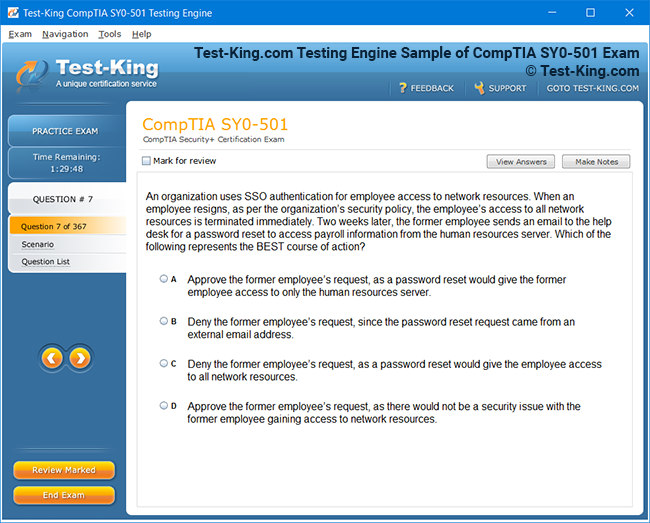
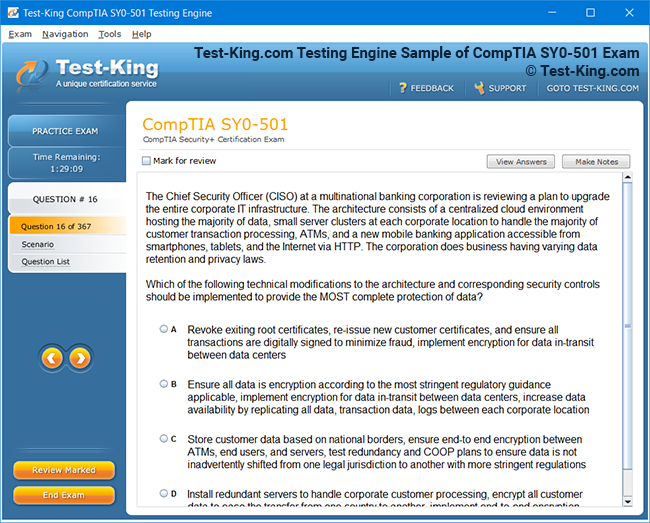
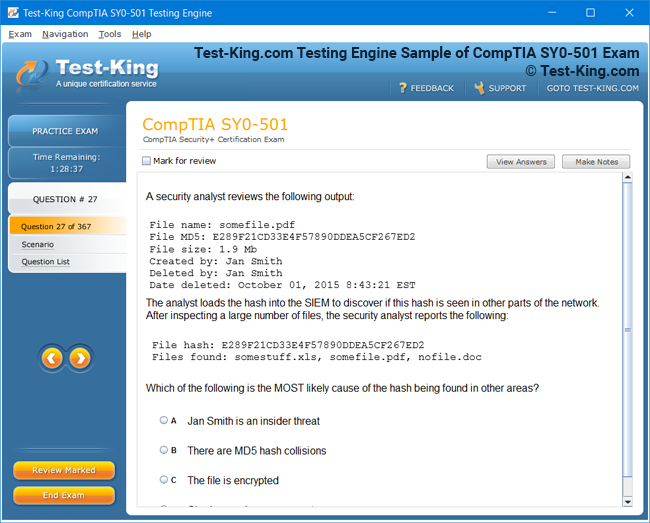
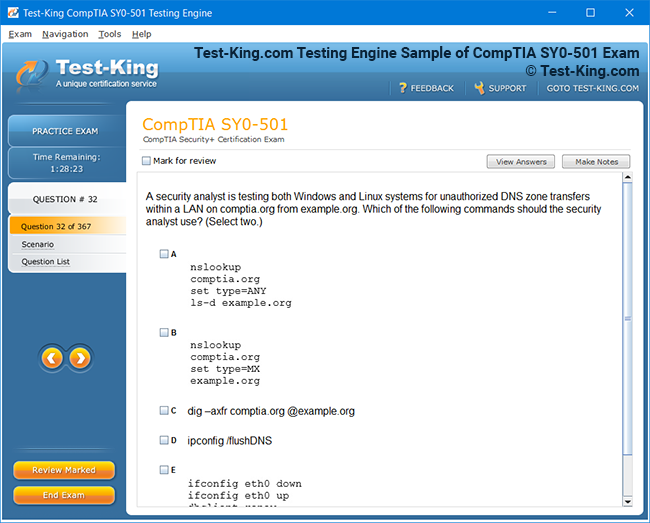
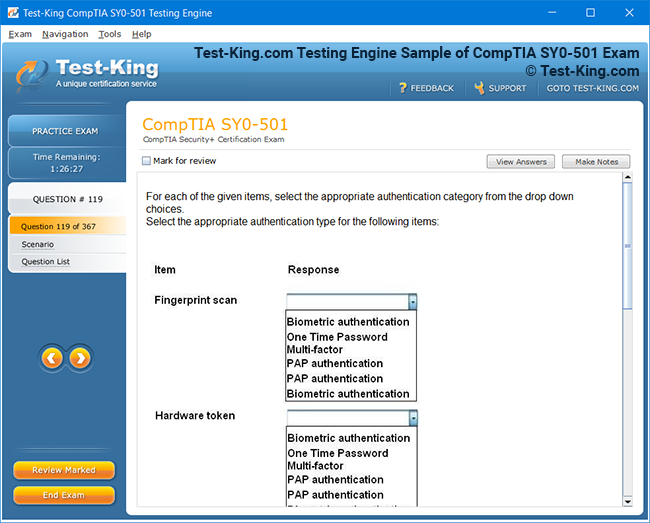
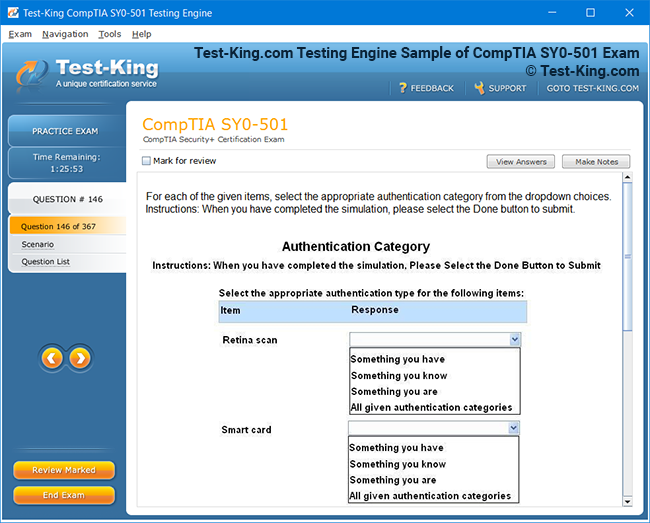
Product Screenshots
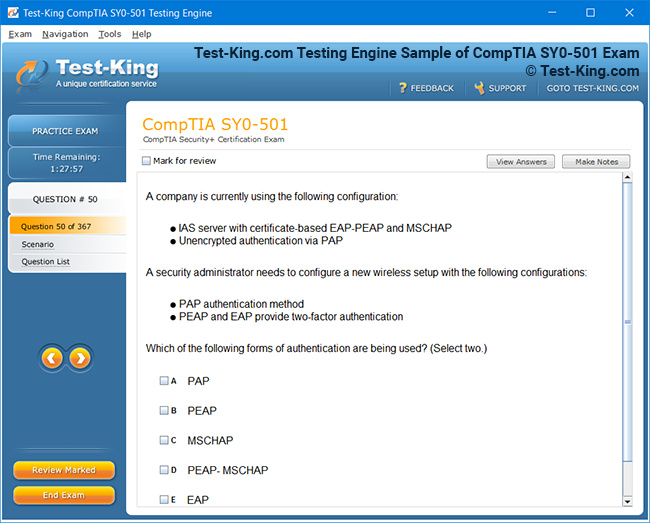
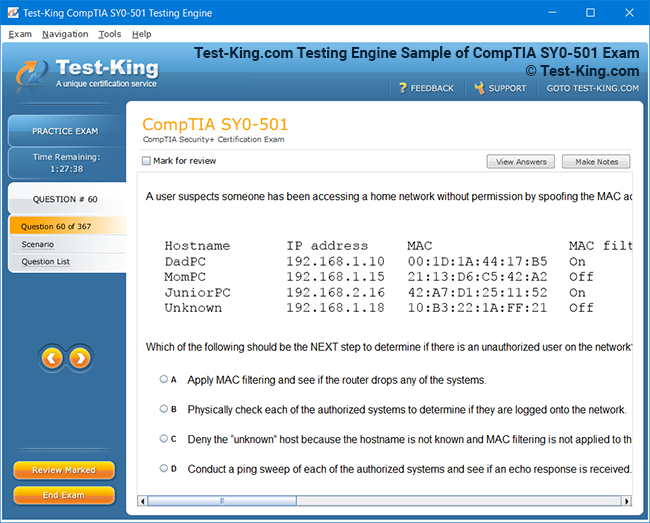
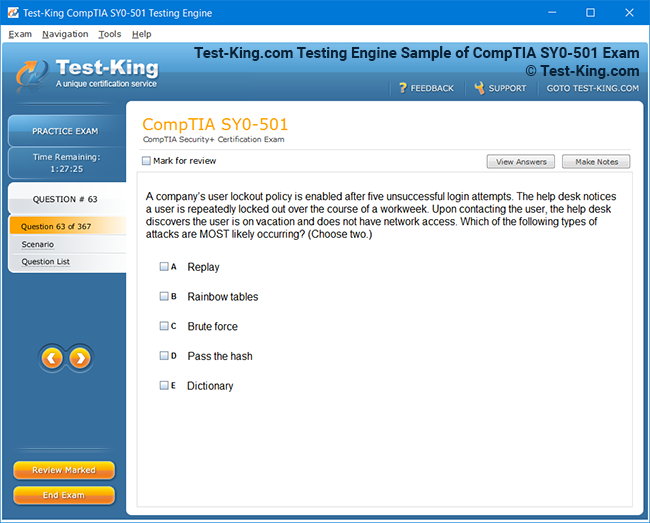
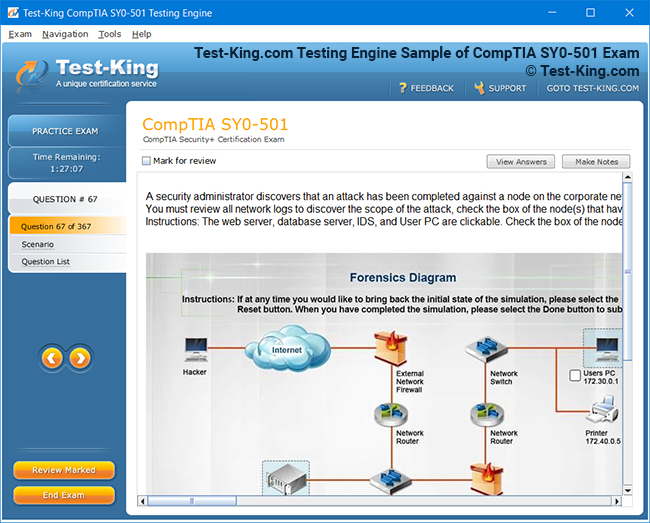
Frequently Asked Questions
How can I get the products after purchase?
All products are available for download immediately from your Member's Area. Once you have made the payment, you will be transferred to Member's Area where you can login and download the products you have purchased to your computer.
How long can I use my product? Will it be valid forever?
Test-King products have a validity of 90 days from the date of purchase. This means that any updates to the products, including but not limited to new questions, or updates and changes by our editing team, will be automatically downloaded on to computer to make sure that you get latest exam prep materials during those 90 days.
Can I renew my product if when it's expired?
Yes, when the 90 days of your product validity are over, you have the option of renewing your expired products with a 30% discount. This can be done in your Member's Area.
Please note that you will not be able to use the product after it has expired if you don't renew it.
How often are the questions updated?
We always try to provide the latest pool of questions, Updates in the questions depend on the changes in actual pool of questions by different vendors. As soon as we know about the change in the exam question pool we try our best to update the products as fast as possible.
How many computers I can download Test-King software on?
You can download the Test-King products on the maximum number of 2 (two) computers or devices. If you need to use the software on more than two machines, you can purchase this option separately. Please email support@test-king.com if you need to use more than 5 (five) computers.
What is a PDF Version?
PDF Version is a pdf document of Questions & Answers product. The document file has standart .pdf format, which can be easily read by any pdf reader application like Adobe Acrobat Reader, Foxit Reader, OpenOffice, Google Docs and many others.
Can I purchase PDF Version without the Testing Engine?
PDF Version cannot be purchased separately. It is only available as an add-on to main Question & Answer Testing Engine product.
What operating systems are supported by your Testing Engine software?
Our testing engine is supported by Windows. Andriod and IOS software is currently under development.
Top Genesys Exams
- GCP-GCX - Genesys Cloud CX Certified Professional - Consolidated
- GCX-GCD - Genesys Cloud CX: Developer
- GCP-GC-ARC - Genesys Cloud Architect Certified Specialist
- GC-AI-DB - Genesys Cloud: AI - Digital Bots & Knowledge
- GCP-GC-ADM - Genesys Cloud Certified Professional - Contact Center Admin
- GCP-GC-IMP - Genesys Cloud Certified Professional - Implementation
- GCP-GC-REP - Genesys Cloud Certified Professional - Reporting and Analytics
- GCX-ARC - Genesys Cloud CX: Architect
- GCX-WFM - Genesys Cloud CX: WEM - Workforce Management Certified Specialist
Latest Updates and Changes to the GCP-GC-REP Exam You Should Know
The Genesys Cloud Certified Professional - Reporting and Analytics exam, also known as GCP-GC-REP, has undergone several notable updates that candidates need to be aware of to navigate their preparation effectively. This certification is designed for professionals who aspire to harness the analytical capabilities of Genesys Cloud, demonstrating proficiency in generating actionable insights from customer engagement data. With the evolving landscape of cloud contact center solutions, Genesys has adapted the exam structure to reflect new features, reporting tools, and best practices that align with modern business demands.
Understanding the GCP-GC-REP Exam
The exam emphasizes not only the technical knowledge required to build and manage reports but also the analytical reasoning needed to interpret data meaningfully. Recent changes have focused on deepening the assessment of practical skills, requiring candidates to demonstrate competency in real-world scenarios. This means that rote memorization is no longer sufficient; instead, candidates must understand how to translate data into strategies that improve customer experience, operational efficiency, and workforce performance. Additionally, the exam now integrates more scenario-based questions, challenging professionals to apply their knowledge in dynamic situations rather than simply recalling facts.
Understanding the prerequisites is crucial for candidates aiming to succeed. While the previous version of the exam heavily tested theoretical understanding, the revised structure requires familiarity with the entire reporting ecosystem within Genesys Cloud. Candidates are expected to navigate standard reports, historical and real-time analytics, dashboards, and data export processes. Proficiency in using the reporting APIs and understanding data architecture is increasingly emphasized, reflecting the growing importance of data integration and manipulation in a professional environment. Moreover, the exam encourages familiarity with operational metrics, key performance indicators, and statistical methods for evaluating service levels and agent performance.
Key Areas of Change in the Exam Content
Several changes have been implemented to keep pace with the evolving needs of Genesys Cloud users. One significant update is the expansion of content covering predictive and AI-driven analytics tools. Previously, the exam largely concentrated on standard reporting functions, but now candidates are expected to understand how to leverage predictive models and trend analyses. This shift reflects the broader industry movement toward proactive engagement and anticipatory analytics, where businesses seek to predict customer needs and optimize resource allocation before issues arise.
Another substantial change relates to the scope of data sources. The current exam assesses knowledge of integrating multiple data streams, including external CRM platforms, workforce management systems, and third-party analytics tools. Candidates must demonstrate the ability to consolidate disparate datasets into coherent reports that provide actionable insights. This requires understanding how data synchronization, scheduling, and transformation processes work within Genesys Cloud, emphasizing not just technical execution but also the strategic rationale behind report design.
The exam now also places greater emphasis on user interface customization and the creation of dashboards that facilitate quick decision-making. Candidates are expected to demonstrate proficiency in designing dashboards that cater to different stakeholders, from operational managers to senior executives. This includes the selection of appropriate visualizations, the grouping of relevant metrics, and the configuration of alerts for real-time monitoring. The ability to balance comprehensiveness with clarity is crucial, as poorly designed dashboards can obscure important insights and reduce operational effectiveness.
Security and data governance have also become a prominent theme in the updated exam. Professionals are now assessed on their knowledge of access controls, data privacy considerations, and compliance requirements when managing reporting systems. This includes understanding roles and permissions, anonymization techniques, and the principles of least privilege. Ensuring that sensitive customer information is protected while maintaining the utility of analytical outputs has become a critical competency for reporting professionals.
Exam Structure and Format Changes
The format of the GCP-GC-REP exam has evolved to better reflect real-world tasks. The current iteration includes a combination of multiple-choice questions, scenario-based queries, and hands-on exercises that simulate live reporting environments. Candidates are required to interpret sample datasets, identify trends, and recommend appropriate interventions based on their analysis. This experiential approach ensures that successful candidates are not only theoretically knowledgeable but also practically capable of using Genesys Cloud tools effectively.
Time management has become more critical due to the increased emphasis on applied questions. Each scenario requires careful consideration and the application of analytical reasoning, often involving multiple steps to reach a conclusion. Candidates are encouraged to practice with mock datasets and simulate report creation processes to build fluency and confidence. The inclusion of questions on error detection and troubleshooting also means that candidates must understand common pitfalls and how to resolve them efficiently, reflecting the realities of operational reporting in live environments.
Additionally, the scoring system has been refined to reward not only accuracy but also the depth of analysis. Candidates who demonstrate advanced problem-solving skills and the ability to contextualize data insights are more likely to achieve higher scores. This aligns with the exam’s objective of producing professionals capable of translating raw data into strategic recommendations that drive organizational performance. Understanding the weightage of each section, familiarizing oneself with scenario-based evaluation, and prioritizing practice on applied analytics tasks are now essential components of preparation.
Skills and Knowledge Tested in the Updated Exam
The updated exam evaluates a broad spectrum of competencies, ranging from fundamental reporting skills to advanced analytics and data management capabilities. Core skills include the ability to design, configure, and deploy reports and dashboards that reflect operational priorities. Candidates must also demonstrate fluency in interpreting performance metrics, identifying trends, and making recommendations that enhance customer engagement and workforce efficiency.
Advanced skills now include predictive modeling, trend analysis, and anomaly detection. Professionals are expected to understand statistical concepts, recognize patterns in historical data, and anticipate future operational needs. This analytical foresight is increasingly valued as organizations aim to optimize their resources and proactively address service challenges. The integration of AI-powered reporting tools requires candidates to understand how machine learning algorithms generate insights and how these can be leveraged in practical business contexts.
Data management competencies are also critical. Candidates are tested on their ability to clean, transform, and aggregate data from multiple sources, ensuring consistency and accuracy across reports. Understanding data hierarchies, relational structures, and the nuances of scheduled versus on-demand reporting forms an essential component of the exam. Professionals must demonstrate not only technical proficiency but also the ability to make strategic decisions regarding data representation and reporting cadence.
The exam also evaluates soft skills indirectly, through scenario-based questions that require prioritization, judgment, and stakeholder communication. Professionals must demonstrate the ability to balance conflicting demands, such as speed versus accuracy or granularity versus clarity. This reflects the real-world challenges of reporting, where technical expertise must be complemented by strategic thinking and effective communication.
Common Questions Transformed into Insights
One common question in the previous version of the exam asked candidates to identify the best report type for monitoring agent performance over a specific period. In the updated version, this is now framed as a scenario: an operations manager needs to track agent adherence to schedule while maintaining service levels. Candidates are required to interpret historical and real-time data, design an appropriate dashboard, and justify the chosen metrics. This change emphasizes applied reasoning over theoretical recall, encouraging candidates to think critically about how data supports operational decisions.
Another frequently encountered topic is report scheduling and automation. Whereas earlier exams asked candidates to describe scheduling options, the new exam presents a scenario where a report must be automatically generated and shared with multiple stakeholders with differing access permissions. Candidates must explain how to configure the scheduling, manage permissions, and ensure that the data integrity is maintained, demonstrating both technical knowledge and governance awareness.
Questions around predictive analytics have also evolved. Previously, candidates might have been asked to explain basic forecasting methods. Now, they are asked to evaluate a trend in customer interactions, predict potential service bottlenecks, and propose preventive measures. This requires understanding not only the mechanics of forecasting but also the operational implications and strategic use of insights, reinforcing the exam’s focus on practical application.
Similarly, data integration questions have shifted from identifying compatible systems to designing a cohesive reporting solution that combines Genesys Cloud data with external sources such as CRM platforms or workforce management tools. Candidates must outline the steps for data extraction, transformation, and loading, while ensuring accuracy and timeliness. This reinforces the importance of holistic understanding and strategic thinking in real-world reporting scenarios.
Finally, candidate inquiries about anomaly detection have transitioned from simple pattern recognition to scenario-driven analysis. Professionals must now identify unusual trends in real-time dashboards, determine root causes, and recommend corrective actions. This approach tests both analytical acuity and operational knowledge, highlighting the critical role of reporting professionals in supporting organizational resilience and performance.
Deep Dive into Reporting and Analytics Enhancements
The Genesys Cloud Certified Professional - Reporting and Analytics exam has evolved to encompass a more intricate and sophisticated evaluation of candidates’ skills. The most recent updates emphasize a comprehensive understanding of reporting workflows, data manipulation, and analytical interpretation. Candidates are now required to not only navigate the reporting tools within Genesys Cloud but also demonstrate an ability to extract nuanced insights that can influence operational strategy and customer engagement practices.
A significant transformation in the exam content is the expanded focus on historical and real-time analytics. Professionals must demonstrate the ability to juxtapose past performance trends against current operational metrics, identifying deviations and correlating them with actionable causes. This dual approach necessitates an understanding of temporal data relationships and the implications of variances for service levels, agent performance, and customer satisfaction. Candidates are encouraged to interpret performance anomalies with precision, utilizing both quantitative and qualitative insights to inform strategic decisions.
The scope of scenario-based questions has widened, reflecting the dynamic nature of modern contact center operations. For instance, candidates may be presented with a situation where an unexpected surge in call volume occurs during a promotional campaign. They are required to design an appropriate set of reports and dashboards to monitor agent response times, service level adherence, and customer sentiment. This scenario tests not only technical fluency but also operational foresight, prioritization skills, and the ability to anticipate downstream effects on staffing and resource allocation.
Recent exam revisions have placed considerable emphasis on advanced visualization techniques. Candidates are expected to understand which graphical representations—such as heat maps, scatter plots, or funnel charts—best convey complex datasets to diverse stakeholders. The ability to transform raw numbers into comprehensible visual stories is critical, as effective visualization enhances decision-making, reduces cognitive load, and fosters actionable insights. This shift toward visualization mastery also reflects the broader industry trend of integrating data storytelling into business intelligence practices.
Enhanced Emphasis on Predictive Analytics
Predictive analytics has become a cornerstone of the updated examination framework. Professionals are tested on their ability to leverage Genesys Cloud’s predictive models to anticipate future customer interactions, identify potential operational bottlenecks, and forecast workforce requirements. Candidates must understand the principles of trend extrapolation, regression analysis, and anomaly detection to provide forward-looking recommendations that drive efficiency and improve service quality.
One illustrative scenario may involve predicting the impact of a new product launch on call volumes across different channels. Candidates are required to analyze historical trends, incorporate seasonal variations, and assess the potential effects on agent workload and service levels. This exercise evaluates their aptitude for integrating diverse data sources, interpreting complex patterns, and generating prescriptive insights. Such predictive exercises underscore the exam’s shift from static reporting toward strategic analytics, reflecting the modern expectations of reporting professionals in high-performing contact centers.
Data Integration and Holistic Reporting
Another notable update pertains to the integration of multiple data sources into cohesive reporting frameworks. Candidates are expected to demonstrate proficiency in consolidating data from Genesys Cloud, customer relationship management systems, workforce management applications, and other third-party platforms. This capability requires an understanding of data transformation, synchronization, and validation to ensure that reporting outputs are accurate, timely, and actionable.
A practical example may involve constructing a comprehensive performance report that combines real-time call metrics with historical customer satisfaction scores. Candidates must determine how to align disparate datasets, identify potential inconsistencies, and ensure that metrics are meaningful for operational stakeholders. This emphasizes the necessity of both technical acumen and strategic reasoning, as reports must not only convey information accurately but also guide managerial decision-making effectively.
Candidates are also evaluated on their ability to design modular dashboards that cater to multiple user personas. Dashboards for frontline supervisors may prioritize adherence, call handling times, and immediate operational alerts, whereas executive dashboards focus on strategic metrics such as customer satisfaction trends, revenue implications, and resource optimization. The exam now emphasizes the importance of tailoring reports to audience requirements, reinforcing the professional’s role as both an analyst and a communicator.
Reporting Automation and Scheduling
The updated examination framework places increased importance on report automation and scheduling. Candidates must understand how to configure reports to run at specified intervals, distribute them securely to relevant stakeholders, and manage permissions to safeguard sensitive data. They are required to consider operational constraints, ensure the integrity of distributed data, and minimize manual intervention to enhance efficiency and reliability.
A typical scenario might involve setting up automated weekly performance summaries for a regional operations team, while ensuring that access rights prevent unauthorized exposure of confidential metrics. Candidates are expected to navigate the nuances of recurring report generation, error handling, and alert configuration. This focus on automation underscores the exam’s commitment to assessing practical, real-world skills that extend beyond theoretical knowledge.
Advanced Troubleshooting and Analytical Reasoning
Troubleshooting has become a prominent component of the exam. Candidates are frequently presented with scenarios where reports yield unexpected results, such as discrepancies in historical metrics or anomalous trends in agent performance. They must identify the root cause, which may involve misconfigured filters, delayed data updates, or inconsistencies in external data sources, and then propose corrective actions.
Analytical reasoning is also emphasized through scenarios that require interpreting patterns in customer interactions. For example, if a sudden decline in service level occurs during a promotional event, candidates must determine whether this is due to increased volume, agent performance issues, or system bottlenecks. The ability to synthesize multiple data points and draw meaningful conclusions is now a critical aspect of the examination, reflecting the real-world demands placed upon reporting professionals.
Scenario-Based Reporting Exercises
One common type of scenario involves monitoring agent adherence across multiple shifts. Candidates are asked to design reports that track schedule adherence, agent availability, and exceptions, then interpret the results to provide recommendations for staffing adjustments. This requires a granular understanding of scheduling metrics, operational priorities, and the interplay between agent behavior and service levels.
Another scenario may involve evaluating customer satisfaction scores across various interaction channels. Candidates are required to identify trends, detect anomalies, and correlate metrics with operational interventions. This exercise tests the candidate’s ability to translate raw data into actionable insights that can inform training, resource allocation, and strategic planning. The scenario-driven approach reinforces the exam’s objective of producing professionals capable of delivering high-impact reporting solutions in dynamic operational environments.
Incorporating Compliance and Data Governance
Data governance and compliance are now integral elements of the updated exam. Candidates must demonstrate awareness of access controls, data anonymization practices, and regulatory requirements that govern customer information. They are expected to manage sensitive data responsibly while ensuring that reporting outputs retain their analytical value.
A typical scenario may involve distributing performance reports to multiple stakeholders while ensuring that personal identifiers are masked in accordance with privacy regulations. Candidates must describe how to configure access permissions, validate data integrity, and comply with organizational policies. This emphasis on governance reflects the increasing importance of responsible data handling in contemporary reporting practices.
Emerging Trends in Genesys Cloud Analytics
The exam has been updated to reflect emerging trends in cloud-based analytics, including the integration of artificial intelligence and machine learning for enhanced insight generation. Candidates are expected to understand how AI can augment reporting, such as by identifying patterns that are not immediately apparent or by providing predictive recommendations. This shift aligns the examination with the trajectory of modern contact center operations, where data-driven decision-making and proactive management are paramount.
Additionally, candidates may encounter scenarios involving multi-channel reporting, where performance metrics from voice, chat, email, and social media interactions must be synthesized into a coherent analysis. This requires an understanding of channel-specific nuances, appropriate metrics, and the design of reports that provide a unified view of customer engagement. The integration of diverse communication channels underscores the complexity of modern reporting and the necessity for comprehensive analytical capabilities.
Practical Application of Exam Knowledge
The updated exam encourages practical application of knowledge through realistic operational scenarios. Candidates are expected to demonstrate how reporting insights can influence staffing decisions, optimize resource allocation, and enhance customer satisfaction. For example, if real-time dashboards indicate a surge in interaction volume, candidates must interpret the data and recommend immediate operational interventions to maintain service levels. This approach ensures that certified professionals are prepared to translate reporting proficiency into tangible organizational outcomes.
Another practical consideration involves evaluating the effectiveness of implemented interventions. Candidates may be asked to compare pre- and post-intervention metrics, analyze trends, and assess whether the applied changes achieved desired results. This iterative analytical approach highlights the importance of continuous monitoring, adjustment, and refinement of reporting processes to support organizational performance.
Questions Recast as Insights
One recurrent exam question involves choosing the optimal report type for evaluating agent efficiency over a given timeframe. In the current version, this is framed as a scenario where supervisors require ongoing insight into agent adherence, call handling efficiency, and exceptions. Candidates are expected to select the appropriate report type, configure relevant filters, and explain the rationale behind their choices, emphasizing applied analytical reasoning.
Questions regarding data integration are now presented as complex tasks where multiple datasets must be harmonized to produce meaningful insights. Candidates must describe how they would align data from Genesys Cloud with external sources, address potential discrepancies, and ensure that consolidated reports accurately reflect operational realities. This shift underscores the practical and strategic focus of the updated examination framework.
Similarly, inquiries about predictive analytics have evolved from basic explanations to applied exercises where candidates must anticipate operational trends based on historical and real-time data. Professionals must interpret patterns, evaluate potential risks, and propose proactive measures, demonstrating a blend of analytical rigor and operational understanding.
Advanced Insights into Genesys Cloud Reporting
The Genesys Cloud Certified Professional - Reporting and Analytics exam has undergone extensive revisions to ensure that candidates demonstrate proficiency in contemporary reporting practices and data-driven decision-making. The updated examination framework evaluates both technical aptitude and analytical foresight, demanding that professionals not only construct reports but also interpret patterns, identify anomalies, and provide actionable recommendations to enhance operational efficiency.
One notable enhancement involves the emphasis on holistic reporting. Candidates are expected to integrate metrics across multiple channels, including voice, chat, email, and social interactions, to construct a comprehensive understanding of organizational performance. This multi-channel approach necessitates an appreciation for the subtleties inherent in each communication medium, the appropriate selection of metrics, and the presentation of unified insights that guide managerial decisions. Professionals are now assessed on their capacity to discern patterns that might otherwise remain obscured when considering channels in isolation, underscoring the importance of synthesis and contextual reasoning.
The exam also highlights the growing significance of predictive and prescriptive analytics. Candidates must demonstrate the ability to leverage historical data to anticipate future trends and proactively manage resources. For example, predicting potential call surges during seasonal campaigns or evaluating the impact of workforce adjustments on service levels requires not only familiarity with forecasting methodologies but also operational insight. This focus on predictive reasoning reflects the broader trend in cloud contact centers toward anticipatory management, where actionable foresight can mitigate risks and optimize performance.
Real-Time Analytics and Operational Agility
Real-time analytics has become a central element of the updated exam. Candidates are evaluated on their ability to configure dashboards that provide instant visibility into ongoing operations, detect deviations promptly, and support swift interventions. Real-time metrics, including queue length, handle time, and agent occupancy, must be interpreted with precision to guide immediate operational adjustments. Professionals are expected to recognize the interplay between metrics and the practical implications of trends, such as how increased queue times may necessitate temporary resource reallocation or escalation protocol activation.
Scenario-based questions often illustrate sudden operational changes, such as unexpected spikes in call volume or system downtime. Candidates must demonstrate both analytical acuity and decision-making agility, configuring alerts, interpreting anomalies, and recommending actions that maintain service continuity. This emphasis on operational responsiveness underscores the exam’s intent to assess applied knowledge, rather than theoretical recall, ensuring that certified professionals are prepared for the dynamic demands of cloud-based contact centers.
The revised exam also evaluates how real-time data can be harmonized with historical performance to inform strategic decisions. For instance, comparing current agent adherence against historical averages allows candidates to identify deviations, recognize trends, and formulate recommendations to enhance staffing efficiency or adjust scheduling practices. This synthesis of past and present data demonstrates a sophisticated understanding of temporal patterns and operational dynamics, aligning with the expectation that reporting professionals translate raw data into actionable insights.
Dashboard Design and Visualization Mastery
An essential component of the updated exam is proficiency in designing dashboards that communicate complex data effectively. Candidates must understand the principles of data visualization, including the selection of appropriate chart types, the grouping of related metrics, and the prioritization of information for different audiences. Dashboards intended for operational managers focus on granular, actionable metrics such as queue performance, agent adherence, and real-time exceptions, whereas executive dashboards emphasize strategic outcomes like customer satisfaction trends, operational efficiency, and predictive forecasts.
In practice, candidates are often presented with scenarios requiring them to construct dashboards that balance clarity, comprehensiveness, and interpretability. For example, presenting agent performance alongside customer sentiment scores necessitates careful arrangement of visual elements to avoid cognitive overload while ensuring meaningful insights. Professionals are assessed on their ability to create dashboards that enable swift, data-driven decision-making, demonstrating not only technical competence but also an understanding of human factors in data interpretation.
Recent updates also emphasize the use of advanced visualization techniques such as heat maps, scatter plots, and comparative trend graphs. Candidates are required to justify the selection of visual formats based on the data being presented, ensuring that the chosen representation highlights patterns, anomalies, and correlations effectively. This approach aligns with contemporary expectations of reporting professionals to act as interpreters of data, translating numbers into strategic guidance.
Data Integration and Transformation
Data integration remains a critical aspect of the GCP-GC-REP exam. Candidates must demonstrate the ability to consolidate information from multiple sources, including Genesys Cloud, customer relationship management platforms, workforce management tools, and other third-party applications. This task requires understanding the principles of data transformation, validation, and harmonization to ensure that integrated reports are both accurate and actionable.
Scenario-based questions often involve the construction of comprehensive reports that merge historical performance data with current operational metrics. For example, aligning call center statistics with customer satisfaction scores from external systems demands careful consideration of data hierarchies, formatting differences, and timing discrepancies. Professionals are expected to identify and resolve potential inconsistencies, demonstrating not only technical proficiency but also strategic awareness of how integrated data informs decision-making processes.
Candidates are also evaluated on their ability to apply filters, aggregations, and calculations appropriately, tailoring reports to meet the informational needs of various stakeholders. Whether generating reports for frontline supervisors, team leads, or senior management, the ability to customize data presentation without compromising accuracy is emphasized in the updated exam framework.
Predictive Analytics in Operational Scenarios
Predictive analytics is increasingly prominent in the revised examination. Candidates are assessed on their ability to forecast future trends based on historical patterns and real-time inputs. For instance, analyzing past call volumes and seasonal fluctuations enables professionals to anticipate staffing requirements, identify potential bottlenecks, and recommend preventive measures. The exam evaluates not only methodological knowledge but also the operational application of predictive insights, emphasizing a pragmatic approach to analytics.
One illustrative scenario may involve projecting the impact of a marketing campaign on service queues. Candidates are required to evaluate historical data, account for anticipated increases in interactions, and propose staffing adjustments or workflow optimizations to maintain service levels. This exercise demonstrates the importance of applying analytical insights proactively, highlighting the growing expectation that reporting professionals act as strategic partners in operational planning.
Candidates must also understand anomaly detection within predictive frameworks. Identifying deviations from expected patterns, diagnosing underlying causes, and recommending interventions are critical skills tested in the exam. This capacity for analytical foresight distinguishes competent reporting professionals, ensuring that organizations can respond to emerging operational challenges effectively.
Reporting Automation and Efficiency
The updated exam places considerable emphasis on report automation and efficient data dissemination. Candidates are expected to configure scheduled reports, manage permissions, and ensure that outputs are delivered accurately to relevant stakeholders. Scenarios often involve recurring operational reports or ad hoc analytical requests, requiring candidates to demonstrate both technical fluency and strategic judgment in optimizing reporting workflows.
A typical scenario may involve setting up daily performance summaries for regional managers while restricting access to confidential metrics for frontline staff. Candidates are required to describe the scheduling process, validate data integrity, and ensure that reports are both timely and actionable. This focus on automation reflects the evolving demands of cloud contact centers, where efficiency and accuracy in reporting are essential to operational success.
Troubleshooting and Error Resolution
Troubleshooting has become an integral aspect of the GCP-GC-REP exam. Candidates frequently encounter scenarios where report results appear inconsistent, incomplete, or delayed. They must identify the root cause, which may involve misconfigured filters, outdated datasets, or discrepancies in external data sources, and propose corrective actions. This evaluative approach ensures that professionals possess practical problem-solving skills essential for maintaining the reliability and credibility of reporting outputs.
Analytical reasoning is tested through complex operational scenarios. For example, if a dashboard indicates unexpected fluctuations in agent performance, candidates must determine whether the anomaly arises from operational factors, data synchronization issues, or reporting misconfigurations. Their ability to synthesize multiple data points, identify underlying causes, and recommend interventions demonstrates the holistic expertise expected of certified professionals.
Questions Transformed into Applied Understanding
Many questions in the updated exam are scenario-driven, emphasizing applied knowledge over rote memorization. One recurring topic involves determining the most suitable report type for tracking agent performance. Candidates must consider operational objectives, select appropriate metrics, configure filters, and interpret the results to provide actionable recommendations. This approach tests analytical judgment and operational understanding rather than simple theoretical knowledge.
Data integration questions have similarly evolved. Candidates are often presented with tasks requiring the consolidation of multiple datasets into coherent reports. They must identify potential discrepancies, validate the data, and ensure that the resulting reports accurately reflect operational realities. This process evaluates both technical proficiency and strategic insight, highlighting the critical role of reporting professionals in informed decision-making.
Predictive analytics questions now focus on proactive intervention. Candidates may be asked to analyze historical trends, anticipate potential service issues, and propose operational adjustments. This tests their ability to apply predictive reasoning in a practical context, ensuring that certified professionals can leverage analytics to drive organizational performance.
Automation and scheduling inquiries also emphasize real-world application. Candidates must describe how they would configure recurring reports, manage permissions, and distribute outputs effectively to relevant stakeholders. The exam evaluates both technical competence and strategic thinking, reflecting the integrated responsibilities of reporting professionals in contemporary cloud contact centers.
Comprehensive Analysis of Reporting and Analytics in Genesys Cloud
The Genesys Cloud Certified Professional - Reporting and Analytics exam has transformed to encompass the intricacies of modern cloud-based reporting, emphasizing both technical mastery and analytical perspicacity. Candidates are now expected to exhibit a sophisticated understanding of data collection, visualization, integration, and predictive interpretation to provide actionable insights that drive operational efficiency and elevate customer experiences. The updated examination evaluates not only the capacity to generate reports but also the strategic aptitude required to interpret multi-dimensional data across varied operational contexts.
Recent modifications underscore the necessity of holistic comprehension of Genesys Cloud’s reporting architecture. Professionals are required to navigate both historical and real-time datasets to discern patterns, detect anomalies, and make informed recommendations. Understanding temporal correlations within data, and their impact on performance metrics, has become critical. Candidates must demonstrate the ability to juxtapose current performance indicators against historical benchmarks, elucidating insights that inform decisions related to workforce allocation, service level adherence, and customer satisfaction trajectories.
Scenario-based questions now dominate the assessment, requiring candidates to solve operational challenges using data-driven reasoning. For instance, in a situation where call volumes fluctuate unexpectedly due to a marketing initiative, candidates must interpret historical and real-time data, design dashboards that capture critical metrics, and propose operational adjustments to maintain service levels. This experiential approach ensures that professionals are prepared for the dynamism inherent in cloud contact center environments, where analytical acuity and operational foresight are paramount.
Advanced Dashboard Configuration and Visualization Techniques
A core component of the exam update emphasizes dashboard design and data visualization. Candidates must illustrate the ability to configure dashboards that accommodate diverse stakeholder needs while presenting complex data in a digestible and actionable manner. Operational managers require dashboards that highlight immediate concerns such as agent adherence, queue durations, and exceptions, whereas executive stakeholders prioritize strategic metrics such as customer satisfaction indices, operational efficiency, and predictive forecasts.
Visualization expertise is increasingly critical, with candidates evaluated on their ability to select appropriate graphical formats, such as trend lines, heat maps, and comparative charts, to convey nuanced data narratives. Scenarios may involve illustrating correlations between agent performance and customer satisfaction, requiring careful selection of visual cues to prevent cognitive overload while maximizing interpretive clarity. This approach reflects the contemporary imperative that reporting professionals act not merely as data producers but as interpreters capable of transforming raw metrics into actionable guidance.
The exam also stresses interactive dashboards that enable stakeholders to drill down into metrics, filter data, and explore trends dynamically. Candidates must demonstrate an understanding of the balance between information granularity and accessibility, ensuring that users can derive meaningful insights without being overwhelmed. Mastery of these advanced visualization techniques is critical, as effective dashboards can drive operational decisions and support proactive management strategies.
Integration of Multiple Data Sources
Data integration has become a salient focus in the updated exam. Candidates are evaluated on their ability to amalgamate information from Genesys Cloud, CRM systems, workforce management platforms, and other external repositories. This requires a nuanced understanding of data transformation, normalization, and validation to ensure consistency and accuracy across reporting outputs.
In practical scenarios, candidates may be asked to produce reports that combine historical call data with customer satisfaction scores from external platforms, requiring reconciliation of timing discrepancies, data hierarchies, and formatting differences. Professionals must demonstrate proficiency in managing complex datasets to ensure that integrated reports are both coherent and strategically meaningful. This competency reflects the real-world expectation that reporting professionals serve as architects of actionable intelligence, capable of synthesizing data across systems to provide a holistic operational perspective.
Additionally, candidates are expected to implement filters, aggregations, and calculated metrics appropriately, tailoring reports to meet the needs of distinct stakeholders. For example, frontline supervisors may require highly granular operational insights, whereas executives may prioritize high-level performance trends. The exam assesses the professional’s ability to balance specificity with strategic relevance, reinforcing the importance of context-aware reporting.
Predictive and Prescriptive Analytics
Predictive analytics forms an increasingly central component of the exam. Candidates are required to leverage historical trends and real-time data to anticipate operational challenges and inform decision-making. For instance, predicting peak call periods or potential agent shortages involves an understanding of trend analysis, forecasting methodologies, and anomaly detection. This anticipatory approach reflects the evolving role of reporting professionals, who are expected not merely to report historical outcomes but to guide proactive interventions that optimize performance and customer satisfaction.
Prescriptive analytics further challenges candidates to translate predictive insights into actionable strategies. A scenario may involve analyzing anticipated call surges and recommending dynamic staffing adjustments, workflow reallocation, or escalation protocols to mitigate potential service degradation. Candidates must articulate the rationale behind their recommendations, demonstrating analytical rigor and operational awareness. This emphasis on prescriptive reasoning underscores the exam’s intent to assess both data fluency and strategic decision-making skills.
Report Automation and Scheduling Proficiency
Efficiency and automation are vital elements of the updated examination. Candidates are assessed on their ability to configure recurring reports, manage stakeholder access, and ensure data integrity in automated workflows. Practical scenarios may require setting up daily or weekly reports for different managerial levels, ensuring that sensitive information is appropriately safeguarded while maintaining timeliness and accuracy.
Candidates must understand the principles of scheduling, distribution, and error handling to guarantee that automated reporting processes function reliably. For example, configuring a report to run at specific intervals and alerting relevant stakeholders in case of anomalies demonstrates a mastery of operational best practices. This focus on automation reflects the contemporary expectation that reporting professionals optimize workflows and reduce manual effort, enhancing organizational efficiency and reliability.
Troubleshooting and Analytical Problem-Solving
The revised exam places considerable emphasis on troubleshooting and analytical problem-solving. Candidates may encounter scenarios where reports yield unexpected results, inconsistencies, or anomalies. They are required to diagnose the root causes, which could include misconfigured filters, delayed data feeds, or discrepancies in external datasets, and propose corrective measures.
Analytical reasoning is further tested through multi-layered operational scenarios. For instance, a sudden decline in customer satisfaction metrics may necessitate investigating multiple potential causes, such as agent performance, workflow inefficiencies, or reporting inaccuracies. Candidates are expected to synthesize information from various sources, identify patterns, and recommend operational or analytical interventions. This evaluative approach ensures that certified professionals are adept at maintaining report accuracy and delivering actionable intelligence under complex conditions.
Questions Recast into Applied Scenarios
Many examination questions now prioritize applied understanding over rote memorization. One recurring topic involves determining the optimal report type for evaluating agent performance over a specific period. Candidates are presented with a scenario where supervisors need continuous visibility into adherence, handling efficiency, and performance exceptions. They are required to select the most appropriate report type, configure relevant metrics, and interpret results to provide actionable recommendations. This approach emphasizes analytical reasoning and operational insight.
Data integration inquiries have evolved to require scenario-based problem-solving. Candidates may be asked to consolidate multiple datasets to produce a coherent and meaningful report. They must identify potential discrepancies, validate data accuracy, and ensure the resulting report aligns with operational objectives. This approach underscores the dual requirement of technical proficiency and strategic awareness in modern reporting practices.
Predictive and prescriptive analytics questions similarly focus on practical application. Candidates may analyze historical and real-time data to anticipate operational challenges, such as staffing shortages or service bottlenecks, and propose actionable interventions. This evaluation tests their ability to translate predictive insights into operational strategies that optimize performance and customer satisfaction.
Automation and scheduling questions are now framed in real-world scenarios, requiring candidates to describe how they would configure recurring reports, manage stakeholder access, and ensure timely distribution. This demonstrates the integration of technical knowledge with operational judgment, reflecting the contemporary expectations of reporting professionals in cloud-based contact center environments.
Emerging Operational and Analytical Trends
The GCP-GC-REP exam also incorporates emerging trends in reporting and analytics. Candidates are expected to understand the integration of artificial intelligence, machine learning, and multi-channel data synthesis within reporting workflows. AI-enhanced analytics allows professionals to identify patterns not readily discernible in raw data, while multi-channel reporting provides a cohesive view of customer interactions across diverse platforms.
Candidates must demonstrate the ability to leverage these advanced tools to enhance operational decision-making. Scenarios may involve interpreting AI-generated insights to optimize agent workflows or predicting customer behavior across channels. Mastery of these capabilities ensures that certified professionals are equipped to address the evolving complexities of modern contact center operations.
In-Depth Exploration of Genesys Cloud Reporting and Analytics
The Genesys Cloud Certified Professional - Reporting and Analytics exam has experienced substantial enhancements, reflecting the increasing complexity and sophistication of modern cloud contact center operations. Candidates are now evaluated on their ability to leverage comprehensive reporting tools, interpret complex data patterns, and provide actionable insights that drive operational efficiency and optimize customer interactions. The examination framework emphasizes not only technical proficiency but also strategic reasoning, ensuring that certified professionals are equipped to meet the dynamic demands of contemporary reporting environments.
Recent updates underscore the importance of integrating historical and real-time data to enable informed decision-making. Professionals are required to analyze past performance trends alongside current operational metrics to identify deviations, anomalies, and emerging patterns. This dual-perspective analysis allows candidates to anticipate potential issues, propose corrective actions, and optimize workflow efficiency. The ability to discern subtle correlations between different operational parameters has become a critical competency, demonstrating the exam’s emphasis on analytical acuity and operational foresight.
Scenario-based evaluations dominate the current examination structure. Candidates may be asked to address situations such as unexpected increases in call volume, fluctuating service levels, or changes in customer sentiment. They must utilize Genesys Cloud’s reporting tools to construct dashboards, generate reports, and interpret insights to recommend operational interventions. This approach tests applied knowledge, ensuring that professionals are capable of translating analytical findings into tangible operational outcomes.
Advanced Dashboard Construction and Data Visualization
Dashboard design and data visualization are central to the updated examination. Candidates are expected to configure dashboards that present complex datasets in an interpretable and actionable manner. Operational dashboards prioritize metrics such as queue times, agent adherence, and workload distribution, whereas executive dashboards emphasize broader performance indicators, including customer satisfaction trends, strategic forecasts, and operational efficiency metrics.
Proficiency in advanced visualization techniques is essential. Candidates must select appropriate graphical representations such as trend lines, heat maps, scatter plots, and comparative charts to highlight correlations, anomalies, and patterns within datasets. Scenarios often require presenting agent performance in conjunction with customer satisfaction or predicting future operational trends. This necessitates thoughtful design to ensure clarity without sacrificing informational depth, emphasizing the candidate’s role as both data interpreter and strategic advisor.
Interactive dashboards have also become a focal point. Candidates are assessed on their ability to enable drill-downs, filters, and dynamic views, allowing users to explore data at multiple levels of granularity. Mastery of this functionality enhances operational agility, as managers can quickly identify performance deviations, investigate root causes, and implement timely corrective actions. The exam evaluates proficiency in balancing detailed operational metrics with high-level strategic insights to create dashboards that serve multiple stakeholders effectively.
Multi-Source Data Integration
The integration of diverse data sources is a prominent focus in the revised exam. Candidates must demonstrate the ability to consolidate information from Genesys Cloud, customer relationship management systems, workforce management tools, and external analytic platforms. Effective integration requires an understanding of data normalization, transformation, and validation to ensure consistency and accuracy across reporting outputs.
A practical example might involve generating a comprehensive report that aligns historical interaction data with customer feedback collected from external surveys or social media platforms. Candidates must identify and reconcile discrepancies, synchronize datasets, and ensure that metrics are presented in a coherent manner. This competency highlights the necessity of both technical acumen and strategic insight, ensuring that professionals can provide a holistic view of operational performance.
Candidates are also expected to implement advanced filtering, aggregation, and calculated metrics to tailor reporting outputs for different stakeholder requirements. Supervisors may need granular insights into agent adherence and queue performance, while executives require strategic overviews emphasizing trends, forecasts, and actionable recommendations. The ability to adapt reports to the needs of diverse audiences is a critical skill assessed in the exam.
Predictive and Prescriptive Analytics Applications
Predictive analytics has become an integral element of the updated examination framework. Candidates must demonstrate the ability to anticipate operational trends based on historical and real-time data. For example, forecasting call surges during marketing campaigns or predicting potential service bottlenecks requires a comprehensive understanding of trend analysis, regression models, and anomaly detection. This forward-looking approach underscores the growing expectation that reporting professionals contribute proactively to operational planning rather than merely reporting historical outcomes.
Prescriptive analytics further tests candidates’ capacity to translate predictive insights into actionable strategies. In scenarios where anticipated call volumes are likely to exceed staffing capacity, candidates may be required to recommend adjustments such as reallocating agents, implementing automated responses, or initiating escalation protocols. This evaluative process emphasizes applied reasoning, strategic thinking, and operational judgment, reflecting the exam’s emphasis on real-world applicability of analytical skills.
Candidates must also demonstrate the ability to evaluate the effectiveness of interventions using both historical and real-time metrics. By comparing pre- and post-intervention data, professionals can assess whether operational changes achieved the intended outcomes. This iterative analytical approach underscores the importance of continuous monitoring, adjustment, and refinement of reporting strategies in a dynamic operational environment.
Automation and Reporting Efficiency
The updated exam places significant importance on automation and efficient reporting practices. Candidates are expected to configure recurring reports, manage distribution and access permissions, and ensure data integrity throughout automated workflows. Practical scenarios may involve generating daily or weekly performance summaries for different managerial levels while protecting sensitive information. Candidates must demonstrate the ability to maintain accuracy, timeliness, and reliability in automated reporting processes.
Candidates are also evaluated on their capacity to implement error handling and alert mechanisms within automated workflows. For instance, if a scheduled report fails to generate or contains unexpected anomalies, professionals must identify the cause and propose corrective actions. This reflects the real-world demands of reporting in cloud-based contact centers, where automation enhances operational efficiency but requires careful monitoring and management to ensure reliability.
Troubleshooting and Analytical Problem Solving
Troubleshooting is a crucial component of the updated examination. Candidates frequently encounter scenarios where reports yield inconsistent or unexpected results. They must identify underlying causes, which may include misconfigured filters, delayed data feeds, or inconsistencies in external data sources, and propose effective solutions. This aspect of the exam assesses both technical proficiency and analytical reasoning, ensuring that professionals can maintain the reliability and credibility of reporting outputs.
Scenario-based troubleshooting exercises often involve multiple layers of analysis. For example, a sudden decline in agent performance metrics may require investigating staffing issues, workflow bottlenecks, and reporting configurations simultaneously. Candidates must synthesize information from various sources, recognize patterns, and recommend operational or analytical interventions. This holistic approach demonstrates the integration of technical skill, strategic judgment, and operational awareness required of certified reporting professionals.
Applied Scenario Questions
Examination questions have shifted toward scenario-based assessments to emphasize applied understanding. One common type involves selecting the optimal report type to evaluate agent performance over a designated period. Candidates are presented with real-world situations where supervisors require continuous visibility into adherence, efficiency, and exceptions. They must select the appropriate report type, configure relevant metrics, and interpret results to provide actionable recommendations. This approach assesses both analytical reasoning and operational insight.
Data integration questions now often require candidates to merge multiple datasets into coherent reports. Professionals must identify potential discrepancies, validate data accuracy, and ensure that resulting reports align with operational objectives. This emphasizes the dual requirement of technical competence and strategic understanding in modern reporting practices.
Predictive and prescriptive analytics inquiries are framed in scenarios that require anticipation of operational trends, identification of potential challenges, and recommendation of corrective actions. Candidates must demonstrate an ability to translate predictive insights into practical strategies that optimize performance and customer satisfaction.
Automation and scheduling questions also focus on practical application. Candidates may be asked to configure recurring reports, manage stakeholder access, and ensure timely distribution. This evaluates both technical proficiency and strategic judgment, reinforcing the contemporary expectation that reporting professionals optimize workflows while maintaining accuracy and reliability.
Emerging Trends and Operational Insights
The updated examination also emphasizes emerging trends in reporting and analytics. Candidates are expected to understand the integration of artificial intelligence, machine learning, and multi-channel data synthesis. AI-enhanced analytics enables the identification of patterns not readily discernible in raw datasets, while multi-channel reporting provides a comprehensive view of customer interactions across platforms.
Candidates must demonstrate the ability to leverage these tools to enhance operational decision-making. Scenarios may include interpreting AI-generated insights to optimize workflows, anticipate service bottlenecks, or forecast resource requirements. Mastery of these capabilities ensures that certified professionals are prepared to navigate the increasing complexity and dynamic nature of cloud-based contact center reporting.
Mastering Genesys Cloud Reporting and Analytics
The Genesys Cloud Certified Professional - Reporting and Analytics exam has evolved into a comprehensive evaluation of technical proficiency, analytical reasoning, and operational foresight. Candidates are required to exhibit mastery of the Genesys Cloud reporting ecosystem, encompassing data integration, visualization, predictive analytics, and scenario-based decision-making. The most recent updates reflect the increasing sophistication of cloud contact centers, where professionals must interpret complex datasets, anticipate operational trends, and provide actionable insights that drive efficiency and enhance customer experiences.
A critical aspect of the updated exam is the emphasis on holistic data comprehension. Professionals must analyze both historical and real-time metrics to identify deviations, recognize trends, and recommend interventions. This dual approach enables candidates to correlate performance anomalies with operational conditions, providing insights that inform staffing, workflow management, and service level adjustments. Scenario-based questions often simulate sudden operational challenges, requiring professionals to respond with analytical precision and strategic insight.
The examination also evaluates advanced dashboard design and visualization techniques. Candidates are expected to construct dashboards that balance clarity with informational depth, providing both operational managers and executives with actionable insights. Operational dashboards highlight real-time agent adherence, queue lengths, and exceptions, while executive dashboards emphasize strategic metrics such as customer satisfaction trends, predictive forecasts, and efficiency ratios. Mastery of visualization principles, including trend lines, comparative charts, and heat maps, allows professionals to convey complex data in an interpretable format that supports decision-making.
Multi-Source Data Integration and Transformation
Data integration has become a central focus of the updated examination. Candidates must demonstrate the ability to consolidate data from multiple sources, including Genesys Cloud, CRM systems, workforce management platforms, and external analytic tools. Effective integration requires a nuanced understanding of data transformation, normalization, and validation to ensure consistency and accuracy across reports.
Practical scenarios often involve generating comprehensive reports that merge historical call metrics with customer feedback, external survey data, and social media insights. Professionals must reconcile differences in data structure, timing, and formatting to produce cohesive reports that inform operational and strategic decisions. Candidates are also evaluated on the ability to implement filters, aggregations, and calculated metrics to tailor outputs for different stakeholder needs. Supervisors may require granular operational insights, while executives need strategic summaries emphasizing trends, forecasts, and actionable recommendations.
Predictive Analytics and Strategic Decision-Making
Predictive analytics forms a crucial component of the updated exam. Candidates are required to use historical and real-time data to anticipate operational trends and optimize resource allocation. Scenarios may include projecting call volumes during marketing campaigns, anticipating workforce shortages, or identifying potential service bottlenecks. Professionals must demonstrate the ability to apply trend analysis, regression techniques, and anomaly detection to provide actionable insights that mitigate risks and enhance operational performance.
Prescriptive analytics further challenges candidates to translate predictive insights into strategic recommendations. For instance, if projected call volumes are expected to exceed agent capacity, candidates may recommend dynamic staffing adjustments, workflow reallocations, or escalation protocols. This evaluative process tests applied reasoning and operational foresight, reflecting the real-world expectations of reporting professionals in contemporary contact centers. Candidates are also assessed on their ability to evaluate the effectiveness of implemented interventions by comparing pre- and post-intervention metrics, thereby demonstrating continuous analytical refinement.
Reporting Automation and Operational Efficiency
Automation of reporting processes has gained prominence in the updated examination. Candidates must demonstrate proficiency in configuring recurring reports, managing stakeholder access, and ensuring data integrity. Scenarios may involve automating daily, weekly, or monthly reports while safeguarding sensitive information and ensuring timely delivery. Professionals are expected to implement error detection, alerts, and workflow monitoring to maintain reliability in automated reporting.
In addition, the exam evaluates the professional’s ability to optimize reporting efficiency without sacrificing accuracy. Candidates may be required to design automated dashboards that provide real-time visibility, generate scheduled performance summaries, and distribute reports to multiple stakeholders. This focus on automation reflects the operational necessity for timely, actionable intelligence that supports both day-to-day management and long-term strategic planning.
Troubleshooting and Analytical Problem-Solving
Troubleshooting remains a core component of the updated examination. Candidates frequently encounter scenarios in which report outputs are inconsistent, incomplete, or delayed. Professionals must identify root causes, which may include misconfigured filters, delayed data feeds, or discrepancies in integrated data sources, and propose corrective measures. This aspect of the exam evaluates both technical proficiency and analytical reasoning, ensuring that certified professionals can maintain the integrity and credibility of reporting outputs.
Complex scenario-based questions often involve multiple layers of analysis. For example, a sudden decline in customer satisfaction metrics may require candidates to examine agent performance, workflow processes, and reporting configurations simultaneously. Professionals are expected to synthesize disparate data points, identify patterns, and recommend operational or analytical interventions. This approach ensures that candidates are not only adept at identifying problems but also capable of formulating strategic solutions that enhance operational outcomes.
Scenario-Driven Examination Questions
Many of the updated examination questions emphasize applied understanding rather than rote memorization. One common scenario involves selecting the most appropriate report type to evaluate agent performance over a given timeframe. Candidates are required to configure relevant metrics, interpret results, and provide recommendations for improving adherence, efficiency, and service quality. This approach highlights the importance of analytical judgment, operational knowledge, and strategic reasoning.
Data integration questions now often involve reconciling multiple datasets to produce coherent, actionable reports. Candidates must identify potential inconsistencies, validate data accuracy, and ensure alignment with organizational objectives. Predictive and prescriptive analytics inquiries require candidates to anticipate operational trends, evaluate risks, and recommend proactive interventions. Automation and scheduling questions emphasize configuring recurring reports, managing stakeholder access, and ensuring timely distribution, reflecting the real-world demands of contemporary reporting practices.
Emerging Trends in Genesys Cloud Reporting
The examination also incorporates emerging trends in analytics and operational reporting. Candidates are expected to understand the integration of artificial intelligence, machine learning, and multi-channel data synthesis within reporting workflows. AI-driven analytics facilitates the identification of subtle patterns, predictive trends, and actionable insights that may not be immediately apparent in raw datasets. Multi-channel reporting provides a unified view of customer interactions across voice, chat, email, and social platforms, allowing professionals to evaluate overall engagement and operational efficiency comprehensively.
Candidates may encounter scenarios that involve interpreting AI-generated insights to optimize agent workflows, predict service bottlenecks, and proactively manage customer interactions. Mastery of these emerging capabilities ensures that certified professionals are equipped to navigate the increasing complexity of cloud contact center operations and deliver high-impact reporting solutions.
Practical Applications and Operational Implications
The updated exam emphasizes the translation of reporting expertise into operational and strategic impact. Candidates are expected to use reporting insights to inform staffing decisions, workflow adjustments, and service quality improvements. For example, real-time dashboards indicating increased queue lengths may require immediate agent reallocation, workflow modifications, or escalation protocol activation. Professionals must demonstrate the ability to interpret data, anticipate operational challenges, and implement corrective measures in a timely and effective manner.
Scenario-based exercises also assess the professional’s ability to evaluate the effectiveness of interventions. By analyzing metrics before and after operational changes, candidates can determine whether implemented actions achieved desired outcomes. This iterative analytical approach highlights the necessity of continuous monitoring, adjustment, and refinement in contemporary reporting practices, ensuring that professionals contribute meaningfully to organizational performance and customer satisfaction.
Conclusion
The Genesys Cloud Certified Professional - Reporting and Analytics exam has evolved into a rigorous and comprehensive assessment of technical skill, analytical reasoning, and strategic foresight. Candidates are evaluated on their ability to integrate and interpret complex datasets, construct advanced dashboards, leverage predictive and prescriptive analytics, automate reporting processes, and troubleshoot operational challenges. Scenario-based questions emphasize applied knowledge, ensuring that certified professionals can translate analytical insights into actionable operational improvements.
Emerging trends such as AI-enhanced analytics, multi-channel data integration, and interactive visualizations further underscore the dynamic nature of the exam and its alignment with contemporary cloud contact center requirements. Mastery of these competencies equips professionals to anticipate operational challenges, optimize workforce performance, and enhance customer engagement. By emphasizing practical application, strategic interpretation, and continuous refinement, the updated GCP-GC-REP exam ensures that certified individuals are not only proficient in reporting tools but also capable of driving meaningful business outcomes in complex and evolving operational environments.