

Exam Code: ITILF
Exam Name: ITIL Foundation (ITILF)
Certification Provider: Exin
Corresponding Certification: ITIL Foundation Certificate in IT Service Management
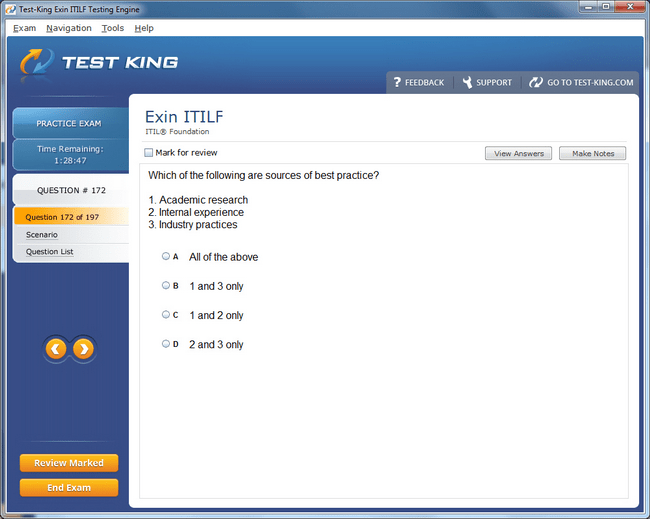
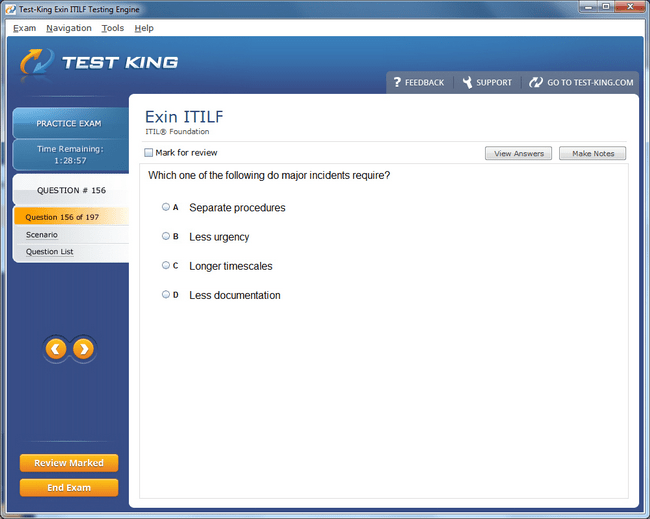
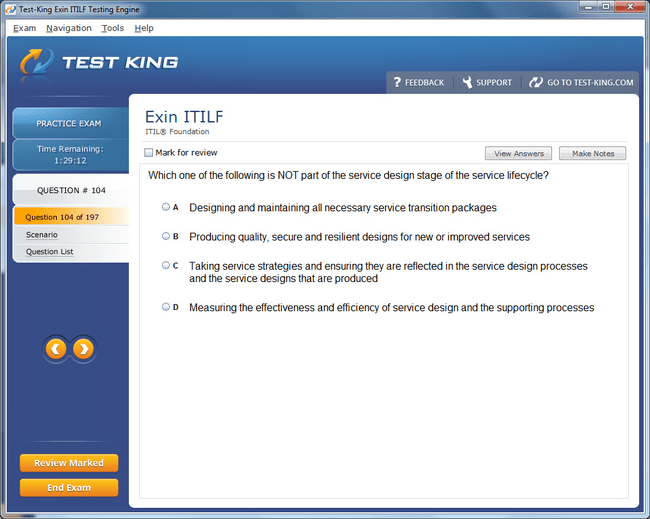
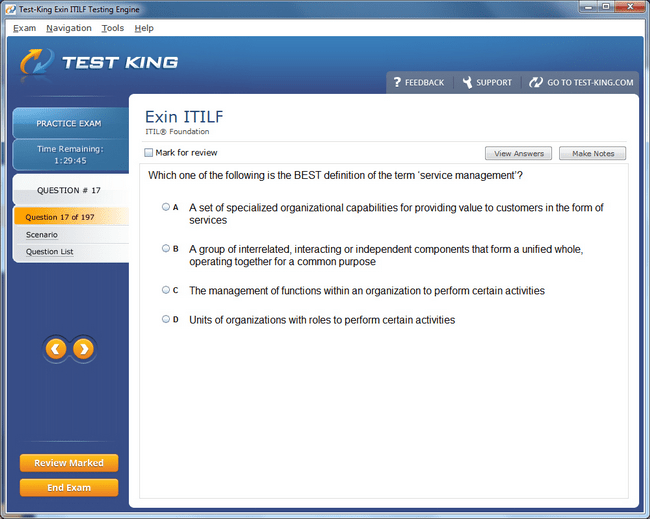
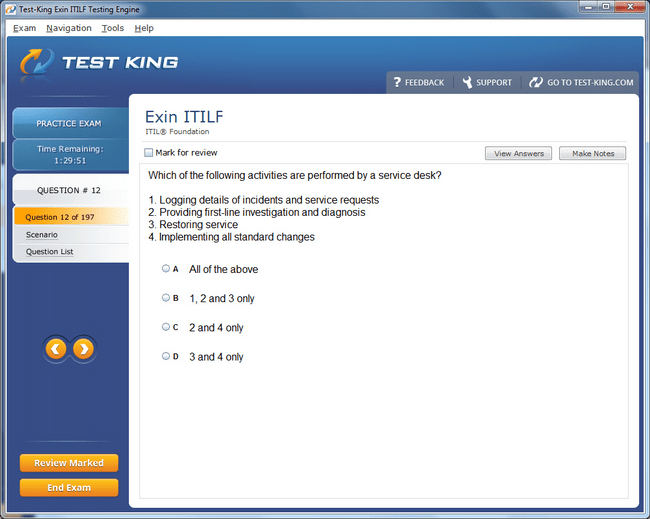
ITILF Exam Product Screenshots
Frequently Asked Questions
How can I get the products after purchase?
All products are available for download immediately from your Member's Area. Once you have made the payment, you will be transferred to Member's Area where you can login and download the products you have purchased to your computer.
How long can I use my product? Will it be valid forever?
Test-King products have a validity of 90 days from the date of purchase. This means that any updates to the products, including but not limited to new questions, or updates and changes by our editing team, will be automatically downloaded on to computer to make sure that you get latest exam prep materials during those 90 days.
Can I renew my product if when it's expired?
Yes, when the 90 days of your product validity are over, you have the option of renewing your expired products with a 30% discount. This can be done in your Member's Area.
Please note that you will not be able to use the product after it has expired if you don't renew it.
How often are the questions updated?
We always try to provide the latest pool of questions, Updates in the questions depend on the changes in actual pool of questions by different vendors. As soon as we know about the change in the exam question pool we try our best to update the products as fast as possible.
How many computers I can download Test-King software on?
You can download the Test-King products on the maximum number of 2 (two) computers or devices. If you need to use the software on more than two machines, you can purchase this option separately. Please email support@test-king.com if you need to use more than 5 (five) computers.
What is a PDF Version?
PDF Version is a pdf document of Questions & Answers product. The document file has standart .pdf format, which can be easily read by any pdf reader application like Adobe Acrobat Reader, Foxit Reader, OpenOffice, Google Docs and many others.
Can I purchase PDF Version without the Testing Engine?
PDF Version cannot be purchased separately. It is only available as an add-on to main Question & Answer Testing Engine product.
What operating systems are supported by your Testing Engine software?
Our testing engine is supported by Windows. Andriod and IOS software is currently under development.
Top Exin Exams
Step-by-Step Guide to Preparing for the EXIN ITIL Foundation Exam
Preparing for the EXIN ITIL Foundation exam demands not only dedication but a strategic approach that blends comprehension, application, and disciplined practice. The ITIL Foundation credential serves as a crucial milestone for professionals seeking to enhance their knowledge in IT service management and align their careers with globally recognized best practices. Achieving this credential requires understanding the fundamental concepts of ITIL, the service lifecycle, and the principles that govern efficient and effective IT service management. Candidates must immerse themselves in the framework’s vocabulary, grasp the intricacies of processes, and familiarize themselves with the relationships between different components of the service management system.
Building a Solid Foundation for ITIL Success
The first step in constructing a robust preparation plan is to understand the architecture of ITIL and its contemporary iteration. ITIL 4 introduces a modern perspective that emphasizes a holistic service value system, integrating traditional IT service management practices with agile, lean, and DevOps principles. Familiarity with the service value chain, the guiding principles, and continual improvement models is paramount. Without a firm grasp of these concepts, candidates may struggle to navigate scenario-based questions that test the practical application of ITIL principles.
An effective preparation strategy begins with identifying the resources most conducive to learning. The official ITIL Foundation publications provide the backbone of study, offering comprehensive explanations of processes, roles, and activities. Complementing these with reputable training materials, online modules, and practice exercises enables learners to consolidate knowledge through repetition and application. Engaging with varied resources helps to accommodate different learning styles, whether visual, auditory, or kinesthetic, thereby ensuring deeper retention of complex material.
Equally important is developing a schedule that balances study intensity with cognitive absorption. The process of learning ITIL principles should be distributed across manageable intervals rather than attempted in concentrated bursts. Spaced repetition and deliberate practice enhance memory retention, particularly for concepts that are nuanced or interdependent. Allocating time to revisit earlier topics ensures that foundational knowledge remains strong as candidates progress toward more advanced applications.
To reinforce comprehension, candidates are encouraged to contextualize ITIL concepts within real-world scenarios. Mapping the theoretical principles to practical experiences in IT operations or service delivery environments creates a bridge between abstract knowledge and tangible understanding. This approach not only aids in recalling information during examinations but also prepares learners to apply ITIL practices effectively in professional settings. Reflection on personal experiences, coupled with case studies, provides a fertile ground for internalizing the methodologies underlying service management excellence.
Monitoring progress is another crucial element of preparation. Practice tests and mock examinations serve as valuable instruments for evaluating knowledge gaps, understanding question patterns, and developing time management skills. Each attempt allows candidates to identify areas of weakness, recalibrate study strategies, and approach the material from new perspectives. It is not merely the accumulation of correct answers that fosters success but the reflective practice that accompanies each review. Analyzing mistakes, understanding why a particular option is incorrect, and revisiting the relevant material ensures a deeper assimilation of concepts and reinforces the ability to navigate complex exam questions.
Time management during preparation and on the exam itself requires deliberate attention. A structured plan that delineates study periods, breaks, and review sessions prevents cognitive fatigue and promotes sustained focus. Allocating specific intervals for challenging topics ensures that candidates do not neglect crucial elements of the ITIL framework. During the examination, familiarity with the format and pacing gained from timed practice tests allows candidates to answer questions with confidence, minimizing anxiety and maximizing accuracy.
Furthermore, collaborative learning can enhance the preparation experience. Engaging with study groups or online communities exposes candidates to diverse perspectives, encourages discussion of challenging concepts, and fosters accountability. Explaining topics to peers or participating in knowledge-sharing sessions consolidates understanding, as teaching others requires clarity of thought and articulation. This method also reveals subtleties in the framework that might be overlooked during solitary study.
In addition to structured study, attention to cognitive readiness is essential. Candidates should cultivate habits that enhance mental agility, including adequate rest, nutrition, and mindfulness techniques to manage stress. Maintaining a balanced lifestyle supports concentration, endurance, and overall cognitive performance, all of which are critical during prolonged periods of focused study and during the examination itself.
Integrating scenario-based exercises into study routines is particularly beneficial. Many ITIL Foundation questions assess comprehension through practical examples rather than rote memorization. By simulating situations that require selecting appropriate responses, candidates develop the ability to interpret problems, apply principles correctly, and select the most effective solutions. This experiential approach mirrors real-world decision-making and equips learners with skills that extend beyond the examination, contributing to professional competence in IT service management environments.
As part of preparation, candidates should also familiarize themselves with the language and terminology specific to ITIL. The framework uses precise terms to describe processes, activities, and roles, and understanding this vocabulary is essential for interpreting questions accurately. Misinterpretation of terminology can lead to incorrect answers even when the underlying concept is understood, highlighting the importance of both memorization and contextual comprehension.
Study materials should be approached in a layered fashion. Initial readings provide a broad overview of ITIL principles and components, allowing candidates to build a mental map of the service management landscape. Subsequent reviews should focus on deeper analysis, integrating knowledge of interactions between processes, the service value chain, and continual improvement practices. Active learning strategies such as summarizing content, creating concept maps, and formulating self-generated questions enhance engagement and retention, transforming passive reading into dynamic learning experiences.
Incorporating regular practice assessments into the study plan provides critical feedback on progress. Simulated exams, when conducted under realistic conditions, train candidates to manage time pressures, develop endurance for sustained focus, and refine strategies for selecting correct answers among distractors. Reviewing these assessments with a reflective mindset ensures that mistakes become opportunities for learning rather than sources of frustration. Iterative practice nurtures confidence, reinforces knowledge, and sharpens problem-solving skills essential for exam success.
Finally, candidates should cultivate adaptability and resilience throughout the preparation journey. Each learner encounters unique challenges, whether conceptual difficulties, time constraints, or distractions. Recognizing these obstacles, developing contingency strategies, and maintaining a positive, proactive mindset are integral to sustained progress. Preparation for the ITIL Foundation exam is not solely an academic exercise but a holistic endeavor that integrates intellectual, psychological, and practical dimensions, ultimately equipping candidates with both the credential and the capacity to apply ITIL principles effectively in professional contexts.
Advanced Strategies for Comprehensive ITIL Foundation Preparation
Progressing further in preparation for the EXIN ITIL Foundation exam involves developing a sophisticated understanding of the framework, coupled with strategic study practices that reinforce retention and enhance application skills. Mastery of ITIL principles requires not only familiarity with definitions and processes but also the ability to interpret scenarios and make informed decisions reflecting the service management philosophy. Deepening comprehension of the service lifecycle, the guiding principles, and the service value system constitutes the cornerstone of effective preparation.
One of the most effective methods for embedding knowledge is to employ a thematic approach to study. Instead of approaching topics in isolation, candidates benefit from exploring interconnections among practices, processes, and value streams. For instance, understanding how incident management interacts with problem management, or how continual improvement influences the entire service lifecycle, fosters a holistic grasp of ITIL concepts. Such an integrative perspective allows learners to perceive the framework as a dynamic ecosystem rather than a collection of isolated procedures, improving both exam performance and practical utility in professional settings.
Active engagement with study materials is paramount. Passive reading rarely produces long-term retention, so candidates should utilize techniques that require synthesis and critical analysis. Creating mind maps, drawing flowcharts of process interactions, and summarizing concepts in their own words encourage cognitive processing at a deeper level. These methods enable learners to internalize terminology, understand procedural dependencies, and identify key inputs and outputs within the service value chain. By transforming abstract concepts into visual or textual representations, the material becomes more tangible and accessible during exam scenarios.
In addition to traditional reading, leveraging digital platforms and interactive modules can accelerate comprehension. Many reputable training tools offer scenario-based exercises, quizzes, and simulations that mirror the structure of the EXIN ITIL Foundation exam. These interactive experiences provide immediate feedback, allowing candidates to recognize misconceptions, refine problem-solving approaches, and familiarize themselves with the types of questions commonly posed. Repeated exposure to realistic scenarios builds confidence and hones the ability to apply principles in complex contexts.
Time management strategies are integral to sustaining momentum and avoiding burnout. A disciplined study schedule should allocate intervals for reviewing new material, consolidating prior learning, and engaging in practice exercises. Structured blocks of focused study, interspersed with restorative breaks, enhance attention, facilitate memory consolidation, and prevent cognitive fatigue. Candidates who systematically distribute study sessions over several weeks or months often achieve greater comprehension than those attempting intensive, short-term cramming.
Reflection and self-assessment play a pivotal role in preparing for the exam. After each study session, candidates should review what they have learned, articulate key takeaways, and identify areas requiring additional focus. Writing brief reflections or summarizing the material orally strengthens recall and aids in internalizing concepts. This reflective practice, coupled with iterative review of challenging topics, ensures that learning is reinforced through repetition and active engagement rather than passive absorption.
Practice assessments serve as both evaluative and educational instruments. Completing mock exams under timed conditions allows candidates to simulate the pressures of the actual examination environment. Beyond merely identifying correct and incorrect answers, careful analysis of mistakes provides insights into conceptual gaps or misinterpretations of terminology. Understanding the rationale behind each answer fosters critical thinking and enhances the ability to navigate scenario-based questions where subtle distinctions determine the correct choice.
Real-world application of ITIL concepts further consolidates understanding. Mapping principles onto actual experiences in IT operations, service management, or project involvement contextualizes theoretical knowledge. By examining how change management, service request fulfillment, or capacity management operate within an organization, learners develop an appreciation for the practical implications of ITIL methodologies. This application-oriented perspective not only strengthens exam readiness but also cultivates skills directly transferable to professional environments, enhancing overall competence.
Candidates should also pay close attention to the linguistic precision used within the ITIL framework. Terminology is meticulously defined, and subtle differences in phrasing can influence the meaning of questions and answers. Regular engagement with official glossaries and consistent practice in interpreting terms within context reduces the risk of errors caused by semantic misunderstandings. Integrating terminology review into daily study routines ensures that candidates develop a fluent understanding of ITIL vocabulary, which is essential for both comprehension and application.
Adopting a variety of learning modalities can further reinforce knowledge. Combining reading, visual aids, practice exercises, and collaborative discussions caters to different cognitive preferences and strengthens retention. Visual learners benefit from diagrams and process maps, auditory learners gain from listening to explanations or lectures, and kinesthetic learners internalize knowledge through active problem-solving or scenario-based exercises. By leveraging multiple pathways to learning, candidates can consolidate knowledge more effectively and accommodate the nuances of complex ITIL concepts.
Collaboration with peers or mentors introduces additional layers of insight. Study groups encourage discussion of ambiguous topics, sharing of practical experiences, and collective problem-solving. Engaging in dialogue with others not only exposes candidates to alternative perspectives but also reinforces their own understanding as they explain concepts to peers. Mentorship, particularly from experienced IT service management professionals, provides guidance, clarifies misunderstandings, and offers practical strategies for both exam preparation and future professional application.
To enhance cognitive endurance, candidates should cultivate habits that support sustained mental focus. Maintaining regular sleep patterns, balanced nutrition, and mindfulness practices contributes to mental acuity, reduces stress, and improves concentration during extended study periods. Preparing for the ITIL Foundation exam is as much a cognitive endeavor as it is an intellectual one; optimizing mental and physical well-being ensures that candidates can engage with complex material effectively and retain knowledge over prolonged periods.
Scenario-based exercises, reflecting real-world IT service challenges, are particularly effective in reinforcing conceptual understanding. Candidates can analyze hypothetical incidents, determine appropriate process applications, and evaluate outcomes according to ITIL best practices. Engaging with such exercises bridges the gap between theoretical knowledge and practical implementation, sharpening critical thinking and problem-solving skills that are indispensable both for the exam and professional practice.
Finally, embracing iterative learning reinforces both retention and confidence. Revisiting challenging topics multiple times, analyzing practice test performance, and continuously refining strategies cultivate resilience and mastery. Each cycle of study enhances familiarity with the material, strengthens recall, and solidifies the capacity to apply principles effectively under examination conditions. By maintaining a disciplined, reflective, and multifaceted approach, candidates position themselves to navigate the ITIL Foundation exam successfully while acquiring skills of enduring value in the realm of IT service management.
Mastering ITIL Concepts and Exam Strategies
Progressing in preparation for the EXIN ITIL Foundation exam requires a meticulous approach that intertwines deep comprehension of ITIL principles with strategic techniques for retaining knowledge and applying it effectively in practical scenarios. The foundation of success rests on not only understanding the definitions, processes, and service management components but also on cultivating the ability to interpret scenarios, make informed judgments, and connect theoretical concepts with real-world applications. Achieving mastery demands a holistic grasp of the service value system, guiding principles, and lifecycle stages, enabling candidates to navigate complex interactions between processes with clarity and confidence.
Central to this endeavor is the development of a structured study plan that accommodates both depth and breadth. Candidates are encouraged to approach ITIL concepts in an integrated manner, linking practices such as incident management, problem management, and change management to their effects on overall service value. By perceiving ITIL as a coherent framework rather than discrete practices, learners enhance their understanding of interdependencies and cultivate the ability to apply concepts contextually. This approach also fosters analytical thinking, allowing candidates to deduce the most appropriate actions in scenario-based questions commonly encountered in the examination.
Active engagement with learning materials remains an indispensable strategy. Reading the official ITIL publications provides foundational knowledge, yet deeper comprehension is attained through interactive study methods. Candidates may employ techniques such as annotating key passages, summarizing concepts in their own words, and constructing process maps to visualize relationships between different components. Such cognitive exercises reinforce memory retention and facilitate recall during the exam, transforming abstract ideas into tangible mental constructs. By continually synthesizing and articulating knowledge, learners internalize the essence of ITIL principles beyond mere rote memorization.
Practice assessments are vital in bridging theoretical understanding with applied knowledge. Mock exams and scenario-based exercises simulate the conditions of the EXIN ITIL Foundation examination, offering candidates the opportunity to refine time management, develop strategies for interpreting questions, and identify areas of weakness. Each attempt should be followed by reflective analysis, examining why certain answers are correct or incorrect and revisiting the relevant material to address knowledge gaps. This iterative practice cultivates precision, enhances comprehension, and fosters confidence under exam conditions, enabling candidates to approach the test with clarity and composure.
Time allocation during preparation must be deliberate and balanced. Study sessions should be divided into focused intervals targeting specific areas, interspersed with periods for review and consolidation. Emphasis should be placed on complex topics or concepts that are easily misunderstood, ensuring that comprehension is thorough and resilient. Integrating spaced repetition into the study schedule reinforces retention, particularly for terminologies, processes, and lifecycle stages that are fundamental to ITIL. By organizing preparation with intentionality, candidates maintain cognitive energy, reduce fatigue, and optimize learning efficiency.
Scenario-based learning amplifies understanding by situating theoretical concepts within realistic contexts. Candidates may examine hypothetical organizational challenges, assess the application of service management practices, and evaluate outcomes in line with ITIL principles. Such exercises cultivate critical thinking, allowing learners to navigate ambiguous or multi-faceted situations with analytical rigor. Engaging with these practical illustrations not only enhances exam readiness but also equips candidates with skills readily transferable to professional environments, where decision-making and process alignment are pivotal.
Understanding and internalizing ITIL terminology is another cornerstone of effective preparation. Precise language is integral to the framework, and misinterpretation can lead to incorrect conclusions even when underlying concepts are understood. Candidates should routinely review glossaries, employ flashcards for reinforcement, and contextualize terms within examples to ensure fluency. Mastery of vocabulary enables accurate interpretation of questions and strengthens the ability to apply principles consistently across various scenarios.
Collaborative learning provides additional depth to preparation. Engaging with peers or mentors facilitates discussion of complex topics, encourages alternative viewpoints, and promotes collective problem-solving. Teaching concepts to others requires clarity of thought, consolidates knowledge, and uncovers nuances that may be overlooked during solitary study. Interaction with experienced professionals offers guidance, highlights practical applications, and contextualizes principles within organizational environments, enriching both conceptual understanding and exam preparedness.
Cognitive readiness extends beyond study techniques to encompass overall mental and physical well-being. Candidates should prioritize adequate sleep, balanced nutrition, and mindfulness practices to maintain focus and reduce stress. Sustaining concentration during extended study periods and remaining alert during examination conditions requires deliberate attention to health and wellness. Incorporating regular physical activity and relaxation strategies supports memory consolidation, endurance, and analytical performance, ultimately enhancing both preparation quality and exam results.
Integrating iterative review sessions consolidates learning by revisiting previously studied material with increasing depth. Candidates should approach each topic multiple times, progressively analyzing interconnections, evaluating processes in various contexts, and reinforcing retention through repeated application. This method ensures that knowledge is not only memorized but internalized, allowing candidates to navigate nuanced or scenario-driven questions with accuracy and confidence.
Visualization techniques also support comprehension, particularly for complex service management interactions. Mapping the flow of value streams, delineating process inputs and outputs, and illustrating interdependencies within the service lifecycle provide concrete representations of abstract concepts. Such visualizations aid in grasping the overarching structure of ITIL, facilitating both memory retention and analytical reasoning during the exam. By transforming theoretical frameworks into mental models, candidates can approach questions with greater clarity and strategic insight.
Engagement with authentic case studies enhances both understanding and practical skills. Candidates can examine real-world implementations of ITIL principles, observing how organizations handle incidents, manage change, and continuously improve service delivery. Analyzing successes and challenges in these examples deepens comprehension, highlights contextual nuances, and fosters the ability to apply knowledge flexibly. Exposure to diverse scenarios ensures that candidates are prepared to interpret questions that reflect practical challenges rather than purely theoretical constructs.
Effective preparation also requires cultivating adaptability and resilience. Encountering difficult concepts, unexpected question formats, or gaps in knowledge is inevitable, and candidates must develop strategies to navigate these challenges without discouragement. Embracing a growth-oriented mindset, seeking clarification from multiple resources, and iteratively refining study techniques strengthen perseverance and enhance long-term retention. Such resilience not only supports examination performance but also equips learners with enduring professional capabilities.
Cognitive reinforcement through active recall techniques is particularly beneficial. Candidates can periodically test themselves on key processes, terminologies, and interdependencies, verbalizing explanations or writing summaries without reference to materials. This practice strengthens memory retrieval pathways, promotes durable learning, and enhances the ability to apply knowledge under examination constraints. Active recall complements other study strategies, creating a multi-dimensional approach that consolidates both comprehension and application skills.
Finally, maintaining consistent momentum throughout the preparation journey is essential. Balancing structured study, reflective practice, scenario-based exercises, and cognitive reinforcement ensures comprehensive mastery of ITIL principles. Candidates who integrate these strategies systematically cultivate both confidence and competence, positioning themselves to approach the EXIN ITIL Foundation exam with clarity, analytical agility, and practical readiness.
Refining Knowledge and Exam Readiness for ITIL Foundation
Advancing preparation for the EXIN ITIL Foundation exam requires a meticulous synthesis of conceptual mastery, practical application, and strategic study techniques. Candidates must cultivate a thorough understanding of ITIL principles, processes, and the service value system while developing the ability to interpret complex scenarios and make judicious decisions. Achieving proficiency entails more than memorization; it involves the integration of theoretical knowledge with practical insight, allowing learners to navigate nuanced situations both in the examination and in professional IT service environments. A deliberate and comprehensive approach is essential for attaining fluency in the framework and ensuring preparedness for varied question formats.
One of the primary strategies in refining understanding is to approach ITIL as an interconnected ecosystem rather than as isolated practices. Processes such as incident management, problem management, change enablement, and continual improvement interact dynamically within the service value chain. By exploring these interdependencies, candidates can perceive the cascading effects of decisions and actions within the organization, fostering analytical thinking and enhancing the ability to respond accurately to scenario-based questions. Recognizing these relationships also deepens comprehension of how guiding principles inform decision-making and influence service delivery outcomes.
Active engagement with authoritative study materials remains foundational. The official ITIL publications provide comprehensive descriptions of processes, roles, and activities, yet the retention of information is enhanced through interactive and reflective learning. Techniques such as creating process flow diagrams, summarizing content in personalized language, and constructing concept maps facilitate the transformation of abstract knowledge into actionable mental models. This active synthesis reinforces understanding, aids memory retention, and enables candidates to navigate complex questions with clarity and precision.
Practice assessments continue to play a central role in preparation. Mock exams, practice quizzes, and scenario simulations allow learners to experience the examination environment, gauge comprehension, and identify areas requiring focused attention. Reflecting on incorrect responses, analyzing reasoning, and revisiting material to address misunderstandings transform assessment into a dynamic learning tool rather than merely an evaluative exercise. Repeated exposure to realistic scenarios cultivates familiarity with question structures, enhances interpretive skills, and nurtures the confidence necessary to perform effectively under timed conditions.
Time management is integral to sustaining study efficiency and cognitive endurance. Structuring study sessions with designated intervals for reviewing new material, consolidating previous knowledge, and engaging in practical exercises ensures balanced progress. Employing spaced repetition, whereby key concepts are revisited at increasing intervals, strengthens long-term retention and reduces the risk of forgetting critical details. Allocating additional attention to challenging topics, while periodically revisiting foundational principles, creates a balanced approach that enhances comprehension across the breadth of ITIL content.
Scenario-based exercises remain pivotal in linking theoretical knowledge to real-world applications. Candidates benefit from analyzing hypothetical situations in which IT service management principles must be applied to resolve organizational challenges. For instance, evaluating the impact of an unplanned service disruption, determining appropriate response actions, and considering the implications for change management and continual improvement fosters the ability to think critically and strategically. These exercises prepare candidates to interpret nuanced exam questions that assess not only factual knowledge but also practical decision-making skills.
Understanding ITIL terminology with precision is critical for success. The framework employs specific language to describe processes, practices, and value streams, and subtle differences in phrasing can significantly influence interpretation. Candidates should engage with glossaries, integrate terms into practical examples, and use active recall techniques to ensure fluency. Accurate comprehension of terminology allows candidates to answer questions with confidence and apply principles consistently across varied scenarios, reducing errors caused by semantic ambiguity.
Collaborative learning enhances preparation by introducing diverse perspectives and fostering discussion. Engaging with peers or mentors encourages exploration of complex topics, facilitates clarification of misconceptions, and promotes collective problem-solving. Teaching concepts to others solidifies understanding, revealing nuances that may not be apparent during solitary study. Mentorship provides practical insights, illustrating how ITIL principles are applied within organizational contexts and offering strategies to navigate both examination challenges and professional applications effectively.
Cognitive readiness extends beyond academic study to encompass mental and physical well-being. Adequate sleep, balanced nutrition, and mindfulness practices support sustained focus, reduce stress, and enhance memory consolidation. Preparing for the ITIL Foundation examination requires prolonged periods of concentration, and maintaining cognitive vitality is crucial for absorbing complex material and performing under timed conditions. Incorporating strategies to optimize mental and physical health ensures that candidates engage with study content efficiently and retain knowledge more effectively.
Iterative review strengthens comprehension by repeatedly revisiting material with increasing depth. Candidates can refine understanding by examining process interactions, tracing service value contributions, and evaluating practical implications. Repetition reinforces memory, enhances analytical thinking, and prepares learners to respond accurately to multifaceted questions. Integrating active recall during review sessions ensures that knowledge is both retained and readily accessible during examination conditions, transforming memorized information into applied expertise.
Visualization techniques contribute to clarity in understanding complex service management interactions. Mapping process flows, delineating inputs and outputs, and illustrating dependencies within the service value system create tangible representations of abstract concepts. Visualizing how different activities and practices interact facilitates comprehension, supports memory retention, and enables candidates to navigate questions that involve layered processes or interrelated decisions. Such mental models are particularly effective for scenario-based questions, where understanding relationships is essential.
Engaging with authentic case studies enriches preparation by connecting theoretical principles to practical implementation. Examining how organizations handle incidents, manage changes, or implement continual improvement programs provides insight into real-world challenges and best practices. Analyzing successes and setbacks in these scenarios enhances conceptual understanding, fosters adaptability, and equips candidates to interpret and respond to complex questions. Exposure to diverse organizational contexts ensures that learners develop a flexible and pragmatic approach to applying ITIL principles.
Active reinforcement techniques, including self-testing and oral articulation of concepts, bolster retention and understanding. Candidates benefit from explaining processes, describing interactions, and recalling definitions without reference to study materials. This practice strengthens memory pathways, enhances analytical skills, and cultivates confidence in applying knowledge. By integrating active reinforcement into regular study routines, learners consolidate comprehension and develop the agility required to respond accurately to both direct and scenario-driven questions.
Maintaining consistent motivation and momentum throughout preparation is essential. Structured study, reflective practice, scenario exercises, and iterative review combine to create a comprehensive strategy that reinforces both confidence and mastery. Candidates who sustain focus, embrace challenges, and continuously refine their study methods cultivate the expertise necessary to excel in the examination and translate ITIL knowledge into practical service management proficiency.
Enhancing Understanding and Practical Application of ITIL Principles
Deepening preparation for the EXIN ITIL Foundation exam involves cultivating a sophisticated comprehension of ITIL concepts, coupled with strategies to translate theoretical knowledge into practical proficiency. Candidates must approach the framework holistically, perceiving interrelated processes and practices as components of a dynamic service management ecosystem. Mastery of ITIL extends beyond memorization of terms and definitions; it requires analytical insight, the ability to interpret complex scenarios, and the capability to apply principles effectively in both examination and professional contexts.
A central tenet of advanced preparation is the integration of process interdependencies. Understanding how incident management interacts with problem management, change enablement, and continual improvement illuminates the mechanisms that sustain service quality and value delivery. Recognizing these interactions allows candidates to assess the consequences of actions within the service value chain, fostering analytical reasoning and equipping learners to respond adeptly to scenario-based questions. This interconnected approach cultivates an appreciation for the systemic nature of ITIL practices, enhancing both comprehension and practical application.
Engagement with authoritative study materials forms the foundation for mastery. Official ITIL publications provide comprehensive explanations of roles, processes, and activities, yet their utility is maximized through active learning strategies. Candidates benefit from summarizing content in personalized language, constructing flow diagrams of process interactions, and creating conceptual maps that depict the relationships among service management components. Such techniques convert abstract principles into tangible cognitive constructs, facilitating memory retention and enabling learners to navigate questions that demand applied understanding.
Practice assessments are indispensable for reinforcing knowledge and developing exam proficiency. Mock examinations and scenario simulations replicate the conditions of the EXIN ITIL Foundation exam, offering insight into question patterns, timing, and complexity. Reflective analysis of results enables candidates to identify misconceptions, examine reasoning errors, and revisit challenging topics. Each cycle of practice strengthens comprehension, hones decision-making skills, and builds confidence, ensuring preparedness for the multifaceted questions characteristic of the examination.
Effective time management is critical in structuring study routines and maintaining cognitive efficiency. Candidates are advised to divide preparation into focused intervals, alternating between reviewing new material, consolidating prior learning, and engaging in scenario-based exercises. Employing spaced repetition reinforces retention of critical concepts, particularly terminologies, process interactions, and lifecycle stages. Allocating additional focus to complex or nuanced topics ensures balanced understanding across the framework, preventing gaps in knowledge that could compromise exam performance.
Scenario-based exercises amplify conceptual mastery by situating ITIL principles within realistic operational contexts. Candidates can examine hypothetical service disruptions, determine appropriate responses, and evaluate the implications for incident, problem, and change management. These exercises cultivate critical thinking, enhance problem-solving capabilities, and prepare learners to interpret questions that reflect practical service management challenges. The application of principles to dynamic scenarios ensures that knowledge extends beyond theoretical memorization and is readily applicable in professional environments.
Precision in ITIL terminology is essential for accurate interpretation and application. The framework employs meticulously defined language, and subtle variations in phrasing can significantly alter meaning. Candidates should incorporate active review of glossaries, contextualize terms within scenarios, and employ recall exercises to ensure fluency. Mastery of vocabulary enhances comprehension, reduces semantic errors, and enables learners to respond confidently to both direct and scenario-driven questions.
Collaborative study provides additional depth to preparation. Engaging with peers or mentors fosters discussion of complex concepts, exposure to alternative perspectives, and collective problem-solving. Explaining topics to others reinforces understanding, while mentorship provides practical insights into the application of ITIL principles within organizational contexts. Such interactions enrich conceptual knowledge, bridge the gap between theory and practice, and support the development of analytical reasoning required for the examination.
Maintaining cognitive and physical readiness is pivotal for sustained study efficacy. Adequate sleep, balanced nutrition, and mindfulness practices bolster concentration, reduce stress, and enhance memory consolidation. Preparing for the ITIL Foundation exam entails prolonged engagement with complex material, and preserving mental acuity ensures that candidates can process information efficiently, retain knowledge effectively, and apply principles with precision. Incorporating wellness strategies into daily routines strengthens both cognitive endurance and overall performance.
Iterative review is a fundamental component of advanced preparation. Revisiting previously studied topics enables candidates to deepen understanding, analyze interconnections, and reinforce retention. Active recall techniques, including verbal articulation and self-testing, strengthen memory pathways and enhance analytical proficiency. This iterative approach transforms memorized knowledge into applied expertise, enabling learners to navigate multifaceted questions with confidence and accuracy.
Visualization techniques support comprehension of complex service management interactions. Mapping the flow of value streams, illustrating process inputs and outputs, and delineating interdependencies within the service value system render abstract concepts more tangible. Visual representations aid memory retention, clarify relationships, and enhance the ability to apply principles effectively in scenario-based contexts. Candidates who internalize these visual models demonstrate greater agility in interpreting questions and identifying optimal solutions.
Engagement with real-world case studies enriches understanding and practical application. Examining organizational approaches to incident resolution, change implementation, and continual improvement provides insight into the operationalization of ITIL principles. Analyzing successes and challenges in authentic scenarios deepens comprehension, fosters adaptability, and equips learners to respond to complex questions that reflect real-life service management challenges. Exposure to varied organizational practices ensures that candidates develop a flexible and pragmatic approach to applying ITIL knowledge.
Advanced memorization techniques, including spaced repetition, active recall, and interleaved practice, enhance retention and comprehension. Candidates benefit from periodically revisiting key concepts, testing understanding without reference to materials, and alternating study topics to create robust cognitive connections. These strategies reinforce long-term retention, enhance analytical thinking, and ensure readiness for scenario-based questions that require applied knowledge rather than rote recall.
Maintaining sustained motivation and momentum throughout preparation is critical. Structured study, reflective practice, scenario-based exercises, and iterative review converge to create a comprehensive approach that reinforces mastery. Candidates who embrace challenges, continuously refine study strategies, and integrate practical applications cultivate both confidence and proficiency, positioning themselves to approach the EXIN ITIL Foundation exam with clarity, precision, and strategic insight.
Consolidating Knowledge and Achieving Exam Readiness
Advancing toward mastery of the EXIN ITIL Foundation exam involves consolidating all prior preparation into a coherent strategy that emphasizes understanding, application, and exam readiness. Success in the ITIL Foundation exam relies on a candidate’s ability to interpret the framework’s principles, processes, and service value system within practical and theoretical contexts. Deep comprehension, analytical insight, and strategic recall are the pillars of effective preparation. Candidates must integrate their knowledge with scenario-based reasoning, ensuring that they can apply ITIL concepts accurately under examination conditions while also gaining skills that extend to professional IT service management.
Central to effective preparation is reinforcing the interconnectedness of ITIL processes. Understanding the relationships among incident management, problem management, change enablement, and continual improvement allows candidates to appreciate the cascading impact of decisions on service quality and value delivery. This comprehension is not limited to memorization but involves analytical reasoning, enabling learners to discern which processes are applicable in complex scenarios. By exploring these interactions, candidates cultivate a holistic view of ITIL as a dynamic ecosystem, which is crucial both for accurate examination responses and for practical implementation in IT operations.
Active engagement with authoritative study materials remains essential. Official ITIL publications provide detailed descriptions of processes, practices, and roles, yet the assimilation of this knowledge is maximized through interactive and reflective methods. Candidates benefit from summarizing key concepts in their own words, constructing conceptual maps to visualize interactions, and creating mental models that represent the service lifecycle and value streams. These strategies transform abstract principles into tangible cognitive frameworks, facilitating recall, comprehension, and the ability to navigate scenario-based questions with confidence.
Practice assessments are invaluable for reinforcing knowledge and building exam proficiency. Mock tests and scenario simulations replicate the conditions of the EXIN ITIL Foundation examination, allowing candidates to develop time management skills, understand question patterns, and refine interpretive strategies. Reflective analysis of performance, including examining incorrect answers and revisiting misunderstood concepts, transforms each assessment into a learning opportunity. Iterative practice enhances precision, cultivates confidence, and ensures readiness to tackle complex questions that demand applied understanding.
Time management is a critical factor in sustained preparation. Structured study schedules should balance intervals for learning new concepts, reviewing prior material, and engaging with scenario-based exercises. Employing spaced repetition strengthens retention of terminologies, process interactions, and lifecycle stages, while allocating focused attention to more challenging areas ensures comprehensive mastery. Effective time allocation reduces cognitive fatigue, optimizes study efficiency, and supports sustained engagement with demanding material over extended periods.
Scenario-based exercises are particularly beneficial for translating theoretical knowledge into practical application. By analyzing hypothetical organizational situations, candidates learn to apply ITIL principles to resolve service challenges, assess potential outcomes, and align actions with best practices. Exercises such as evaluating the impact of unplanned service interruptions, selecting appropriate responses, and considering the effects on change and continual improvement enhance analytical reasoning and decision-making skills. Familiarity with this type of practical application prepares candidates for questions that extend beyond simple recall, reflecting the real-world challenges of IT service management.
Precision in understanding ITIL terminology is fundamental to exam success. The framework’s language is meticulously defined, and nuanced differences in phrasing can significantly affect comprehension. Candidates should actively review glossaries, integrate terminology into scenario exercises, and practice recall to ensure fluency. Mastery of vocabulary enables accurate interpretation of questions, reduces semantic errors, and strengthens the ability to apply principles consistently across different contexts, which is critical for both examination performance and professional practice.
Collaborative learning further enhances understanding. Interacting with peers or mentors facilitates discussion of complex concepts, exposes learners to alternative viewpoints, and encourages collective problem-solving. Explaining concepts to others consolidates knowledge, clarifies understanding, and uncovers subtleties that may be overlooked in solitary study. Mentorship provides practical insights into the implementation of ITIL principles, bridging the gap between theoretical knowledge and organizational application, and reinforcing analytical thinking required for accurate exam responses.
Maintaining cognitive and physical readiness is essential for sustained focus and performance. Adequate sleep, balanced nutrition, and mindfulness practices support memory consolidation, reduce stress, and enhance concentration. Preparing for the ITIL Foundation examination demands extended engagement with detailed and sometimes intricate material, and optimizing mental and physical health ensures candidates can process information efficiently and retain knowledge effectively.
Iterative review strengthens both comprehension and retention. Revisiting previously studied concepts, examining interconnections among processes, and reinforcing understanding through active recall promotes long-term retention and analytical agility. Candidates can test themselves by explaining concepts verbally or summarizing processes without reference to study materials, fostering durable memory pathways and practical fluency. This repeated engagement consolidates knowledge, allowing learners to respond accurately to scenario-driven questions and multi-faceted challenges.
Visualization techniques further support comprehension. Mapping process flows, delineating inputs and outputs, and illustrating interdependencies within the service value system render abstract concepts more concrete. These visual representations clarify relationships, enhance memory retention, and support applied reasoning during the examination. Internalizing these models enables candidates to approach questions with clarity, identify optimal solutions, and interpret complex scenarios with confidence.
Engagement with authentic case studies strengthens practical understanding. Analyzing organizational approaches to incident resolution, change implementation, and continual improvement provides insight into the operationalization of ITIL principles. Observing successes and challenges in these scenarios reinforces comprehension, illustrates best practices, and equips learners to apply knowledge flexibly. Exposure to varied contexts ensures that candidates develop adaptable strategies, preparing them for nuanced questions and professional implementation of ITIL methodologies.
Advanced reinforcement techniques, including interleaved practice and active recall, enhance retention and analytical thinking. Alternating topics, revisiting challenging material, and testing understanding without reference to study resources strengthens memory pathways and enhances the ability to apply knowledge effectively. These methods cultivate mastery that extends beyond memorization, enabling learners to navigate complex and scenario-based questions with precision.
Sustaining motivation and momentum throughout preparation is vital. Consistent study, reflective practice, scenario engagement, and iterative review converge to create a comprehensive strategy that fosters confidence and mastery. Candidates who embrace challenges, continuously refine study techniques, and integrate practical insights cultivate the skills necessary to approach the EXIN ITIL Foundation exam with assurance, clarity, and professional readiness.
The culmination of these strategies provides a roadmap for both exam success and professional competence. Candidates who systematically integrate understanding of processes, scenario application, iterative review, active reinforcement, and cognitive wellness develop not only the ability to pass the ITIL Foundation examination but also the proficiency to implement ITIL practices effectively within organizations. This dual focus on theoretical comprehension and practical application ensures that the credential gained is supported by enduring capability in IT service management.
Conclusion
Preparation for the EXIN ITIL Foundation exam is a multifaceted endeavor that blends comprehensive understanding of ITIL principles with strategic study, practical application, and cognitive readiness. By integrating active learning, scenario-based exercises, iterative review, and precise mastery of terminology, candidates cultivate both confidence and competence. Incorporating wellness strategies, collaborative learning, and visualization techniques further reinforces retention and analytical skills, enabling learners to respond adeptly to complex examination scenarios. Ultimately, the combination of structured preparation, practical engagement, and sustained cognitive focus equips candidates not only to succeed in the exam but also to apply ITIL principles effectively in professional IT service environments, transforming knowledge into actionable expertise.