

Exam Code: OG0-023
Exam Name: ArchiMate 2 Combined Part 1 and 2
Certification Provider: The Open Group
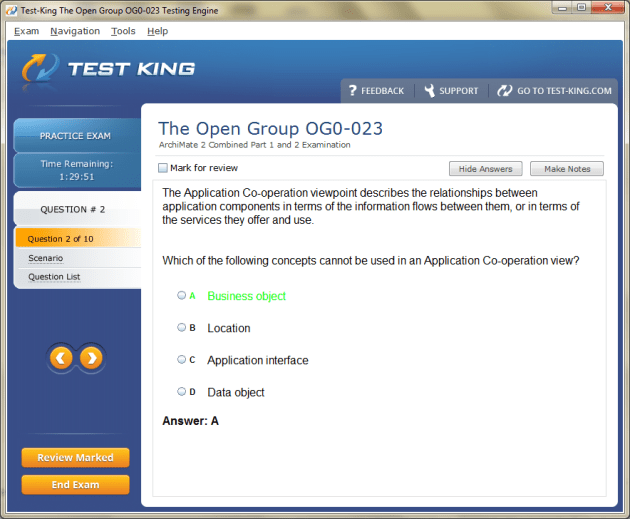
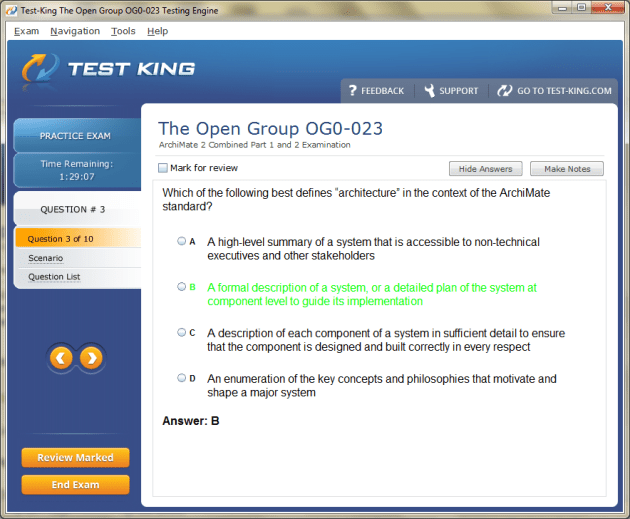
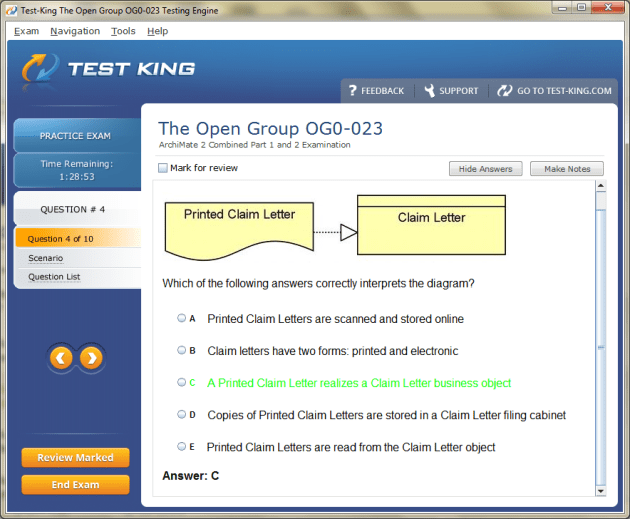
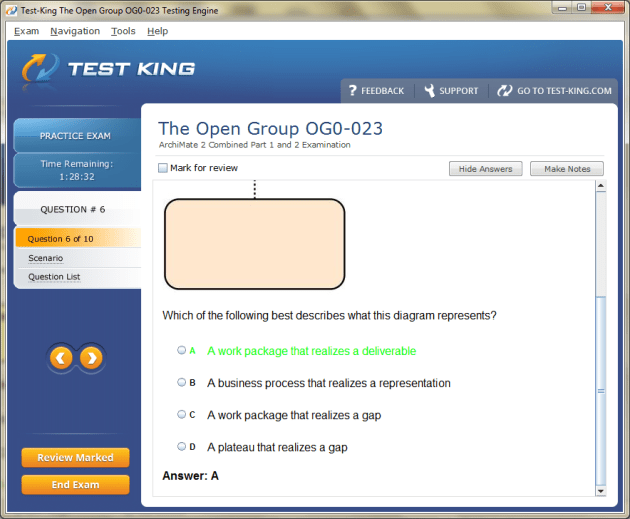
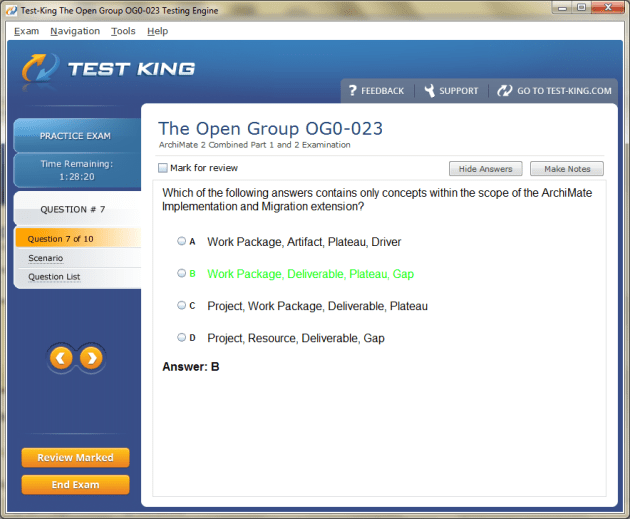
OG0-023 Exam Product Screenshots
Frequently Asked Questions
How can I get the products after purchase?
All products are available for download immediately from your Member's Area. Once you have made the payment, you will be transferred to Member's Area where you can login and download the products you have purchased to your computer.
How long can I use my product? Will it be valid forever?
Test-King products have a validity of 90 days from the date of purchase. This means that any updates to the products, including but not limited to new questions, or updates and changes by our editing team, will be automatically downloaded on to computer to make sure that you get latest exam prep materials during those 90 days.
Can I renew my product if when it's expired?
Yes, when the 90 days of your product validity are over, you have the option of renewing your expired products with a 30% discount. This can be done in your Member's Area.
Please note that you will not be able to use the product after it has expired if you don't renew it.
How often are the questions updated?
We always try to provide the latest pool of questions, Updates in the questions depend on the changes in actual pool of questions by different vendors. As soon as we know about the change in the exam question pool we try our best to update the products as fast as possible.
How many computers I can download Test-King software on?
You can download the Test-King products on the maximum number of 2 (two) computers or devices. If you need to use the software on more than two machines, you can purchase this option separately. Please email support@test-king.com if you need to use more than 5 (five) computers.
What is a PDF Version?
PDF Version is a pdf document of Questions & Answers product. The document file has standart .pdf format, which can be easily read by any pdf reader application like Adobe Acrobat Reader, Foxit Reader, OpenOffice, Google Docs and many others.
Can I purchase PDF Version without the Testing Engine?
PDF Version cannot be purchased separately. It is only available as an add-on to main Question & Answer Testing Engine product.
What operating systems are supported by your Testing Engine software?
Our testing engine is supported by Windows. Andriod and IOS software is currently under development.
Top The Open Group Exams
- OGEA-103 - TOGAF Enterprise Architecture Combined Part 1 and Part 2
- OGEA-101 - TOGAF Enterprise Architecture Part 1
- OGEA-102 - TOGAF Enterprise Architecture Part 2
- OG0-093 - TOGAF 9 Combined Part 1 and Part 2
- OGBA-101 - TOGAF Business Architecture Foundation
- OGA-031 - ArchiMate 3 Part 1
- OGA-032 - ArchiMate 3 Part 2
- OGEA-10B - TOGAF Enterprise Architecture Bridge
- OG0-092 - TOGAF 9 Part 2
- OG0-091 - TOGAF 9 Part 1
OG0-023 ArchiMate 2 Exam Guide: Everything You Need to Know Before Taking the Test
The realm of enterprise architecture is intricate, and the ability to visualize, structure, and govern organizational processes is pivotal for modern enterprises. ArchiMate 2 provides a comprehensive modeling language that allows architects to depict the interrelationships between business, application, and technology layers. This modeling approach is not merely about diagrammatic representation; it is a lingua franca for complex organizational ecosystems, enabling clarity, cohesion, and strategic alignment.
Understanding ArchiMate 2 and Its Relevance in Enterprise Architecture
The OG0-023 certification, awarded by The Open Group, validates proficiency in ArchiMate 2 across both foundational and practical dimensions. Professionals seeking this credential are expected to demonstrate not only familiarity with concepts but also an aptitude for their application in real-world scenarios. The certification consolidates understanding of architectural layers, relationships, and viewpoints, equipping candidates to navigate enterprise architecture with precision. Its significance is underscored by the demand for structured approaches to managing business transformations, technology integration, and strategic planning.
The objectives of the OG0-023 examination encompass a wide array of topics, ranging from fundamental terminology to advanced modeling techniques. The evaluation emphasizes comprehension of the ArchiMate 2 framework, encompassing business processes, application cooperation, and technology deployment. Moreover, it assesses the candidate’s capacity to interpret complex architectural scenarios and apply suitable modeling conventions to articulate relationships and dependencies.
The Scope and Purpose of the OG0-023 Certification
Obtaining the OG0-023 credential signals a profound understanding of enterprise architecture modeling using ArchiMate 2. This understanding is vital for those tasked with guiding organizational transformation or implementing enterprise solutions. The certification bridges theoretical knowledge with applied proficiency, allowing professionals to design and analyze architectures that are robust, coherent, and aligned with strategic imperatives. The recognized competence facilitates collaboration across technical and managerial stakeholders, fostering consensus and informed decision-making.
The examination encompasses both conceptual and practical dimensions. Candidates are expected to delineate layers, identify relationships, and illustrate interconnections between architectural elements. The business layer involves analyzing organizational structures, roles, services, and processes. The application layer focuses on software components, information flows, and their contribution to business functions. The technology layer addresses infrastructure, networks, and system interactions, highlighting dependencies and performance considerations.
Understanding these layers is crucial, as they collectively represent the enterprise ecosystem. The exam evaluates whether candidates can model these layers accurately, identify redundancies, potential bottlenecks, and strategic alignment gaps, and articulate the impact of changes within and across layers. Knowledge of ArchiMate 2 also extends to viewpoints, which provide perspectives tailored to stakeholders, ensuring that models are comprehensible and actionable.
Core Concepts and Foundational Knowledge
Candidates preparing for OG0-023 must grasp core concepts, including elements, relationships, and viewpoints. Elements represent entities or components within the architecture, ranging from business roles to application services and technology nodes. Relationships describe dependencies, flows, and interactions between elements, such as triggering, realization, or association links. Viewpoints provide stakeholder-oriented perspectives, enabling the representation of relevant information without overwhelming the observer with unnecessary detail.
The examination often tests comprehension through scenario-based questions that require interpretation of models and determination of appropriate elements or relationships. For instance, a candidate might be presented with a complex business process and asked to identify which application services realize specific business functions. These questions assess analytical reasoning and the ability to correlate different architectural layers.
A nuanced understanding of strategic alignment is also critical. Enterprise architecture is not merely structural; it is a vehicle for organizational strategy. Candidates must appreciate how business capabilities, processes, and technology support overarching goals. Questions may explore hypothetical scenarios where misalignment occurs, challenging the candidate to propose architectural adjustments that restore harmony and efficiency.
Methodical Approach to Understanding Exam Content
A systematic approach to exam preparation enhances comprehension and retention. It is beneficial to begin with the terminology and elemental concepts, progressing toward complex relationships and scenario-based analysis. Candidates are encouraged to visualize the interactions within layers and to practice translating organizational requirements into coherent models. By internalizing the ArchiMate 2 notation, candidates can fluidly interpret questions and construct logical responses.
Understanding the examination structure is equally important. The OG0-023 assessment combines foundational knowledge evaluation with practical application, demanding a balance of memorization and analytical aptitude. While factual recall of terms and relationships is necessary, success hinges on the ability to apply concepts in situational contexts. Practicing model interpretation and scenario resolution reinforces this skill, allowing candidates to anticipate question patterns and reduce cognitive load during the examination.
Interpreting Scenarios and Analytical Question Handling
Questions in the OG0-023 examination are frequently scenario-based, presenting intricate organizational or technical situations. Candidates may be asked to determine the appropriate architectural elements that reflect a given business process or technology deployment. For example, understanding how a business service is realized by application components requires tracing functional dependencies across layers.
Analyzing such scenarios demands a structured thought process. First, identify the primary objective of the scenario. Next, examine the elements involved, their relationships, and the dependencies that influence outcomes. Finally, propose a coherent interpretation that aligns with the principles of ArchiMate 2. This approach transforms seemingly complex questions into manageable analytical exercises, enabling confident responses.
Misconceptions often arise when candidates overlook the interplay between layers or misinterpret relationship types. For instance, confusing a triggering relationship with an association may lead to incorrect modeling. A deliberate focus on the semantics of each element and relationship type mitigates errors, reinforcing the candidate’s ability to construct accurate and meaningful architectural models.
Practical Implications and Real-World Relevance
The OG0-023 certification is not an academic exercise; it has tangible applications in enterprise contexts. Certified professionals are equipped to evaluate current architectures, propose enhancements, and communicate structural insights effectively. They can guide stakeholders in understanding the implications of technological choices, process redesign, or capability evolution. In practice, these skills enable organizations to optimize resources, streamline operations, and achieve strategic goals with clarity and precision.
Questions in the examination may simulate real-world challenges, such as integrating new applications, aligning business processes with technology, or assessing the impact of system changes. Candidates must navigate these scenarios with both technical understanding and strategic foresight, demonstrating that certification embodies applied knowledge, not theoretical recall alone.
Integrating Knowledge Through Continuous Learning
Achieving proficiency for the OG0-023 exam necessitates continual engagement with ArchiMate 2 concepts. Beyond textbooks and formal materials, candidates benefit from examining case studies, exploring enterprise architectures, and participating in discussion forums. Immersion in diverse organizational contexts reveals patterns, exceptions, and innovative applications of ArchiMate 2 principles, deepening comprehension and preparing candidates for the multifaceted questions encountered in the exam.
Practice is indispensable. Constructing models, simulating scenarios, and evaluating outcomes fortifies analytical skills. Candidates who engage in repeated exercises develop an intuitive grasp of relationships, dependencies, and viewpoints. This experiential learning cultivates the cognitive agility required to navigate the comprehensive and applied nature of the OG0-023 assessment, ensuring readiness for both conceptual and scenario-based questions.
Navigating Challenges and Exam Complexity
The OG0-023 examination poses challenges due to its integrative and applied design. Questions are rarely isolated; they often intertwine elements across layers, requiring candidates to trace chains of relationships and assess systemic implications. Preparing for these complexities entails both memorization of fundamental concepts and cultivation of analytical skills that allow fluid navigation through intricate scenarios.
Candidates may encounter questions that test their understanding of uncommon or subtle architectural situations. Recognizing these rare scenarios is essential, as they frequently distinguish proficient candidates from those with superficial knowledge. Practicing with diverse examples, analyzing nuanced differences in element behavior, and understanding the rationale behind modeling conventions equips candidates to respond with confidence.
Strategic Preparation Tips
A deliberate, structured approach enhances preparation. Begin with a meticulous review of foundational terminology and relationships. Progress to modeling exercises that reflect realistic enterprise scenarios. Allocate time to interpret diagrams, evaluate interdependencies, and synthesize insights across layers. By combining theoretical study with practical exercises, candidates can internalize concepts, recognize patterns, and anticipate the logic underlying examination questions.
Engaging with community resources, professional forums, and mentorship opportunities provides additional perspectives. Observing how experienced architects apply ArchiMate 2 principles in diverse contexts illuminates practical nuances, reinforces learning, and highlights potential pitfalls. Such exposure complements traditional study methods, bridging the gap between textbook knowledge and real-world application.
Comprehensive Overview of Exam Composition
The OG0-023 examination is designed to evaluate not only theoretical knowledge of ArchiMate 2 but also the candidate’s ability to interpret and apply architectural concepts within multifaceted scenarios. Unlike assessments that prioritize rote memorization, this evaluation emphasizes cognitive dexterity, analytical reasoning, and the capacity to translate organizational intricacies into coherent models. The examination amalgamates questions from both foundational and applied domains, requiring a holistic understanding of business, application, and technology layers.
A crucial aspect of preparation involves grasping the architecture of the assessment itself. The examination encompasses a specific number of questions, each meticulously crafted to probe comprehension of elements, relationships, and viewpoints. Candidates encounter a blend of multiple-choice questions and scenario-driven inquiries that necessitate the application of principles rather than mere recall. Timing considerations also play a significant role, as the ability to manage cognitive load and efficiently navigate complex scenarios can determine overall performance.
The OG0-023 test allocates time proportionally across question types, ensuring candidates have sufficient opportunity to analyze both conceptual and applied items. Scenario-based questions often extend over multiple layers, requiring the examination of dependencies, functional alignments, and technological interactions. In practice, this structure ensures that certified professionals are not only conversant with ArchiMate 2 notation but also proficient in interpreting organizational dynamics and implementing effective modeling strategies.
Understanding Question Typologies and Cognitive Demands
Candidates frequently inquire about the types of questions they will encounter and how best to approach them. The examination blends discrete and integrated question types, each demanding distinct cognitive approaches. Multiple-choice questions typically focus on fundamental definitions, terminology, and the identification of elements within a given layer. These questions serve to verify familiarity with the lexicon of ArchiMate 2, ensuring candidates can accurately distinguish roles, services, functions, and nodes.
Scenario-based questions constitute a significant portion of the assessment, challenging candidates to apply their knowledge within realistic contexts. A sample scenario might present a business process undergoing transformation, requiring candidates to identify which application components realize specific functions or how technology infrastructure underpins particular services. The analytical approach involves first isolating key objectives, then tracing relationships across layers, and finally synthesizing a coherent representation that aligns with ArchiMate 2 principles. Mastery of this method is often what differentiates successful candidates from those who struggle with applied problem-solving.
Weightage across topics is carefully balanced, reflecting the integrated nature of the examination. Foundational concepts in the business layer, such as roles, actors, and services, often form the basis for subsequent questions involving application and technology dependencies. Similarly, understanding how application components facilitate business processes is critical for accurate interpretation of technology deployment scenarios. The interconnectivity of these domains ensures that preparation must be comprehensive, encompassing both theory and practical application.
Managing Time and Navigating Complexity
Time management is a critical determinant of success in the OG0-023 assessment. The examination allocates a finite duration to a substantial number of questions, requiring candidates to prioritize analytical efficiency without compromising accuracy. Scenario-based questions often demand extended cognitive processing, as they involve multiple layers, relationships, and dependencies. Allocating adequate time to deconstruct each scenario, identify relevant elements, and map relationships is essential for accurate responses.
Candidates are advised to approach the assessment systematically. Initial review of each question allows for the identification of straightforward items that can be answered expeditiously, thereby reserving more time for complex scenarios. Employing a methodical approach to tracing dependencies between business, application, and technology layers enhances accuracy and mitigates the risk of oversight. Practicing under simulated examination conditions strengthens temporal awareness and fosters the ability to balance speed with precision.
Interpreting Complex Scenarios and Dependencies
Scenario-based questions often present intricate organizational or technological contexts. For example, a candidate may be asked to determine which application services support a newly designed business capability or to evaluate the impact of technology changes on business processes. Addressing these questions requires a deep comprehension of relationships, including triggering, realization, and flow dependencies. Candidates must visualize the interplay between elements, appreciating both the direct and cascading effects of modifications across layers.
A methodical approach involves first identifying the primary focus of the scenario, then mapping relevant elements, and finally assessing relationships and dependencies. Misinterpretation of even a single element or relationship can propagate errors throughout the analysis, highlighting the importance of meticulous attention to detail. Mastery of ArchiMate 2 notation, coupled with scenario-based practice, allows candidates to navigate these complex questions with confidence.
Analytical Approaches to Common Question Patterns
Frequently, questions challenge candidates to distinguish between superficially similar relationships or elements. For instance, differentiating between association and triggering relationships requires a nuanced understanding of their semantic implications. Association represents a general linkage without causality, whereas triggering indicates that one element initiates the behavior of another. Recognizing such subtleties is essential for scenario-based problem-solving.
Another recurring question pattern involves alignment between business processes and technology components. Candidates may be presented with a diagram depicting multiple applications and services, and asked to identify which elements directly realize a business function. The analytical strategy involves tracing the chain from business roles to processes, then to application services, and finally to technology nodes. By systematically following these connections, candidates can construct accurate mental models and answer questions with precision.
Navigating Rare and Nuanced Scenarios
The OG0-023 assessment occasionally incorporates less common scenarios to evaluate deeper understanding. Candidates may encounter hypothetical situations involving redundant processes, overlapping applications, or multi-layer dependencies. Successfully addressing these items requires both conceptual clarity and practical reasoning. For example, a scenario might involve identifying potential bottlenecks in service delivery caused by inefficient alignment between application components and business capabilities. Recognizing the subtle indicators of such inefficiencies is a mark of advanced comprehension.
Exposure to diverse scenarios enhances preparedness for these rare questions. Candidates benefit from analyzing case studies, exploring atypical organizational structures, and simulating modeling exercises that incorporate unusual dependencies. Such practice develops cognitive flexibility and equips candidates to approach unfamiliar situations with structured reasoning.
Examination Strategy and Resource Utilization
Developing a strategic approach to the OG0-023 test is indispensable for success. Effective preparation integrates knowledge acquisition with application exercises. Candidates should begin by consolidating foundational understanding of elements, relationships, and viewpoints, progressing toward scenario interpretation and applied modeling. Resources such as official guides, practice examinations, and architectural case studies provide invaluable insights into question patterns and analytical expectations.
Self-assessment through timed exercises fosters familiarity with the pacing required to navigate complex scenarios. By simulating examination conditions, candidates can identify strengths, weaknesses, and areas necessitating further focus. Reviewing incorrect responses enhances understanding and prevents repetition of similar mistakes. Engaging with professional communities offers additional perspectives, particularly regarding uncommon scenario types and nuanced relationship interpretations.
Typical Question Responses Explained
In many instances, a question may describe a business service and inquire which application components realize it. A structured response involves identifying the function of the business service, tracing dependencies to relevant applications, and confirming that each linkage adheres to ArchiMate 2 notation. Similarly, a scenario presenting overlapping processes requires evaluating whether redundancy exists, which application services contribute to each process, and what technology nodes support them. Explaining answers in paragraph form encourages comprehensive reasoning rather than rote selection, promoting deeper understanding of underlying principles.
Another question pattern involves viewpoint interpretation. Candidates may be asked which viewpoint is most appropriate for a specific stakeholder concern, such as assessing business capability or evaluating technology readiness. Understanding the purpose of each viewpoint and how it highlights relevant information enables accurate selection and demonstrates applied comprehension. Misalignment between viewpoint selection and scenario objectives is a common pitfall, emphasizing the necessity for careful analysis.
Integrating Knowledge Across Layers
Success in the OG0-023 examination requires seamless integration of knowledge across business, application, and technology layers. Candidates must appreciate that changes in one layer can propagate through others, affecting services, processes, and infrastructure. Questions often test this integrative understanding, asking candidates to evaluate systemic impacts, optimize process flows, or identify alignment gaps. Developing mental models that encompass multiple layers and their interdependencies enhances both speed and accuracy during the examination.
Scenario Simulation and Cognitive Conditioning
Engaging with simulated scenarios fosters cognitive conditioning for the assessment. Candidates can create mock situations where business processes evolve, applications interact, and technology supports services. Practicing the identification of elements, tracing relationships, and evaluating dependencies under timed conditions cultivates an intuitive grasp of scenario complexity. Such training strengthens analytical reasoning, reduces cognitive overload, and instills confidence in handling diverse question types.
Addressing Subtle Conceptual Distinctions
Questions occasionally probe subtle distinctions, such as differentiating between business roles and actors or identifying the nuance between composition and aggregation relationships. Comprehending these fine-grained concepts is critical, as they directly influence scenario interpretation and answer accuracy. Candidates are encouraged to examine real-world examples, considering how roles, functions, and services interrelate and how subtle variations in relationships affect overall architectural coherence.
Optimizing Exam Approach
A deliberate approach during the assessment involves initial scanning to identify straightforward questions, careful time allocation for scenario analysis, and systematic reasoning to verify answers. Candidates should mentally map scenarios across layers, considering both immediate and downstream effects. Avoiding assumptions, focusing on explicit information, and cross-checking relationships ensures that responses reflect accurate interpretation rather than guesswork.
Preparing for Unexpected Complexity
The OG0-023 examination occasionally presents questions that diverge from typical patterns, incorporating intricate dependencies, rare elements, or unusual viewpoints. Encountering such questions requires composure, structured analysis, and confidence in foundational knowledge. By reinforcing understanding of core concepts, practicing diverse scenarios, and cultivating analytical flexibility, candidates can approach unexpected complexity without hesitation, ensuring consistent performance throughout the examination.
Grasping the Architectural Layers and Their Interrelations
The essence of ArchiMate 2 lies in its layered approach, which organizes organizational elements into business, application, and technology domains. Each layer serves a distinct function, yet their interrelations form a cohesive framework enabling holistic analysis of enterprise architecture. The business layer addresses organizational structures, roles, processes, and services, elucidating how enterprises achieve strategic objectives. Understanding this layer requires appreciation for organizational dynamics, process orchestration, and the subtleties of service delivery.
The application layer depicts software components, information flows, and interactions, illustrating how applications support business functions. Candidates must recognize how application services realize specific business processes, the dependencies that govern their operation, and the architectural conventions used to represent them. This layer bridges organizational intent with technological execution, providing clarity on how systems collaborate to achieve business outcomes.
The technology layer captures infrastructure, networks, devices, and platform elements that underpin applications and services. It emphasizes system interactions, deployment considerations, and operational dependencies. Mastery of this layer necessitates comprehension of both hardware and software components, the orchestration of technological resources, and the propagation of changes across layers. A nuanced understanding ensures accurate modeling and allows for the evaluation of systemic impacts.
Elements, Relationships, and Semantics
Elements form the building blocks of ArchiMate 2. Business actors, roles, functions, processes, services, application components, data objects, infrastructure nodes, and devices constitute these fundamental units. Candidates are required to identify, classify, and utilize these elements appropriately within models. Precise application ensures clarity and facilitates stakeholder understanding, as each element conveys specific meaning and purpose.
Relationships describe interactions and dependencies between elements. The examination tests knowledge of various relationship types, including association, composition, aggregation, triggering, flow, and realization. Association denotes a general linkage without direct causality, whereas composition reflects ownership of constituent parts. Aggregation conveys a whole-part relationship that maintains independence, while triggering indicates causal activation. Flow relationships represent the transfer of information, and realization demonstrates that one element implements or supports another. Candidates must distinguish between these subtle differences and apply them accurately in scenario-based questions.
Semantics underpin the interpretation of elements and relationships. Misapprehension of subtle nuances often results in incorrect models. For instance, confusing a role with an actor can distort the representation of responsibilities, while misidentifying a realization relationship may misrepresent system dependencies. The OG0-023 evaluation emphasizes precise understanding, requiring candidates to internalize both the meaning and function of each element and relationship within a layered context.
Viewpoints and Stakeholder Perspectives
Viewpoints provide tailored perspectives, highlighting information relevant to specific stakeholders. They allow architects to present models without overwhelming observers with extraneous detail. Examples include business process viewpoints, application cooperation viewpoints, and technology infrastructure viewpoints. Candidates may be asked to select the most suitable viewpoint for a scenario, interpret the information it presents, or determine how it informs decision-making.
Understanding the purpose of viewpoints involves recognizing that each highlights a particular aspect of architecture. The business process viewpoint emphasizes operational workflows, dependencies, and organizational roles, while application cooperation focuses on software interactions and data flow. Technology infrastructure viewpoints depict deployment, resource allocation, and system interactions. Scenario-based questions often require candidates to map the appropriate viewpoint to stakeholder concerns, ensuring that communication is effective and decision-making is informed.
Strategic Alignment and Capability Mapping
ArchiMate 2 provides mechanisms to ensure strategic alignment, linking business capabilities to processes, applications, and technology. Capability mapping enables organizations to assess readiness, identify gaps, and prioritize investments. Questions in the OG0-023 examination may present hypothetical organizational challenges, requiring candidates to trace capabilities through business, application, and technology layers.
For example, a scenario may describe a business goal dependent on specific processes and supported by applications and infrastructure. The candidate must identify which capabilities enable the goal, assess dependencies, and model relationships accurately. This approach tests not only comprehension of elements but also the ability to interpret their systemic impact. Strategic alignment ensures that architecture reflects organizational intent, guiding investments and resource allocation effectively.
Modeling Business Processes and Services
Business processes form a central component of the business layer. They represent sequences of activities designed to achieve organizational objectives. Understanding process modeling requires familiarity with tasks, events, triggers, roles, and outcomes. Scenario-based questions may describe complex workflows and ask candidates to identify how services realize process functions or which roles are responsible for execution.
Business services, representing the value delivered to external or internal stakeholders, often interact with multiple processes and applications. Candidates are required to model these interactions, ensuring that relationships accurately reflect dependencies and operational realities. For instance, a customer-facing service may depend on back-office processes and supporting applications, each of which must be depicted to convey a comprehensive architectural view.
Application Layer Dynamics and Interactions
Within the application layer, components, interfaces, and services collaborate to facilitate business functions. Questions may present a scenario in which a business process requires the orchestration of multiple applications. Candidates must identify which components support specific functions, determine the flow of information between them, and evaluate dependencies that may affect performance or reliability.
Understanding application interactions involves recognizing patterns of cooperation, orchestration, and redundancy. For example, two applications may provide similar services to different departments, creating potential inefficiencies. Scenario-based questions may ask candidates to evaluate such situations, suggesting architectural improvements to optimize service delivery and resource utilization. Mastery of these dynamics ensures that models accurately reflect operational realities.
Technology Layer and Infrastructure Considerations
The technology layer provides the foundation for applications and services. Elements such as nodes, devices, networks, and system software constitute the infrastructure. Candidates must model how these elements support applications, facilitate data flow, and maintain service availability. Scenario questions may involve assessing the impact of technological changes on business operations or determining which infrastructure components are critical for process continuity.
Understanding deployment relationships, dependencies, and resource allocation is essential. For instance, identifying which servers host specific applications, how load balancing affects performance, and which devices ensure redundancy are all crucial considerations. The OG0-023 examination evaluates the candidate’s ability to integrate these considerations into coherent architectural models.
Rare Concepts and Advanced Considerations
The examination occasionally explores advanced or uncommon concepts, such as motivation elements, outcome assessment, and gap analysis. Motivation elements, including goals, drivers, and assessments, provide insight into why architecture exists and guides decision-making. Questions may require mapping business goals to processes, applications, and technology, ensuring that all layers contribute to strategic objectives.
Outcome assessment involves evaluating whether a proposed architectural change achieves desired results, considering both immediate and downstream effects. Candidates may encounter scenarios where changes in one layer produce unintended consequences in another, requiring careful analysis to propose corrective actions. Gap analysis, another nuanced concept, examines discrepancies between current and desired states, highlighting areas for improvement and guiding architectural evolution.
Scenario Analysis and Applied Reasoning
Scenario-based questions often present multifaceted organizational challenges. Candidates may be asked to determine which elements realize a specific business goal, identify dependencies across layers, or evaluate potential inefficiencies. Addressing these scenarios requires methodical reasoning: first, isolate relevant elements and relationships; second, trace interactions and dependencies; third, synthesize a model that accurately represents the architecture.
For instance, a question might describe a company integrating a new customer relationship management system. Candidates must determine which business processes are affected, identify supporting application components, and assess technological implications. By translating descriptive information into a coherent model, candidates demonstrate both theoretical knowledge and applied proficiency.
Integrating Layers for Holistic Understanding
Mastery of ArchiMate 2 requires integrating knowledge across layers. Changes in business processes ripple through applications and technology, and understanding these interactions is crucial. Questions may require candidates to anticipate downstream effects, evaluate dependencies, or propose adjustments to optimize performance. Developing a mental framework that captures inter-layer dynamics enhances both speed and accuracy during the examination.
Common Pitfalls and Misconceptions
Many candidates encounter difficulty when subtle distinctions are overlooked. Confusing association with triggering relationships, misidentifying actors versus roles, or neglecting viewpoint relevance can lead to inaccurate models. The OG0-023 evaluation rewards precision, encouraging candidates to scrutinize scenarios carefully, verify relationships, and ensure alignment with ArchiMate 2 principles. Practicing with diverse examples and reviewing uncommon scenarios fosters the discernment needed to avoid these pitfalls.
Cognitive Strategies for Success
A deliberate cognitive approach enhances performance in theoretical and scenario-based questions. Candidates benefit from mentally mapping scenarios, tracing dependencies, and systematically verifying each element’s placement. Understanding the semantic intent of each relationship, appreciating layer interdependencies, and visualizing the flow of processes and services strengthens analytical capacity. This methodical approach transforms complex questions into manageable exercises, fostering confidence and accuracy.
Practical Application of Theoretical Knowledge
Understanding the theoretical foundations is essential, but applied reasoning is equally critical. Candidates may encounter scenarios requiring the evaluation of redundancy, process optimization, or strategic alignment. By applying theoretical concepts to practical situations, candidates demonstrate the ability to translate abstract knowledge into actionable architectural insights. Mastery of core concepts ensures that responses are not only correct but also reflective of enterprise realities.
Navigating Complexity Through Practice
Repeated exposure to diverse scenarios, architectural models, and layered interactions builds cognitive fluency. Candidates who actively practice constructing models, evaluating dependencies, and interpreting viewpoints develop intuition for complex question patterns. This fluency allows them to approach unfamiliar scenarios with structured reasoning, accurately identifying elements, relationships, and layers critical for effective solutions.
Designing an Effective Preparation Approach
Embarking on the journey to attain the OG0-023 credential demands a disciplined and methodical approach. Success is contingent not merely on understanding terminology or memorizing diagrams, but on cultivating the analytical agility necessary to navigate complex scenarios across business, application, and technology layers. Candidates should view preparation as a deliberate orchestration of study, practice, and reflection, each contributing to a holistic grasp of ArchiMate 2 principles.
The preparation strategy begins with identifying core learning objectives. These encompass the foundational elements, relationships, viewpoints, and the theoretical underpinnings of each architectural layer. Candidates must then integrate this knowledge with scenario-based applications, translating abstract concepts into practical reasoning. This dual approach ensures readiness for both knowledge-based and applied questions, fostering confidence and adaptability during the examination.
Consolidating Foundational Knowledge
At the heart of the preparation strategy is the consolidation of foundational knowledge. Candidates are encouraged to immerse themselves in the definition, classification, and function of elements across all layers. Business actors, roles, processes, services, application components, data objects, and technology nodes must be clearly understood, along with their respective interrelationships. Scenario-based practice reinforces the application of this knowledge, ensuring that concepts are not isolated but integrated into a comprehensive cognitive framework.
Relationship types constitute another critical focus. Association, composition, aggregation, realization, triggering, and flow relationships possess subtle distinctions that influence model interpretation. Misinterpretation of a relationship type can cascade into inaccuracies, particularly in scenario-based questions. Candidates should employ mental exercises to differentiate relationships, examining real-world analogies to internalize semantics and practical application.
Structured Study Plan and Time Allocation
A meticulous study plan is indispensable for efficient preparation. Candidates are advised to segment their efforts, focusing on foundational elements first, then progressing to advanced scenarios, viewpoints, and strategic alignment considerations. Allocating specific intervals for study, practice, and review helps manage cognitive load and reinforces retention. For example, dedicating initial sessions to the business layer establishes a conceptual base, followed by concentrated study of application interactions and technology dependencies.
Time allocation should balance comprehension and practice. While theoretical study builds understanding, scenario-based exercises cultivate applied reasoning. Candidates may allocate initial periods to reading and conceptualization, followed by problem-solving exercises that simulate examination conditions. This oscillation between theory and application reinforces memory, hones analytical skills, and builds familiarity with the structure and complexity of examination questions.
Utilizing Diverse Study Resources
Selecting the appropriate resources is essential for effective preparation. Official guides provide structured insight into ArchiMate 2 principles, while practice examinations offer exposure to question formats and analytical expectations. Supplementary materials, such as whitepapers, case studies, and online forums, contribute real-world context, illuminating the practical implications of architectural decisions.
Engaging with diverse sources broadens perspective and reveals nuances often absent from standard study guides. For instance, examining enterprise architecture case studies can uncover uncommon dependencies, rare viewpoints, and subtle variations in element classification. Candidates benefit from integrating these insights into practice exercises, developing the cognitive flexibility needed to address atypical scenarios during the examination.
Simulating Scenario-Based Questions
Scenario-based questions constitute a significant portion of the OG0-023 assessment, requiring the application of knowledge across multiple layers. Candidates should dedicate substantial preparation time to scenario simulation, constructing models, tracing dependencies, and evaluating systemic implications. For example, a scenario may describe the implementation of a new application system impacting multiple business processes. Candidates must identify relevant elements, analyze relationships, and anticipate potential downstream effects.
This exercise develops analytical acuity, enabling candidates to dissect complex situations methodically. By repeatedly engaging with varied scenarios, individuals cultivate the ability to recognize patterns, identify critical dependencies, and construct accurate mental representations of layered architecture. Simulation not only reinforces comprehension but also enhances speed and confidence in responding to examination items.
Effective Memorization and Conceptual Integration
Memorization alone is insufficient for examination success, yet it plays a supportive role when integrated with conceptual understanding. Candidates may employ mnemonic techniques, mental visualization, or associative reasoning to retain key definitions, relationship types, and viewpoint purposes. However, memorized information should always be linked to practical application, ensuring that recall facilitates problem-solving rather than mere repetition.
For instance, associating a triggering relationship with a real-world scenario where one process initiates another reinforces both memorization and comprehension. Similarly, visualizing the flow of information across application components in relation to business processes strengthens the ability to trace dependencies, a skill frequently tested in the OG0-023 assessment.
Regular Self-Assessment and Feedback
Self-assessment is critical to gauge readiness and identify areas for improvement. Candidates should periodically attempt practice questions under timed conditions, simulating the pressures of the examination. Reviewing incorrect responses and analyzing reasoning errors allows for corrective learning, reducing the likelihood of repeating mistakes during the actual test.
Feedback from peers or mentors can further enhance preparation. Engaging in discussions about scenario interpretation, relationship semantics, and viewpoint selection provides alternative perspectives, revealing blind spots and refining analytical reasoning. By integrating self-assessment with external feedback, candidates achieve a nuanced understanding of both foundational and applied concepts.
Prioritizing Weak Areas and Reinforcement
A strategic study plan emphasizes the identification and reinforcement of weak areas. Candidates may encounter difficulty with specific relationships, complex scenarios, or uncommon viewpoints. Systematic analysis of these challenging topics allows for targeted practice, ensuring comprehensive coverage and minimizing vulnerability during the examination.
For example, a candidate struggling with aggregation and composition distinctions may devote additional exercises to modeling situations where these relationships are applied. Similarly, practicing scenarios involving multi-layer dependencies enhances proficiency in tracing causal effects and aligning architectural elements effectively. Reinforcement through repetition consolidates understanding and builds confidence in handling intricate questions.
Time Management and Examination Readiness
Effective time management during preparation directly translates to performance during the examination. Candidates should develop a rhythm for study, balancing theoretical review with applied practice. Allocating time proportionally to layer complexity, scenario diversity, and question difficulty ensures comprehensive readiness.
During the examination, this preparation manifests as the ability to allocate attention efficiently across question types. Simple questions may be addressed quickly, reserving cognitive resources for complex scenario-based items. Systematic scanning, mental mapping, and prioritization of tasks contribute to efficient navigation of the test, reducing stress and enhancing accuracy.
Visualization and Cognitive Mapping
Visualization serves as a powerful cognitive tool for mastering ArchiMate 2 concepts. Candidates benefit from mentally constructing models, tracing dependencies, and simulating interactions across layers. Cognitive mapping reinforces comprehension, facilitates scenario analysis, and enables rapid identification of relationships, elements, and viewpoints.
For instance, visualizing the orchestration of application services supporting business processes allows candidates to anticipate potential bottlenecks or misalignments. Cognitive mapping also aids in understanding the cascading effects of changes across layers, a skill frequently tested in scenario-based questions.
Integrating Motivation and Strategy
Understanding motivation elements such as goals, drivers, and assessments enhances both preparation and applied reasoning. Candidates may encounter scenarios where architectural decisions must align with organizational objectives. By linking processes, applications, and technology components to strategic goals, candidates demonstrate both conceptual mastery and practical insight.
Scenario-based questions may present conflicts between strategic intent and operational realities. Candidates must identify the underlying motivations, assess dependencies, and propose models that reconcile discrepancies. Integrating motivation into preparation ensures readiness to navigate complex, multi-dimensional scenarios during the examination.
Enhancing Analytical Agility
Analytical agility is cultivated through repeated engagement with layered scenarios, relationship evaluation, and viewpoint interpretation. Candidates develop the ability to dissect complex problems, isolate critical elements, and construct coherent architectural representations. This skill is particularly valuable when encountering atypical or intricate questions that require flexibility and adaptive reasoning.
For example, a scenario may involve overlapping application services supporting multiple business processes. Candidates must evaluate efficiency, redundancy, and alignment, synthesizing a solution that reflects accurate understanding of ArchiMate 2 principles. Repeated practice enhances both speed and precision in addressing such challenges.
Leveraging Community and Professional Resources
Engaging with professional communities, forums, and mentors provides additional preparation advantages. Candidates gain exposure to diverse perspectives, uncommon scenarios, and innovative modeling techniques. Discussion of practical applications, real-world challenges, and nuanced interpretations deepens understanding and reinforces theoretical knowledge.
Professional resources also provide insights into examination patterns, potential pitfalls, and strategies for effective response. By combining individual study with communal learning, candidates enrich their cognitive toolkit and enhance readiness for the multifaceted nature of the OG0-023 assessment.
Continuous Iteration and Refinement
Preparation is an iterative process, requiring continuous refinement of knowledge, skills, and strategies. Candidates should periodically review concepts, practice scenarios, and assess performance, adjusting their study plan to address evolving needs. Iterative learning reinforces retention, sharpens analytical skills, and ensures adaptability when confronted with complex examination items.
Interpreting Business Layer Scenarios
Understanding how business processes, roles, and services interrelate forms the foundation of the OG0-023 examination. A common scenario involves analyzing a business workflow to determine how services are realized and which roles are responsible for execution. For example, consider a workflow in a retail organization where order processing involves multiple departments. The candidate must identify that order management is realized by a business service encompassing the activities of the sales department, inventory management, and finance. Recognizing the roles, their responsibilities, and the sequence of activities ensures that the business layer is accurately represented.
Another scenario may describe the optimization of a business process to reduce redundancy and enhance efficiency. Candidates are asked to identify which processes overlap, which roles contribute to each process, and how business services are affected. Analytical reasoning requires tracing the interactions across processes and mapping dependencies to reveal potential inefficiencies. By visualizing these relationships mentally, candidates can construct coherent responses that reflect the principles of ArchiMate 2.
Application Layer Modeling in Practice
Scenario-based questions often extend into the application layer, requiring candidates to connect business functions with the software components that realize them. For instance, a question may describe a customer relationship management process and ask which applications facilitate data collection, analysis, and reporting. Candidates must recognize that multiple application components may cooperate to deliver a seamless service. Understanding data flows, component dependencies, and integration points is critical for accurate modeling.
In some cases, questions present overlapping applications supporting similar business processes in different departments. Candidates must evaluate potential redundancies and propose improvements. For example, two reporting systems may exist for finance and sales, but a single application component could centralize reporting. Identifying these opportunities requires comprehension of application interactions, orchestration patterns, and dependencies. Correct answers demonstrate both conceptual understanding and applied reasoning.
Technology Layer Scenarios and Deployment Analysis
The technology layer introduces infrastructure, nodes, and devices into scenario analysis. Questions may involve assessing the impact of technology changes on business or application layers. For instance, a scenario might describe migrating a legacy application to a cloud platform and ask candidates to identify which infrastructure nodes and devices support this transition. The analysis must consider deployment relationships, redundancy, and performance implications.
Candidates may also encounter scenarios where network dependencies or system interactions create potential bottlenecks. Understanding how technology underpins application services and business processes allows candidates to model these dependencies accurately. For example, identifying that a database server failure could disrupt multiple applications highlights the importance of evaluating cascading effects across layers.
Evaluating Relationships and Dependencies
A frequent area of examination involves distinguishing between nuanced relationship types. Consider a scenario where a business process triggers multiple application services. Candidates must recognize that a triggering relationship indicates causality, whereas an association merely indicates linkage without initiation. Similarly, a realization relationship demonstrates that an application component implements a business function, whereas aggregation or composition describes structural or ownership connections.
Scenario-based questions often require tracing chains of dependencies across layers. For example, a business goal may be realized by multiple processes, which in turn rely on specific application services and infrastructure components. Candidates must evaluate the sequence and impact of these dependencies to construct accurate models. Misinterpreting even a single relationship can lead to flawed reasoning and incorrect answers.
Applying Viewpoints to Scenario Interpretation
Viewpoints are frequently tested through scenarios requiring candidates to select or interpret stakeholder-focused perspectives. For example, a business executive may seek insight into strategic capabilities, necessitating the use of a capability viewpoint. Alternatively, a technical manager evaluating system readiness would require a technology infrastructure viewpoint. Candidates must match the scenario’s objective with the appropriate viewpoint, ensuring that the information presented is both relevant and comprehensible to the stakeholder.
A scenario may describe a complex architecture with multiple layers and relationships, asking which viewpoint effectively communicates the impact of changes. Analytical reasoning involves evaluating stakeholder concerns, identifying key elements, and presenting them in a format that aligns with the viewpoint’s purpose. This process reinforces the candidate’s ability to translate abstract architectural knowledge into actionable insights.
Strategic Alignment and Capability Scenarios
Exam questions often test the candidate’s understanding of strategic alignment by presenting organizational goals and asking which processes, applications, or technology elements enable them. For example, a goal to enhance customer satisfaction may involve business processes such as order fulfillment and customer support, applications that manage interactions, and technology nodes that ensure uptime and performance. Candidates must map these elements accurately to demonstrate comprehension of the linkage between strategy and architecture.
Scenario analysis may extend to identifying misalignments, where business objectives are not fully supported by existing processes or applications. Candidates are asked to propose adjustments, such as integrating additional applications, reassigning roles, or modifying infrastructure, to restore alignment. This evaluates the ability to think critically and apply theoretical knowledge to practical, real-world challenges.
Analyzing Rare and Complex Scenarios
Some questions present uncommon or intricate scenarios, testing deeper understanding of ArchiMate 2 principles. A scenario might describe overlapping services, redundant applications, or multi-layer dependencies with subtle distinctions. Candidates must parse these complexities, identifying relationships, dependencies, and gaps. For instance, a process may appear efficient in isolation but creates a bottleneck when integrated with other workflows. Detecting such nuances requires careful analysis, layered reasoning, and comprehensive knowledge of modeling principles.
Another example involves integrating motivation elements such as goals, drivers, or assessments into scenario interpretation. A question might ask how a specific business driver influences processes, applications, and technology. Candidates must trace the effect of the driver across layers, identifying dependencies and evaluating systemic impact. This type of scenario demonstrates advanced proficiency, requiring both conceptual mastery and practical reasoning.
Evaluating Redundancies and Optimization Opportunities
Scenario-based questions often present situations where business, application, or technology elements are duplicated or misaligned. For example, multiple application components may perform similar functions, leading to inefficiencies. Candidates are asked to analyze these redundancies, evaluate the impact on processes, and propose optimizations. Solutions may involve consolidating applications, streamlining processes, or enhancing infrastructure to improve performance and alignment.
Evaluating optimization opportunities requires understanding interdependencies, flow relationships, and the cascading effect of changes across layers. Candidates must balance efficiency gains with potential risks, ensuring that proposed solutions maintain service continuity and strategic alignment. This analytical approach reflects the applied nature of the OG0-023 assessment, emphasizing both knowledge and problem-solving ability.
Illustrating Workflow Tracing
Many questions involve tracing the flow of activities or information through business processes, application components, and technology nodes. For instance, a scenario may describe an order fulfillment process starting with customer interaction, progressing through inventory checks, payment processing, and shipping coordination. Candidates must identify the business services involved, the supporting applications, and the underlying infrastructure.
Tracing workflows also includes evaluating dependencies, triggers, and realization relationships. By following the sequence of activities, candidates can detect potential inefficiencies, misalignments, or bottlenecks. This approach demonstrates a comprehensive understanding of layered architecture and reinforces the ability to apply theoretical knowledge to practical scenarios.
Cognitive Approach to Scenario Resolution
Addressing scenario-based questions effectively requires a structured cognitive approach. Candidates should first identify the primary objective of the scenario, isolate relevant elements, and assess the relationships and dependencies. Next, they should consider viewpoints and stakeholder perspectives, ensuring that the analysis aligns with organizational goals. Finally, synthesizing this information into a coherent mental model allows candidates to select the most appropriate answer.
Regular practice with diverse scenarios enhances cognitive agility, enabling candidates to navigate unfamiliar or complex situations. By repeatedly simulating scenario resolution, candidates develop intuition for element interactions, relationship types, and multi-layer dependencies. This fluency is critical for success in the OG0-023 assessment, where applied reasoning outweighs rote memorization.
Sample Scenario Analysis
Consider a scenario where a company is implementing a new inventory management system affecting order processing and supply chain management. Candidates are asked to identify which business processes, application services, and technology nodes are impacted. The analysis involves tracing the dependencies: order processing relies on inventory updates, which are facilitated by application components responsible for stock management, supported by servers and network infrastructure. Candidates must evaluate both direct and indirect effects, ensuring that all affected elements are accounted for.
Another scenario may describe overlapping customer support applications in different departments. Candidates are required to identify redundancies, evaluate the impact on service efficiency, and propose architectural adjustments. This involves analyzing application cooperation, information flow, and business process alignment to suggest consolidation or optimization strategies.
Integrating Motivation and Strategy in Scenario Analysis
Scenarios sometimes include strategic goals or drivers to test the integration of motivation elements. For example, a goal to reduce customer response time may influence business processes, necessitate new application services, and require upgraded technology infrastructure. Candidates must trace the impact of this driver across all layers, identifying dependencies and proposing adjustments that ensure alignment with strategic objectives.
Analyzing these scenarios reinforces the candidate’s ability to connect abstract motivation concepts with practical architectural decisions. This synthesis of strategy, process, application, and technology reflects the applied nature of ArchiMate 2 modeling and prepares candidates for complex examination questions.
Optimizing Responses Through Practice
Frequent engagement with scenario-based questions cultivates the analytical skills necessary for accurate and efficient response. Candidates should practice identifying elements, tracing relationships, evaluating dependencies, and considering viewpoints in a cohesive manner. By simulating diverse scenarios, including rare or complex situations, candidates enhance their ability to reason logically, anticipate cascading effects, and construct accurate mental models under examination conditions.
Applying Certification Knowledge in Real-World Contexts
Earning the OG0-023 credential signifies not only mastery of ArchiMate 2 principles but also readiness to apply these concepts in complex organizational settings. Professionals are equipped to analyze enterprise structures, identify interdependencies, and provide recommendations that optimize processes, applications, and technology infrastructure. Post-exam application begins with integrating the acquired knowledge into real-world projects, assessing existing architectures, and proposing refinements that align with strategic objectives.
A common scenario encountered by certified individuals involves reviewing organizational workflows to identify inefficiencies. By mapping business processes to application services and technology nodes, the certified professional can detect redundant activities, misaligned roles, or underutilized infrastructure. Applying ArchiMate 2 principles ensures that recommendations are coherent, structured, and actionable, enhancing both operational efficiency and stakeholder confidence.
Strategic Alignment and Enterprise Architecture
The certification equips professionals to facilitate strategic alignment within organizations. Candidates post-certification can evaluate how business objectives translate into processes, application services, and technological deployments. For example, when a company introduces a new customer engagement initiative, a certified professional can map the strategic goal to the corresponding business capabilities, application functionalities, and supporting technology. This alignment ensures that organizational resources are leveraged effectively, and that strategic intent is realized through operational execution.
Scenario-based application often requires balancing conflicting priorities. A business unit may prioritize speed while another emphasizes data integrity. Certified professionals must evaluate these tensions, propose architectural adjustments, and ensure that interdependencies are optimized. This capability underscores the practical value of the OG0-023 credential, demonstrating that knowledge is not confined to diagrams or theoretical models but extends into actionable organizational guidance.
Optimizing Processes and Application Integration
Certified individuals frequently engage in projects where process optimization and application integration are critical. Consider a scenario where multiple departments operate disparate systems performing similar functions. By analyzing the application layer and mapping interactions with business processes, professionals can identify redundancies and propose consolidation strategies. Such adjustments may involve integrating applications, streamlining workflows, or enhancing data interoperability.
The technology layer also benefits from this analysis. Professionals can assess infrastructure utilization, ensure system availability, and evaluate the impact of technological changes on business operations. For example, migrating an application to a cloud platform may require adjustments in underlying nodes, network topology, or load balancing to maintain service continuity. Certification knowledge enables a structured approach to these decisions, minimizing risk while maximizing efficiency.
Supporting Decision-Making Through Viewpoints
One of the primary advantages of the OG0-023 credential is the ability to leverage viewpoints for stakeholder communication. Certified professionals can select appropriate viewpoints to convey complex information clearly, aligning technical insights with business concerns. For example, an executive may require a strategic capability viewpoint to evaluate how new processes support organizational objectives, while a technical manager may require an infrastructure viewpoint to assess deployment readiness.
Applying viewpoints ensures that recommendations are comprehensible and actionable. By tailoring models to stakeholder perspectives, certified individuals facilitate informed decision-making, enhance collaboration, and promote transparency. This skill is particularly valuable in cross-functional projects where diverse interests must be reconciled to achieve strategic objectives.
Addressing Challenges and Complexity in Organizations
Post-certification, professionals often encounter complex organizational challenges that test their applied skills. These may include integrating legacy systems with modern applications, harmonizing processes across business units, or evaluating the impact of technological changes on service delivery. By applying ArchiMate 2 principles, certified individuals can model these complexities, identify dependencies, and propose solutions that balance efficiency, risk, and strategic alignment.
A scenario might involve consolidating customer support services across multiple regions. Certified professionals would map business processes, identify application dependencies, and assess technology infrastructure. By analyzing interdependencies, redundancies, and potential bottlenecks, they can recommend architectural adjustments that optimize service delivery, reduce operational costs, and maintain stakeholder satisfaction.
Enhancing Career Opportunities and Professional Growth
The OG0-023 credential provides tangible career benefits, opening opportunities in enterprise architecture, business analysis, solution design, and IT strategy roles. Certification signals proficiency in modeling complex systems, interpreting organizational dependencies, and providing actionable recommendations. Professionals with this expertise are positioned to lead transformation initiatives, advise on technology investments, and guide strategic planning.
Scenario-based application of certification knowledge demonstrates competence to employers. For example, a professional may lead a project to integrate disparate business systems, leveraging ArchiMate 2 models to align processes, applications, and technology. Success in such initiatives enhances professional reputation, increases visibility within the organization, and often leads to advancement into senior architecture or management roles.
Leveraging Certification in Consulting and Advisory Roles
Consulting environments benefit significantly from OG0-023 certification. Certified professionals can assess client architectures, recommend improvements, and communicate complex concepts effectively. For instance, a consultancy engagement may require analyzing a client’s enterprise architecture to identify misalignments between strategic objectives and operational processes. By applying ArchiMate 2 principles, the consultant can provide a structured assessment, highlight gaps, and propose actionable solutions.
In advisory capacities, professionals may also assist organizations in adopting best practices for process optimization, application integration, and infrastructure management. Certification knowledge enhances credibility, enabling consultants to present insights with authority and precision, while also facilitating cross-functional collaboration with technical and business stakeholders.
Continuous Application and Knowledge Reinforcement
Maintaining proficiency post-examination requires continuous application and reinforcement of knowledge. Professionals are encouraged to engage in ongoing projects, explore advanced modeling scenarios, and review emerging practices in enterprise architecture. Applying skills to diverse contexts strengthens analytical capabilities, reinforces foundational knowledge, and enhances the ability to navigate complex organizational environments.
Scenario analysis remains an essential tool for reinforcement. Professionals may simulate potential changes in business processes, evaluate application integration strategies, or model technological infrastructure enhancements. Such exercises cultivate cognitive agility, enabling individuals to respond effectively to real-world challenges and maintain competence in the evolving enterprise architecture landscape.
Mentorship and Knowledge Sharing
Certified professionals can amplify their impact by mentoring peers, sharing knowledge, and contributing to organizational learning. By guiding colleagues in modeling processes, interpreting relationships, and applying viewpoints, they foster a culture of architectural awareness and strategic alignment. Mentorship also reinforces the professional’s own expertise, as teaching and explaining concepts deepens understanding and encourages the exploration of nuanced scenarios.
Engagement in professional communities, discussion forums, and workshops provides additional opportunities for knowledge sharing. Certified individuals can exchange insights on uncommon scenarios, innovative modeling techniques, and best practices, enhancing both personal and collective expertise in enterprise architecture.
Scenario-Based Problem Solving in Career Applications
Post-certification, scenario-based problem solving becomes a routine aspect of professional responsibilities. A typical scenario may involve evaluating the impact of introducing a new application on existing business processes and technology infrastructure. Certified professionals would identify affected elements, trace dependencies, assess potential bottlenecks, and propose adjustments to ensure alignment with organizational goals.
Another scenario might focus on optimizing interdepartmental workflows by consolidating application services and enhancing process coordination. Applying ArchiMate 2 principles allows professionals to visualize dependencies, evaluate redundancies, and recommend architectural adjustments that improve efficiency and reduce operational risk. Such applied reasoning underscores the practical utility of the certification in diverse organizational contexts.
Driving Transformation and Organizational Change
The OG0-023 credential empowers professionals to drive transformation initiatives. By integrating strategic goals with business processes, applications, and technology infrastructure, certified individuals can lead projects that enhance efficiency, reduce costs, and improve service delivery. For instance, when an organization seeks to implement digital transformation initiatives, professionals can map strategic objectives to existing architecture, identify gaps, and design actionable pathways for improvement.
Scenario-based analysis plays a critical role in transformation projects. Professionals evaluate proposed changes, anticipate cascading effects across layers, and ensure that adjustments align with organizational strategy. This capability demonstrates the applied value of certification, positioning certified individuals as key contributors to organizational evolution.
Career Advancement Through Applied Expertise
The applied expertise gained through OG0-023 certification facilitates career progression. Professionals who demonstrate proficiency in analyzing, modeling, and optimizing enterprise architecture are often considered for leadership roles in architecture governance, IT strategy, and business transformation. Successful navigation of complex scenarios, informed recommendations, and the ability to communicate architectural insights to stakeholders enhance professional visibility and open pathways to senior roles.
Employers recognize the strategic advantage of having certified professionals who can bridge technical and business domains. By applying ArchiMate 2 principles to optimize processes, applications, and technology infrastructure, certified individuals contribute measurable value, solidifying their position as trusted advisors and organizational leaders.
Conclusion
The OG0-023 ArchiMate 2 certification represents a profound understanding of enterprise architecture principles and their practical application. Post-exam, certified professionals are equipped to analyze organizational structures, evaluate interdependencies, optimize processes, and guide strategic decision-making. By applying skills across business, application, and technology layers, professionals enhance operational efficiency, support strategic alignment, and contribute to organizational transformation. Certification opens doors to advanced career opportunities, consulting roles, and leadership positions, while continuous application, mentorship, and scenario-based problem solving reinforce expertise and ensure long-term professional growth. The ability to translate complex architectural concepts into actionable insights establishes certified individuals as invaluable assets within any enterprise seeking to harmonize strategy, operations, and technology.