

Exam Code: PCNSC
Exam Name: Palo Alto Networks Certified Network Security Consultant
Certification Provider: Palo Alto Networks
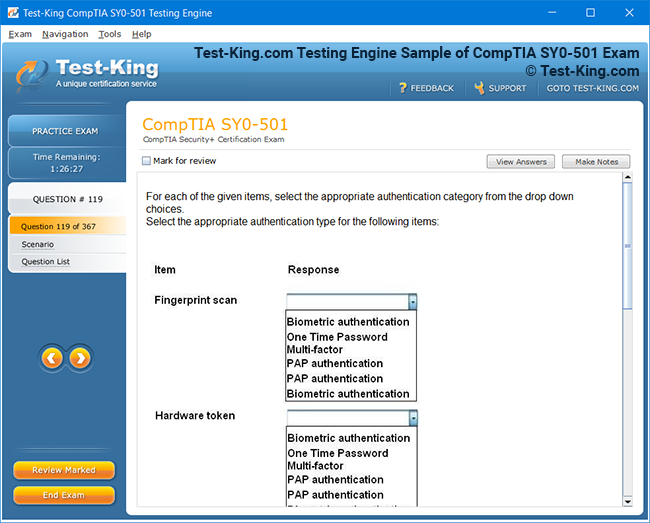
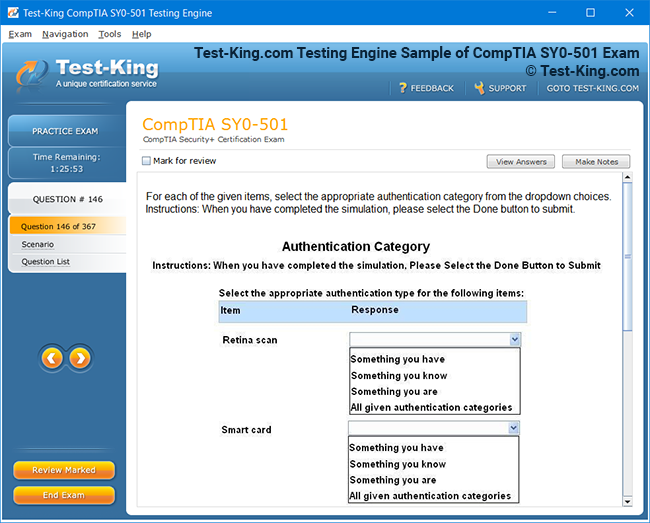
Product Screenshots
Frequently Asked Questions
How can I get the products after purchase?
All products are available for download immediately from your Member's Area. Once you have made the payment, you will be transferred to Member's Area where you can login and download the products you have purchased to your computer.
How long can I use my product? Will it be valid forever?
Test-King products have a validity of 90 days from the date of purchase. This means that any updates to the products, including but not limited to new questions, or updates and changes by our editing team, will be automatically downloaded on to computer to make sure that you get latest exam prep materials during those 90 days.
Can I renew my product if when it's expired?
Yes, when the 90 days of your product validity are over, you have the option of renewing your expired products with a 30% discount. This can be done in your Member's Area.
Please note that you will not be able to use the product after it has expired if you don't renew it.
How often are the questions updated?
We always try to provide the latest pool of questions, Updates in the questions depend on the changes in actual pool of questions by different vendors. As soon as we know about the change in the exam question pool we try our best to update the products as fast as possible.
How many computers I can download Test-King software on?
You can download the Test-King products on the maximum number of 2 (two) computers or devices. If you need to use the software on more than two machines, you can purchase this option separately. Please email support@test-king.com if you need to use more than 5 (five) computers.
What is a PDF Version?
PDF Version is a pdf document of Questions & Answers product. The document file has standart .pdf format, which can be easily read by any pdf reader application like Adobe Acrobat Reader, Foxit Reader, OpenOffice, Google Docs and many others.
Can I purchase PDF Version without the Testing Engine?
PDF Version cannot be purchased separately. It is only available as an add-on to main Question & Answer Testing Engine product.
What operating systems are supported by your Testing Engine software?
Our testing engine is supported by Windows. Andriod and IOS software is currently under development.
Top Palo Alto Networks Exams
- NetSec-Pro - Palo Alto Networks Certified Network Security Professional
- NGFW-Engineer - Palo Alto Networks Certified Next-Generation Firewall Engineer
- SecOps-Pro - Palo Alto Networks Security Operations Professional
- SSE-Engineer - Palo Alto Networks Security Service Edge Engineer
- XSIAM-Engineer - Palo Alto Networks XSIAM Engineer
- NetSec-Analyst - Palo Alto Networks Certified Network Security Analyst
- NetSec-Architect - Palo Alto Networks Network Security Architect
- CloudSec-Pro - Palo Alto Networks Cloud Security Professional
- XSIAM-Analyst - Palo Alto Networks Certified XSIAM Analyst
- XDR-Engineer - Palo Alto Networks XDR Engineer
- SD-WAN-Engineer - Palo Alto Networks SD-WAN Engineer
- XSOAR-Engineer - Palo Alto Networks XSOAR Engineer
- PCCP - Palo Alto Networks Cybersecurity Practitioner
- Apprentice - Palo Alto Networks Cybersecurity Apprentice
- PCNSE - Palo Alto Networks Certified Network Security Engineer
- PCNSA - Palo Alto Networks Certified Network Security Administrator
- PSE-SASE - Palo Alto Networks System Engineer Professional - SASE
- PSE-Prisma Cloud - Palo Alto Networks System Engineer Professional - Prisma Cloud
- NetSec-Generalist - Palo Alto Networks - Network Security Generalist
PCNSC : Top Strategies to Pass the Palo Alto Networks Certified Network Security Consultant Exam
Passing the Palo Alto Networks Certified Network Security Consultant exam demands more than superficial understanding of firewalls and security protocols; it requires an intricate comprehension of enterprise network security, practical implementation strategies, and the ability to anticipate real-world security challenges. To embark on this preparation journey, candidates must first immerse themselves in the foundational principles that govern network security architectures. This includes understanding the core functionalities of Palo Alto Networks’ firewalls, their policy management paradigms, and the integration of security modules into existing infrastructures. Knowledge of packet flow, traffic inspection, and session handling provides a robust scaffolding upon which advanced configurations can be constructed.
Mastering the Foundations of Network Security
A significant strategy is to familiarize oneself with the practical applications of the firewall beyond theoretical constructs. This involves simulating network environments and deploying virtual instances where security policies can be tested in controlled conditions. Such hands-on experience develops an intuitive grasp of network segmentation, threat containment, and the interplay of multiple security layers. Candidates are advised to meticulously document each configuration, noting the outcomes of policy changes, which not only aids in retention but also cultivates troubleshooting acumen critical for exam scenarios.
Understanding the nuances of Palo Alto Networks’ Panorama management platform is equally imperative. Panorama centralizes firewall management and provides granular visibility into network operations. Mastery of Panorama allows candidates to comprehend how global policies are propagated across multiple firewalls, how logs are consolidated for comprehensive analysis, and how reporting functions can identify anomalies in network traffic. By engaging with these features in simulated environments, aspirants gain experiential knowledge that transcends rote memorization, fostering the type of analytical thinking valued by the exam.
Strategic Study Approaches for Complex Topics
The exam content spans a broad spectrum of topics, from basic network security principles to complex threat prevention techniques. One effective approach is to construct a study matrix that aligns exam objectives with personal competency levels. By identifying areas of strength and weakness, candidates can prioritize their preparation and allocate study time efficiently. This targeted focus is enhanced by utilizing a combination of textual study materials, video tutorials, and interactive labs, creating a multisensory learning experience that reinforces retention and comprehension.
An essential strategy for navigating intricate topics is the use of scenario-based learning. The exam frequently evaluates candidates on their ability to apply theoretical knowledge to practical network dilemmas, such as mitigating lateral movement of threats or configuring security policies to prevent data exfiltration. Engaging with scenario-based exercises sharpens critical thinking, enhances problem-solving abilities, and simulates the cognitive demands of the exam environment. Regular practice of these exercises develops a mental framework that enables candidates to quickly assess situations, select appropriate security controls, and justify their decisions logically.
Equally crucial is the iterative review of advanced concepts such as threat intelligence integration, decryption policies, and content inspection mechanisms. These components are often interdependent, and mastery requires understanding not only individual functionalities but also their interactions within a holistic security architecture. Frequent revisitation of these topics solidifies comprehension and ensures that candidates can fluidly apply them under time-constrained exam conditions.
Effective Time Management and Study Scheduling
One of the most underestimated strategies in preparation is disciplined time management. The scope of the Palo Alto Networks Certified Network Security Consultant exam can overwhelm candidates if study efforts are sporadic or unstructured. Establishing a meticulous schedule that balances theory, practice, and revision ensures consistent progress while preventing cognitive fatigue. Allocating dedicated blocks for hands-on lab exercises, theoretical study, and scenario analysis facilitates a rhythm that reinforces learning and promotes retention of intricate material.
Integrating spaced repetition into study routines is a potent method to enhance memory retention. By reviewing key concepts at systematically increasing intervals, candidates strengthen neural connections and reduce the risk of forgetting critical information. This method is particularly effective for memorizing security best practices, policy hierarchies, and protocol functionalities. Supplementing spaced repetition with self-assessment quizzes creates immediate feedback loops, allowing candidates to identify gaps in knowledge and address them proactively.
Time management strategies also extend to exam-day planning. Familiarity with the format, number of questions, and time constraints enables candidates to pace themselves effectively. Practicing full-length simulated exams under timed conditions cultivates endurance, reduces anxiety, and develops an internal sense of temporal allocation for different question types. By integrating these strategies into the preparation process, aspirants increase their efficiency and enhance performance under pressure.
Leveraging Practice Labs and Simulation Environments
Hands-on practice is indispensable when preparing for this exam. Simulated environments replicate enterprise network conditions, allowing candidates to implement policies, configure security profiles, and troubleshoot connectivity issues in a safe, controlled context. These labs are crucial for understanding the nuances of Palo Alto Networks security solutions, including application identification, user-based policies, and intrusion prevention mechanisms.
One effective practice is to recreate real-world incidents in the lab, such as mitigating a malware outbreak or enforcing segmentation to prevent lateral propagation of threats. This approach not only tests technical acumen but also cultivates adaptive thinking and strategic foresight, traits highly valued in the exam. Candidates should systematically document each lab session, capturing both successful configurations and troubleshooting attempts, as this reinforces experiential knowledge and serves as a reference for subsequent review.
Simulations also provide exposure to complex multi-firewall environments. Understanding how security policies interact across distributed networks, how logging and reporting are centralized, and how Panorama management facilitates oversight is critical. By engaging with these environments repetitively, candidates develop fluency in operational workflows and the ability to apply theoretical principles to dynamic network scenarios, a skill essential for exam success.
Integrating Theory with Real-World Security Practices
While technical mastery is essential, candidates must also appreciate the strategic imperatives of network security in enterprise contexts. Exam questions often probe understanding of security policies in relation to organizational objectives, regulatory compliance, and risk management. Therefore, bridging the gap between technical knowledge and real-world application is a key strategy. Candidates should study case studies of network breaches, explore the rationale behind security frameworks, and analyze how Palo Alto Networks solutions are deployed in diverse industries.
Understanding the implications of policy decisions, such as the trade-offs between encryption and performance or the prioritization of traffic inspection, enhances analytical reasoning. By internalizing these considerations, candidates develop a holistic view of network security, enabling them to approach exam questions with insight rather than rote recall. Moreover, connecting theoretical concepts to operational realities cultivates professional judgment that is invaluable both for the exam and subsequent career advancement.
Psychological Preparation and Exam Mindset
Success in the exam is as much a function of mindset as it is of technical knowledge. Developing resilience, focus, and confidence underpins effective performance. Candidates are encouraged to adopt mental conditioning strategies such as mindfulness, visualization of successful outcomes, and deliberate practice of problem-solving under simulated pressure. These techniques reduce cognitive stress, enhance concentration, and promote a proactive approach to complex questions.
Equally important is cultivating adaptive thinking. The exam often presents unconventional scenarios requiring flexible application of principles. Candidates should practice interpreting questions from multiple angles, anticipating potential pitfalls, and systematically evaluating options before selecting an answer. By combining technical expertise with mental agility, aspirants position themselves to navigate challenging questions confidently and accurately.
Deepening Understanding of Security Policies and Traffic Management
Achieving mastery for the Palo Alto Networks Certified Network Security Consultant exam requires a meticulous understanding of how security policies govern network traffic and how nuanced configurations impact threat mitigation. Security policies are not merely rules to be applied; they are frameworks for orchestrating traffic control, segmenting networks, and enforcing compliance standards across complex infrastructures. Candidates should focus on the interdependencies between rule order, object usage, and the application of security profiles, as subtle misconfigurations can significantly alter network behavior.
A sophisticated approach involves analyzing traffic patterns and anticipating potential vulnerabilities. For example, understanding how applications interact with protocol-specific traffic and how session-based rules influence throughput allows candidates to design policies that are both secure and operationally efficient. Hands-on exercises that simulate high-volume traffic and mixed application environments enhance intuition for policy design and cultivate the ability to quickly identify conflicts or redundant rules.
Additionally, candidates should pay careful attention to user identification and role-based policy implementation. Integrating user-based controls with security policies enables more granular oversight of network activity, ensuring that access is appropriately restricted while minimizing operational disruption. By practicing scenarios that require dynamic adjustments to policies based on user roles, candidates develop an adaptable mindset that aligns closely with real-world network management challenges.
Threat Prevention and Advanced Security Profiles
A significant component of the exam evaluates the candidate's ability to employ Palo Alto Networks’ threat prevention technologies effectively. This includes configuring intrusion prevention systems, leveraging malware protection mechanisms, and understanding the application of vulnerability-based signatures. Candidates should immerse themselves in the operational logic of these systems, exploring how they identify, categorize, and respond to emerging threats.
Advanced exercises involve simulating attack vectors such as lateral movement, phishing attempts, or command-and-control communication. Observing how the firewall responds under these conditions develops a practical understanding of its protective capacities and the potential trade-offs between security enforcement and network performance. Candidates should also investigate decryption policies, appreciating how SSL/TLS decryption facilitates deeper inspection while maintaining compliance with privacy and regulatory frameworks.
Content inspection is another critical area. By configuring security profiles to detect and prevent data exfiltration, candidates gain insight into balancing the need for thorough inspection with the constraints of processing power and network latency. Repetitive engagement with these scenarios cultivates proficiency in tailoring security profiles to the unique demands of different enterprise environments, ensuring readiness for the nuanced questions encountered in the exam.
Hands-On Mastery Through Lab Simulations
Practical application of knowledge in lab environments is indispensable. Virtualized labs allow candidates to recreate multi-layered network environments where firewall rules, routing protocols, and threat prevention mechanisms can be tested under controlled yet complex conditions. These simulations help in internalizing the interplay between various security elements, such as how URL filtering, data loss prevention, and antivirus policies interact to form a comprehensive security posture.
Structured lab exercises should include scenario replication from real-world incidents. For instance, configuring firewall rules to contain ransomware propagation, segmenting critical assets to prevent lateral movement, or deploying multi-tiered inspection to mitigate sophisticated malware threats sharpens practical acumen. Candidates are encouraged to meticulously document each configuration, noting the rationale behind adjustments and the observed outcomes. This approach not only reinforces retention but also develops analytical documentation skills essential for operational success.
Optimizing Configuration Management and Monitoring
Candidates must also develop expertise in configuration management and ongoing monitoring, as the exam tests both conceptual knowledge and operational proficiency. Panorama, the centralized management platform, serves as a pivotal tool for overseeing multiple firewalls and maintaining coherent policy enforcement. Understanding how global policies propagate, how local exceptions can be managed, and how logs are aggregated is fundamental.
Effective monitoring involves interpreting logs and reports to detect anomalies, preemptively identify threats, and verify that security policies are functioning as intended. Candidates should practice correlating data from multiple firewalls, analyzing traffic patterns, and responding to alerts with appropriate corrective actions. This experience fosters analytical thinking and equips candidates with the ability to translate raw operational data into actionable insights, a skill that is frequently evaluated in exam scenarios.
Additionally, candidates should explore the automation and orchestration features within the Palo Alto Networks ecosystem. Leveraging automation scripts for repetitive configuration tasks not only reduces human error but also illustrates an advanced understanding of operational efficiency and scalability. By integrating automation into practice labs, aspirants can simulate enterprise-scale deployments, enhancing their readiness for the types of complex scenarios presented in the exam.
Integrating Risk Management and Compliance Awareness
Understanding security is not limited to technological controls; it encompasses an appreciation for risk management, regulatory compliance, and organizational policy alignment. Candidates are expected to demonstrate awareness of how security policies reflect risk priorities and regulatory mandates. Studying real-world case studies of network breaches and compliance audits allows candidates to internalize how policy decisions influence overall organizational resilience.
Key concepts include risk assessment, threat modeling, and policy enforcement aligned with industry standards. Candidates should analyze scenarios where security measures balance operational requirements against potential risk exposure, such as selectively decrypting traffic to inspect critical assets while maintaining user privacy. This integrated perspective strengthens the ability to reason through complex exam questions and supports the development of strategic judgment in security operations.
Exam Readiness Through Cognitive and Practical Drills
To perform optimally, candidates must prepare cognitively as well as technically. Regularly engaging in timed practice exams, scenario analyses, and lab-based drills builds mental endurance, sharpens analytical reasoning, and reduces test-day anxiety. The ability to swiftly interpret problem statements, identify key constraints, and select the most effective solutions is essential for success in the Palo Alto Networks Certified Network Security Consultant exam.
Mindset preparation includes cultivating resilience, focus, and the capacity to manage cognitive load under pressure. Techniques such as visualization of problem-solving sequences, methodical breakdown of complex questions, and reflective review of mistakes during practice sessions enhance confidence and cognitive agility. By harmonizing technical mastery with mental preparedness, candidates develop the aptitude to navigate the challenging questions of the exam with clarity and precision.
Continuous Iteration and Knowledge Reinforcement
Finally, sustained success hinges on continuous iteration and reinforcement of knowledge. The Palo Alto Networks Certified Network Security Consultant exam tests both depth and breadth, requiring candidates to revisit concepts repeatedly while integrating new insights. Effective preparation involves alternating between theory, practical exercises, and scenario evaluation, ensuring that understanding evolves into fluent, actionable knowledge.
Candidates should maintain a living study log, capturing lessons learned from labs, practice exams, and review sessions. By continually refining strategies, identifying knowledge gaps, and reinforcing strengths, aspirants cultivate a level of preparedness that extends beyond memorization, fostering expertise that is applicable both in the exam environment and professional practice.
Advanced Threat Analysis and Response Strategies
Success in the Palo Alto Networks Certified Network Security Consultant exam relies heavily on a candidate’s ability to understand, anticipate, and respond to advanced threats. These threats range from sophisticated malware and ransomware attacks to complex lateral movement within enterprise networks. Candidates should cultivate the skill of threat analysis, which involves dissecting patterns of malicious activity, understanding attacker methodologies, and predicting potential system vulnerabilities. Practical engagement with simulated attacks provides insight into the firewall’s mechanisms for detection, logging, and mitigation.
Intrusion prevention systems within Palo Alto Networks firewalls are designed to identify anomalous behaviors in real-time, yet understanding the subtleties of how these systems prioritize threats is crucial. By conducting exercises that replicate multifaceted attack vectors, candidates can observe how policy rules, threat signatures, and content inspection converge to neutralize risk. This experiential approach sharpens judgment, enabling candidates to make rapid and effective decisions under exam conditions while developing operational expertise that is invaluable in professional environments.
Optimizing Security Profiles for Multi-Layered Protection
An essential component of exam preparation involves mastering the configuration and deployment of multi-layered security profiles. These profiles encompass antivirus, anti-spyware, vulnerability protection, URL filtering, and file blocking capabilities. Candidates should understand not only the individual functionalities of each profile but also their interdependencies. Practicing comprehensive profile configurations in controlled environments enhances intuition for balancing protection and performance.
Effective strategies include analyzing how profiles interact with different types of traffic and user behaviors. For example, prioritizing inspection for critical applications or sensitive data flows while applying less intrusive policies for routine traffic can optimize network efficiency without compromising security. Regular engagement with lab exercises allows candidates to observe how changes in one profile influence overall network behavior, fostering a holistic understanding of multi-layered defense architectures.
Refining Policy Implementation and Hierarchy Management
Understanding policy hierarchy is pivotal for success. Palo Alto Networks firewalls evaluate rules in a top-down sequence, and subtle misplacements or overlaps can lead to unintended consequences, such as traffic bypassing critical security checks. Candidates must develop meticulous attention to rule ordering, object referencing, and exception handling. Laboratory exercises that simulate complex rule sets with overlapping permissions and exclusions cultivate practical competence and reinforce conceptual understanding.
In addition, implementing best practices for policy design, such as consolidating redundant rules, leveraging nested objects, and applying least-privilege principles, strengthens operational efficiency. By regularly practicing these implementations, candidates enhance their ability to troubleshoot conflicts, anticipate rule interactions, and optimize network security in alignment with enterprise objectives. This depth of understanding ensures readiness for scenario-based questions that challenge both technical skill and analytical reasoning.
Leveraging Centralized Management and Log Analysis
Panorama, the centralized management platform for Palo Alto Networks firewalls, plays a critical role in exam preparedness. Candidates should explore its full capabilities, including centralized policy enforcement, log aggregation, and reporting functionalities. Effective use of Panorama allows for comprehensive visibility across multiple firewalls, providing insights into traffic patterns, policy compliance, and potential security incidents.
Regular practice analyzing logs from distributed environments is invaluable. Candidates should simulate network events, such as policy violations or attempted breaches, and interpret logs to determine root causes and remedial actions. This exercise enhances both operational proficiency and exam readiness, as questions often require candidates to evaluate scenarios based on provided logs, identify misconfigurations, and propose corrective measures. Developing this competency ensures that candidates can confidently navigate questions that blend theoretical knowledge with practical application.
Applying Risk Management and Compliance Considerations
The exam evaluates not only technical acumen but also the ability to integrate risk management and regulatory compliance into network security strategies. Candidates should study how security policies mitigate risks while aligning with organizational objectives and regulatory frameworks. Understanding the rationale behind prioritizing certain controls, such as decryption for sensitive data versus performance considerations, allows candidates to approach complex scenarios with analytical rigor.
Exam preparation benefits from reviewing real-world examples where policy decisions influenced the outcome of security incidents. This approach illuminates the relationship between risk assessment, policy enforcement, and compliance adherence, enabling candidates to reason through questions that incorporate operational, legal, and strategic dimensions. By internalizing these principles, aspirants develop a nuanced perspective that enhances both exam performance and professional expertise.
Hands-On Scenario Drills and Simulation Exercises
Practical drills remain central to mastering the exam content. Candidates should engage in comprehensive simulations that replicate enterprise-scale environments, where multiple firewalls, segmented networks, and dynamic user behaviors interact. These exercises provide opportunities to implement security policies, configure threat prevention measures, and monitor system responses in real-time.
Scenario drills should include replicating security incidents, such as malware propagation, unauthorized access attempts, and network performance degradation. Observing system behavior under these conditions allows candidates to develop troubleshooting skills, refine policy adjustments, and reinforce analytical thinking. Meticulous documentation of these exercises, capturing both successful strategies and encountered challenges, supports knowledge retention and builds a reference framework for rapid recall during the exam.
Enhancing Cognitive Agility and Exam Performance
Beyond technical preparation, candidates must cultivate cognitive agility to navigate the multifaceted questions of the exam. This involves developing strategies for rapid problem assessment, prioritizing critical elements, and applying theoretical knowledge in practical contexts. Time-constrained practice exams are highly effective in fostering these skills, as they simulate the cognitive demands and pacing of the actual exam environment.
Psychological preparation is equally significant. Techniques such as focused visualization, methodical problem decomposition, and reflective review of practice exercises enhance resilience and confidence. By consistently practicing under simulated pressure, candidates strengthen their ability to maintain clarity, accuracy, and analytical precision, ensuring readiness to tackle complex questions that require both technical insight and strategic judgment.
Continuous Knowledge Reinforcement and Skill Integration
Sustained mastery requires iterative reinforcement of knowledge and skills. Candidates should integrate theoretical study with hands-on exercises, scenario analysis, and log interpretation to create a cohesive learning experience. Revisiting advanced topics, such as threat intelligence integration, policy optimization, and centralized management, ensures that learning evolves into fluent, actionable expertise.
Maintaining detailed study records, capturing lessons learned, and systematically addressing knowledge gaps facilitates continuous improvement. This iterative process fosters adaptability, deepens conceptual understanding, and cultivates confidence in both technical implementation and analytical reasoning. Through consistent practice, reflection, and refinement, candidates develop the comprehensive skill set required to excel in the Palo Alto Networks Certified Network Security Consultant exam and in professional network security environments.
Advanced Troubleshooting and Diagnostic Techniques
Success in the Palo Alto Networks Certified Network Security Consultant exam requires not only a strong understanding of configuration and policy design but also mastery of advanced troubleshooting techniques. Candidates should develop the ability to identify, analyze, and resolve complex network issues efficiently. This involves interpreting log data, correlating events, and applying systematic problem-solving methods to pinpoint misconfigurations or security breaches. Hands-on engagement with simulated network disruptions, such as traffic congestion, failed policy enforcement, or application connectivity issues, allows candidates to refine their diagnostic acuity and develop intuitive understanding of firewall behavior under stress.
One effective approach is to dissect hypothetical incidents where multiple variables interact simultaneously, such as simultaneous application blocking, user-based access denials, and policy conflicts. Observing the cascading effects of each element cultivates a holistic perspective, enhancing both operational competence and analytical reasoning. Candidates who routinely practice these scenarios gain fluency in recognizing the root cause of issues, applying corrective measures, and verifying the effectiveness of solutions, which is invaluable for exam readiness and professional expertise alike.
Multi-Firewall Management and Policy Orchestration
The Palo Alto Networks ecosystem often requires coordination across multiple firewalls, demanding expertise in policy orchestration and centralized management. Candidates should focus on understanding how Panorama facilitates global policy deployment, log consolidation, and consistent security enforcement across distributed networks. Mastery of these features ensures that rules are propagated accurately, anomalies are detected promptly, and operational efficiency is maintained.
Simulated exercises involving multi-firewall topologies enable candidates to observe the interplay between local and global policies. For instance, configuring exceptions for specific regions or departments while maintaining overarching security standards fosters nuanced understanding of hierarchical rule management. This practice strengthens the ability to anticipate conflicts, resolve inconsistencies, and optimize policy enforcement, skills that are frequently tested through scenario-based exam questions.
Deep Packet Inspection and Threat Containment Strategies
Exam success requires a sophisticated grasp of deep packet inspection and the methods employed to contain advanced threats. Candidates should understand how Palo Alto Networks firewalls analyze traffic at multiple layers, identifying anomalies, malware signatures, and policy violations. By simulating network traffic containing various threats, candidates can observe detection mechanisms in action and evaluate how policies and security profiles interact to neutralize risks.
Practical exercises should include scenarios such as identifying command-and-control communication, intercepting unauthorized data transfers, and mitigating the propagation of malware within segmented networks. This approach not only reinforces theoretical knowledge but also cultivates operational intuition, allowing candidates to implement preventive measures effectively and respond to emerging threats with precision.
Integrating User and Application Awareness
A distinctive feature of Palo Alto Networks firewalls is the integration of user and application awareness into security policy enforcement. Candidates must master the ability to associate network traffic with specific users, roles, or applications, allowing for granular control over access and activity. Hands-on practice with these configurations develops the capability to enforce security without disrupting legitimate operations, balancing protection with business continuity.
Simulating complex enterprise environments, where multiple applications and user groups coexist, enables candidates to appreciate the challenges of dynamic policy management. Observing the effects of policy adjustments on user behavior, application performance, and security posture strengthens analytical reasoning and operational agility, both critical for exam success.
Advanced Logging, Reporting, and Continuous Monitoring
Candidates should also focus on leveraging logging and reporting tools to maintain comprehensive visibility and support proactive security management. Panorama and firewall logs provide insights into policy compliance, traffic anomalies, and potential security incidents. By regularly reviewing logs from simulated networks, candidates develop the ability to detect patterns, identify misconfigurations, and implement timely corrective actions.
Continuous monitoring exercises should include evaluating aggregated log data for trends, correlating events across multiple firewalls, and interpreting alert signals. This practice reinforces analytical skills, enhances situational awareness, and ensures candidates are adept at converting raw operational data into actionable insights. The ability to synthesize information from multiple sources is frequently tested in exam scenarios, making log analysis an indispensable component of preparation.
Strategic Planning for Exam Scenarios
The exam evaluates not only technical proficiency but also strategic thinking and decision-making under time constraints. Candidates should practice interpreting scenario-based questions, identifying critical elements, and applying structured approaches to select optimal solutions. Techniques such as mental mapping, systematic elimination of unlikely options, and prioritization based on risk assessment enhance efficiency and accuracy.
Simulation of timed exercises mirrors the cognitive demands of the exam, fostering endurance and focus. Candidates who consistently practice under realistic conditions develop the ability to approach complex questions methodically, balance multiple variables, and justify their decisions logically. This combination of technical skill and strategic reasoning is central to achieving high performance on the exam.
Continuous Knowledge Enhancement and Skill Refinement
Sustained preparedness relies on iterative refinement of knowledge and skills. Candidates should integrate theoretical study, hands-on practice, scenario analysis, and log interpretation into a cohesive learning cycle. Revisiting challenging topics such as threat intelligence, policy optimization, and multi-firewall orchestration ensures comprehension evolves into practical expertise.
Maintaining a living study record, capturing lessons learned from labs and exercises, and systematically addressing knowledge gaps supports continuous improvement. This iterative approach cultivates adaptability, deepens conceptual understanding, and enhances both exam readiness and operational competence. Through deliberate practice and reflection, candidates develop mastery that extends beyond memorization, equipping them to handle complex network security challenges with confidence and precision.
Advanced Configuration and Network Architecture Optimization
Success in the Palo Alto Networks Certified Network Security Consultant exam demands a profound understanding of firewall configuration and enterprise network architecture. Candidates should focus on designing and implementing optimal rule sets that balance security requirements with operational efficiency. This involves configuring policies that control traffic flow, applying security profiles strategically, and ensuring compliance with enterprise standards. Practical exercises in simulated network environments allow candidates to observe the interplay between routing, policy enforcement, and application behavior, cultivating intuition for complex network scenarios.
Effective configuration strategies include leveraging object grouping, nested policies, and dynamic updates to streamline management. By practicing these advanced techniques, candidates develop the ability to anticipate interactions between rules, optimize traffic inspection, and minimize redundant or conflicting policies. These exercises build a deep comprehension of firewall behavior, preparing candidates for scenario-based questions that require analytical and technical proficiency.
Threat Intelligence Integration and Predictive Analysis
A crucial aspect of preparation involves integrating threat intelligence into security strategies. Candidates must understand how Palo Alto Networks firewalls utilize updated threat feeds, signature databases, and behavioral analysis to preemptively identify risks. Engaging with simulations that replicate emerging threats, such as zero-day vulnerabilities or polymorphic malware, allows candidates to observe the effectiveness of predictive controls and refine response strategies.
Scenario exercises that incorporate threat intelligence encourage analytical reasoning, as candidates must determine the most appropriate combination of security measures to mitigate risk while preserving operational performance. This practical engagement fosters an adaptive mindset, enhancing the ability to respond to unconventional scenarios, which is frequently assessed in exam questions.
Multi-Device Coordination and Policy Synchronization
Large-scale enterprise environments often require coordination across multiple firewalls and network devices. Candidates should develop expertise in managing synchronized policies, ensuring consistent enforcement, and resolving conflicts that may arise due to overlapping rules or exceptions. Panorama serves as a central tool for deploying global policies, aggregating logs, and monitoring compliance across distributed systems.
Hands-on exercises should simulate complex topologies where multiple firewalls interact with segmented networks and dynamic user groups. Observing the propagation of policies and their real-time impact on traffic reinforces understanding of hierarchical rule management. This preparation equips candidates with the analytical skills needed to optimize multi-device deployments and respond to intricate network configurations, a competence regularly evaluated in the exam.
Performance Optimization and Security Balancing
While security is paramount, candidates must also grasp the operational impact of firewall policies on network performance. Advanced preparation involves analyzing traffic patterns, identifying potential bottlenecks, and configuring inspection rules that minimize latency without compromising protection. Simulated exercises focusing on high-volume traffic environments allow candidates to observe the effects of security measures on throughput, application behavior, and user experience.
Strategies such as selective decryption, prioritization of critical applications, and adaptive content inspection help balance security and performance. By practicing these techniques in lab environments, candidates develop the ability to implement nuanced configurations, ensuring efficient traffic management while maintaining robust threat prevention. This combination of analytical judgment and practical skill is central to the Palo Alto Networks Certified Network Security Consultant exam.
Incident Response and Remediation Practice
Candidates should cultivate a structured approach to incident response and remediation. This involves detecting security anomalies, diagnosing underlying causes, and applying corrective actions efficiently. Simulated scenarios such as unauthorized access attempts, malware propagation, or misconfigured policies provide opportunities to practice systematic investigation and resolution.
Effective incident response practice emphasizes thorough documentation, capturing observed behaviors, applied remedies, and subsequent verification steps. Candidates who consistently engage in these exercises develop both operational competence and analytical clarity, enhancing their ability to respond to real-world incidents and complex exam scenarios with precision and confidence.
Application and User-Based Policy Enforcement
Palo Alto Networks firewalls offer granular control through application and user-based policies. Candidates must master the ability to associate network traffic with specific users, roles, or applications, facilitating tailored security enforcement. Hands-on practice involves configuring policies that restrict access, monitor application usage, and enforce compliance while maintaining operational continuity.
Simulating enterprise environments with diverse applications and user groups enables candidates to appreciate the challenges of dynamic policy enforcement. Observing the impact of adjustments on traffic flow, application performance, and user experience strengthens analytical reasoning and practical skills. This expertise is essential for both exam success and effective network security management in professional contexts.
Log Analysis and Proactive Monitoring Techniques
Effective preparation includes mastery of log analysis and proactive monitoring. Logs provide insights into policy compliance, traffic anomalies, and potential security threats. Candidates should regularly practice reviewing aggregated logs from multiple firewalls, interpreting patterns, and identifying anomalies that may indicate breaches or misconfigurations.
Proactive monitoring exercises, such as correlating events across devices, detecting unusual traffic patterns, and anticipating threats, cultivate analytical acuity. By integrating log interpretation into daily practice, candidates strengthen their ability to make informed decisions, apply corrective measures, and verify the efficacy of security configurations, which are key competencies evaluated in the exam.
Cognitive Strategies and Exam Readiness Drills
Candidates must prepare mentally as well as technically. Time management, focus, and analytical agility are critical for navigating the exam’s complex scenarios. Regular timed practice exams, scenario exercises, and problem-solving drills enhance cognitive endurance and decision-making under pressure.
Techniques such as mental rehearsal, systematic question decomposition, and reflective review of practice exercises improve clarity, confidence, and analytical precision. By harmonizing technical expertise with mental preparedness, candidates develop the ability to approach multifaceted questions methodically, evaluate multiple variables, and select optimal solutions, ensuring high performance on the exam.
Iterative Learning and Continuous Skill Enhancement
Sustained success relies on continuous learning and iterative refinement of knowledge and skills. Candidates should integrate theory, practical exercises, scenario analysis, and log interpretation into a cohesive preparation strategy. Revisiting challenging topics, such as policy optimization, threat intelligence, and multi-device orchestration, transforms theoretical understanding into operational mastery.
Maintaining a dynamic study log, capturing lessons learned from simulations, and addressing knowledge gaps systematically fosters continuous improvement. This iterative approach cultivates adaptability, deepens conceptual understanding, and enhances proficiency in both exam scenarios and real-world network security challenges. Through disciplined practice and reflection, candidates develop a comprehensive skill set that underpins both exam success and professional excellence.
High-Level Operational Proficiency and Scenario Management
Achieving excellence in the Palo Alto Networks Certified Network Security Consultant exam requires not only technical knowledge but also operational fluency and the ability to manage complex network scenarios. Candidates should focus on developing a deep understanding of how firewalls operate in dynamic environments, how policies interact across multiple devices, and how threat prevention mechanisms function under varying conditions. Practicing with simulated enterprise networks, including segmented topologies, multiple user groups, and diverse applications, equips candidates with the capacity to anticipate challenges and respond effectively to intricate configurations.
Understanding the interdependencies among routing, security policies, and inspection mechanisms is essential. Candidates should engage in exercises that replicate multi-layered traffic flows, ensuring that they can implement rules that secure critical assets while maintaining operational efficiency. This hands-on familiarity fosters the cognitive agility necessary for scenario-based questions, allowing candidates to apply theoretical principles pragmatically and navigate complex network interactions with confidence.
Refinement of Policy Optimization and Advanced Threat Management
Candidates should develop expertise in crafting precise and efficient security policies. Advanced preparation includes understanding the nuances of rule placement, object utilization, and policy inheritance across multiple firewalls. Exercises that simulate policy conflicts, redundancy resolution, and adaptive adjustments enable candidates to optimize security while minimizing performance degradation.
Threat management extends beyond reactive measures; candidates must comprehend predictive mechanisms, such as threat intelligence integration and anomaly detection, to preemptively mitigate risks. By studying attack patterns and testing threat response in simulated environments, candidates learn to identify potential vulnerabilities, implement countermeasures, and evaluate the effectiveness of policies in containing sophisticated attacks. This iterative practice develops operational intuition and ensures readiness for questions demanding applied knowledge.
Multi-Device Coordination and Centralized Oversight
Panorama, as the centralized management platform for Palo Alto Networks firewalls, is a critical component of preparation. Candidates should become proficient in deploying global policies, synchronizing configurations across devices, and interpreting aggregated logs for insights into security events and network performance. Exercises should include scenarios where global policies must be adapted for local requirements without compromising compliance or protection.
Observing policy propagation, analyzing its effects on traffic, and resolving conflicts enhances understanding of hierarchical rule management and operational oversight. Candidates who routinely practice these tasks develop the ability to anticipate issues, implement solutions efficiently, and ensure consistent enforcement across distributed systems. This mastery is frequently tested through complex scenario-based questions in the exam.
Deep Packet Inspection and Application-Level Security Controls
Exam preparation requires an in-depth understanding of deep packet inspection and the application of security controls at multiple layers. Candidates should study how Palo Alto Networks firewalls identify anomalies, malware, and policy violations while maintaining network performance. Simulated traffic exercises provide insight into the behavior of inspection engines, allowing candidates to observe the impact of configurations and the interactions among security profiles, threat prevention mechanisms, and application-level controls.
Application-aware policies enable granular enforcement based on user activity, application type, or role-specific requirements. Candidates should engage in exercises that replicate enterprise environments with diverse applications, evaluating how policy adjustments affect traffic flow, operational continuity, and security posture. This practical understanding fosters analytical skills essential for successfully addressing applied questions on the exam.
Incident Response, Log Analysis, and Continuous Monitoring
Candidates must be adept at detecting, diagnosing, and resolving incidents. Practical exercises should involve reviewing logs from multiple firewalls, correlating events, and identifying root causes of anomalies or policy violations. By engaging in scenario-based simulations of security breaches, unauthorized access, or network misconfigurations, candidates develop systematic approaches to incident response, enhancing operational proficiency.
Continuous monitoring exercises, including evaluating trends, assessing potential risks, and verifying the effectiveness of policies, cultivate analytical reasoning and situational awareness. Candidates who regularly practice these skills gain the ability to anticipate issues, implement proactive measures, and document their findings, preparing them for questions that require both technical and strategic analysis.
Cognitive Preparation and Exam Strategy
Time management, focus, and cognitive agility are crucial for navigating the exam. Candidates should practice timed exercises, scenario analyses, and problem-solving drills to build endurance and improve decision-making under pressure. Techniques such as mental visualization, methodical decomposition of complex questions, and reflective review of practice exercises enhance confidence, clarity, and analytical precision.
Developing a structured approach to question interpretation allows candidates to identify critical elements, evaluate multiple variables, and select optimal solutions efficiently. Consistent practice under exam-like conditions familiarizes candidates with pacing, reduces anxiety, and strengthens the ability to apply knowledge strategically in time-constrained situations.
Iterative Knowledge Reinforcement and Skill Integration
Sustained mastery depends on continuous reinforcement of knowledge and refinement of skills. Candidates should integrate theoretical study, hands-on practice, scenario exercises, and log interpretation into a cohesive preparation cycle. Revisiting challenging topics, such as multi-device orchestration, threat intelligence, and policy optimization, transforms abstract understanding into actionable expertise.
Maintaining a dynamic study log, recording lessons learned from simulations and practical exercises, and systematically addressing knowledge gaps ensure continuous improvement. This iterative process cultivates adaptability, deepens comprehension, and enhances both operational and analytical skills. Candidates who adopt this approach develop proficiency that extends beyond memorization, equipping them to handle complex exam scenarios and real-world network security challenges with confidence.
Conclusion
Preparing for the Palo Alto Networks Certified Network Security Consultant exam is an intricate endeavor that requires a harmonious blend of technical knowledge, operational expertise, and cognitive agility. Mastery of firewall configurations, security policies, threat prevention mechanisms, multi-device coordination, and log analysis forms the backbone of success. Practical exercises, scenario simulations, and iterative reinforcement of knowledge cultivate the analytical reasoning and hands-on proficiency necessary for high performance.
By combining theoretical study with disciplined practice, strategic scenario management, and mental preparation, candidates develop a comprehensive skill set that not only ensures exam success but also fosters professional excellence in network security. The integration of advanced techniques, thoughtful policy design, and proactive monitoring equips aspirants to navigate complex network environments effectively, positioning them as adept and capable certified network security consultants.