

Exam Code: PSE-Cortex
Exam Name: Palo Alto Networks System Engineer Professional - Cortex (Version 2023)
Certification Provider: Palo Alto Networks
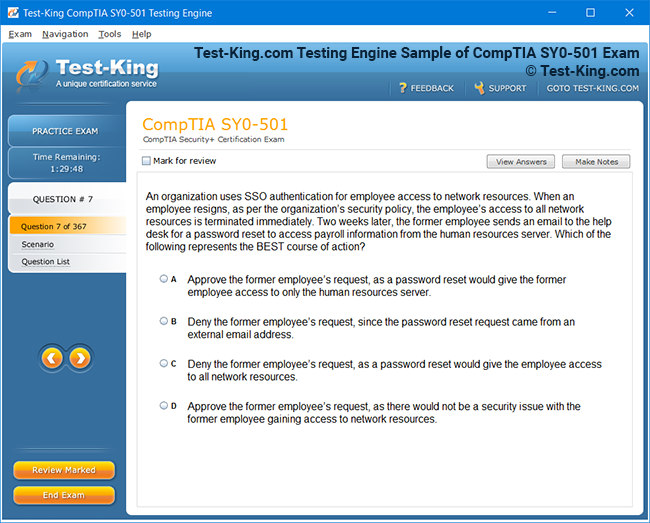
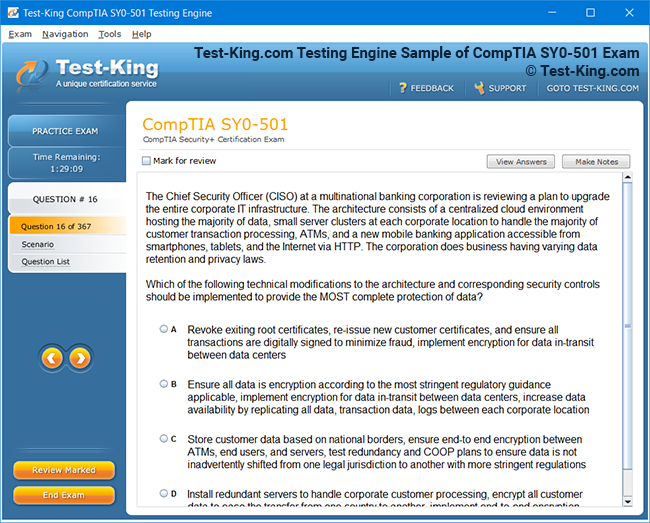
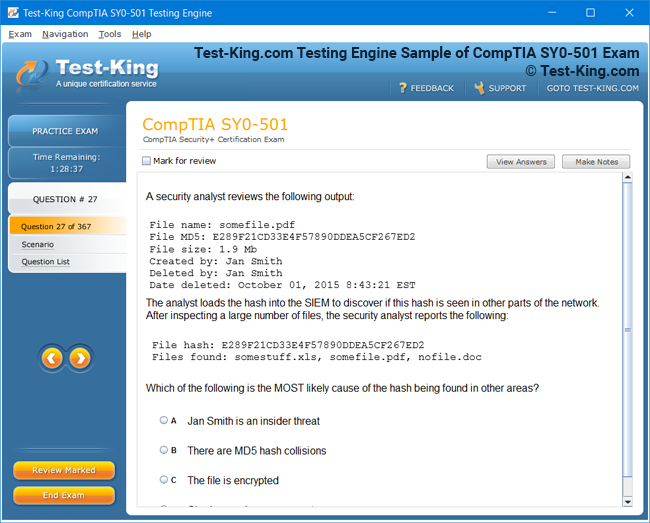
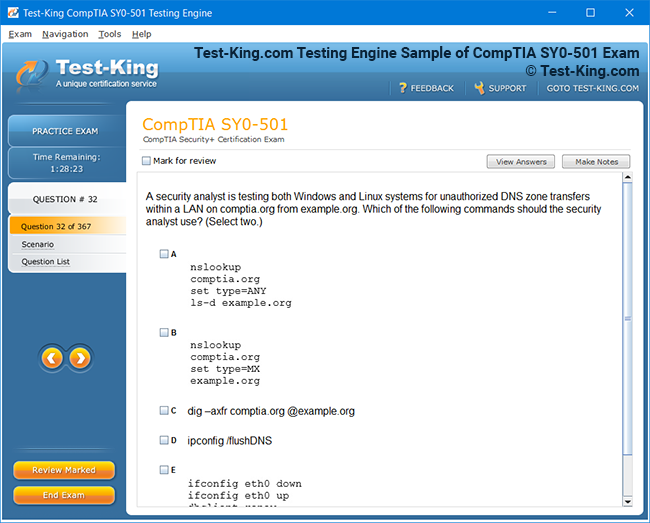
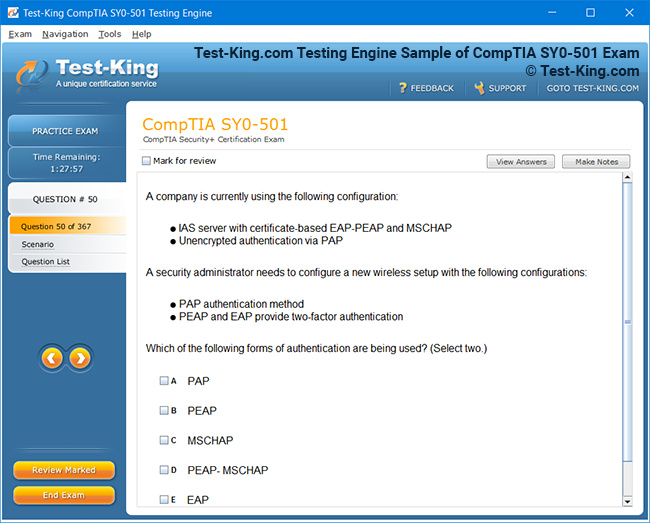
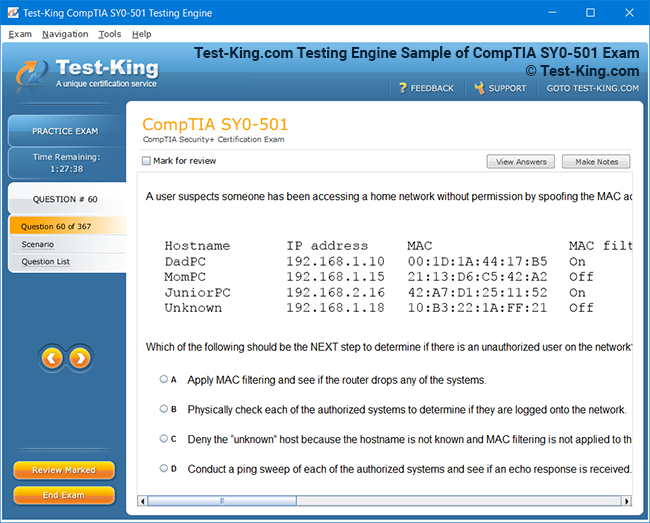
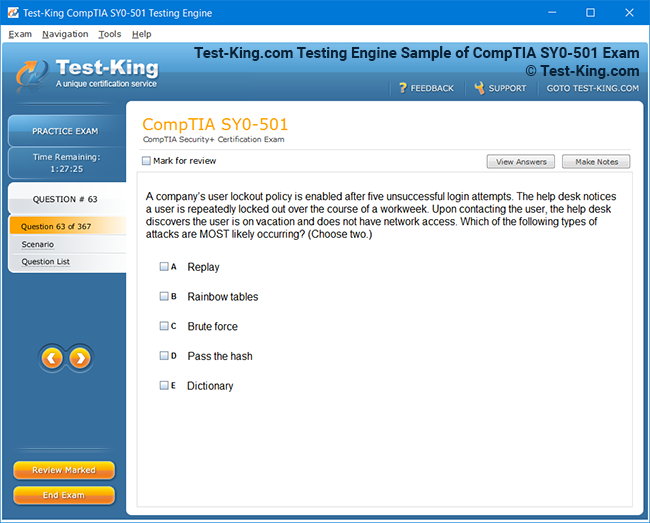
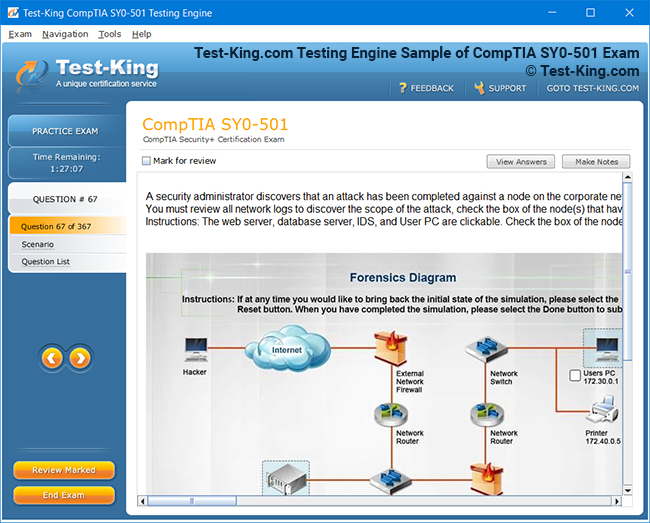
Product Screenshots
Frequently Asked Questions
How can I get the products after purchase?
All products are available for download immediately from your Member's Area. Once you have made the payment, you will be transferred to Member's Area where you can login and download the products you have purchased to your computer.
How long can I use my product? Will it be valid forever?
Test-King products have a validity of 90 days from the date of purchase. This means that any updates to the products, including but not limited to new questions, or updates and changes by our editing team, will be automatically downloaded on to computer to make sure that you get latest exam prep materials during those 90 days.
Can I renew my product if when it's expired?
Yes, when the 90 days of your product validity are over, you have the option of renewing your expired products with a 30% discount. This can be done in your Member's Area.
Please note that you will not be able to use the product after it has expired if you don't renew it.
How often are the questions updated?
We always try to provide the latest pool of questions, Updates in the questions depend on the changes in actual pool of questions by different vendors. As soon as we know about the change in the exam question pool we try our best to update the products as fast as possible.
How many computers I can download Test-King software on?
You can download the Test-King products on the maximum number of 2 (two) computers or devices. If you need to use the software on more than two machines, you can purchase this option separately. Please email support@test-king.com if you need to use more than 5 (five) computers.
What is a PDF Version?
PDF Version is a pdf document of Questions & Answers product. The document file has standart .pdf format, which can be easily read by any pdf reader application like Adobe Acrobat Reader, Foxit Reader, OpenOffice, Google Docs and many others.
Can I purchase PDF Version without the Testing Engine?
PDF Version cannot be purchased separately. It is only available as an add-on to main Question & Answer Testing Engine product.
What operating systems are supported by your Testing Engine software?
Our testing engine is supported by Windows. Andriod and IOS software is currently under development.
Top Palo Alto Networks Exams
- NetSec-Pro - Palo Alto Networks Certified Network Security Professional
- NGFW-Engineer - Palo Alto Networks Certified Next-Generation Firewall Engineer
- SecOps-Pro - Palo Alto Networks Security Operations Professional
- XSIAM-Engineer - Palo Alto Networks XSIAM Engineer
- NetSec-Architect - Palo Alto Networks Network Security Architect
- SSE-Engineer - Palo Alto Networks Security Service Edge Engineer
- NetSec-Analyst - Palo Alto Networks Certified Network Security Analyst
- XDR-Engineer - Palo Alto Networks XDR Engineer
- XSIAM-Analyst - Palo Alto Networks Certified XSIAM Analyst
- CloudSec-Pro - Palo Alto Networks Cloud Security Professional
- XSOAR-Engineer - Palo Alto Networks XSOAR Engineer
- SD-WAN-Engineer - Palo Alto Networks SD-WAN Engineer
- PCCP - Palo Alto Networks Cybersecurity Practitioner
- Apprentice - Palo Alto Networks Cybersecurity Apprentice
- PCNSE - Palo Alto Networks Certified Network Security Engineer
- PCNSA - Palo Alto Networks Certified Network Security Administrator
- PSE-SASE - Palo Alto Networks System Engineer Professional - SASE
- NetSec-Generalist - Palo Alto Networks - Network Security Generalist
- PSE-Prisma Cloud - Palo Alto Networks System Engineer Professional - Prisma Cloud
PSE-Cortex: Understanding Palo Alto Networks Cortex-Architecture, Features, and Exam Relevance
Palo Alto Networks Cortex is an advanced cybersecurity platform that redefines the approach organizations take to threat detection, investigation, and response. It is designed to provide system engineers with a cohesive and intelligent framework capable of unifying multiple aspects of cybersecurity operations. The platform has gained significance in modern enterprises because it seamlessly integrates endpoint monitoring, threat intelligence, and automated response capabilities, allowing security teams to respond to threats with greater agility and precision. For professionals preparing for the Palo Alto Networks System Engineer Professional – Cortex exam, mastering the nuances of this platform is essential, as it reflects both the technical and practical requirements of managing security operations at scale.
Introduction to Cortex and Its Importance
Cortex is not merely a collection of tools; it is an ecosystem that enables proactive and preemptive threat management. The platform leverages advanced analytics, machine learning, and centralized data repositories to provide security professionals with the ability to detect anomalous behavior across networks, endpoints, and cloud environments. By combining intelligence from multiple sources, Cortex reduces the likelihood of threats going undetected while allowing for faster response times. For aspiring system engineers, understanding this ecosystem in depth is critical, as the exam evaluates practical knowledge of deploying, configuring, and managing Cortex in real-world enterprise environments.
Key Components of Cortex
Cortex comprises several integral components, each contributing to a holistic cybersecurity strategy. Cortex XDR, or Extended Detection and Response, serves as the platform’s analytical and investigative engine. It aggregates data from endpoints, network traffic, and cloud logs, applying correlation algorithms and behavioral analytics to detect complex threats. This functionality is crucial for organizations seeking to identify attacks that traditional security tools might miss. Within Cortex XDR, security analysts can investigate incidents, trace attack vectors, and implement containment measures, providing a practical and robust defense mechanism. Understanding the deployment, configuration, and operation of XDR is fundamental for anyone preparing for the professional certification exam, as it tests the ability to manage these processes effectively.
Another critical component is Cortex XSOAR, which stands for Security Orchestration, Automation, and Response. This solution enables security teams to automate repetitive tasks, orchestrate complex workflows, and respond to incidents with minimal manual intervention. By integrating playbooks, automated alerts, and incident management processes, Cortex XSOAR enhances operational efficiency and reduces response time. For the exam, candidates are expected to understand how to configure automation workflows, create playbooks tailored to organizational policies, and leverage the system to coordinate response actions. Practical familiarity with these capabilities ensures that exam takers can translate theoretical knowledge into actionable skills in professional environments.
Cortex Data Lake serves as the central repository where all security telemetry is stored, processed, and analyzed. By collecting logs, alerts, and behavioral data from diverse sources, Data Lake provides a unified view of the security landscape, enabling both XDR and XSOAR to function effectively. Candidates preparing for the certification must be able to navigate this repository, perform queries to extract insights, and understand the implications of the data in incident response. The integration between Data Lake, XDR, and XSOAR exemplifies the platform’s cohesive architecture, highlighting the importance of interconnected operations in modern cybersecurity practices.
Architecture and Design Principles
The architecture of Cortex is designed with scalability, intelligence, and resilience in mind. At its core, the platform employs a layered approach that separates data ingestion, analysis, and orchestration. This separation ensures that each component can operate independently while contributing to a unified operational workflow. For instance, endpoints and network sensors feed raw telemetry into Data Lake, where it is normalized and indexed. Cortex XDR then applies advanced analytics to identify potential threats, while XSOAR orchestrates the response by triggering automated playbooks or alerting human analysts when intervention is required. Understanding this architecture is essential for the exam, as it allows candidates to conceptualize how data flows through the system and how each module contributes to overall threat mitigation.
Cortex’s design principles also emphasize automation and intelligence. Machine learning models analyze patterns of behavior to detect anomalies that might indicate malicious activity. Behavioral analytics provide contextual insights, helping analysts distinguish between benign deviations and genuine threats. This intelligent layer reduces the reliance on manual intervention, allowing security teams to focus on high-priority incidents and strategic decision-making. Exam questions often test candidates’ understanding of these principles, evaluating their ability to optimize configurations and leverage automation to enhance operational efficiency.
Scalability is another cornerstone of Cortex architecture. The platform is capable of handling vast amounts of data generated by enterprise environments, ensuring consistent performance even under heavy load. Data Lake’s distributed architecture allows for parallel processing of logs and alerts, while XDR and XSOAR maintain operational efficiency through cloud-native deployment models. Candidates must appreciate these aspects, as real-world deployments often involve complex, high-volume environments that require careful planning and resource management.
Features and Functional Capabilities
Cortex offers a wide range of features designed to support modern security operations. Endpoint detection and response functionality allows teams to monitor endpoints for signs of compromise, track process execution, and investigate anomalous behavior. Network traffic analysis complements this by identifying unusual patterns in data flow that could signify lateral movement or exfiltration attempts. Cloud monitoring capabilities ensure that security extends beyond on-premises infrastructure, providing visibility into cloud workloads and SaaS applications.
The platform also excels in incident investigation and response. Analysts can pivot through related alerts, correlate events across multiple vectors, and construct a comprehensive timeline of attacks. Automated playbooks within XSOAR streamline response actions, allowing repetitive tasks such as containment, user notification, or malware analysis to be executed with minimal delay. This combination of detection, investigation, and automated response is a hallmark of Cortex, and candidates must understand how to implement these workflows effectively.
Threat intelligence integration is another essential feature. Cortex aggregates external and internal threat intelligence feeds, enriching alerts with contextual information such as indicators of compromise, attacker profiles, and known tactics. This contextual awareness enhances decision-making, enabling analysts to prioritize incidents based on risk and potential impact. Exam takers should be able to describe how intelligence feeds integrate with XDR and XSOAR and how this integration influences response strategies.
Practical Applications in Enterprise Environments
In real-world environments, Cortex provides tangible benefits by enhancing visibility, reducing response times, and mitigating risk. Organizations can implement the platform to continuously monitor endpoints, networks, and cloud assets, ensuring that potential threats are detected before they escalate into incidents. For system engineers, practical deployment involves configuring sensors, establishing data ingestion pipelines, and setting up automation workflows that align with organizational policies. The exam tests candidates’ ability to translate these configurations into operational readiness, simulating scenarios where threat detection and response are critical.
Case studies often illustrate Cortex’s effectiveness in detecting advanced persistent threats, ransomware attacks, and insider threats. By correlating data from multiple sources, the platform enables analysts to identify subtle indicators that might otherwise be missed. Automated response mechanisms ensure that containment and mitigation actions are executed swiftly, minimizing operational disruption. Understanding these practical applications is vital for exam preparation, as questions may explore both the theoretical underpinnings of Cortex features and their implementation in enterprise environments.
Exam Relevance and Preparation Strategies
Preparing for the Palo Alto Networks System Engineer Professional – Cortex exam requires a blend of theoretical knowledge and hands-on experience. Candidates should familiarize themselves with each component of the platform, understand the flow of data between modules, and practice configuring real-world scenarios. Key topics often include deployment planning, sensor configuration, automated playbooks, and data analysis using Data Lake. Mastery of these concepts enables candidates to demonstrate not only their technical knowledge but also their ability to apply solutions effectively.
Practical labs and simulations are highly recommended. These exercises allow candidates to investigate incidents, configure automated responses, and analyze logs in a controlled environment. The experience gained through such practice is invaluable, as it mirrors the types of challenges encountered in professional security operations. Additionally, reviewing official documentation and understanding the architecture diagrams and workflow processes provides the contextual knowledge necessary for success on the exam.
Introduction to Cortex XDR
Cortex XDR, the cornerstone of the Palo Alto Networks security ecosystem, is a sophisticated solution designed to provide comprehensive visibility across endpoints, networks, and cloud environments. Its primary function is to detect, investigate, and respond to threats with unparalleled precision, merging data from diverse sources to uncover anomalies and complex attack patterns. Unlike traditional security tools that operate in isolation, Cortex XDR employs a holistic methodology, integrating behavioral analytics, machine learning, and correlation techniques to ensure threats are identified early and mitigated effectively.
The significance of Cortex XDR in modern enterprise environments cannot be overstated. As cyber threats evolve in complexity and scale, organizations require solutions that can monitor diverse infrastructures, analyze large volumes of security telemetry, and automate responses. For aspiring Palo Alto Networks System Engineer Professionals, understanding Cortex XDR is crucial for both operational deployment and exam preparation. It is essential to grasp not only the functional capabilities of XDR but also the underlying mechanisms that allow it to correlate events, identify hidden threats, and streamline incident response.
Detection Capabilities
Cortex XDR’s detection capabilities are rooted in its ability to ingest vast quantities of telemetry from multiple sources, including endpoints, network traffic, and cloud services. This data is analyzed using sophisticated algorithms to detect deviations from established baselines, identify suspicious behaviors, and flag potential indicators of compromise. For system engineers, the ability to configure data collection policies and ensure accurate telemetry ingestion is a fundamental skill, as it directly impacts the accuracy and efficiency of threat detection.
Behavioral analytics play a pivotal role in XDR’s detection framework. By establishing normal operational patterns, the system can identify anomalies that might signify malicious activity, such as lateral movement, privilege escalation, or exfiltration attempts. These detections are enriched with contextual information, allowing analysts to understand the scope, origin, and potential impact of each alert. Candidates preparing for the certification exam must be able to explain how behavioral analytics functions within XDR and how it supports the identification of sophisticated threats.
Another key aspect of detection is correlation. Cortex XDR does not rely solely on individual alerts; it aggregates events across endpoints, networks, and cloud environments to form a comprehensive picture of an attack. By correlating disparate events, XDR reduces false positives, highlights true threats, and provides actionable insights for response. Exam takers are expected to demonstrate proficiency in configuring correlation rules, interpreting correlation alerts, and leveraging them to drive incident investigation.
Investigation and Analysis
Once a potential threat is detected, Cortex XDR provides robust investigative tools to analyze the incident. Analysts can examine the complete chain of events, trace the actions of malicious actors, and identify affected assets. The platform presents this information in a visual and structured manner, enabling efficient decision-making. Understanding how to navigate investigative dashboards, perform root cause analysis, and prioritize alerts is crucial for both operational effectiveness and exam success.
XDR enables timeline-based investigation, where analysts can reconstruct attacks from initial compromise to final impact. This reconstruction allows for precise determination of how threats propagated, what vulnerabilities were exploited, and which systems were affected. Candidates must be familiar with these investigative processes, as the exam often tests the ability to correlate events, interpret findings, and recommend mitigation strategies. Furthermore, investigative proficiency ensures that responses are targeted, reducing unnecessary disruptions to business operations while neutralizing threats effectively.
Threat intelligence integration further enhances the investigative process. XDR can ingest external and internal intelligence feeds, providing additional context to alerts and incidents. This information might include indicators of compromise, known attacker behaviors, and emerging threat patterns. System engineers must understand how to leverage these feeds to enrich investigations, prioritize incidents based on severity, and develop informed response actions.
Response Mechanisms
Cortex XDR offers a comprehensive set of response mechanisms to mitigate threats quickly and efficiently. Automated containment is a critical feature, allowing endpoints or network segments to be isolated upon detection of malicious activity. This prevents further propagation and limits the impact of attacks. For certification candidates, knowledge of automated response configuration, scope determination, and rollback procedures is essential, as exam scenarios often assess the ability to implement effective containment strategies.
Response workflows in XDR can be integrated with broader orchestration platforms such as Cortex XSOAR, enhancing operational efficiency and ensuring consistent execution of remediation tasks. Analysts can trigger scripts, alerts, or notifications automatically, reducing manual intervention and improving response times. Understanding the integration between XDR and orchestration solutions is vital for exam preparation, as it reflects practical application in real-world enterprise environments.
Additionally, XDR supports manual response actions for cases requiring human intervention. Analysts can terminate malicious processes, quarantine files, revoke user sessions, and apply configuration changes across endpoints. Candidates must be adept at executing these actions efficiently while maintaining compliance with organizational policies and minimizing business disruption. The ability to balance automated and manual responses is a hallmark of proficient XDR use.
Data Management and Analytics
Central to the effectiveness of Cortex XDR is its approach to data management and analytics. Security telemetry from endpoints, networks, and cloud environments is collected, normalized, and stored in the Cortex Data Lake. This centralized repository enables complex querying, pattern recognition, and historical analysis. For system engineers, understanding how data flows from collection points to the analytics engine is critical for configuring effective monitoring and reporting capabilities.
XDR leverages machine learning models to identify subtle anomalies that traditional detection methods might overlook. These models continuously refine their detection rules based on evolving threat landscapes and operational patterns. Certification candidates are expected to explain how machine learning contributes to threat detection, including the benefits and limitations of automated anomaly detection. Awareness of model tuning, data quality, and signal-to-noise ratios is important for ensuring reliable performance in production environments.
Analytical dashboards within XDR provide visibility into ongoing incidents, emerging threats, and overall security posture. Candidates should be familiar with generating reports, interpreting trends, and correlating analytics with operational objectives. This analytical acumen enables system engineers to make informed decisions, optimize configurations, and present findings to stakeholders clearly and effectively.
Deployment Considerations
Successful deployment of Cortex XDR involves careful planning, configuration, and ongoing maintenance. Candidates must understand the prerequisites for deployment, such as endpoint agent installation, network sensor placement, and cloud integration. Proper deployment ensures that data collection is complete, detection rules are effective, and response mechanisms are functional. In the exam context, understanding deployment best practices, potential pitfalls, and troubleshooting techniques is crucial for demonstrating operational competence.
Scalability is another key consideration. XDR must accommodate large volumes of telemetry from diverse environments without compromising performance. Candidates should be aware of deployment strategies that optimize resource usage, ensure low latency in detection and response, and maintain system reliability. Knowledge of distributed architecture, data ingestion strategies, and load balancing contributes to operational success and aligns with exam expectations.
Real-World Applications
Cortex XDR is widely deployed in enterprise environments to address advanced persistent threats, ransomware attacks, insider threats, and other sophisticated adversarial tactics. Its comprehensive detection, investigation, and response capabilities allow organizations to preemptively identify and mitigate risks. Candidates preparing for the exam must understand how XDR can be applied to real-world scenarios, such as detecting lateral movement within corporate networks, analyzing suspicious cloud activity, or automating containment of endpoint infections.
Practical experience with XDR deployments enhances comprehension of operational workflows and reinforces theoretical knowledge. By simulating incidents, investigating alerts, and executing response actions, system engineers develop the skills required to manage enterprise security operations effectively. This hands-on experience is invaluable for the Palo Alto Networks certification, which emphasizes the application of knowledge in professional contexts rather than purely theoretical understanding.
Introduction to Cortex XSOAR
Cortex XSOAR, or Security Orchestration, Automation, and Response, is a pivotal component of the Palo Alto Networks Cortex platform, providing enterprises with the ability to streamline security operations while minimizing manual intervention. Its primary objective is to orchestrate complex workflows, automate repetitive tasks, and accelerate incident response through intelligent playbooks and integrations. The platform empowers security teams to coordinate actions across endpoints, network devices, cloud services, and other integrated security tools, ensuring a cohesive defense strategy. For candidates preparing for the Palo Alto Networks System Engineer Professional – Cortex exam, understanding XSOAR’s operational mechanisms, automation capabilities, and integration points is crucial, as the exam evaluates practical expertise in deploying, configuring, and managing orchestration workflows.
The significance of XSOAR lies in its ability to transform traditional security operations centers from reactive environments into proactive and efficient units. By automating repetitive tasks and orchestrating responses across multiple security layers, XSOAR reduces response times, mitigates human error, and enhances operational consistency. System engineers are expected to comprehend not only the theoretical underpinnings of XSOAR but also the practical methodologies for implementing automation playbooks, managing incident workflows, and integrating external intelligence feeds to enrich decision-making.
Core Capabilities of Cortex XSOAR
Cortex XSOAR offers an extensive array of functionalities designed to support modern security operations. Central to its design is the concept of automation, which allows predefined playbooks to execute actions automatically when specific triggers or alerts are detected. These playbooks can encompass a wide range of activities, including containment of compromised endpoints, notifications to stakeholders, and orchestration of cross-system mitigation steps. Understanding how to design, configure, and deploy these playbooks is essential for candidates, as it reflects the practical application of XSOAR in enterprise environments.
Orchestration within XSOAR enables the integration of diverse security tools and platforms, creating a unified operational workflow. For example, alerts from Cortex XDR, firewalls, intrusion detection systems, or cloud monitoring tools can be automatically processed and acted upon according to predefined policies. Candidates must be able to configure connectors and integrations to ensure seamless communication between tools, as the exam tests the ability to implement operationally effective workflows that leverage the full ecosystem of security technologies.
Incident management is another critical capability of XSOAR. The platform provides a centralized console for tracking, prioritizing, and managing incidents from detection to resolution. Analysts can access comprehensive incident dashboards, review timelines of events, and coordinate responses across teams. This functionality not only enhances situational awareness but also ensures accountability and traceability, which are essential for compliance and audit purposes. Exam scenarios often evaluate the candidate’s proficiency in navigating incident dashboards, assigning tasks, and implementing structured response workflows.
Automation and Playbooks
Automation within Cortex XSOAR is driven by playbooks, which are structured sequences of actions executed in response to specific conditions. Playbooks can be triggered by alerts from integrated tools, scheduled tasks, or manual initiation. They provide a systematic approach to incident response, ensuring consistency and adherence to organizational policies. Candidates preparing for the certification exam must understand how to create, customize, and test playbooks, including conditional logic, branching scenarios, and error handling.
The value of automation lies not only in speed but also in reliability. Repetitive tasks such as isolating endpoints, blocking malicious IP addresses, or gathering forensic data can be executed automatically, freeing analysts to focus on higher-level strategic decisions. By leveraging automation, XSOAR enhances operational efficiency, reduces the potential for human error, and ensures timely mitigation of threats. Understanding the balance between automated actions and human oversight is critical for practical deployment, as not all responses can or should be fully automated.
Integration with Security Tools
Cortex XSOAR’s orchestration capabilities rely heavily on its ability to integrate with a wide range of security tools. These integrations, often referred to as connectors, allow the platform to receive alerts, query external systems, and execute remediation actions across endpoints, networks, and cloud environments. For example, XSOAR can interact with firewalls to block suspicious traffic, query threat intelligence platforms for indicators of compromise, or initiate investigations within endpoint detection systems. Candidates must be familiar with configuring and managing these connectors, as well as troubleshooting integration issues, since the exam evaluates proficiency in operationalizing integrated workflows.
Integration extends beyond reactive measures; it also enables proactive threat mitigation. By leveraging intelligence from multiple sources, XSOAR can trigger automated alerts, execute preventive actions, and ensure that potential threats are addressed before they escalate. This level of orchestration requires a deep understanding of both the technical capabilities of XSOAR and the operational requirements of enterprise security environments. Exam candidates should be able to articulate how integrations support security objectives, streamline incident response, and enhance overall organizational resilience.
Incident Management and Investigation
Incident management within XSOAR is designed to provide a structured and centralized approach to handling security events. Analysts can access detailed incident records, view associated alerts, and understand the sequence of actions that led to detection. The platform supports collaborative workflows, enabling multiple team members to coordinate response activities, assign tasks, and track progress. For exam preparation, candidates should be able to explain how to manage incidents effectively, prioritize based on severity, and utilize the platform to maintain accountability and traceability.
Investigation is tightly integrated with incident management, allowing analysts to perform in-depth analysis of alerts and incidents directly within the XSOAR console. Investigative actions can include gathering additional data from endpoints, querying threat intelligence sources, or initiating forensics on compromised systems. The ability to pivot between alerts, correlate events, and identify root causes is essential for operational proficiency. Exam scenarios frequently assess a candidate’s ability to conduct thorough investigations, determine scope and impact, and implement appropriate remediation measures.
Customization and Workflow Optimization
Cortex XSOAR provides extensive customization options, enabling organizations to tailor workflows, playbooks, and incident handling procedures to their specific requirements. This flexibility ensures that security operations align with organizational policies, compliance obligations, and risk management strategies. Candidates must understand how to optimize workflows, design scalable playbooks, and implement conditional logic to address varying threat scenarios. The ability to adapt XSOAR to unique operational contexts is a key differentiator for system engineers, both in professional practice and in certification assessment.
Optimization also involves monitoring performance metrics, identifying bottlenecks, and refining automation sequences. By continuously improving workflows, analysts can enhance response times, reduce operational overhead, and ensure that the platform remains effective as threat landscapes evolve. Candidates should be able to describe strategies for workflow optimization, including the use of dashboards, reporting tools, and feedback mechanisms to drive continuous improvement.
Real-World Applications
In enterprise environments, Cortex XSOAR is deployed to enhance the efficiency and effectiveness of security operations centers. Its automation capabilities reduce the manual burden on analysts, while orchestration ensures that diverse tools operate in harmony. System engineers can leverage XSOAR to manage ransomware outbreaks, respond to insider threats, coordinate incident response across multiple teams, and integrate threat intelligence into daily operations. Practical experience with these applications reinforces theoretical knowledge and prepares candidates for exam scenarios that simulate real-world challenges.
Hands-on practice with XSOAR deployments is invaluable for understanding the interplay between automation, orchestration, and incident management. Candidates should engage in exercises that involve configuring connectors, building playbooks, responding to simulated incidents, and analyzing outcomes. This experiential learning not only enhances operational skills but also ensures readiness for the certification exam, which emphasizes the practical application of knowledge in enterprise security contexts.
Introduction to Cortex Data Lake
Cortex Data Lake is the central repository within the Palo Alto Networks Cortex ecosystem, designed to aggregate, store, and analyze massive volumes of security telemetry from endpoints, networks, and cloud environments. Its primary role is to provide a unified data backbone that supports both detection and response capabilities, enhancing visibility and operational intelligence across the enterprise. By centralizing diverse data sources, Data Lake enables system engineers and security teams to perform comprehensive analysis, identify anomalies, and develop actionable insights that inform proactive defense strategies. For candidates preparing for the Palo Alto Networks System Engineer Professional – Cortex exam, mastering the functionalities of Data Lake and understanding its integration with XDR and XSOAR is crucial for demonstrating expertise in enterprise security operations.
The importance of Data Lake lies not merely in storage, but in its capacity to facilitate intelligent security operations. By organizing data in a structured, queryable format, the platform allows for rapid correlation, trend analysis, and historical investigations. Security analysts can leverage this information to understand attack vectors, detect patterns, and optimize automated responses. Candidates must appreciate the role of Data Lake in enabling cohesive security workflows, as exam scenarios often require applying data-driven insights to real-world operational challenges.
Data Collection and Ingestion
The first step in leveraging Cortex Data Lake is the collection and ingestion of security telemetry. Data is gathered from endpoints, including user devices and servers, network appliances such as firewalls and intrusion detection systems, and cloud platforms hosting applications or workloads. This data includes logs, alerts, events, and telemetry metrics, which are standardized and normalized upon ingestion to ensure consistency and accuracy.
Proper configuration of data sources is essential for operational effectiveness. Security engineers must define collection policies, establish connection parameters, and ensure that all relevant data streams are captured. In the exam context, candidates are expected to understand how to configure ingestion pipelines, verify data integrity, and troubleshoot potential gaps in collection. By ensuring complete and accurate data ingestion, the system becomes capable of supporting precise detection, investigation, and response activities.
Normalization and parsing of ingested data allow for the extraction of key attributes, enabling correlation and analysis. For instance, logs from a firewall can be parsed to identify source IP addresses, destination ports, and event types, which can then be correlated with endpoint alerts or cloud events to detect coordinated attacks. Understanding this process is fundamental for exam takers, as it underpins many operational and analytical tasks in enterprise security.
Storage and Scalability
Cortex Data Lake is built to accommodate the massive and growing volumes of security data generated by modern enterprises. Its distributed architecture allows for scalable storage, ensuring that even high-volume environments can retain historical data for extended periods without compromising performance. Candidates should be aware of how Data Lake achieves this scalability, including the use of cloud-native storage, partitioning, and indexing strategies that optimize data retrieval and query performance.
Retention policies are another critical aspect of Data Lake management. Organizations must balance regulatory compliance requirements with operational needs, determining how long different types of data should be retained. System engineers preparing for the exam should understand how to implement retention policies, manage storage quotas, and optimize the performance of queries and analytics based on available resources. This knowledge ensures that security operations remain effective while adhering to governance requirements.
Analytics and Querying
Once data is ingested and stored, Cortex Data Lake provides powerful analytics capabilities that support detection, investigation, and response. Security analysts can perform queries across endpoints, network devices, and cloud platforms to identify anomalies, correlate events, and uncover hidden threats. The platform’s analytical engine enables both ad hoc and scheduled queries, providing flexible options for exploring data in depth.
Machine learning models are applied to historical and real-time data, allowing the system to identify behavioral deviations and emerging threats. For example, an unusual pattern of user activity across multiple endpoints may indicate credential compromise or insider threat activity. Candidates must understand how analytics and machine learning within Data Lake support threat detection, prioritization, and investigation. This includes familiarity with anomaly detection models, behavioral baselines, and the interpretation of results to inform incident response.
Visualization tools within Data Lake enhance the ability to comprehend complex datasets. Dashboards, charts, and reports allow security teams to monitor trends, track incidents, and communicate findings to stakeholders. Exam candidates should be adept at generating and interpreting these visualizations, as they reflect practical skills in operational monitoring, reporting, and decision-making.
Integration with Cortex XDR and XSOAR
Cortex Data Lake is tightly integrated with both Cortex XDR and XSOAR, providing the data foundation that enables extended detection and automated response. For XDR, Data Lake supplies telemetry from endpoints, networks, and cloud environments, allowing advanced correlation, threat detection, and incident investigation. For XSOAR, the centralized repository supports automated playbooks by providing the necessary context and historical information to drive orchestration workflows.
Understanding the integration points is essential for candidates preparing for the exam. System engineers should be able to describe how XDR queries Data Lake to detect threats, how XSOAR retrieves relevant telemetry to automate responses, and how the combined ecosystem enhances operational efficiency. This knowledge demonstrates a holistic grasp of the Cortex architecture and its real-world applicability in enterprise security operations.
Data Security and Governance
Maintaining the security and integrity of data within Cortex Data Lake is of paramount importance. The platform employs encryption at rest and in transit, access controls, and auditing mechanisms to ensure that sensitive telemetry is protected against unauthorized access or tampering. Candidates should understand how to configure these security measures, including role-based access control, multi-factor authentication, and monitoring of access logs.
Governance and compliance considerations are also integral. Enterprises may be subject to regulatory requirements that dictate how data is stored, retained, and accessed. System engineers must be familiar with implementing policies that satisfy these obligations while maintaining operational effectiveness. Exam scenarios often assess the ability to balance security, compliance, and functionality, highlighting the importance of data governance in practical deployments.
Practical Applications in Enterprise Security
In operational environments, Cortex Data Lake serves as the backbone for unified security operations. By centralizing data, the platform enables advanced threat detection, rapid investigation, and coordinated response across all connected systems. Analysts can trace attack vectors, understand the scope of incidents, and implement mitigation strategies based on comprehensive, reliable information. Candidates preparing for the exam should understand how Data Lake supports real-world applications such as detecting insider threats, coordinating multi-vector responses, and analyzing attack trends over time.
Hands-on familiarity with Data Lake enhances comprehension of its capabilities. System engineers benefit from exercises involving querying historical data, analyzing telemetry from multiple sources, and integrating analytics with automated workflows. This practical experience ensures readiness for both professional deployments and exam scenarios, which emphasize the application of knowledge in complex, enterprise-scale environments.
Optimization and Best Practices
Effective use of Cortex Data Lake requires attention to optimization and operational best practices. Candidates should understand how to configure data pipelines for efficiency, tune queries for performance, and manage storage resources to ensure timely access to relevant information. Monitoring system health, tracking ingestion performance, and maintaining accurate indexes are essential tasks that ensure the platform operates at peak capacity.
Additionally, workflow optimization involves aligning Data Lake usage with broader security objectives. Analysts must be able to extract actionable insights quickly, prioritize alerts based on risk, and support automated and manual response actions. Candidates preparing for the exam should be able to articulate strategies for maintaining Data Lake performance, ensuring data reliability, and enabling seamless integration with XDR and XSOAR to support comprehensive security operations.
Introduction to Cortex Integration
Cortex integration is at the heart of modern enterprise security, providing a seamless framework where multiple components operate cohesively to detect, investigate, and respond to threats. By combining Cortex XDR, Cortex XSOAR, and Cortex Data Lake, organizations achieve unparalleled situational awareness, operational efficiency, and threat mitigation capabilities. For candidates preparing for the Palo Alto Networks System Engineer Professional – Cortex exam, understanding the practical and architectural integration of these components is essential, as it demonstrates the ability to implement end-to-end security solutions in real-world environments.
The integration of Cortex components transforms isolated security tools into a unified ecosystem capable of automated detection and response. XDR provides visibility and analytics, XSOAR orchestrates workflows and automates responses, while Data Lake serves as the centralized repository for security telemetry. Together, they enable security teams to analyze complex attack patterns, respond to incidents swiftly, and maintain a resilient security posture across endpoints, networks, and cloud environments.
Coordinated Detection Across Endpoints, Networks, and Cloud
Integrating Cortex components allows organizations to achieve comprehensive detection across multiple environments. Cortex XDR ingests telemetry from endpoints, network devices, and cloud workloads, correlating events to identify anomalies and potential threats. The platform’s analytics capabilities leverage behavioral models and machine learning to detect patterns that may otherwise remain hidden. For exam candidates, it is important to understand how data from various sources flows through XDR, how correlation rules are configured, and how alerts are generated for further investigation.
Cortex Data Lake acts as the foundational repository for all collected telemetry, storing structured and normalized logs from multiple sources. By centralizing this data, the platform ensures that XDR and XSOAR have access to comprehensive information for detection, investigation, and response. Candidates must be familiar with how Data Lake supports multi-source correlation, enabling system engineers to identify threats that span multiple environments, such as lateral movement between endpoints or exfiltration from cloud workloads.
Integration enhances visibility and contextual understanding. By combining data from endpoints, networks, and cloud platforms, XDR can detect sophisticated attack sequences and provide enriched alerts. XSOAR can then orchestrate automated responses or guide analysts through manual investigation workflows. Understanding this coordinated detection process is critical for certification, as the exam emphasizes the candidate’s ability to implement practical, integrated security solutions.
Automated Response Workflows
A key benefit of integrating Cortex components is the ability to implement automated response workflows. Cortex XSOAR orchestrates playbooks that respond to alerts generated by XDR, using contextual information from Data Lake to inform decision-making. These workflows can include actions such as isolating compromised endpoints, blocking malicious IP addresses, revoking user credentials, and notifying stakeholders. Candidates must understand how to design, configure, and optimize playbooks to ensure timely and effective responses in enterprise environments.
Automation reduces manual intervention and enhances operational efficiency. Routine tasks, such as log enrichment, threat validation, and initial containment, can be executed automatically, freeing analysts to focus on complex investigations and strategic decision-making. For the exam, candidates should be able to explain how automation workflows interact with detection alerts, how playbooks are triggered, and how outcomes are monitored and validated to ensure effectiveness.
The integration also supports conditional logic and branching within workflows. Different types of threats may require distinct response actions, and playbooks can be configured to adapt based on severity, source, or environment. Candidates must demonstrate an understanding of how to implement conditional response strategies, ensuring that automated actions are appropriate, targeted, and compliant with organizational policies.
Incident Investigation and Collaboration
Integrating Cortex components facilitates robust incident investigation and collaboration. Alerts generated by XDR provide the initial indicators of potential threats, which analysts can explore using investigative tools that leverage data from Data Lake. XSOAR enables structured incident management, allowing teams to assign tasks, document actions, and coordinate responses across multiple security personnel. Understanding this interplay is crucial for candidates, as the exam tests the ability to manage incidents efficiently using integrated workflows.
Investigation within the integrated ecosystem allows for detailed analysis of attack vectors, affected assets, and potential impact. Analysts can pivot between related alerts, correlate events across different environments, and construct a comprehensive timeline of incidents. This capability ensures that responses are informed and effective, reducing the likelihood of overlooked threats or unnecessary disruptions. Candidates should be familiar with investigative dashboards, query capabilities within Data Lake, and the orchestration of tasks within XSOAR for a cohesive operational approach.
Collaboration features within the integrated platform enhance situational awareness and accountability. Teams can track incident progress, document findings, and ensure that all actions are logged for auditing and reporting purposes. Exam candidates must be able to articulate how integrated incident management supports operational efficiency, compliance, and informed decision-making in enterprise security operations.
Threat Intelligence Integration
Cortex integration extends beyond internal telemetry to incorporate external threat intelligence. XDR can ingest indicators of compromise, attacker profiles, and emerging threat data, which are then stored in Data Lake for analysis and reference. XSOAR can leverage this intelligence to automate responses, enrich alerts, and guide analysts through remediation steps. Candidates must understand how threat intelligence is incorporated into integrated workflows, how it enhances detection and response, and how it informs prioritization and mitigation strategies.
The use of threat intelligence enables proactive threat hunting and predictive security operations. By correlating internal telemetry with external indicators, organizations can anticipate potential attacks, detect early signs of compromise, and implement preventive measures. Understanding this proactive application is essential for exam success, as questions often explore the candidate’s ability to leverage integrated tools for strategic defense rather than purely reactive responses.
Optimization and Best Practices
Integrating Cortex components requires careful planning, configuration, and ongoing optimization. System engineers must ensure that data flows efficiently between XDR, XSOAR, and Data Lake, that automated workflows operate correctly, and that detection and response actions are aligned with organizational objectives. Candidates should be familiar with best practices for monitoring system performance, tuning correlation rules, maintaining playbooks, and ensuring data integrity across the ecosystem.
Optimization also involves aligning integrated workflows with operational priorities. High-severity threats should trigger immediate and targeted responses, while lower-priority events may follow automated validation and enrichment processes. Understanding how to balance automation, human intervention, and workflow efficiency is critical for both practical deployments and exam readiness. Candidates should be able to describe strategies for continuous improvement, including iterative refinement of detection rules, playbook logic, and data management processes.
Real-World Applications of Integrated Cortex
In enterprise environments, integrating Cortex components provides tangible benefits, including faster threat detection, coordinated response, and comprehensive visibility. Organizations can implement automated containment of ransomware outbreaks, streamline responses to insider threats, and correlate multi-vector attacks across endpoints, networks, and cloud platforms. Candidates preparing for the exam should understand how these real-world applications demonstrate the practical value of integrated Cortex operations.
Hands-on experience with integration enhances understanding of operational workflows. By simulating incidents, executing automated responses, and analyzing correlated data, system engineers develop the skills necessary to manage complex enterprise security environments. This practical familiarity ensures that candidates can apply theoretical knowledge in real-world scenarios, a key expectation for the certification exam.
Introduction to Exam Preparation
The Palo Alto Networks System Engineer Professional – Cortex exam is designed to evaluate a candidate’s ability to deploy, manage, and optimize the full suite of Cortex components in enterprise environments. This includes Cortex XDR for detection and response, Cortex XSOAR for automation and orchestration, and Cortex Data Lake for centralized data management and analytics. Understanding the architecture, integration, and practical applications of these components is essential for candidates aiming to demonstrate operational proficiency. Preparation involves combining theoretical knowledge with hands-on experience, simulating real-world scenarios, and mastering workflows that align with organizational security objectives.
Effective preparation requires a structured approach, focusing on both foundational concepts and practical applications. Candidates must comprehend the architecture of Cortex, the flow of telemetry, the orchestration of automated responses, and the analytical capabilities that enable informed decision-making. Familiarity with deployment best practices, operational workflows, and integration strategies ensures that system engineers can apply knowledge in complex enterprise environments. The exam evaluates both theoretical understanding and practical skills, emphasizing the importance of preparation that mirrors real-world operational challenges.
Mastering Cortex Components
Cortex XDR serves as the analytical and investigative engine of the platform, providing comprehensive visibility across endpoints, networks, and cloud environments. Candidates should understand how telemetry is collected, normalized, and analyzed to detect threats. This includes knowledge of correlation rules, behavioral analytics, and machine learning models that identify anomalies and potential compromises. Hands-on experience in investigating alerts, reconstructing attack timelines, and implementing response actions is crucial for demonstrating proficiency in both practical and exam contexts.
Cortex XSOAR complements XDR by providing automation, orchestration, and structured incident management. Candidates should master the creation and optimization of playbooks, integration with security tools, and the execution of automated and manual responses. Understanding how to design workflows that incorporate conditional logic, branching, and escalation processes is essential. The exam evaluates the ability to implement XSOAR in operational environments, reflecting real-world scenarios where rapid, coordinated responses are required to mitigate risks.
Cortex Data Lake underpins both XDR and XSOAR, acting as the centralized repository for all collected security telemetry. Candidates must be adept at configuring data ingestion, performing queries, analyzing patterns, and managing storage and retention policies. Knowledge of how Data Lake supports analytics, enriches incident investigation, and informs automated responses is fundamental. Mastery of these capabilities demonstrates an integrated understanding of the Cortex ecosystem, which is a critical component of exam readiness.
Exam Strategies and Study Techniques
Effective exam preparation involves a combination of study techniques that reinforce theoretical knowledge while building practical skills. Candidates should engage in hands-on labs and simulations, replicating scenarios such as malware outbreaks, insider threats, or cloud-based attacks. These exercises enable candidates to practice configuring XDR policies, executing XSOAR playbooks, querying Data Lake, and responding to incidents in real time. Experiential learning ensures that theoretical understanding translates into operational competence.
Creating a study plan that prioritizes high-impact topics is essential. Candidates should focus on areas such as deployment planning, sensor configuration, automation workflows, threat intelligence integration, and incident management. Reviewing official documentation, exploring case studies, and analyzing operational scenarios further reinforces understanding. Exam preparation should also include self-assessment through practice questions, scenario-based exercises, and troubleshooting challenges that reflect the complexities of enterprise security operations.
Time management during study and examination is another critical factor. Candidates should allocate sufficient time to understand each component, practice hands-on exercises, and review areas of weakness. During the exam, it is important to read questions carefully, consider real-world operational implications, and apply integrated knowledge rather than relying solely on memorization. Developing a disciplined, focused approach ensures comprehensive coverage of exam objectives and enhances confidence during testing.
Real-World Scenario Applications
The exam evaluates candidates’ ability to apply knowledge in realistic enterprise scenarios. For example, in the case of a ransomware outbreak, XDR may detect unusual file activity and privilege escalations, Data Lake provides historical and contextual telemetry for analysis, and XSOAR executes automated containment, notification, and remediation playbooks. Candidates must understand how each component contributes to detection, investigation, and response, and how to coordinate their use effectively.
Another scenario involves insider threats, where anomalous user behavior is detected across endpoints and cloud environments. XDR identifies deviations, Data Lake provides enriched telemetry for investigation, and XSOAR orchestrates response actions, such as account suspension, alert notifications, and forensic data collection. Understanding these workflows and their practical implementation is critical for exam readiness, as questions often simulate multi-step incidents requiring integrated use of Cortex components.
Cloud security scenarios also test candidates’ ability to monitor and respond to threats in hybrid environments. Telemetry from cloud workloads, virtual networks, and SaaS applications flows into Data Lake, where XDR analytics detect unusual access patterns or misconfigurations. XSOAR orchestrates automated responses, such as applying access controls, notifying administrators, and isolating compromised resources. Familiarity with cloud integrations, telemetry analysis, and automated response strategies is essential for demonstrating proficiency in real-world contexts.
Best Practices for Exam Success
Several best practices can enhance exam performance and ensure readiness. Candidates should focus on developing a deep understanding of Cortex architecture and inter-component workflows. Hands-on experience is invaluable, as it enables practical application of theoretical concepts. Familiarity with configuration options, automation playbooks, query techniques, and incident investigation processes ensures that candidates can demonstrate operational competence.
Documentation review and scenario practice are also critical. Exam candidates should study deployment guides, configuration manuals, and operational examples to understand both standard and edge-case implementations. Simulating incidents, executing workflows, and analyzing outcomes provide practical insight into the platform’s capabilities. Additionally, joining study groups, participating in labs, and leveraging community resources can enhance understanding and provide exposure to diverse operational scenarios.
Stress management and exam-day preparation are equally important. Candidates should approach the exam with confidence, carefully manage time during testing, and apply knowledge systematically to scenario-based questions. Integrating theoretical understanding with practical application ensures that answers reflect both accuracy and operational insight, which is a key expectation for certification evaluation.
Conclusion
Preparing for the Palo Alto Networks System Engineer Professional – Cortex exam requires a balanced approach that combines theoretical knowledge, hands-on experience, and practical understanding of integrated workflows. Mastery of Cortex XDR, XSOAR, and Data Lake, along with proficiency in deployment, automation, investigation, and incident response, forms the foundation of success. By simulating real-world scenarios, optimizing workflows, and applying best practices, candidates can demonstrate operational competence and achieve certification readiness. The exam not only tests knowledge but also evaluates the ability to implement Cortex components effectively in enterprise environments, ensuring that certified professionals are prepared to manage complex security operations with confidence and precision.