

Exam Code: PSE-SASE
Exam Name: Palo Alto Networks System Engineer Professional - SASE
Certification Provider: Palo Alto Networks
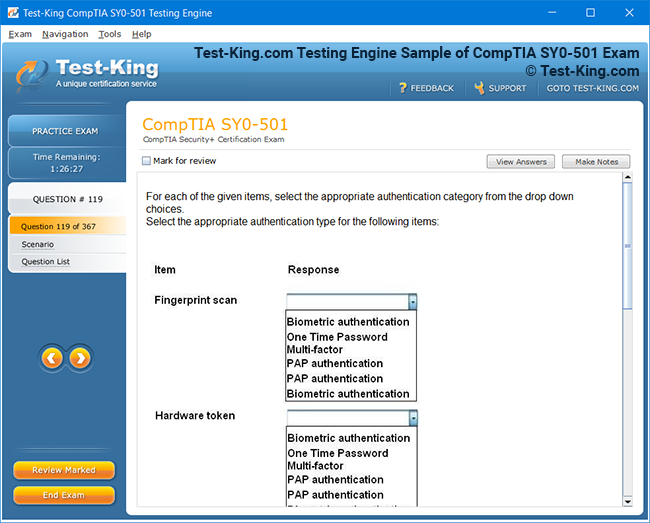
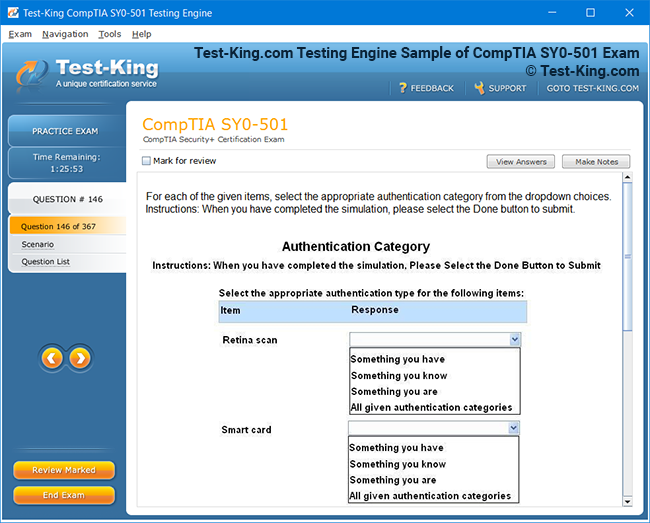
Product Screenshots
Frequently Asked Questions
How can I get the products after purchase?
All products are available for download immediately from your Member's Area. Once you have made the payment, you will be transferred to Member's Area where you can login and download the products you have purchased to your computer.
How long can I use my product? Will it be valid forever?
Test-King products have a validity of 90 days from the date of purchase. This means that any updates to the products, including but not limited to new questions, or updates and changes by our editing team, will be automatically downloaded on to computer to make sure that you get latest exam prep materials during those 90 days.
Can I renew my product if when it's expired?
Yes, when the 90 days of your product validity are over, you have the option of renewing your expired products with a 30% discount. This can be done in your Member's Area.
Please note that you will not be able to use the product after it has expired if you don't renew it.
How often are the questions updated?
We always try to provide the latest pool of questions, Updates in the questions depend on the changes in actual pool of questions by different vendors. As soon as we know about the change in the exam question pool we try our best to update the products as fast as possible.
How many computers I can download Test-King software on?
You can download the Test-King products on the maximum number of 2 (two) computers or devices. If you need to use the software on more than two machines, you can purchase this option separately. Please email support@test-king.com if you need to use more than 5 (five) computers.
What is a PDF Version?
PDF Version is a pdf document of Questions & Answers product. The document file has standart .pdf format, which can be easily read by any pdf reader application like Adobe Acrobat Reader, Foxit Reader, OpenOffice, Google Docs and many others.
Can I purchase PDF Version without the Testing Engine?
PDF Version cannot be purchased separately. It is only available as an add-on to main Question & Answer Testing Engine product.
What operating systems are supported by your Testing Engine software?
Our testing engine is supported by Windows. Andriod and IOS software is currently under development.
Top Palo Alto Networks Exams
- NetSec-Pro - Palo Alto Networks Certified Network Security Professional
- NGFW-Engineer - Palo Alto Networks Certified Next-Generation Firewall Engineer
- SecOps-Pro - Palo Alto Networks Security Operations Professional
- XSIAM-Engineer - Palo Alto Networks XSIAM Engineer
- SSE-Engineer - Palo Alto Networks Security Service Edge Engineer
- NetSec-Analyst - Palo Alto Networks Certified Network Security Analyst
- NetSec-Architect - Palo Alto Networks Network Security Architect
- CloudSec-Pro - Palo Alto Networks Cloud Security Professional
- XSIAM-Analyst - Palo Alto Networks Certified XSIAM Analyst
- XDR-Engineer - Palo Alto Networks XDR Engineer
- SD-WAN-Engineer - Palo Alto Networks SD-WAN Engineer
- PCCP - Palo Alto Networks Cybersecurity Practitioner
- XSOAR-Engineer - Palo Alto Networks XSOAR Engineer
- Apprentice - Palo Alto Networks Cybersecurity Apprentice
- PCNSE - Palo Alto Networks Certified Network Security Engineer
- PCNSA - Palo Alto Networks Certified Network Security Administrator
- PSE-SASE - Palo Alto Networks System Engineer Professional - SASE
- PSE-Prisma Cloud - Palo Alto Networks System Engineer Professional - Prisma Cloud
- NetSec-Generalist - Palo Alto Networks - Network Security Generalist
Top Study Resources and Practice Tests for Palo Alto PSE-SASE Exam
The Palo Alto Networks System Engineer Professional – SASE certification represents a pivotal credential for professionals who wish to demonstrate mastery of secure access service edge technologies. This exam is not merely about memorization of features or definitions; it embodies the comprehension of an integrated framework that unites networking and security through cloud-delivered principles. The examination, officially known by its code PSE-SASE, is designed for engineers and consultants who aspire to validate their expertise in deploying and optimizing solutions like Prisma Access, SD-WAN, and Zero Trust Network Access within enterprise infrastructures.
Understanding the PSE-SASE Certification Landscape
Understanding the purpose of this credential is crucial before delving into the study materials. Palo Alto Networks crafted this certification to align with modern cybersecurity paradigms where the conventional perimeter has vanished. As organizations migrate to distributed architectures and hybrid workplaces, safeguarding access and connectivity demands a holistic comprehension of identity, data, and context. The PSE-SASE certification, therefore, signifies the professional’s ability to interlink all these domains using the Palo Alto Networks ecosystem.
Candidates pursuing this certification typically come from backgrounds involving network administration, systems engineering, or cloud architecture. They are expected to possess foundational familiarity with Palo Alto Networks technologies and general concepts in cybersecurity. However, the PSE-SASE exam goes beyond these fundamentals. It measures proficiency in practical deployment, troubleshooting, and optimization scenarios. Hence, the resources chosen for preparation must cultivate both conceptual understanding and hands-on competence.
A methodical approach to preparation can transform a daunting syllabus into a structured journey. Instead of treating the syllabus as a monolithic list of topics, a prudent learner should perceive it as a living structure where each domain interlaces with another. Grasping SASE architecture requires contextual awareness of how identity, policy enforcement, and data protection converge in real-world implementations. Each module of the exam stems from real scenarios that Palo Alto Networks engineers encounter across industries. Therefore, authentic comprehension rather than rote memorization is the cornerstone of success.
Decoding the Structure and Objective of the Examination
The PSE-SASE exam is carefully orchestrated to evaluate analytical aptitude and applied knowledge rather than mechanical recall. Candidates encounter questions that assess their decision-making abilities in configuring or troubleshooting diverse security layers. The evaluation model typically integrates multiple choice questions, situational analysis, and concept correlation.
To navigate this landscape successfully, aspirants must first comprehend the underlying philosophy of SASE. The concept of secure access service edge merges networking and security into a unified cloud-native service. It revolves around principles such as Zero Trust, least privilege access, and continuous risk evaluation. For the purpose of the exam, candidates are expected to demonstrate their ability to architect and sustain SASE solutions using Palo Alto’s Prisma Access and related components.
Another pivotal dimension is the capability to translate theoretical models into operational blueprints. Many candidates underestimate the necessity of understanding real-world deployment scenarios. Palo Alto Networks emphasizes contextual application—knowing not just what a function does, but why it is invoked under certain network circumstances. Thus, preparation should involve deliberate immersion into documentation, case studies, and configuration guides.
The objectives of the PSE-SASE certification orbit around a few key axes. One is proficiency in describing and differentiating the components of Prisma Access, including its policy enforcement, traffic steering, and cloud management layers. Another is understanding the mechanisms of integration with directory services, identity providers, and third-party analytics systems. Furthermore, the candidate must exhibit knowledge of performance optimization, latency mitigation, and secure connectivity within multi-region deployments. These objectives mirror the expectations of organizations deploying Palo Alto solutions at scale.
The Role of Foundational Knowledge in Preparation
While the PSE-SASE certification represents an advanced tier within the Palo Alto Networks pathway, the bedrock of success remains rooted in fundamental principles of networking and cybersecurity. Familiarity with routing protocols, VPN topologies, identity management, and data protection standards becomes indispensable. Without these underpinnings, aspirants often find it arduous to assimilate the complex orchestration of SASE components.
Those who have previously explored certifications like PCCET or PCNSE will find themselves at an advantage, as the conceptual overlap offers a continuum of learning. However, the PSE-SASE exam requires an elevation from configuration proficiency to architectural reasoning. A candidate must articulate not only how to deploy a policy but also why a specific policy aligns with a given security framework or compliance requirement. This distinction delineates a technician from a professional engineer, and the exam is designed to assess that leap.
Understanding how different security models converge under the umbrella of Zero Trust is a prerequisite. Candidates should explore how user identity, device posture, and session context interact dynamically to grant or revoke access in a SASE environment. Additionally, familiarity with cloud networking principles such as traffic inspection, tunnel establishment, and dynamic routing within Prisma Access is imperative.
In this preparatory stage, building conceptual clarity is analogous to laying the groundwork for an architectural edifice. Without a solid foundation, the superstructure of advanced knowledge becomes unstable. Therefore, before delving into complex lab exercises or practice tests, aspirants should ensure a thorough understanding of the theoretical base. Reading the official Palo Alto Networks documentation and whitepapers on SASE evolution provides indispensable insight.
Leveraging Official Palo Alto Networks Study Materials
The official learning resources offered by Palo Alto Networks stand as the most authoritative and reliable instruments for PSE-SASE preparation. The organization provides structured courses under its Education Services platform. These courses encompass e-learning modules, instructor-led training, and hands-on labs crafted by the very engineers who develop and maintain the technology.
Among the most beneficial resources is the Prisma Access SASE Fundamentals training. This course introduces the architectural framework, service components, and deployment methodologies. Learners gain exposure to the operational interface of Prisma Access Cloud Management, the configuration of service connections, and the integration of branch and mobile users. The training emphasizes real-world relevance, helping candidates visualize how each function aligns with enterprise requirements.
Additionally, the Palo Alto Learning Center offers specialized webinars and recorded sessions featuring experts who share insights into emerging challenges in SASE deployments. These sessions delve into nuanced aspects like user experience optimization, policy enforcement automation, and multi-tenant management. They also clarify the evolution of SASE in conjunction with Zero Trust principles.
Beyond structured training, Palo Alto Networks provides extensive documentation within its TechDocs library. This repository includes deployment guides, configuration references, release notes, and best practice recommendations. Exploring these materials helps aspirants understand not just the what but the why behind configuration decisions. The PSE-SASE exam frequently integrates questions inspired by real documentation scenarios. Reading and internalizing these references thus becomes invaluable.
Candidates can further enhance their comprehension through the Knowledge Base and the LIVEcommunity. These platforms host discussions, troubleshooting guides, and success stories contributed by seasoned professionals. Engaging with such communities can reveal subtle insights that conventional courses might not cover. Furthermore, the collaborative nature of these forums cultivates an analytical mindset essential for interpreting multifaceted exam scenarios.
Incorporating Third-Party Learning Resources
While official materials are indispensable, supplementing them with external resources can amplify understanding and reinforce retention. Third-party platforms offer varied pedagogical styles that cater to diverse learning preferences. Some professionals benefit from structured video lessons, whereas others thrive on interactive labs or detailed textual explanations.
Online learning platforms such as Udemy, LinkedIn Learning, and Pluralsight host comprehensive courses dedicated to Palo Alto Networks technologies. These courses often include visual demonstrations that simplify intricate concepts like traffic redirection, cloud-based policy enforcement, or secure tunnel establishment. The diversity of instructors also introduces alternative perspectives that can illuminate aspects not explicitly emphasized in official materials.
In addition, professional blogs and cybersecurity forums frequently publish analytical essays and practical tutorials on SASE deployment using Palo Alto solutions. These write-ups often discuss pragmatic challenges—latency tuning, failover configurations, and multi-cloud integration—which may not always appear in certification documentation. By integrating these insights, candidates can bridge the gap between academic preparation and professional practice.
Books remain another formidable ally in this journey. While there is no singular canonical textbook for the PSE-SASE exam, literature on cloud networking, Zero Trust security, and SD-WAN provides conceptual reinforcement. Reading across sources enhances critical reasoning and nurtures the ability to synthesize knowledge into coherent solutions.
It is also advantageous to explore simulation environments. Virtual lab platforms, where one can replicate SASE architectures and experiment with configuration parameters, offer tactile learning experiences. Many learners recall information better when they interact physically with a system rather than merely reading about it. Practicing deployment workflows builds muscle memory that proves invaluable during the exam’s analytical questions.
Importance of Practice Tests and Hands-On Simulation
No preparation endeavor reaches fruition without systematic evaluation. Practice tests serve as diagnostic instruments to gauge readiness, identify gaps, and acclimate candidates to the rhythm of the actual examination. For the PSE-SASE certification, reputable sources provide simulated assessments that mirror the complexity and tone of the official test.
These practice tests are not meant to be memorized but analyzed. Each incorrect answer should prompt an exploration into the underlying principle. By dissecting why a particular choice is erroneous, a candidate uncovers subtle nuances that reinforce long-term retention. Repetition of this exercise transforms raw information into intuitive understanding.
Some online platforms provide adaptive tests that adjust difficulty based on the user’s performance. This dynamic method helps learners progress gradually while sustaining engagement. After completing each mock exam, reviewing performance analytics highlights weak domains, guiding subsequent study efforts with precision.
Hands-on labs complement theoretical mastery by instilling operational confidence. Setting up a small-scale Prisma Access simulation within a controlled environment can illuminate how different parameters interact. Experimenting with user groups, access policies, and routing configurations deepens understanding beyond what textual study can provide.
Moreover, attempting to resolve intentional misconfigurations cultivates diagnostic acumen. Troubleshooting skills are integral to system engineering roles and are often indirectly assessed within exam questions. A candidate who has practiced identifying and rectifying issues will naturally excel when confronted with situational problem statements.
The essence of preparation lies not only in reading and memorizing but also in internalizing through experience. The human brain retains experiential knowledge more vividly than abstract instruction. Hence, alternating between theory and practice generates a cyclical reinforcement that steadily strengthens competence.
Developing a Strategic Study Plan
Organized preparation is the linchpin of success. Candidates should allocate sufficient time for iterative learning and revision. A balanced plan interleaving conceptual study, documentation review, lab exercises, and mock assessments yields optimal results. Instead of marathon reading sessions, shorter, focused intervals tend to produce better retention.
Beginning with official documentation sets the foundation. Progressing subsequently to interactive learning platforms and then to practice tests creates a logical continuum. Each step should reinforce the previous one, ensuring a coherent accumulation of knowledge.
Incorporating review sessions at regular intervals consolidates what has been learned. After completing a particular topic, revisiting it within a week aids long-term memory consolidation. Keeping a personal compendium of notes or digital flashcards can expedite revision.
Equally vital is the inclusion of rest and reflection. Cognitive fatigue undermines comprehension. Interspersing study periods with brief intervals of leisure enhances mental agility. Many successful candidates affirm that a calm, consistent routine outweighs erratic bursts of intensive study.
Finally, cultivating curiosity is indispensable. The PSE-SASE certification is not just an exam to conquer; it is an intellectual expedition into the evolution of secure networking. Approaching it with genuine interest transforms preparation into enrichment rather than obligation. The more one immerses in the subject with inquisitive vigor, the deeper and more enduring the expertise becomes.
Exploring Official Palo Alto Networks Learning Pathways in Depth
Mastering the PSE-SASE certification requires a meticulous engagement with the official Palo Alto Networks education ecosystem. This network of structured learning materials, practical workshops, and guided resources forms the backbone of professional preparation for anyone seeking to attain deep proficiency in secure access service edge frameworks. The Palo Alto Networks education architecture is designed with both cognitive progression and practical immersion in mind. It allows aspirants to begin with foundational courses before advancing into complex integrations, thereby ensuring a gradual yet comprehensive ascent toward exam readiness.
The journey begins with Palo Alto Networks’ Education Services platform, a digital hub that aggregates diverse training methodologies. Learners can choose self-paced e-learning, instructor-led workshops, or hybrid modules. Each mode emphasizes different dimensions of learning. E-learning modules favor flexibility and conceptual clarity, whereas instructor-led classes enable direct discourse with experts. This balance of autonomy and mentorship underpins the success of many candidates who have conquered the PSE-SASE exam.
The Prisma Access SASE Fundamentals course remains an indispensable starting point. This official curriculum introduces learners to the architectural essence of SASE, including the principles of unified policy enforcement, identity-based access, and cloud-native scalability. Within its interactive labs, participants practice configuring service connections, onboarding remote users, and establishing global gateways. These exercises simulate authentic enterprise environments, enabling learners to internalize how each parameter affects performance and security posture.
A vital aspect of this course lies in its emphasis on context-based decision-making. Unlike traditional network certifications that prioritize configuration syntax, the PSE-SASE learning structure trains candidates to think strategically. It encourages comprehension of user behavior analytics, the interplay of applications, and dynamic policy assignment. As organizations increasingly adopt distributed topologies, this analytical orientation becomes indispensable for ensuring secure, reliable connectivity across hybrid infrastructures.
Another noteworthy offering from Palo Alto Networks is the SASE Advanced Operations Lab. This immersive workshop extends beyond theoretical understanding into the domain of orchestration and optimization. Participants engage with multi-region deployments, explore redundancy strategies, and implement continuous visibility mechanisms. Through guided experimentation, they learn how to harmonize performance and security—two facets often perceived as contradictory. The ability to strike equilibrium between these elements epitomizes the maturity expected from PSE-SASE professionals.
In addition to formal coursework, Palo Alto Networks furnishes an extensive collection of digital literature. The TechDocs portal is a treasure trove of architectural references, feature guides, and deployment recommendations. Unlike condensed tutorials, these documents dive into the minutiae of system design, covering aspects such as certificate management, routing protocols, and data inspection policies. Many candidates underestimate their significance, yet a substantial portion of exam questions derive conceptual inspiration from these very resources. Reading them attentively fortifies both theoretical insight and interpretive skill.
Within the broader Palo Alto ecosystem, the Knowledge Base functions as a dynamic encyclopedia, updated with insights derived from real-world case studies and technical resolutions. It reveals how different enterprises navigate challenges in SASE deployments—from latency issues in global rollouts to policy synchronization between mobile users and branch offices. By studying these examples, aspirants cultivate the problem-solving perspective that the exam subtly demands.
Furthermore, the LIVEcommunity platform adds a human dimension to preparation. It serves as a collaborative forum where engineers, architects, and instructors exchange perspectives on evolving SASE paradigms. Engaging in discussions, contributing observations, or even passively reading expert exchanges helps learners internalize the lexicon and logic of practical implementation. The platform’s diversity of experiences mirrors the unpredictability of actual deployment scenarios, making it a fertile ground for conceptual reinforcement.
The integration of these resources builds an interconnected ecosystem of knowledge. Each element—formal courses, digital documentation, community engagement, and knowledge bases—complements the others. Skipping any component creates gaps that can manifest as conceptual ambiguity during the exam. Consistency, patience, and curiosity remain the most valuable virtues throughout this intellectual endeavor.
Maximizing the Potential of Palo Alto Networks Labs and Demonstrations
An integral yet often underutilized component of preparation lies in hands-on exploration. Palo Alto Networks recognizes that true mastery transcends theoretical comprehension; it thrives through tactile experience. To facilitate this, the company provides numerous virtual environments that allow learners to experiment freely without risking production infrastructure.
The Prisma Access Lab environment exemplifies this philosophy. It offers candidates the chance to simulate deployments, configure tunnels, and test security rules under controlled conditions. Each exercise represents a microcosm of real enterprise scenarios, blending complexity with structured guidance. Through repetition, learners develop an intuitive grasp of system behavior. They learn how policies propagate, how logs reveal network intent, and how the cloud-based console orchestrates distributed endpoints.
These laboratories also introduce the invaluable discipline of troubleshooting. While many aspirants focus exclusively on successful configurations, true expertise lies in the ability to diagnose anomalies. Palo Alto’s labs deliberately embed challenges that mimic common misconfigurations—authentication mismatches, certificate expirations, or routing conflicts. Resolving these issues nurtures analytical resilience and teaches candidates to interpret logs, event timelines, and performance metrics with discernment.
Moreover, these exercises cultivate a systems-thinking mentality. In a SASE environment, a minor policy adjustment can have cascading repercussions across regions and user groups. By witnessing these interactions in a simulated setting, aspirants acquire a nuanced appreciation for interdependencies within the architecture. This perspective equips them to tackle the exam’s multi-layered scenario questions with poise.
The labs also familiarize learners with the Prisma Access Cloud Management interface, an essential tool for the exam. The interface encapsulates the unification principle of SASE—it merges networking, security, and analytics into a single operational console. Mastering its navigation and comprehension of its dashboards accelerates real-world efficacy and contributes directly to examination performance.
For those with limited access to official labs, alternative practice environments exist. Many technology training centers replicate simplified versions of SASE architectures using trial licenses or virtual firewalls. Though less comprehensive than Palo Alto’s proprietary setup, they offer substantial experiential benefit. They allow learners to practice configuring gateways, defining security rules, and simulating user connectivity scenarios.
Reinforcing lab exercises with consistent documentation review amplifies retention. After each configuration activity, correlating actions with documentation clarifies purpose and logic. For instance, if a candidate configures a user authentication policy, revisiting the corresponding documentation solidifies understanding of how identity federation occurs within Prisma Access. This synthesis between action and theory ensures long-term mastery.
The emphasis on experimentation aligns seamlessly with the ethos of Palo Alto Networks: continuous learning through exploration. Engineers are encouraged to evolve from task executors into solution architects capable of innovation and foresight. Each hands-on encounter thus becomes an opportunity to transform procedural knowledge into strategic intuition.
Navigating Palo Alto Networks’ Certification Portal and Exam Tools
Once the learner has assimilated the educational foundation and honed their practical abilities, attention must turn toward the administrative and evaluative aspects of the certification process. The Palo Alto Networks Certification Portal functions as both the logistical nucleus and the progress tracker. Through it, candidates register for exams, access digital badges, and monitor their certification history.
The registration process is streamlined yet demands careful attention to detail. Candidates must ensure their profile information aligns precisely with identification documents, as discrepancies may lead to complications during the exam. After registration, the portal provides guidance on scheduling either an online proctored test or an in-person assessment through authorized centers. Each modality has unique protocols concerning environment, identification, and equipment.
For the PSE-SASE exam, online proctoring has emerged as a prevalent choice, given its convenience and accessibility. However, it necessitates technical preparation. Participants must verify that their systems meet compatibility requirements, including internet stability, camera functionality, and software permissions. Familiarizing oneself with the testing interface beforehand mitigates anxiety on the exam day. Palo Alto Networks provides sample tutorials that replicate the user interface of the test environment, helping candidates adapt to its navigation style.
Understanding the structure of the assessment tool is as vital as mastering content. The PSE-SASE exam typically presents scenario-based questions that demand critical reasoning. Each question may depict a complex enterprise situation requiring identification of optimal configurations or policy designs. Time management becomes crucial, as overanalyzing one scenario may compromise progress on others. Therefore, practicing within timed conditions using mock exams cultivates discipline and efficiency.
Additionally, candidates should learn to decipher question patterns. While the exact wording of questions varies, the underlying logic often reflects specific concepts such as identity management, secure web gateway configuration, or branch connectivity. Recognizing these patterns accelerates comprehension during the actual exam. This cognitive agility emerges from repetitive engagement with varied question formats.
The certification portal also houses a feedback mechanism where examinees can provide post-assessment observations. While not directly influencing results, participating in feedback contributes to the refinement of future exams. Palo Alto Networks values the perspectives of its global community, ensuring that each iteration of the PSE-SASE exam aligns with evolving industry dynamics.
After completing the exam, successful candidates receive digital certification credentials accessible through the portal. These credentials can be shared on professional platforms and integrated into corporate learning systems. Beyond recognition, the certification becomes a symbolic endorsement of proficiency in the convergence of security and networking disciplines.
Integrating Knowledge Through Study Communities and Collaborative Learning
Beyond individual study, the collective intellect of peer communities offers an inexhaustible reservoir of insight. Engaging with study groups or online cohorts dedicated to Palo Alto Networks certifications enhances motivation, comprehension, and accountability. Collective learning transforms solitary effort into shared discovery, fostering nuanced perspectives on intricate topics.
Communities such as the Palo Alto LIVEcommunity, Reddit’s cybersecurity forums, and specialized LinkedIn groups provide fertile ground for discussion. Members exchange resources, dissect complex scenarios, and share strategies for mastering specific exam domains. Observing how others interpret identical concepts illuminates alternative ways of reasoning, enriching one’s own analytical capacity.
Study partners can also simulate exam environments by posing scenario-based challenges to each other. These exercises refine articulation skills, a subtle yet critical aspect of success. The ability to verbalize reasoning ensures clarity of thought, which translates into faster cognitive processing during the actual assessment.
Mentorship within these communities often accelerates progress. Seasoned professionals who have already attained the PSE-SASE certification frequently volunteer guidance to newcomers. Their experiential narratives—how they structured their study schedules, which topics they found most challenging, and how they maintained focus—offer pragmatic templates for replication.
However, engaging in collaborative learning requires discernment. Information shared in informal groups should be cross-referenced with official documentation to ensure accuracy. The digital realm abounds with interpretations, not all of which align with the certification’s authentic objectives. Maintaining intellectual vigilance ensures that learning remains grounded in veracity.
Participating in webinars and panel discussions hosted by Palo Alto Networks further strengthens comprehension. These events often feature industry experts elucidating emerging trends in SASE adoption, Zero Trust frameworks, and cloud transformation. Attending such sessions not only supplements theoretical knowledge but also situates learning within the context of real-world technological evolution.
The sense of belonging cultivated through communities alleviates the isolation that often accompanies self-study. It transforms preparation into an engaging dialogue rather than a monologue. This dynamic exchange of ideas ignites curiosity and sustains enthusiasm even during challenging study phases.
Ultimately, the synthesis of individual diligence and communal collaboration produces the most formidable candidates. Those who learn collectively absorb knowledge more deeply, as discussion reinforces memory and fosters interpretive adaptability.
Sustaining Motivation and Cognitive Endurance During Preparation
Long-duration certification preparation demands psychological resilience as much as intellectual effort. Many aspirants begin with enthusiasm only to falter midway due to cognitive fatigue or waning motivation. Understanding how to sustain momentum is thus an integral component of successful exam preparation.
Establishing a consistent study rhythm forms the first pillar of endurance. Setting achievable milestones helps transform a vast syllabus into manageable objectives. Each completed topic delivers a sense of accomplishment, reinforcing motivation. Regular self-assessment using quizzes or flashcards maintains engagement while solidifying retention.
Equally crucial is balancing intensity with restoration. Continuous immersion without intervals of rest depletes focus and reduces comprehension. Incorporating deliberate pauses—short walks, meditation, or recreational activities—revitalizes mental faculties. Many successful candidates attribute their achievements not to relentless labor but to rhythmic alternation between concentration and relaxation.
Physical well-being underpins cognitive performance. Adequate hydration, nutrition, and sleep fortify the brain’s ability to assimilate complex information. Neglecting these physiological necessities can impair reasoning and memory retention. Thus, a holistic approach that integrates both mental and physical care yields superior outcomes.
Another method to sustain interest is the cultivation of curiosity beyond the syllabus. Exploring adjacent topics—such as the historical evolution of network security, the philosophy behind Zero Trust, or the future trajectory of cloud security—infuses learning with freshness. This expansive curiosity transforms the act of studying from obligation into intellectual adventure.
Tracking progress visually through journals or digital dashboards provides tangible evidence of advancement. Observing gradual mastery reinforces confidence and mitigates anxiety. Some learners derive motivation from sharing progress publicly within study groups, which adds a dimension of accountability and camaraderie.
Lastly, envisioning the post-certification horizon sustains purpose. The PSE-SASE credential is not an endpoint but a gateway to advanced professional avenues. It opens pathways into network architecture, cybersecurity consultancy, and cloud solution design. Keeping this broader perspective in view imbues each study session with meaning, converting effort into aspiration.
The convergence of discipline, curiosity, and resilience ensures steady advancement toward mastery. The PSE-SASE journey, though intricate, becomes deeply rewarding for those who perceive it not merely as an exam but as an odyssey through the evolving landscape of secure networking.
Mastering Third-Party Study Materials and Deep-Dive Learning Approaches
Achieving mastery in the Palo Alto Networks System Engineer Professional – SASE certification requires more than a mere acquaintance with the official curriculum. While the company’s own resources form the doctrinal base, the ecosystem of third-party materials provides a multidimensional comprehension that bridges theoretical sophistication with practical agility. Many aspirants find that delving into external content broadens their interpretive horizons, exposing them to variant methodologies and novel analogies that elucidate difficult concepts embedded in the SASE framework.
Third-party resources often serve as interpretive companions rather than substitutes for official documentation. They distill the intricate architecture of secure access service edge into digestible narratives, enabling aspirants to perceive the interplay of networking, identity, and cloud security in holistic fashion. The efficacy of these resources arises from their diversity: digital tutorials, video lectures, professional blogs, printed guides, simulation environments, and interactive quizzes. Each medium engages the intellect differently, ensuring that conceptual understanding becomes anchored through repeated exposure across varied cognitive channels.
Among the most beneficial external learning platforms are those that specialize in cybersecurity and network engineering. Their courses frequently incorporate immersive graphics and real-world deployment footage that illustrate how Prisma Access operates within dispersed infrastructures. Candidates observe how data packets traverse between branch offices and cloud gateways, how latency is mitigated through intelligent routing, and how user identities are authenticated within a Zero Trust paradigm. This visual exposure imprints functional awareness that textual reading alone rarely conveys.
When selecting third-party content, discernment remains paramount. The internet brims with heterogeneous material, some meticulously accurate, others hastily compiled. Aspirants should prioritize resources authored by certified professionals or educators recognized within the Palo Alto Networks community. Their insights, grounded in genuine experience, tend to mirror the conceptual rigor expected in the PSE-SASE exam. Furthermore, aligning study materials with the official blueprint prevents deviation from tested domains. The most valuable external guides focus explicitly on topics such as policy orchestration, global protect configuration, SD-WAN integration, and cloud security enforcement.
Printed literature retains an enduring relevance despite the digital surge. Books on network transformation and Zero Trust strategies offer profound conceptual enrichment. Works exploring the philosophy of distributed security paradigms cultivate the abstract reasoning necessary for architecting cohesive SASE solutions. Reading across disciplines—cyber law, risk management, and network psychology—can also sharpen analytical agility, helping aspirants to perceive the human and organizational dimensions of secure networking.
Academic journals and industry whitepapers further enhance intellectual depth. These publications often analyze case studies involving multinational deployments of SASE architectures, delineating the operational challenges faced by enterprises migrating from legacy networks. By studying such expositions, candidates gain a panoramic understanding of scalability, compliance adaptation, and cross-platform interoperability. This empirical knowledge nurtures adaptability—a quality that examination questions implicitly reward.
Digital learning communities built around third-party providers often integrate real-time discussion boards. These virtual colloquiums enable learners to pose nuanced inquiries and debate conceptual interpretations. The dialectical exchange of ideas transforms passive absorption into active construction of knowledge. Each argument, clarification, and counterexample refines cognitive clarity, cementing understanding through discourse.
To supplement visual and textual learning, many external academies introduce micro-lab simulations. These virtual ecosystems mimic network topologies wherein learners can deploy policies, manage traffic flows, and visualize analytics dashboards. Unlike purely theoretical exercises, these simulations generate experiential cognition—the type of learning that fuses muscle memory with conceptual awareness. The tactile repetition of configuration tasks engrains proficiency that transcends memorization.
Video-based instruction contributes an auditory and emotional dimension to study. The human voice, when articulating complex concepts, can convey emphasis and cadence that anchor memory more effectively than written words. Instructors frequently contextualize theoretical modules with anecdotal experiences from field deployments, transforming abstract principles into relatable narratives. This storytelling approach resonates profoundly with auditory learners who find motivation in real-world success stories.
Blogs curated by independent cybersecurity experts are another fertile domain of insight. They frequently dissect recent updates to Prisma Access, elaborate on the integration of AI-driven analytics within SASE frameworks, and critique emerging cybersecurity trends. Because these writings often appear soon after technological innovations, they deliver contemporary relevance that textbooks may lack. Regularly engaging with such content keeps learners attuned to the living evolution of the Palo Alto Networks ecosystem.
Community-driven open-source documentation occasionally supplements proprietary materials. Though not official, these texts illustrate practical problem-solving from grassroots engineers who navigate configurations daily. Their experiential tone often reveals hidden nuances—such as latency optimization or certificate chaining issues—that formal materials might omit. Evaluating these insights with critical discernment adds a pragmatic layer to theoretical understanding.
In addition to external readings, aspirants may benefit from engaging with podcasts focused on cybersecurity strategy. Listening to discussions among professionals about digital transformation, Zero Trust architecture, and secure cloud adoption fosters intuitive comprehension of overarching principles. The conversational rhythm of such audio content aids mental retention during commutes or leisure, subtly reinforcing knowledge through subconscious assimilation.
While the abundance of third-party materials offers a wealth of opportunities, candidates must cultivate strategic moderation. Consuming excessive, uncoordinated resources can engender cognitive dissonance. A judicious approach involves mapping external materials directly onto the official exam blueprint. Each external resource should serve a precise function—either deepening comprehension of a difficult topic or providing alternative pedagogical exposure. This intentional alignment ensures that time and effort yield maximum cognitive return.
Another crucial dimension involves maintaining version awareness. The rapid evolution of cloud services means that configurations and features documented a year ago might differ subtly in current interfaces. Learners should always cross-validate information with the latest official documentation. Outdated configurations, even when conceptually correct, may induce confusion during the exam, where precision matters.
Practice questions hosted by third-party platforms are instrumental in acclimating candidates to the examination’s intellectual temperament. The best mock exams emulate not only question format but also conceptual density. They encourage reasoning rather than rote memory by framing situational challenges that demand contextual evaluation. When reviewing these practice questions, the aspirant should analyze the rationale behind every answer choice, especially incorrect ones. This reflective practice cultivates diagnostic insight, allowing recognition of recurring logic patterns in actual tests.
Third-party video lectures sometimes include demonstrations of integration scenarios such as linking Prisma Access with Azure AD or implementing traffic steering using SD-WAN policies. Watching these sequences clarifies procedural interdependencies between cloud components and on-premises networks. By observing configurations unfold in real time, learners can comprehend the choreography of commands and responses, thereby internalizing systemic cause-and-effect relationships.
Professional bootcamps hosted by cybersecurity institutions also contribute structured discipline to study. These intensive sessions often simulate enterprise projects wherein participants design end-to-end SASE frameworks. The collaborative format compels participants to articulate reasoning, justify policy decisions, and anticipate security ramifications. This cooperative environment mirrors professional practice, where engineers must negotiate design compromises among diverse stakeholders. Completing such bootcamps nurtures confidence that translates seamlessly into exam performance.
A notable benefit of external training ecosystems lies in their capacity to foster creative problem-solving. Since the PSE-SASE exam challenges candidates to reconcile efficiency with security, exposure to multiple pedagogical viewpoints expands cognitive elasticity. When faced with a novel question scenario, those who have encountered diverse conceptual frameworks respond with ingenuity rather than hesitation.
Many learners find it useful to maintain an annotated compendium of external references. Summarizing key takeaways from articles, videos, and labs into personal notes consolidates dispersed information into coherent structure. This process of paraphrasing reinforces retention by compelling the learner to rearticulate complex notions in their own vernacular. Over time, these notes evolve into an individualized textbook reflecting both official and third-party insights.
Integrating external resources into the overall study regimen requires balance. Excessive reliance on third-party interpretations may dilute the precise terminologies used by Palo Alto Networks. Hence, learners should continuously return to official content to reaffirm terminological consistency. The PSE-SASE exam values linguistic exactitude, where subtle distinctions—such as between data inspection and data filtration—may influence correct answers.
In parallel with content acquisition, aspirants should refine cognitive discipline through spaced repetition and active recall. Techniques like mind mapping, concept linking, and self-explanation transform passive reading into dynamic understanding. For example, constructing a conceptual map that interrelates Prisma Access components with corresponding Zero Trust principles can visually demonstrate the symmetry of the architecture. Each revisit of this map solidifies conceptual scaffolding, enabling rapid recall under timed conditions.
When navigating voluminous material, time management becomes pivotal. Allocating study sessions based on cognitive rhythm enhances productivity. Early mornings may favor analytical subjects like routing mechanisms or identity federation, whereas evenings might suit reflective review of documentation or listening to cybersecurity podcasts. This synchronization between mental energy cycles and content difficulty optimizes absorption.
Aspirants should not underestimate the value of self-reflection throughout this intellectual endeavor. Regular introspection concerning comprehension gaps, progress velocity, and emotional state sustains equilibrium. Recognizing moments of stagnation early prevents burnout. Adjusting study intensity or diversifying resources can reinvigorate motivation. The pursuit of the PSE-SASE certification is as much an exercise in self-governance as it is in technical learning.
Networking with professionals who specialize in Palo Alto implementations yields further advantages. Engaging with architects or consultants exposes learners to operational subtleties that textbooks rarely capture. Conversations about deployment strategies, compliance challenges, or latency optimization inject authenticity into theoretical frameworks. These dialogues illuminate how SASE principles manifest within organizational ecosystems characterized by budget constraints, regulatory mandates, and human variability.
Independent workshops organized by cybersecurity associations also broaden perspective. These events often explore adjacent technologies that intersect with SASE, such as identity-as-a-service, data-loss prevention, and zero-touch provisioning. Understanding these interconnected domains enriches the holistic awareness essential for a systems engineer’s mindset. By perceiving the technological symphony beyond Palo Alto’s immediate suite, candidates position themselves as versatile experts capable of cross-vendor orchestration.
Third-party study materials often integrate global case studies illustrating how enterprises modernize network security through SASE adoption. Examining these narratives reveals recurring motifs—centralized policy control, user experience optimization, and agile scalability. Candidates who internalize these business rationales acquire the strategic vocabulary to interpret exam scenarios not merely as technical puzzles but as organizational challenges.
A subtle yet invaluable advantage of engaging with external materials lies in exposure to diverse terminological styles. While official resources use canonical terminology, third-party authors might employ synonyms or conceptual analogies that clarify difficult ideas. This linguistic diversity strengthens semantic flexibility, ensuring that varied phrasing in exam questions does not confuse interpretation.
Learners should cultivate digital minimalism while using online platforms. The ubiquity of advertisements, social notifications, and auxiliary content can fragment concentration. Adopting distraction-free study environments—offline viewing modes, isolated browser profiles, or reading lists—enhances cognitive immersion. Deep focus transforms information into long-term knowledge far more effectively than fragmented attention.
In advanced stages of preparation, integrating problem-based learning yields profound results. By constructing hypothetical scenarios—such as designing a global enterprise network for secure access to SaaS platforms—aspirants can synthesize disparate knowledge threads into coherent design solutions. This creative synthesis mirrors the real-world engineering thought process that the PSE-SASE exam implicitly measures.
Evaluating progress through reflective journaling introduces a metacognitive dimension. Documenting insights, recurring errors, and moments of conceptual revelation transforms the study journey into a narrative of growth. Over time, these chronicles reveal intellectual maturation and serve as motivational artifacts during moments of doubt.
To deepen experiential competence, learners may explore integration between Palo Alto technologies and external ecosystems such as AWS or Google Cloud. Although not all features are examined directly, understanding multi-cloud connectivity patterns enriches contextual comprehension. Real-world engineers must navigate heterogeneous landscapes; thus, familiarity with interoperability nuances enhances both confidence and versatility.
Staying attuned to Palo Alto’s product announcements, release notes, and security advisories ensures contemporaneity. The certification reflects living technology, not static doctrine. Reading each new update as an opportunity to reassess understanding maintains alignment with the vendor’s current architectural vision.
In the final stages of preparation, third-party mock tests play a decisive role. They simulate exam pressure, calibrate time awareness, and reveal habitual cognitive biases. Some learners discover tendencies toward overanalyzing simple questions or misinterpreting qualifiers. Systematic practice under timed conditions neutralizes these tendencies through habituation.
After each practice attempt, an analytical post-mortem session proves invaluable. Reviewing not only errors but also correct responses clarifies reasoning pathways. This meta-analysis transforms performance evaluation into intellectual refinement. Patterns of misunderstanding gradually dissolve through iterative feedback loops.
Ultimately, external learning resources serve as catalysts for conceptual expansion. They encourage learners to traverse beyond prescribed boundaries, to explore the symbiosis between technology and thought. The confluence of official doctrine and third-party exploration yields an intellectual synthesis wherein understanding becomes both precise and adaptable.
As one immerses deeply in these multifaceted resources, the once-intimidating expanse of the PSE-SASE syllabus metamorphoses into a coherent tapestry. Each topic—whether SASE architecture, Zero Trust enforcement, or Prisma Access configuration—reveals its place within a grander narrative of digital transformation. The learner evolves from an aspirant memorizing procedures into an engineer perceiving interconnections. In this metamorphosis lies the true purpose of comprehensive preparation: to think as the technology itself operates, seamlessly integrated, adaptive, and secure.
Practical Mastery Through Practice Tests, Simulated Labs, and Real-World Scenarios
The journey toward mastering the Palo Alto Networks System Engineer Professional – SASE certification inevitably converges on the indispensable practice of simulation and assessment. Reading materials, video tutorials, and theoretical analyses provide intellectual scaffolding, but the crystallization of knowledge occurs only when concepts are tested under pressure. The PSE-SASE exam, known for its emphasis on situational problem-solving and integrative reasoning, rewards not the passive accumulation of facts but the active demonstration of judgment. Practice tests and hands-on labs thus function as crucibles where understanding matures into competence and confidence.
Aspirants who approach these practical exercises with diligence discover that each mock assessment reveals new layers of comprehension. Beyond identifying gaps in knowledge, these tests illuminate patterns of reasoning—how one interprets scenarios, correlates system behaviors, and evaluates contextual clues. Through iterative exposure to examination-style questions, learners cultivate cognitive agility, a skill crucial to navigating the multidimensional challenges that define the SASE architecture.
The structure of a well-crafted practice test mirrors the intellectual architecture of the real certification exam. Each question encapsulates a scenario that compels synthesis across multiple domains of expertise: identity management, network topology, cloud security, policy orchestration, and performance optimization. The aspirant must decode these elements simultaneously, discerning the interdependencies that shape secure access service edge solutions. Practicing this process repeatedly transforms abstract theory into operational intuition.
Reputable platforms offering PSE-SASE practice materials are invaluable companions in this endeavor. They replicate the stylistic cadence and complexity of Palo Alto Networks’ question design, ensuring familiarity with phrasing nuances that often distinguish correct from incorrect responses. These assessments frequently incorporate scenario-based reasoning that mirrors the pragmatic dilemmas faced by enterprise engineers—balancing performance against policy enforcement, resolving conflicts between security layers, or mitigating latency within global Prisma Access deployments.
However, the value of practice tests extends beyond score accumulation. Each question is a miniature case study in logic. Reviewing explanations for correct and incorrect answers reveals the conceptual architecture behind decisions. Aspirants should treat each item as a narrative, tracing the causal relationships between network conditions and prescribed solutions. This analytical approach, repeated consistently, engrains the diagnostic acumen expected of a Palo Alto Networks professional.
In addition to textual assessments, virtual laboratories elevate learning to a tactile dimension. Palo Alto Networks and various external institutions provide sandbox environments where learners can experiment freely without the fear of destabilizing production systems. These environments emulate enterprise infrastructures, allowing participants to configure gateways, define user groups, deploy Prisma Access nodes, and observe traffic behavior across distributed endpoints. Each configuration activity transforms theoretical instruction into living comprehension.
Immersion in these labs nurtures technical fluency. Concepts such as policy hierarchy, certificate trust chains, and user identity mapping acquire tangible significance when manipulated directly within a system. For instance, configuring an access policy for mobile users using Prisma Access teaches more than procedure; it imparts an experiential sense of how identity attributes propagate through authentication mechanisms and influence policy enforcement at the edge. This embodied knowledge endures far longer than rote memorization.
Moreover, these environments encourage error-based learning, a pedagogical method rooted in exploration. Mistakes made in a controlled setting become catalysts for deeper insight. Troubleshooting misconfigurations—such as failed tunnels or misaligned routing policies—forces one to retrace conceptual steps, reinforcing understanding through analytical reconstruction. The patience cultivated in these exercises mirrors the composure required during the exam, where some questions may initially seem ambiguous or paradoxical.
Beyond individual labs, many training providers integrate guided scenarios that mimic end-to-end enterprise implementations. Participants might be tasked with designing a hybrid network that interconnects multiple branch offices to the cloud through secure tunnels while ensuring Zero Trust enforcement for remote workers. Such projects challenge learners to harmonize all elements of the SASE ecosystem, including secure web gateways, SD-WAN optimization, and centralized policy management. Completing these scenarios under simulated constraints fosters decisiveness and strategic coherence.
Peer collaboration within lab environments amplifies comprehension. Discussing configuration choices, debating troubleshooting approaches, and interpreting log data collectively deepens perspective. Each participant brings a unique interpretive lens, often illuminating overlooked details. These dialogues replicate the collaborative ethos of professional engineering, where solutions emerge from the confluence of diverse minds rather than solitary endeavor.
Regularly alternating between practice tests and hands-on labs cultivates equilibrium between abstract reasoning and operational dexterity. Theory contextualizes practice, while practice animates theory. This cyclic reinforcement engenders a holistic mastery wherein the learner perceives each topic not as an isolated module but as part of a coherent continuum. The PSE-SASE exam, designed to evaluate this synthesis, becomes far less daunting when approached through such integrated preparation.
While numerous third-party platforms offer generic cybersecurity practice exams, candidates should prioritize those tailored specifically for Palo Alto Networks certifications. The lexicon, operational paradigms, and architectural philosophies of the SASE model possess unique characteristics that differ from other vendors. Authentic practice materials ensure alignment with the conceptual nuances expected by Palo Alto Networks evaluators.
Some online academies enhance their mock tests with adaptive learning algorithms. These systems analyze a candidate’s performance and dynamically adjust subsequent question difficulty. Such adaptive testing mirrors the natural progression of expertise—beginning with foundational concepts before advancing toward intricate scenarios. This graduated challenge sustains motivation while progressively refining competence.
When engaging with practice exams, attention to timing is paramount. The official certification assessment imposes stringent time constraints that challenge one’s ability to analyze swiftly without sacrificing precision. Simulating these conditions during preparation familiarizes the mind with temporal pressure, reducing anxiety during the actual test. Over time, the aspirant learns to balance deliberate reasoning with efficient execution, optimizing cognitive rhythm.
After completing each practice test, an exhaustive review process yields maximum benefit. Rather than focusing solely on incorrect answers, one should scrutinize every item. Understanding why a correct answer is right consolidates positive patterns, while dissecting mistakes illuminates conceptual blind spots. Documenting these reflections in a study journal converts fleeting insights into enduring wisdom. Over weeks of practice, these annotations accumulate into a personalized compendium of knowledge—an artifact that mirrors the learner’s intellectual evolution.
Visualization techniques can further augment recall during testing. Creating mental imagery of configurations or conceptual relationships transforms abstract details into memorable patterns. For instance, envisioning the flow of data through Prisma Access nodes—from user authentication to policy inspection to routing—creates a visual schema that accelerates recall under exam conditions. Many high-performing candidates report that such cognitive imagery anchors confidence and clarity amidst complex scenarios.
Hands-on experimentation should not be confined solely to virtual labs. Whenever feasible, learners can construct miniature test environments using virtual machines, trial licenses, or emulated topologies. Even a simplified setup consisting of a single branch, a gateway, and a simulated cloud connection provides invaluable experiential grounding. Through repeated experimentation, the learner internalizes cause-and-effect relationships—how policy misconfigurations manifest in traffic logs, how latency metrics fluctuate under load, or how user behavior influences access patterns.
The dynamic nature of SASE technology necessitates continual adaptation. As Palo Alto Networks evolves Prisma Access features and refines orchestration interfaces, candidates should update their practical exercises accordingly. Aligning lab practices with current versions ensures familiarity with new features that may appear in examination content. This ongoing calibration transforms preparation into a living process rather than a finite task.
Another critical element of preparation lies in mental conditioning. Practice tests not only measure knowledge but also shape psychological readiness. Repeated exposure to exam-like environments reduces apprehension by normalizing the experience of uncertainty. Gradually, the learner develops an equanimity that allows focus amid complexity. This mental composure often distinguishes proficient candidates from anxious ones during the actual assessment.
Some training ecosystems incorporate gamified elements into their practice modules. Earning points, badges, or rankings after each successful test introduces playful motivation. While seemingly trivial, this element of challenge invigorates persistence. Motivation is a finite resource; sustaining it through incremental achievements ensures consistent engagement over the extended preparation period required for mastery.
Engaging with mentors or instructors during lab sessions further amplifies retention. Experienced professionals can contextualize theoretical subtleties with anecdotes from field operations—stories of deployments, unforeseen challenges, and ingenious resolutions. These narratives convert abstract procedures into lived wisdom. Mentorship also accelerates troubleshooting proficiency by modeling systematic diagnostic thinking, an attribute directly evaluated in the PSE-SASE exam’s scenario-based questions.
To enhance precision, aspirants should learn to document configurations meticulously during labs. Recording parameters, policies, and observed outcomes trains discipline and attention to detail. In enterprise environments, documentation underpins maintainability; in the examination context, it mirrors analytical order. Cultivating this habit fosters clarity of reasoning, enabling one to articulate solutions confidently when confronted with multifaceted problem descriptions.
In parallel with structured exercises, spontaneous experimentation nurtures creativity. By intentionally diverging from prescribed configurations, learners can explore how systems react to unconventional settings. This curiosity-driven exploration reveals edge behaviors and exception handling mechanisms that may later prove pivotal in complex exam scenarios. It transforms the learner from a procedural executor into an investigative engineer capable of adaptive reasoning.
Integrating performance analytics into lab work also deepens understanding. Monitoring throughput, latency, and bandwidth utilization under varying policies teaches the practical trade-offs between security and performance. This empirical awareness equips candidates to answer conceptual questions about optimization strategies with authority grounded in experience rather than speculation.
As preparation intensifies, synthesizing disparate experiences becomes essential. Linking insights from practice exams with those gained in labs reinforces neural connections between conceptual and practical domains. Each scenario confronted in a test can be reimagined in a lab environment, and each configuration executed in a lab can be translated into an analytical question. This bidirectional reinforcement ensures comprehensive assimilation of knowledge.
Another underestimated benefit of practice exercises is linguistic acclimatization. The phrasing of Palo Alto Networks’ questions often employs subtle terminological distinctions. Exposure to repeated question formats attunes the mind to these linguistic cues, preventing misinterpretation. Similarly, hands-on engagement familiarizes learners with the precise nomenclature used in interfaces and documentation. This lexical fluency translates directly into confidence when decoding exam prompts.
Self-assessment through mock interviews or oral recitations of technical concepts can further consolidate understanding. Explaining SASE architecture aloud, outlining the workflow of user authentication, or narrating the sequence of policy enforcement transforms implicit knowledge into explicit articulation. Teaching a concept—even to oneself—requires organization of thought and reveals hidden uncertainties that written study might overlook.
For comprehensive mastery, aspirants should diversify their testing materials. Combining vendor-authorized practice tests with independent ones ensures exposure to varied question formulations. Some tests may emphasize conceptual clarity, while others stress procedural detail. Navigating both prepares candidates for the spectrum of analytical challenges embedded in the PSE-SASE examination.
Consistency remains the cornerstone of effective practice. Sporadic engagement yields superficial familiarity, whereas disciplined repetition breeds mastery. Establishing a structured schedule—allocating specific days for mock exams, others for lab exercises, and intervals for review—creates a rhythmic learning cadence. This discipline transforms preparation from sporadic effort into habitual refinement.
In advanced stages of preparation, integrating cross-technology scenarios can sharpen contextual adaptability. Configuring interoperability between Prisma Access and third-party identity providers or testing connectivity with cloud-native applications reveals real-world complexities. Understanding these intersections extends beyond the exam’s immediate requirements but imbues professional confidence that resonates in every future deployment.
Finally, reflection consolidates all practice experiences into coherent knowledge. After each exercise, pausing to articulate what was learned, what failed, and what improved bridges short-term activity with long-term mastery. These reflections capture the evolution of understanding—how initial confusion transforms into clarity, how fragmented concepts coalesce into systemic vision.
Through the disciplined synthesis of practice tests and immersive labs, the aspirant transcends the boundaries of theoretical learning. The interplay between challenge and reflection, between configuration and comprehension, engenders a profound alignment between intellect and technology. In this harmony, the once-distant objective of conquering the PSE-SASE certification becomes not merely attainable but inevitable, a natural culmination of sustained curiosity, methodical practice, and unrelenting precision.
Strategies for Advanced Preparation, Concept Reinforcement, and Knowledge Integration
As learners progress toward mastery of the Palo Alto Networks System Engineer Professional – SASE certification, their preparation inevitably evolves beyond basic comprehension and repetition. The advanced stage of study demands a nuanced interplay between conceptual reinforcement, analytical synthesis, and continuous exposure to real-world complexities. Achieving proficiency at this level is not merely an act of memorization but a cognitive orchestration—where theory, application, and interpretation align harmoniously. The journey transforms into an intellectual refinement process that shapes the aspirant’s technical identity and professional philosophy.
The first principle of advanced preparation lies in reconciling depth with breadth. Candidates often begin their study by surveying all topics—architecture, policy configuration, Zero Trust frameworks, cloud integration, identity management, and threat prevention. Yet, as understanding matures, the learner must invert this hierarchy, diving deeply into selected areas while maintaining awareness of interconnected domains. This deliberate oscillation between focused and panoramic perspectives mirrors the way the SASE model itself operates—integrating multiple services while retaining coherent policy control. In practice, this means studying topics like Prisma Access architecture not as isolated units but as nodes within an intricate ecosystem of routing, encryption, and authentication.
Refinement also involves mastering the subtleties of terminological precision. The lexicon of Palo Alto Networks is dense, layered, and often context-dependent. Understanding how similar terms diverge in technical nuance—such as between security posture assessment and policy enforcement verification—enables a sharper grasp of conceptual integrity. This awareness becomes critical in exam scenarios where small semantic differences may alter the meaning of an entire question. Advanced learners, therefore, cultivate linguistic sensitivity alongside technical competence, reading official documentation slowly, almost as if it were philosophical literature, to uncover the deliberate intent behind each term.
At this stage, learners benefit from constructing integrative frameworks that synthesize various domains into cohesive cognitive maps. Instead of studying networking, security, and identity management separately, one can visualize them as interdependent pillars supporting a unified structure of secure access. This mental architecture facilitates associative recall, allowing the mind to navigate effortlessly across topics during the exam. Drawing or mentally simulating these conceptual frameworks is an exercise in abstraction that deepens understanding by revealing the invisible symmetry within complex systems.
Advanced preparation further requires deliberate practice—an approach grounded in repetition, reflection, and refinement. Unlike rote memorization, deliberate practice targets weaknesses through focused drills. For example, if a learner consistently struggles with understanding dynamic routing integration within Prisma Access, they should isolate that concept, experiment with configurations in a lab environment, read multiple explanatory sources, and revisit related topics until clarity emerges. This iterative loop mirrors the scientific method, where each cycle of testing, observing, and adjusting leads to progressively finer understanding.
Self-testing remains an indispensable part of advanced reinforcement. By creating one’s own exam-style questions, a learner not only assesses knowledge but also simulates the examiner’s perspective. Crafting plausible distractors—incorrect yet convincing options—develops an appreciation for the logic behind official questions. It also strengthens conceptual boundaries by forcing the learner to differentiate between closely related ideas. Over time, this exercise cultivates meta-cognitive awareness: the ability to perceive how one thinks, not merely what one knows.
Peer collaboration, when approached with intellectual humility, becomes another cornerstone of advanced mastery. Discussing complex concepts with fellow aspirants, exchanging lab results, or debating the merits of various configuration strategies produces a dialectical tension that sharpens reasoning. In such exchanges, each participant mirrors the other’s blind spots, revealing assumptions that might otherwise remain hidden. Group discussions centered on simulated enterprise scenarios—such as designing secure access for multinational users or optimizing SD-WAN performance—transform abstract principles into tangible challenges that mimic real-world decision-making.
Immersion in community discourse extends beyond study groups. Online forums, certification-focused communities, and digital symposiums dedicated to Palo Alto Networks professionals offer continuous exposure to evolving industry trends. Engaging with discussions about new Prisma Access updates, troubleshooting experiences, or innovative SASE implementations reinforces adaptability. Reading community threads where seasoned engineers dissect real deployment issues provides rare insight into operational complexities that textbooks often omit. These interactions create a living classroom where learning becomes organic and perpetual.
A critical skill cultivated during advanced preparation is analytical endurance. The PSE-SASE exam’s length and intensity demand sustained cognitive performance over extended periods. To train this endurance, candidates should simulate prolonged study sessions that mimic the temporal rhythm of the actual assessment. This practice conditions both concentration and stamina, minimizing mental fatigue. Techniques such as focused breathing, interval-based studying, and brief mindfulness interludes between mock tests enhance resilience and sharpen focus.
The intellectual dimension of the PSE-SASE exam extends beyond technical memory—it evaluates problem-solving methodology. Advanced learners must internalize the principles of analytical reasoning: identifying the essence of a problem, isolating variables, evaluating interdependencies, and deriving conclusions grounded in logic rather than instinct. For example, when presented with a scenario about inconsistent user authentication in a global deployment, the adept candidate traces the issue backward through layers of identity federation, policy inheritance, and certificate validation, instead of hastily selecting familiar keywords. Cultivating this forensic thinking requires consistent exposure to real-world case analyses and thoughtful reflection after each practice exercise.
Reading whitepapers authored by Palo Alto Networks architects significantly strengthens this analytical dimension. These documents often discuss infrastructural philosophy—how policy design principles align with organizational needs and technological evolution. Engaging with such literature transforms the learner from a technician into an architect, capable of perceiving systems not as isolated mechanisms but as adaptive organisms shaped by strategic intent. This architectural thinking aligns perfectly with the ethos of the SASE framework, where flexibility and scalability are inseparable from design integrity.
For those seeking to transcend conventional preparation, adopting a teaching mindset yields transformative results. Explaining a concept to others forces the teacher to organize ideas coherently, identify ambiguities, and simplify complexity without distortion. Hosting informal study webinars, writing explanatory notes for peers, or recording short tutorials can dramatically accelerate comprehension. The act of translating complex technical language into accessible expression reveals the depth of one’s mastery. Every moment of teaching becomes a mirror reflecting one’s intellectual structure.
An essential dimension of advanced preparation involves cross-referencing between theoretical frameworks and product documentation. Palo Alto Networks provides extensive resources detailing feature sets, command references, and configuration best practices. Integrating these materials into one’s study ensures factual precision. However, advanced learners must not only know what each feature does but also why it exists and how it harmonizes with the greater system. Understanding design rationale—such as the reasoning behind particular security inspection workflows—enables intuitive decision-making during the exam.
Engagement with cybersecurity research expands perspective beyond vendor-specific knowledge. Reading about developments in encryption algorithms, network segmentation, or cloud-native security paradigms contextualizes Palo Alto’s innovations within the broader technological landscape. Recognizing how SASE principles align with global security trends reinforces conceptual confidence. It also prepares candidates for high-level exam questions that test understanding of architectural philosophy rather than procedural detail.
As preparation deepens, learners should prioritize synthesis over accumulation. The aim is no longer to gather information but to fuse it into a unified, living comprehension. This transformation occurs through integration exercises—designing hypothetical enterprise topologies that incorporate every aspect of SASE architecture. Crafting such mental models challenges the learner to balance scalability, compliance, and user experience simultaneously. Through iterative refinement of these models, the aspirant begins to think like an engineer designing real systems, rather than a candidate reciting memorized content.
Reflection is a crucial companion to synthesis. After each intensive study period, taking time to articulate insights, unresolved questions, and emerging patterns solidifies understanding. Writing reflections in a study log transforms scattered learning episodes into a coherent narrative. Over time, this record becomes a chronicle of intellectual evolution, charting the transition from novice uncertainty to expert lucidity.
Advanced preparation must also accommodate psychological adaptability. The unpredictable nature of certification exams can unsettle even the most prepared candidate. Developing emotional equilibrium through mindfulness, controlled breathing, or visualization exercises mitigates anxiety. Imagining successful performance, visualizing the testing interface, and rehearsing calm responses to difficult questions create a mental rehearsal that conditions composure. Confidence, when grounded in genuine preparation and inner stability, becomes an invisible yet decisive advantage.
Another dimension often overlooked in preparation is the cultivation of curiosity. Beyond scheduled study, curiosity propels spontaneous exploration. Investigating adjacent technologies such as Secure Web Gateways, Cloud Access Security Brokers, or Endpoint Protection Systems broadens contextual understanding. This holistic curiosity ensures that the learner perceives the SASE model not as a closed construct but as an evolving paradigm interconnected with the entire cybersecurity ecosystem. Such awareness enhances intellectual flexibility—a trait indispensable for advanced problem-solving.
Integrating visualization tools and diagrammatic thinking enriches comprehension further. Creating visual analogies for processes—such as mapping traffic flow across SASE nodes or illustrating identity propagation through cloud environments—stimulates spatial intelligence. Visualization bridges the gap between abstract text and tangible understanding, enabling rapid recall of conceptual relationships during the exam. The brain retains visual structures with greater persistence than verbal lists, making this technique a powerful reinforcement mechanism.
Peer mentorship at this stage acquires reciprocal value. Advanced learners can exchange mentorship roles, each guiding the other through their respective strengths. This exchange fosters collaborative empathy and mutual accountability. Discussing misinterpretations, comparing approaches to complex problems, and jointly troubleshooting simulated configurations refine both analytical and interpersonal skills. In professional life, these collaborative traits later translate into leadership capability within engineering teams.
Diversity of perspective also plays a pivotal role in refining judgment. Engaging with professionals from different sectors—finance, healthcare, manufacturing, or education—reveals how SASE implementations vary according to regulatory environments and operational constraints. Understanding these variations enriches conceptual elasticity, preparing the learner to interpret exam questions rooted in diverse organizational contexts.
For aspirants seeking near-perfect readiness, integrating periodic self-assessments through comprehensive mock tests is indispensable. These assessments should encompass all domains, simulating the cumulative challenge of the actual certification. Reviewing performance across multiple attempts highlights trends of improvement and identifies persistent gaps. By analyzing not only what errors occur but why they recur, learners transform failure into diagnostic insight. This cyclical refinement strengthens both confidence and competence.
Cognitive reinforcement benefits immensely from alternating study environments. Shifting between quiet isolation, collaborative sessions, and outdoor reading refreshes neural engagement. Environmental variation prevents cognitive saturation, keeping the mind alert and receptive. Some candidates even find that explaining a topic while walking or recording reflections aloud imprints knowledge more deeply than silent reading.
At the pinnacle of preparation, the line between study and practice dissolves. Every professional interaction, every cybersecurity article, and every system configuration becomes an opportunity for reinforcement. This mindset reflects the true essence of mastery—where learning ceases to be a compartmentalized activity and evolves into a continuous mode of being. For PSE-SASE aspirants, embodying this ethos ensures that certification is not an endpoint but a manifestation of an enduring intellectual discipline.
In essence, advanced preparation integrates technical expertise with cognitive artistry. It demands a balance between structure and spontaneity, precision and creativity, reflection and action. Each study session becomes a deliberate act of craftsmanship, each practice lab a rehearsal of excellence, and each challenge an invitation to deepen awareness. Through such holistic dedication, the aspirant transforms not only their knowledge base but their very way of perceiving technology—seeing within systems the graceful interplay of logic, purpose, and innovation that defines the Palo Alto Networks SASE paradigm.
The Path to Mastery Through Continuous Learning, Real-World Alignment, and Exam Readiness
Mastering the Palo Alto Networks System Engineer Professional – SASE certification is not solely about passing a rigorous examination; it is about cultivating a mindset that aligns technical comprehension with real-world application. The process requires persistence, introspection, and a willingness to navigate the complexities of an ever-evolving technological ecosystem. At this culminating stage of preparation, the learner’s goal shifts from simple proficiency toward holistic mastery, where every concept connects seamlessly to operational reality and every practice effort converges toward strategic clarity.
Comprehensive preparation begins with recognizing that the PSE-SASE certification measures far more than memory—it evaluates the candidate’s ability to interpret dynamic network environments through the lens of Palo Alto’s Secure Access Service Edge architecture. Understanding the orchestration of Prisma Access, the intricacies of Zero Trust models, and the operational harmony between cloud-delivered security and enterprise agility becomes indispensable. The final preparation journey transforms from mere revision into the art of integration, where each concept reinforces the next like interlocking gears in a precise machine.
The most successful candidates at this stage cultivate a dual orientation: they deepen conceptual understanding while refining examination tactics. Deep understanding arises from exploring the technological rationale behind SASE’s evolution—the convergence of network performance and security into a unified framework. As enterprises increasingly distribute their infrastructures across multi-cloud environments, the necessity for centralized policy management and identity-based access control grows exponentially. Recognizing this macro-level transformation provides the philosophical context for every technical detail within the Palo Alto framework.
On a practical level, advanced learners immerse themselves in configuration practice and diagnostic exercises that replicate real deployment conditions. Setting up simulated environments using virtualized resources, monitoring live analytics, and testing user behavior under varied conditions transforms abstract theories into tangible experience. The sensory engagement of interacting with the interfaces, interpreting logs, and troubleshooting anomalies anchors comprehension at a visceral level. By translating the written word into operational action, learners solidify understanding through tangible application.
Time management now becomes a decisive factor. As the exam encompasses an extensive range of topics, from architecture design to cloud security enforcement, effective allocation of study hours ensures proportional focus on all knowledge domains. A disciplined schedule, harmonized with personal cognitive rhythms, maximizes retention while preventing fatigue. Periodic review sessions focused on previously covered material strengthen neural consolidation, ensuring that knowledge remains accessible under examination stress.
The process of refinement also requires analytical depth. Advanced learners cultivate the habit of examining cause and effect within every topic. Instead of merely memorizing how a Prisma Access gateway authenticates users, they investigate why particular authentication methods align with Zero Trust principles or how traffic redirection affects performance metrics. This analytical engagement transforms knowledge from static information into a dynamic framework of reasoning.
Exposure to multiple information sources sustains intellectual diversity. Reading official Palo Alto Networks whitepapers provides doctrinal precision, while exploring industry analyses and independent blogs introduces diverse interpretations that enhance flexibility of thought. Comparing these perspectives allows learners to discern patterns across sources, deepening conceptual understanding. Each new insight functions as a prism refracting familiar ideas into new dimensions of clarity.
Engaging with online forums and professional communities remains invaluable during this stage. Within these interactive environments, aspirants encounter discussions that reflect authentic operational dilemmas faced by certified engineers. Participating in these exchanges refines problem-solving skills through exposure to alternative methodologies. Moreover, articulating responses or offering guidance to others reinforces mastery; teaching others has long been recognized as one of the most powerful learning techniques.
At this advanced level, stress management and cognitive stability become equally significant as intellectual preparation. The PSE-SASE exam challenges both technical acuity and composure under constraint. Practicing mindfulness techniques—controlled breathing, visualization of success, or brief meditative pauses between study intervals—maintains mental equilibrium. Such techniques optimize focus, ensuring clarity during moments of uncertainty in the examination itself.
Another layer of preparation lies in recognizing the ethical and strategic dimensions of the technology. Secure access service edge architecture is not only a technological solution but also an enabler of digital trust. Its capacity to protect distributed users, applications, and data across the cloud depends on principles of transparency, accountability, and resilience. Understanding this philosophical underpinning fosters a deeper sense of responsibility and purpose that extends beyond the exam into professional practice.
Aspirants at this juncture should revisit their personal study archives—notes, annotations, summaries, and reflections accumulated throughout their journey. Reviewing these records not only consolidates knowledge but also reveals patterns of growth and recurring areas of uncertainty. Refining these notes into a structured summary book—a personalized reference of distilled insights—serves as a mental compass during the final review. This synthesis exercise transforms scattered information into cohesive knowledge architecture.
Advanced practice tests continue to play an essential role. However, the focus now shifts from quantity to quality. Instead of repeatedly attempting random tests, learners should analyze specific domains where performance variation persists. For instance, consistent difficulty in interpreting traffic flow policies or integrating SD-WAN configurations with cloud security components signals the need for targeted review. This precision-driven approach conserves time and energy, channeling them into meaningful reinforcement.
Equally vital is the art of interpretation during mock examinations. The subtle phrasing of Palo Alto’s exam questions demands careful reading. Sometimes, a single qualifier—such as “most effective,” “primary,” or “initial”—determines the correct response. Practicing attentiveness to linguistic nuance enhances comprehension accuracy. This discipline of reading analytically mirrors the engineer’s responsibility to interpret system documentation and alerts accurately in real-world environments.
Peer collaboration retains its value as well. Conducting live discussions about mock test questions with fellow candidates cultivates interpretive flexibility. Each participant often perceives details others overlook, collectively refining understanding through debate and synthesis. This communal learning model transforms solitary study into a symphonic process of shared intelligence.
Engagement with professional webinars and live demonstrations conducted by Palo Alto experts reinforces alignment with current industry practices. Observing how certified professionals deploy SASE solutions in actual enterprises bridges the gap between academic learning and pragmatic application. These events frequently showcase use cases involving hybrid cloud integration, secure user mobility, and advanced threat prevention, providing real-world narratives that embody theoretical principles.
Reflection becomes the intellectual axis upon which all other preparation pivots. After every study session, test, or lab, taking time to analyze the experience transforms transient activity into cumulative understanding. Reflective questions—What concept surprised me? Where did I hesitate? Which connection between topics became clearer?—stimulate metacognitive awareness. Through reflection, learners uncover not only what they know but also how they know it, allowing them to regulate their learning process with precision.
At this advanced stage, interconnecting knowledge with professional context enhances memorability. Visualizing oneself deploying these technologies in a real organization—defining user access policies, optimizing latency, or enforcing compliance—creates experiential associations. These mental simulations mirror professional responsibilities, reinforcing understanding through application-oriented imagination.
Technological evolution ensures that learning never reaches a finite conclusion. Even after obtaining certification, the landscape of cloud security and network architecture continues to evolve with new updates, integrations, and vulnerabilities. Adopting a mindset of lifelong learning ensures sustained relevance. Keeping abreast of Palo Alto Networks’ updates, reading release notes, and experimenting with new functionalities maintains alignment with the company’s evolving vision.
In preparing for final readiness, reviewing all conceptual frameworks that unify the SASE model is invaluable. Revisiting the integration between identity management and network access, re-evaluating how Zero Trust principles govern policy creation, and reaffirming the role of cloud orchestration ensures holistic comprehension. This periodic re-centering acts as cognitive calibration, reaffirming the architecture’s structural coherence in the learner’s mind.
Embracing the psychological rhythm of preparation is equally vital. Alternating between periods of focused intensity and deliberate rest rejuvenates cognitive efficiency. Mental rejuvenation through leisure reading, physical exercise, or quiet reflection sustains long-term retention by preventing intellectual exhaustion. Balance becomes the invisible engine that powers endurance throughout the final phase.
As the examination date approaches, learners should embrace realism balanced with optimism. The objective is not flawless recollection but confident adaptability. Understanding that the PSE-SASE exam values analytical reasoning over mechanical recall relieves undue pressure. The ability to infer, evaluate, and connect ideas often outweighs the memorization of minor configuration details. The learner’s goal is not to predict every question but to cultivate the intellectual agility to respond intelligently to any question.
The synthesis of study, practice, and reflection culminates in a transformation that transcends certification. The journey toward PSE-SASE mastery reshapes how one perceives technology, strategy, and problem-solving. It fosters humility before complexity, discipline in analysis, and creativity in resolution. These attributes define not only successful examinees but also competent engineers and visionary architects capable of guiding organizations through the labyrinth of digital transformation.
Every aspect of preparation—the countless hours of reading, the iterative practice tests, the troubleshooting sessions, the discussions, and the reflections—contributes to this metamorphosis. The candidate emerges from the process not as a passive recipient of knowledge but as an active participant in the continuous evolution of secure connectivity. The SASE framework, in its essence, embodies the same principle: an adaptive, convergent system that unifies protection and performance.
Conclusion
Mastery of the Palo Alto Networks System Engineer Professional – SASE certification represents far more than the accumulation of technical data; it signifies the convergence of intellectual discipline, practical dexterity, and philosophical understanding. Those who succeed embody the same harmony that defines the SASE model itself—balance between structure and flexibility, precision and adaptability, analysis and intuition.
The culmination of preparation brings an awareness that certification is not an endpoint but a threshold into continuous learning. The cybersecurity landscape remains in constant flux, and true expertise lies in perpetual curiosity. A certified professional carries not only credentials but also a responsibility—to safeguard digital ecosystems, to design architectures that empower rather than constrain, and to remain vigilant amid the ceaseless emergence of new challenges.
Through consistent study, authentic practice, reflective insight, and an unwavering commitment to improvement, every aspirant can traverse the intricate path toward this certification with confidence and purpose. The PSE-SASE exam thus becomes a mirror of one’s intellectual growth—a testament to endurance, understanding, and the mastery of secure access in an interconnected world where knowledge and integrity remain the ultimate defenses.