

Exam Code: SIAMF
Exam Name: EXIN BCS Service Integration and Management
Certification Provider: Exin
Corresponding Certification: BCS SIAM Foundation
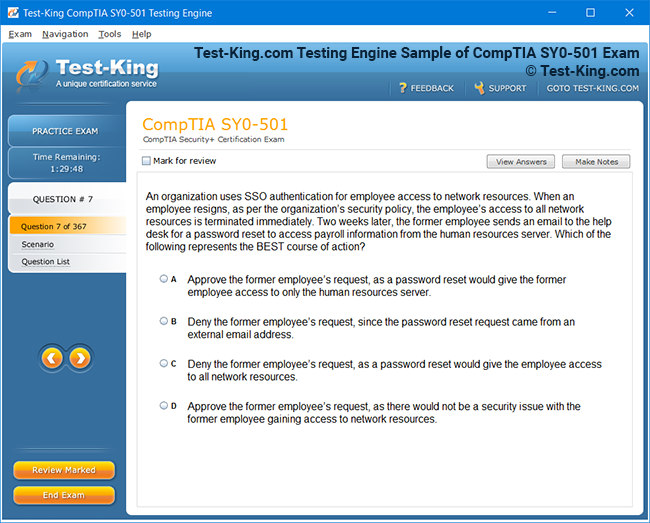
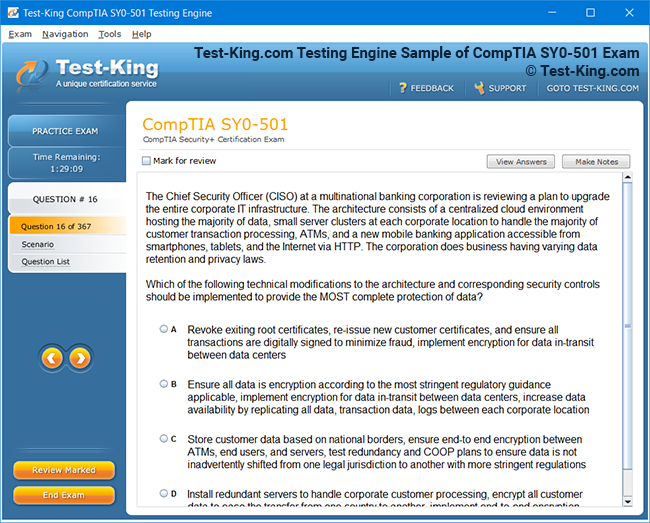
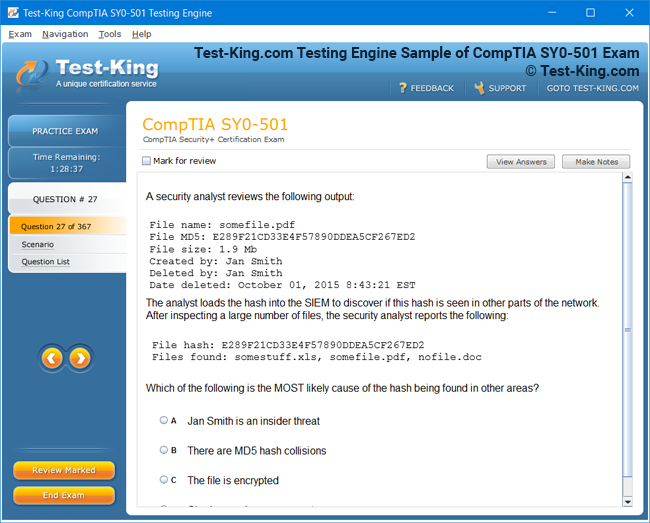
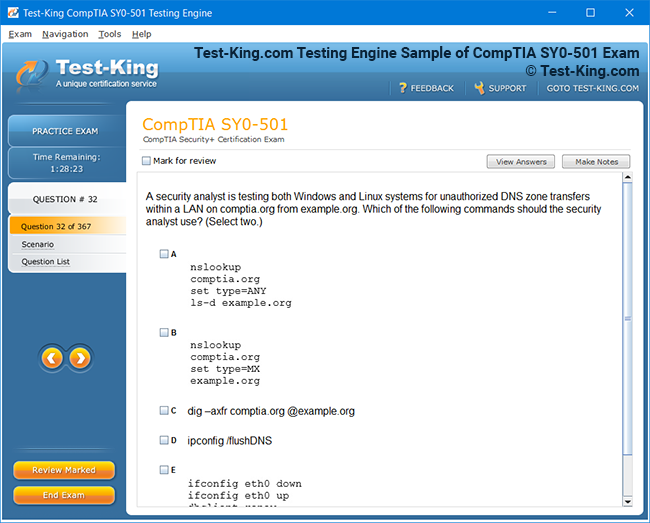
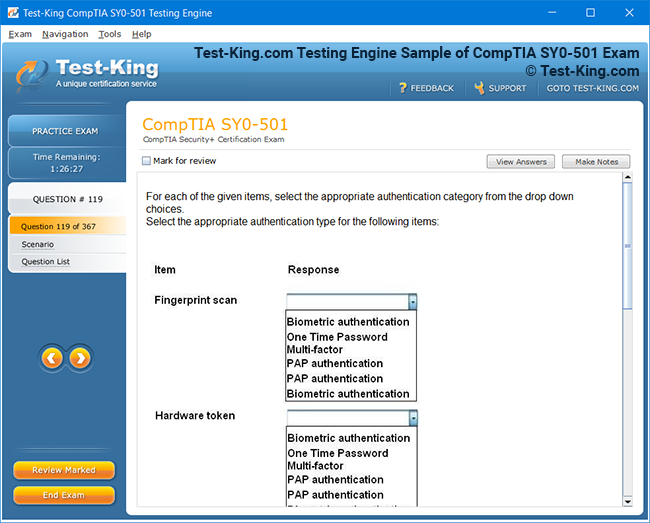
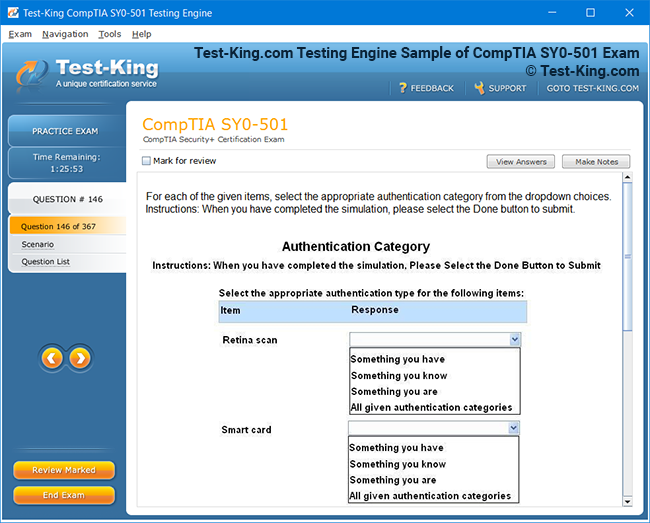
Product Screenshots
Frequently Asked Questions
How can I get the products after purchase?
All products are available for download immediately from your Member's Area. Once you have made the payment, you will be transferred to Member's Area where you can login and download the products you have purchased to your computer.
How long can I use my product? Will it be valid forever?
Test-King products have a validity of 90 days from the date of purchase. This means that any updates to the products, including but not limited to new questions, or updates and changes by our editing team, will be automatically downloaded on to computer to make sure that you get latest exam prep materials during those 90 days.
Can I renew my product if when it's expired?
Yes, when the 90 days of your product validity are over, you have the option of renewing your expired products with a 30% discount. This can be done in your Member's Area.
Please note that you will not be able to use the product after it has expired if you don't renew it.
How often are the questions updated?
We always try to provide the latest pool of questions, Updates in the questions depend on the changes in actual pool of questions by different vendors. As soon as we know about the change in the exam question pool we try our best to update the products as fast as possible.
How many computers I can download Test-King software on?
You can download the Test-King products on the maximum number of 2 (two) computers or devices. If you need to use the software on more than two machines, you can purchase this option separately. Please email support@test-king.com if you need to use more than 5 (five) computers.
What is a PDF Version?
PDF Version is a pdf document of Questions & Answers product. The document file has standart .pdf format, which can be easily read by any pdf reader application like Adobe Acrobat Reader, Foxit Reader, OpenOffice, Google Docs and many others.
Can I purchase PDF Version without the Testing Engine?
PDF Version cannot be purchased separately. It is only available as an add-on to main Question & Answer Testing Engine product.
What operating systems are supported by your Testing Engine software?
Our testing engine is supported by Windows. Andriod and IOS software is currently under development.
Top Exin Exams
Exam Preparation Guide: How to Pass the EXIN BCS SIAMF Certification on the First Attempt
The EXIN BCS Service Integration and Management Foundation certification, often abbreviated as SIAMF, has become an indispensable credential for professionals navigating the increasingly complex terrain of multi-supplier IT environments. In contemporary organizations, services are rarely delivered by a single provider. Instead, multiple vendors collaborate to provide cohesive, high-quality services that align with business objectives. The SIAMF certification serves as a structured framework to ensure that such collaborations are effective, transparent, and strategically aligned. Achieving this certification demonstrates a candidate’s ability to comprehend the principles, models, and practices that underpin integrated service management, ensuring that all service providers work in harmony to meet organizational goals.
Understanding the Essence of Service Integration and Management
Service Integration and Management, at its core, is more than a procedural approach; it is a philosophy that emphasizes synergy, accountability, and performance optimization across multiple suppliers. Organizations face challenges such as overlapping responsibilities, inconsistent service levels, and fragmented communication channels. SIAM provides a coherent methodology to mitigate these challenges, introducing governance structures, clearly defined roles, and standardized processes that enhance overall service quality. Understanding this philosophical underpinning is crucial for anyone preparing for the EXIN BCS SIAMF certification because it forms the conceptual foundation upon which the examination is structured.
The Strategic Relevance of SIAM in Modern Enterprises
In the digital era, businesses increasingly rely on complex service ecosystems to maintain competitive advantage. These ecosystems involve internal teams, external vendors, cloud services, and specialized niche providers. The lack of coordination among these entities can lead to inefficiencies, operational risks, and suboptimal service delivery. SIAM addresses these vulnerabilities by offering a blueprint for integrated service management. This blueprint outlines governance models, communication protocols, and performance measurement techniques that ensure that every participant in the service chain understands their responsibilities and how their contributions impact organizational objectives.
The significance of SIAM extends beyond operational efficiency. Organizations that adopt SIAM frameworks report improved accountability, enhanced vendor collaboration, and a clearer understanding of end-to-end service performance. Professionals certified in SIAMF are thus equipped not only with theoretical knowledge but also with the strategic insight required to implement and optimize these frameworks in real-world scenarios. Understanding the broader business context in which SIAM operates is a critical step in exam preparation, as it allows candidates to answer scenario-based questions with practical, contextually informed solutions.
Core Principles and Models of Service Integration
The SIAM framework is grounded in a set of core principles that emphasize collaboration, governance, transparency, and continuous improvement. Each principle guides decision-making, role allocation, and process design. Collaboration ensures that all service providers align with common objectives, while governance establishes clear accountability structures. Transparency guarantees that information flows seamlessly across organizational boundaries, and continuous improvement fosters adaptability and responsiveness to evolving business needs.
Service Integration and Management employs various models to structure interactions among providers. These models can be categorized into four primary approaches: the retained organization model, the hybrid service integration model, the internal service integration model, and the external service integration model. In the retained organization model, the client organization retains significant control over integration activities, directly managing vendor relationships and performance. The hybrid model combines internal oversight with external support, balancing control and resource optimization. The internal service integration model leverages an internal team to coordinate all supplier activities, whereas the external service integration model delegates integration responsibilities to a dedicated third-party provider. Each model has distinct advantages and challenges, and understanding these nuances is essential for SIAMF candidates, as the examination often evaluates comprehension of model selection and application in practical contexts.
Organizational Roles and Responsibilities
Effective SIAM implementation requires clearly defined roles and responsibilities. The SIAM framework delineates these roles across three layers: the business layer, the service integration layer, and the supplier layer. The business layer represents the organization’s strategic objectives and defines service requirements. The service integration layer acts as the orchestrator, ensuring that suppliers collaborate effectively and deliver cohesive services. The supplier layer encompasses individual vendors responsible for executing specific service functions.
Within these layers, roles such as the service integrator, process owner, service manager, and governance manager are critical. The service integrator coordinates activities across multiple suppliers, ensuring alignment with business objectives and adherence to agreed service levels. Process owners oversee specific service processes, ensuring that best practices are maintained. Service managers monitor day-to-day operations and service performance, while governance managers ensure compliance with contractual obligations and organizational policies. Mastery of these roles, their interactions, and their accountability structures is central to success in the SIAMF examination.
Key Processes and Practices in SIAM
SIAM incorporates several essential processes that guide service delivery and integration. These processes include service design, transition, operation, and continual service improvement. In service design, the focus is on planning integrated services that meet business requirements while minimizing complexity. Transition processes ensure that new or modified services are effectively deployed across all vendors, maintaining service continuity. Service operation emphasizes monitoring, incident management, and problem resolution across the multi-supplier environment. Continual service improvement identifies performance gaps, implements enhancements, and ensures that the integrated service environment evolves in alignment with organizational objectives.
Adopting SIAM processes involves the use of standard frameworks and best practices from IT service management. Concepts from ITIL, COBIT, and other governance frameworks are often incorporated to provide structure and consistency. Professionals preparing for the SIAMF exam must understand how these processes interact, how they are measured, and how they contribute to the broader objectives of service integration. For instance, incident management in a SIAM environment requires coordination among multiple vendors, clear escalation paths, and a unified reporting mechanism, which differs significantly from traditional single-supplier incident management.
Metrics, Performance, and Governance
Measurement is a pivotal aspect of Service Integration and Management. SIAM emphasizes performance metrics that monitor not only individual supplier performance but also the effectiveness of integration itself. Metrics such as service level achievement, incident resolution times, process compliance, and end-to-end service quality are essential indicators. These metrics provide insights into where bottlenecks occur, which processes require refinement, and how supplier interactions influence overall service outcomes.
Governance structures ensure that these metrics are applied consistently and that decision-making remains transparent. Governance involves defining roles, responsibilities, escalation mechanisms, and reporting requirements. For candidates preparing for the SIAMF certification, understanding the interplay between metrics, governance, and continuous improvement is crucial. Examination questions often assess the ability to recommend governance models, select appropriate performance indicators, and resolve integration challenges in hypothetical organizational scenarios.
Preparing for the SIAMF Examination
Preparation for the EXIN BCS SIAMF certification requires a multifaceted approach. Candidates must combine theoretical understanding with practical insight, ensuring that they can navigate both conceptual questions and scenario-based problems. A comprehensive study plan involves reviewing official syllabi, consulting reference materials, participating in training courses, and engaging with practice examinations.
Study materials should cover the principles, models, roles, processes, and metrics discussed above. Additionally, candidates benefit from case studies and real-world examples that illustrate challenges in multi-supplier environments, as these examples often mirror the scenarios presented in the examination. Time management and consistent revision are critical, as the examination tests not only knowledge retention but also the ability to apply concepts in practical contexts.
Common Challenges and Strategies for Success
Aspiring SIAMF professionals often encounter challenges such as the abstract nature of integration concepts, the complexity of multi-vendor environments, and the nuanced distinctions among integration models. Overcoming these challenges requires deliberate strategies, including active engagement with practical examples, creation of mind maps to visualize processes and roles, and discussion with peers or mentors to clarify ambiguities.
Focusing on scenario-based learning is particularly effective. Since the examination frequently presents complex organizational situations, candidates must practice analyzing problems, identifying the relevant SIAM principles, and recommending solutions that align with governance and performance objectives. Building familiarity with terminology, processes, and integration models through repeated application strengthens both confidence and competence.
Leveraging SIAMF Knowledge in Real-World Contexts
Beyond examination success, mastering the SIAMF syllabus equips professionals to make tangible contributions to organizational performance. Knowledge of service integration models, governance structures, and performance metrics enables certified individuals to implement robust integration strategies, optimize supplier collaboration, and enhance overall service quality. By understanding both the theoretical and practical dimensions of SIAM, professionals can position themselves as strategic assets within their organizations, guiding multi-supplier initiatives and ensuring alignment with business goals.
The EXIN BCS SIAMF certification thus functions as both a marker of professional expertise and a practical toolkit for effective service management. Candidates who internalize these concepts and apply them proactively are well-prepared not only for examination success but also for the broader challenges and opportunities in integrated service delivery.
Exploring the Foundations of Service Integration and Management
Service Integration and Management, commonly referred to as SIAM, represents a sophisticated methodology designed to orchestrate multiple service providers in a coherent and efficient manner. In contemporary enterprises, digital transformation and the proliferation of specialized vendors have created intricate service ecosystems where the seamless delivery of IT services is contingent on robust integration and oversight. The EXIN BCS SIAMF certification equips professionals with the insight and expertise necessary to navigate these complexities, emphasizing not only theoretical comprehension but also practical application across multi-vendor environments.
At the heart of SIAM lies the principle of holistic oversight. Unlike traditional single-vendor service models, SIAM introduces a coordinated approach where the organization retains visibility and control over all service providers. This ensures that each contributor aligns with business objectives, adheres to service levels, and integrates effectively with other providers. Professionals aspiring for the SIAMF certification must grasp these foundational concepts deeply, as they form the backbone of both examination questions and real-world application.
The Strategic Significance of Multi-Vendor Collaboration
Organizations today rely on multiple suppliers to deliver specialized services ranging from infrastructure management and cybersecurity to cloud-based solutions and application development. This distributed responsibility can create operational friction, as individual providers may prioritize their internal metrics over holistic service outcomes. SIAM mitigates these challenges by introducing a structured model of governance, accountability, and communication, ensuring that each vendor’s contribution is harmonized with organizational objectives.
Understanding the dynamics of multi-vendor collaboration is critical for SIAMF candidates. The framework requires professionals to consider not only individual performance but also the interdependencies between suppliers. For instance, a delay in network management services can impact application performance, which in turn affects end-user satisfaction. By conceptualizing these linkages, professionals can develop strategies to monitor, coordinate, and optimize integrated service delivery.
Governance and Control Mechanisms in SIAM
Governance forms the cornerstone of effective service integration. In SIAM, governance mechanisms define the rules, responsibilities, and accountability structures that guide all participants in the service ecosystem. Central to this governance is the establishment of a service integrator role, which acts as the orchestrator, ensuring that service providers meet their contractual obligations and collaborate effectively. The service integrator maintains oversight of processes, resolves conflicts, and aligns vendor performance with business objectives.
Additional governance roles include process owners, who are responsible for specific service processes such as incident management or change management, and service managers, who monitor operational performance and escalate issues as necessary. Effective governance relies on clarity of roles, structured reporting channels, and consistent application of performance metrics. Candidates preparing for the SIAMF examination must understand the interplay of these roles and how they collectively maintain service quality and operational harmony.
Understanding the Four Operational Stages of SIAM
The SIAM framework is structured around four operational stages, each with distinct objectives, deliverables, and challenges. These stages provide a roadmap for integrating services across multiple suppliers, ensuring that organizational goals are achieved efficiently. The first stage, discovery and strategy, focuses on understanding the existing service landscape, identifying gaps, and defining integration objectives. This stage requires comprehensive analysis of supplier capabilities, business requirements, and potential risks, forming the foundation for subsequent integration activities.
The second stage, design, involves translating strategic objectives into actionable integration plans. This includes defining service models, processes, roles, and responsibilities. Professionals must consider how workflows will interact across different vendors, ensuring that service delivery remains seamless and aligned with organizational expectations. Design activities also encompass risk mitigation strategies, communication protocols, and performance measurement frameworks.
Implementation constitutes the third stage, where integration plans are operationalized. This stage demands meticulous coordination of vendors, deployment of processes, and continuous monitoring to ensure that services are delivered according to agreed standards. Implementation is inherently complex, as it involves aligning multiple stakeholders, managing change, and addressing unforeseen challenges that arise during the operationalization of integration strategies.
The final stage, continual improvement, emphasizes ongoing refinement of the integrated service ecosystem. Performance metrics are analyzed to identify bottlenecks, inefficiencies, and areas for enhancement. Feedback loops, best practice adoption, and iterative adjustments ensure that the integration model evolves in response to changing business needs, technological advancements, and vendor dynamics. Mastery of these four stages is essential for success in the SIAMF examination, as it demonstrates both conceptual understanding and practical readiness.
Processes and Practices Supporting Operational Effectiveness
To ensure that each operational stage functions optimally, SIAM relies on a set of standardized processes and practices. These processes include service design, transition, operation, and continual improvement, each adapted to the complexities of multi-vendor environments. In service design, the focus is on creating end-to-end workflows that minimize fragmentation and ensure accountability. Service transition emphasizes careful deployment of new or modified services, maintaining continuity and preventing disruption across supplier boundaries. Service operation covers routine monitoring, incident response, problem resolution, and day-to-day management, while continual improvement provides mechanisms for iterative enhancements based on performance data and evolving business priorities.
A unique aspect of SIAM is the integration of governance and process management. Processes are not merely procedural checklists; they are mechanisms for coordination, collaboration, and transparency. For example, incident management in a SIAM context requires synchronized communication among vendors, standardized escalation paths, and unified reporting. Professionals must internalize both the procedural and strategic dimensions of these processes to navigate examination scenarios successfully.
Roles, Responsibilities, and Accountability Structures
SIAM emphasizes the criticality of clearly defined roles and accountability. In a multi-supplier environment, ambiguity in responsibilities can lead to service degradation, conflicts, and inefficiencies. The framework delineates responsibilities across three layers: business, service integration, and supplier. The business layer defines objectives and expectations, translating organizational goals into service requirements. The service integration layer acts as the coordinating entity, ensuring that each vendor’s actions align with overarching goals. The supplier layer executes the operational tasks required to deliver services.
Key roles include the service integrator, who orchestrates coordination among vendors; process owners, who ensure that specific service processes meet quality standards; service managers, who oversee operational performance and escalation; and governance managers, who monitor compliance with policies, contracts, and regulatory standards. Understanding the interaction of these roles, the responsibilities they entail, and the reporting mechanisms is fundamental for the SIAMF examination.
Metrics, Monitoring, and Performance Evaluation
Measurement is indispensable in evaluating the effectiveness of service integration. SIAM emphasizes both supplier-specific metrics and integrated performance indicators, providing a holistic view of service quality. Metrics such as service level achievement, incident resolution times, process compliance, and end-to-end service performance allow organizations to identify areas of improvement and reinforce accountability.
Monitoring mechanisms are embedded across all operational stages, ensuring real-time visibility and enabling proactive intervention. Performance evaluation is not merely a retrospective activity but a dynamic process that informs continual improvement efforts. Candidates preparing for the SIAMF examination must understand how metrics drive decision-making, influence governance, and support the iterative refinement of service integration practices.
Strategies for Effective SIAM Implementation
Successfully implementing SIAM requires a combination of strategic insight, process knowledge, and interpersonal skills. Professionals must approach integration with a clear understanding of organizational objectives, supplier capabilities, and potential risks. Best practices include defining precise roles and responsibilities, establishing robust governance frameworks, standardizing communication protocols, and instituting performance measurement systems.
Scenario-based learning is particularly beneficial for SIAMF candidates. By analyzing hypothetical organizational challenges and proposing integration strategies, professionals develop the ability to apply theoretical knowledge in practical contexts. This approach also strengthens problem-solving capabilities, decision-making under uncertainty, and strategic thinking, all of which are critical for both examination success and real-world effectiveness.
Practical Applications and Real-World Scenarios
The true value of SIAM knowledge lies in its application to complex organizational scenarios. Enterprises often encounter challenges such as overlapping vendor responsibilities, misaligned objectives, and inconsistent service levels. By applying the principles and operational stages of SIAM, professionals can design integration models that harmonize supplier activities, mitigate risks, and optimize service delivery.
For example, in a cloud migration project involving multiple vendors, SIAM frameworks ensure that network services, security protocols, and application deployment are coordinated seamlessly. The service integrator monitors each provider’s performance, ensures adherence to service levels, and facilitates communication across teams. This orchestration reduces delays, prevents conflicts, and enhances end-user satisfaction, illustrating the practical utility of the concepts examined in the SIAMF certification.
Preparing for Complex Examination Scenarios
The SIAMF examination often presents candidates with intricate scenarios that require both conceptual understanding and practical reasoning. Candidates must evaluate multi-vendor configurations, governance structures, and process flows to recommend appropriate solutions. Effective preparation involves studying operational stages, understanding role interdependencies, analyzing real-world examples, and practicing scenario-based problem-solving.
Internalizing these elements allows candidates to approach examination questions with confidence. Rather than memorizing isolated facts, professionals develop the ability to synthesize information, apply principles to novel situations, and provide coherent, actionable recommendations that align with both governance standards and organizational objectives.
Understanding the Structure of the SIAMF Examination
The EXIN BCS Service Integration and Management Foundation examination assesses the ability of candidates to understand, apply, and analyze the principles and practices of integrated service management across multi-vendor environments. The examination is designed not only to test theoretical knowledge but also to evaluate practical reasoning, decision-making, and problem-solving skills in scenarios that mirror real-world organizational challenges.
Candidates encounter a combination of multiple-choice questions, scenario-based questions, and situational judgments. Each question is carefully formulated to examine comprehension of core concepts such as service integration models, governance frameworks, roles and responsibilities, operational processes, and performance management. The focus is on applying knowledge rather than rote memorization, and the scenarios often involve interdependent suppliers, conflicting priorities, and dynamic operational contexts. Understanding the structure and intent of the examination is critical for preparation, as it allows candidates to prioritize study efforts and develop strategies for answering complex questions with clarity and precision.
Core Knowledge Areas in Service Integration and Management
The examination content is built around several interrelated knowledge areas that form the foundation of effective service integration. One primary area is the understanding of service integration models. Candidates must differentiate among retained, hybrid, internal, and external integration approaches, recognizing their respective advantages, limitations, and suitable application contexts. Each model impacts governance, role allocation, and process design, and successful application requires the ability to evaluate organizational needs and select the most appropriate integration strategy.
Another essential knowledge area is governance and control. Governance mechanisms define how accountability, decision-making, and communication are structured across multiple vendors. Candidates must understand how governance frameworks ensure compliance, mitigate risks, and facilitate transparency. The knowledge extends to understanding escalation mechanisms, reporting structures, and decision-making hierarchies. Competence in this area allows candidates to address examination scenarios that involve performance gaps, misaligned objectives, or conflicts among suppliers.
Roles and responsibilities constitute a further knowledge area. SIAM emphasizes the importance of clearly defined roles across the business, service integration, and supplier layers. Knowledge of key roles, including the service integrator, process owner, service manager, and governance manager, is crucial. Candidates must understand how these roles interact, the scope of their responsibilities, and the mechanisms for accountability and performance measurement. Questions may present scenarios where role ambiguity or overlap threatens service quality, requiring candidates to propose solutions that restore clarity and operational effectiveness.
Operational processes form another critical domain. Candidates are expected to understand how service design, transition, operation, and continual improvement processes are applied within a multi-supplier environment. For instance, service design involves planning end-to-end workflows that minimize fragmentation and ensure accountability across vendors. Service transition covers deployment strategies that maintain service continuity while integrating new capabilities. Service operation focuses on day-to-day monitoring, incident resolution, and problem management, while continual improvement emphasizes iterative enhancements informed by performance metrics and stakeholder feedback. Mastery of these processes enables candidates to evaluate complex scenarios and recommend appropriate interventions.
Metrics, monitoring, and performance evaluation are also central to the examination. Candidates are tested on their ability to interpret performance indicators, assess service quality, and implement corrective measures. Key metrics include service level achievement, incident resolution times, process compliance, and end-to-end service performance. Understanding how these metrics inform governance decisions, process refinement, and supplier evaluation is essential. Scenario-based questions frequently challenge candidates to identify performance bottlenecks, propose measurement strategies, and recommend improvements to integrated service delivery.
Risk management is another area of focus. SIAM environments are inherently complex, and integrated services can be disrupted by technical failures, miscommunication, or misalignment of priorities. Candidates must understand how to identify, assess, and mitigate risks across multiple suppliers. This includes evaluating the impact of potential disruptions, designing preventive measures, and developing contingency plans. The examination may present hypothetical incidents or operational failures, requiring candidates to demonstrate their understanding of risk identification and mitigation in a structured and methodical manner.
Scenario-Based Evaluation in SIAMF
A distinctive feature of the SIAMF examination is its emphasis on scenario-based evaluation. Candidates are frequently presented with complex organizational situations involving multiple vendors, overlapping responsibilities, and evolving business requirements. The questions are designed to assess the candidate’s ability to synthesize knowledge across multiple domains and propose coherent solutions that maintain service quality and operational efficiency.
For instance, a scenario might describe a multi-supplier service operation experiencing delays in incident resolution due to misaligned escalation protocols. Candidates are expected to identify the root causes, evaluate the roles and responsibilities of the involved parties, recommend governance adjustments, and propose process improvements. This type of question assesses comprehension of operational processes, role clarity, and the practical application of integration models. Scenario-based questions also challenge candidates to demonstrate strategic thinking, critical analysis, and practical problem-solving skills, all of which are integral to real-world SIAM practice.
Integrating Governance, Roles, and Processes
Effective integration of governance, roles, and processes is essential to the SIAMF examination. Candidates must recognize that these elements are interdependent; governance structures determine how roles interact, which in turn affects process execution and performance outcomes. For example, a weak governance framework may lead to unclear responsibilities, which can cause delays in incident management or failure to meet service level agreements. Understanding these interdependencies allows candidates to analyze complex situations comprehensively and propose solutions that enhance both operational efficiency and accountability.
Exam questions often emphasize the need to align governance mechanisms with organizational objectives. Candidates should be able to evaluate whether escalation procedures are appropriate, whether roles are clearly defined, and whether processes are designed to facilitate seamless collaboration among vendors. The ability to assess these dimensions holistically distinguishes candidates who can apply knowledge in practical scenarios from those who have only theoretical familiarity.
Knowledge of Multi-Vendor Integration Models
In addition to operational knowledge, candidates must demonstrate understanding of the practical application of integration models. The retained model places control within the client organization, which is responsible for coordinating all vendors directly. The hybrid model combines internal management with external support, balancing control with efficiency. The internal integration model relies on internal teams to oversee supplier activities, while the external integration model delegates integration responsibilities to a specialized third-party provider.
Each model requires specific governance arrangements, role definitions, and process adaptations. Candidates may be asked to recommend a suitable integration model for a given organizational context, justifying their choice based on operational complexity, vendor capabilities, and risk considerations. This demands both analytical rigor and practical awareness of organizational dynamics.
Practical Application of Operational Processes
Operational processes in SIAM are not merely procedural; they embody the coordination and synchronization of multiple service providers. Candidates must understand how service design, transition, operation, and continual improvement interact within an integrated environment. Service design ensures that workflows are end-to-end and vendor responsibilities are clearly defined. Transition processes focus on deploying new or modified services with minimal disruption. Service operation emphasizes incident and problem management across multiple suppliers, ensuring that corrective measures are effective and consistent. Continual improvement relies on performance analysis, stakeholder feedback, and iterative enhancements to optimize integrated service delivery.
Exam scenarios often require candidates to apply these processes to hypothetical operational challenges. For instance, a question may describe repeated service outages caused by coordination failures among vendors. Candidates would be expected to analyze process deficiencies, recommend corrective measures, and suggest mechanisms for monitoring future performance. This practical application reinforces the need for candidates to integrate theoretical understanding with real-world problem-solving skills.
Metrics, Monitoring, and Continual Assessment
Performance measurement and monitoring are critical in SIAM environments. Metrics provide objective evidence of service quality and integration effectiveness. Candidates must be adept at identifying appropriate indicators, interpreting performance data, and recommending improvements. Metrics may include service level attainment, resolution times, process compliance, and holistic service performance.
Monitoring mechanisms provide ongoing oversight, enabling proactive intervention before minor issues escalate into significant disruptions. Continual assessment ensures that integration practices evolve in response to organizational changes, technological advancements, and vendor dynamics. Understanding the role of metrics and monitoring allows candidates to approach scenario-based questions with analytical precision, proposing evidence-based solutions that enhance operational reliability.
Risk Management and Mitigation Strategies
Risk management in a multi-supplier environment requires foresight, planning, and coordination. Candidates must understand how to identify potential risks, assess their impact, and implement mitigation strategies. Risks may arise from technical failures, communication breakdowns, contractual ambiguities, or misalignment of priorities.
In examination scenarios, candidates may be asked to address hypothetical incidents, such as a critical service outage or vendor non-compliance. Effective responses require the application of governance mechanisms, role clarification, process refinement, and contingency planning. Mastery of risk management principles is essential for candidates to demonstrate their ability to maintain service integrity and operational continuity in complex multi-vendor environments.
Preparation Strategies for Exam Mastery
To excel in the SIAMF examination, candidates must adopt a strategic preparation approach that encompasses comprehensive understanding of knowledge areas, practical scenario analysis, and continuous self-assessment. Study plans should include review of official syllabi, engagement with case studies, and practice with scenario-based questions. Candidates benefit from simulating examination conditions, analyzing complex operational situations, and applying SIAM principles to devise solutions.
Understanding the examination format, the types of questions, and the expected reasoning allows candidates to approach the test with confidence. Focusing on integration models, governance structures, operational processes, role clarity, metrics, and risk management ensures that preparation is aligned with the examination objectives. By synthesizing these knowledge areas, candidates can demonstrate both theoretical comprehension and practical competence, which are key determinants of success in the SIAMF examination.
Laying the Foundation for Focused Learning
Success in the EXIN BCS Service Integration and Management Foundation examination is contingent upon a deliberate and structured study approach. The complexity of multi-vendor environments, the interdependent nature of operational processes, and the diversity of knowledge areas necessitate a study strategy that balances breadth with depth. Effective preparation begins with a clear understanding of the examination objectives, the core principles of SIAM, and the operational models that underpin integrated service management. By establishing a strong conceptual foundation, candidates can approach detailed study with confidence, ensuring that knowledge acquisition is both systematic and purpose-driven.
A well-structured study plan must recognize the interplay between theoretical understanding and practical application. The examination evaluates not only familiarity with concepts but also the ability to analyze scenarios, recommend integration strategies, and assess governance, metrics, and process alignment. Therefore, candidates should approach preparation holistically, integrating reading, analysis, application, and continuous evaluation into their study routine.
Prioritizing Knowledge Areas and Study Content
Strategic preparation requires prioritization of key knowledge areas. Understanding service integration models is fundamental, as it provides the conceptual framework for coordinating multiple vendors. Candidates must differentiate between retained, hybrid, internal, and external models, recognizing how each influences governance, role allocation, and operational processes. Mastery of these models enables candidates to select appropriate strategies in scenario-based questions and practical applications.
Governance and control mechanisms are equally critical. Candidates should focus on the design and implementation of oversight structures, reporting hierarchies, and escalation procedures. Comprehension of roles such as service integrator, process owner, service manager, and governance manager is essential for evaluating complex multi-vendor situations. Operational processes, including service design, transition, operation, and continual improvement, should be studied in relation to multi-supplier coordination, emphasizing both procedural execution and strategic alignment.
Performance measurement, metrics, and risk management form another high-priority domain. Candidates must understand how to interpret performance indicators, assess service quality, and implement improvements. Risk assessment requires the identification of potential disruptions, evaluation of impact, and design of mitigation strategies. By prioritizing these knowledge areas, candidates can allocate study time effectively, focusing on high-impact concepts that frequently appear in examination scenarios.
Structuring the Study Timeline
A successful preparation plan incorporates a structured timeline that balances comprehensive coverage with focused review. The initial phase of study should involve familiarization with the official syllabus, reference materials, and foundational concepts. Candidates are advised to read extensively, annotate critical points, and create summaries that facilitate retention and comprehension. Following this, deeper exploration of operational models, governance frameworks, processes, and metrics ensures that candidates develop a nuanced understanding of interdependencies and practical application.
As the examination date approaches, emphasis should shift towards scenario-based practice and self-assessment. Regularly attempting hypothetical scenarios, analyzing multi-vendor challenges, and proposing solutions cultivates critical thinking and decision-making skills. Scheduling periodic review sessions reinforces retention, identifies knowledge gaps, and allows for iterative refinement of understanding. Candidates who follow a disciplined timeline, with clearly defined milestones and checkpoints, are better equipped to manage the breadth of content and maintain focus throughout the preparation period.
Utilizing Learning Resources Effectively
A diverse set of learning resources enhances comprehension and reinforces practical application. Official syllabi, recommended reading materials, and training courses provide structured knowledge, while case studies and real-world examples illustrate how SIAM principles operate in practice. Engaging with interactive resources, such as workshops or discussion forums, allows candidates to explore complex scenarios, clarify doubts, and benefit from peer insights.
Practice examinations are particularly valuable, as they simulate the conditions and cognitive demands of the actual test. Candidates can identify patterns in question types, refine time management skills, and develop strategies for approaching scenario-based questions. Supplementing study with reflective exercises, such as summarizing key concepts in personal notes or visualizing process workflows, enhances understanding and retention. By combining theoretical and experiential resources, candidates cultivate a comprehensive and practical grasp of SIAM principles.
Effective Revision Techniques
Revision is a critical component of examination preparation. Candidates should employ techniques that reinforce memory, consolidate understanding, and facilitate rapid recall during the examination. Mind mapping, for instance, allows visualization of relationships between integration models, governance roles, operational processes, and performance metrics. This technique aids in synthesizing complex interdependencies and provides a structured reference for scenario analysis.
Active recall, through self-quizzing and scenario problem-solving, strengthens the ability to retrieve information under examination conditions. Spaced repetition ensures that critical concepts are revisited at strategic intervals, reinforcing retention and preventing forgetting. Additionally, candidates should periodically review real-world examples, evaluating how theoretical principles are applied in practical multi-vendor environments. This approach bridges the gap between conceptual knowledge and application, enhancing both confidence and competence.
Scenario-Based Practice and Analytical Thinking
A distinguishing feature of the SIAMF examination is the prevalence of scenario-based questions that test analytical thinking, problem-solving, and practical application. Candidates should dedicate substantial preparation time to working through complex hypothetical situations. These scenarios often involve multiple suppliers, interdependent processes, governance challenges, and performance discrepancies.
Effective preparation involves analyzing each scenario systematically: identifying the relevant operational stages, recognizing governance implications, assessing role clarity, evaluating process efficiency, and considering risk management strategies. Candidates should practice proposing integrated solutions that optimize service delivery, enhance collaboration, and align with organizational objectives. This iterative practice develops critical reasoning skills and ensures that candidates are comfortable applying principles to unfamiliar contexts, a capability that is central to examination success.
Time Management and Focused Study Techniques
Time management is an essential element of a strategic study plan. Candidates should allocate study periods according to the complexity and weight of each knowledge area. Intensive focus on high-priority domains, such as integration models, governance structures, operational processes, and metrics, ensures that effort is directed where it has the greatest impact. Breaks and intervals should be incorporated to maintain cognitive clarity, prevent burnout, and enhance absorption of information.
Techniques such as the Pomodoro method, deliberate practice sessions, and periodic self-assessment support efficient time allocation. Candidates are encouraged to simulate examination conditions during practice exercises, timing responses to scenario-based questions and managing cognitive load. This preparation not only reinforces knowledge but also builds familiarity with the pace and intensity of the examination environment.
Enhancing Conceptual Understanding through Visualization
Visualization is a powerful tool for mastering complex SIAM concepts. Flowcharts, diagrams, and conceptual maps allow candidates to see the interconnections between roles, processes, governance structures, and performance metrics. For example, mapping the relationship between service integrator responsibilities and supplier workflows clarifies accountability and highlights potential bottlenecks. Similarly, visualizing operational processes from design through continual improvement demonstrates the cyclical nature of service integration and the feedback mechanisms that drive performance enhancement.
Visualization also aids memory retention and scenario analysis. When encountering examination questions that describe multi-vendor challenges, candidates can mentally reconstruct process flows, role interactions, and governance checkpoints, facilitating a structured and coherent response. This technique reinforces both analytical thinking and conceptual clarity, enhancing overall preparation effectiveness.
Balancing Theory and Practical Application
A balanced study approach integrates theoretical comprehension with practical application. While understanding definitions, principles, and models is essential, the ability to apply knowledge to dynamic, real-world contexts is equally important. Candidates should seek opportunities to analyze organizational scenarios, evaluate integration challenges, and recommend solutions that consider governance, metrics, and operational processes.
Practical exercises might involve examining case studies of multi-vendor environments, identifying gaps in service delivery, or simulating the role of a service integrator coordinating multiple suppliers. This application-focused preparation ensures that candidates are not only able to recall knowledge but also demonstrate reasoning, problem-solving, and decision-making abilities, all of which are central to the SIAMF examination.
Reinforcing Knowledge Through Collaborative Learning
Engaging in collaborative learning can enhance preparation by providing exposure to diverse perspectives and real-world insights. Discussion forums, study groups, and professional workshops allow candidates to explore complex scenarios, debate integration strategies, and clarify ambiguities. Sharing experiences and solutions helps reinforce understanding, identify knowledge gaps, and develop confidence in applying principles under examination conditions.
Collaboration also cultivates critical thinking, as candidates evaluate differing approaches to problem-solving and consider multiple angles for resolving integration challenges. This interactive learning approach complements individual study, enriching comprehension and preparing candidates to tackle scenario-based questions with analytical depth and clarity.
Continuous Self-Assessment and Improvement
Regular self-assessment is vital for identifying strengths, weaknesses, and areas requiring additional focus. Candidates should incorporate mock tests, scenario exercises, and reflective reviews into their study regimen. Analyzing performance outcomes, understanding errors, and adjusting study strategies accordingly ensures continuous improvement and builds resilience in approaching examination challenges.
Self-assessment also reinforces time management, prioritization, and cognitive endurance. By repeatedly testing comprehension, applying principles to scenarios, and evaluating performance, candidates develop both confidence and competence. This iterative cycle of study, practice, reflection, and refinement enhances readiness for the examination and ensures a comprehensive understanding of SIAM principles and their practical application.
Applying Service Integration Principles in Complex Environments
The EXIN BCS Service Integration and Management Foundation certification emphasizes not only theoretical understanding but also the practical application of principles in dynamic organizational contexts. In multi-vendor ecosystems, operational complexity arises from interdependencies, diverse service levels, and varying vendor capabilities. Professionals who seek SIAMF certification must internalize both the conceptual framework and the practical strategies for implementing effective service integration. Mastery of practical knowledge ensures that candidates can translate theoretical models into actionable solutions that enhance performance, optimize collaboration, and sustain governance across multiple service providers.
Service integration is inherently a synthesis of oversight, coordination, and facilitation. Each vendor contributes unique capabilities that must align with organizational objectives. The service integrator plays a pivotal role in orchestrating these contributions, ensuring that processes, metrics, and communication channels function cohesively. Understanding the nuances of this coordination is essential for examination success, as scenario-based questions often simulate situations where interdependencies create challenges that require strategic problem-solving.
Real-World Application of Integration Models
One of the critical aspects of practical mastery is the application of integration models. The retained model, in which the organization maintains direct control over all vendor activities, is suitable for enterprises with significant internal expertise and resources. It demands meticulous planning, active monitoring, and direct accountability for all suppliers. The hybrid model blends internal oversight with external support, offering a balanced approach that reduces administrative burden while maintaining strategic control. Internal integration models rely heavily on dedicated internal teams to coordinate supplier activities, ensuring seamless operational alignment. The external integration model delegates responsibility to a specialized third-party provider, which can enhance efficiency but requires rigorous governance and oversight to maintain quality and accountability.
Professionals must evaluate organizational contexts to determine the most appropriate integration model. Considerations include the complexity of services, the maturity of internal processes, vendor capabilities, and risk tolerance. Scenario-based examination questions often present multi-vendor environments with varying levels of service complexity and organizational objectives. Candidates are expected to assess these scenarios, justify model selection, and outline mechanisms for governance, accountability, and performance monitoring.
Governance in Practice
Governance is the structural foundation that ensures integration models operate effectively. In practice, governance involves defining roles, establishing reporting hierarchies, setting escalation protocols, and implementing performance measurement systems. Service integrators, process owners, service managers, and governance managers must operate in a coordinated manner to maintain service quality and compliance.
A common practical challenge arises when responsibilities overlap or remain ambiguous across vendors. Candidates must understand how to identify gaps, clarify role definitions, and enforce accountability through structured governance mechanisms. For example, in a scenario where multiple suppliers contribute to a cloud migration project, governance frameworks ensure that data migration, security compliance, and application deployment occur in a synchronized manner. This orchestration prevents operational conflicts, reduces risk, and enhances service reliability, exemplifying the practical application of governance principles in integrated service environments.
Operational Processes and Their Execution
Effective implementation of SIAM requires meticulous attention to operational processes. Service design in practice involves mapping end-to-end workflows, identifying dependencies among vendors, and ensuring that service outputs align with business objectives. Transition processes focus on the deployment of new or modified services, maintaining continuity while integrating multiple suppliers. Service operation encompasses daily monitoring, incident management, and problem resolution, emphasizing coordination across vendors to prevent service disruption. Continual improvement entails the iterative assessment of performance metrics, stakeholder feedback, and process refinement to enhance efficiency and quality.
Scenario-based questions in the SIAMF examination frequently assess understanding of process execution in multi-supplier contexts. Candidates may be asked to propose process modifications, resolve conflicts, or optimize workflows to enhance service delivery. Practical knowledge of process interactions, potential bottlenecks, and mitigation strategies is essential to provide coherent, actionable responses that align with organizational goals and service level agreements.
Performance Measurement and Monitoring
Metrics and monitoring are indispensable components of practical service integration. Performance indicators provide insights into vendor contributions, process efficiency, and overall service quality. Common metrics include service level achievement, incident resolution times, process compliance, and end-to-end service performance. Monitoring mechanisms facilitate proactive intervention, enabling the service integrator to address issues before they escalate into critical disruptions.
Candidates must understand the selection, interpretation, and application of performance metrics. For instance, recurring delays in incident resolution may indicate process inefficiencies, inadequate role clarity, or communication gaps among suppliers. Practical application involves analyzing these metrics, identifying root causes, and recommending corrective measures to optimize service integration. Examination scenarios often present such challenges, requiring candidates to demonstrate analytical reasoning, decision-making, and application of governance frameworks to restore operational effectiveness.
Risk Identification and Mitigation
Risk management is a core component of practical SIAM implementation. Integrated service environments are susceptible to technical failures, vendor non-compliance, miscommunication, and misalignment with organizational priorities. Effective risk management requires proactive identification, impact assessment, and mitigation planning.
In practical terms, this might involve establishing contingency plans, enhancing communication protocols, or redistributing responsibilities among vendors to prevent service disruption. Candidates are expected to apply risk management principles to hypothetical scenarios, identifying potential vulnerabilities and recommending preventive and corrective measures. Mastery of risk management demonstrates an ability to maintain service continuity, optimize supplier collaboration, and uphold governance standards, reflecting both practical competence and examination readiness.
Scenario-Based Decision Making
The SIAMF examination frequently includes complex scenarios that test the ability to apply practical knowledge to real-world situations. These scenarios often involve multiple vendors, conflicting priorities, and operational challenges that require integrated solutions. Candidates must systematically analyze scenarios by identifying the relevant operational stages, governance implications, role responsibilities, and process efficiencies.
For example, a scenario may describe repeated service outages caused by uncoordinated vendor activities. Candidates must assess the root causes, evaluate governance frameworks, analyze role clarity, and propose interventions to enhance service integration. This approach reflects the practical application of knowledge, demonstrating both theoretical understanding and the ability to implement effective solutions in complex, multi-supplier environments.
Enhancing Collaboration and Communication
Practical mastery of SIAM principles emphasizes the importance of collaboration and communication among vendors. Multi-supplier environments often experience challenges due to fragmented information flows, misaligned objectives, and inconsistent reporting standards. Effective integration requires establishing standardized communication protocols, regular performance reviews, and collaborative problem-solving mechanisms.
Candidates preparing for the SIAMF examination should understand the methods for facilitating inter-vendor collaboration, including structured meetings, unified reporting formats, and joint process improvement initiatives. Scenario-based questions may present conflicts or miscommunication among vendors, requiring candidates to propose strategies that reinforce collaboration, ensure accountability, and optimize overall service delivery.
Integrating Knowledge Across Domains
Practical application demands the integration of knowledge across multiple domains. Candidates must synthesize understanding of governance, roles, processes, performance metrics, and risk management to develop coherent solutions for complex organizational scenarios. This integration enables professionals to anticipate interdependencies, identify potential bottlenecks, and design interventions that maintain operational harmony.
The examination often evaluates this integrative capability by presenting scenarios that span multiple knowledge areas. Candidates are expected to demonstrate not only conceptual comprehension but also analytical reasoning and practical problem-solving. Mastery of this integrated approach ensures preparedness for both the examination and real-world application, where challenges rarely exist in isolation.
Utilizing Tools and Methodologies for Practical Application
Professionals in SIAM environments frequently employ tools and methodologies to facilitate integration, monitor performance, and enhance governance. Practical knowledge includes understanding how to leverage dashboards, reporting mechanisms, and performance tracking systems to provide visibility across multiple suppliers. Methodologies for process improvement, risk assessment, and scenario analysis support effective decision-making and operational optimization.
Candidates should develop familiarity with these tools conceptually, recognizing their role in enhancing service delivery, maintaining accountability, and supporting integrated workflows. Scenario-based examination questions may involve evaluating the suitability of specific tools or recommending monitoring approaches, requiring candidates to demonstrate practical reasoning grounded in operational principles.
Continuous Learning and Adaptive Application
The dynamic nature of multi-vendor environments necessitates continuous learning and adaptive application of SIAM principles. Professionals must remain attuned to technological advancements, evolving business requirements, and shifts in vendor capabilities. Practical mastery involves not only applying existing knowledge but also adapting processes, governance mechanisms, and integration models to address emerging challenges.
Candidates preparing for the SIAMF examination benefit from exploring case studies, real-world examples, and hypothetical scenarios that reflect evolving service environments. This adaptive approach ensures that practical knowledge remains relevant, enabling professionals to provide effective solutions in dynamic contexts while reinforcing examination readiness.
Navigating the Examination with Confidence
Success in the EXIN BCS Service Integration and Management Foundation examination hinges on a combination of thorough preparation, practical understanding, and strategic execution during the test. Exam day demands not only cognitive readiness but also composure, focus, and efficient time management. Candidates must enter the examination with a clear mental map of knowledge areas, integration models, governance frameworks, operational processes, and performance metrics. Confidence emerges from preparation, scenario-based practice, and the ability to apply theoretical concepts in practical contexts.
Effective exam strategy begins with familiarization with the format. The examination typically includes multiple-choice questions and scenario-based scenarios designed to assess comprehension, analytical thinking, and problem-solving abilities. Candidates are often presented with complex multi-vendor situations where governance, roles, process efficiency, and risk management intersect. Understanding the type of questions and the expected reasoning is essential, as it allows candidates to approach each question methodically and avoid misinterpretation under time constraints.
Strategic Time Management During the Examination
Time allocation is a critical factor in examination success. Candidates should initially survey the entire test, identifying questions that are straightforward and those requiring detailed analysis. Addressing simpler questions first builds confidence, reserves cognitive energy for more challenging scenarios, and minimizes the risk of incomplete responses. For scenario-based questions, a structured approach is advisable: identify the operational context, analyze roles and responsibilities, evaluate governance mechanisms, and consider performance and risk implications before proposing a solution.
Maintaining awareness of time while ensuring thoughtful analysis is essential. Many candidates lose valuable points due to rushing through complex scenarios or overanalyzing simpler questions. Practical preparation, including timed practice tests and scenario exercises, enhances the ability to balance speed with analytical depth, ensuring that all questions are addressed with clarity and precision.
Applying Knowledge in Scenario-Based Questions
Scenario-based questions are designed to evaluate the candidate’s capacity to integrate knowledge across multiple domains. These questions often present multi-vendor environments with interdependent processes, potential conflicts, and evolving service requirements. Effective responses require the application of SIAM principles, including the selection of appropriate integration models, implementation of governance structures, role clarification, process optimization, performance measurement, and risk mitigation.
Candidates must approach each scenario by systematically dissecting the problem. This involves identifying the relevant operational stages, assessing the alignment of roles and responsibilities, evaluating process effectiveness, and considering metrics and monitoring mechanisms. Proposing integrated, actionable solutions demonstrates both theoretical understanding and practical competence, aligning with the objectives of the examination and reinforcing readiness for real-world application.
Maintaining Composure and Cognitive Clarity
Examination success is influenced not only by knowledge but also by psychological readiness. Maintaining composure under time pressure ensures that analytical thinking remains sharp and that responses are coherent and well-structured. Techniques such as deep breathing, mental visualization, and positive self-talk can mitigate anxiety and enhance focus. Candidates should also pace themselves, taking brief mental pauses when transitioning between questions or scenarios to sustain cognitive clarity throughout the test.
Cognitive endurance is particularly important for scenario-based questions, which require sustained attention, critical analysis, and multi-layered reasoning. Candidates who have practiced under simulated exam conditions develop resilience and the ability to approach complex situations calmly and systematically, ensuring that both accuracy and insight are maximized.
Post-Certification Applications and Professional Growth
Achieving SIAMF certification opens opportunities for both immediate application and long-term professional development. Certified professionals are equipped to manage multi-vendor environments, orchestrate service delivery, implement governance frameworks, and optimize operational processes. The certification validates practical competence, enhancing credibility and career prospects in IT service management, consulting, and organizational leadership.
In practice, professionals may assume the role of service integrator, overseeing coordination among multiple vendors, managing process efficiency, and ensuring performance alignment with organizational objectives. They are also positioned to advise on integration strategies, risk management approaches, and governance improvements. The practical knowledge gained through preparation and certification allows professionals to design and implement solutions that enhance service quality, reduce operational friction, and support strategic objectives.
Leveraging Certification for Strategic Advantage
Beyond operational application, SIAMF certification provides a strategic advantage in professional development. Certified individuals demonstrate an understanding of multi-vendor dynamics, governance mechanisms, and integration practices that surpass basic operational knowledge. This expertise is valuable in organizational transformation initiatives, vendor negotiations, and process optimization projects. Professionals can leverage their skills to influence policy, drive innovation, and enhance the efficiency and effectiveness of service delivery across diverse organizational contexts.
Continuous professional engagement, including participation in workshops, peer networks, and industry forums, reinforces knowledge and exposes certified professionals to emerging trends, best practices, and evolving methodologies. This ongoing learning ensures that SIAMF-certified individuals maintain relevance and adaptability in rapidly changing technological and organizational environments.
Integrating Practical Knowledge into Organizational Processes
Certification provides not only recognition but also a framework for embedding SIAM principles into everyday organizational operations. Professionals can implement governance frameworks, clarify roles, optimize processes, and introduce metrics and monitoring systems that enhance multi-vendor collaboration. The application of these principles promotes transparency, accountability, and consistent service quality, fostering a culture of excellence and operational coherence.
Scenario-based learning and practical exercises conducted during preparation can be translated into real-world interventions. Professionals can analyze organizational challenges, evaluate vendor performance, and propose evidence-based solutions that align with strategic objectives. This practical integration ensures that certification translates into tangible improvements in service management, operational efficiency, and business outcomes.
Sustaining Long-Term Competence and Advancement
Sustained competence requires continuous practice, reflection, and adaptation. Professionals must remain vigilant to changes in technology, organizational priorities, and vendor landscapes. Periodic review of operational processes, governance structures, and integration models ensures that service delivery remains effective and aligned with evolving objectives. Engaging in scenario-based exercises, peer discussions, and professional development opportunities reinforces both conceptual understanding and practical skill, supporting ongoing advancement.
The SIAMF certification also provides a foundation for further specialization and career growth. Professionals may pursue advanced certifications, leadership roles in IT service management, or consultancy positions where strategic oversight and multi-vendor coordination are critical. Continuous application of knowledge, coupled with reflective learning, enables certified individuals to evolve into thought leaders, trusted advisors, and architects of integrated service ecosystems.
Developing a Personal Growth Plan
Post-certification growth is enhanced by creating a personal development roadmap. This includes identifying areas of strength, recognizing knowledge gaps, and setting objectives for continuous skill enhancement. Incorporating scenario analysis, participation in professional communities, and ongoing reflection ensures that learning remains active and relevant. Certified professionals can track performance improvements, evaluate the impact of interventions, and refine strategies for both operational excellence and career advancement.
A personal growth plan also emphasizes adaptability and resilience, encouraging professionals to respond proactively to organizational changes, technological advancements, and emerging challenges. By maintaining a forward-looking approach, certified individuals ensure that their SIAMF expertise remains impactful, relevant, and strategically valuable over the long term.
Emphasizing the Holistic Value of Certification
SIAMF certification represents more than an examination achievement; it embodies a comprehensive understanding of multi-vendor integration, governance, process optimization, and performance management. The value of certification lies in the ability to apply knowledge to complex scenarios, influence organizational outcomes, and sustain service excellence across diverse operational contexts. Candidates who have prepared meticulously and internalized both theoretical and practical dimensions are positioned to leverage certification for strategic advantage, professional growth, and meaningful organizational impact.
The combination of structured preparation, scenario-based practice, cognitive readiness, and ongoing professional development ensures that certified professionals maximize the benefits of SIAMF, both during the examination and in subsequent career endeavors.
Conclusion
Mastery of the SIAMF examination requires a blend of preparation, practical application, and strategic execution. Exam-day success is achieved through careful planning, scenario-based analysis, time management, and cognitive composure. Post-certification, professionals are empowered to implement governance frameworks, optimize operational processes, and coordinate multi-vendor environments effectively. The certification validates expertise, enhances credibility, and provides a foundation for ongoing professional growth, strategic influence, and long-term career advancement. By integrating knowledge, practice, and reflective learning, SIAMF-certified individuals are equipped to navigate complex organizational landscapes, drive operational excellence, and sustain value across diverse service ecosystems.