

Exam Code: 500-560
Exam Name: Cisco Networking: On-Premise and Cloud Solutions (OCSE)
Certification Provider: Cisco
Corresponding Certification: Cisco Express Specialization - Networking Track
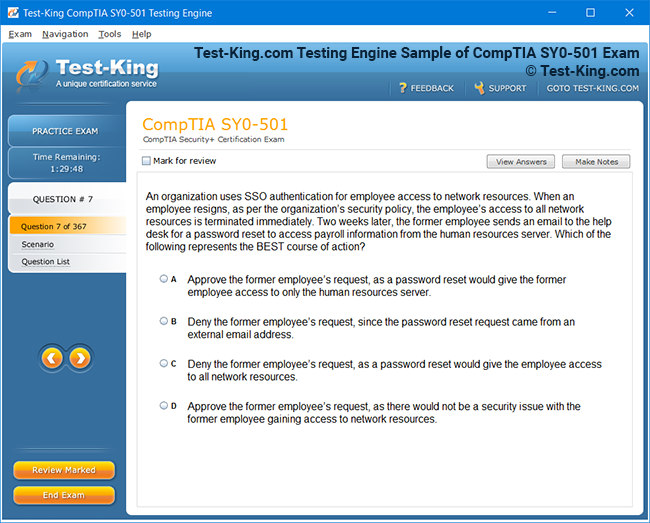
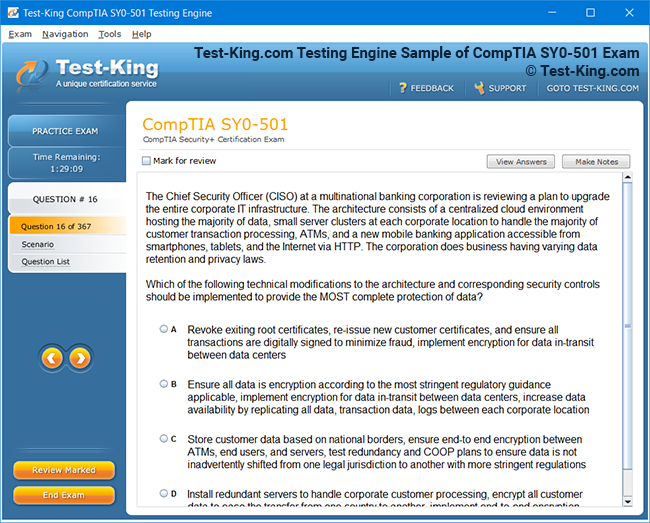
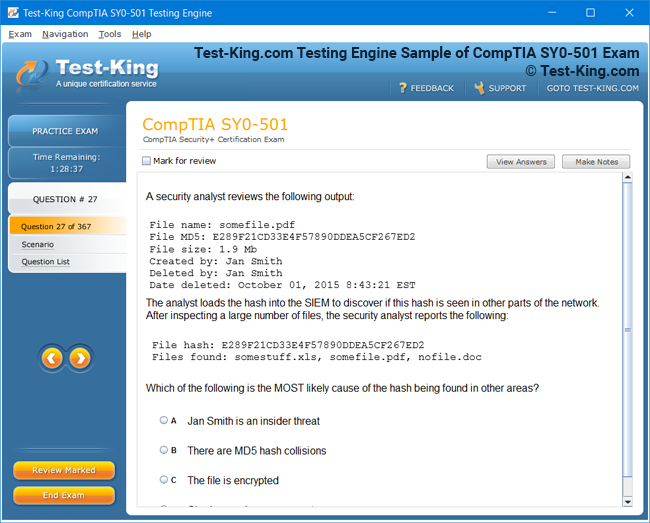
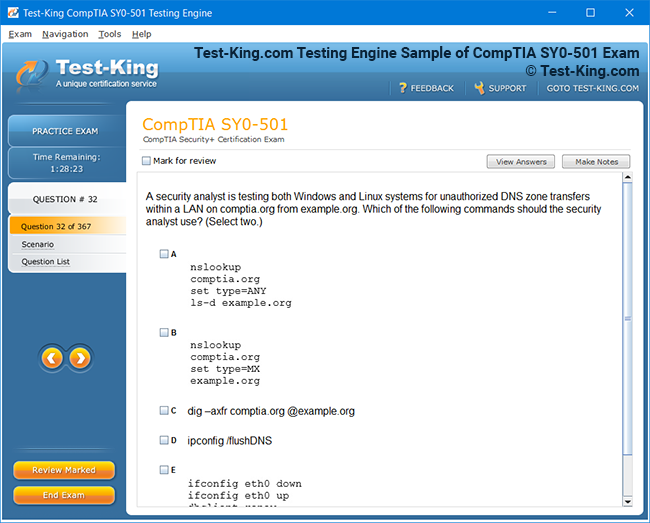
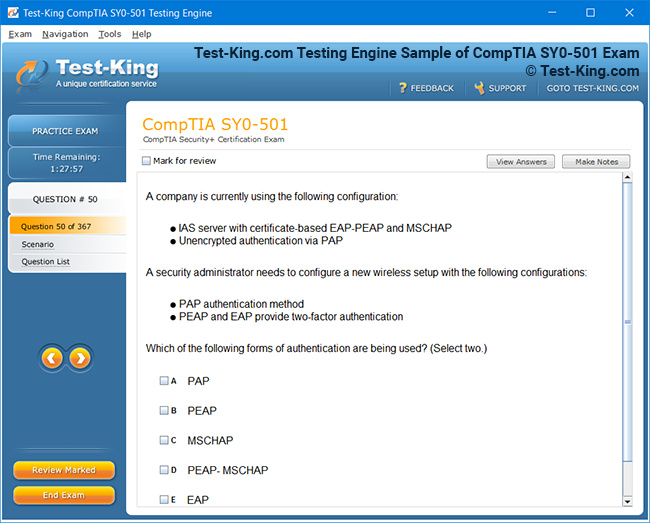
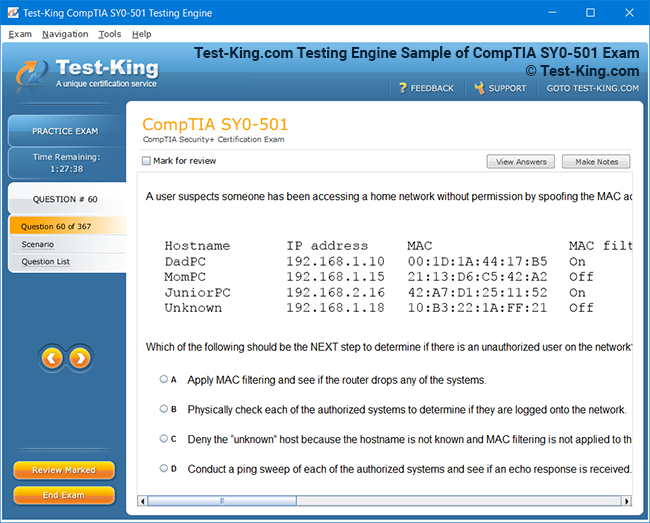
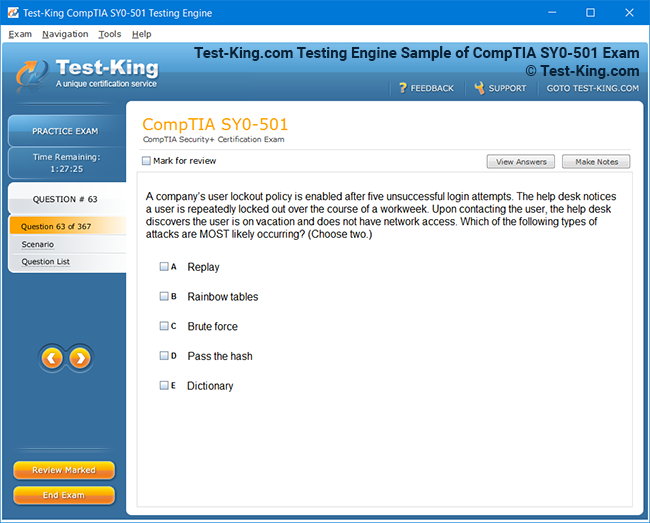
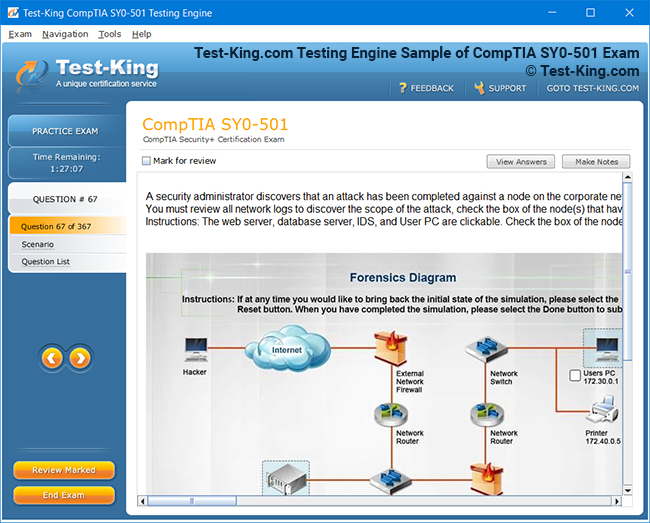
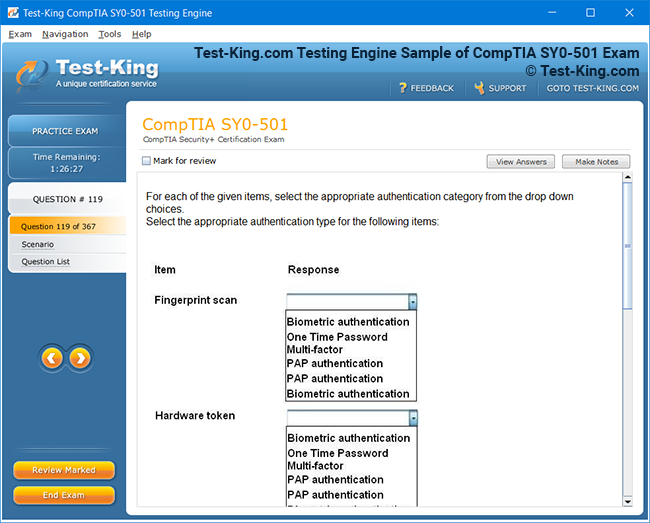
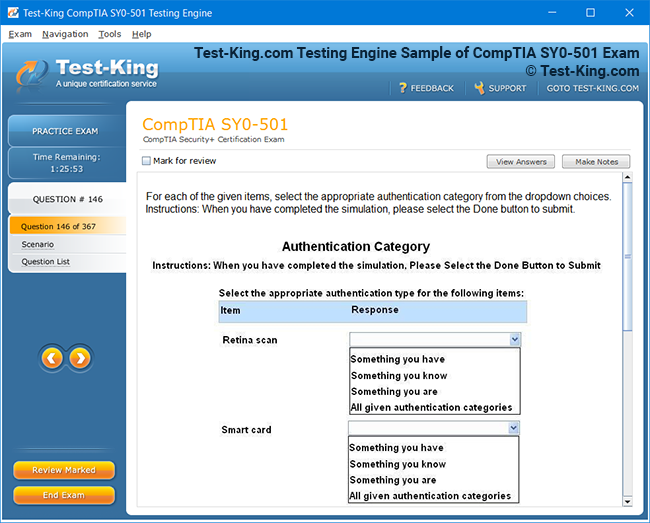
Product Screenshots
Frequently Asked Questions
How can I get the products after purchase?
All products are available for download immediately from your Member's Area. Once you have made the payment, you will be transferred to Member's Area where you can login and download the products you have purchased to your computer.
How long can I use my product? Will it be valid forever?
Test-King products have a validity of 90 days from the date of purchase. This means that any updates to the products, including but not limited to new questions, or updates and changes by our editing team, will be automatically downloaded on to computer to make sure that you get latest exam prep materials during those 90 days.
Can I renew my product if when it's expired?
Yes, when the 90 days of your product validity are over, you have the option of renewing your expired products with a 30% discount. This can be done in your Member's Area.
Please note that you will not be able to use the product after it has expired if you don't renew it.
How often are the questions updated?
We always try to provide the latest pool of questions, Updates in the questions depend on the changes in actual pool of questions by different vendors. As soon as we know about the change in the exam question pool we try our best to update the products as fast as possible.
How many computers I can download Test-King software on?
You can download the Test-King products on the maximum number of 2 (two) computers or devices. If you need to use the software on more than two machines, you can purchase this option separately. Please email support@test-king.com if you need to use more than 5 (five) computers.
What is a PDF Version?
PDF Version is a pdf document of Questions & Answers product. The document file has standart .pdf format, which can be easily read by any pdf reader application like Adobe Acrobat Reader, Foxit Reader, OpenOffice, Google Docs and many others.
Can I purchase PDF Version without the Testing Engine?
PDF Version cannot be purchased separately. It is only available as an add-on to main Question & Answer Testing Engine product.
What operating systems are supported by your Testing Engine software?
Our testing engine is supported by Windows. Andriod and IOS software is currently under development.
Top Cisco Exams
- 200-301 - Cisco Certified Network Associate (CCNA)
- 350-401 - Implementing Cisco Enterprise Network Core Technologies (ENCOR)
- 300-410 - Implementing Cisco Enterprise Advanced Routing and Services (ENARSI)
- 350-701 - Implementing and Operating Cisco Security Core Technologies
- 300-420 - Designing Cisco Enterprise Networks (ENSLD)
- 350-601 - Implementing and Operating Cisco Data Center Core Technologies (DCCOR)
- 300-715 - Implementing and Configuring Cisco Identity Services Engine (300-715 SISE)
- 300-415 - Implementing Cisco SD-WAN Solutions (ENSDWI)
- 810-110 - Cisco AI Technical Practitioner (AITECH)
- 350-801 - Implementing Cisco Collaboration Core Technologies (CLCOR)
- 300-710 - Securing Networks with Cisco Firewalls
- 400-007 - Cisco Certified Design Expert
- 500-220 - Cisco Meraki Solutions Specialist
- 350-101 - Implementing and Operating Cisco Wireless Core Technologies (WLCOR)
- 300-730 - Implementing Secure Solutions with Virtual Private Networks (SVPN 300-730)
- 350-201 - Performing Cybersecurity Using Cisco Security Technologies (CBRCOR)
- 200-901 - DevNet Associate (DEVASC)
- 350-501 - Implementing and Operating Cisco Service Provider Network Core Technologies (SPCOR)
- 200-201 - Understanding Cisco Cybersecurity Operations Fundamentals (CBROPS)
- 100-150 - Cisco Certified Support Technician (CCST) Networking
- 300-620 - Implementing Cisco Application Centric Infrastructure (DCACI)
- 350-901 - Designing, Deploying, and Managing Network Automation Systems
- 820-605 - Cisco Customer Success Manager (CSM)
- 300-435 - Automating Cisco Enterprise Solutions (ENAUTO)
- 300-640 - Implementing Cisco Data Center AI Infrastructure (DCAI)
- 300-745 - Designing Cisco Security Infrastructure
- 300-440 - Designing and Implementing Cloud Connectivity (ENCC)
- 300-720 - Securing Email with Cisco Email Security Appliance (300-720 SESA)
- 300-510 - Implementing Cisco Service Provider Advanced Routing Solutions (SPRI)
- 100-140 - Cisco Certified Support Technician (CCST) IT Support
- 300-610 - Designing Cisco Data Center Infrastructure for Traditional and AI Workloads
- 300-425 - Designing Cisco Enterprise Wireless Networks (300-425 ENWLSD)
- 300-220 - Conducting Threat Hunting and Defending using Cisco Technologies for Cybersecurity
- 700-805 - Cisco Renewals Manager (CRM)
- 300-445 - Designing and Implementing Enterprise Network Assurance
- 100-160 - Cisco Certified Support Technician (CCST) Cybersecurity
- 300-215 - Conducting Forensic Analysis and Incident Response Using Cisco CyberOps Technologies (CBRFIR)
- 300-815 - Implementing Cisco Advanced Call Control and Mobility Services (CLASSM)
- 800-150 - Supporting Cisco Devices for Field Technicians
- 500-442 - Administering Cisco Contact Center Enterprise
- 300-515 - Implementing Cisco Service Provider VPN Services (SPVI)
- 300-635 - Automating Cisco Data Center Solutions (DCAUTO)
- 300-725 - Securing the Web with Cisco Web Security Appliance (300-725 SWSA)
- 300-830 - Implementing Cisco Collaboration Cloud Customer Experience (CLCCE)
- 300-820 - Implementing Cisco Collaboration Cloud and Edge Solutions
- 500-443 - Advanced Administration and Reporting of Contact Center Enterprise
- 010-151 - Supporting Cisco Data Center System Devices (DCTECH)
- 500-470 - Cisco Enterprise Networks SDA, SDWAN and ISE Exam for System Engineers (ENSDENG)
- 500-560 - Cisco Networking: On-Premise and Cloud Solutions (OCSE)
- 700-750 - Cisco Small and Medium Business Engineer
Cisco 500-560 OCSE Exam Preparation – Comprehensive Insights for Success
The technology industry has never been more competitive, and professionals who want to build lasting careers in networking sales, architecture, and solution consulting need credentials that go beyond general knowledge to demonstrate genuine expertise with specific vendor technologies and solutions. Cisco's portfolio of specialization certifications addresses this need directly, providing recognized credentials that validate expertise in specific Cisco solution areas for professionals who work in sales engineering, partner technical roles, and customer-facing consulting positions. These certifications occupy a distinct and valuable niche in the broader Cisco certification ecosystem, serving the needs of professionals whose primary contribution is helping organizations select, design, and justify technology investments rather than implementing and managing the underlying infrastructure.
The Cisco 500-560 OCSE exam, which stands for Cisco Optical Solutions and Selling exam, represents one of these specialization credentials and addresses a technology area that has grown in strategic importance as bandwidth demands continue to escalate across enterprise, service provider, and data center environments. Optical networking, once the exclusive domain of large telecommunications carriers and hyperscale operators, has become increasingly relevant to a broader range of organizations and technology professionals as the volume of data traversing networks continues to grow at rates that only fiber optic infrastructure can reliably accommodate. Professionals who develop expertise in optical networking solutions and earn the OCSE certification position themselves to contribute meaningfully to conversations about network infrastructure that are happening at the highest levels of organizational decision-making.
Understanding the OCSE Certification Purpose
The Cisco Optical Solutions and Selling certification serves a specific and well-defined purpose within the Cisco partner and sales ecosystem. It validates that a professional possesses the knowledge needed to have informed technical and business conversations about Cisco optical networking solutions with customers who are evaluating their network infrastructure options. The certification is designed primarily for sales engineers, account managers, and technical pre-sales professionals who work for Cisco or Cisco partner organizations and who need to be credible participants in optical networking discussions without necessarily being implementation specialists who configure and operate the equipment directly.
This distinction between sales-oriented and implementation-oriented certifications is important for understanding what the OCSE credential represents and how it differs from the implementation-focused credentials in the broader Cisco certification hierarchy. An OCSE-certified professional is expected to understand what Cisco optical solutions do, how they compare to alternatives, how they address specific customer requirements, and how to articulate their business and technical value convincingly. They are not expected to have the hands-on operational expertise of a network engineer who configures and troubleshoots optical equipment daily. This positioning makes the certification accessible to professionals from diverse backgrounds including business development, technical marketing, and solution architecture who bring valuable commercial and strategic perspectives to optical networking discussions.
Exam Format and Assessment Details
The Cisco 500-560 OCSE exam is delivered through Pearson VUE testing centers and online proctoring options, consistent with Cisco's standard exam delivery approach for specialization certifications. The exam consists of approximately 55 to 65 questions in multiple choice and multiple response formats, and candidates are given 90 minutes to complete the assessment. The question content reflects the sales engineering and solution consulting orientation of the certification, testing candidates on their ability to match customer requirements to appropriate Cisco optical solutions, compare Cisco offerings against competitive alternatives, and identify the business and technical factors that influence optical networking purchase decisions.
Cisco provides an official exam topics document that outlines the domains and subject areas covered in the assessment, and this document represents the authoritative reference for structuring a preparation plan. The exam topics reflect the full scope of knowledge that an effective optical solutions sales engineer needs, from foundational optical networking technology principles through the specifics of Cisco's optical product portfolio, competitive positioning, and the business case development skills required to support complex sales processes. Candidates who align their preparation closely with the official exam topics consistently report better preparation outcomes than those who study broadly without reference to the specific scope defined by Cisco.
Optical Networking Technology Foundations
A solid understanding of optical networking technology principles is the foundation upon which all other OCSE exam knowledge builds, and candidates who lack this foundation will struggle to make sense of the product-specific and sales-oriented content that comprises the bulk of the exam. Optical networking uses light to transmit data through glass or plastic fiber cables at speeds that vastly exceed what copper-based electrical transmission can achieve over meaningful distances, and the fundamental physics of light transmission through fiber determine many of the characteristics that make optical networking both powerful and technically complex. Candidates must understand concepts including optical signal attenuation, dispersion, amplification through erbium-doped fiber amplifiers, and the relationship between wavelength and transmission distance.
Dense Wavelength Division Multiplexing is the core technology that has made optical networking economically viable for high-capacity applications, and the OCSE exam addresses it as a central concept. DWDM allows multiple channels of data to be transmitted simultaneously over a single optical fiber by assigning each channel to a different wavelength of light, dramatically multiplying the effective capacity of fiber infrastructure without requiring the deployment of additional fiber cables. Candidates must understand how DWDM systems are structured, including the roles of multiplexers, demultiplexers, optical amplifiers, and reconfigurable optical add-drop multiplexers in enabling flexible, high-capacity optical transmission. This conceptual foundation prepares candidates to discuss optical networking solutions with customers in terms that reflect genuine technical understanding rather than superficial familiarity with product names and marketing claims.
Cisco Optical Portfolio Knowledge
The Cisco optical networking product portfolio has expanded significantly through a combination of organic development and strategic acquisitions, and OCSE candidates must develop comprehensive familiarity with the products and platforms that Cisco offers in this space. The Cisco NCS series of platforms represents the core of Cisco's optical networking product line, addressing different segments of the optical networking market with platforms optimized for different scale, performance, and integration requirements. Candidates must understand the positioning and primary use cases of the key NCS platforms, including how they differ from each other and which customer requirements each is best suited to address.
The Cisco Routed Optical Networking architecture represents one of the most strategically significant developments in Cisco's optical portfolio, combining IP routing and optical transport functions in a way that simplifies network architecture, reduces operational complexity, and improves the economics of high-capacity network infrastructure. Candidates must understand the architecture and value proposition of Routed Optical Networking, how it differs from traditional network architectures that maintain separate IP and optical layers managed independently, and the customer environments where it delivers the greatest benefit. Understanding this architectural approach is important not just for technical discussions but for business case development, as the operational simplification and cost reduction benefits of converged IP and optical infrastructure are among the most compelling value propositions in complex optical networking sales engagements.
Competitive Landscape Analysis Skills
Effective optical solutions sales engineering requires a thorough understanding of the competitive landscape, including the strengths and positioning of alternative optical networking solutions from vendors such as Nokia, Ciena, Infinera, Fujitsu, and others. The OCSE exam tests candidates on their ability to articulate Cisco's competitive differentiation in the optical networking space, identify the scenarios where Cisco solutions provide the most compelling advantages, and address customer objections that arise from competitive comparisons. This competitive knowledge must be grounded in accurate technical and commercial understanding rather than generic vendor comparisons that sophisticated customers will quickly see through.
Competitive differentiation in optical networking often centers on factors including system capacity, reach, power consumption, footprint, management capabilities, and integration with IP networking infrastructure. Cisco's competitive positioning in the optical space leverages several distinctive advantages including the integration of optical transport with Cisco's broader IP and automation portfolio, the operational efficiency benefits of unified management across IP and optical layers, and the innovation in silicon photonics and coherent optical technology that underpins Cisco's optical platform performance. Candidates who develop a nuanced understanding of these competitive differentiators are better equipped to engage in sophisticated technical and commercial discussions with customers who are conducting rigorous evaluations of optical networking alternatives before making significant infrastructure investment decisions.
Customer Requirements and Solution Mapping
One of the most important skills that OCSE-certified professionals demonstrate is the ability to translate customer requirements into appropriate Cisco optical solution recommendations. This skill requires both a thorough understanding of customer needs across different market segments and a detailed knowledge of how Cisco optical solutions address those needs in technically and commercially appropriate ways. The exam tests this mapping skill through scenario-based questions that present customer situations and require candidates to identify the most appropriate Cisco optical solution or to recognize which customer requirement is most effectively addressed by a specific Cisco product or architectural approach.
Different customer segments have distinctly different optical networking requirements that shape which solutions are most appropriate for them. Service providers building long-haul and metro optical networks have requirements centered on maximum capacity, reach, and operational scalability that differ significantly from those of enterprise organizations building campus and data center interconnect optical infrastructure. Data center operators have requirements around low latency, high density, and integration with switching and routing infrastructure that create yet another distinct solution profile. Candidates must understand these segment-specific requirements and how Cisco's optical portfolio addresses each, developing the market segment knowledge that allows them to quickly calibrate their solution discussions to the specific customer context they are engaging with.
Business Case Development Proficiency
Technical knowledge alone is insufficient for success in optical solutions sales engineering. The ability to construct and present a compelling business case that justifies the investment in Cisco optical infrastructure from a financial and strategic perspective is equally important, and the OCSE exam addresses this business case development capability as a core competency. Candidates must understand how to quantify the total cost of ownership of optical networking solutions, including both capital expenditure for equipment and operational expenditure for ongoing management, maintenance, and power consumption, and how to compare these costs against alternatives in a way that accurately reflects the full economic picture.
The business case for optical networking investments often extends beyond direct infrastructure cost comparisons to encompass the business value enabled by increased network capacity, improved reliability, reduced latency, and the operational simplification achieved through architectural consolidation. Candidates must understand how to identify and articulate these business value dimensions in terms that resonate with decision-makers at different levels of the customer organization, from technical operations teams who care about manageability and performance to financial executives who focus on return on investment and total cost of ownership. Developing the ability to translate technical capability advantages into business outcome language is one of the most valuable skills that any technology sales professional can develop, and the OCSE certification provides a structured framework for developing this skill specifically in the context of optical networking solutions.
Network Automation and Management
Modern optical networking deployments are increasingly managed through software-defined and automated management frameworks that provide network operators with greater visibility, control, and operational efficiency than traditional element-by-element management approaches. The OCSE exam addresses Cisco's approach to optical network automation and management, covering the Cisco Crosswork Network Automation platform and its capabilities for automated network discovery, topology visualization, traffic engineering, and network health monitoring. Candidates must understand how Cisco's automation and management tools address the operational complexity challenges that large-scale optical network operators face and how these capabilities contribute to the overall value proposition of Cisco optical solutions.
The integration of optical network management with broader network operations platforms is an increasingly important topic as organizations seek to achieve unified visibility and control across their entire network infrastructure rather than managing IP and optical layers through separate, siloed tools. Cisco's approach to this integration, including the use of open APIs and standard interfaces that allow Crosswork to exchange data with third-party management systems and analytics platforms, is an important differentiator in complex customer environments where multi-vendor infrastructure management is a practical reality. Candidates who understand both the capabilities of Cisco's management tools and the integration architecture that makes them compatible with broader network operations ecosystems are better equipped to address the management and operations considerations that influence optical networking purchase decisions in enterprise and service provider environments.
Service Provider Market Segment Focus
Service providers represent one of the most important market segments for Cisco optical networking solutions, and the OCSE exam addresses service provider requirements and solution positioning in considerable depth. Service providers building metro, regional, and long-haul optical networks face requirements for massive scalability, carrier-grade reliability, comprehensive operations support system integration, and the flexibility to evolve their network architecture as traffic volumes grow and service mix changes. Cisco's optical portfolio addresses these requirements with platforms and architectures specifically designed for service provider scale and operational needs.
The migration of service provider networks from legacy SONET and SDH infrastructure to modern coherent optical transport represents a significant market opportunity and a common customer conversation that OCSE-certified professionals need to be equipped to support. Candidates must understand the drivers for this migration, the migration strategies that allow service providers to modernize their optical infrastructure while maintaining service continuity for existing customers, and how Cisco's optical solutions support different migration approaches. The ability to engage in informed discussions about service provider network evolution, including the adoption of open line system architectures, open ROADM standards, and disaggregated optical networking approaches, reflects the depth of market knowledge that distinguishes credible optical solutions professionals from those with only surface-level familiarity with the service provider optical market.
Data Center Interconnect Solutions
Data center interconnect represents one of the fastest-growing application areas for optical networking technology, driven by the explosive growth of data center capacity and the need to move large volumes of data between data center locations with high bandwidth, low latency, and high reliability. The OCSE exam addresses data center interconnect as a distinct solution category with specific technical and commercial requirements that differentiate it from metro and long-haul optical networking applications. Candidates must understand the latency, capacity, distance, and integration requirements that characterize data center interconnect deployments and how Cisco's optical solutions address these requirements.
The integration of Cisco optical data center interconnect solutions with Cisco's data center switching and routing infrastructure is an important differentiator that OCSE candidates must be able to articulate clearly. For customers who rely on Cisco infrastructure throughout their data center and network environments, the ability to extend Cisco management and automation capabilities across the optical interconnect layer provides operational consistency benefits that are commercially significant. The use of Cisco optical platforms for data center interconnect in high-frequency trading, cloud services, and enterprise disaster recovery scenarios reflects the performance-sensitive nature of many data center interconnect applications and the premium that customers in these segments place on latency and reliability characteristics.
Preparing Effectively for OCSE Success
Preparing effectively for the Cisco 500-560 OCSE exam requires a study approach that balances technical depth with commercial and market awareness in proportions appropriate for a sales engineering certification. Cisco provides official training resources aligned to the OCSE exam through its authorized learning partner network, and completing relevant Cisco training courses provides a structured foundation for exam preparation that ensures comprehensive coverage of the official exam topics. Candidates who have direct experience in optical networking sales engineering roles bring contextual knowledge that accelerates their preparation, but those who are newer to the optical networking space can develop the required knowledge through focused study of official training materials, Cisco technical documentation, and supplementary resources from the optical networking community.
Hands-on exposure to Cisco optical networking products and management tools, even in a demonstration or lab environment, is highly beneficial for building the practical familiarity with product interfaces and capabilities that scenario-based exam questions test. Cisco provides demo environments and product documentation that allow candidates to develop familiarity with optical platform features and the Crosswork management interface without requiring access to production optical networking hardware. Studying competitive positioning documents, customer case studies, and solution briefs from Cisco's partner portal provides the market and competitive context that supplements technical knowledge and prepares candidates for the business-oriented questions in the exam. Practice exams that include detailed explanations of correct and incorrect answer choices are valuable tools for identifying knowledge gaps and reinforcing understanding of challenging concepts before sitting for the actual assessment.
Partner Ecosystem and Commercial Benefits
The Cisco 500-560 OCSE certification carries important commercial significance within the Cisco partner ecosystem, and understanding these commercial implications is part of what makes the certification strategically valuable for both individuals and the organizations they represent. Cisco partner companies that maintain certified professionals in specific technology areas qualify for specialization status that unlocks access to deal registration benefits, partner program incentives, and technical and commercial support resources that are not available to non-specialized partners. The OCSE certification contributes to optical networking specialization requirements that enable partner organizations to differentiate themselves in the market as recognized Cisco optical networking specialists.
For individual professionals, the OCSE certification strengthens their position within partner organizations by demonstrating specific expertise that contributes directly to the organization's commercial capabilities and partner program standing. Sales engineers and technical pre-sales professionals who hold relevant specialization certifications are often prioritized for assignments on strategic deals and complex customer engagements where certified expertise is valued by customers or required by partner program rules. The combination of technical credibility, competitive knowledge, and business case development skills validated by the OCSE certification creates a professional profile that is genuinely valuable in the commercial contexts where optical networking solutions are sold and positioned, making the investment in preparation and certification worthwhile for ambitious sales and technical professionals in the optical networking space.
Conclusion
The Cisco 500-560 OCSE certification represents a genuinely valuable credential for professionals who work at the intersection of technical expertise and commercial execution in the optical networking space. Its comprehensive coverage of optical networking technology foundations, Cisco optical product portfolio knowledge, competitive landscape analysis, customer requirement mapping, business case development, network automation and management, service provider market dynamics, and data center interconnect solutions reflects the full breadth of knowledge that effective optical solutions sales engineering requires. For professionals who are serious about building credibility and capability in this specialized and technically demanding field, the OCSE certification provides both a recognized credential and a structured curriculum for developing the expertise that distinguishes the most effective optical networking professionals from those with only general familiarity.
The journey toward earning the OCSE certification is itself a valuable professional development experience that produces returns independent of the credential. Professionals who engage seriously with the preparation process develop a more complete and coherent understanding of optical networking technology and the Cisco optical solutions portfolio, filling knowledge gaps that even experienced professionals carry from their project-based and customer-interaction-based learning. This deeper understanding makes them more effective in customer conversations because they can draw on a broader range of technical and commercial knowledge to address diverse customer questions and concerns. It makes them more confident in competitive discussions because their knowledge of Cisco's differentiated capabilities is grounded in genuine understanding rather than rehearsed talking points that sophisticated customers quickly see through.
For organizations that invest in supporting their teams through OCSE certification preparation, the returns are visible across multiple dimensions of commercial performance. Teams with certified optical networking professionals win more optical networking opportunities because their technical credibility is stronger, their competitive positioning is more precise, and their business case development capability is more mature. They build deeper customer relationships because customers trust that the advice they receive reflects genuine expertise rather than generic sales messaging. They contribute more effectively to complex solution architectures because their understanding of how optical networking integrates with broader network infrastructure is comprehensive enough to support the multidimensional technical discussions that sophisticated customers expect. In the competitive landscape for optical networking sales engineering talent, the Cisco 500-560 OCSE certification is a meaningful differentiator that delivers value from the first customer conversation after certification and continues to compound its returns throughout a successful optical networking career.