

Exam Code: C_TFIN22_67
Exam Name: SAP Certified Application Associate - Management Accounting with SAP ERP 6.0 EhP7
Certification Provider: SAP
Corresponding Certification: SAP Application Associate
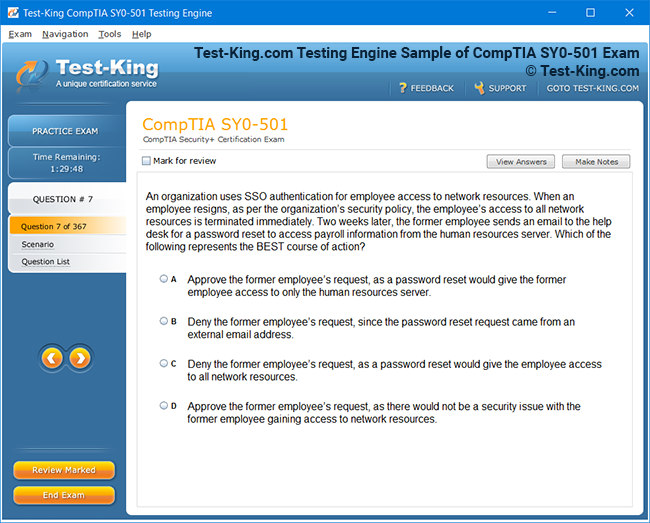
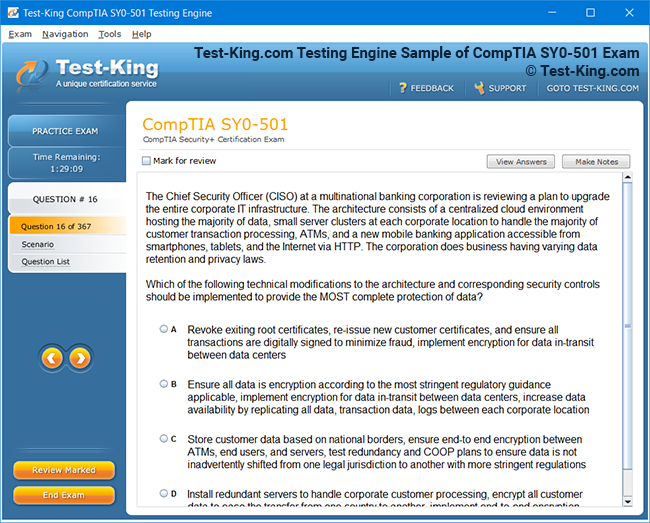
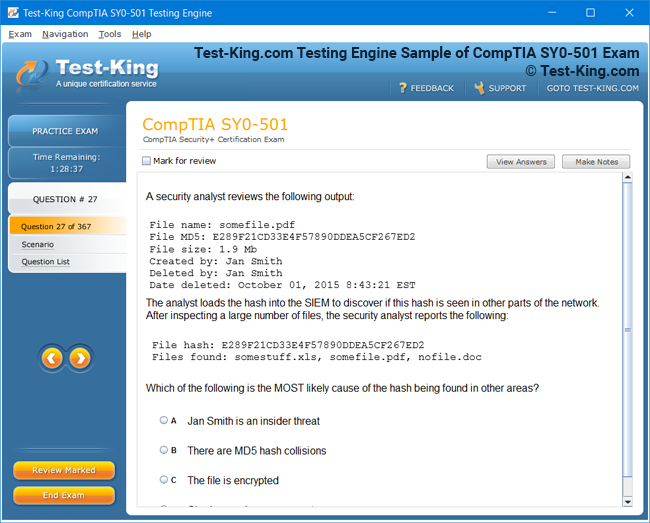
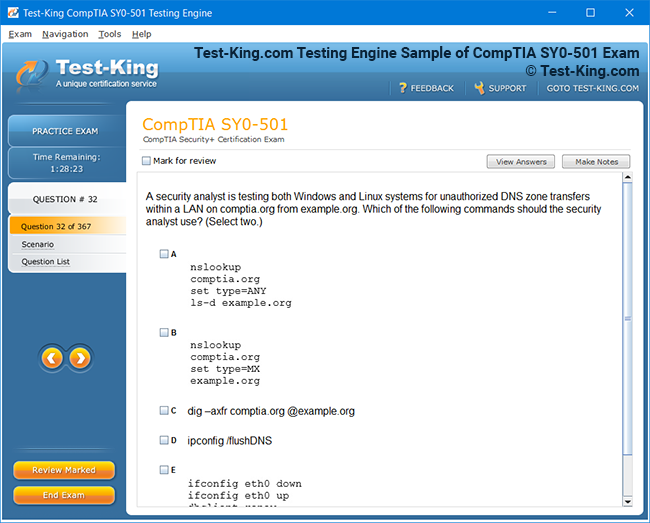
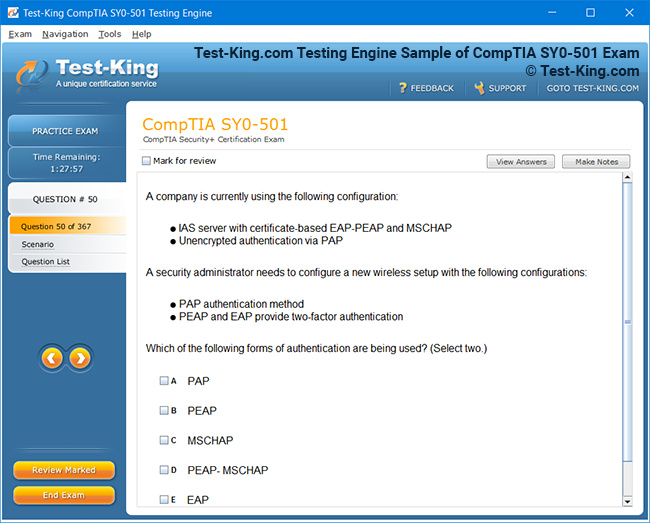
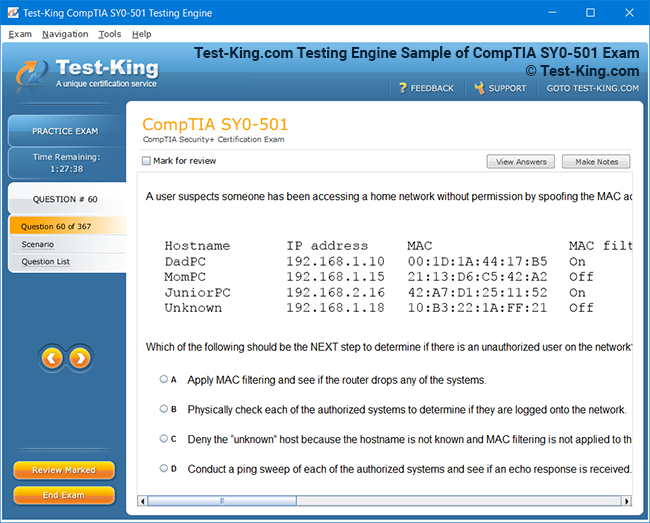
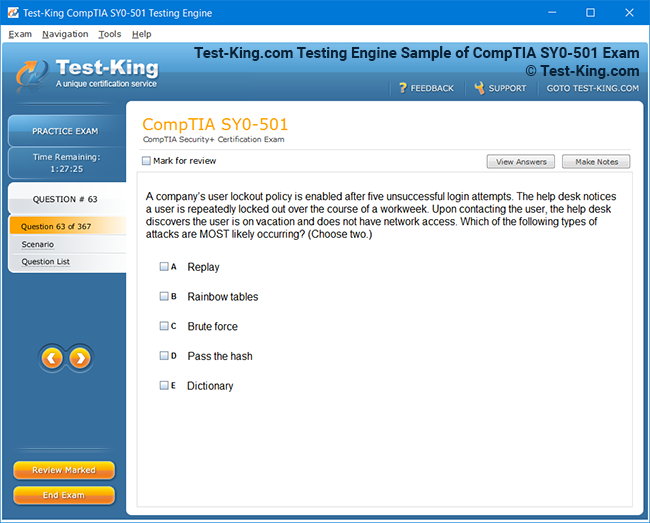
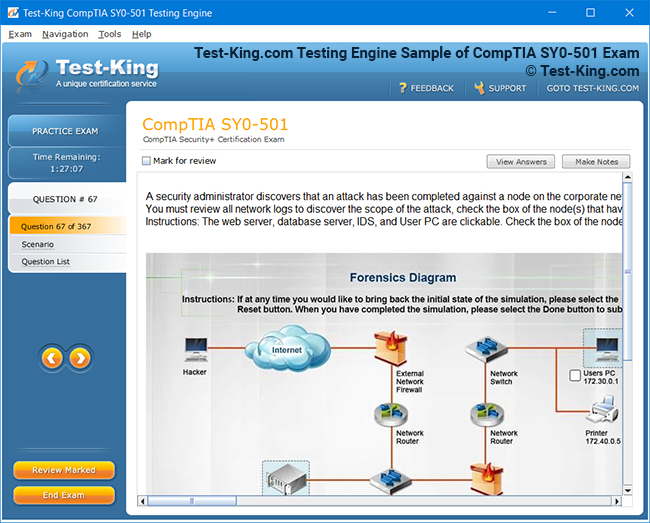
Product Screenshots
Frequently Asked Questions
How can I get the products after purchase?
All products are available for download immediately from your Member's Area. Once you have made the payment, you will be transferred to Member's Area where you can login and download the products you have purchased to your computer.
How long can I use my product? Will it be valid forever?
Test-King products have a validity of 90 days from the date of purchase. This means that any updates to the products, including but not limited to new questions, or updates and changes by our editing team, will be automatically downloaded on to computer to make sure that you get latest exam prep materials during those 90 days.
Can I renew my product if when it's expired?
Yes, when the 90 days of your product validity are over, you have the option of renewing your expired products with a 30% discount. This can be done in your Member's Area.
Please note that you will not be able to use the product after it has expired if you don't renew it.
How often are the questions updated?
We always try to provide the latest pool of questions, Updates in the questions depend on the changes in actual pool of questions by different vendors. As soon as we know about the change in the exam question pool we try our best to update the products as fast as possible.
How many computers I can download Test-King software on?
You can download the Test-King products on the maximum number of 2 (two) computers or devices. If you need to use the software on more than two machines, you can purchase this option separately. Please email support@test-king.com if you need to use more than 5 (five) computers.
What is a PDF Version?
PDF Version is a pdf document of Questions & Answers product. The document file has standart .pdf format, which can be easily read by any pdf reader application like Adobe Acrobat Reader, Foxit Reader, OpenOffice, Google Docs and many others.
Can I purchase PDF Version without the Testing Engine?
PDF Version cannot be purchased separately. It is only available as an add-on to main Question & Answer Testing Engine product.
What operating systems are supported by your Testing Engine software?
Our testing engine is supported by Windows. Andriod and IOS software is currently under development.
Top SAP Exams
Develop Deeper Financial Accounting Integration Skills with C_TFIN22_67 in SAP Application Settings
The contemporary business landscape demands professionals who possess comprehensive knowledge of enterprise resource planning systems, particularly in the domain of financial management and accounting operations. The C_TFIN22_67 certification examination represents a pivotal credential for individuals aspiring to demonstrate their proficiency in SAP Financial Accounting with SAP S/4HANA. This professional qualification serves as a testament to one's capability in managing intricate financial processes, executing accounting operations, and leveraging the sophisticated functionalities embedded within the SAP ecosystem.
Organizations across various industries increasingly rely on SAP solutions to streamline their financial operations, maintain regulatory compliance, and derive actionable insights from their fiscal data. Consequently, professionals equipped with validated expertise in SAP Financial Accounting find themselves positioned advantageously in the competitive employment market. The C_TFIN22_67 examination evaluates candidates on multiple dimensions of financial accounting, encompassing general ledger operations, accounts payable and receivable management, asset accounting, and financial closing procedures.
SAP Financial Accounting Certification C_TFIN22_67
Pursuing this certification necessitates a strategic approach that combines theoretical understanding with practical application. Candidates must familiarize themselves with the architectural framework of SAP S/4HANA, comprehend the integration points between various modules, and develop hands-on experience with real-world scenarios. The examination format challenges test-takers to demonstrate not merely rote memorization but genuine comprehension of financial accounting principles as implemented within the SAP environment.
The journey toward certification success involves navigating through numerous technical concepts, business processes, and configuration settings. Aspirants must develop a holistic understanding of how financial transactions flow through the system, how organizational structures influence accounting procedures, and how various master data elements interact to facilitate accurate financial reporting. This comprehensive knowledge foundation enables certified professionals to contribute meaningfully to implementation projects, system optimization initiatives, and ongoing support activities.
Fundamental Architecture of SAP Financial Accounting in S/4HANA
The architectural foundation of SAP Financial Accounting within the S/4HANA environment represents a sophisticated convergence of technological innovation and business process optimization. Unlike legacy systems that relied on traditional database structures, S/4HANA leverages in-memory computing capabilities to deliver unprecedented performance, real-time analytics, and simplified data models. This paradigm shift fundamentally transforms how financial information is stored, processed, and retrieved, enabling organizations to make faster, more informed decisions.
At the core of this architecture lies the Universal Journal, a revolutionary concept that consolidates financial and controlling data into a single, unified table structure. This consolidation eliminates redundancies inherent in previous SAP versions, where separate tables maintained parallel information for financial accounting and management accounting purposes. The Universal Journal architecture streamlines data reconciliation, enhances reporting efficiency, and reduces system complexity. Financial transactions recorded in the system automatically populate both financial accounting and controlling perspectives simultaneously, ensuring consistency across all analytical dimensions.
The organizational structure within SAP Financial Accounting comprises several hierarchical elements that define how business operations are represented within the system. The client represents the highest organizational level, encompassing all company codes, which serve as legally independent entities required to produce complete financial statements. Each company code operates with its own chart of accounts, fiscal year variants, and currency settings, enabling multinational corporations to manage diverse legal entities within a single system instance.
Business areas provide an additional organizational dimension that enables cross-company code reporting based on specific business segments or divisions. This functionality proves particularly valuable for matrix organizations that require financial visibility across both legal and operational boundaries. The assignment of business areas to transactions facilitates consolidated reporting that reflects the economic reality of corporate structures rather than merely legal configurations.
The chart of accounts forms the backbone of financial accounting operations, defining the structure and classification of general ledger accounts. SAP supports multiple charts of accounts configurations, including operating charts of accounts used for day-to-day transactions, country-specific charts of accounts that accommodate local statutory requirements, and group charts of accounts that enable consolidated reporting across international operations. The flexible mapping between these various chart structures allows organizations to maintain local operational autonomy while ensuring corporate-level consolidation and compliance.
Fiscal year variants determine the temporal framework within which financial transactions are recorded and reported. Organizations can configure fiscal years to align with calendar years or define special periods that accommodate posting adjustments after the formal year-end close. The posting period variant controls which accounting periods remain open for transaction entry, providing essential controls that safeguard the integrity of closed accounting periods while enabling ongoing business operations.
Currency management within SAP Financial Accounting accommodates the complexities of global business operations through sophisticated multi-currency capabilities. The system maintains transaction values in multiple currencies simultaneously, including local currency for statutory reporting, company code currency for internal management purposes, and group currency for consolidated financial statements. Exchange rate types and translation methods can be configured to reflect various valuation approaches, ensuring compliance with international accounting standards while supporting management reporting requirements.
Document types and number ranges constitute critical configuration elements that govern transaction recording within the system. Document types classify transactions based on their business nature, such as vendor invoices, customer payments, or general ledger postings. Each document type connects to specific number range intervals that generate sequential document numbers, facilitating audit trails and financial controls. The configuration of document types influences posting authorizations, field status variants, and workflow processing, making these elements fundamental to system behavior.
Integration points between Financial Accounting and other SAP modules exemplify the holistic nature of enterprise resource planning systems. Material movements in inventory management automatically generate corresponding financial postings that update general ledger accounts, inventory accounts, and cost accounting objects. Sales processes trigger accounts receivable postings upon invoice generation, while subsequent payment receipts update cash accounts and clear open receivables. Procurement cycles create accounts payable obligations and inventory valuations through goods receipts and invoice verification processes.
The financial closing cockpit represents a sophisticated tool that orchestrates period-end and year-end closing activities. This functionality enables finance teams to define task sequences, assign responsibilities, monitor execution progress, and document completion status for all closing procedures. Dependencies between tasks ensure proper sequencing, preventing premature execution of activities that require predecessor completion. Template functionality allows organizations to standardize closing procedures across accounting periods, reducing manual effort and minimizing the risk of overlooked steps.
General Ledger Accounting Operations and Configuration
General ledger accounting serves as the central repository for all financial transactions within an organization, providing the foundation for statutory reporting, management analysis, and financial decision-making. Within the SAP S/4HANA environment, the general ledger has evolved significantly from traditional implementations, incorporating real-time integration, multidimensional analysis capabilities, and simplified reconciliation processes through the Universal Journal architecture.
The configuration of general ledger master data begins with the chart of accounts structure, which defines the framework for classifying financial transactions. Master data for general ledger accounts includes essential attributes such as account number, account name, account group classification, and control parameters that govern how transactions can be posted to specific accounts. Account groups determine field status settings, defining which fields are required, optional, or suppressed during document entry. This configuration ensures data quality by enforcing consistent information capture across all financial postings.
Financial Statement Versions represent configured structures that define how general ledger accounts map to financial statement line items for external reporting purposes. Organizations typically maintain multiple financial statement versions to accommodate different reporting frameworks, such as local generally accepted accounting principles, international financial reporting standards, and management reporting structures. The hierarchical arrangement of accounts within financial statement versions enables drill-down analysis from summary financial statements to detailed transaction-level information.
Ledger configuration introduces flexibility in how organizations maintain and report financial information. The leading ledger serves as the primary accounting ledger, containing all financial transactions and serving as the source for statutory reporting. Organizations can configure additional non-leading ledgers to maintain parallel accounting under alternative accounting principles, such as tracking both local GAAP and IFRS perspectives simultaneously. Each ledger can utilize different currencies, fiscal year variants, and accounting principles, enabling comprehensive multi-perspective financial reporting.
Document splitting functionality enables real-time segmentation of financial transactions based on configurable characteristics such as profit centers, segments, or business areas. When document splitting is activated, the system automatically generates balanced accounting entries for each segment dimension, ensuring that segment-level balance sheets remain balanced without requiring additional period-end allocation procedures. This real-time balancing capability significantly enhances the quality of segment reporting and reduces period-end closing efforts.
Zero-balance clearing represents a critical control mechanism that ensures accuracy in account reconciliation processes. Certain general ledger accounts, particularly those used for interim postings or clearing operations, must maintain zero balances after related transactions have been processed and cleared. The system configuration can designate specific accounts as requiring zero-balance status, triggering automatic validations during document posting to prevent unbalanced entries that would compromise account integrity.
Accrual and deferral processing enables organizations to recognize revenues and expenses in the appropriate accounting periods, aligning with accrual accounting principles. The system supports both manual accrual postings and automated recurring entry processes for predictable accruals such as rent, insurance, or subscription expenses. Deferral calculations distribute prepaid expenses or deferred revenues across multiple accounting periods based on configured allocation rules, ensuring proper period matching of revenues and expenses.
Sample account assignments provide default values for specific general ledger accounts, streamlining data entry for routine transactions. When sample accounts are configured for specific document types or posting keys, the system automatically populates account assignments during transaction entry, reducing manual effort and minimizing data entry errors. This automation proves particularly valuable for high-volume transaction processing where consistency and efficiency are paramount.
Tolerance groups define acceptable variance thresholds for various financial processes, including payment differences, exchange rate fluctuations, and cash discount calculations. By configuring tolerance limits, organizations establish boundaries within which system users can post transactions without requiring additional approvals. Transactions exceeding defined tolerance thresholds trigger workflow notifications or require elevated authorization levels, providing essential controls over financial processes while enabling efficient processing of routine transactions within acceptable parameters.
Foreign currency valuation procedures ensure that monetary assets and liabilities denominated in foreign currencies are restated at current exchange rates for financial reporting purposes. The system supports various valuation methods, including month-end valuations, strict lowest value principles, and realization principles. Valuation runs can be executed for specific key dates, generating adjustment postings that reflect unrealized gains or losses resulting from exchange rate fluctuations. These valuation adjustments ensure compliance with accounting standards while providing accurate representations of financial position.
Account determination configuration establishes the linkage between business transactions and general ledger accounts, automating the posting logic for integrated processes. For instance, goods receipts automatically post to inventory accounts and goods receipt/invoice receipt clearing accounts based on configured account determination rules. Similarly, revenue recognition processes post to revenue accounts, accounts receivable, and tax accounts based on customer master data, material master settings, and pricing conditions. This automated account determination ensures consistency in financial postings while reducing manual intervention requirements.
Accounts Payable Processing and Vendor Management
Accounts payable operations constitute a critical component of financial management, encompassing all activities related to managing obligations to suppliers, service providers, and other creditors. Effective accounts payable processing ensures timely payment of obligations, maintains positive supplier relationships, optimizes cash management, and provides accurate visibility into outstanding liabilities. The SAP Financial Accounting module offers comprehensive functionality for managing the complete accounts payable lifecycle, from vendor master data maintenance through payment processing and account reconciliation.
Vendor master data serves as the foundation for all accounts payable transactions, containing essential information about suppliers with whom the organization conducts business. The vendor master record comprises three organizational levels: general data applicable across all company codes, company code-specific data relevant to accounting operations, and purchasing organization data used for procurement processes. General data includes basic information such as vendor name, address, communication details, and bank information for payment processing.
Company code-specific vendor master data includes accounting-relevant information such as reconciliation account assignment, payment terms, payment methods, and dunning procedures. The reconciliation account links subsidiary ledger transactions in accounts payable to corresponding general ledger accounts, ensuring that summary-level financial statements reflect detailed accounts payable activity. Payment terms define standard credit periods, cash discount percentages, and discount periods applicable to vendor invoices, automatically calculating due dates and available discounts during invoice processing.
Vendor invoice processing represents the primary transaction type that creates accounts payable obligations within the system. Invoices can be entered through various methods, including manual entry transactions, automated invoice verification in the procurement cycle, and electronic invoice receipt through integration interfaces. Each invoice document records the vendor account, invoice amount, tax calculations, payment terms, and relevant reference information such as purchase order numbers or goods receipt documents.
The three-way match principle provides essential controls over invoice verification processes, comparing invoices against purchase orders and goods receipts to validate quantity, price, and calculation accuracy. When discrepancies exceed configured tolerance limits, the system generates exception notifications requiring manual resolution before invoice approval. This automated validation significantly reduces the risk of incorrect payments, duplicate invoices, or unauthorized charges, while streamlining the approval process for invoices that match supporting documentation within acceptable tolerances.
Invoice parking functionality enables organizations to capture invoice information without immediately posting financial impacts, supporting approval workflow processes. Parked invoices exist in a preliminary state, allowing multiple reviewers to validate invoice details, verify supporting documentation, and authorize payment obligations before formal posting occurs. Once approvals are complete, parked invoices can be posted in batch processes, creating actual accounts payable obligations and updating general ledger accounts.
Payment terms negotiation with vendors significantly influences cash flow management and working capital optimization. Organizations that negotiate extended payment terms preserve cash resources for longer periods, while vendors offering attractive early payment discounts provide opportunities for cost savings. The system automatically calculates payment due dates based on invoice dates and configured payment terms, identifying invoices eligible for early payment discounts and generating payment proposals that optimize the balance between capturing discounts and managing cash resources.
Automatic payment programs streamline the payment execution process, identifying due invoices, applying payment optimization logic, and generating payment media such as checks, electronic fund transfers, or payment files for banking systems. Payment proposals can be configured to prioritize vendors based on various criteria, including due dates, discount opportunities, vendor importance, and available cash positions. The payment program groups payments efficiently, combining multiple invoices for a single vendor into consolidated payments when appropriate, reducing transaction fees and administrative overhead.
Payment method configuration determines how organizations transmit funds to vendors, accommodating various payment instruments such as checks, bank transfers, electronic payments, and letters of credit. Each payment method connects to specific bank accounts, defines payment medium formats, and specifies authorization requirements. Country-specific payment formats ensure compliance with local banking standards and regulatory requirements, enabling seamless integration with financial institutions across different geographic regions.
Down payment processing accommodates business scenarios where organizations make advance payments to vendors before receiving goods or services. Down payments create special accounts payable items that are subsequently cleared against final invoices when goods are delivered or services are rendered. This functionality proves essential for high-value procurements, construction projects, or customized manufacturing scenarios where suppliers require financial commitments before commencing work.
Vendor account reconciliation procedures ensure the accuracy of accounts payable balances by comparing internal records against vendor statements and identifying discrepancies requiring investigation. Reconciliation activities include matching invoice records against vendor statements, investigating unapplied payments or credits, resolving disputed items, and confirming that recorded balances accurately reflect obligations. Automated reconciliation tools within SAP facilitate this process by providing comparison views, variance analysis, and exception reporting.
Credit memo processing handles various scenarios where vendors provide credits against previously invoiced amounts, such as return authorizations, pricing corrections, or quality discounts. Credit memos reduce accounts payable balances and can either be applied against specific invoices or maintained as credits available for offset against future obligations. Proper credit memo processing ensures accurate vendor account balances and prevents overpayments when subsequent invoices are processed.
Vendor evaluation functionality provides systematic assessment of supplier performance based on configurable criteria such as delivery reliability, quality metrics, pricing competitiveness, and service responsiveness. These evaluations inform procurement decisions, supplier selection processes, and vendor relationship management strategies. Integration between accounts payable and materials management modules ensures that financial performance metrics, including payment accuracy and invoice dispute resolution, contribute to comprehensive vendor evaluation scorecards.
Accounts Receivable Operations and Customer Financial Management
Accounts receivable management encompasses all processes related to recording customer obligations, monitoring collection activities, and ensuring timely receipt of payments owed to the organization. Effective accounts receivable operations directly impact cash flow, working capital efficiency, and overall financial health. The SAP Financial Accounting module provides robust functionality for managing customer credit policies, processing invoices, monitoring aging, executing collection activities, and analyzing receivable portfolios.
Customer master data forms the cornerstone of accounts receivable operations, containing essential information about parties who purchase goods or services from the organization. Similar to vendor master data structure, customer master records comprise general data applicable across all organizational units, company code-specific data relevant for accounting purposes, and sales organization data used in order-to-cash processes. General data includes fundamental information such as customer name, address, contact details, and communication preferences.
Company code-specific customer data includes accounting-relevant attributes such as reconciliation account assignment, payment terms, payment methods, tolerance groups, and dunning procedures. The reconciliation account links customer transactions in the subsidiary ledger to corresponding general ledger accounts, ensuring that financial statements reflect aggregate accounts receivable activity. Payment terms define standard credit periods offered to customers, cash discount conditions, and calculation methods for determining invoice due dates.
Credit management represents a critical risk mitigation function that prevents excessive exposure to customer default risk. The system supports comprehensive credit checking procedures that evaluate customer creditworthiness based on configured credit limits, existing exposure including open invoices and open orders, and payment history. Credit checks can be executed at various points in the sales process, including order entry, delivery processing, and goods issue, providing multiple safeguards against releasing goods to customers whose credit exposure exceeds acceptable limits.
Customer invoice processing within integrated sales processes automatically generates accounts receivable entries when billing documents are created. The billing process references sales orders, delivery documents, and pricing conditions to calculate invoice amounts, apply taxes, and determine payment terms. Integration between sales and distribution and financial accounting modules ensures seamless flow of information, eliminating redundant data entry and ensuring consistency between operational and financial perspectives.
Payment receipt processing records customer payments against open invoices, updating accounts receivable balances and cash accounts. Incoming payments can be posted manually through direct entry transactions or processed automatically through bank statement processing. The system provides flexible clearing mechanisms that match payments against specific invoices based on document numbers, invoice references, or automatic matching algorithms that identify corresponding invoices based on amount, customer, and date criteria.
Residual payment and partial payment processing accommodates real-world scenarios where customer payments do not exactly match invoice amounts. Residual items represent small remaining balances after partial payments, which can either remain open for future collection or be written off based on configured tolerance limits. Partial payments create split invoice items, with portions marked as paid and remaining balances carried forward as open receivables. Proper handling of these scenarios ensures accurate receivable balances and appropriate recognition of cash receipts.
Cash discount calculations incentivize prompt payment by offering percentage reductions in invoice amounts when customers remit payment within specified discount periods. The system automatically calculates applicable discounts based on payment terms and payment dates, posting appropriate revenue adjustments when discounts are taken. Organizations must balance the cost of offering early payment discounts against the benefits of accelerated cash collection and reduced collection efforts, with SAP providing analytics to evaluate the financial impact of discount policies.
Dunning procedures provide structured approaches to collection activities, escalating communication frequency and tone based on the age and severity of overdue balances. Dunning configurations define multiple dunning levels, each associated with specific letter templates, escalation timeframes, and procedural actions. The system automatically determines appropriate dunning levels for each customer based on aging analysis, generates dunning letters or notifications, and tracks dunning history. Effective dunning processes balance the imperative of collections with the importance of maintaining positive customer relationships.
Account receivable aging analysis provides visibility into the temporal distribution of outstanding customer balances, categorizing receivables based on how long they have been outstanding. Standard aging categories typically include current balances, invoices outstanding thirty days, sixty days, ninety days, and beyond. Aging reports enable finance teams to identify collection priorities, assess credit risk exposure, and evaluate the effectiveness of collection efforts. Trend analysis of aging patterns provides early warning indicators of deteriorating collection performance requiring management attention.
Customer account reconciliation ensures accuracy of receivable balances by comparing internal records against customer statements and resolving discrepancies. Common reconciliation issues include payment application errors, disputed invoices, unprocessed credit memos, or timing differences between when organizations record transactions and when customers process them. Proactive reconciliation activities minimize collection delays, prevent customer dissatisfaction resulting from incorrect balance assertions, and ensure the integrity of financial reporting.
Bad debt management addresses the inevitable reality that some customer obligations prove uncollectible despite reasonable collection efforts. Organizations must establish policies for identifying uncollectible accounts, obtaining appropriate authorization for write-offs, and recording provisions for doubtful accounts. The system supports both direct write-off methods and allowance methods, with provision calculations based on aging analysis, historical loss experience, or specific identification of impaired accounts. Proper bad debt accounting ensures financial statements present realistic valuations of receivable assets.
Revenue recognition principles require that revenues be recorded when earned rather than when cash is received, creating timing differences between billing and cash collection. Accounts receivable serves as the bridge between these two events, representing the organization's contractual rights to consideration from customers. For complex revenue arrangements involving multiple performance obligations, deferred revenue accounts, or variable consideration, the system supports sophisticated revenue allocation and recognition processes that comply with contemporary accounting standards.
Asset Accounting Principles and Fixed Asset Management
Asset accounting encompasses the comprehensive management of tangible and intangible fixed assets throughout their lifecycle, from acquisition through retirement. Fixed assets represent significant investments that generate economic benefits over multiple accounting periods, requiring systematic depreciation calculations, capitalization procedures, and detailed record-keeping. The SAP Asset Accounting module integrates seamlessly with financial accounting, controlling, and procurement modules, providing end-to-end functionality for asset lifecycle management.
Fixed asset master records contain detailed information about individual assets or groups of similar assets, including descriptive data, valuation parameters, depreciation terms, and organizational assignments. Each asset master record consists of general data applicable across all organizational contexts, depreciation areas defining valuation perspectives, and allocation information connecting assets to cost centers or internal orders. Descriptive fields capture asset specifications such as manufacturer, model, serial number, location, and responsible employee, facilitating physical inventory procedures and asset tracking.
Depreciation areas represent parallel valuation perspectives maintained simultaneously for each asset, accommodating different accounting principles and reporting requirements. Organizations typically maintain multiple depreciation areas, including book depreciation for statutory financial reporting, tax depreciation for regulatory tax calculations, and cost accounting depreciation for management reporting purposes. Each depreciation area operates with independent depreciation keys, useful lives, and calculation methods, enabling comprehensive multi-perspective asset valuation.
Depreciation calculation methods determine how asset costs are systematically allocated across useful life periods, matching expense recognition with the temporal pattern of economic benefit consumption. Straight-line depreciation allocates equal amounts to each period, reflecting assets that provide consistent utility throughout their useful lives. Declining balance methods accelerate early-period depreciation, appropriate for assets experiencing rapid technological obsolescence or higher early-period productivity. Units-of-production methods tie depreciation to actual asset utilization, matching expense recognition with usage patterns.
Asset acquisition processes create or increase asset values through various transaction types, including purchases from vendors, internal construction, donations, or asset transfers from other organizational units. Integrated procurement processes automatically create asset master records and post acquisition values when purchase orders are received and invoiced. The system validates capitalization thresholds during acquisition, ensuring that only expenditures meeting materiality criteria are capitalized as fixed assets while expenses below thresholds are immediately expensed.
Assets under construction represent incomplete assets requiring multiple expenditures before being ready for productive use. Organizations accumulate costs in AUC asset master records or investment orders, capitalizing direct material costs, labor, overhead allocations, and interest during construction periods. Upon completion, accumulated costs are settled to regular fixed asset master records, commencing depreciation calculations. This phased approach ensures depreciation begins only when assets are placed in service and generating economic benefits.
Subsequent acquisition and capitalized improvements increase the carrying value of existing assets, extending useful lives or enhancing productive capacity. Organizations must distinguish between capital improvements that increase future economic benefits and maintenance expenses that merely preserve existing functionality. Capitalized improvements are added to asset carrying values and depreciated over remaining or extended useful lives, while maintenance costs are immediately expensed to profit and loss accounts.
Asset retirements reduce or eliminate asset values when assets are disposed through sales, scrapping, donations, or transfers. The system calculates gains or losses on disposition by comparing net book value at retirement date against any proceeds received. Full retirements remove assets entirely from the asset register, while partial retirements proportionately reduce asset quantities and values, appropriate for scenarios such as disposing of components from larger asset groups.
Depreciation posting runs execute periodically, typically monthly, to calculate and post depreciation expenses based on configured depreciation keys and current asset values. The system determines depreciation amounts for each asset and depreciation area, generates accounting documents posting depreciation expense to profit and loss accounts and accumulated depreciation to balance sheet contra-asset accounts. Automated processing ensures consistent application of depreciation policies across all assets while maintaining detailed audit trails of depreciation calculations.
Asset value adjustments address various scenarios requiring modifications to recorded asset values outside normal depreciation calculations. Impairment testing may identify assets whose recoverable amounts fall below carrying values, necessitating impairment loss recognition. Revaluation procedures increase asset carrying values to fair value under permitted accounting frameworks. Unplanned depreciation captures extraordinary value reductions resulting from damage or obsolescence. Each adjustment type follows specific accounting rules and generates appropriate financial statement impacts.
Asset physical inventory procedures reconcile recorded asset master data against physical asset existence and condition. Periodic physical counts verify asset location, condition, and continued productive use, identifying discrepancies requiring investigation. Discrepancies may indicate unrecorded retirements, incorrect asset locations, or necessary master data corrections. Systematic physical inventory processes enhance asset security, improve master data accuracy, and ensure reliable financial reporting.
Asset reporting provides visibility into asset portfolios from multiple perspectives, supporting financial reporting, tax compliance, and management decision-making. Standard reports include asset registers detailing all owned assets, depreciation schedules projecting future depreciation, acquisition and retirement summaries analyzing asset movements, and forecast reports projecting future capital expenditure requirements. Analytical reports compare plan versus actual capital spending, evaluate return on asset investments, and assess asset utilization efficiency.
Integration between Asset Accounting and Controlling modules enables automatic settlement of depreciation costs to cost centers, internal orders, or profitability segments. This integration ensures that period costs reflect depreciation associated with assets used in operational activities, providing accurate full-cost perspectives for management reporting. Automated settlement eliminates manual allocation efforts while maintaining precise traceability between asset depreciation and organizational cost objects.
Bank Accounting Operations and Cash Management
Bank accounting encompasses all processes related to managing cash positions, bank accounts, and liquidity, providing visibility into cash flows and enabling effective treasury operations. Effective cash management ensures organizations maintain adequate liquidity to meet operational obligations while optimizing returns on surplus cash positions. The SAP Financial Accounting module offers comprehensive bank accounting functionality, including bank master data maintenance, payment processing, bank statement processing, and cash position reporting.
Bank master data contains essential information about financial institutions where the organization maintains accounts, including bank identification codes, addresses, and communication details. Bank keys uniquely identify financial institutions within country-specific banking networks, facilitating electronic payment processing and bank communication interfaces. Bank master records also store country-specific routing information such as SWIFT codes for international transfers or national bank codes for domestic payment networks.
House bank configuration represents the organization's own bank accounts within the system, linking to specific general ledger accounts and company codes. Each house bank can contain multiple bank accounts denominated in various currencies, accommodating diverse treasury structures. Account IDs uniquely identify individual bank accounts within house banks, enabling detailed tracking of balances and transactions across the banking portfolio.
Bank statement processing reconciles internal cash records against bank-provided transaction information, ensuring accuracy of recorded cash positions. Electronic bank statements received through standardized formats are automatically imported and processed, matching bank transactions against internal payment and receipt records. Manual bank statements can be entered through direct input screens when electronic statements are unavailable. The system proposes matching postings based on amount, value date, and reference information, with exceptions requiring manual investigation and clearing.
Automatic bank statement reconciliation algorithms attempt to match bank transactions against open items in cash clearing accounts, identifying corresponding payments, receipts, or other transactions. Sophisticated matching rules consider transaction amounts, reference numbers, business partner information, and value dates to propose likely matches. Successfully matched items are automatically cleared, reducing manual reconciliation efforts. Unmatched items generate exception lists requiring manual review to identify corresponding internal transactions or proper accounting treatment.
Cash concentration and liquidity management functionality enables organizations to optimize cash positions across multiple bank accounts and currencies. Cash pooling structures consolidate balances from subsidiary accounts into centralized concentration accounts, maximizing interest income on surplus balances or minimizing interest expense on deficit positions. The system supports both physical cash pooling involving actual fund transfers and notional pooling where balances remain in individual accounts but are treated as consolidated for interest calculation purposes.
Check management encompasses all processes related to issuing, tracking, voiding, and reconciling physical check payments. Check lots define number ranges for sequential check numbers, with assignments to specific house banks and check forms. The system tracks check status throughout the payment lifecycle, from printing through presentation and clearing. Void and stop payment procedures handle scenarios where issued checks must be cancelled, generating reversal entries and updating check status to prevent duplicate payments.
Electronic payment processing supports various modern payment methods including wire transfers, automated clearing house transactions, and electronic funds transfers. Payment medium workbenches generate payment files in bank-specific formats, incorporating required payment information such as beneficiary details, payment amounts, value dates, and remittance information. Digital signatures and encryption protect payment file security during transmission to banking systems. Status monitoring tracks payment processing progress through various stages from generation through final clearing.
Bank charges and fees represent costs associated with maintaining bank accounts and processing transactions. These charges must be captured and recorded to present accurate views of cash positions and banking costs. Organizations can process bank charges manually based on bank statements or automate posting through configured value date postings. Analysis of banking fees enables evaluation of banking relationships, identification of optimization opportunities, and negotiation of more favorable pricing structures.
Foreign currency cash management introduces additional complexities related to exchange rate fluctuations and multi-currency liquidity positions. Organizations must monitor cash positions in multiple currencies, consider exchange rate exposure, and optimize currency conversion timing to minimize foreign exchange losses. The system maintains cash balances in both local currency and original transaction currencies, facilitating accurate tracking of foreign currency positions and calculation of realization gains or losses when foreign currency receipts or payments are processed.
Cash position reporting provides visibility into current and projected liquidity across all bank accounts and currencies. Real-time cash position displays aggregate available balances, considering cleared transactions and outstanding items such as checks in transit or pending electronic payments. Cash forecasting projects future positions based on scheduled receipts and payments, enabling proactive liquidity management. Variance analysis compares actual cash positions against forecasts, identifying discrepancies requiring investigation and improving forecast accuracy over time.
Bank account reconciliation procedures ensure consistency between general ledger cash account balances and bank statement balances, identifying timing differences and errors. Reconciliation involves comparing ledger activity against bank statement activity for specified periods, categorizing reconciling items such as deposits in transit, outstanding checks, bank charges not yet recorded, or errors requiring correction. Regular reconciliation disciplines enhance internal controls, detect fraud or errors promptly, and ensure reliable financial reporting.
Period-End Closing Procedures and Financial Reporting
Period-end closing processes encompass all activities required to finalize accounting records for a completed fiscal period, prepare financial statements, and transition to the subsequent accounting period. These procedures ensure completeness and accuracy of financial information, compliance with accounting standards and regulations, and timely availability of financial reports for stakeholders. The SAP Financial Accounting module provides comprehensive functionality and tools to orchestrate, execute, and monitor closing activities efficiently.
Closing task lists define structured sequences of activities required for period-end or year-end closing, organizing interdependent tasks into logical workflow progressions. Each task specifies responsible persons, predecessor dependencies, estimated durations, and documentation requirements. Dependencies ensure tasks execute in proper sequence, preventing premature execution of activities requiring predecessor completion. Status tracking provides real-time visibility into closing progress, enabling managers to identify bottlenecks, resolve issues, and ensure timely closing completion.
Accrual and deferral processing represents critical closing activities that ensure revenues and expenses are recognized in appropriate accounting periods. Manual accrual entries record estimated expenses incurred but not yet invoiced, such as utilities, services, or period-end inventory adjustments. Recurring entry programs automate predictable accruals such as rent, insurance, or depreciation. Deferral processing allocates prepaid expenses or deferred revenues across multiple periods based on time-based or event-based allocation rules.
Foreign currency valuation procedures restate monetary assets and liabilities denominated in foreign currencies at period-end exchange rates, recognizing unrealized gains or losses resulting from exchange rate movements. Valuation runs execute for specified key dates, calculating differences between original transaction exchange rates and current rates. Valuation results generate adjustment postings to unrealized gain or loss accounts, with corresponding adjustments to asset or liability carrying values. Reversal postings at the beginning of the subsequent period eliminate valuation adjustments for realized transactions while maintaining adjustments for items remaining open.
Receivables and payables valuation ensures that customer and vendor balances reflect current collectability assessments and payment expectations. Allowance for doubtful accounts calculations estimate uncollectible receivable amounts based on aging analysis, historical loss patterns, or specific identification of impaired accounts. Provisions for vendor obligations ensure liabilities are stated at best estimates of settlement amounts, considering expected payment terms, discounts, or disputed items.
Inventory valuation procedures ensure inventory carrying values reflect lower of cost or market principles and recognize impairments for obsolete or slow-moving materials. Valuation runs compare inventory costs against current market values or net realizable values, generating write-down postings when market values fall below costs. Inventory provisions recognize anticipated losses on obsolete inventory that has not yet been physically disposed, ensuring conservative balance sheet valuations.
Depreciation posting represents a mandatory period-end activity that allocates fixed asset costs to the current accounting period. Monthly depreciation runs calculate depreciation amounts for all active assets based on configured depreciation keys and useful lives. Depreciation postings update accumulated depreciation on the balance sheet and recognize depreciation expense in profit and loss statements. Automated processing ensures consistent application of depreciation policies while maintaining detailed documentation of depreciation calculations.
Account reconciliation procedures verify the accuracy of subsidiary ledgers against general ledger control accounts, investigating and resolving discrepancies. Accounts payable reconciliation confirms that vendor subsidiary ledger balances equal accounts payable control account balances. Accounts receivable reconciliation validates customer subsidiary ledger consistency with receivables control accounts. Fixed asset subledger reconciliation ensures asset register balances match general ledger fixed asset and accumulated depreciation accounts.
Balance confirmations with external parties provide independent verification of recorded amounts, particularly for receivables and payables. Customer balance confirmations request customers to confirm or dispute recorded receivable balances, identifying discrepancies requiring investigation. Vendor statement reconciliation compares internal payable records against vendor-provided account statements, resolving differences. Bank confirmations verify recorded cash and investment balances against bank records, providing assurance over highly liquid assets.
Intercompany reconciliation ensures transactions between related legal entities within the corporate group are consistently recorded across all involved company codes. Intercompany receivables and payables must mirror each other, with one entity's receivable exactly matching the counterparty's payable. Reconciliation procedures identify mismatches resulting from timing differences, currency translation variations, or transaction recording errors. Resolving intercompany discrepancies is essential for consolidated financial statement preparation, as uneliminated differences create artificial assets or liabilities at the group level.
Financial statement generation produces formatted reports presenting financial position, performance, and cash flows in accordance with applicable accounting frameworks. Balance sheets display assets, liabilities, and equity at the reporting date, providing snapshots of financial position. Income statements present revenues, expenses, and resulting profit or loss for the reporting period. Cash flow statements analyze cash generation and utilization across operating, investing, and financing activities. Statement of changes in equity reconciles opening and closing equity balances, detailing comprehensive income, capital transactions, and dividend distributions.
Tax Accounting Configuration and Processing
Tax accounting encompasses the calculation, recording, reporting, and remittance of various taxes arising from business transactions. Organizations must comply with complex and frequently changing tax regulations spanning multiple jurisdictions, requiring robust systems for accurately determining tax obligations. The SAP Financial Accounting module provides sophisticated tax determination and processing capabilities that automate calculations, maintain compliance, and generate required tax reports across diverse regulatory environments.
Tax code configuration forms the foundation of automated tax calculation, defining specific tax types, rates, and accounting treatments. Each tax code represents a combination of tax rate, tax type, and jurisdiction, enabling the system to calculate appropriate tax amounts automatically during transaction processing. Tax codes distinguish between input tax on purchases and output tax on sales, deductible versus non-deductible tax components, and various special tax scenarios such as reverse charge mechanisms or exemptions.
Tax jurisdiction codes identify geographic locations subject to specific tax authorities and regulations, particularly important in regions with complex multi-level tax structures. In countries with state, county, and local taxes layered upon national taxes, jurisdiction codes enable precise determination of all applicable tax rates based on transaction locations. The system can evaluate customer ship-to addresses, vendor locations, or company code locations to determine appropriate jurisdiction codes and corresponding tax calculations.
Tax determination procedures automatically identify applicable tax codes based on various factors including transaction type, business partner characteristics, material classifications, and geographic locations. Condition technique logic evaluates configured access sequences examining these factors in defined priority orders until matching tax determination rules are located. This sophisticated determination logic accommodates complex tax scenarios such as exports receiving zero-rated treatment, intra-community supplies under VAT schemes, or use tax applications for purchases from vendors not collecting sales tax.
Input tax processing captures tax amounts paid on purchases, professional services, and operating expenses. For jurisdictions permitting tax deduction or credit, input tax represents amounts recoverable from tax authorities, recorded as tax receivable assets. The system tracks input tax separately from expense amounts, enabling accurate reporting of deductible tax and net expense values. Input tax codes distinguish between fully deductible scenarios, partially deductible situations requiring apportionment, and non-deductible circumstances where tax is included in expense basis.
Output tax processing calculates tax obligations on sales revenues, recording liabilities for amounts to be remitted to authorities. Output tax appears separately on customer invoices, increasing total amounts due while not representing revenue to the organization. The system records output tax to dedicated liability accounts, accumulating obligations throughout the tax period for subsequent remittance. Tax reporting documents present output tax collected, input tax paid, and resulting net tax payable or refund due.
Tax reporting encompasses various periodic and transactional reports required by regulatory authorities. Periodic tax returns summarize tax activity for specified reporting periods, presenting output tax collected, input tax incurred, adjustments, and net tax obligations. Transaction-level reports provide detailed listings of all transactions generating tax obligations, supporting tax return preparation and audit responses. Electronic filing capabilities generate tax return data in authority-specified formats, facilitating direct submission to tax agencies through approved transmission channels.
Withholding tax processing addresses tax obligations requiring payers to retain portions of payments for remittance to authorities rather than paying full amounts to recipients. Withholding tax applies in various contexts including employee compensation, vendor payments for services, dividend distributions, and cross-border payments subject to treaty withholding rates. The system calculates withholding amounts based on configured withholding tax codes, posts tax liabilities, reduces net payment amounts, and generates required certifications documenting tax withholding.
Reverse charge mechanisms shift tax payment responsibility from vendors to customers in specified circumstances, requiring customers to self-assess and report tax on purchased goods or services. Common in international trade and construction industries, reverse charge situations require specialized transaction processing where invoices are received without tax, customers calculate and record both input and output tax, and reporting distinguishes reverse charge activity from standard transactions. Proper reverse charge processing ensures compliance while avoiding double taxation or incorrect tax payments.
Tax on sales and purchases integration ensures seamless flow of tax information between sales order processing, billing, purchasing, and financial accounting. Customer invoices automatically calculate output tax based on customer master data, material tax classifications, and delivery locations. Vendor invoices processed through invoice verification automatically determine appropriate input tax treatment based on vendor master data and material attributes. Integration eliminates redundant tax determination, ensures consistency across modules, and automates tax accounting entries.
Tax adjustments accommodate various scenarios requiring modifications to previously recorded tax amounts. Corrections may be necessary for errors discovered after original transaction posting, such as incorrect tax code application or calculation mistakes. Tax rate changes taking effect during open accounting periods may require retroactive adjustments to transactions recorded under superseded rates. Credit memos and returns generate tax adjustments reversing original tax amounts. The system maintains detailed audit trails documenting all tax adjustments, supporting compliance verification and audit responses.
Tax audit preparation functionality facilitates responses to inquiries from tax authorities by providing comprehensive documentation of tax calculations and reporting. Standard reports generate transaction listings supporting reported tax amounts, enabling verification that all taxable transactions were appropriately included in tax returns. Archived documents provide access to historical transaction details, supporting multi-year audit horizons. Analytical reports identify anomalies or patterns requiring explanation, enabling proactive issue identification before authorities raise questions.
Organizational Structure and Master Data Management for C_TFIN22_67
Organizational structure configuration establishes the hierarchical framework representing corporate entities, operational units, and functional divisions within the SAP system. Proper organizational structure design is fundamental to system functionality, influencing authorization controls, reporting structures, and integration between modules. Candidates preparing for the C_TFIN22_67 examination must comprehend how organizational elements interact, how master data relates to organizational structures, and how configuration choices impact business processes.
Client represents the highest organizational level in SAP systems, encompassing all company codes, controlling areas, and master data within a single system instance. Multinational corporations may operate single clients containing all global entities or multiple clients separating geographic regions or business divisions. Client configurations include basic settings such as system currency, country versions, and cross-client customization parameters. Candidates should understand client concepts as the foundational container within which all other organizational structures exist.
Company code configuration establishes legally independent entities required to produce complete financial statements including balance sheets and income statements. Each company code maintains its own set of financial accounting books, operates with assigned currency, follows specified fiscal year calendar, and reports to appropriate regulatory authorities. Company codes can represent wholly-owned subsidiaries, business units structured as separate legal entities, or acquisitions operating independently post-transaction. Understanding company code as the primary organizational unit for financial accounting is essential for C_TFIN22_67 success.
Chart of accounts assignment to company codes determines which account structures govern financial transaction recording. Operating charts of accounts define the primary account framework used for day-to-day transactions and internal reporting. Country-specific charts of accounts accommodate local statutory requirements, enabling parallel maintenance of both internal and regulatory account structures. Group charts of accounts facilitate consolidated reporting across international operations by mapping local accounts to standardized group-level accounts. Examination candidates should comprehend how multiple chart assignments enable multi-perspective accounting.
Fiscal year variant configuration defines the temporal framework for recording and reporting financial transactions. Standard fiscal years align with calendar years, while non-calendar fiscal years accommodate industries with seasonal patterns or regulatory requirements specifying alternate periods. Special periods enable posting adjustments after formal year-end closing while maintaining segregation from regular operational transactions. Shortened fiscal years accommodate mid-year entity formations or acquisitions. Understanding fiscal year variant impacts on period-dependent transactions is crucial for examination success.
Posting period variant controls which accounting periods accept new transaction postings, providing essential controls over closed periods while enabling ongoing business in open periods. Configuration defines period interval ranges, account type specifications enabling different period access for various account classes, and authorization groups restricting period opening authority to designated personnel. Candidates must understand how posting period variants safeguard closed accounting periods while maintaining operational flexibility.
Currency configuration accommodates multi-currency environments where organizations conduct business in various monetary units. Company code currency represents the primary currency for local financial reporting and statutory compliance. Group currency enables consolidated reporting across international operations in a single common currency. Additional parallel currencies support alternative valuation perspectives such as hard currency reporting in hyperinflationary economies. Exchange rate types distinguish various rate sources such as spot rates, historical rates, or average rates for translation purposes.
Business area configuration enables cross-company code reporting based on operational segments rather than legal entity structures. Business areas assigned to transactions facilitate consolidated reporting that reflects economic business divisions spanning multiple legal entities. Matrix organizations benefit from business area reporting by viewing financial results along both legal and operational dimensions simultaneously. Examination candidates should recognize business areas as optional organizational units enabling segment reporting flexibility.
Profit center structures represent responsibility centers evaluated based on profitability metrics, enabling management accountability for financial results. Profit centers can align with organizational hierarchies such as divisions or product lines, with transactions assigned through various techniques including derivation from cost centers, direct assignment during posting, or allocation during period-end processing. Profit center accounting provides balance sheets and income statements at segment levels, supporting decentralized management approaches. Understanding profit center integration with financial accounting is important for comprehensive C_TFIN22_67 preparation.
Segment reporting fulfills financial statement disclosure requirements by presenting financial information disaggregated along business segment or geographic dimensions. Segments typically align with major business units, product categories, or regional operations, enabling financial statement readers to analyze performance and risk profiles across portfolio components. Document splitting functionality ensures real-time balanced segment-level balance sheets by automatically partitioning account assignments across multiple segments. Candidates should comprehend segment reporting requirements and enabling configuration.
Master data governance encompasses policies and procedures ensuring accuracy, consistency, and completeness of foundational data elements such as general ledger accounts, customer records, vendor information, and material masters. Data quality directly impacts transaction processing accuracy, reporting reliability, and analytical insights. Master data maintenance responsibilities typically distribute across central governance functions maintaining standardized elements and decentralized business units maintaining entity-specific attributes. Understanding master data management principles supports successful C_TFIN22_67 examination performance.
General ledger account master data includes descriptive information such as account numbers, names, and classifications, plus control parameters governing how transactions post to accounts. Account groups determine field status variants specifying required, optional, or suppressed fields during posting. Balance sheet and profit and loss indicators classify accounts for financial statement presentation. Currency attributes specify whether accounts can contain foreign currency postings. Account control parameters enable features such as line item management for detailed transaction tracking or open item management for clearing procedures.
Customer master data maintenance encompasses general data applicable across all organizational units, company code data relevant for financial accounting, and sales area data supporting order-to-cash processes. General data includes name, address, communication details, and banking information. Company code data specifies reconciliation accounts, payment terms, tolerance groups, and correspondence parameters. Sales area data defines pricing groups, shipping conditions, and delivery priorities. Understanding customer master structure and relationships to organizational units is essential for accounts receivable proficiency required on the C_TFIN22_67 examination.
Vendor master data structure parallels customer master organization, comprising general data, company code-specific information, and purchasing organization data. General data captures vendor name, address, contact information, and banking details for payment processing. Company code data includes reconciliation accounts, payment terms, payment methods, and tax information. Purchasing organization data specifies ordering addresses, incoterms, and evaluation criteria. Examination candidates should comprehend vendor master relationships to procurement and accounts payable processes.
Material master data supports inventory management, procurement, and sales processes while driving automatic account determination in integrated transactions. Basic data includes material descriptions, base units of measure, and material types classifying inventory categories. Accounting data specifies valuation classes determining which general ledger accounts are posted during goods movements. Purchasing data defines default vendors, purchase order units, and procurement parameters. Sales data includes sales units, item category groups, and availability checking parameters.
Internal Controls and Audit Trail Functionality
Internal controls within SAP Financial Accounting ensure the integrity, accuracy, and reliability of financial information while preventing unauthorized access, detecting errors, and deterring fraud. The C_TFIN22_67 examination evaluates candidates' understanding of built-in control mechanisms, configuration options enhancing controls, and audit trail capabilities supporting compliance verification. Effective control implementation balances risk mitigation with operational efficiency, enabling secure yet productive financial processes.
Segregation of duties represents a fundamental control principle requiring separation of incompatible functions to prevent single individuals from completing potentially harmful action sequences. Critical segregation includes separating transaction authorization from transaction recording, separating asset custody from accounting record maintenance, and separating transaction execution from reconciliation review. SAP authorization concepts enable granular segregation by restricting access to specific transactions, organizational units, or data ranges based on assigned roles and profiles.
Authorization objects define specific activities users can perform, data they can access, and organizational contexts within which permissions apply. Financial accounting authorization objects govern functions such as document posting, master data maintenance, and report execution. Field-level authorization objects restrict access based on company codes, account ranges, or document types. Organizational authorization objects limit access to specific organizational units. Properly designed authorization schemes implement least privilege principles, granting users minimum access necessary for job responsibilities.
Document posting controls prevent unauthorized or erroneous transaction entry through various validation mechanisms. Document type controls restrict which user groups can post specific transaction categories. Posting period controls prevent posting to closed accounting periods except by designated closing personnel. Tolerance group limits define maximum amounts individual users can post without additional approvals. Document parking enables transaction capture for review before final posting. These layered controls balance operational flexibility with appropriate transaction governance.
Validation and substitution rules provide configurable edit checks enforcing data quality and business rules during transaction processing. Validations evaluate posted data against defined criteria, rejecting transactions violating business rules with explanatory error messages. Substitutions automatically modify field values to enforce standardization or correct predictable errors. Prerequisites determine when validations or substitutions execute based on transaction characteristics. Boolean logic expressions accommodate complex business rule specifications supporting sophisticated data quality enforcement.
Change document tracking maintains comprehensive audit trails of master data modifications, recording changed values, change dates, user identities, and transaction codes used to execute changes. Finance organizations can activate change document tracking for critical master data objects such as general ledger accounts, customer masters, or vendor records. Change history reports display chronological modification sequences, supporting investigations into data accuracy issues, unauthorized changes, or compliance verifications. This functionality provides essential accountability for master data governance.
Document parking functionality enables preliminary transaction capture without immediate financial impact, supporting approval workflow processes. Parked documents exist in preliminary status, allowing reviewers to validate transaction accuracy, verify supporting documentation, and authorize financial impacts before formal posting. Parked document reports provide visibility into pending approvals, preventing bottlenecks. Batch posting capabilities enable efficient final posting of multiple approved documents simultaneously. Document parking balances control requirements with processing efficiency.
Workflow automation orchestrates multi-step business processes requiring sequential approvals or activities across multiple users or departments. Financial workflows can automate processes such as invoice approval routing, payment authorization sequences, or period-end closing task coordination. Workflow definitions specify task sequences, routing conditions based on transaction attributes, escalation procedures for delayed activities, and notification mechanisms alerting users to pending actions. Effective workflow implementation improves process efficiency while ensuring consistent control application.
Dual control mechanisms require independent verification or approval by second individuals before critical transactions finalize. Payment processing workflows can require secondary authorization before payment execution. Account master data maintenance can require supervisory approval before activation. Journal entry posting for certain account ranges or amount thresholds can demand dual signoff. Dual control implementations balance fraud prevention and error detection benefits against processing efficiency impacts, targeting highest-risk areas for enhanced controls.
Reconciliation procedures provide essential detective controls identifying discrepancies requiring investigation and correction. Subsidiary ledger reconciliation verifies customer and vendor subledger balances match general ledger control accounts. Bank reconciliation ensures recorded cash positions agree with bank statements. Intercompany reconciliation validates reciprocal balance consistency across related legal entities. Regular reconciliation discipline detects errors promptly, prevents accumulation of unidentified differences, and maintains financial reporting integrity essential for C_TFIN22_67 competency demonstration.
Audit information system provides comprehensive reporting capabilities supporting internal audit activities, external audit support, and compliance verification. Standard audit reports include document journals listing all posted transactions, account change reports displaying all modifications to account balances, and line item displays presenting detailed transaction information. Sample document reports facilitate statistical sampling audit procedures. These tools enable auditors to efficiently verify transaction populations, investigate exceptional items, and confirm control effectiveness.
Integration Between Financial Accounting and Controlling Modules
Integration between Financial Accounting and Controlling modules enables seamless information flow supporting both external financial reporting and internal management accounting requirements. The C_TFIN22_67 examination assesses understanding of integration points, automatic posting mechanisms, reconciliation procedures, and how data flows across module boundaries. Comprehensive integration ensures consistency between external and internal perspectives while providing multidimensional analysis capabilities for management decision support.
Cost element accounting represents the Controlling module component maintaining costs from a controlling perspective, mirroring relevant general ledger accounts used for expense and revenue recording. Primary cost elements correspond directly to general ledger expense accounts, automatically created in Controlling when expenses are posted in Financial Accounting. Secondary cost elements exist exclusively in Controlling for internal allocations, assessments, and settlement processes not reflected in external financial statements. Understanding cost element duality between Financial Accounting and Controlling is essential for examination success.
Automatic account assignment from general ledger postings to controlling objects enables simultaneous updating of financial and management accounting perspectives. When expenses post to general ledger accounts, integrated posting logic automatically determines applicable cost centers, internal orders, projects, or profitability segments based on configuration and transaction attributes. This real-time integration eliminates separate manual posting to Controlling while ensuring consistency between financial and management views. Candidates must comprehend how account determination drives automatic cost object assignment.
Cost center accounting provides detailed tracking of overhead costs by organizational responsibility centers or functional locations. Cost centers represent organizational units where costs occur, enabling management accountability for resource consumption. Primary cost postings from Financial Accounting automatically flow to assigned cost centers, accumulating costs throughout accounting periods. Cost center reports analyze actual costs against planned budgets, supporting management decision-making and performance evaluation. Understanding cost center integration with general ledger accounting is important for C_TFIN22_67 preparation.
Internal order accounting manages costs for specific tasks, events, or projects spanning limited timeframes. Organizations use internal orders for tracking discrete initiatives such as marketing campaigns, facility maintenance projects, or research activities. Costs accumulate to internal orders through direct postings or periodic allocations from cost centers. Settlement processes transfer accumulated costs to final cost objects such as fixed assets, cost centers, or profitability segments upon order completion. Examination candidates should understand internal order cost flow from Financial Accounting through settlement.
Profitability analysis provides multidimensional analysis of revenues, costs, and margins across various characteristics such as products, customers, sales organizations, or distribution channels. Costing-based profitability analysis derives values from cost element accounting integrated with Financial Accounting postings. Account-based profitability analysis directly pulls revenue and expense postings from general ledger accounts. Characteristic derivation rules automatically determine profitability segment assignments during transaction posting, enabling real-time margin analysis. Understanding profitability analysis integration supports comprehensive C_TFIN22_67 competency.
Conclusion
Reconciliation ledger functionality ensures consistency between Financial Accounting and Controlling by identifying and reconciling differences. While theoretically integrated systems should maintain perfect consistency, practical implementations sometimes experience reconciliation differences resulting from timing issues, posting errors, or configuration gaps. Reconciliation reports compare totals between general ledger accounts and corresponding cost elements, highlighting variances requiring investigation. Regular reconciliation discipline maintains data integrity essential for reliable management reporting.
Settlement processing transfers costs accumulated on temporary cost objects to final recipients, completing cost flow cycles. Internal orders settlement transfers accumulated costs to designated receivers such as cost centers or assets under construction. Projects settlement distributes project costs to assigned work breakdown structure elements or final cost targets. Settlement rules define allocation bases, such as percentage distributions or equivalence number calculations, governing how costs distribute across multiple receivers when applicable.
Overhead calculation and allocation procedures distribute indirect costs from support cost centers to production cost centers or final cost objects consuming support services. Assessment allocates costs using sender-receiver relationships where sender cost centers distribute costs to receivers based on configured allocation keys. Distribution uses statistical key figures representing consumption metrics such as headcount, square footage, or machine hours to proportionally allocate costs. Periodic overhead processes ensure full-cost perspectives include appropriate indirect cost components.
Product costing integration determines manufactured product costs by accumulating direct material, direct labor, and allocated overhead components. Standard cost estimates calculate planned product costs used for inventory valuation and variance analysis. Material ledger functionality enables actual costing, updating inventory values based on actual cost components incurred. Variances between standard and actual costs post to general ledger variance accounts during settlement, providing visibility into manufacturing efficiency. Understanding product costing integration with Financial Accounting inventory valuation is valuable for examination preparation.
Profitability segment reporting presents revenues, costs, and contribution margins across multiple analytical dimensions simultaneously. Reports can display profitability by customer and product simultaneously, revealing which customer-product combinations generate strongest margins. Drill-down capabilities enable analysis progression from summary levels to detailed transaction components. Comparative reporting analyzes profitability trends across time periods, identifies growing or declining segments, and supports strategic decision-making. Integration between revenue postings in Financial Accounting and cost flows in Controlling enables comprehensive profitability perspectives.
Financial documents represent the fundamental transaction records within SAP Financial Accounting, capturing all financial events and forming the basis for financial reporting, audit trails, and account balance determination. The C_TFIN22_67 examination evaluates understanding of document structure, document types, posting keys, field status variants, and the document posting principle ensuring data integrity. Comprehensive document comprehension is essential for successful examination performance and effective system usage.
Document header contains attributes applying to entire documents, including document date, posting date, document type, reference document number, document header text, and exchange rate information for foreign currency documents. Document date represents the business transaction occurrence date, while posting date determines the accounting period receiving the transaction. Document type classifies transactions by business purpose, controlling number ranges, permitted account types, and workflow handling. Header texts provide brief transaction descriptions supporting document identification and review.