

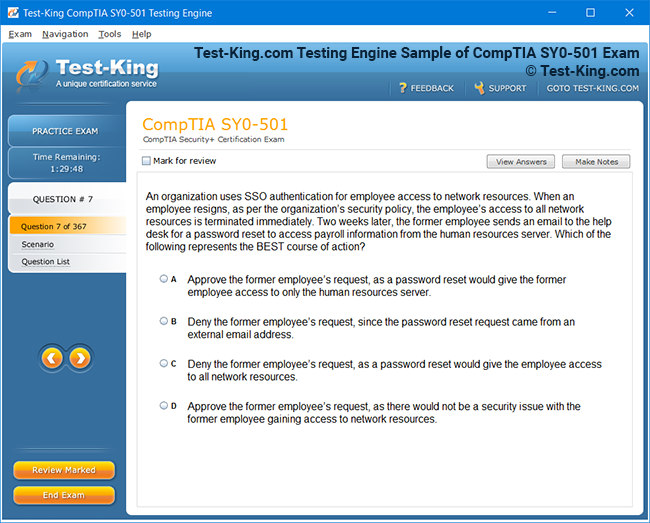
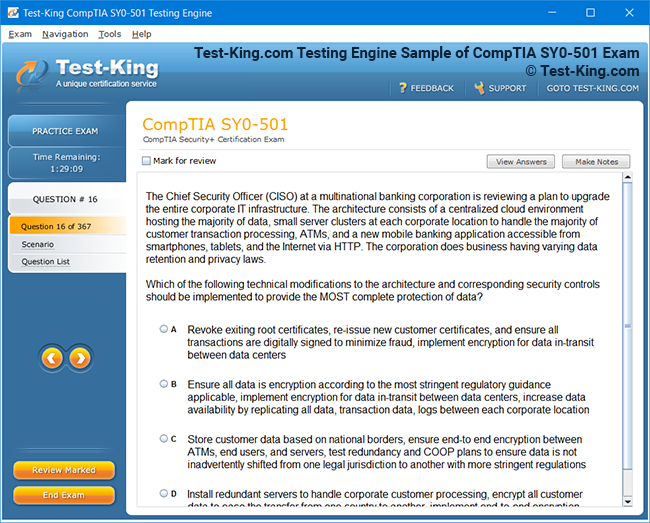
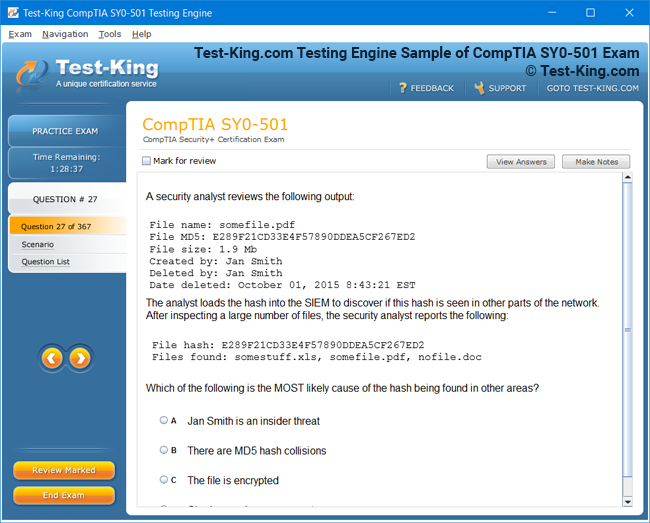
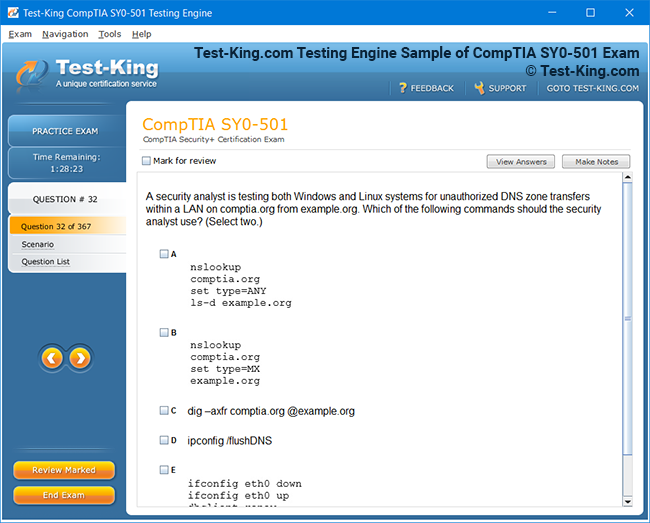
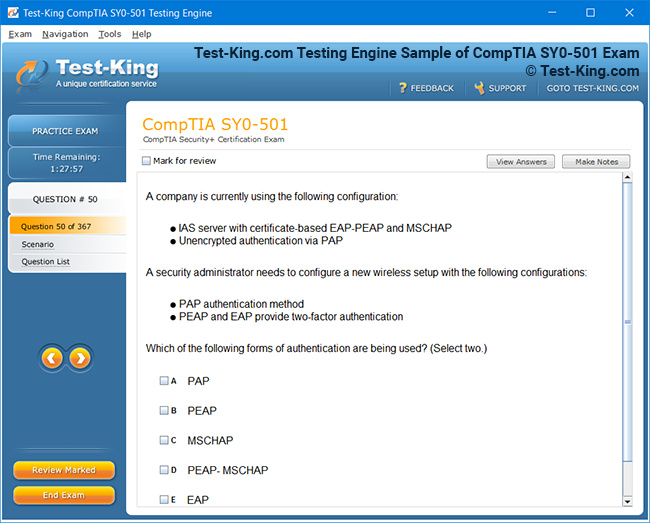
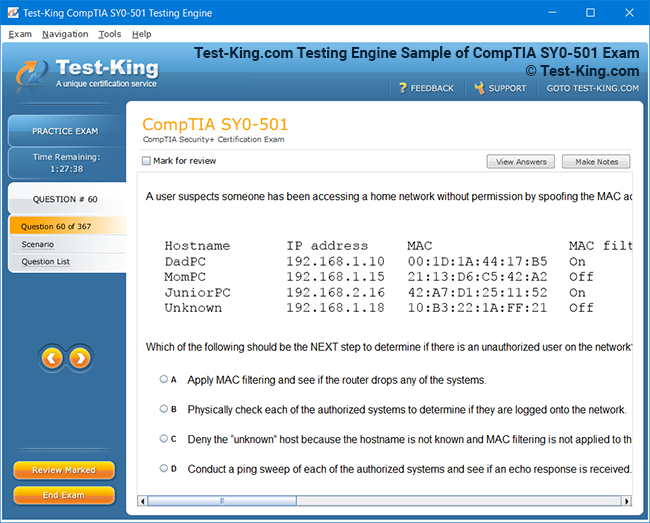
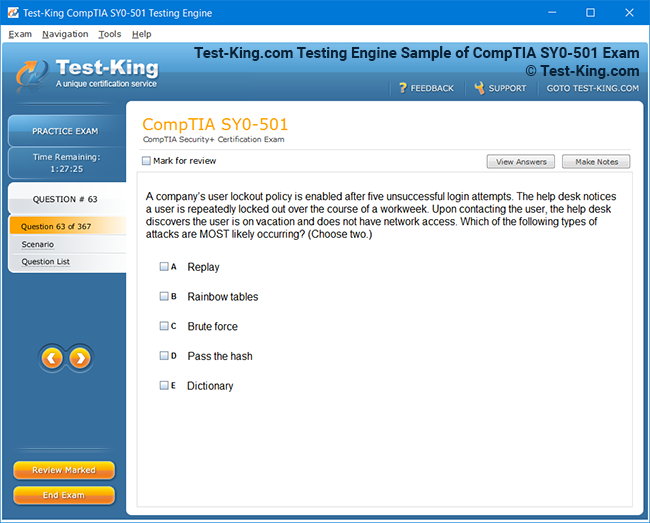
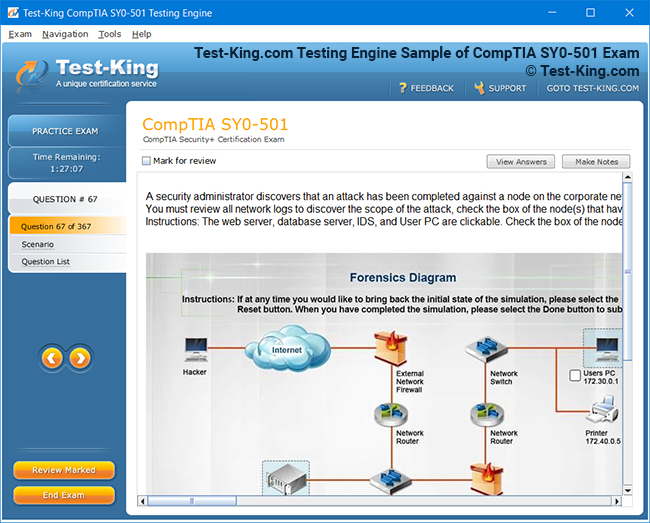
Product Screenshots
Frequently Asked Questions
How can I get the products after purchase?
All products are available for download immediately from your Member's Area. Once you have made the payment, you will be transferred to Member's Area where you can login and download the products you have purchased to your computer.
How long can I use my product? Will it be valid forever?
Test-King products have a validity of 90 days from the date of purchase. This means that any updates to the products, including but not limited to new questions, or updates and changes by our editing team, will be automatically downloaded on to computer to make sure that you get latest exam prep materials during those 90 days.
Can I renew my product if when it's expired?
Yes, when the 90 days of your product validity are over, you have the option of renewing your expired products with a 30% discount. This can be done in your Member's Area.
Please note that you will not be able to use the product after it has expired if you don't renew it.
How often are the questions updated?
We always try to provide the latest pool of questions, Updates in the questions depend on the changes in actual pool of questions by different vendors. As soon as we know about the change in the exam question pool we try our best to update the products as fast as possible.
How many computers I can download Test-King software on?
You can download the Test-King products on the maximum number of 2 (two) computers or devices. If you need to use the software on more than two machines, you can purchase this option separately. Please email support@test-king.com if you need to use more than 5 (five) computers.
What is a PDF Version?
PDF Version is a pdf document of Questions & Answers product. The document file has standart .pdf format, which can be easily read by any pdf reader application like Adobe Acrobat Reader, Foxit Reader, OpenOffice, Google Docs and many others.
Can I purchase PDF Version without the Testing Engine?
PDF Version cannot be purchased separately. It is only available as an add-on to main Question & Answer Testing Engine product.
What operating systems are supported by your Testing Engine software?
Our testing engine is supported by Windows. Andriod and IOS software is currently under development.
Top Genesys Exams
- GCP-GCX - Genesys Cloud CX Certified Professional - Consolidated
- GCX-GCD - Genesys Cloud CX: Developer
- GC-AI-DB - Genesys Cloud: AI - Digital Bots & Knowledge
- GCP-GC-ARC - Genesys Cloud Architect Certified Specialist
- GCP-GC-ADM - Genesys Cloud Certified Professional - Contact Center Admin
- GCX-WFM - Genesys Cloud CX: WEM - Workforce Management Certified Specialist
- GCP-GC-IMP - Genesys Cloud Certified Professional - Implementation
- GCP-GC-REP - Genesys Cloud Certified Professional - Reporting and Analytics
- GCX-ARC - Genesys Cloud CX: Architect
CIC-101-01 : Best Practices for Administering and Maintaining a Stable CIC Environment
Administering a stable CIC environment begins with a profound understanding of the essential components that form its backbone. At the heart of the system lies the PureConnect platform, a robust architecture designed to provide seamless interaction management across voice, chat, email, and other digital channels. The platform’s core consists of servers, databases, interaction routers, and management consoles that collectively ensure operational integrity. Recognizing the interdependence of these elements is crucial; the failure of one component can reverberate throughout the system, impacting service levels and operational efficiency. Network architecture, including redundant paths, optimized routing, and secured communication channels, plays a pivotal role in preserving stability and reliability.
Understanding the Core Components of CIC
Centralized management tools within CIC offer administrators the capability to monitor system health in real-time, observe call flows, and track user activity. Leveraging these tools effectively requires not only technical proficiency but also a strategic mindset. The deployment of monitoring dashboards and alert systems allows administrators to preemptively address anomalies before they escalate into critical incidents. This proactive approach is further reinforced by periodic system audits that examine configurations, resource utilization, and security postures. Understanding the architectural nuances of CIC, therefore, becomes a cornerstone of sustainable administration and forms the foundation upon which all subsequent best practices rest.
Optimizing User and Role Management
User and role management in a CIC environment demands meticulous attention to detail, as it directly affects system security, operational workflow, and resource allocation. Administrators must establish clear role hierarchies, assigning permissions that are aligned with organizational policies and compliance requirements. This includes defining who can access configuration settings, monitor interactions, or generate reports. Over-provisioning permissions can introduce vulnerabilities, while under-provisioning can hinder operational efficiency. Regular audits of user accounts help identify dormant or redundant users, minimizing potential security risks and ensuring that system resources are not allocated unnecessarily.
Training and documentation are indispensable components of effective user management. Every operator, supervisor, or administrator should have access to structured guidance that outlines responsibilities, system navigation, and troubleshooting protocols. By fostering a culture of informed usage, organizations reduce human errors that might compromise system stability. Moreover, leveraging automation tools for user provisioning, password resets, and access revocation streamlines administrative tasks and ensures consistency across the environment. This blend of governance, education, and automation forms a resilient framework that underpins the operational reliability of the CIC platform.
Configuration Best Practices for Sustained Performance
Configurations within CIC must be meticulously designed and maintained to support sustained performance. From server settings and database configurations to interaction routing and reporting mechanisms, each element requires careful consideration. Administrators should adopt a systematic approach, documenting configuration changes and implementing version control to track adjustments over time. This not only aids in troubleshooting but also provides a historical reference that can be invaluable during upgrades or migrations.
Interaction routing, a core component of the PureConnect environment, benefits greatly from continuous optimization. By analyzing call patterns, peak traffic periods, and agent availability, administrators can fine-tune routing algorithms to ensure balanced workloads and minimal delays. Similarly, database maintenance—including indexing, backup scheduling, and performance tuning—prevents bottlenecks that could degrade system responsiveness. Implementing redundant servers and failover strategies enhances resilience, allowing operations to continue uninterrupted during unexpected failures. Configuration management, therefore, is not a one-time effort but a continuous practice that requires vigilance, foresight, and adaptability.
Monitoring and Troubleshooting for Operational Excellence
Effective monitoring and troubleshooting are critical for maintaining a stable CIC environment. Administrators must employ a combination of automated monitoring tools and manual oversight to detect anomalies, performance degradation, or potential failures. Metrics such as server uptime, database latency, interaction queue lengths, and agent performance provide essential insights into system health. Alerts should be configured to notify administrators of deviations from normal parameters, enabling immediate intervention and minimizing service disruption.
When issues arise, a structured troubleshooting methodology enhances efficiency and accuracy. Initial steps include identifying the scope and impact of the problem, isolating affected components, and analyzing logs or system traces to uncover root causes. Communication with affected teams or users ensures that operational impact is understood and managed. In complex environments, collaboration across network, server, and application specialists may be required to resolve issues swiftly. Proactive maintenance, including regular patching, software updates, and system recalibrations, complements reactive troubleshooting by reducing the frequency and severity of potential incidents.
Security and Compliance Considerations
Security within the CIC environment is inseparable from its stability and reliability. Administrators must implement layered security measures, including secure authentication protocols, encrypted communications, and access controls tailored to organizational roles. Monitoring for unusual activity, such as unauthorized access attempts or unexpected configuration changes, adds another layer of protection. Regular vulnerability assessments, combined with timely updates, reduce the risk of exploitation that could compromise system integrity.
Compliance requirements, often dictated by industry regulations or internal governance policies, influence configuration and operational decisions. Detailed audit logs, retention policies, and access tracking provide transparency and accountability, ensuring that the system adheres to legal and operational mandates. Integrating security best practices with performance monitoring and user management creates a holistic approach that safeguards both data integrity and operational continuity. The interplay between security vigilance and system administration thus ensures a robust and resilient CIC environment.
Backup Strategies and Disaster Preparedness
Comprehensive backup strategies are indispensable for mitigating risk and ensuring business continuity in a CIC environment. Administrators should implement multi-tiered backup mechanisms, capturing data at the server, database, and configuration levels. Frequency and redundancy are critical considerations; backups must be performed regularly and stored in geographically separate locations to safeguard against localized failures. Verification of backup integrity through periodic restoration tests ensures that recovery processes are reliable and that data can be restored without loss or corruption.
Disaster preparedness extends beyond data backups to include documented recovery procedures, failover planning, and scenario-based simulations. Administrators should define recovery objectives, including acceptable downtime and data loss thresholds, and communicate these expectations across operational teams. Training staff in recovery protocols, combined with the availability of alternative operational sites or cloud-based failover options, enhances organizational resilience. By integrating preventive measures, backups, and recovery planning, CIC administrators create a safety net that preserves service continuity and operational stability even under adverse conditions.
Ensuring Optimal System Performance Through Resource Management
Maintaining a stable CIC environment necessitates meticulous resource management to prevent system strain and degradation. Administrators must monitor server CPU utilization, memory allocation, and disk I/O patterns continuously. Efficient resource allocation ensures that interaction routers, telephony servers, and database instances operate within optimal parameters, reducing the likelihood of performance bottlenecks. Overutilization of resources can lead to latency, dropped interactions, and diminished user experience, while underutilization represents a waste of computational capacity that could be redirected to improve throughput or redundancy. Periodic load analysis provides insight into peak traffic times, allowing administrators to schedule maintenance during low-demand intervals, thereby minimizing operational disruption.
Optimizing resource usage extends to database management, where indexing, query optimization, and archival policies play critical roles in preserving system responsiveness. Administrators should regularly assess the size and growth of databases, implementing archival strategies for historical interaction records. This prevents unnecessary bloating, ensuring that searches, reporting, and real-time analytics remain swift and reliable. Additionally, balancing workloads across redundant servers and distributed clusters enhances resilience, providing a buffer against unexpected spikes in traffic or localized hardware failures. By treating resource management as a proactive and continuous endeavor, administrators maintain the fluidity and responsiveness essential to a high-functioning CIC environment.
Proactive Monitoring of Interaction Flow and Call Quality
The fidelity of interactions within CIC, whether voice, chat, or email, hinges on vigilant monitoring of call quality and flow. Administrators must employ real-time dashboards to track metrics such as average handling time, queue depth, agent availability, and customer wait times. These insights allow for swift interventions, including rerouting interactions to underutilized agents or adjusting skill-based routing parameters to ensure balanced distribution. Monitoring should not be confined to superficial metrics; analyzing trends over time uncovers hidden inefficiencies, such as persistent congestion during specific hours or recurring agent overload in particular queues.
Call quality monitoring involves assessing latency, jitter, packet loss, and codec performance to maintain communication clarity and minimize dropped connections. Any degradation in these parameters can adversely affect both customer satisfaction and operational efficiency. Administrators are encouraged to conduct regular end-to-end tests, simulating diverse interaction scenarios to validate the performance of voice gateways, SIP trunks, and network paths. Integrating these insights into an ongoing optimization cycle ensures that the CIC environment remains robust and responsive, providing a seamless experience for both agents and clients.
Streamlining Change Management and System Updates
Change management represents a critical aspect of sustaining CIC stability. Every update to servers, databases, telephony configurations, or routing rules carries potential risk if not executed systematically. Administrators should adopt structured procedures for evaluating, testing, and deploying changes, incorporating rollback strategies to mitigate unintended consequences. Documentation of every modification—ranging from configuration adjustments to patch applications—serves as an invaluable reference for troubleshooting and historical analysis. A meticulous approach to change management reduces the likelihood of disruptions and ensures continuity of service.
System updates, including security patches, software upgrades, and firmware revisions, must be integrated thoughtfully into operational schedules. Testing updates in a controlled environment before production deployment prevents conflicts or performance regressions. Communication with affected teams ensures awareness of planned changes, allowing for coordinated adjustments in workflow or temporary resource allocation. Administrators should also track vendor release notes and known issue advisories, incorporating relevant insights into planning. By treating change management as both a scientific and strategic process, organizations maintain system integrity while evolving to meet emerging operational and technological requirements.
Enhancing Agent Productivity and Interaction Efficiency
Agent productivity is intrinsically linked to the stability and usability of the CIC environment. Administrators must provide intuitive interfaces, streamlined workflows, and access to real-time information to enable agents to handle interactions efficiently. Skill-based routing ensures that interactions are matched with agents most capable of resolving them, reducing escalations and improving first-contact resolution rates. Additionally, integrating knowledge management systems within the CIC environment empowers agents with relevant resources, enhancing their ability to provide accurate and timely responses.
Monitoring agent performance through dashboards and analytics provides insights into patterns that may indicate training needs, workflow inefficiencies, or systemic bottlenecks. Administrators can leverage these insights to adjust routing rules, modify queue priorities, or implement automation where repetitive tasks are identified. Furthermore, fostering collaboration between administrators and supervisors ensures that operational adjustments align with both technological capabilities and human workflows. By optimizing agent productivity, organizations reinforce the broader goal of a stable and efficient CIC environment that delivers consistent service quality.
Implementing Redundancy and Failover Mechanisms
Redundancy and failover mechanisms constitute a fundamental strategy for preserving CIC reliability. Administrators should deploy multiple instances of critical components, including telephony servers, interaction routers, and databases, across geographically diverse locations where possible. This approach safeguards against localized failures, ensuring that operations continue seamlessly even in the face of hardware or network disruptions. Load balancing and failover configurations must be meticulously tested to verify that traffic reroutes correctly and that failover triggers operate without delay or conflict.
High-availability configurations extend beyond hardware redundancy to encompass data replication, session persistence, and automated failback procedures. Administrators should conduct periodic failover drills, simulating various disaster scenarios to validate recovery processes. By integrating redundancy planning into the broader operational framework, organizations reduce the risk of prolonged downtime, preserve service levels, and maintain confidence among users and clients. The discipline of redundancy management is both preventative and reactive, ensuring that the CIC environment remains resilient under fluctuating conditions.
Maintaining Security Protocols and Regulatory Compliance
Security remains inseparable from CIC stability, requiring continuous vigilance and adaptive protocols. Administrators must enforce secure authentication measures, access control policies, and encryption protocols to protect sensitive interaction data. Monitoring for anomalous activity, such as unusual login patterns, unauthorized configuration changes, or data exfiltration attempts, reinforces the security posture. Regular audits of system permissions and activity logs are essential to identify potential vulnerabilities before they can be exploited.
Regulatory compliance mandates further influence administrative practices, encompassing data retention policies, privacy regulations, and operational transparency. Administrators must ensure that all system processes, from data storage to interaction routing, adhere to these standards, integrating audit trails and documentation practices into routine operations. Security and compliance, when embedded into the fabric of CIC administration, provide both operational stability and organizational credibility. The intersection of proactive monitoring, governance, and strategic planning ensures that the system remains protected while operating efficiently, supporting both internal stakeholders and external clients.
Leveraging Analytics and Reporting for Continuous Improvement
The use of analytics and reporting tools in CIC administration transcends basic oversight, providing actionable intelligence for operational enhancement. Administrators should analyze interaction trends, agent performance metrics, and system utilization data to identify inefficiencies and opportunities for optimization. Historical data reveals cyclical patterns, enabling predictive planning for staffing, resource allocation, and interaction routing adjustments. By transforming raw data into insights, administrators can anticipate challenges and implement solutions before they impact system stability.
Reporting also plays a pivotal role in organizational decision-making. Detailed performance metrics inform management strategies, training programs, and technology investments. Administrators should ensure that reports are accurate, timely, and aligned with operational objectives, facilitating informed decision-making across teams. By embedding analytics into daily administration practices, organizations cultivate a culture of continuous improvement, reinforcing both system stability and service excellence.
Advanced Telephony and Network Optimization
Ensuring optimal performance in a CIC environment requires a nuanced approach to telephony and network management. Administrators must maintain a meticulous overview of voice gateways, SIP trunks, and network bandwidth utilization. Voice quality can deteriorate due to packet loss, jitter, or network congestion, so continuous monitoring of these parameters is indispensable. Implementing Quality of Service policies prioritizes critical interaction traffic, ensuring clarity and stability across simultaneous communications. In addition, network segmentation and redundancy help to isolate potential points of failure, preventing localized issues from cascading into widespread disruptions.
Regular assessment of telephony endpoints, including softphones, desk phones, and mobile integrations, is essential to maintain uniform performance standards. Firmware updates, configuration consistency, and compatibility verification prevent issues that could otherwise compromise call routing or agent productivity. Administrators should also optimize codec settings, enabling efficient compression without sacrificing voice quality. Through a combination of proactive monitoring, structured network management, and strategic telephony adjustments, CIC environments achieve both stability and resilience, even under high load or complex operational conditions.
Database Integrity and Interaction Logging
The integrity of databases within a CIC environment underpins both operational continuity and reporting accuracy. Administrators must implement consistent backup routines, regular indexing, and optimization of query performance. Large volumes of interaction logs require systematic archival and pruning to prevent database bloat, which could impair system responsiveness. Structured retention policies allow historical data to be accessible for reporting and compliance without overwhelming system resources.
Interaction logging extends beyond mere recordkeeping; detailed logs of voice, chat, and email interactions provide critical insights into agent performance, customer experience, and system behavior. Administrators can leverage this data to identify recurring issues, bottlenecks, or inefficiencies. Regular audits of database integrity, including checksums, consistency validation, and restoration drills, ensure that information is reliable and recoverable. By maintaining database rigor, administrators safeguard both real-time operations and long-term strategic insights, reinforcing the reliability of the CIC environment.
Automation and Workflow Enhancement
Automation plays a pivotal role in maintaining a smooth CIC operation. Routine tasks such as user provisioning, password resets, and interaction routing adjustments can be streamlined through automated workflows, reducing human error and freeing administrative capacity for higher-value initiatives. Skill-based routing, automated callback scheduling, and predictive interaction distribution enhance both agent efficiency and customer satisfaction.
Administrators should evaluate workflow performance periodically, analyzing patterns and identifying opportunities to refine automation rules. Integrating knowledge management resources, templates, and AI-assisted responses further accelerates interaction resolution while maintaining consistency and quality. The careful deployment of automation within the CIC environment fosters operational harmony, allowing administrators to manage complex systems with minimal disruption while ensuring responsiveness to dynamic interaction volumes.
Monitoring Security Threats and Vulnerabilities
Security is inseparable from the administration of a CIC environment, and proactive monitoring of potential threats is crucial. Administrators should track unauthorized access attempts, abnormal configuration changes, and anomalous activity patterns within the system. Deploying intrusion detection mechanisms and periodic vulnerability scans ensures that weaknesses are identified before they can be exploited. Maintaining up-to-date security patches, encryption protocols, and secure authentication methods mitigates risk and preserves both operational stability and customer confidence.
Compliance with regulatory frameworks requires meticulous documentation of security measures and incident response actions. Administrators must integrate monitoring insights with procedural protocols, creating a comprehensive defense strategy. Security awareness among agents and staff reinforces technical safeguards, reducing the risk of accidental breaches. The interweaving of proactive surveillance, procedural discipline, and technical controls ensures that the CIC environment operates securely without impeding performance or usability.
Disaster Recovery and Business Continuity
Preparing for unforeseen disruptions is essential in sustaining CIC operations. Administrators must implement disaster recovery strategies that encompass data backups, redundant hardware, and geographically separated recovery sites. Recovery objectives, including maximum tolerable downtime and acceptable data loss, guide the design of these strategies. Regular testing of recovery processes ensures that failover mechanisms function correctly and that personnel are familiar with operational procedures during emergencies.
Business continuity planning extends to operational workflows, communication protocols, and interaction routing, ensuring that services remain available to clients even during critical incidents. By integrating disaster preparedness into everyday administration, organizations reduce vulnerability and maintain trust with both agents and customers. Comprehensive recovery planning, combined with structured testing and procedural clarity, transforms potential disruptions into manageable scenarios without compromising the stability of the CIC platform.
Performance Analytics and Capacity Planning
Administrators must continuously analyze system performance and anticipate future demands through rigorous capacity planning. Metrics such as agent occupancy rates, queue lengths, and interaction volumes provide insights into current system load and potential stress points. Longitudinal analysis reveals trends in usage, allowing predictive adjustments to server capacity, network bandwidth, and telephony resources. Properly executed capacity planning ensures that the system remains responsive during peak periods and scalable as organizational needs evolve.
Analytics extend beyond raw system metrics, encompassing agent behavior, customer feedback, and interaction outcomes. By integrating these insights into strategic planning, administrators can implement targeted improvements in routing logic, resource allocation, and workflow design. The judicious use of performance analytics fosters a culture of continuous optimization, maintaining a CIC environment that is resilient, efficient, and capable of adapting to shifting operational demands.
Integration and System Interoperability
Maintaining a stable CIC environment also involves careful management of integrations with third-party applications, CRM systems, and other enterprise software. Interoperability challenges, such as data synchronization errors or interface mismatches, can introduce operational inefficiencies and jeopardize system stability. Administrators must verify compatibility, monitor integration health, and perform regular updates to maintain seamless communication between systems.
Automated data flows between CIC and external systems enhance efficiency, allowing agents access to real-time customer information and facilitating streamlined reporting. Proper integration management prevents operational bottlenecks and ensures that all components of the ecosystem function harmoniously. By emphasizing interoperability and seamless integration, administrators safeguard the reliability of interactions while enabling a more cohesive organizational infrastructure.
Strategic Planning for High Availability
Ensuring the continuous availability of a CIC environment demands strategic foresight and meticulous planning. Administrators must design the system to withstand hardware failures, network interruptions, and software anomalies without compromising service continuity. Implementing high-availability clusters, redundant servers, and geographically distributed resources forms the bedrock of a resilient environment. Load balancing across multiple instances distributes traffic evenly, preventing performance degradation during peak interaction periods. These measures, combined with rigorous monitoring and proactive alerting, enable administrators to detect potential disruptions before they escalate into critical outages.
Capacity planning plays a pivotal role in sustaining high availability. By analyzing historical interaction patterns, peak volumes, and seasonal fluctuations, administrators can anticipate resource demands and implement preemptive adjustments. This proactive approach ensures that servers, databases, and telephony components maintain optimal performance, reducing the likelihood of bottlenecks and system strain. Strategic planning for availability thus intertwines operational insight, resource management, and anticipatory measures to uphold system stability and user satisfaction.
Optimizing Configuration Management
Configuration management is an essential practice for maintaining CIC stability. Administrators must document and control all system settings, from server parameters and database configurations to routing rules and agent profiles. Consistent configuration standards prevent inconsistencies that could lead to operational errors or service interruptions. Implementing version control allows administrators to track changes over time, facilitating troubleshooting and rollback if modifications introduce unforeseen issues.
Routine audits of configuration settings help identify deviations from best practices, ensuring that performance, security, and compliance requirements are consistently met. Additionally, aligning configuration changes with organizational policies and operational objectives guarantees that system adjustments support broader business goals. By treating configuration management as a disciplined, continuous process, administrators preserve the integrity and reliability of the CIC environment while supporting scalability and adaptability.
Monitoring and Maintaining System Health
Maintaining the health of a CIC environment requires a comprehensive monitoring strategy that encompasses servers, databases, telephony components, and network infrastructure. Administrators should track performance indicators such as CPU and memory utilization, database query times, queue lengths, and interaction volumes. Anomalies in these metrics can indicate potential system degradation, enabling preemptive intervention. Automated alerts complement manual oversight, notifying administrators of threshold breaches or unusual patterns in real-time.
System health monitoring also includes proactive maintenance tasks such as patch management, firmware updates, and routine system checks. By systematically applying updates and performing preventive maintenance, administrators reduce the likelihood of unexpected failures or performance issues. Monitoring logs and historical performance trends further aids in identifying recurring problems and guiding optimization efforts. A structured approach to system health ensures that the CIC environment remains stable, responsive, and capable of supporting complex operational demands.
Enhancing Security and Access Control
Security is intrinsic to the stability of a CIC environment, requiring vigilant administration and adaptive measures. Administrators must enforce robust authentication protocols, manage role-based access, and encrypt sensitive communications to safeguard data integrity. Monitoring access logs for unusual activity provides early detection of potential breaches, while periodic reviews of permissions prevent privilege creep and minimize risk. Security measures must be integrated seamlessly with daily operations, ensuring that protective protocols do not hinder performance or user efficiency.
Compliance with regulatory requirements and organizational policies reinforces both security and operational reliability. Administrators should maintain detailed records of system access, configuration changes, and incident responses, providing transparency and accountability. Training agents and staff on security best practices enhances the human component of system protection, reducing the likelihood of inadvertent vulnerabilities. By embedding security into the core of CIC administration, organizations fortify both system stability and user confidence.
Interaction Routing and Queue Optimization
The efficiency of interaction handling in a CIC environment depends on intelligent routing and queue management. Administrators must design routing strategies that distribute interactions based on agent skills, availability, and priority levels. Skill-based routing ensures that inquiries are addressed by agents best equipped to provide timely and accurate resolutions, reducing escalations and improving customer satisfaction. Queue optimization involves balancing workloads, minimizing wait times, and ensuring equitable distribution of interactions to prevent agent fatigue.
Continuous analysis of interaction patterns, peak load periods, and agent performance informs adjustments to routing rules and queue configurations. Administrators can implement dynamic routing adjustments, automated callbacks, and overflow mechanisms to maintain operational fluidity. By optimizing the flow of interactions, the CIC environment remains responsive, efficient, and capable of adapting to fluctuating demand without compromising service quality.
Data Backup and Recovery Practices
Robust data backup and recovery strategies are fundamental to sustaining CIC operations. Administrators should implement multi-layered backups, capturing system configurations, databases, and interaction histories at regular intervals. Redundant storage locations, including offsite or cloud-based repositories, protect against localized failures. Verification of backup integrity through periodic restoration tests ensures that recovery processes are reliable and that critical data remains accessible.
Disaster recovery planning extends beyond backups to include documented recovery procedures, failover mechanisms, and staff preparedness. Simulating various failure scenarios allows administrators to evaluate recovery efficiency, identify gaps, and refine processes. Clear recovery objectives, including maximum allowable downtime and data loss thresholds, guide operational decisions and prioritize critical resources. By integrating backup strategies with proactive recovery planning, administrators safeguard the CIC environment against disruptions while maintaining operational continuity.
Leveraging Analytics for Continuous Improvement
Analytics and reporting provide administrators with insights that drive continuous improvement in CIC operations. Monitoring key metrics such as agent performance, interaction resolution rates, queue dynamics, and system resource utilization reveals trends and potential areas for enhancement. Historical data analysis enables predictive planning, allowing administrators to anticipate capacity needs, optimize routing strategies, and refine workflows before issues arise.
Reports and analytics also support strategic decision-making, informing training programs, operational policies, and technology investments. Administrators can identify recurring bottlenecks, assess the effectiveness of automation, and adjust system parameters to maximize efficiency. By integrating analytical insights into daily administration, organizations cultivate an environment of ongoing refinement, ensuring that the CIC platform evolves in alignment with both operational demands and organizational goals.
Proactive System Maintenance and Patch Management
Maintaining a stable CIC environment demands diligent system maintenance and the careful application of software patches. Administrators must track updates from vendors, assessing their relevance and potential impact on operational stability before deployment. Patches addressing security vulnerabilities, performance enhancements, or compatibility improvements should be tested in a controlled environment to ensure they do not introduce unforeseen issues. Scheduling maintenance during periods of low interaction volume minimizes disruption and allows administrators to monitor system behavior post-implementation. Consistent documentation of applied updates provides a historical record that supports troubleshooting and informs future maintenance planning.
Preventive maintenance extends beyond patching, encompassing routine checks of servers, telephony gateways, databases, and network components. Disk integrity verification, memory diagnostics, and database optimization routines reduce the risk of hardware or software failure. Administrators should also monitor system logs for early signs of degradation, such as increased latency, error messages, or unusual traffic patterns. By approaching system maintenance as a continuous and proactive process, CIC administrators safeguard both performance and operational continuity, ensuring that the platform remains resilient under fluctuating workloads.
Efficient Resource Allocation and Load Balancing
Resource allocation is a critical element in maintaining a responsive CIC environment. Administrators must monitor CPU usage, memory consumption, network bandwidth, and storage utilization across servers and virtual instances. Imbalances in resource allocation can result in performance bottlenecks, dropped interactions, or degraded agent experience. Implementing load balancing across multiple servers ensures even distribution of traffic, preventing any single node from becoming overwhelmed. Dynamic adjustment of resource allocation based on real-time monitoring allows administrators to respond swiftly to unexpected surges in interaction volume.
Database performance and telephony traffic also benefit from strategic resource planning. Administrators should optimize queries, implement indexing strategies, and ensure sufficient bandwidth for voice and data transmissions. Redundant infrastructure and failover mechanisms provide additional support during periods of high demand or unexpected failures. By combining real-time monitoring with proactive load management, the CIC environment maintains consistent performance and mitigates the risk of service degradation.
Enhancing Agent Performance and Interaction Efficiency
The effectiveness of a CIC environment is closely tied to agent performance and the efficiency of interaction handling. Administrators should provide agents with streamlined interfaces, intuitive navigation, and access to relevant knowledge resources. Skill-based routing ensures that interactions are directed to agents with the expertise to resolve inquiries quickly and accurately, reducing escalations and improving first-contact resolution. Supervisors can monitor agent performance through analytics and dashboards, identifying patterns that indicate training needs, workflow inefficiencies, or recurring issues.
Automation and workflow integration further enhance agent efficiency. Routine tasks such as follow-up communications, callback scheduling, and status updates can be automated to reduce manual effort. Administrators should periodically evaluate workflows, making adjustments based on observed patterns, agent feedback, and operational metrics. By focusing on both human performance and process optimization, the CIC environment sustains high-quality interactions while reducing operational friction and ensuring consistent customer experiences.
Continuous Monitoring and Issue Detection
Continuous monitoring is essential for maintaining the operational integrity of a CIC environment. Administrators must track server performance, database activity, telephony metrics, and network health to identify potential issues before they escalate. Automated alerts can notify administrators of abnormal conditions, such as high CPU utilization, increased queue lengths, or dropped interactions. Regular review of logs, combined with historical trend analysis, enables the early detection of recurring problems and the implementation of preventive measures.
Monitoring extends to the quality of customer interactions, including voice clarity, chat responsiveness, and email delivery. Latency, jitter, and packet loss should be tracked and addressed to maintain consistent communication standards. Interaction analytics provide insights into agent performance, customer satisfaction, and system efficiency, informing adjustments to workflows, routing rules, and resource allocation. By maintaining a vigilant monitoring regime, administrators ensure that the CIC environment remains stable, reliable, and capable of adapting to evolving operational demands.
Security and Compliance Management
Security and regulatory compliance are fundamental to CIC stability. Administrators must enforce role-based access, secure authentication, and encrypted communications to protect sensitive data. Monitoring for unusual activity, unauthorized changes, and potential breaches enables early intervention and risk mitigation. Security policies should be integrated seamlessly with operational procedures, ensuring protection without impeding performance or user efficiency.
Compliance requirements, including data retention, privacy regulations, and industry standards, influence system configuration and operational practices. Administrators must maintain detailed records of access, changes, and incident responses, ensuring accountability and transparency. Training staff on security protocols and compliance obligations reinforces protective measures, reducing the likelihood of human error. Integrating security and compliance into routine administration strengthens the resilience of the CIC environment while maintaining organizational credibility.
Backup Strategies and Disaster Recovery Planning
Comprehensive backup and disaster recovery planning safeguard the CIC environment against data loss and operational disruptions. Administrators should implement multi-level backup strategies, capturing configuration settings, databases, and interaction histories. Offsite or cloud-based storage adds redundancy, protecting against localized failures. Regular verification of backup integrity through restoration tests ensures that recovery procedures function reliably.
Disaster recovery plans should include documented procedures, failover configurations, and clearly defined recovery objectives, such as maximum acceptable downtime and data loss thresholds. Periodic simulations of disaster scenarios allow administrators to evaluate recovery readiness, identify gaps, and refine protocols. By integrating backup strategies with proactive recovery planning, the CIC environment can maintain continuity, mitigate risks, and ensure that operations remain stable under adverse conditions.
Leveraging Data Analytics for Operational Excellence
Data analytics provide administrators with actionable insights to optimize CIC operations. Monitoring key performance indicators, such as queue lengths, agent occupancy, interaction resolution rates, and system utilization, reveals trends and inefficiencies that can be addressed proactively. Historical analysis enables predictive planning, allowing administrators to adjust routing strategies, resource allocation, and staffing levels in anticipation of fluctuating demand.
Analytics also inform decision-making related to training, workflow design, and technology enhancements. By integrating data-driven insights into daily administration, organizations foster a culture of continuous improvement, enhancing both operational efficiency and customer experience. Administrators can identify recurring challenges, optimize system performance, and align operational practices with organizational goals, ensuring that the CIC environment evolves in a sustainable and effective manner.
Advanced Performance Tuning and System Optimization
Maintaining a stable CIC environment relies heavily on the continual refinement of system performance. Administrators must conduct periodic performance assessments across servers, databases, telephony interfaces, and network infrastructure to ensure operational efficiency. Metrics such as CPU utilization, memory consumption, database query times, and interaction queue lengths offer insights into system health. Identifying performance bottlenecks allows administrators to implement corrective measures, such as optimizing query structures, adjusting memory allocations, or balancing workloads across redundant servers.
Advanced tuning also encompasses telephony optimization, including codec selection, voice gateway calibration, and prioritization of critical interaction traffic through Quality of Service protocols. Interaction routing algorithms should be continually refined to account for skill sets, agent availability, and customer priority. By combining detailed performance monitoring with proactive tuning strategies, administrators create an environment that remains responsive even under peak demand, minimizing delays, dropped interactions, and agent frustration.
Interaction Flow Management and Routing Efficiency
The efficiency of interaction flow is a cornerstone of a stable CIC platform. Administrators should design routing strategies that dynamically adapt to changing operational conditions. Skill-based routing ensures that customer inquiries are directed to agents with the most relevant expertise, enhancing first-contact resolution rates and reducing escalations. Queue management techniques, such as overflow routing, callback scheduling, and priority handling, further maintain equilibrium between agent workloads and customer expectations.
Continuous analysis of interaction patterns provides critical insights for optimizing routing decisions. Administrators should evaluate peak periods, recurring bottlenecks, and queue dynamics, adjusting routing rules as necessary. Effective interaction flow management balances customer experience with agent efficiency, ensuring that the CIC environment operates smoothly while meeting organizational service objectives.
Security Vigilance and Risk Mitigation
Security is integral to both system stability and operational credibility. Administrators must implement layered security measures, including encrypted communications, secure authentication, and role-based access controls, to protect sensitive data. Proactive monitoring for unusual activity, configuration changes, or unauthorized access attempts enables early intervention before issues escalate. Periodic vulnerability assessments, coupled with timely application of security patches, reduce the risk of exploitation and maintain system integrity.
Compliance with regulatory standards and internal policies reinforces the importance of security in daily administration. Detailed audit logs, activity tracking, and incident documentation provide accountability and facilitate governance. Training agents and staff on security awareness complements technical safeguards, minimizing the potential for human error. Integrating security and compliance into routine operations preserves both the stability and trustworthiness of the CIC environment.
Backup, Recovery, and Disaster Preparedness
Comprehensive backup and disaster recovery planning safeguard the CIC platform against unforeseen disruptions. Administrators must establish multi-layered backup routines covering databases, system configurations, and interaction histories, with redundancy achieved through offsite or cloud-based storage. Periodic testing of backups and restoration processes ensures that recovery operations are reliable and that critical data remains accessible when required.
Disaster preparedness also encompasses clearly defined recovery objectives, failover strategies, and procedural documentation. Simulated scenarios allow administrators to evaluate the effectiveness of recovery mechanisms and refine processes accordingly. Coordination among operational teams ensures that responsibilities are understood and that services can continue with minimal interruption. By integrating robust backup and disaster recovery practices, organizations preserve service continuity and mitigate the operational impact of unexpected events.
Analytics, Reporting, and Continuous Improvement
Data analytics and reporting are essential tools for enhancing CIC performance and supporting strategic decisions. Administrators should monitor agent performance, queue dynamics, interaction resolution times, and system resource utilization to identify patterns and optimize operations. Historical data provides predictive insights, enabling proactive adjustments to staffing, routing, and resource allocation.
Reports generated from analytics facilitate organizational decision-making, guiding training initiatives, workflow redesigns, and technological investments. Administrators can identify inefficiencies, assess the effectiveness of automation, and refine system parameters to improve overall performance. Embedding analytics into everyday administration fosters a culture of continuous improvement, ensuring that the CIC environment remains adaptive, efficient, and aligned with evolving operational needs.
Automation and Workflow Optimization
Automation enhances both efficiency and stability within a CIC environment. Administrators should implement automated routines for user provisioning, password management, routing adjustments, and repetitive task execution. Automation reduces the likelihood of human error, frees administrative capacity, and allows for more consistent operational execution. Workflow optimization involves evaluating interaction processes, identifying bottlenecks, and implementing adjustments that improve efficiency without compromising service quality.
Knowledge management systems, integrated templates, and AI-assisted tools further support agents, enabling faster resolution of inquiries and a more consistent customer experience. By leveraging automation and optimized workflows, administrators ensure that both system performance and human productivity are maximized, creating a resilient operational environment.
Proactive Monitoring and System Health
Sustaining a stable CIC environment requires vigilant monitoring across all system components. Administrators should track performance indicators for servers, telephony interfaces, network connections, and databases, as well as agent activity and customer interaction metrics. Automated alerts combined with manual oversight enable rapid detection and resolution of emerging issues.
System health checks, including log analysis, error monitoring, and routine inspections, prevent minor anomalies from escalating into operational disruptions. Proactive maintenance, such as applying updates, calibrating telephony components, and adjusting server configurations, reinforces system reliability. Through vigilant monitoring and intervention, administrators maintain a CIC environment capable of delivering consistent, high-quality service even under complex operational demands.
Conclusion
Administering and maintaining a stable CIC environment requires a multifaceted approach that combines performance optimization, interaction flow management, security vigilance, and disaster preparedness. Proactive monitoring, data-driven decision-making, and structured maintenance routines ensure that the system remains responsive, resilient, and efficient. By integrating automation, workflow optimization, and strategic resource allocation, administrators can enhance both operational stability and agent productivity. Security and compliance measures safeguard data integrity, while robust backup and recovery practices provide protection against unforeseen disruptions. Continuous analysis of metrics and system performance fosters a culture of improvement, allowing the CIC platform to evolve in alignment with organizational objectives. Together, these practices establish a CIC environment that delivers reliable, high-quality interactions, supports scalable operations, and maintains the trust of both agents and clients.