

Exam Code: EX0-008
Exam Name: Agile Scrum Foundation
Certification Provider: Exin
Corresponding Certification: EXIN Agile Scrum Foundation
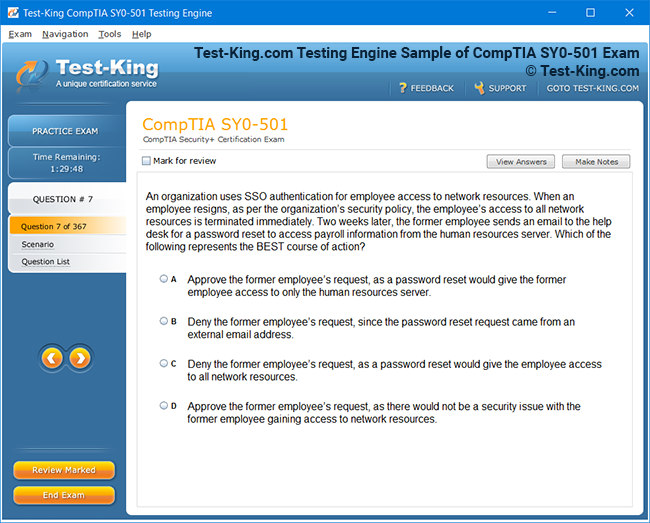
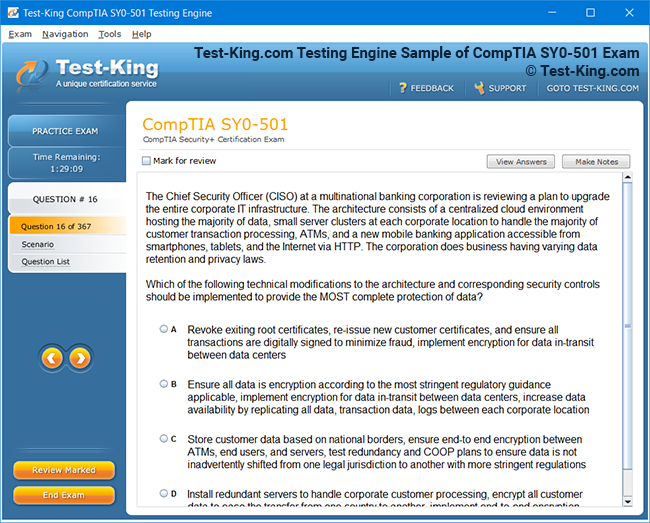
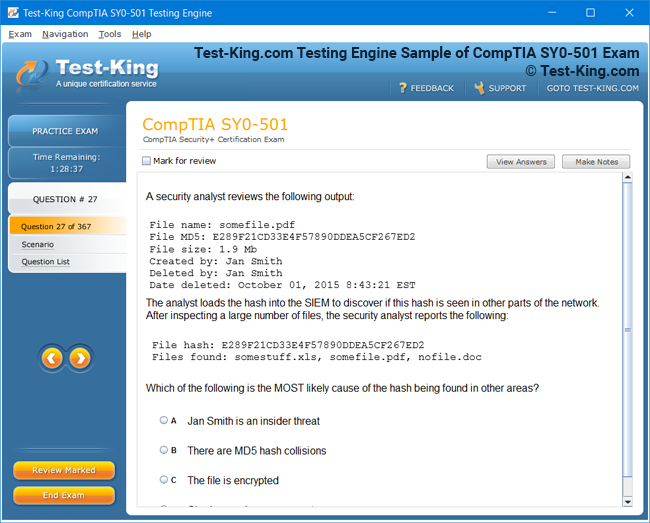
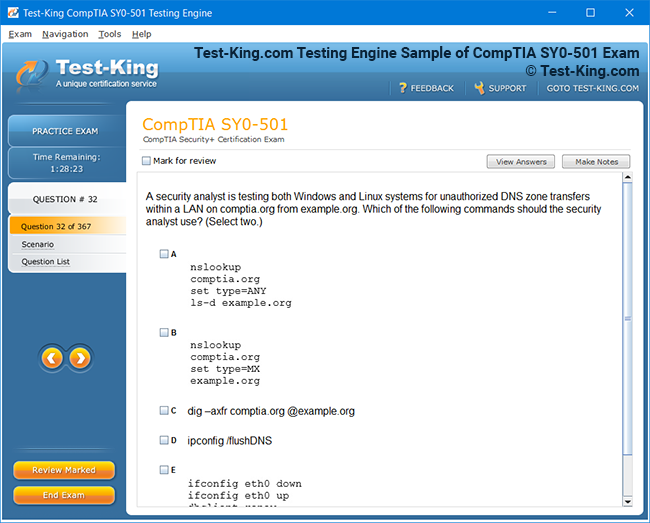
Product Screenshots
Frequently Asked Questions
How can I get the products after purchase?
All products are available for download immediately from your Member's Area. Once you have made the payment, you will be transferred to Member's Area where you can login and download the products you have purchased to your computer.
How long can I use my product? Will it be valid forever?
Test-King products have a validity of 90 days from the date of purchase. This means that any updates to the products, including but not limited to new questions, or updates and changes by our editing team, will be automatically downloaded on to computer to make sure that you get latest exam prep materials during those 90 days.
Can I renew my product if when it's expired?
Yes, when the 90 days of your product validity are over, you have the option of renewing your expired products with a 30% discount. This can be done in your Member's Area.
Please note that you will not be able to use the product after it has expired if you don't renew it.
How often are the questions updated?
We always try to provide the latest pool of questions, Updates in the questions depend on the changes in actual pool of questions by different vendors. As soon as we know about the change in the exam question pool we try our best to update the products as fast as possible.
How many computers I can download Test-King software on?
You can download the Test-King products on the maximum number of 2 (two) computers or devices. If you need to use the software on more than two machines, you can purchase this option separately. Please email support@test-king.com if you need to use more than 5 (five) computers.
What is a PDF Version?
PDF Version is a pdf document of Questions & Answers product. The document file has standart .pdf format, which can be easily read by any pdf reader application like Adobe Acrobat Reader, Foxit Reader, OpenOffice, Google Docs and many others.
Can I purchase PDF Version without the Testing Engine?
PDF Version cannot be purchased separately. It is only available as an add-on to main Question & Answer Testing Engine product.
What operating systems are supported by your Testing Engine software?
Our testing engine is supported by Windows. Andriod and IOS software is currently under development.
Top Exin Exams
Common Mistakes to Avoid on the EX0-008 Agile Scrum Foundation Exam – How to Improve Your Passing Chances
One of the most frequent pitfalls for candidates attempting the EXIN Agile Scrum Foundation certification is a superficial comprehension of the Scrum framework. Agile is a philosophy that prioritizes adaptability, collaboration, and incremental delivery, yet many aspirants mistakenly equate it solely with rigid processes. Scrum is not a prescriptive methodology but a framework designed to facilitate agility within complex projects. Candidates often err by memorizing definitions and events without grasping their practical implications in real-world scenarios. For instance, understanding the purpose of a sprint retrospective extends beyond reciting its definition; it is about recognizing its role in fostering continuous improvement and nurturing a culture of transparency. Neglecting this nuance can cause confusion when faced with scenario-based questions on the EX0-008 exam.
Misunderstanding the Scrum Framework and Its Principles
Additionally, failing to differentiate between Scrum roles can lead to erroneous answers. Many learners conflate the responsibilities of a Scrum Master, Product Owner, and development team. The Scrum Master serves as a facilitator, ensuring that the team adheres to Agile principles, whereas the Product Owner prioritizes backlog items based on value and stakeholder input. Misidentifying these roles during an exam scenario can result in misapplied concepts. Candidates must internalize the fluid yet structured nature of Scrum events, artifacts, and roles rather than relying solely on rote memorization. Doing so cultivates a more profound comprehension, enhancing both exam performance and practical application in project environments.
Neglecting the Importance of Scrum Artifacts
Another common misstep involves underestimating the significance of Scrum artifacts such as the product backlog, sprint backlog, and increment. These artifacts are not mere documentation; they are living tools that guide transparency, inspection, and adaptation throughout the development process. Candidates frequently fail to understand the iterative evolution of these artifacts, leading to errors on questions regarding backlog refinement or increment definition. For example, the product backlog is dynamic and continually evolving, influenced by stakeholder feedback and changing priorities. Misconstruing it as a static list of tasks undermines the essence of Agile thinking.
Furthermore, the sprint backlog is more than a collection of tasks assigned to team members. It represents the team’s commitment to deliver a specific increment within the sprint duration, highlighting the interdependence between planning, execution, and accountability. The increment itself is a tangible, potentially shippable product portion, embodying value at the end of each sprint. Candidates who overlook these subtleties may misinterpret scenario-based questions on the EX0-008 exam, particularly those requiring discernment between different artifact purposes. Developing an intimate understanding of how each artifact serves the team’s iterative progress is essential for avoiding these common mistakes.
Misjudging Timeboxing and Event Dynamics
Timeboxing is a concept central to Scrum, yet many learners underestimate its impact on productivity and rhythm within Agile projects. Each event—whether it is sprint planning, daily scrum, sprint review, or retrospective—has a prescribed duration intended to create focus and prevent wasted effort. Candidates often falter by either overestimating or underestimating the role of timeboxing, leading to incorrect responses in exam questions concerning event management. For instance, a daily scrum is a 15-minute opportunity for the team to synchronize activities, not a forum for detailed problem-solving. Misinterpreting this can reflect a fundamental misunderstanding of Agile philosophy, which emphasizes efficiency and minimal bureaucracy.
Moreover, some aspirants misjudge the sequential dynamics of events. Sprint planning sets the foundation for the sprint, while the review assesses progress and the retrospective instigates improvement. Interchanging these processes or failing to appreciate their iterative feedback loop can produce flawed reasoning when answering scenario-based questions. Embracing the concept of timeboxing as a mechanism for maintaining cadence and fostering accountability ensures candidates are better equipped for nuanced EX0-008 questions.
Overlooking the Significance of Agile Values and Mindset
A frequent mistake among candidates is focusing excessively on processes while neglecting the underlying Agile values. Scrum is deeply rooted in the Agile Manifesto, which emphasizes individuals and interactions, working solutions, customer collaboration, and responsiveness to change. Memorizing events and roles without internalizing these values may lead to superficial understanding and errors in situational judgment questions on the EX0-008 exam. For example, a scenario may present conflicting stakeholder priorities, and the candidate must determine the most appropriate course of action guided by Agile principles. Without an ingrained Agile mindset, one might choose options that adhere to process superficially but ignore the spirit of collaboration and adaptability.
Candidates must also recognize the importance of servant leadership embodied by the Scrum Master and the collective responsibility of the team. Agile encourages psychological safety, self-organization, and iterative learning, concepts that are less tangible but crucial for answering situational and applied questions accurately. Overlooking these facets can hinder both exam success and practical effectiveness in real-world Scrum implementations.
Misinterpreting Question Contexts and Scenarios
Many aspirants fail the EX0-008 exam due to inattentive reading or misinterpretation of scenario-based questions. Unlike multiple-choice questions that test factual recall, scenario questions assess applied understanding, requiring candidates to synthesize knowledge about roles, artifacts, events, and values. A common error is selecting the first plausible answer without considering the full context or subtle wording differences, which often include terms such as “should,” “may,” or “must,” affecting the correct choice.
Additionally, some learners impose real-world experiences onto the exam scenarios without accounting for the standardized Scrum principles defined by EXIN. While practical experience is invaluable, assuming flexibility beyond the Scrum Guide’s scope can result in misaligned answers. The key to mitigating this mistake is careful reading, contextual analysis, and cross-referencing answers against core Scrum principles rather than anecdotal practices. Candidates who cultivate this disciplined approach often achieve higher accuracy and confidence on the EX0-008 exam.
Insufficient Practice with Sample Questions and Simulations
A critical mistake involves underestimating the importance of extensive practice with sample questions and mock simulations. The Agile Scrum Foundation exam tests not only theoretical understanding but also the ability to apply concepts in varied contexts. Candidates who neglect practice often find themselves unprepared for nuanced questions, especially those that interweave multiple Scrum elements. Practicing with scenario-based questions familiarizes candidates with the exam’s cognitive demands and highlights areas needing reinforcement, such as distinguishing between product backlog grooming and sprint planning or differentiating the role of a Scrum Master from that of a facilitator.
Furthermore, the habit of self-assessment through timed simulations cultivates both speed and accuracy. Many candidates answer too hastily due to nervousness or time pressure, leading to avoidable mistakes. Engaging with practice questions enhances familiarity with the exam format, sharpens analytical thinking, and instills confidence. The interplay between diligent preparation, iterative self-evaluation, and reflective learning is indispensable for anyone seeking EXIN certification through the EX0-008 Agile Scrum Foundation exam.
Misaligning Theory with Practical Application
Another subtle error arises when candidates know theoretical definitions but fail to connect them to practical scenarios. The EX0-008 exam often presents questions where knowledge of Scrum terminology alone is insufficient; understanding how artifacts, events, and roles manifest in practice is critical. For instance, knowing that a sprint review is an event for inspecting the increment is useful, but grasping that it also involves collaboration with stakeholders and adjustment of the product backlog demonstrates deeper comprehension. Candidates who neglect this integration often choose technically correct but contextually inappropriate answers, reducing their overall score.
It is therefore crucial to cultivate a mindset that bridges theory and practice. Engaging in real or simulated Scrum projects, participating in retrospectives, or shadowing Scrum Masters can provide the experiential grounding necessary to navigate complex exam scenarios. This approach not only improves EX0-008 outcomes but also equips candidates with tangible skills for their professional growth, highlighting the intrinsic value of the Agile Scrum Foundation certification beyond mere examination success.
Underestimating the Value of Clear Communication
Effective communication is a linchpin of Scrum, yet many learners underestimate its significance when preparing for the EX0-008 exam. Clear articulation of backlog priorities, incremental progress, and impediments is crucial for practical Scrum environments and for interpreting exam questions accurately. Misreading a question due to convoluted phrasing or overcomplicating an answer because of assumed nuances can lead to simple mistakes. Candidates must practice distilling complex scenarios into clear, concise reasoning to ensure their answers align with Scrum principles.
In addition, understanding the collaborative essence of Scrum reinforces exam comprehension. The ability to interpret stakeholder needs, facilitate team discussions, and appreciate nuanced perspectives enhances the capacity to respond accurately to scenario-based questions. Communication, both in preparation and conceptual understanding, serves as a bridge between theoretical knowledge and applied expertise, mitigating common pitfalls during the EX0-008 Agile Scrum Foundation exam.
Cognitive Biases and Overconfidence
Overconfidence is an insidious mistake that affects many candidates. Assuming that prior project management experience or familiarity with Agile concepts guarantees success on the EX0-008 exam often results in overlooked details and minor errors that compound. Cognitive biases, such as anchoring on familiar concepts or prematurely dismissing unfamiliar questions, can skew judgment. Candidates must remain vigilant, approach each question objectively, and resist the temptation to rely solely on intuition.
Mindful practice, deliberate reflection on mistakes, and iterative learning are antidotes to overconfidence. By acknowledging gaps in understanding and embracing continuous improvement—a core Scrum tenet—aspirants can enhance both their exam strategy and long-term Agile competence. Recognizing the subtle ways cognitive biases manifest during preparation and testing is an advanced strategy that distinguishes successful candidates from those who falter despite superficial familiarity with Scrum concepts.
Misunderstanding the Role of the Product Owner
A recurring mistake among candidates pursuing EXIN Agile Scrum Foundation certification is misunderstanding the role of the Product Owner. This role is not simply a managerial position that dictates tasks to the development team; it is a steward of value, responsible for maximizing the return on investment through the product backlog. Many aspirants mistakenly assume that the Product Owner has authority over team operations, which can lead to incorrect answers on scenario-based questions of the EX0-008 exam. The Product Owner collaborates closely with stakeholders, gathers requirements, and prioritizes backlog items based on their strategic value. This requires a delicate balance between stakeholder expectations and the team’s capacity, highlighting the importance of negotiation and foresight. Candidates who internalize this nuanced responsibility are better prepared to discern correct responses in exam contexts that assess both knowledge and judgment.
Furthermore, some candidates confuse backlog refinement with sprint planning, attributing the task of detailed breakdown to the wrong event. Backlog refinement is an ongoing activity that ensures backlog items are sufficiently detailed and prioritized for upcoming sprints, whereas sprint planning determines the immediate commitments for the sprint. Misinterpreting this distinction can lead to flawed reasoning in EX0-008 questions and reflects a superficial understanding of Scrum events and artifacts. Emphasizing the Product Owner’s strategic role rather than administrative oversight helps avoid these errors and enhances exam performance.
Confusing Scrum Master Responsibilities
Another prevalent error involves misinterpreting the responsibilities of the Scrum Master. This role is often conflated with traditional project management, leading candidates to overestimate authority over task assignment or team performance evaluation. In reality, the Scrum Master acts as a servant leader and facilitator, removing impediments, coaching the team, and ensuring adherence to Scrum principles. Mistaking this role for a directive function not only jeopardizes correct answers on the EX0-008 exam but also undermines the foundational principles of Agile practice. Candidates must understand that the Scrum Master is instrumental in cultivating self-organization and creating an environment conducive to iterative improvement rather than controlling execution.
Many aspirants also fail to appreciate the Scrum Master’s involvement in fostering collaboration and communication. This role requires keen observation, empathy, and the ability to mediate conflicts, ensuring that all team members are empowered to contribute effectively. Misjudging the scope of these responsibilities can result in selecting choices that appear correct superficially but violate the spirit of Scrum. Understanding the Scrum Master as a linchpin of process facilitation rather than authority equips candidates to navigate nuanced EX0-008 questions accurately.
Neglecting the Concept of Incremental Delivery
Incremental delivery is a core principle of Scrum that many candidates overlook. Some assume that project success is measured solely by the final product rather than by successive, potentially shippable increments. This misunderstanding can lead to errors when answering questions that emphasize the iterative nature of Scrum. Each increment represents tangible progress, offering the opportunity for inspection, adaptation, and feedback. Candidates who fail to recognize this iterative paradigm often misinterpret questions about sprint outcomes, backlog updates, or stakeholder involvement, thereby lowering their exam performance.
Additionally, understanding that increments must meet the definition of done is crucial. Candidates frequently confuse partially completed work with an increment, failing to appreciate that quality and readiness are non-negotiable attributes. This subtle distinction is tested in EX0-008 scenarios that require discernment between aspirational progress and concrete deliverables. Internalizing the incremental mindset strengthens both conceptual clarity and practical readiness for Agile projects, reinforcing the value of the Agile Scrum Foundation certification.
Misapprehending Daily Scrum Dynamics
The daily scrum, often viewed superficially as a status meeting, is another area prone to misunderstanding. Many aspirants mistakenly assume it is a forum for problem-solving or micromanaging team tasks, leading to incorrect interpretations on the EX0-008 exam. In reality, the daily scrum is a 15-minute event designed to synchronize activities, identify impediments, and maintain focus on the sprint goal. Candidates must comprehend that it is a collaborative inspection tool rather than a managerial checkpoint. Misreading this purpose can result in flawed answers, particularly in scenario questions where the correct approach involves guiding the team toward self-organization and visibility of progress.
Some candidates also misjudge the level of participation required during daily scrums. Each team member is expected to share insights about progress, upcoming tasks, and obstacles without descending into exhaustive reporting. Overcomplicating the process or assuming hierarchical reporting can produce misconceptions in exam responses. By grasping the essence of the daily scrum as a compact, interactive synchronization event, candidates can avoid common pitfalls on the EX0-008 Agile Scrum Foundation exam and enhance their applied understanding of Scrum dynamics.
Overlooking Sprint Planning Essentials
A frequent source of error lies in underestimating the intricacies of sprint planning. Some candidates believe it is merely a task assignment session, overlooking its strategic nature. Sprint planning serves to establish a sprint goal, select backlog items for the sprint, and collaboratively plan how the team will achieve these commitments. Ignoring the dual focus on what will be delivered and how it will be accomplished often results in incorrect answers during scenario-based questions. Candidates must appreciate that sprint planning is both a tactical and collaborative activity that fosters commitment, alignment, and transparency within the team.
Furthermore, failing to recognize the iterative refinement embedded within sprint planning is a common misstep. While backlog refinement prepares items for selection, sprint planning finalizes the commitment and defines tasks in alignment with capacity and dependencies. Confusing these events can lead to flawed reasoning when choosing options on the EX0-008 exam. Candidates who internalize these subtleties understand that sprint planning is a cornerstone of predictable and iterative delivery, reinforcing their ability to respond correctly to nuanced questions.
Misjudging Retrospective Significance
The sprint retrospective is often undervalued, with candidates perceiving it as a perfunctory exercise rather than a critical opportunity for continuous improvement. Misinterpreting its purpose can result in choosing exam answers that emphasize administrative reporting or blame allocation rather than fostering reflection, learning, and actionable change. A retrospective enables the team to evaluate processes, identify impediments, and implement enhancements in subsequent sprints. Candidates who appreciate its transformative potential are better equipped to answer EX0-008 questions involving iterative feedback loops, team dynamics, or process refinement.
Additionally, some aspirants overlook the importance of psychological safety during retrospectives. The Scrum Master’s facilitation role ensures that team members feel secure to express concerns, propose solutions, and collaborate openly. Misjudging this aspect may lead to responses that violate Agile values or misapply Scrum principles, highlighting the need for holistic comprehension. Recognizing the retrospective as a vehicle for collective learning, rather than a formality, sharpens exam performance and aligns with the spirit of Agile practice.
Misunderstanding Backlog Prioritization
Backlog prioritization is a common stumbling block, particularly when candidates assume that all items carry equal weight or that prioritization is a one-time task. Effective prioritization is continuous, value-driven, and responsive to stakeholder input. Candidates frequently err by failing to appreciate that priorities may shift based on evolving requirements, feedback, or market conditions. Misinterpreting questions about backlog management can result in selecting options that ignore dynamic reordering or fail to consider business value, both of which are critical elements in the EX0-008 Agile Scrum Foundation exam.
Moreover, aspirants sometimes overlook the collaborative aspect of prioritization. The Product Owner engages with stakeholders, but the development team’s technical insights inform feasibility and risk considerations. Ignoring this interdependence may produce flawed reasoning, particularly in scenario-based questions. Understanding backlog prioritization as an iterative, strategic, and collaborative activity is essential for avoiding errors and demonstrating mastery of Scrum principles.
Overlooking Stakeholder Engagement
Engaging stakeholders effectively is a subtle but critical area where candidates often falter. Many assume that the Product Owner alone manages all interactions, neglecting the importance of team transparency and collaboration. Scrum encourages frequent communication, incremental delivery, and feedback loops to align stakeholder expectations with project progress. Misunderstanding this dynamic can lead to incorrect EX0-008 answers regarding stakeholder involvement, reporting, or decision-making. Candidates who internalize the continuous, transparent nature of stakeholder engagement gain an advantage in interpreting exam scenarios accurately.
Additionally, some aspirants underestimate the importance of adaptability in stakeholder interactions. Feedback may necessitate reprioritization or scope adjustment, requiring the team to remain flexible while maintaining focus on sprint goals. Misapplying rigid approaches to such questions can result in misaligned answers. Recognizing the iterative and collaborative essence of stakeholder engagement sharpens exam reasoning and reinforces the practical value of the Agile Scrum Foundation certification.
Mismanaging Time and Exam Strategy
Time management is another recurring mistake that affects performance on the EX0-008 exam. Candidates often underestimate the complexity of scenario-based questions or spend excessive time on factual recall, leaving insufficient time for applied reasoning. A disciplined approach involves pacing through questions, prioritizing scenario comprehension, and revisiting uncertain items after initial completion. Neglecting such strategies can magnify small errors into significant score reductions. Understanding the interplay between time management, cognitive focus, and methodical reasoning is a skill that distinguishes high-performing candidates from those who falter.
Furthermore, overreliance on memory without contextual application is a common pitfall. The exam emphasizes not only knowledge of Agile concepts but also the ability to apply them in realistic scenarios. Candidates who integrate time management with analytical reasoning, iterative review, and reflective judgment improve both accuracy and efficiency, reducing avoidable mistakes and enhancing confidence during the EX0-008 Agile Scrum Foundation exam.
Failing to Grasp the Importance of Sprint Goals
A common mistake among candidates pursuing the EXIN Agile Scrum Foundation certification is an inadequate understanding of sprint goals. Many aspirants focus narrowly on completing tasks without recognizing that the sprint goal serves as a unifying vision for the team. The sprint goal provides direction, aligns the team’s efforts, and ensures that work completed during the sprint contributes to overall product value. Neglecting this principle can result in misinterpretation of scenario-based questions on the EX0-008 exam, particularly those requiring comprehension of prioritization, coordination, and iterative delivery. Candidates must internalize that a sprint without a clear goal may complete tasks but fails to deliver cohesive value, a nuance often tested through situational queries.
Additionally, some learners underestimate the iterative nature of sprint goals. As conditions change or feedback emerges, adjustments to the sprint goal may be necessary while still respecting the sprint’s timebox. Misjudging this adaptability can cause errors in exam responses, particularly when confronted with questions about scope modification, backlog adjustments, or alignment with stakeholder priorities. Understanding the sprint goal as both a guiding principle and a flexible framework ensures that candidates can navigate complex EX0-008 scenarios with confidence and precision.
Misinterpreting the Concept of Definition of Done
Many candidates falter in understanding the definition of done, a foundational concept in Agile Scrum. Some mistakenly consider partial completion or incomplete functionality as fulfilling an increment, which is a critical error on the EX0-008 exam. The definition of done represents a shared understanding within the team about what constitutes a potentially shippable product. It encompasses criteria such as quality standards, testing completion, and stakeholder acceptance. Misapplying this principle often leads to incorrect answers in scenario-based questions that assess practical comprehension rather than theoretical knowledge.
Furthermore, aspirants sometimes overlook the collaborative nature of establishing the definition of done. While the Scrum Master may facilitate discussions, the team collectively ensures that the criteria reflect quality, usability, and value. Ignoring this collaborative aspect can result in flawed interpretations, especially in exam questions exploring team dynamics, quality control, or sprint completion. Recognizing the definition of done as both a standard and a consensus-driven agreement enhances candidates’ understanding of Scrum principles and improves their performance on the EX0-008 Agile Scrum Foundation exam.
Overlooking the Significance of Collaboration
Collaboration is a cornerstone of Agile Scrum, yet many candidates fail to appreciate its depth. They may assume that collaboration is limited to team members performing tasks together, overlooking the broader network of interactions with stakeholders, the Product Owner, and facilitators. Misunderstanding the scope and purpose of collaboration can lead to incorrect answers in EX0-008 scenarios that test decision-making, communication, and problem-solving. Effective collaboration requires active listening, empathy, and iterative negotiation, all of which influence the outcome of sprints and the delivery of incremental value.
Some aspirants also underestimate the iterative nature of collaborative work. In Scrum, feedback loops, retrospectives, and daily scrums serve as instruments to strengthen collaboration continuously. Misjudging the importance of these mechanisms may result in superficial answers on the exam that fail to capture the essence of Agile teamwork. Candidates who internalize collaboration as both a process and a mindset are better positioned to tackle complex scenario-based questions, reinforcing their conceptual and applied understanding of Scrum.
Confusing Product Backlog Refinement and Sprint Planning
A frequent source of errors involves conflating product backlog refinement with sprint planning. Candidates often perceive both events as interchangeable, assuming that the detailed breakdown of tasks occurs exclusively during sprint planning. In reality, backlog refinement is a continuous process aimed at clarifying, estimating, and prioritizing items, while sprint planning formalizes the selection of items for immediate implementation and defines the approach to achieve the sprint goal. Misunderstanding this distinction can result in flawed answers on the EX0-008 exam, particularly in questions requiring differentiation between preparatory and execution-oriented events.
Moreover, some candidates fail to recognize the iterative aspect of backlog refinement. Items may evolve over time, informed by stakeholder feedback, team experience, and emerging insights. Assuming a static, one-time refinement approach overlooks Scrum’s adaptive nature and can compromise performance in scenario-based questions. Appreciating the dynamic interplay between backlog refinement and sprint planning ensures candidates answer questions with accuracy and a nuanced understanding of Agile processes.
Misunderstanding Increment Inspection and Adaptation
Many candidates underestimate the importance of inspection and adaptation within Scrum. Increments are intended not merely as outputs but as mechanisms for learning, feedback, and continuous improvement. Misinterpreting the purpose of inspection can lead to answers that prioritize completion over quality or feedback incorporation, resulting in errors on the EX0-008 exam. Understanding that adaptation is a response to insights gained during inspection is critical for scenario-based questions addressing iterative progress, stakeholder engagement, or process improvement.
Additionally, aspirants sometimes fail to appreciate that inspection and adaptation occur at multiple levels, from daily scrums to sprint reviews and retrospectives. Ignoring these layers of iterative evaluation can result in superficial reasoning, misaligning answers with the principles emphasized by EXIN. Candidates who internalize the iterative feedback loop cultivate a mindset that combines vigilance, analysis, and proactive adjustment, enhancing both exam performance and practical Agile proficiency.
Overemphasizing Tools over Principles
A recurring error among candidates is placing excessive emphasis on software tools rather than Scrum principles. While tools can facilitate backlog management, progress tracking, and communication, they are not substitutes for understanding roles, events, and artifacts. Many aspirants answer EX0-008 questions with assumptions derived from tool usage rather than conceptual comprehension, resulting in mistakes. Recognizing that tools support but do not define Scrum practices is essential for accurate scenario-based reasoning.
Some candidates assume that familiarity with popular Agile software guarantees exam success, neglecting the deeper understanding of principles such as self-organization, iterative delivery, and transparency. This overreliance on technology can distort judgment, particularly in questions emphasizing human collaboration, decision-making, or artifact interpretation. Integrating conceptual understanding with practical tool usage ensures balanced preparation and reduces the likelihood of common mistakes on the EX0-008 Agile Scrum Foundation exam.
Misjudging the Role of the Development Team
Another frequent mistake is misunderstanding the responsibilities and autonomy of the development team. Candidates often assume that the team acts under directive supervision rather than as self-organizing entities capable of managing tasks, estimating work, and determining technical approaches. Misinterpreting this principle can lead to errors on EX0-008 scenario questions involving accountability, collaboration, or problem resolution. Understanding the development team’s independence, combined with accountability for delivering increments, is critical for answering questions accurately.
Additionally, aspirants sometimes fail to recognize that the development team collectively owns the definition of done, participates in backlog refinement, and engages actively in retrospectives. Misjudging these responsibilities may result in responses that overstate external control or undervalue internal collaboration. Internalizing the role of the development team as both autonomous and accountable strengthens conceptual clarity and improves accuracy in the Agile Scrum Foundation exam.
Neglecting the Importance of Transparency
Transparency is a principle that underpins every Scrum event, artifact, and interaction, yet many candidates overlook its practical significance. Some mistakenly assume that transparency pertains solely to documentation or reporting, ignoring its role in fostering trust, accountability, and informed decision-making. Misinterpreting questions about progress, impediments, or stakeholder engagement can occur when transparency is undervalued. Recognizing that transparency allows inspection and adaptation to be meaningful ensures candidates align their answers with core Scrum values during the EX0-008 exam.
Candidates also frequently fail to see how transparency integrates with collaboration and iterative improvement. Daily scrums, sprint reviews, and backlog updates are not merely procedural requirements but instruments for creating visibility and shared understanding. Overlooking these connections can result in responses that capture procedural correctness but miss conceptual depth. Internalizing transparency as both a value and a practical mechanism enhances performance on the EX0-008 Agile Scrum Foundation exam while reinforcing real-world Scrum effectiveness.
Misinterpreting Scenario-Based Questions
A pervasive challenge for many candidates is misinterpreting scenario-based questions, which are prominent in the EX0-008 exam. Unlike straightforward multiple-choice questions that test recall, scenario-based queries require analytical reasoning, contextual awareness, and application of Scrum principles. Candidates often err by selecting answers that appear superficially correct but fail to consider subtle distinctions, stakeholder implications, or iterative context. This misjudgment underscores the importance of reading carefully, evaluating assumptions, and applying a holistic understanding of Scrum practices.
Moreover, some aspirants allow prior experience in non-Agile environments to color their interpretations. While experience is valuable, assuming flexibility beyond the prescribed Scrum framework can result in incorrect responses. Effective preparation entails internalizing both principles and practical applications, carefully analyzing scenarios, and discerning the most contextually appropriate solution. Cultivating this analytical mindset is essential for avoiding mistakes and achieving success on the EX0-008 Agile Scrum Foundation exam.
Ignoring the Continuous Learning Mindset
Candidates often underestimate the necessity of a continuous learning mindset when preparing for the EX0-008 exam. Scrum emphasizes inspection, adaptation, and iterative improvement not only in project work but also in personal skill development. Some aspirants approach the exam with a fixed mindset, relying solely on memorization or past experiences, which can lead to mistakes when encountering nuanced or unfamiliar scenarios. Embracing curiosity, reflection, and deliberate practice allows candidates to internalize concepts more deeply and apply them flexibly.
This mindset extends to reviewing practice questions, analyzing mistakes, and iteratively refining preparation strategies. Candidates who engage in reflective learning develop resilience, adaptability, and deeper comprehension, all of which enhance both exam performance and professional Agile competence. Ignoring this principle can result in superficial preparation, misinterpretation of questions, and unnecessary errors during the EX0-008 Agile Scrum Foundation certification exam.
Overlooking the Dynamics of Self-Organizing Teams
A common oversight among candidates preparing for the EXIN Agile Scrum Foundation certification is underestimating the dynamics of self-organizing teams. Many aspirants assume that management prescribes tasks or directs workflows, neglecting the core Scrum principle that empowers teams to determine how to accomplish their commitments. Self-organization is a linchpin of Agile, allowing teams to leverage their collective expertise, innovate, and adapt within each sprint. Misunderstanding this principle can lead to errors in EX0-008 scenario-based questions, especially when evaluating questions about team responsibility, accountability, or workflow decisions. Candidates must internalize that a self-organizing team thrives on collaboration, shared ownership, and iterative problem-solving rather than hierarchical command.
Additionally, candidates often fail to recognize that self-organization fosters resilience and adaptability. In rapidly changing environments, teams capable of adjusting tasks and approaches without external intervention maintain productivity and alignment with sprint goals. Misjudging this adaptive capability can result in selecting answers that reflect rigid control, which contradicts Scrum philosophy. Internalizing the principle of self-organization enhances understanding of team dynamics and improves performance on practical and theoretical aspects of the EX0-008 exam.
Misinterpreting the Role of Scrum Artifacts in Transparency
Scrum artifacts are frequently misunderstood in their purpose of promoting transparency. Some candidates assume that artifacts are mere records or outputs rather than active tools for inspection and adaptation. The product backlog, sprint backlog, and increment serve as visible repositories of work, progress, and value, allowing stakeholders and team members to make informed decisions. Misinterpreting their function can lead to mistakes in scenario-based questions that examine whether candidates appreciate the importance of visibility and continuous feedback within the Scrum framework.
Many aspirants also overlook the iterative evolution of these artifacts. The product backlog changes as priorities shift and feedback is received, while the sprint backlog is updated throughout the sprint to reflect progress and obstacles. The increment demonstrates tangible progress aligned with the definition of done. Candidates who fail to grasp these nuances often choose answers that treat artifacts as static or administrative, rather than dynamic instruments that drive collaboration and adaptation in Agile projects and on the EX0-008 exam.
Failing to Understand the Nuances of Sprint Reviews
Sprint reviews are frequently misconstrued as simple status updates rather than collaborative events for inspection, feedback, and stakeholder engagement. Many candidates preparing for EX0-008 mistakenly believe that the review is merely a presentation of completed work, neglecting its role in fostering dialogue, adjusting priorities, and generating actionable insights for future sprints. Misunderstanding this purpose often results in incorrect answers on scenario-based questions that assess comprehension of iterative improvement and value delivery.
Some aspirants also fail to recognize that sprint reviews are opportunities to adapt the product backlog based on feedback. This dynamic adjustment is critical to maintaining alignment with stakeholder expectations and ensuring that subsequent sprints deliver meaningful increments. Misjudging the review as a perfunctory exercise can produce flawed responses, highlighting the importance of appreciating both the strategic and collaborative dimensions of this event. Candidates who internalize the multifaceted purpose of sprint reviews improve their ability to navigate complex EX0-008 scenarios.
Misjudging Impediment Management
Another frequent mistake involves misjudging the management of impediments during a sprint. Many candidates assume that obstacles are the sole responsibility of the Scrum Master to resolve, neglecting the collaborative approach required in Scrum. While the Scrum Master facilitates removal of impediments, the development team actively identifies and communicates obstacles to ensure transparency and prompt resolution. Misinterpreting this division of responsibility can lead to incorrect responses on EX0-008 questions about team accountability, problem-solving, or process facilitation.
Additionally, aspirants sometimes overlook the importance of proactive impediment identification. Waiting for impediments to escalate or assuming external resolution may cause delays in delivery and misalignment with sprint goals. Understanding that impediment management is both proactive and collaborative enables candidates to apply nuanced reasoning when confronted with scenario-based questions, reflecting the iterative, adaptive, and transparent nature of Scrum practices.
Confusing Agile Principles with Traditional Project Management
Many candidates preparing for EX0-008 make the mistake of applying traditional project management thinking to Scrum. This includes expecting linear progress, detailed upfront planning, or rigid role definitions. Agile values emphasize adaptability, iterative delivery, collaboration, and responsiveness to change, all of which contrast with conventional project management paradigms. Misapplying outdated assumptions can result in errors when selecting answers for scenario-based questions that assess practical understanding of Scrum principles.
Some aspirants also underestimate the significance of iterative cycles in delivering value. Scrum encourages incremental delivery, frequent inspection, and adaptation to emerging requirements, rather than attempting to predict and control all variables in advance. Candidates who internalize these principles are better prepared to analyze EX0-008 questions contextually, differentiating between superficially plausible answers and those that adhere to Agile philosophy.
Underestimating the Role of Feedback Loops
Feedback loops are a fundamental element of Agile Scrum, yet many candidates overlook their critical function. Daily scrums, sprint reviews, and retrospectives are iterative opportunities to inspect progress, identify improvements, and adapt both processes and products. Misunderstanding these loops often leads to incorrect answers on the EX0-008 exam, particularly in scenario-based questions requiring the application of iterative feedback to decision-making or prioritization. Candidates must recognize that these feedback mechanisms underpin transparency, learning, and continuous improvement within Scrum.
Aspirants sometimes also fail to appreciate that feedback loops are cyclical and interdependent. Insights from daily scrums inform sprint execution, which then feeds into the review and retrospective, creating a continuous cycle of refinement. Misinterpreting the sequential and iterative nature of these loops can compromise reasoning on scenario-based questions. Candidates who embrace the interconnectedness of feedback loops gain both theoretical understanding and practical insight, enhancing their performance on the Agile Scrum Foundation certification exam.
Overlooking the Interdependence of Scrum Roles
A recurring mistake is neglecting the interdependence of Scrum roles. Candidates often view the Scrum Master, Product Owner, and development team in isolation, ignoring the collaborative synergy that enables effective Scrum implementation. Misunderstanding this interdependence can lead to flawed responses on EX0-008 scenario-based questions, especially those addressing accountability, workflow coordination, or problem resolution. Each role has distinct responsibilities, yet their effectiveness depends on communication, alignment, and shared ownership of outcomes.
Many aspirants also fail to recognize that role boundaries are flexible within the framework of collaboration. For example, while the Product Owner prioritizes the backlog, the development team provides feasibility input, and the Scrum Master facilitates the process. Ignoring this dynamic interplay often results in answers that overstate hierarchy or misapply authority, reflecting a superficial understanding of Scrum principles. Internalizing the interdependent nature of roles enhances comprehension and practical decision-making in both exam scenarios and real-world Agile environments.
Misunderstanding the Essence of Iterative Planning
Iterative planning is frequently misinterpreted as disorganized or reactive, leading candidates to underestimate its strategic value. Some assume that planning is a one-time activity conducted at the start of the project, rather than a recurring process aligned with sprints and evolving requirements. Misunderstanding this concept can result in incorrect answers on EX0-008 questions concerning adaptability, backlog prioritization, or sprint commitment. Candidates must internalize that iterative planning allows teams to respond to change, incorporate feedback, and progressively deliver value.
Aspirants sometimes also overlook the balance between flexibility and commitment in iterative planning. While plans evolve, commitments within each sprint are respected, ensuring focus and accountability. Misjudging this balance can produce flawed reasoning when evaluating scenario-based questions. Emphasizing iterative planning as a structured yet adaptive practice enables candidates to navigate complex scenarios effectively and demonstrates deep comprehension of Agile Scrum principles.
Neglecting Retrospective Analysis
Retrospectives are often undervalued by candidates who perceive them as optional reflections rather than critical opportunities for learning and improvement. Misinterpreting the purpose of retrospectives can result in flawed responses to EX0-008 scenario questions, particularly those exploring continuous improvement, team dynamics, or process refinement. The retrospective allows the team to identify successes, obstacles, and actionable improvements, creating a culture of reflection and adaptability. Candidates who internalize its strategic importance are better equipped to answer questions requiring applied understanding of iterative improvement and team collaboration.
Some aspirants also fail to recognize that retrospectives foster psychological safety, encouraging honest discussion and shared responsibility. Misjudging this aspect can lead to answers that overemphasize formalities or hierarchical control, contradicting Agile values. Recognizing retrospectives as both evaluative and developmental strengthens conceptual understanding and enhances exam readiness for the Agile Scrum Foundation certification.
Misjudging the Impact of Team Capacity on Sprint Planning
Another frequent error involves misjudging how team capacity affects sprint planning. Candidates often assume that all backlog items can be completed regardless of team limitations, leading to unrealistic interpretations of sprint commitments on the EX0-008 exam. Understanding capacity, including availability, skill levels, and complexity, is essential for defining achievable sprint goals. Misinterpreting this factor can result in selecting answers that contradict the iterative, adaptive nature of Scrum delivery.
Furthermore, aspirants sometimes overlook the interplay between capacity, velocity, and backlog prioritization. Adjusting sprint scope based on realistic assessment of the team’s capacity ensures sustainable delivery and alignment with product goals. Ignoring these considerations may compromise reasoning on scenario-based questions, highlighting the necessity of understanding practical constraints alongside theoretical knowledge. Integrating capacity awareness into planning decisions reinforces both exam performance and real-world Agile competence.
Misinterpreting the Purpose of Agile Scrum Artifacts
A frequent mistake among candidates attempting the EXIN Agile Scrum Foundation certification is misunderstanding the purpose of Scrum artifacts. Many aspirants perceive artifacts such as the product backlog, sprint backlog, and increment as mere documentation rather than instruments for transparency, inspection, and adaptation. The product backlog is a dynamic repository of prioritized work items that guides the team in delivering incremental value. Misinterpreting it as a static to-do list can lead to errors on the EX0-008 exam, particularly in scenario-based questions assessing backlog evolution, refinement, and prioritization.
The sprint backlog similarly represents a commitment to deliver specific items during a sprint and reflects the team’s plan for achieving the sprint goal. Candidates often overlook its adaptive nature, assuming the tasks are immutable once the sprint begins. The increment embodies the potentially shippable product outcome, demonstrating progress in alignment with the definition of done. Understanding these artifacts as living tools that enable collaboration, transparency, and iterative refinement is essential for avoiding common mistakes and for accurate interpretation of scenario-based questions.
Confusing Roles and Responsibilities
Another common error involves confusing the roles and responsibilities of the Scrum Master, Product Owner, and development team. Candidates often assume that the Scrum Master holds authority over task assignment or that the Product Owner directly manages the team’s workflow. In reality, the Scrum Master is a servant leader who facilitates adherence to Scrum principles, coaches the team, and removes impediments, while the Product Owner focuses on maximizing value through backlog prioritization and stakeholder engagement. Misinterpreting these distinctions can lead to incorrect answers on the EX0-008 exam, particularly in scenarios involving accountability, conflict resolution, or decision-making.
Some candidates also underestimate the autonomy of the development team. Self-organization empowers the team to determine how to accomplish the sprint goal and manage work collaboratively. Misunderstanding this principle can result in selecting answers that impose hierarchical control or overlook collective responsibility. Recognizing the nuanced interplay among roles enhances comprehension of Scrum principles and strengthens exam performance by enabling accurate analysis of complex scenarios.
Neglecting Iterative and Incremental Delivery
Candidates frequently make the mistake of overlooking the iterative and incremental nature of Scrum delivery. Some assume that progress is measured solely by final outcomes, disregarding the value of intermediate increments. Each increment represents tangible progress, allowing for inspection, adaptation, and stakeholder feedback. Misinterpreting this principle can lead to errors on the EX0-008 exam, especially when confronted with scenario-based questions assessing iterative progress, backlog adjustments, or stakeholder involvement.
Additionally, many aspirants fail to appreciate that increments must meet the definition of done, ensuring quality and readiness for delivery. Misunderstanding this requirement can result in answers that accept partially completed work as valid, contradicting Scrum standards. Internalizing the iterative paradigm and the importance of fully realized increments provides both conceptual clarity and practical insight, enhancing the ability to navigate nuanced exam scenarios accurately.
Underestimating the Value of Daily Scrum
The daily scrum is often misconstrued as a status meeting or a managerial checkpoint, leading to mistakes on the EX0-008 exam. Many candidates assume that detailed problem-solving or task assignment occurs during this event, rather than understanding its purpose as a short synchronization forum for the team. The daily scrum enables team members to share progress, identify impediments, and coordinate activities to achieve the sprint goal. Misinterpreting its intent can result in selecting answers that reflect rigid control or excessive discussion, both of which violate Scrum principles.
Aspirants also sometimes overlook the timeboxed nature of the daily scrum. Limiting the event to fifteen minutes ensures efficiency and focus, preventing unnecessary delays while maintaining synchronization. Misjudging this constraint can produce flawed reasoning on scenario-based questions, particularly those evaluating team coordination or communication practices. Internalizing the purpose and structure of the daily scrum is essential for accurate application of Scrum principles in both the exam and practical Agile environments.
Misjudging Sprint Planning and Commitment
Sprint planning is another area prone to misunderstanding. Candidates often perceive it as a task assignment meeting rather than a collaborative effort to define what can be delivered and how it will be achieved. Sprint planning establishes the sprint goal, selects backlog items for the sprint, and allows the team to plan the approach for delivering the increment. Misinterpreting this process can result in errors on the EX0-008 exam, particularly in scenario-based questions involving planning, prioritization, or team alignment.
Some aspirants also underestimate the importance of realistic commitment. Evaluating team capacity, complexity, and dependencies ensures that the sprint goal is achievable. Ignoring these considerations may lead to selecting answers that overestimate the team’s ability to complete work, reflecting a superficial understanding of Scrum principles. Understanding sprint planning as both strategic and collaborative strengthens exam performance and reinforces practical Agile expertise.
Misunderstanding Retrospectives
Retrospectives are frequently undervalued, with candidates perceiving them as optional reflection exercises rather than essential opportunities for continuous improvement. Many aspirants fail to recognize that retrospectives allow the team to identify successes, challenges, and actionable improvements for future sprints. Misinterpreting this purpose can lead to incorrect answers on the EX0-008 exam, particularly in scenario-based questions that test iterative learning and team development.
Some candidates also neglect the role of psychological safety in retrospectives. The Scrum Master facilitates an environment where team members feel comfortable sharing insights, proposing solutions, and engaging in constructive dialogue. Misjudging this element may result in answers that emphasize formality or control, contradicting Agile values. Recognizing retrospectives as both evaluative and developmental activities enhances understanding of Scrum principles and improves practical application in real-world projects.
Failing to Appreciate Stakeholder Engagement
Engaging stakeholders effectively is a subtle yet critical area where candidates often falter. Some assume that the Product Owner alone manages stakeholder communication, neglecting the importance of transparency and collaboration within the team. Scrum encourages frequent feedback and involvement to ensure alignment between delivered increments and stakeholder expectations. Misunderstanding this dynamic can lead to incorrect EX0-008 answers regarding communication, decision-making, or iterative adjustment.
Candidates also frequently underestimate the adaptability required in stakeholder engagement. Feedback may necessitate reprioritization, scope adjustment, or refinement of backlog items. Misjudging these requirements can result in answers that assume static or rigid processes. Understanding stakeholder engagement as a continuous, collaborative, and adaptive activity enhances accuracy in scenario-based questions and reinforces the practical value of the Agile Scrum Foundation certification.
Overlooking Impediment Resolution
Impediment resolution is often misinterpreted by candidates who assume the Scrum Master is solely responsible for addressing obstacles. While the Scrum Master facilitates removal, the development team actively identifies impediments and communicates them to enable swift resolution. Misunderstanding this shared responsibility can result in incorrect answers on the EX0-008 exam, particularly in scenarios involving problem-solving, accountability, or team collaboration.
Many aspirants also fail to recognize the proactive nature of impediment management. Identifying potential obstacles early, assessing risk, and collaboratively devising solutions prevents delays and ensures alignment with sprint goals. Neglecting this aspect can lead to responses that overlook team initiative, highlighting the need to understand impediment resolution as a cooperative and anticipatory process central to Agile practice.
Misjudging Feedback Integration
Feedback integration is another area where candidates frequently err. Scrum emphasizes continuous inspection and adaptation, and each event provides opportunities to incorporate learning into subsequent iterations. Some aspirants focus solely on completing tasks, ignoring how feedback from daily scrums, sprint reviews, and retrospectives informs adjustments. Misinterpreting this principle can lead to incorrect responses on EX0-008 scenario-based questions requiring application of iterative improvement.
Candidates also sometimes underestimate the strategic value of feedback. Beyond process refinement, feedback guides backlog prioritization, product enhancements, and team development. Misjudging its importance can result in answers that fail to reflect adaptive practices, highlighting a superficial understanding of Agile principles. Embracing feedback as both a tactical and strategic tool strengthens exam performance and practical competency in Scrum environments.
Mismanaging Time During the Exam
Time management is a subtle but critical factor affecting performance on the EX0-008 exam. Candidates often spend disproportionate time on straightforward questions or memorized facts, leaving insufficient time for scenario-based questions that require analysis and application. Poor pacing can lead to rushed responses, careless mistakes, and incomplete answers. Understanding the balance between accuracy and efficiency is crucial for maximizing performance, particularly on questions that integrate multiple Scrum concepts or require nuanced judgment.
Some aspirants also rely too heavily on memorized definitions rather than contextual reasoning. The EX0-008 exam emphasizes applied understanding, and failing to adapt knowledge to scenarios can lead to errors. Practicing timed exercises, reviewing sample questions, and refining analytical skills improves both speed and comprehension. Effective time management combined with critical thinking is essential for avoiding common pitfalls and achieving success on the Agile Scrum Foundation certification exam.
Misunderstanding Agile Scrum Values
A frequent error among candidates preparing for the EXIN Agile Scrum Foundation certification is an inadequate grasp of Agile Scrum values. Many aspirants focus solely on processes, events, or roles without appreciating that the framework is grounded in principles of transparency, collaboration, and continuous improvement. Misinterpreting these values can result in flawed reasoning on scenario-based questions of the EX0-008 exam, particularly those testing applied judgment rather than rote knowledge. Candidates must understand that Agile values guide decision-making, prioritize stakeholder satisfaction, and enable teams to adapt to evolving circumstances.
Additionally, candidates often underestimate the role of trust, respect, and courage within Scrum teams. Psychological safety allows team members to share insights, challenge assumptions, and propose improvements without fear of retribution. Misjudging the importance of these values can lead to answers that overlook the human dynamics essential to Agile, reducing both exam performance and real-world effectiveness. Internalizing the underlying principles of Agile ensures a holistic understanding that informs correct responses across a variety of scenarios.
Misinterpreting the Purpose of Scrum Events
Scrum events, including sprint planning, daily scrum, sprint review, and retrospective, are frequently misinterpreted by candidates. Many assume that these events exist solely for administrative oversight or status reporting, neglecting their strategic function in fostering collaboration, inspection, and adaptation. For example, sprint planning is not merely a task assignment session; it defines the sprint goal, identifies backlog items for delivery, and establishes a collaborative approach for achieving the increment. Misinterpreting the purpose of events can result in incorrect EX0-008 answers, particularly in scenario-based questions where nuance and context matter.
Candidates often overlook the iterative nature of Scrum events. Each event informs the next, creating a continuous feedback loop that enables learning and adjustment. The daily scrum synchronizes activities and identifies impediments, feeding insights into the sprint review and retrospective. Misjudging these interconnections can produce answers that violate Agile principles. Understanding events as purposeful, collaborative, and interdependent activities strengthens exam performance and enhances practical application in professional environments.
Failing to Internalize Role Responsibilities
Another common mistake is a superficial understanding of the responsibilities of Scrum roles. The Scrum Master is frequently misconstrued as a traditional project manager with directive authority, whereas in reality, this role functions as a servant leader facilitating adherence to Agile principles and removing impediments. The Product Owner is often seen as an administrative manager rather than a value maximizer responsible for backlog prioritization, stakeholder alignment, and incremental delivery. Misinterpreting these roles can result in flawed reasoning in EX0-008 scenario-based questions, particularly those assessing accountability or decision-making.
Additionally, the development team is sometimes perceived as a passive executor rather than a self-organizing, accountable unit capable of determining how to deliver the sprint goal. Misjudging the autonomy and collaborative responsibility of the development team can lead to answers that overemphasize hierarchical control. Recognizing the interdependent, yet distinct, responsibilities of all roles ensures accurate application of Scrum principles and reduces common mistakes on the Agile Scrum Foundation certification exam.
Overlooking Incremental Delivery and Definition of Done
Incremental delivery and the definition of done are concepts frequently misunderstood by candidates. Many aspirants assume that partial completion or unfinished work constitutes a valid increment, which is a critical mistake in both practical application and EX0-008 scenario-based questions. The definition of done provides a shared understanding of quality, usability, and readiness for delivery. Misinterpreting this principle can lead to responses that conflict with Scrum standards, particularly in questions involving sprint review, backlog updates, or product increments.
Candidates also often fail to appreciate the iterative nature of delivery. Each increment is an opportunity for inspection, adaptation, and stakeholder feedback. Misjudging this process may result in superficial answers that emphasize output quantity over meaningful progress. Internalizing both incremental delivery and the definition of done fosters conceptual clarity and enables candidates to navigate complex EX0-008 scenarios with confidence.
Misjudging Backlog Prioritization and Refinement
Backlog prioritization and refinement are critical areas where mistakes frequently occur. Candidates often perceive the product backlog as static or fail to appreciate the ongoing refinement process required to maintain relevance and alignment with stakeholder needs. Misinterpreting this dynamic can result in incorrect answers on scenario-based questions assessing value delivery, iterative adaptation, or stakeholder engagement.
Additionally, aspirants sometimes overlook the collaborative aspect of prioritization. While the Product Owner is responsible for ordering backlog items based on value, the development team provides input regarding feasibility, effort, and risk. Ignoring this interdependence can lead to answers that violate the principles of transparency and collaboration, both central to the Agile Scrum Foundation framework. Understanding backlog prioritization as a continuous, adaptive, and value-driven process is essential for minimizing mistakes and enhancing performance on the EX0-008 exam.
Misunderstanding Feedback Loops and Continuous Improvement
Feedback loops and continuous improvement are foundational principles often misunderstood by candidates. Daily scrums, sprint reviews, and retrospectives provide iterative opportunities to inspect progress, identify impediments, and implement changes. Many aspirants overlook how insights from one event inform subsequent actions, resulting in flawed responses to EX0-008 scenario-based questions.
Candidates may also fail to recognize the strategic value of feedback beyond immediate process adjustment. Insights gained through inspection influence backlog prioritization, sprint goals, and team dynamics, reinforcing a culture of learning and adaptability. Misinterpreting the scope or significance of feedback loops can compromise reasoning, whereas internalizing iterative improvement enhances both exam performance and real-world proficiency in Agile environments.
Confusing Agile Principles with Traditional Project Management
A recurring mistake is applying traditional project management assumptions to Scrum scenarios. Candidates may expect linear progress, rigid planning, or hierarchical control, overlooking Scrum’s iterative, adaptive, and collaborative nature. Misjudging these distinctions often leads to errors on the EX0-008 exam, particularly in scenario-based questions testing practical application.
Some aspirants also underestimate the importance of embracing uncertainty and change. Scrum encourages responsiveness to evolving requirements and stakeholder feedback, rather than adherence to predetermined plans. Misapplying conventional paradigms compromises the alignment of answers with Agile principles. Internalizing the adaptive, iterative, and collaborative essence of Scrum strengthens both conceptual understanding and applied reasoning for the Agile Scrum Foundation certification.
Mismanaging Time and Exam Strategy
Time management and exam strategy are frequently overlooked by candidates. Many spend excessive time on memorized facts, leaving insufficient time for scenario-based questions that require critical analysis. Poor pacing can lead to careless mistakes, incomplete answers, and unnecessary stress. Effective candidates balance speed with careful reasoning, ensuring that nuanced questions receive appropriate attention.
Additionally, overreliance on memory rather than contextual application is a common pitfall. The EX0-008 exam evaluates applied understanding, and candidates who fail to adapt knowledge to scenarios often make errors. Practicing timed exercises, reviewing sample scenarios, and reflecting on mistakes enhances analytical skills, improves efficiency, and reduces the likelihood of avoidable errors.
Overconfidence and Cognitive Biases
Overconfidence is an insidious factor that contributes to mistakes. Candidates who assume that prior experience or familiarity with Agile concepts guarantees success may neglect careful reading, contextual analysis, and cross-referencing with Scrum principles. Cognitive biases, such as anchoring on familiar solutions or prematurely dismissing options, can distort judgment and reduce accuracy on the EX0-008 exam.
Mindful preparation, deliberate reflection, and iterative learning mitigate the effects of overconfidence. Recognizing personal knowledge gaps, embracing a growth mindset, and practicing applied reasoning enables candidates to approach questions objectively, reduce errors, and demonstrate mastery of Agile Scrum concepts.
Importance of Effective Communication
Effective communication is often underestimated by candidates preparing for the Agile Scrum Foundation exam. Misinterpreting question context or failing to convey reasoning clearly can lead to mistakes, particularly in scenario-based questions. Clear understanding and articulation of progress, impediments, and collaborative decisions are central to both exam success and practical Scrum implementation.
Candidates must appreciate that communication is both a skill and a mechanism for transparency. Daily scrums, sprint reviews, and retrospectives all rely on effective exchange of information to achieve alignment and facilitate decision-making. Underestimating this principle can result in answers that overlook critical nuances, while internalizing it enhances both comprehension and applied performance.
Conclusion
Achieving success on the EX0-008 Agile Scrum Foundation exam requires more than memorization of definitions and processes. Common mistakes—ranging from misunderstanding roles and artifacts, neglecting iterative delivery, misjudging feedback loops, to applying traditional project management assumptions—can significantly impact performance. Candidates who internalize Agile values, embrace iterative improvement, and appreciate the interdependent nature of Scrum roles are better equipped to navigate scenario-based questions accurately. Practicing effective time management, cultivating a continuous learning mindset, and understanding the strategic purpose of events, increments, and artifacts minimizes errors and strengthens both conceptual and practical proficiency. Ultimately, avoiding these pitfalls not only enhances exam success but also equips professionals with the mindset and skills essential for effective Scrum implementation in real-world projects, reinforcing the value of EXIN certification and fostering long-term career growth.