

Exam Code: GCP-GC-ARC
Exam Name: Genesys Cloud Architect Certified Specialist
Certification Provider: Genesys
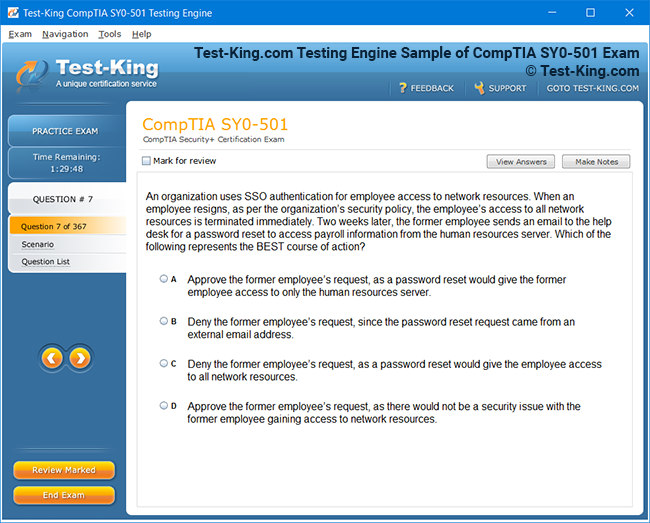
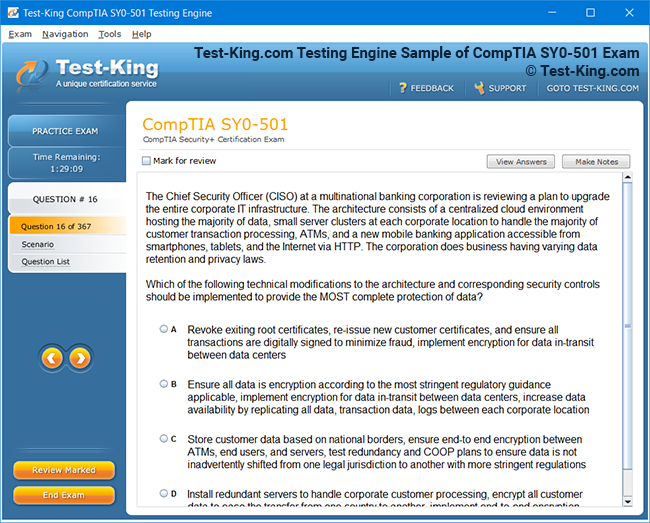
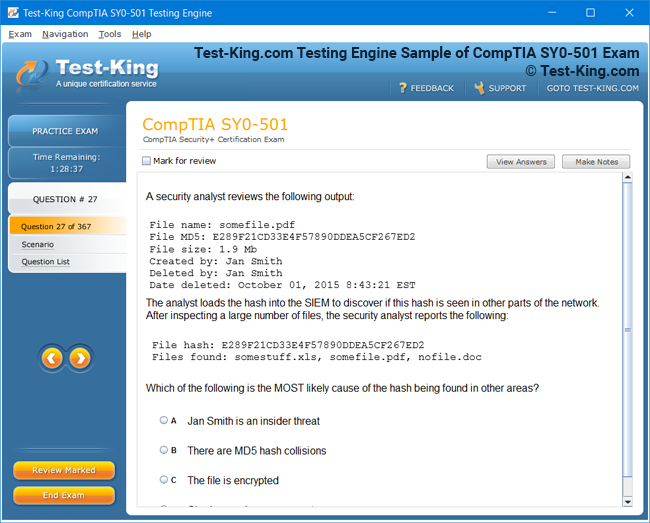
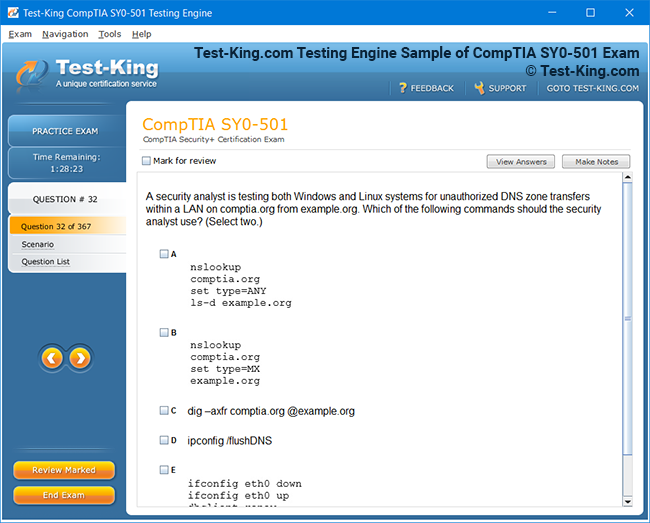
Product Screenshots
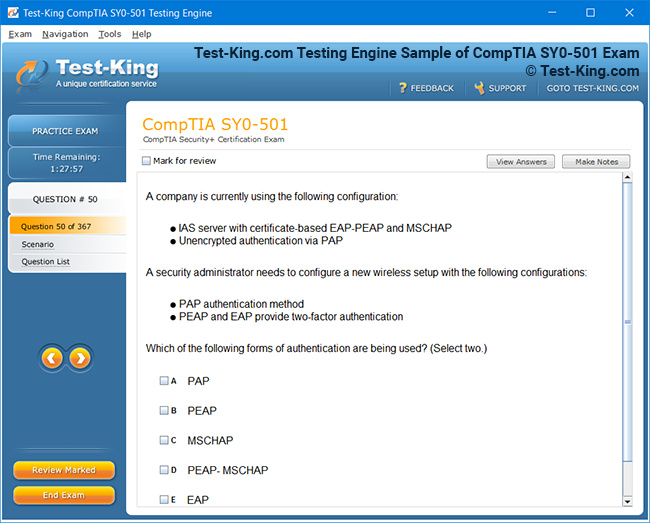
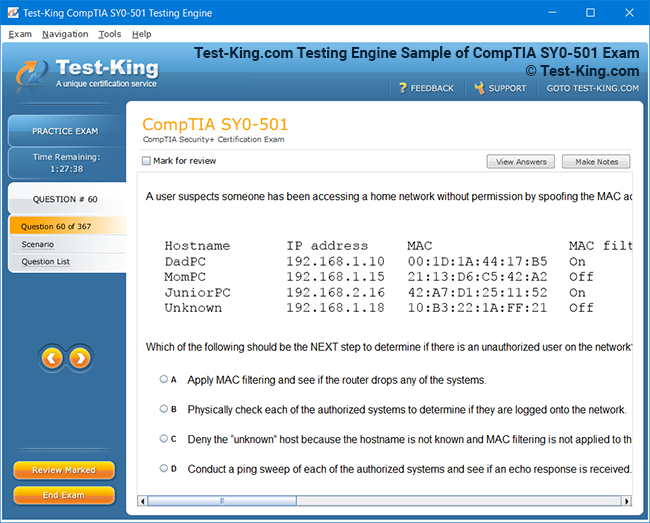
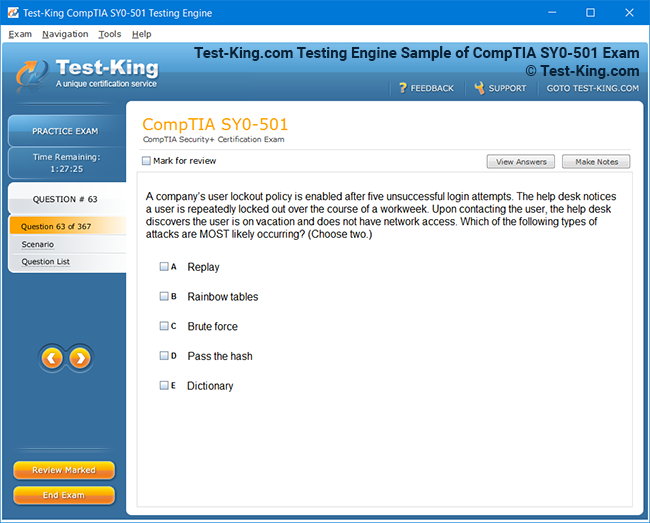
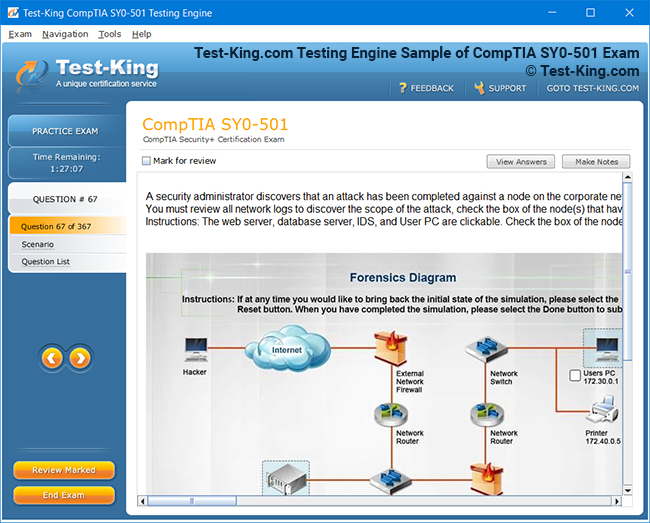
Frequently Asked Questions
How can I get the products after purchase?
All products are available for download immediately from your Member's Area. Once you have made the payment, you will be transferred to Member's Area where you can login and download the products you have purchased to your computer.
How long can I use my product? Will it be valid forever?
Test-King products have a validity of 90 days from the date of purchase. This means that any updates to the products, including but not limited to new questions, or updates and changes by our editing team, will be automatically downloaded on to computer to make sure that you get latest exam prep materials during those 90 days.
Can I renew my product if when it's expired?
Yes, when the 90 days of your product validity are over, you have the option of renewing your expired products with a 30% discount. This can be done in your Member's Area.
Please note that you will not be able to use the product after it has expired if you don't renew it.
How often are the questions updated?
We always try to provide the latest pool of questions, Updates in the questions depend on the changes in actual pool of questions by different vendors. As soon as we know about the change in the exam question pool we try our best to update the products as fast as possible.
How many computers I can download Test-King software on?
You can download the Test-King products on the maximum number of 2 (two) computers or devices. If you need to use the software on more than two machines, you can purchase this option separately. Please email support@test-king.com if you need to use more than 5 (five) computers.
What is a PDF Version?
PDF Version is a pdf document of Questions & Answers product. The document file has standart .pdf format, which can be easily read by any pdf reader application like Adobe Acrobat Reader, Foxit Reader, OpenOffice, Google Docs and many others.
Can I purchase PDF Version without the Testing Engine?
PDF Version cannot be purchased separately. It is only available as an add-on to main Question & Answer Testing Engine product.
What operating systems are supported by your Testing Engine software?
Our testing engine is supported by Windows. Andriod and IOS software is currently under development.
Top Genesys Exams
- GCP-GCX - Genesys Cloud CX Certified Professional - Consolidated
- GCX-GCD - Genesys Cloud CX: Developer
- GC-AI-DB - Genesys Cloud: AI - Digital Bots & Knowledge
- GCP-GC-ARC - Genesys Cloud Architect Certified Specialist
- GCP-GC-ADM - Genesys Cloud Certified Professional - Contact Center Admin
- GCP-GC-IMP - Genesys Cloud Certified Professional - Implementation
- GCP-GC-REP - Genesys Cloud Certified Professional - Reporting and Analytics
- GCX-ARC - Genesys Cloud CX: Architect
- GCX-WFM - Genesys Cloud CX: WEM - Workforce Management Certified Specialist
GCP-GC-ARC Exam : Foundations of Genesys Cloud Architecture
Genesys Cloud architecture represents a confluence of modern cloud paradigms designed to deliver omnichannel contact center solutions with unparalleled scalability and resilience. The architecture is underpinned by microservices, enabling modular deployment of communication and operational services that can scale independently based on demand. A profound understanding of these foundational elements is critical for designing systems that not only meet current business needs but also anticipate future expansion. Cloud-native design patterns, such as stateless services, containerization, and service orchestration, form the backbone of the platform, allowing enterprises to achieve operational efficiency while maintaining flexibility in their deployments.
Understanding the Core of Genesys Cloud
The platform’s multitenant framework allows multiple organizations to operate on the same infrastructure without interference, ensuring data isolation and secure partitioning of resources. This capability is essential for architects aiming to provide high-availability solutions for a diverse range of clients. By leveraging a modular design, one can deploy new features or updates without disrupting existing workflows, thereby reducing downtime and enhancing user experience. Professionals preparing for advanced architectural roles must internalize how these components interact to maintain a cohesive and stable ecosystem.
Designing Scalable Contact Center Solutions
One of the foremost challenges in Genesys Cloud architecture is designing systems that can scale elastically in response to fluctuating workloads. Unlike traditional contact centers, cloud solutions must account for variable call volumes, omnichannel interactions, and sudden spikes in service demand. Scalability is achieved through horizontal scaling of services, intelligent load balancing, and distributed resource allocation. Architects must anticipate potential bottlenecks and ensure that components such as session management, media routing, and API endpoints can handle concurrent interactions without degradation of service quality.
Designing scalable systems also involves strategic planning around redundancy and failover mechanisms. Redundant nodes, geographically distributed data centers, and automatic rerouting protocols ensure continuity in the face of hardware failures or network disruptions. This resilience is not merely a technical requirement but a business imperative, as contact center downtime can directly impact customer satisfaction and revenue. Consequently, aspiring architects must cultivate an intuitive understanding of system dependencies, capacity planning, and the orchestration of resilient services across a dispersed cloud infrastructure.
Integration with Enterprise Ecosystems
A comprehensive knowledge of Genesys Cloud architecture necessitates an appreciation for its integrative capabilities with external enterprise systems. The platform’s APIs, webhooks, and event-driven architecture enable seamless communication between Genesys services and customer relationship management platforms, workforce management systems, and third-party analytics tools. Integrating these disparate systems requires careful planning to ensure data consistency, transactional integrity, and minimal latency in information flow.
For instance, synchronizing customer profiles across CRM systems and Genesys Cloud ensures agents have complete contextual awareness during interactions. Event-driven design facilitates real-time updates, triggering automated workflows and notifications without manual intervention. Advanced architects must also consider data mapping strategies, error handling protocols, and asynchronous communication patterns to prevent information loss and maintain system reliability. The subtle intricacies of these integrations underscore the importance of both technical acumen and strategic foresight in crafting robust contact center solutions.
Ensuring High Availability and Reliability
Genesys Cloud architecture places a premium on high availability, reflecting the critical nature of uninterrupted communication services. Achieving this involves meticulous design choices that incorporate redundancy, load distribution, and automated failover mechanisms. Components such as telephony gateways, media servers, and application services are deployed across multiple availability zones to mitigate the impact of localized failures. This geographic dispersion not only enhances resilience but also optimizes latency by positioning resources closer to end-users.
Reliability also depends on continuous monitoring and observability, allowing architects to detect anomalies and address potential failures before they escalate. Metrics such as response time, session throughput, and error rates provide actionable insights into system performance. By establishing robust alerting and logging frameworks, architects ensure that operational teams can maintain service quality and promptly respond to incidents. In essence, reliability is a combination of architectural foresight, proactive monitoring, and automated recovery mechanisms that collectively safeguard the integrity of cloud operations.
Designing for Security and Compliance
An often underappreciated dimension of cloud architecture is security, which is inextricably linked with both compliance and trustworthiness. Genesys Cloud implements layered security models, encompassing identity and access management, network segmentation, and encryption of data at rest and in transit. Architects must design solutions that adhere to regulatory frameworks such as GDPR, HIPAA, and ISO standards, ensuring that sensitive customer information is protected at every stage of interaction.
Role-based access control, multi-factor authentication, and auditing protocols allow organizations to enforce granular permissions and maintain accountability. Threat modeling and vulnerability assessments further enhance system robustness, enabling proactive identification of potential security gaps. For architects, the challenge lies in balancing stringent security requirements with operational efficiency, ensuring that protection measures do not impede usability or system performance.
Leveraging Observability and Monitoring
Observability is a fundamental aspect of managing complex cloud systems, providing visibility into the operational state of distributed services. Genesys Cloud leverages a combination of logging, metrics collection, and tracing to offer architects actionable insights into performance, usage patterns, and potential anomalies. By implementing comprehensive monitoring frameworks, architects can detect issues such as latency spikes, session failures, or integration errors early, enabling swift corrective action.
Additionally, predictive analytics can be applied to historical data to forecast resource utilization and preemptively scale services to accommodate anticipated workloads. This forward-looking approach enhances resilience, reduces downtime, and supports the delivery of consistent service quality. Understanding observability tools, dashboards, and alerting mechanisms is essential for architects seeking to maintain optimal performance and ensure seamless user experiences.
Real-World Application of Architectural Principles
The theoretical knowledge of Genesys Cloud architecture must be complemented by practical application in real-world scenarios. Deploying a new contact center requires careful orchestration of infrastructure, integration, security, and monitoring components. Architects must consider the end-to-end lifecycle of customer interactions, from initial engagement through resolution, and design systems that support both operational efficiency and exceptional customer experience.
For instance, during periods of high call volume, intelligent routing algorithms ensure that interactions are directed to available agents with appropriate skill sets, minimizing wait times and optimizing satisfaction. Integration with workforce management systems allows for dynamic scheduling, balancing agent availability with anticipated demand. Architects must also plan for disaster recovery, ensuring that data and services can be restored rapidly in the event of a catastrophic failure. The ability to translate architectural principles into tangible solutions distinguishes proficient specialists from those with theoretical knowledge alone.
Planning for Future Expansion
A sophisticated understanding of cloud architecture involves anticipating future requirements and designing systems capable of evolution. Genesys Cloud’s modular design facilitates incremental enhancements, allowing organizations to adopt new features, channels, or integrations without disruptive overhauls. Architects must consider not only current functional needs but also emerging trends such as AI-powered customer interactions, real-time analytics, and hybrid deployment models that combine public and private cloud resources.
Capacity planning, resource optimization, and scalability assessments are integral to future-proofing deployments. By incorporating flexibility into the design, architects ensure that the contact center can accommodate growth, adapt to technological advancements, and maintain service quality under evolving business conditions. This forward-thinking approach requires a combination of technical expertise, strategic insight, and a nuanced understanding of the broader enterprise landscape.
Strategic Importance of Architectural Mastery
Mastering the fundamentals of Genesys Cloud architecture provides a strategic advantage, enabling professionals to design systems that are resilient, efficient, and aligned with business objectives. The ability to integrate disparate systems, optimize performance, ensure security, and plan for future expansion positions architects as indispensable contributors to organizational success. Those preparing for certification must internalize not only the operational mechanics of the platform but also the strategic implications of architectural decisions, bridging the gap between technical execution and business outcomes.
By cultivating expertise in these areas, architects gain the capacity to influence critical decisions regarding technology adoption, resource allocation, and customer experience strategies. The knowledge acquired serves as a foundation for more advanced architectural design, complex integrations, and leadership roles in cloud-based contact center initiatives. Through rigorous study and practical application, aspiring specialists can navigate the multifaceted challenges of modern enterprise environments and contribute meaningfully to organizational transformation.
Seamless Connectivity Across Platforms
Integration within Genesys Cloud demands a comprehensive understanding of how disparate systems communicate, synchronize, and operate cohesively. The platform provides a robust set of tools for connecting omnichannel communication services to customer relationship management systems, analytics engines, workforce management tools, and other enterprise applications. By leveraging APIs, event-driven workflows, and prebuilt connectors, architects can ensure that information flows smoothly across the organization, minimizing latency and maintaining consistency. The ability to harmonize these systems is crucial for delivering an uninterrupted customer experience while preserving operational efficiency.
Architects must grasp the nuances of synchronous and asynchronous communication patterns. Synchronous interactions are suited for scenarios where immediate response is necessary, such as real-time chat or voice routing, whereas asynchronous messaging facilitates background processing, enabling tasks like bulk data synchronization or deferred notifications without impeding system performance. Understanding these paradigms allows architects to tailor integration strategies to meet both performance expectations and business requirements.
Designing Efficient Data Workflows
A core aspect of integration strategy involves orchestrating the movement and transformation of data across platforms. Data mapping, schema translation, and validation processes are essential to ensure that information maintains its integrity as it moves between systems. For example, customer attributes captured within a Genesys Cloud interaction must align seamlessly with CRM records, preserving identifiers, timestamps, and interaction context. Failure to maintain consistency can result in incomplete profiles, misrouted communications, or flawed analytics.
Event-driven architecture plays a pivotal role in modern integration strategies. By subscribing to specific triggers or notifications, systems can react to changes in real time, initiating automated workflows or updating relevant records without manual intervention. This approach not only enhances operational efficiency but also reduces the likelihood of human error. Advanced architects often implement layered event processing, where multiple services can consume and act on the same event independently, promoting modularity and flexibility.
Leveraging APIs and Webhooks
Application programming interfaces provide the primary conduit for programmatic interaction between Genesys Cloud and external systems. Comprehensive knowledge of RESTful APIs, their authentication mechanisms, rate limits, and response structures is essential for architects to design stable and performant integrations. Well-designed API usage ensures that applications can query, update, or trigger interactions reliably, maintaining transactional integrity and supporting real-time responsiveness.
Webhooks complement APIs by offering a push-based model, delivering notifications as events occur rather than relying on polling mechanisms. This reduces overhead, minimizes latency, and fosters real-time awareness across connected systems. Architects must carefully consider the design of webhook endpoints, including error handling, retry policies, and security measures, to ensure that notifications are processed accurately and securely.
Ensuring Security in Integration
Integrating multiple systems invariably introduces security considerations that must be addressed proactively. Architects must implement robust authentication and authorization mechanisms, such as OAuth tokens, API keys, and role-based access control, to ensure that only authorized applications can access sensitive data. Encryption of data in transit and at rest further safeguards against potential breaches, while audit logging provides a transparent record of data exchanges and system interactions.
Compliance with regulatory frameworks is another critical consideration. Many organizations operate under standards such as GDPR or HIPAA, which impose strict requirements on data handling, storage, and transfer. Integration strategies must be designed to honor these obligations, employing techniques such as tokenization, anonymization, and secure data routing. This ensures that the operational benefits of integration do not come at the expense of privacy or legal compliance.
Monitoring and Troubleshooting Integrations
Even the most meticulously planned integration strategy can encounter operational challenges. Real-time monitoring and observability are indispensable for detecting anomalies, tracking message flow, and identifying performance bottlenecks. Metrics such as API response time, error rates, event processing latency, and data integrity checks provide actionable insights that allow architects and operational teams to resolve issues before they impact customer interactions.
Troubleshooting requires a systematic approach, combining log analysis, alerting mechanisms, and correlation of events across multiple systems. For example, a failed CRM update might originate from a schema mismatch, an authentication error, or a network disruption. Understanding the interplay of components enables swift resolution, preserving continuity and reliability in the integrated environment. Predictive analytics can also be employed to anticipate failures, allowing proactive adjustments to workflows, resource allocation, and system configurations.
Optimizing Performance and Scalability
Integration strategies must account for the variability of workloads and the need for elastic scalability. Architects design solutions that can handle surges in interactions, data synchronization, or analytics processing without degrading performance. Load balancing, throttling mechanisms, and asynchronous processing ensure that services remain responsive under heavy demand.
Caching frequently accessed data and optimizing query patterns can reduce latency and minimize resource consumption. Additionally, adopting modular, microservice-oriented architectures allows integration components to scale independently, aligning resource allocation with demand. This elasticity not only improves performance but also enhances cost efficiency by preventing over-provisioning of infrastructure.
Managing Complex Workflows
Modern enterprises often require complex, multi-step workflows that span numerous systems and channels. Architects must design orchestration strategies that sequence operations correctly, handle dependencies, and accommodate exceptions gracefully. For instance, an incoming customer interaction might trigger a sequence of operations including profile retrieval, sentiment analysis, routing to a skilled agent, and logging of the conversation for compliance purposes.
Workflow management involves defining clear decision points, error-handling pathways, and fallback mechanisms to ensure reliability even when individual components fail. Advanced architects often employ message queues, event buses, and state management techniques to maintain consistency and order in highly concurrent environments. The objective is to provide seamless automation while retaining the ability to intervene or adapt when necessary.
Real-World Application of Integration Techniques
Practical application of integration principles requires architects to understand not only the tools and protocols but also the operational and business context. For example, integrating workforce management data with Genesys Cloud allows for predictive scheduling, aligning agent availability with anticipated call volumes and interaction types. Similarly, syncing customer journey data with analytics platforms enables organizations to derive actionable insights, optimize processes, and enhance service quality.
Successful architects anticipate the dynamic nature of enterprise environments, designing integrations that can adapt to evolving requirements. They test workflows extensively, simulate peak loads, and implement iterative improvements to maintain reliability and efficiency. The ability to translate abstract principles into practical, operationally robust solutions distinguishes highly skilled professionals from those with theoretical knowledge alone.
Maintaining Data Consistency and Integrity
One of the most critical aspects of integration is ensuring that data remains consistent across systems. Inconsistent or incomplete data can compromise reporting accuracy, misguide decision-making, and negatively impact customer interactions. Architects implement strategies such as transactional workflows, data validation checks, and conflict resolution mechanisms to preserve integrity across platforms.
Advanced designs often include reconciliation processes, where periodic audits of data between systems identify discrepancies and trigger corrective actions. These mechanisms ensure that all connected applications reflect the same state, preserving operational continuity and reinforcing trust in the platform. The meticulous attention to detail in maintaining data integrity underscores the importance of both technical skill and analytical foresight in the role of an architect.
Leveraging Observability for Continuous Improvement
Continuous improvement in integration strategies relies heavily on observability. By capturing detailed telemetry, architects can identify recurring patterns, inefficiencies, or failure modes. This information informs enhancements to workflows, API usage, and event processing, promoting incremental optimization over time.
Real-time dashboards and analytical reports provide visibility into the health of integrations, enabling teams to act swiftly and maintain uninterrupted service delivery. Predictive modeling and trend analysis allow architects to anticipate future challenges, implement preemptive adjustments, and ensure that the integrated environment remains resilient, efficient, and responsive to evolving business needs.
Designing Robust Security Frameworks
In the realm of Genesys Cloud architecture, security forms an indispensable foundation that underpins every operational decision and technical deployment. Architects must understand that security is not merely a set of reactive measures but a proactive design philosophy embedded across infrastructure, applications, and integrations. Identity and access management serves as the cornerstone, allowing organizations to enforce precise control over who can access sensitive systems and data. Role-based access control ensures that privileges are allocated according to responsibilities, minimizing exposure to unnecessary risk while enabling operational efficiency.
Multi-factor authentication adds a secondary verification layer, fortifying defenses against unauthorized access. By combining knowledge-based factors with physical tokens or biometric verification, organizations create an environment that is significantly more resistant to intrusion attempts. Architects must also consider session management and token expiration policies, balancing security imperatives with usability to maintain a seamless user experience while preventing potential vulnerabilities.
Network and Data Security
Securing the network layer within Genesys Cloud is equally critical. Architects design segmentation strategies to isolate sensitive components, ensuring that communication paths between telephony gateways, media servers, and application nodes are protected against unauthorized interception or tampering. Encryption plays a pivotal role, safeguarding data in transit using protocols such as TLS, while encryption at rest ensures that stored information remains inaccessible to malicious actors.
Advanced architects incorporate intrusion detection and prevention mechanisms that monitor network traffic for anomalies, irregular access patterns, or potential threats. By analyzing patterns over time, systems can identify suspicious behavior, triggering alerts or automated mitigations before compromise occurs. The combination of robust encryption, vigilant monitoring, and proactive defense strategies establishes a fortified environment for Genesys Cloud deployments.
Regulatory Compliance and Standards
Compliance with regulatory frameworks is a paramount concern when designing and operating Genesys Cloud solutions. Organizations often operate under strict mandates such as GDPR, HIPAA, ISO standards, and other regional or industry-specific regulations. These frameworks govern the handling, storage, and transmission of sensitive data, demanding meticulous adherence to avoid legal repercussions and reputational damage.
Architects must ensure that personal and health information is processed only within defined boundaries, employing techniques such as anonymization, pseudonymization, and secure routing to mitigate exposure risks. Audit logging and comprehensive documentation provide evidence of compliance, enabling organizations to demonstrate that internal practices align with statutory requirements. Understanding these frameworks in depth allows architects to design solutions that are not only technically sound but legally defensible.
Threat Modeling and Risk Assessment
Proactive security begins with a thorough understanding of potential threats and vulnerabilities. Threat modeling enables architects to identify possible attack vectors, ranging from unauthorized access attempts to data leakage through integration points. By evaluating the likelihood and impact of each threat, architects can prioritize mitigation strategies and allocate resources efficiently.
Risk assessments extend this analysis by examining both technical and operational dimensions, including software vulnerabilities, network exposure, human error, and procedural weaknesses. Mitigation strategies may involve applying patches, segmenting network access, enforcing stricter authentication protocols, or implementing redundancy in critical components. This disciplined approach ensures that security measures are both comprehensive and contextually appropriate, enhancing resilience across the Genesys Cloud ecosystem.
Encryption and Data Protection
Protecting sensitive data is a central tenet of Genesys Cloud security architecture. Encryption ensures that information remains unintelligible to unauthorized entities, safeguarding both stored data and communications in transit. Advanced architects consider key management strategies, employing automated rotation, secure storage, and access controls to prevent compromise.
Additionally, data masking techniques can obscure sensitive information during testing, analytics, or integration workflows without disrupting operational processes. Tokenization may be employed for highly regulated fields, replacing original data with surrogate values while maintaining referential integrity. These mechanisms collectively create a protective lattice that preserves confidentiality, integrity, and availability across the enterprise.
Continuous Monitoring and Observability
Even the most rigorously designed security framework requires continuous monitoring to maintain effectiveness. Genesys Cloud supports comprehensive observability, enabling architects and operational teams to track user activity, system access, and transaction histories. Logging mechanisms capture detailed records of authentication attempts, configuration changes, and data transfers, providing a trail for forensic investigation and proactive anomaly detection.
Alerting systems complement logging by notifying administrators of potential threats or unusual patterns in real time. Observability tools may analyze metrics such as failed login attempts, unexpected API calls, or unusual data flow, enabling swift response to incidents. The integration of predictive analytics allows organizations to anticipate vulnerabilities, adapting defenses before issues manifest and ensuring sustained security in dynamic operational environments.
Secure Integration Practices
Integrations between Genesys Cloud and external systems present unique security challenges. Architects must design endpoints, APIs, and webhooks with stringent access controls and validation checks to prevent unauthorized data manipulation or leakage. Data transmitted between systems should always be encrypted, and endpoints must be monitored for unusual access patterns or repeated failures.
Error handling and retry mechanisms are also crucial in maintaining integrity, ensuring that communication failures do not result in lost or corrupted information. By implementing these safeguards, organizations maintain both operational continuity and regulatory compliance, ensuring that integrated workflows remain secure and reliable under all circumstances.
Identity and Access Governance
Effective identity management extends beyond simple authentication. Architects must consider the lifecycle of user accounts, including onboarding, privilege escalation, and deactivation. Periodic reviews of access rights prevent accumulation of excessive permissions, reducing the potential attack surface. Integration with enterprise identity providers allows for centralized governance, simplifying the enforcement of security policies across multiple platforms.
Single sign-on mechanisms enhance usability while maintaining security, enabling seamless authentication across Genesys Cloud and connected systems. Advanced techniques such as conditional access, behavioral analytics, and adaptive authentication provide an additional layer of protection, dynamically adjusting controls based on contextual risk factors and usage patterns.
Auditing and Compliance Verification
Auditing is an essential practice for verifying that security and compliance objectives are consistently met. Genesys Cloud maintains detailed records of interactions, configuration changes, and system events, providing a comprehensive basis for internal reviews and external audits. Architects design workflows that automatically capture relevant data, generating reports that demonstrate adherence to regulatory standards and organizational policies.
Regular audits allow teams to identify gaps, validate controls, and implement corrective measures proactively. By integrating auditing into operational practices, organizations can maintain both security posture and regulatory compliance, while providing stakeholders with transparency and confidence in system integrity.
Incident Response and Mitigation
Despite the most rigorous preventive measures, security incidents can still occur. Architects must design response frameworks that enable rapid detection, containment, and remediation. Incident response plans detail roles, responsibilities, and procedural steps for handling breaches, minimizing impact on operations and sensitive data.
Automated mechanisms, such as throttling or isolation of affected components, complement human-led response efforts, ensuring swift mitigation of potential damage. Post-incident analysis is critical for identifying root causes, refining controls, and preventing recurrence. A culture of continuous learning and adaptation strengthens the organization’s resilience, reinforcing the security and compliance posture of Genesys Cloud deployments.
Advanced Threat Detection Techniques
Modern security strategies increasingly rely on predictive and adaptive threat detection. Machine learning algorithms analyze behavioral patterns, network activity, and access logs to identify anomalies indicative of potential compromise. By correlating disparate signals, systems can surface subtle threats that may elude conventional monitoring.
Architects incorporate these capabilities into security frameworks, enabling preemptive intervention and enhancing overall resilience. Adaptive responses, such as temporary privilege revocation or automated alerts to administrators, allow organizations to respond dynamically to evolving threat landscapes while maintaining operational continuity.
Operational Security Best Practices
Operational security encompasses the daily practices and controls that sustain a secure environment. Routine tasks include patch management, configuration validation, monitoring of system health, and verification of access logs. Architects emphasize the importance of documenting processes, enforcing standard operating procedures, and conducting regular security drills to reinforce preparedness.
Training and awareness programs for personnel complement technical controls, ensuring that human operators understand potential risks, recognize suspicious behavior, and adhere to established protocols. By embedding security consciousness into the organizational culture, architects help create an environment where technical defenses are supported and reinforced by informed human action.
Implementing Resilient Architectures
Designing advanced cloud architectures within Genesys Cloud requires a deep understanding of resilience principles, ensuring that systems continue to operate smoothly despite failures or unexpected disruptions. Architects employ redundancy and failover mechanisms to safeguard critical components such as media servers, telephony gateways, and interaction routers. Distributed deployments across multiple availability zones provide both fault tolerance and latency optimization, allowing the system to maintain responsiveness under diverse conditions.
Microservices play a pivotal role in enhancing resilience, allowing individual services to fail independently without compromising the entire system. By decoupling components and isolating failures, architects ensure that operational continuity is preserved. Advanced strategies involve designing circuit breakers, retries with exponential backoff, and graceful degradation, allowing partial functionality to persist even under duress.
Horizontal Scaling and Elasticity
Scalability is a defining feature of Genesys Cloud, and architects leverage horizontal scaling to accommodate fluctuating workloads. Adding additional service instances enables systems to handle increased traffic without compromising performance. Horizontal scaling is often complemented by load balancing strategies that distribute requests intelligently, preventing bottlenecks and optimizing resource utilization.
Elasticity ensures that resources can be provisioned or decommissioned dynamically in response to demand. Auto-scaling policies, guided by performance metrics such as session counts or CPU utilization, allow systems to adapt in real time, maintaining efficiency while controlling costs. By combining horizontal scaling with elasticity, architects create environments that respond fluidly to operational pressures, providing consistent service quality regardless of demand variability.
Designing for High Availability
High availability is integral to cloud design patterns within Genesys Cloud. Architects deploy redundant instances of critical services across geographically distributed data centers, minimizing the impact of localized outages. Failover mechanisms automatically redirect traffic to available resources in case of failure, reducing downtime and maintaining user experience continuity.
Architects also consider data replication strategies to ensure that databases and session stores remain synchronized across locations. Techniques such as eventual consistency and quorum-based replication balance the trade-offs between availability, latency, and data integrity. Continuous health monitoring detects anomalies early, triggering automated recovery actions and enabling proactive maintenance of high availability standards.
Event-Driven Architectures
Event-driven design patterns are central to modern cloud systems, enabling real-time responsiveness and decoupled interactions between services. In Genesys Cloud, events generated by customer interactions, system alerts, or integration endpoints trigger workflows that update records, route sessions, or initiate notifications. This approach allows for scalable, modular systems where multiple consumers can independently act on the same event.
Architects often implement layered event processing, where events propagate through queues, buses, or streaming platforms to ensure orderly and reliable delivery. By adopting idempotent operations and retry mechanisms, they minimize the risk of duplicated or lost events. Event-driven architectures also enhance observability, providing clear traces of interactions that can be analyzed for performance optimization and troubleshooting.
Caching and Performance Optimization
Effective cloud architectures incorporate caching mechanisms to reduce latency and optimize performance. Frequently accessed data, such as customer profiles, routing configurations, or historical interaction records, can be stored temporarily to minimize repeated queries to backend systems. Architects determine caching strategies, balancing freshness requirements with storage efficiency to ensure timely and accurate information retrieval.
Performance optimization extends beyond caching to include asynchronous processing, efficient query design, and load distribution. By analyzing traffic patterns and resource utilization, architects can preemptively allocate capacity, preventing congestion during peak periods. Observability tools provide metrics on cache hit ratios, response times, and resource utilization, allowing continuous refinement of performance strategies.
Disaster Recovery and Continuity Planning
Disaster recovery is a fundamental consideration in cloud architecture, encompassing strategies to restore services and data in the event of catastrophic failure. Architects define recovery time objectives and recovery point objectives, aligning technical capabilities with business requirements. Backup strategies, including full, incremental, and snapshot-based approaches, ensure that critical data can be restored quickly.
Continuity planning extends to orchestrating service failover, rerouting interactions, and maintaining operational workflows during disruptions. Redundant infrastructure, automated provisioning, and preconfigured failover routes minimize downtime, ensuring that customer-facing systems remain functional. Advanced architects integrate disaster recovery drills into operational routines, verifying that plans are effective and personnel are prepared to execute them seamlessly.
Hybrid and Multi-Cloud Deployments
Modern organizations often leverage hybrid and multi-cloud strategies to optimize cost, performance, and compliance. Architects design systems that span public and private cloud environments, ensuring secure communication, consistent data replication, and unified management. Multi-cloud deployments reduce vendor lock-in and provide additional redundancy, distributing workloads across platforms to enhance resilience.
Integrating hybrid systems requires careful planning around network topology, security policies, and latency management. Architects must ensure that session continuity, data integrity, and operational visibility are maintained across environments. Techniques such as centralized logging, unified monitoring, and cross-cloud orchestration facilitate the management of complex hybrid infrastructures.
Observability and Metrics-Driven Design
Observability is essential for maintaining advanced cloud architectures. Metrics-driven design allows architects to monitor system health, detect anomalies, and optimize resource allocation. In Genesys Cloud, metrics such as session throughput, error rates, API response times, and resource utilization provide actionable insights for operational decision-making.
Architects implement dashboards, alerts, and automated remediation workflows to maintain visibility and responsiveness. By analyzing historical data, predictive scaling and anomaly detection can be employed, enabling proactive adjustments to workloads and resource distribution. Observability enhances both resilience and efficiency, allowing systems to adapt dynamically to evolving operational conditions.
Microservices Orchestration
Orchestrating microservices is critical for achieving modular, scalable, and resilient architectures. Architects design service dependencies, communication patterns, and lifecycle management protocols to ensure that microservices operate cohesively. Techniques such as service discovery, load balancing, and container orchestration streamline deployment and management, allowing services to scale independently based on demand.
Fault isolation is an important aspect of orchestration, enabling individual service failures to be contained without impacting the broader system. By implementing automated retries, fallback mechanisms, and graceful degradation, architects maintain continuity and minimize customer impact. Microservices orchestration supports rapid innovation and deployment, aligning technical capabilities with dynamic business requirements.
Workflow Automation and Optimization
Automation of workflows within advanced architectures enhances operational efficiency and reliability. Customer interactions, system events, and integration processes can be orchestrated through automated pipelines that enforce rules, trigger notifications, and update records. Architects design these workflows with an emphasis on error handling, scalability, and observability, ensuring that complex processes execute reliably and predictably.
Optimization involves continuous analysis of workflow performance, identifying bottlenecks or redundant operations. By refining process logic and adjusting resource allocation, architects maintain efficiency while reducing operational costs. Automated workflows also facilitate compliance by ensuring that standardized procedures are consistently followed across interactions and integrations.
Cost Efficiency and Resource Management
Resource management and cost optimization are integral to advanced cloud design patterns. Architects evaluate resource allocation, instance types, and scaling policies to balance performance with operational expenditure. Elasticity allows systems to provision resources only when needed, preventing over-provisioning and reducing waste.
Monitoring tools track usage patterns, enabling architects to identify underutilized services and adjust configurations accordingly. Cost-efficient architectures incorporate strategies such as serverless functions, shared infrastructure, and data lifecycle management to optimize expenditure while maintaining service quality. Strategic planning in this domain ensures that performance, resilience, and cost-effectiveness coexist harmoniously.
Maximizing System Efficiency
Performance optimization within Genesys Cloud is a multifaceted endeavor, requiring architects to balance responsiveness, reliability, and resource utilization. The foundation lies in understanding how various components—media servers, telephony gateways, APIs, and integration endpoints—interact under normal and peak loads. By mapping dependencies and identifying potential bottlenecks, architects can design workflows that ensure seamless operation even during periods of heightened demand. Load distribution strategies, intelligent routing algorithms, and caching mechanisms are integral to sustaining system efficiency while minimizing latency.
Architects must also consider the impact of concurrent interactions, asynchronous processing, and background tasks on overall performance. Sophisticated scheduling and prioritization mechanisms allow the system to handle high-volume traffic without degradation. Observability and metrics collection provide continuous insights into resource utilization, enabling dynamic adjustments that maintain optimal performance levels across the Genesys Cloud ecosystem.
Monitoring and Observability
A core aspect of performance optimization is establishing comprehensive monitoring and observability frameworks. Genesys Cloud provides tools to capture metrics such as response times, session throughput, error rates, and integration latency. By analyzing these metrics, architects can identify anomalies, predict potential issues, and proactively adjust configurations.
Real-time dashboards and alerting mechanisms enhance operational awareness, allowing administrators to detect and remediate problems before they impact end users. Observability extends beyond simple monitoring; it includes tracing interactions across multiple services, correlating events, and understanding systemic patterns. By leveraging these insights, architects can pinpoint inefficiencies, optimize workflows, and ensure that the contact center maintains high responsiveness under all conditions.
Optimizing Resource Allocation
Efficient resource allocation is crucial for sustaining performance while controlling operational costs. Architects assess system demands, distributing workloads across available infrastructure to prevent overutilization or underutilization. Horizontal scaling and elastic provisioning allow the environment to adapt dynamically, adding or removing resources in response to fluctuating demand.
Caching frequently accessed data, optimizing API calls, and minimizing redundant operations reduce unnecessary consumption of computational and memory resources. Additionally, prioritizing critical workloads ensures that essential services maintain high availability and low latency, even under peak operational stress. Resource management is a continual process, requiring ongoing observation, analysis, and adjustment to maintain balance between performance and efficiency.
Latency Reduction Strategies
Latency reduction is a central concern in Genesys Cloud architectures, as delayed responses can degrade user experience and operational efficiency. Architects implement strategies such as edge caching, distributed processing, and proximity-based routing to minimize the distance that data must travel. These techniques reduce round-trip times and ensure that interactions reach the appropriate systems and agents promptly.
Optimization of communication protocols and message formats also contributes to reduced latency. By streamlining data payloads, compressing messages, and minimizing redundant network calls, architects ensure that the system operates with maximal efficiency. Continuous performance testing under realistic conditions validates these strategies and highlights areas for further refinement.
Troubleshooting Methodologies
Even the most optimized systems encounter anomalies, and effective troubleshooting requires systematic approaches to diagnose and resolve issues. Architects begin by gathering contextual information, including logs, metrics, and event traces, to identify the source and scope of the problem. Correlating events across services and integrations allows for the identification of root causes, whether they stem from configuration errors, network disruptions, or resource constraints.
Structured troubleshooting methodologies incorporate hypotheses, testing, and iterative refinement. For instance, a sudden spike in failed API requests may originate from rate limiting, authentication issues, or downstream service unavailability. By isolating variables and testing systematically, architects can resolve the underlying cause while minimizing collateral impact on the system.
Diagnosing Integration Failures
Integration points with external systems are frequent sources of performance bottlenecks or failures. Architects must monitor these connections carefully, analyzing response times, error codes, and transactional integrity. Inconsistent data mapping, schema mismatches, or network latency can compromise workflow efficiency and system reliability.
Proactive measures, such as validating input/output data, implementing retry mechanisms, and employing asynchronous processing, enhance the robustness of integrations. Observability into external dependencies allows architects to detect issues promptly, enabling corrective actions before failures propagate through the broader system. Maintaining detailed documentation of integration patterns and endpoints further supports efficient troubleshooting and optimization.
Predictive Analytics for Performance
Predictive analytics is increasingly important in performance optimization, enabling architects to anticipate potential stress points and adjust resources preemptively. By analyzing historical interaction volumes, session durations, and system metrics, predictive models can forecast periods of high demand and resource contention.
These insights inform dynamic scaling policies, load balancing adjustments, and preemptive caching strategies. Predictive approaches reduce the likelihood of performance degradation during peak loads and enhance overall system resilience. Architects leverage these models to move from reactive troubleshooting to proactive performance management, ensuring consistent service quality.
Ensuring Data Integrity and Consistency
Data integrity is vital for both performance and operational correctness. Architects design systems that maintain consistency across distributed components, particularly in high-concurrency scenarios. Transactional workflows, idempotent operations, and reconciliation processes prevent data loss or duplication, even when interactions occur simultaneously across multiple channels.
Continuous verification mechanisms, such as automated audits and periodic reconciliation, ensure that systems remain synchronized. By embedding data integrity considerations into performance optimization strategies, architects preserve both reliability and efficiency, reducing the need for corrective interventions that could impact operational flow.
Load Balancing and Traffic Management
Load balancing is a fundamental technique for maintaining performance in Genesys Cloud. Architects distribute requests across multiple service instances, preventing individual components from becoming overwhelmed. Advanced algorithms account for session persistence, resource utilization, and geographic proximity to optimize routing decisions.
Traffic management strategies include prioritizing critical interactions, throttling nonessential requests during peak periods, and dynamically adjusting resource allocation. By orchestrating these mechanisms, architects ensure that the contact center remains responsive, minimizing wait times and maintaining high-quality customer experiences.
Anomaly Detection and Proactive Remediation
Detecting anomalies early is key to maintaining optimal performance. Architects employ automated monitoring systems that flag deviations from expected patterns, such as sudden latency spikes, unusual error rates, or unexpected traffic surges. These alerts enable rapid investigation and remediation before issues escalate.
Proactive remediation may include redistributing workloads, restarting affected services, or scaling resources temporarily. By anticipating failures and implementing automated recovery measures, architects enhance system reliability and reduce the impact of performance degradation on end users.
Workflow Optimization Techniques
Optimizing workflows involves analyzing the sequence, dependencies, and execution times of operational processes. Architects identify bottlenecks, redundant steps, and inefficient routing, redesigning workflows to maximize throughput and minimize latency. Techniques such as parallel processing, asynchronous execution, and prioritization of critical tasks improve overall efficiency.
Continuous refinement based on operational metrics ensures that workflows remain aligned with evolving business requirements. By optimizing processes at both macro and micro levels, architects maintain high system responsiveness while minimizing unnecessary resource consumption.
Resource Contention and Conflict Resolution
In complex environments, multiple services and interactions compete for shared resources, potentially causing contention and performance degradation. Architects employ strategies such as queuing, prioritization, and resource throttling to manage conflicts effectively. By dynamically adjusting allocations based on workload demands, systems maintain stability and responsiveness.
Conflict resolution mechanisms also include monitoring for deadlocks, retry strategies for failed operations, and preemption of lower-priority tasks during high-load periods. These measures prevent cascading failures and ensure that essential services continue to operate efficiently even under stress.
Continuous Improvement and Iterative Optimization
Performance optimization is an ongoing endeavor. Architects continuously analyze metrics, test configurations, and refine workflows to adapt to changing operational conditions. Lessons learned from troubleshooting incidents inform iterative improvements, enhancing both system efficiency and reliability over time.
By fostering a culture of continuous monitoring, experimentation, and adaptation, organizations ensure that Genesys Cloud deployments remain responsive, resilient, and capable of meeting evolving business demands. The iterative approach allows architects to anticipate emerging challenges and implement proactive measures that sustain high performance across all operational dimensions.
Exam Preparation Strategies
Preparing for the Genesys Cloud Architect Certified Specialist exam requires a meticulous approach that combines theoretical knowledge with practical application. Understanding the exam blueprint is essential, as it outlines the domains, objectives, and weighting of different topics. Architects must cultivate expertise in areas such as cloud architecture, integrations, security, performance optimization, and disaster recovery, ensuring that their knowledge encompasses both foundational principles and advanced operational nuances.
A systematic study plan begins with assessing personal strengths and weaknesses, identifying areas requiring deeper focus. Leveraging official documentation, hands-on labs, and interactive simulations provides experiential learning that reinforces conceptual understanding. Architects often benefit from scenario-based exercises, which replicate real-world challenges in workflow orchestration, system scaling, and multi-channel interaction management. This approach helps internalize the relationships between components, operational constraints, and best practices, equipping candidates to respond confidently to complex exam questions.
Hands-On Experience and Practical Application
The exam emphasizes the application of knowledge in practical contexts. Candidates are encouraged to gain hands-on experience within the Genesys Cloud environment, exploring configuration management, API integrations, and orchestration workflows. Practical exercises, such as deploying new contact center configurations, designing failover strategies, or integrating third-party systems, help reinforce theoretical concepts while developing operational intuition.
By experimenting with real-world scenarios, architects learn to anticipate performance bottlenecks, resolve integration conflicts, and ensure security compliance. This practical proficiency is invaluable, as it not only improves exam readiness but also cultivates the skills required for effective deployment and management of complex cloud architectures in professional settings.
Study Resources and Learning Tools
A variety of resources can enhance preparation for the exam. Official training modules, technical documentation, and knowledge bases provide comprehensive coverage of platform capabilities. Community forums and user groups offer insights from certified professionals, sharing tips, pitfalls, and practical strategies. Interactive labs simulate operational scenarios, enabling architects to practice configuration, integration, and troubleshooting in a controlled environment.
Supplementary materials, such as white papers and case studies, expose candidates to diverse deployment models, illustrating how Genesys Cloud architectures address varied business requirements. By combining these resources, candidates develop a multidimensional understanding, blending conceptual knowledge with applied skills essential for successful certification.
Scenario-Based Learning
Scenario-based learning is particularly effective for mastering the complexities of Genesys Cloud architecture. Candidates analyze and resolve hypothetical situations that mirror real operational challenges, such as designing high-availability systems, optimizing performance under peak loads, or integrating multiple communication channels with enterprise platforms.
Through these exercises, architects refine problem-solving skills, develop strategic thinking, and reinforce their understanding of interdependencies between services, workflows, and integrations. Scenario-based learning also cultivates the ability to anticipate unintended consequences, evaluate trade-offs, and implement robust, scalable solutions, all of which are critical both for the exam and professional practice.
Exam Readiness and Strategy
Exam readiness involves more than knowledge acquisition; it requires strategic preparation to navigate the format, question types, and time constraints effectively. Practicing with sample questions and mock exams helps familiarize candidates with the style and complexity of queries, including multiple-choice scenarios, case studies, and operational problem-solving questions.
Time management is critical, as candidates must balance analytical thinking with efficient decision-making. Architects develop techniques for prioritizing questions, identifying cues in scenario-based prompts, and systematically eliminating incorrect options. Combining methodical study with practiced exam strategies enhances confidence, reduces anxiety, and improves performance on test day.
Career Applications of Certification
Achieving certification as a Genesys Cloud Architect Certified Specialist confers tangible professional advantages. Certified architects are equipped to design, deploy, and optimize cloud-based contact center solutions with proficiency, demonstrating both technical acumen and strategic insight. This expertise opens doors to roles in solution architecture, consultancy, cloud operations, and enterprise deployment management.
Organizations value certified professionals for their ability to deliver robust, scalable, and secure communication systems. Certified architects influence operational strategy, drive adoption of best practices, and mentor teams in the implementation of complex workflows and integrations. This credibility enhances career mobility, positioning professionals as indispensable contributors in enterprise technology landscapes.
Leadership and Strategic Influence
Beyond technical proficiency, certified architects often assume leadership roles in planning, implementation, and operational oversight. Their understanding of system design, security, and performance optimization enables them to guide decision-making, establish governance frameworks, and advocate for scalable, resilient architectures.
Leadership responsibilities may include coordinating multi-disciplinary teams, evaluating emerging technologies, and designing strategic initiatives that align cloud capabilities with business objectives. Certified professionals leverage their expertise to optimize resource allocation, ensure compliance, and enhance operational efficiency, demonstrating value at both tactical and strategic levels within organizations.
Continuous Learning and Professional Growth
Certification represents a milestone in professional development, but continuous learning ensures that architects remain at the forefront of evolving cloud technologies. The dynamic nature of Genesys Cloud, with its regular feature updates, integration enhancements, and performance optimizations, requires ongoing study and experimentation.
Professional growth is facilitated by engaging with communities, attending webinars, participating in workshops, and exploring advanced case studies. This commitment to lifelong learning reinforces technical mastery, expands operational insight, and ensures sustained relevance in a rapidly evolving technological landscape.
Industry Recognition and Opportunities
Certified architects gain recognition within the broader technology ecosystem, enhancing credibility with employers, clients, and peers. This recognition often translates into increased opportunities for consultancy, project leadership, and strategic advisory roles. Organizations seeking to implement sophisticated cloud solutions rely on certified specialists to design architectures that are both innovative and reliable, aligning operational capabilities with strategic business goals.
The certification also signals a commitment to professional excellence, differentiating architects in competitive markets. By demonstrating mastery of complex cloud environments and adherence to best practices, certified professionals establish themselves as authoritative figures capable of driving organizational transformation.
Exam Mastery Through Reflection
Reflective practice is an important element of exam preparation and professional development. Architects review previous deployments, troubleshooting experiences, and integration scenarios to extract lessons that inform future designs. By analyzing successes and challenges, candidates reinforce their understanding of key principles, identify gaps in knowledge, and refine problem-solving approaches.
This reflective mindset extends beyond the exam, shaping professional judgment and enhancing the ability to anticipate operational challenges. Architects who integrate reflection into their learning process cultivate both technical expertise and strategic foresight, reinforcing their value to organizations and clients alike.
Conclusion
Preparing for the Genesys Cloud Architect Certified Specialist exam requires a blend of theoretical knowledge, practical experience, and strategic study approaches. Mastery of cloud architecture, integrations, security, performance optimization, and operational resilience ensures readiness to navigate complex scenarios and demonstrate expertise under exam conditions.
Achieving certification not only validates technical proficiency but also enhances professional credibility, opens pathways to advanced career opportunities, and positions architects as strategic contributors to enterprise technology initiatives. Continuous learning, hands-on practice, and scenario-based problem-solving reinforce expertise and ensure that certified specialists remain adaptable, innovative, and influential in the dynamic landscape of cloud contact center solutions. By combining preparation, application, and reflection, architects maximize both exam success and long-term career impact.