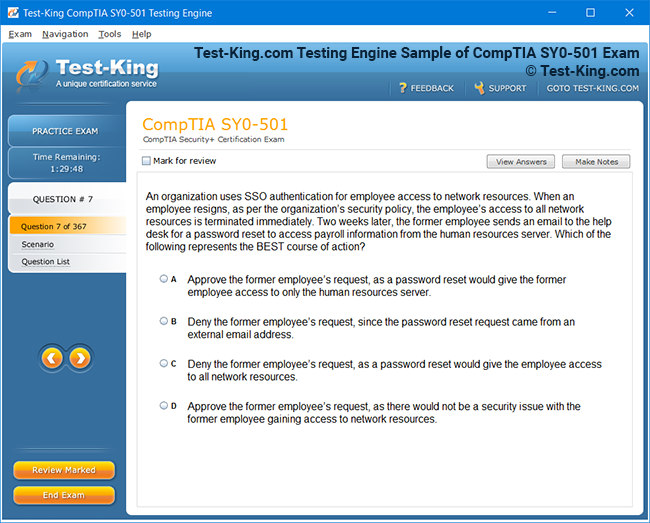
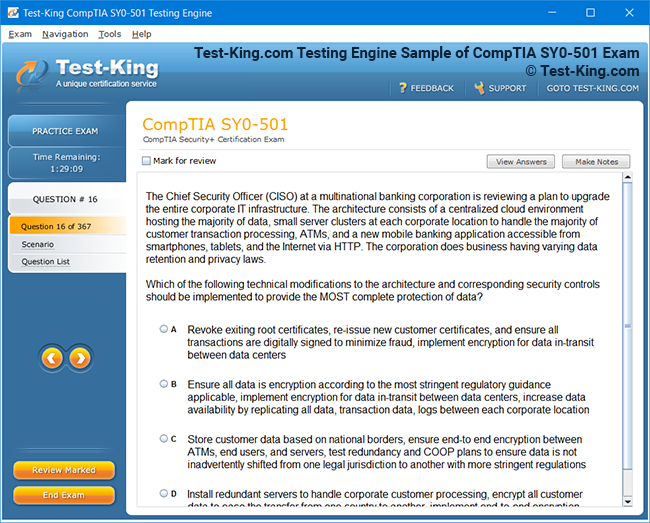
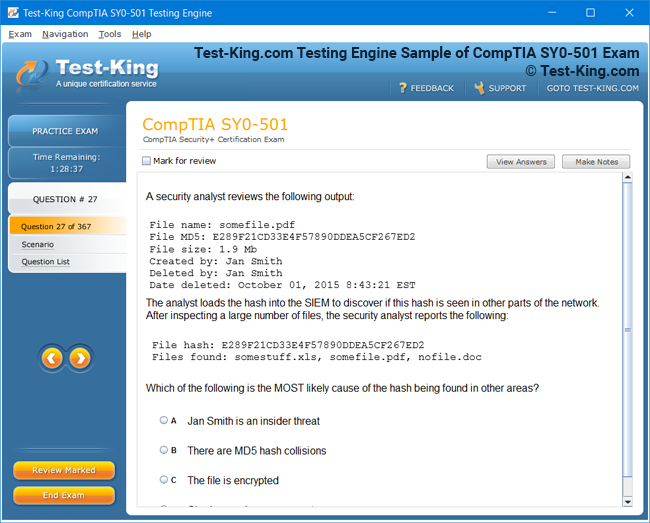
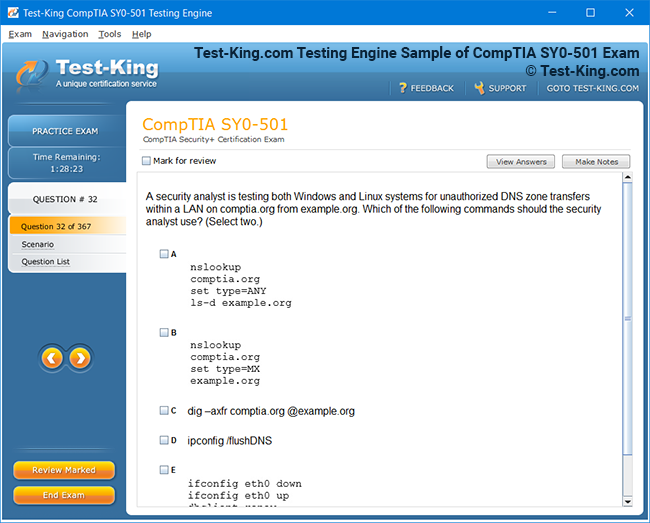
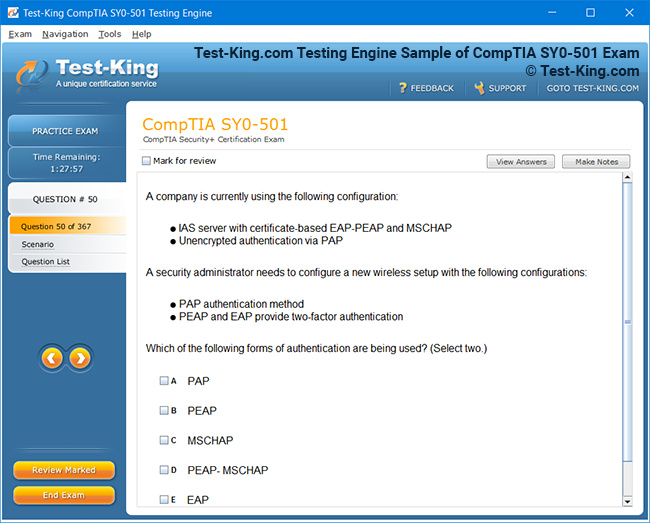
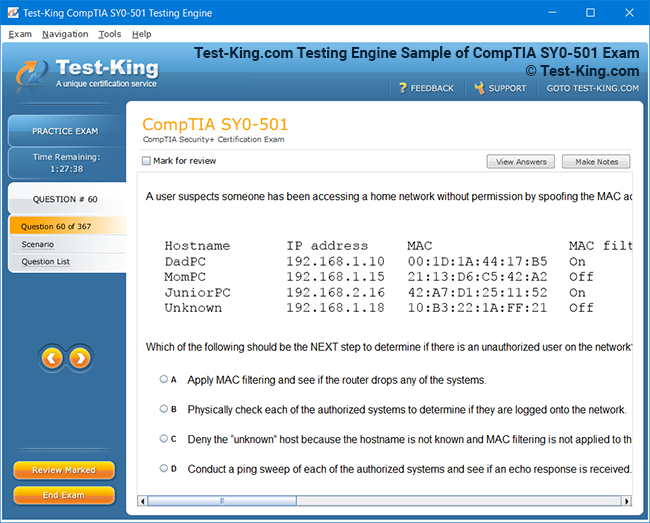
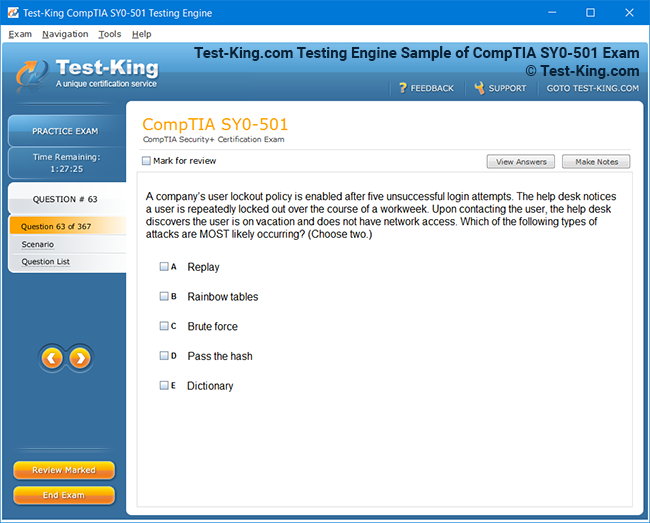
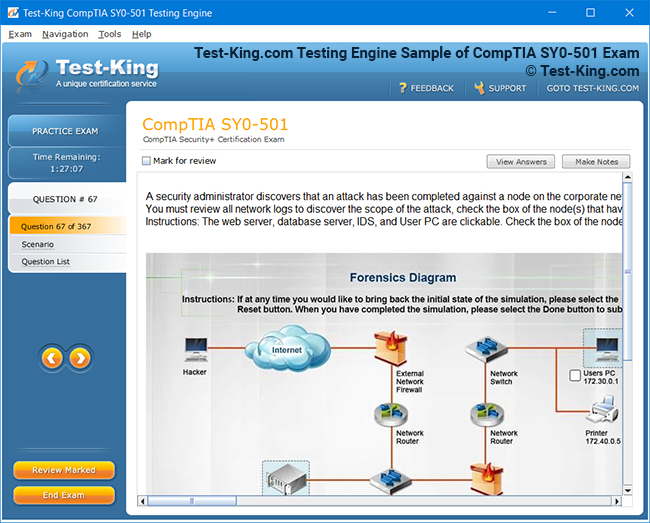
Product Screenshots
Frequently Asked Questions
How can I get the products after purchase?
All products are available for download immediately from your Member's Area. Once you have made the payment, you will be transferred to Member's Area where you can login and download the products you have purchased to your computer.
How long can I use my product? Will it be valid forever?
Test-King products have a validity of 90 days from the date of purchase. This means that any updates to the products, including but not limited to new questions, or updates and changes by our editing team, will be automatically downloaded on to computer to make sure that you get latest exam prep materials during those 90 days.
Can I renew my product if when it's expired?
Yes, when the 90 days of your product validity are over, you have the option of renewing your expired products with a 30% discount. This can be done in your Member's Area.
Please note that you will not be able to use the product after it has expired if you don't renew it.
How often are the questions updated?
We always try to provide the latest pool of questions, Updates in the questions depend on the changes in actual pool of questions by different vendors. As soon as we know about the change in the exam question pool we try our best to update the products as fast as possible.
How many computers I can download Test-King software on?
You can download the Test-King products on the maximum number of 2 (two) computers or devices. If you need to use the software on more than two machines, you can purchase this option separately. Please email support@test-king.com if you need to use more than 5 (five) computers.
What is a PDF Version?
PDF Version is a pdf document of Questions & Answers product. The document file has standart .pdf format, which can be easily read by any pdf reader application like Adobe Acrobat Reader, Foxit Reader, OpenOffice, Google Docs and many others.
Can I purchase PDF Version without the Testing Engine?
PDF Version cannot be purchased separately. It is only available as an add-on to main Question & Answer Testing Engine product.
What operating systems are supported by your Testing Engine software?
Our testing engine is supported by Windows. Andriod and IOS software is currently under development.
Top Genesys Exams
- GCP-GCX - Genesys Cloud CX Certified Professional - Consolidated
- GCX-GCD - Genesys Cloud CX: Developer
- GCP-GC-ARC - Genesys Cloud Architect Certified Specialist
- GC-AI-DB - Genesys Cloud: AI - Digital Bots & Knowledge
- GCP-GC-REP - Genesys Cloud Certified Professional - Reporting and Analytics
- GCP-GC-ADM - Genesys Cloud Certified Professional - Contact Center Admin
- GCP-GC-IMP - Genesys Cloud Certified Professional - Implementation
- GCX-ARC - Genesys Cloud CX: Architect
- GCX-WFM - Genesys Cloud CX: WEM - Workforce Management Certified Specialist
Key Concepts Every Genesys WFM System Consultant Should Know for GE0-806
A Genesys WFM System Consultant occupies a pivotal position within modern contact center operations, bridging the gap between technological capability and organizational workforce efficiency. The role necessitates a meticulous comprehension of forecasting, scheduling, intraday management, and reporting mechanisms. Unlike roles limited to system administration, a consultant must navigate a labyrinthine network of variables that influence staffing requirements and service quality. The consultant’s remit extends beyond routine configuration; it encompasses the anticipation of operational exigencies, optimization of agent schedules, and the orchestration of service-level adherence with precision. Mastery of Genesys Workforce Management tools allows the consultant to wield predictive analytics, data-driven insights, and scheduling algorithms to harmonize workforce allocation with dynamic customer demand.
Understanding the Role of a Genesys WFM System Consultant
The efficacy of a consultant is contingent upon an ability to interpret both quantitative data and qualitative indicators, integrating metrics such as average handle time, shrinkage, occupancy rates, and agent attrition into coherent operational strategies. Moreover, understanding the human dimension, including motivational drivers and behavioral patterns of agents, is indispensable, as accurate forecasting is intrinsically linked to the nuances of human behavior. Consultants must also liaise with multiple stakeholders, translating business requirements into system configurations while ensuring compliance with labor regulations and corporate policies.
Core Components of Genesys Workforce Management
Workforce management in the context of Genesys encompasses an array of interconnected components, each contributing to seamless contact center operations. Foremost among these is forecasting, the foundational pillar upon which staffing and scheduling decisions rest. Accurate forecasts rely on historical contact volumes, agent availability, and seasonal fluctuations, often augmented by advanced predictive methodologies such as time-series analysis, exponential smoothing, and machine learning algorithms. Forecasting is not a mere statistical exercise; it necessitates a deep understanding of operational idiosyncrasies, historical anomalies, and anticipated organizational changes.
Scheduling constitutes the operational manifestation of forecasts, translating projected workloads into tangible shift patterns. The process demands a balance between coverage requirements, labor regulations, and agent preferences. Effective scheduling mitigates underutilization and overstaffing, reduces operational costs, and enhances employee satisfaction. Consultants must also contend with constraints such as statutory leave, break allocations, and specialized skill requirements, necessitating a judicious application of optimization techniques to generate schedules that satisfy multiple, often competing objectives.
Intraday management ensures that workforce allocation remains aligned with actual demand throughout operational hours. This involves continuous monitoring of real-time metrics such as adherence, queue levels, service levels, and agent occupancy. Consultants are expected to implement rapid adjustments in response to deviations, including rescheduling breaks, reallocating agents, or triggering overtime. Intraday management is particularly crucial in environments with volatile call volumes or multi-channel interactions, requiring both analytical acumen and operational agility.
Reporting and analytics constitute the feedback loop that sustains continuous improvement. Comprehensive reports provide insights into forecast accuracy, schedule efficiency, adherence rates, agent performance, and service-level compliance. Advanced analytical techniques enable scenario planning, trend identification, and predictive modeling, equipping consultants to anticipate operational challenges and propose data-informed enhancements. The ability to translate complex datasets into actionable recommendations is a hallmark of expertise in the Genesys WFM domain.
Data Integrity and Sources
The cornerstone of effective workforce management lies in impeccable data integrity. Consultants must ensure that historical contact data, agent profiles, and performance metrics are accurate, complete, and up-to-date. Data anomalies, omissions, or inconsistencies can propagate through forecasting, scheduling, and intraday management processes, resulting in misaligned staffing and suboptimal service levels. Sources of data include telephony systems, customer relationship management platforms, human resources databases, and third-party analytics tools.
A sophisticated understanding of each data source’s strengths and limitations is imperative. Consultants often employ validation protocols, anomaly detection techniques, and reconciliation procedures to uphold data fidelity. Additionally, the integration of disparate data streams requires attention to temporal alignment, granularity, and normalization, ensuring that the inputs feeding into forecasting and scheduling algorithms are coherent and reliable. By cultivating robust data governance practices, consultants safeguard the accuracy and reliability of workforce management operations.
Forecasting Methodologies
Forecasting in Genesys Workforce Management is a synthesis of statistical rigor and operational insight. Quantitative techniques leverage historical contact volumes, average handle times, and shrinkage factors to project future demand with precision. These methods include moving averages, exponential smoothing, and autoregressive models, each suitable for different patterns of call volume variability. Qualitative insights complement these techniques, incorporating managerial foresight, anticipated business changes, and contextual knowledge not captured in historical data.
Advanced forecasting often incorporates probabilistic models and machine learning algorithms that can identify subtle patterns and correlations in voluminous datasets. Consultants must critically evaluate the assumptions and limitations inherent in each methodology, balancing predictive accuracy against operational feasibility. An understanding of seasonality, trend decomposition, and demand elasticity enables consultants to adjust forecasts dynamically, ensuring that scheduling and intraday management strategies are grounded in reliable, actionable projections.
Scheduling Principles
The translation of forecasts into actionable workforce plans necessitates a sophisticated understanding of scheduling principles. Effective schedules are a product of optimization, balancing service-level obligations against agent availability, labor regulations, and organizational constraints. Consultants must generate schedules that minimize overstaffing, avoid underutilization, and accommodate flexibility for unforeseen operational fluctuations.
Scheduling encompasses shift planning, break allocation, skill-based assignment, and rotation of tasks to ensure equitable workload distribution. Techniques such as integer programming, heuristic algorithms, and scenario simulations allow consultants to evaluate multiple scheduling permutations, selecting the solution that maximizes coverage while adhering to operational and regulatory constraints. Scheduling also serves as a tool for employee engagement, as consideration of individual preferences, fairness, and transparency fosters motivation and reduces attrition.
Intraday Management and Real-Time Adjustments
Intraday management is an essential mechanism for aligning workforce deployment with real-time demand fluctuations. Consultants continuously monitor key performance indicators, including adherence to schedules, queue lengths, service levels, and occupancy rates. Real-time interventions may involve adjusting agent breaks, reassigning tasks, activating reserve personnel, or implementing overtime measures.
The efficacy of intraday management hinges upon rapid situational assessment and agile decision-making. Consultants utilize real-time dashboards, automated alert systems, and predefined escalation protocols to respond promptly to deviations. By maintaining operational equilibrium during periods of volatility, intraday management ensures that service levels are met consistently, operational costs are controlled, and employee workload remains balanced.
Reporting, Analytics, and Continuous Improvement
Robust reporting and analytical capabilities are indispensable for sustained operational excellence. Consultants generate comprehensive reports encompassing forecast accuracy, schedule adherence, service-level attainment, agent performance, and productivity metrics. These reports facilitate data-driven decision-making, enabling proactive adjustments to workforce management strategies.
Advanced analytics extend beyond descriptive metrics, incorporating predictive and prescriptive insights. Scenario modeling, trend analysis, and what-if simulations allow consultants to anticipate potential disruptions, evaluate alternative approaches, and implement continuous improvements. The integration of analytical findings into operational practices ensures that workforce management evolves in concert with changing business demands and organizational priorities.
Integration with Genesys Ecosystem
A Genesys WFM System Consultant must also possess a nuanced understanding of how workforce management integrates with the broader Genesys ecosystem. This includes seamless interoperability with telephony, omnichannel routing, CRM systems, and reporting platforms. Integration ensures that data flows unimpeded across systems, enabling accurate forecasting, effective scheduling, and comprehensive performance analysis.
Consultants may leverage APIs, ETL processes, and middleware to facilitate data synchronization and operational automation. By understanding the interplay between workforce management and other Genesys modules, consultants can optimize workflows, enhance efficiency, and deliver cohesive solutions that align with organizational objectives.
Troubleshooting and Optimization
Operational environments invariably encounter anomalies, disruptions, or inefficiencies, necessitating systematic troubleshooting and optimization. Consultants must diagnose root causes of forecast inaccuracies, schedule conflicts, and intraday discrepancies, applying corrective measures that prevent recurrence. Optimization involves iterative refinement of processes, recalibration of forecasting models, and adjustment of scheduling algorithms to improve coverage, reduce costs, and enhance agent satisfaction.
Critical thinking, analytical rigor, and domain expertise underpin successful troubleshooting. Consultants must combine technical knowledge with practical insights, evaluating the impact of interventions on both operational outcomes and employee experience. A proactive approach to optimization ensures that workforce management systems remain resilient, adaptive, and aligned with organizational goals.
Leveraging Historical Data for Precise Forecasting
In Genesys Workforce Management, forecasting transcends simple estimation; it is an intricate amalgamation of statistical rigor, operational insight, and intuitive understanding of patterns within contact center dynamics. Consultants must delve into historical datasets, scrutinizing past call volumes, interaction durations, and agent availability to discern patterns that may influence future demand. This analysis involves identifying cyclical fluctuations, seasonality, and irregular spikes attributable to marketing campaigns, product launches, or unforeseen events. By synthesizing this information, consultants can construct predictive models that anticipate not only routine contact volumes but also anomalies that could strain operational capacity.
The fidelity of forecasts relies heavily on data integrity, encompassing accurate timestamps, consistent categorization of interaction types, and meticulous record-keeping of agent activity. Consultants employ normalization techniques to harmonize disparate data sources, ensuring that historical metrics align with current operational definitions. Advanced smoothing methods, such as exponential smoothing and moving averages, provide a foundation for short-term forecasting, while regression analysis and trend decomposition facilitate long-range projections. The ability to discern subtle correlations between variables such as call volume, agent skill levels, and external business cycles enhances the precision of workforce deployment strategies.
Scenario-Based Forecasting and Contingency Planning
Scenario-based forecasting is a sophisticated approach that allows consultants to prepare for multiple operational contingencies. By constructing alternative projections under varying assumptions, such as sudden spikes in customer inquiries or unanticipated agent absenteeism, consultants can develop resilient scheduling strategies. This method requires both quantitative analysis and managerial acumen, as real-world considerations often defy purely statistical models.
Contingency planning integrates scenario-based forecasts into actionable interventions. Consultants may predefine strategies for surge handling, including dynamic reassignment of agents, activation of reserve personnel, and cross-functional support. The capacity to pivot seamlessly between projected scenarios ensures that service levels remain consistent even during periods of operational turbulence. This approach cultivates an anticipatory mindset, where the workforce management system becomes a proactive instrument rather than a reactive tool.
Skill-Based Forecasting and Multi-Channel Integration
Modern contact centers are rarely monolithic; they encompass multiple communication channels, including voice, chat, email, and social media interactions. Skill-based forecasting is crucial in this context, as it aligns agent competencies with channel-specific requirements. Consultants must evaluate historical performance metrics, assess proficiency levels, and forecast demand for each interaction type. This granular approach ensures that agents with specialized skills are appropriately allocated, preventing service bottlenecks and enhancing customer experience.
Integrating multi-channel considerations requires an understanding of inter-channel interactions and substitution effects. For example, a surge in chat inquiries may alleviate some demand from voice channels, but only if agents possess the requisite skills. Consultants must model these interdependencies and incorporate them into both forecasting and scheduling algorithms. The result is a dynamic allocation strategy that optimizes agent utilization while maintaining high levels of service across all channels.
Optimization of Schedules Using Advanced Techniques
Scheduling in Genesys Workforce Management is not merely a logistical exercise; it is an optimization problem involving multiple constraints and objectives. Consultants employ techniques such as linear programming, heuristic algorithms, and metaheuristic methods to generate schedules that balance coverage requirements, labor regulations, and agent preferences. These advanced methods allow the exploration of a vast solution space to identify optimal or near-optimal schedules that minimize overstaffing and underutilization.
Effective schedules must also account for stochastic variables such as unexpected absences, fluctuating interaction volumes, and skill-specific contingencies. By incorporating probabilistic models into scheduling algorithms, consultants can create resilient plans that maintain service levels despite inherent uncertainties. Scenario testing and sensitivity analysis further enhance the robustness of schedules, providing insights into potential vulnerabilities and enabling preemptive corrective measures.
Intraday Monitoring and Predictive Adjustments
Intraday management extends the principles of forecasting and scheduling into real-time operations. Consultants monitor live metrics, including queue lengths, service levels, agent adherence, and occupancy rates, to identify deviations from projected performance. Predictive adjustments are essential to prevent service degradation; these may include reallocating agents, adjusting break schedules, or invoking temporary overtime measures.
Advanced intraday management incorporates predictive analytics that anticipate deviations before they manifest. For instance, by analyzing trends in call arrival rates, consultants can forecast imminent surges and implement preemptive staffing adjustments. This proactive approach reduces the need for reactive interventions, stabilizes service levels, and optimizes agent utilization. Consultants also employ escalation protocols and automated alert systems to ensure timely interventions, maintaining equilibrium between operational efficiency and employee well-being.
Integration of Workforce Management with Organizational Objectives
The utility of Genesys Workforce Management extends beyond operational efficiency; it serves as a strategic enabler aligned with broader organizational objectives. Consultants must ensure that workforce planning supports service-level commitments, customer satisfaction goals, and cost management targets. This requires a nuanced understanding of key performance indicators, corporate priorities, and strategic initiatives.
Integration involves translating organizational goals into actionable workforce strategies. For instance, an initiative to enhance customer satisfaction may necessitate increased staffing during peak hours, while cost containment objectives may require optimization of overtime allocation. Consultants balance these competing priorities by leveraging forecasting insights, scenario analysis, and scheduling optimization, ensuring that workforce management decisions are both operationally sound and strategically aligned.
Reporting and Analytical Insights for Decision-Making
Robust reporting and analytical capabilities underpin effective decision-making in Genesys WFM. Consultants generate detailed reports on forecast accuracy, schedule efficiency, adherence rates, agent performance, and service-level compliance. Beyond descriptive statistics, advanced analytics include predictive modeling, trend analysis, and scenario simulations that inform proactive interventions.
By translating complex datasets into actionable insights, consultants enable management to make informed decisions regarding staffing, scheduling, and operational improvements. Analytical outputs can reveal systemic inefficiencies, highlight skill gaps, and identify opportunities for process enhancements. This continuous feedback loop ensures that workforce management strategies evolve in concert with changing operational conditions and organizational goals.
Continuous Learning and System Adaptation
The dynamic nature of contact center operations necessitates continuous learning and system adaptation. Consultants must monitor evolving patterns in customer interactions, agent behavior, and operational metrics, adjusting forecasting models and scheduling algorithms accordingly. This iterative process fosters a culture of continuous improvement, ensuring that workforce management practices remain effective, responsive, and aligned with organizational needs.
Adapting the system also involves incorporating technological advancements, such as machine learning enhancements, predictive analytics modules, and integration with emerging communication channels. By remaining attuned to both internal performance data and external technological developments, consultants can enhance system resilience, operational efficiency, and strategic alignment.
Troubleshooting Complex Workforce Scenarios
Complex workforce scenarios often emerge from unexpected surges in demand, discrepancies in historical data, or configuration anomalies within the system. Consultants must apply methodical troubleshooting approaches, diagnosing root causes and implementing corrective measures to restore operational equilibrium. This involves analyzing historical trends, examining real-time metrics, and evaluating the interplay of various workforce components.
Successful troubleshooting is characterized by both analytical precision and practical insight. Consultants identify not only immediate remedies but also systemic improvements that prevent recurrence. Techniques may include recalibration of forecasting models, adjustment of scheduling parameters, or refinement of intraday intervention protocols. By addressing both the symptoms and underlying causes of workforce challenges, consultants ensure sustained service quality and operational resilience.
Strategic Workforce Alignment and Organizational Impact
The ultimate objective of advanced forecasting, scheduling, and intraday management is strategic workforce alignment. Consultants ensure that operational practices support organizational priorities, including customer experience excellence, cost efficiency, and employee engagement. By integrating predictive insights, optimization techniques, and real-time monitoring, consultants translate workforce management from a procedural function into a strategic enabler.
This alignment requires ongoing evaluation of performance metrics, proactive scenario planning, and collaboration with cross-functional stakeholders. Consultants play a critical role in shaping workforce strategies that are adaptable, data-driven, and cognizant of both operational imperatives and human factors. The ability to balance quantitative rigor with qualitative insight distinguishes proficient consultants, positioning them as indispensable assets within the Genesys ecosystem.
Real-Time Monitoring and Operational Awareness
Effective intraday management in Genesys Workforce Management requires meticulous attention to real-time operational metrics, which serve as both navigational instruments and diagnostic tools for the system consultant. Monitoring encompasses queue lengths, service levels, agent occupancy, adherence, and shrinkage, providing a dynamic portrait of contact center activity at any given moment. Consultants synthesize these data streams to detect deviations from planned forecasts and schedules, interpreting them through the prism of operational priorities and agent capabilities.
Real-time dashboards, alerts, and automated reporting mechanisms are crucial for sustaining awareness and responsiveness. A consultant must not merely observe these metrics but anticipate their trajectory, identifying trends that may presage service-level deterioration. The subtle interplay between historical patterns, current deviations, and emergent anomalies requires analytical acuity and rapid decision-making, as even brief misalignments between staffing and demand can cascade into longer-term operational inefficiencies.
Predictive Intraday Adjustments
The cornerstone of advanced intraday management is the ability to make predictive adjustments that forestall performance degradation. Consultants utilize a combination of historical data, trend extrapolation, and real-time indicators to forecast imminent spikes or troughs in contact volume. These predictions inform decisions such as reassigning agents, modifying break schedules, or initiating temporary overtime measures. By anticipating deviations rather than reacting to them, the consultant mitigates the operational risk associated with sudden fluctuations in workload.
Predictive adjustments are particularly valuable in multi-channel environments, where the confluence of voice, chat, email, and social interactions introduces additional complexity. Consultants must evaluate inter-channel dependencies, ensuring that reallocations in one channel do not inadvertently compromise performance in another. This dynamic orchestration preserves service quality while optimizing the utilization of available human resources.
Strategic Use of Real-Time Data
Real-time data within Genesys WFM extends beyond conventional metrics to encompass a wealth of operational intelligence. Consultants interpret adherence patterns, intraday shrinkage variations, agent occupancy, and response times, synthesizing them into actionable strategies. These insights inform decisions regarding load balancing, queue prioritization, and skill-based task assignment. By leveraging granular real-time intelligence, consultants can adjust workflows and resource allocation with surgical precision, enhancing both efficiency and employee experience.
Moreover, the integration of historical benchmarks with current performance data enables consultants to detect anomalies that might otherwise elude observation. Patterns such as repeated deviations in adherence during specific time intervals or recurrent surges in particular interaction channels can signal systemic issues, guiding proactive interventions that prevent operational disruption.
Multi-Scenario Intraday Planning
Sophisticated intraday management involves preparing for multiple operational contingencies. Consultants anticipate varying levels of demand, agent availability, and skill distribution, formulating a suite of alternative responses. This multi-scenario approach ensures resilience in the face of unpredictable fluctuations, reducing reliance on ad hoc interventions and minimizing the potential for service-level breaches.
By simulating potential operational challenges, consultants can predefine corrective measures such as cross-training agents for flexible allocation, initiating temporary staffing adjustments, or dynamically reprioritizing interaction queues. The systematic consideration of multiple scenarios transforms intraday management from a reactive process into a proactive, strategic function that sustains performance under diverse conditions.
Skill-Based Intraday Reallocation
Modern contact centers often require a nuanced approach to task assignment based on agent competencies. Skill-based intraday reallocation ensures that agents with specialized capabilities are deployed where they are most needed, maintaining service levels and enhancing customer satisfaction. Consultants evaluate real-time workloads, agent skill sets, and current queue conditions, reallocating resources dynamically to align capacity with demand.
This approach is particularly critical during periods of heightened activity or unexpected absenteeism, where the misalignment of skills and demand could severely impact performance. By maintaining a skill-sensitive operational model, consultants ensure that specialized interactions receive appropriate attention, while general workloads are distributed efficiently across the available workforce.
Integrating Predictive Analytics and Automation
Automation and predictive analytics are indispensable tools for advanced intraday management. Consultants utilize predictive models to anticipate workload spikes, identify potential bottlenecks, and optimize resource allocation in real time. Automation facilitates rapid execution of predefined adjustments, such as reassigning agents, modifying schedules, or triggering alerts, reducing latency and human error.
The synergy between predictive analytics and automation allows consultants to maintain equilibrium in highly dynamic environments, where minute deviations can have disproportionate operational consequences. By embedding analytical foresight into automated workflows, the consultant transforms data into timely, actionable interventions that preserve service quality and operational efficiency.
Reporting and Feedback Loops
Continuous improvement in intraday management is supported by robust reporting and feedback mechanisms. Consultants analyze both historical and real-time data to evaluate the effectiveness of adjustments, identify trends, and refine operational protocols. Metrics such as adherence, service-level attainment, forecast accuracy, and agent performance provide insights into systemic strengths and vulnerabilities.
Feedback loops enable iterative refinement of intraday strategies, fostering a cycle of learning and optimization. By systematically documenting interventions, outcomes, and lessons learned, consultants cultivate an evidence-based approach to workforce management, ensuring that operational decisions are both informed and repeatable.
Addressing Exceptional Operational Events
Unexpected events, whether technical outages, sudden spikes in contact volume, or widespread absenteeism, present unique challenges for intraday management. Consultants must employ a combination of rapid assessment, resource reallocation, and contingency planning to mitigate these disruptions. Drawing upon historical data, real-time metrics, and scenario simulations, they implement strategies that preserve service levels while minimizing stress on personnel.
These exceptional events test both the resilience of the workforce management system and the adaptability of the consultant. Effective responses balance operational exigencies with considerations of agent capacity, well-being, and regulatory compliance, ensuring that interventions are sustainable and ethically sound.
Coordination with Cross-Functional Teams
Intraday management does not occur in isolation; it requires close coordination with operations, human resources, and technical support teams. Consultants communicate adjustments, anticipate interdependencies, and align actions across organizational functions to ensure cohesive execution. This collaborative approach enhances situational awareness, improves the accuracy of interventions, and reinforces accountability for operational outcomes.
By maintaining strong communication channels and shared understanding among stakeholders, consultants facilitate smoother implementation of intraday adjustments. This coordination mitigates potential conflicts, reduces response times, and supports a more agile operational environment.
Continuous System Refinement
The practice of intraday management extends beyond immediate operational adjustments to include ongoing refinement of forecasting, scheduling, and reporting mechanisms. Consultants analyze patterns of recurring deviations, identify systemic inefficiencies, and implement improvements to predictive models and operational protocols.
Continuous refinement ensures that the workforce management system evolves in response to both internal performance data and external operational pressures. By iteratively enhancing system accuracy, responsiveness, and robustness, consultants contribute to sustainable operational excellence and strategic alignment within the Genesys ecosystem.
Understanding System Integrations in Genesys WFM
A Genesys WFM System Consultant must possess an in-depth understanding of the ecosystem in which workforce management operates. Integration is the linchpin that ensures seamless connectivity between WFM, telephony platforms, customer relationship management systems, and reporting infrastructures. Consultants must evaluate the flow of data from multiple sources, reconciling discrepancies and ensuring that information is accurate, timely, and actionable. The ability to synthesize disparate streams of data is essential for maintaining forecast accuracy, schedule reliability, and operational agility.
Integration extends beyond mere connectivity; it encompasses the orchestration of interdependent modules to support predictive analytics, real-time monitoring, and multi-channel management. For example, accurate forecasting relies on historical interaction data from telephony and digital channels, while intraday adjustments depend on the immediate reflection of agent availability, queue lengths, and service-level performance. By understanding these interdependencies, consultants can optimize system performance and anticipate operational challenges before they manifest.
Configuring Genesys WFM for Organizational Efficiency
Effective configuration of Genesys Workforce Management requires a combination of technical acumen and operational insight. Consultants are responsible for setting up schedules, assigning skills, defining work rules, and establishing adherence protocols that align with organizational policies and regulatory requirements. This configuration must accommodate labor laws, contractual obligations, agent preferences, and operational objectives, creating a framework that is both flexible and resilient.
The configuration process includes fine-tuning forecasting models, adjusting scheduling algorithms, and establishing triggers for intraday interventions. Consultants also configure dashboards, alerts, and reporting templates to facilitate real-time visibility into operational metrics. By creating a system architecture that is adaptable yet robust, consultants enable organizations to respond effectively to evolving workloads and business priorities.
Multi-Channel Integration and Skill Optimization
Modern contact centers operate across a multitude of channels, including voice, chat, email, and social media. Integrating workforce management across these channels requires a nuanced understanding of interdependencies, substitution effects, and agent capabilities. Consultants must ensure that skill-based routing is accurately represented in the system, enabling agents to be deployed efficiently according to both proficiency and demand.
Skill optimization involves analyzing agent performance metrics, historical workloads, and channel-specific interaction patterns. By aligning skills with demand in real time, consultants prevent bottlenecks and enhance customer experience. The ability to balance specialized expertise with general capacity ensures that operational goals are met without overburdening individual agents.
Data Validation and System Accuracy
Data integrity is foundational to all workforce management operations. Consultants must ensure that historical contact data, agent profiles, schedule adherence, and performance metrics are meticulously maintained and validated. Errors or inconsistencies in these datasets can propagate through forecasting, scheduling, and intraday management, resulting in service-level breaches, operational inefficiencies, and diminished agent satisfaction.
Validation includes reconciling data across multiple platforms, detecting anomalies, and implementing corrective measures. Consultants may perform trend analysis to identify recurring discrepancies or utilize automated checks to ensure consistency. Maintaining a rigorous approach to data governance safeguards the reliability of operational insights and enables confident decision-making in complex scenarios.
Troubleshooting Configuration Anomalies
Even with meticulous configuration, anomalies and disruptions inevitably arise within Genesys WFM. Consultants must possess a systematic approach to troubleshooting, identifying the root causes of issues and implementing corrective measures. Common challenges include discrepancies between forecasted and actual demand, misalignment of agent schedules, and unexpected deviations in intraday performance.
Troubleshooting involves analyzing historical trends, evaluating real-time metrics, and understanding system interdependencies. Consultants assess the impact of each anomaly on service levels, agent workload, and operational efficiency. Effective troubleshooting requires both analytical precision and practical judgment, as interventions must address immediate issues while preserving long-term system stability.
Scenario-Based Problem Resolution
Complex operational scenarios often demand scenario-based problem resolution. Consultants simulate alternative courses of action, assessing the implications of each intervention on service levels, agent satisfaction, and resource utilization. This method enables the identification of solutions that are both effective and sustainable, minimizing the risk of recurring disruptions.
For instance, a sudden surge in call volume may necessitate a combination of intraday rescheduling, overtime deployment, and skill-based reassignment. By modeling these scenarios in advance, consultants can execute interventions rapidly and with minimal disruption to ongoing operations. Scenario-based resolution reinforces the consultant’s role as a strategic operator, ensuring that workforce management remains proactive rather than reactive.
Continuous System Monitoring
Monitoring extends beyond real-time metrics to include ongoing observation of system performance, configuration efficacy, and process adherence. Consultants track the accuracy of forecasting models, the efficiency of schedules, and the effectiveness of intraday adjustments. Continuous monitoring enables early detection of trends, inefficiencies, or deviations that could compromise operational outcomes.
By maintaining vigilance across multiple dimensions of system performance, consultants ensure that workforce management remains aligned with both operational imperatives and organizational objectives. This holistic approach encompasses data quality, process compliance, technical integrity, and strategic alignment, creating a resilient framework for sustained performance.
Enhancing Forecast Accuracy Through Iterative Refinement
Forecast accuracy is central to operational effectiveness. Consultants employ iterative refinement techniques to enhance the precision of predictions, adjusting historical data inputs, evaluating model assumptions, and recalibrating algorithms based on observed outcomes. This cyclical process improves the reliability of schedules, reduces overstaffing and underutilization, and stabilizes service levels across multiple channels.
Iteration also involves the incorporation of external variables, such as marketing campaigns, seasonal trends, or macroeconomic shifts, which may influence contact volumes. By continuously refining forecasting models, consultants maintain operational agility and ensure that workforce management strategies remain robust under diverse conditions.
Optimizing Scheduling and Resource Allocation
Scheduling optimization is a core competency of the Genesys WFM System Consultant. Consultants leverage advanced methods to allocate resources efficiently, balancing service-level objectives with agent availability, labor regulations, and organizational priorities. Optimization may involve adjusting shift patterns, balancing workloads, or deploying multi-skill agents across multiple channels to address emergent demand.
Analytical tools and scenario simulations allow consultants to evaluate the potential impact of various scheduling configurations, identifying solutions that maximize coverage, minimize cost, and enhance employee satisfaction. Optimization is not a static exercise; it requires continuous adaptation to evolving operational realities, workforce dynamics, and strategic goals.
Integrating Analytics for Operational Insights
Analytics provides the connective tissue that informs operational decision-making, continuous improvement, and strategic planning. Consultants analyze metrics such as forecast accuracy, schedule adherence, intraday performance, and service-level attainment to identify patterns, trends, and opportunities for enhancement. Advanced analytics techniques, including predictive modeling and trend analysis, enable consultants to anticipate operational challenges and implement preemptive interventions.
By integrating analytical insights into operational workflows, consultants ensure that workforce management is both evidence-based and forward-looking. This integration facilitates data-driven decision-making, strengthens operational resilience, and supports strategic alignment across the organization.
Addressing Exceptional Operational Challenges
Exceptional events, such as unanticipated absences, technical disruptions, or surges in contact volume, require a calibrated response from the consultant. Addressing these challenges involves rapid assessment, resource reallocation, and the deployment of contingency protocols. Consultants rely on a combination of historical data, real-time monitoring, and scenario simulations to restore equilibrium and maintain service levels.
The effectiveness of responses to exceptional events is contingent upon prior planning, operational awareness, and strategic foresight. By preparing for a spectrum of contingencies, consultants minimize the impact of unforeseen events and preserve both operational continuity and employee well-being.
Coordination and Stakeholder Engagement
Workforce management optimization necessitates active coordination with cross-functional teams, including operations, human resources, technical support, and management stakeholders. Consultants communicate changes, anticipate interdependencies, and align workforce interventions with organizational priorities. Effective stakeholder engagement ensures cohesive execution, accelerates decision-making, and reinforces accountability for operational outcomes.
By fostering collaboration and shared understanding, consultants facilitate smoother implementation of complex interventions, enhance situational awareness, and promote alignment between workforce management practices and broader business objectives.
Continuous Learning and System Evolution
The dynamic nature of contact center operations requires ongoing learning and adaptation. Consultants continuously evaluate system performance, identify opportunities for improvement, and incorporate emerging technologies, methodologies, and best practices. This iterative evolution ensures that Genesys Workforce Management remains effective, resilient, and strategically aligned.
Continuous learning encompasses both technical competencies and operational acumen. Consultants remain attuned to changes in customer behavior, agent dynamics, and organizational priorities, applying insights to enhance forecasting, scheduling, intraday management, and analytics. By embedding adaptability into the workforce management framework, consultants sustain operational excellence and position the organization for long-term success.
The Importance of Data-Driven Insights in Workforce Management
In Genesys Workforce Management, reporting and analytics serve as the lifeblood for operational precision and strategic foresight. System consultants leverage these tools to translate complex datasets into actionable intelligence, shaping forecasts, schedules, and intraday adjustments with acuity. The insights derived from historical and real-time data enable consultants to discern patterns in agent behavior, contact volumes, and service-level performance. Such insights are indispensable in constructing strategies that optimize efficiency, maintain service quality, and balance workload across multifaceted communication channels.
The potency of analytics lies not solely in the aggregation of numbers but in their interpretation. Consultants must identify correlations between agent occupancy, shrinkage, and adherence to detect inefficiencies that might otherwise remain obscured. By marrying quantitative analysis with operational understanding, consultants create a framework in which workforce management decisions are evidence-based, predictive, and strategically aligned with organizational objectives.
Designing Effective Reports for Operational Excellence
Reporting in Genesys WFM extends beyond generic metrics to encompass multidimensional insights tailored to operational, managerial, and strategic needs. Consultants develop comprehensive reports covering forecast accuracy, schedule efficiency, agent performance, service-level compliance, and intraday interventions. Each report is constructed to provide actionable intelligence that supports decision-making across multiple organizational layers.
Effective reports integrate both historical context and real-time performance data, offering a nuanced view of operational dynamics. For instance, a report might reveal that certain time intervals consistently experience surges in call volume, highlighting opportunities for refined scheduling or targeted intraday adjustments. By presenting information in a coherent and interpretable format, consultants enable stakeholders to respond swiftly and accurately to emerging operational challenges.
Leveraging Predictive Analytics for Proactive Management
Predictive analytics transforms reporting from a retrospective exercise into a forward-looking tool that guides proactive decision-making. Consultants utilize historical interaction patterns, agent performance metrics, and external variables to anticipate future demand and operational bottlenecks. This foresight informs schedule adjustments, intraday interventions, and resource allocation strategies, reducing the likelihood of service-level breaches.
The integration of predictive analytics enables consultants to implement scenario modeling, assessing the potential impact of various operational contingencies. For example, a projected surge in digital interactions can be managed through preemptive agent reallocation, cross-channel staffing, and optimized break scheduling. By anticipating rather than reacting to operational variability, consultants enhance resilience, maintain service quality, and optimize workforce utilization.
Trend Analysis and Performance Evaluation
Analyzing trends over time allows consultants to detect subtle shifts in contact center dynamics that might otherwise escape notice. Metrics such as average handle time, queue abandonment rates, and agent adherence are evaluated for recurring patterns, seasonality, and anomalies. Trend analysis illuminates opportunities for process refinement, skill development, and operational adjustment.
Performance evaluation extends beyond individual metrics to encompass holistic assessment of system efficacy. Consultants examine the interplay between forecasting accuracy, scheduling efficiency, intraday management, and agent productivity. This integrated perspective identifies systemic inefficiencies, highlights best practices, and informs iterative enhancements that elevate both operational and strategic outcomes.
Scenario Modeling and Operational Forecasting
Scenario modeling provides consultants with a framework to anticipate diverse operational contingencies and evaluate the impact of potential interventions. By simulating multiple hypothetical conditions, such as sudden spikes in call volume, agent absenteeism, or skill shortages, consultants can assess the efficacy of different strategies before implementation.
Operational forecasting derived from scenario modeling enables proactive decision-making, ensuring that schedules, intraday adjustments, and skill allocations remain aligned with both anticipated demand and organizational objectives. The iterative process of modeling, evaluating, and refining interventions creates a resilient and adaptive workforce management environment that responds effectively to both expected and unforeseen events.
Multi-Channel Reporting and Analysis
Modern contact centers operate across a multitude of channels, including voice, chat, email, and social media. Consultants must ensure that reporting captures performance across all channels, reflecting both individual and aggregated metrics. Multi-channel reporting enables identification of interdependencies, workload imbalances, and skill gaps, providing a comprehensive view of operational health.
Analyzing multi-channel data allows consultants to optimize agent deployment, allocate resources based on demand, and balance workloads across channels. By integrating channel-specific insights with overarching workforce management strategies, consultants maintain service quality, maximize agent efficiency, and enhance customer experience.
Continuous Feedback Loops for Operational Refinement
Continuous improvement in workforce management relies on structured feedback loops that capture operational outcomes, evaluate interventions, and inform subsequent adjustments. Consultants monitor the efficacy of forecasting models, schedule adherence, intraday management protocols, and resource allocation strategies. Insights derived from these evaluations guide iterative refinements, ensuring that processes evolve in response to both internal performance metrics and external business conditions.
Feedback loops also facilitate knowledge transfer within the organization, enabling teams to learn from operational successes and setbacks. By institutionalizing continuous learning, consultants embed adaptability into workforce management practices, fostering a culture of evidence-based decision-making and proactive problem-solving.
Identifying Systemic Inefficiencies
Systemic inefficiencies can manifest in numerous forms, including recurring schedule deviations, forecast inaccuracies, suboptimal agent utilization, and skill mismatches. Consultants analyze comprehensive reporting and analytical outputs to detect these patterns, isolating root causes and devising corrective interventions.
Addressing inefficiencies requires both quantitative analysis and qualitative understanding of operational dynamics. Consultants may adjust forecasting parameters, recalibrate scheduling algorithms, optimize intraday interventions, or provide targeted agent training. Through systematic identification and remediation of inefficiencies, workforce management systems achieve higher levels of reliability, efficiency, and operational harmony.
Optimizing Agent Performance Through Analytics
Analytics provides a lens through which consultant can enhance agent performance, ensuring that workforce capacity is utilized optimally and service levels are consistently met. Performance metrics such as adherence, average handle time, occupancy, and quality scores are monitored and analyzed to identify areas for improvement.
Consultants use insights derived from analytics to inform coaching, training, and skill development programs. By aligning individual performance objectives with broader operational goals, consultants enhance both agent engagement and overall contact center effectiveness. Additionally, analytics supports the identification of high-performing agents and potential skill gaps, enabling strategic allocation of talent across channels and tasks.
Strategic Alignment of Reporting with Organizational Goals
Reporting and analytics are most effective when aligned with organizational priorities, including customer satisfaction, operational efficiency, and cost optimization. Consultants translate insights into actionable strategies that support these goals, ensuring that workforce management contributes meaningfully to the broader business agenda.
Strategic alignment requires the consultant to interpret metrics in the context of organizational objectives, balancing short-term operational demands with long-term strategic priorities. This perspective allows for informed decision-making, resource optimization, and sustained performance excellence across all facets of workforce management.
Advanced Analytical Techniques for Operational Foresight
Advanced analytical techniques, including predictive modeling, regression analysis, and scenario simulations, empower consultants to anticipate operational challenges and optimize workforce allocation. These techniques facilitate a deeper understanding of complex interactions between forecasting, scheduling, intraday management, and agent behavior.
By employing sophisticated models, consultants can evaluate the potential impact of hypothetical interventions, refine operational strategies, and enhance resilience against variability in contact volumes, agent availability, and service-level requirements. Analytical rigor enables proactive management and the continuous elevation of operational standards.
Integration of Feedback into Workforce Strategy
The insights derived from reporting and analytics must be integrated into workforce management strategies to create a cycle of continuous improvement. Consultants translate findings into adjustments to forecasting, scheduling, intraday management, and agent deployment.
This integration ensures that workforce management practices remain adaptive, responsive, and evidence-driven. By embedding analytical feedback into daily operations, consultants maintain alignment with service-level objectives, optimize resource utilization, and enhance overall contact center performance.
Enhancing Organizational Agility Through Data
A data-centric approach to workforce management equips organizations with operational agility, enabling rapid response to fluctuations in demand, unexpected absences, or evolving customer needs. Consultants leverage reporting and analytical tools to create a dynamic operational framework, capable of adapting to both anticipated trends and unforeseen disruptions.
Operational agility also extends to strategic decision-making, as insights from data inform policy adjustments, resource planning, and long-term workforce initiatives. By fostering an organization-wide understanding of operational metrics and trends, consultants promote informed, timely, and effective interventions that sustain performance and competitive advantage.
Exam Strategy and Conceptual Mastery
Achieving proficiency in the Genesys WFM GE0-806 exam requires a combination of technical knowledge, operational understanding, and strategic preparation. A System Consultant must approach the examination with a structured strategy that emphasizes comprehension of core concepts, application of practical scenarios, and analytical thinking. The exam tests not only familiarity with forecasting, scheduling, intraday management, and reporting but also the ability to integrate these functions into cohesive operational strategies.
Mastery begins with a thorough understanding of the Genesys Workforce Management environment, including system configuration, skill-based allocation, and multi-channel integration. Consultants must internalize the interplay between historical data, predictive modeling, and real-time adjustments to ensure accurate forecasting and effective resource deployment. Understanding the nuances of agent adherence, shrinkage, occupancy, and service-level expectations is pivotal, as these metrics underpin operational decisions and demonstrate competence in workforce management principles.
Deep Understanding of Forecasting Techniques
Forecasting is a foundational component of workforce management, and mastery of this domain is critical for exam success. Consultants must be adept at analyzing historical contact data, identifying cyclical patterns, and recognizing anomalies that could distort predictive models. Advanced techniques such as exponential smoothing, regression analysis, and time-series forecasting are frequently applied to anticipate workload fluctuations with precision.
In addition to quantitative methods, qualitative insights inform forecasting accuracy. Consultants must incorporate knowledge of organizational changes, marketing initiatives, seasonal variations, and external influences into predictive models. This dual approach, combining statistical rigor with operational intuition, equips candidates to address complex exam scenarios and apply workforce management principles effectively.
Optimizing Scheduling and Resource Allocation
Effective scheduling is the operational manifestation of forecasting insights, requiring the consultant to translate projected workloads into actionable workforce plans. Exam preparation should emphasize understanding shift patterns, break allocation, skill-based assignments, and adherence to labor regulations. Consultants must be able to evaluate scheduling trade-offs, optimize resource allocation, and anticipate the impact of deviations on service levels.
Candidates should familiarize themselves with scenario-based exercises, where multiple constraints and objectives must be balanced. Optimization techniques, including heuristic analysis and scenario simulations, allow consultants to identify schedules that minimize overstaffing, avoid underutilization, and maintain agent satisfaction. Developing proficiency in these strategies ensures readiness for practical and theoretical exam questions.
Intraday Management and Real-Time Adjustments
Intraday management represents the dynamic application of workforce management concepts, where consultants monitor and adjust operations in real time. Candidates must understand the importance of adherence monitoring, queue length evaluation, occupancy analysis, and service-level tracking. Effective intraday management requires rapid assessment, predictive adjustment, and resource reallocation to maintain operational equilibrium.
Exam preparation should include understanding how real-time data informs decision-making. Consultants are expected to recognize patterns that indicate impending deviations, such as sudden surges in contact volume or unexpected absenteeism, and implement corrective measures efficiently. Mastery of these techniques demonstrates the ability to apply theoretical knowledge in a practical operational context.
Leveraging Reporting and Analytics for Operational Insight
Reporting and analytics serve as the feedback mechanism that informs continuous improvement and strategic decision-making. Consultants must develop proficiency in interpreting performance metrics, identifying trends, and deriving actionable insights from complex datasets. Analytical capabilities extend beyond descriptive reporting, incorporating predictive and prescriptive models that anticipate challenges and optimize workforce deployment.
Exam candidates should focus on understanding key metrics, including forecast accuracy, schedule adherence, agent performance, service-level attainment, and intraday adjustments. By synthesizing these insights, consultants can make informed recommendations that enhance operational efficiency, support strategic objectives, and improve agent engagement.
Troubleshooting and System Optimization
A crucial area for exam readiness involves troubleshooting operational anomalies and optimizing system performance. Consultants must be able to diagnose issues arising from configuration discrepancies, forecast inaccuracies, or scheduling conflicts, and implement corrective measures that prevent recurrence.
Exam scenarios often present candidates with complex challenges, requiring analytical thinking, problem-solving skills, and a methodical approach. Understanding the root causes of disruptions, evaluating the impact of interventions, and applying system enhancements demonstrates mastery of both technical and operational dimensions of workforce management.
Integration with Multi-Channel Operations
Modern contact centers are increasingly multi-channel, encompassing voice, chat, email, and social media interactions. Candidates must understand how workforce management integrates with these channels, balancing demand, optimizing skill-based allocation, and ensuring seamless service delivery. Multi-channel proficiency involves interpreting interdependencies, predicting workload shifts, and deploying agents effectively across diverse interaction streams.
Exam preparation should include scenarios in which consultants allocate resources dynamically, manage skill requirements, and respond to emergent patterns across channels. Demonstrating competency in multi-channel integration reflects the ability to maintain operational excellence in complex, real-world environments.
Advanced Analytical Techniques and Scenario Modeling
Candidates should develop fluency in advanced analytical techniques, including scenario modeling, predictive simulations, and trend analysis. These methodologies allow consultants to evaluate potential interventions, anticipate operational bottlenecks, and optimize workforce deployment. Scenario modeling, in particular, is valuable for understanding the impact of varying demand levels, agent availability, and skill distribution on service levels and resource utilization.
Analytical rigor and strategic foresight are essential for translating data into actionable recommendations. Exam preparation should emphasize the application of these techniques in hypothetical and practical scenarios, reinforcing the candidate’s ability to navigate complex operational challenges.
Enhancing Agent Performance and Engagement
Workforce management extends beyond operational metrics to encompass agent performance, satisfaction, and engagement. Consultants must recognize how scheduling, adherence, forecasting accuracy, and workload balance influence employee experience. Exam preparation should include understanding strategies to optimize agent engagement, provide targeted coaching, and align individual performance with organizational objectives.
By integrating workforce management principles with human resource considerations, candidates demonstrate a holistic approach to operational efficiency. This perspective emphasizes both quantitative precision and qualitative understanding, highlighting the consultant’s capacity to manage people and processes in concert.
Strategic Alignment with Organizational Goals
A successful Genesys WFM System Consultant ensures that workforce management practices are aligned with broader organizational objectives, including customer satisfaction, operational efficiency, and cost containment. Exam readiness requires comprehension of how forecasting, scheduling, intraday adjustments, reporting, and analytics support these strategic goals.
Candidates must be able to articulate how operational decisions influence organizational performance, balance competing priorities, and implement initiatives that reinforce alignment between workforce management activities and enterprise objectives. Mastery in this area demonstrates a comprehensive understanding of workforce management as both a tactical and strategic function.
Continuous Improvement and Operational Refinement
Continuous improvement is central to workforce management excellence. Consultants must be adept at analyzing operational outcomes, identifying areas for enhancement, and implementing iterative refinements. Exam preparation should include techniques for evaluating system performance, adjusting forecasting models, refining scheduling algorithms, and optimizing intraday interventions.
By embedding a culture of continuous learning and refinement, consultants ensure that workforce management systems evolve with organizational needs, technological advancements, and changing operational conditions. This competency reinforces the candidate’s readiness to sustain long-term performance and adapt to dynamic environments.
Mock Scenarios and Exam Simulation
To consolidate learning and reinforce readiness, candidates should engage in mock scenarios and exam simulations. These exercises replicate real-world challenges, requiring the application of forecasting, scheduling, intraday management, analytics, and troubleshooting skills under time constraints. Simulation fosters familiarity with exam structure, cultivates decision-making acumen, and enhances confidence in applying knowledge effectively.
Mock scenarios should include a range of operational complexities, multi-channel considerations, and emergent challenges, ensuring comprehensive preparedness for the diversity of questions encountered in the GE0-806 examination.
Time Management and Exam Techniques
Effective time management is critical during the exam. Candidates should develop strategies to allocate sufficient time for complex scenario-based questions, data interpretation, and problem-solving exercises. Familiarity with the exam format, question types, and weighting enables candidates to prioritize high-value tasks, reduce errors, and maintain composure under pressure.
Incorporating systematic approaches, such as reading questions carefully, eliminating implausible options, and applying operational principles to guide reasoning, enhances performance. A disciplined approach to time management ensures that knowledge is translated into successful outcomes during the examination.
Building Confidence Through Review and Practice
Reinforcement through review and practice is essential for mastering key concepts and exam readiness. Candidates should revisit core principles, examine historical scenarios, and practice problem-solving exercises to solidify understanding. Reviewing operational case studies, reflecting on real-world applications, and self-testing reinforces comprehension and builds confidence in applying workforce management concepts.
Regular practice also uncovers knowledge gaps, allowing targeted refinement and focused study. By engaging in deliberate and structured review, candidates enhance retention, operational reasoning, and preparedness for complex exam questions.
Leveraging Resources and Study Materials
Utilizing authoritative resources, study guides, and official documentation supports comprehensive exam preparation. Candidates should explore system manuals, operational guides, and workforce management best practices to ensure a complete understanding of the Genesys WFM environment. Integrating multiple resources enriches knowledge, provides diverse perspectives, and reinforces the practical application of concepts.
Effective use of resources includes synthesizing information from technical documentation, scenario examples, analytical reports, and industry insights. This multi-faceted approach equips candidates to navigate the complexities of the exam confidently and competently.
Conclusion
Mastery of the Genesys WFM GE0-806 exam demands a holistic understanding of workforce management principles, operational intricacies, and strategic integration. Candidates must demonstrate proficiency in forecasting, scheduling, intraday management, reporting, analytics, and troubleshooting while aligning operational practices with organizational goals. Through diligent study, practical scenario application, analytical rigor, and continuous refinement, consultants cultivate the expertise necessary to excel.
Preparation that emphasizes conceptual clarity, real-world application, and strategic foresight not only ensures success in the examination but also equips consultants to deliver exceptional operational performance within dynamic contact center environments. By integrating knowledge, practice, and critical thinking, candidates solidify their capabilities as proficient and effective Genesys WFM System Consultants.