

Exam Code: GE0-807
Exam Name: Genesys Certified Professional 8 - System Consultant, Outbound Voice
Certification Provider: Genesys
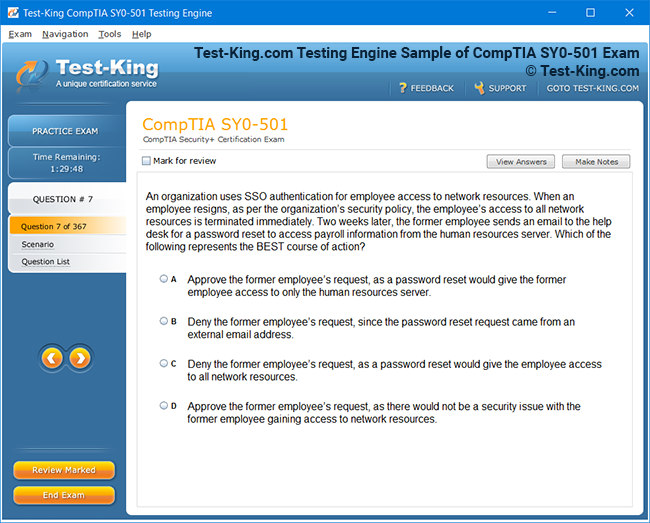
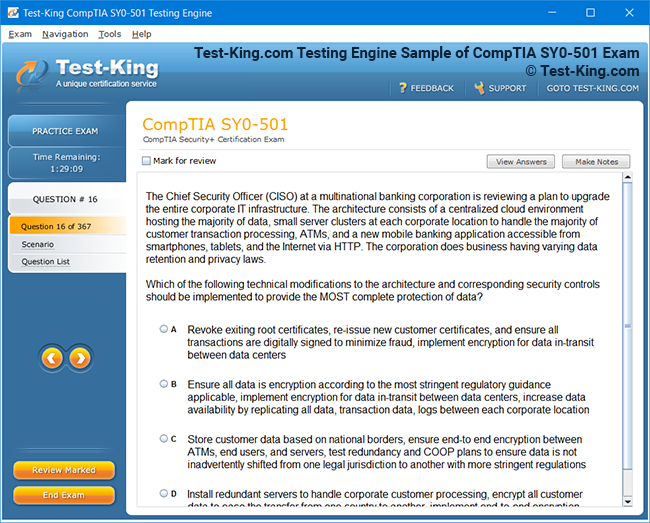
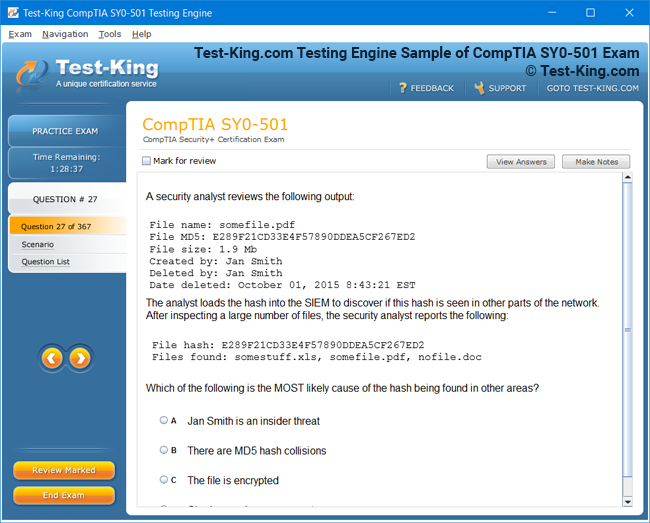
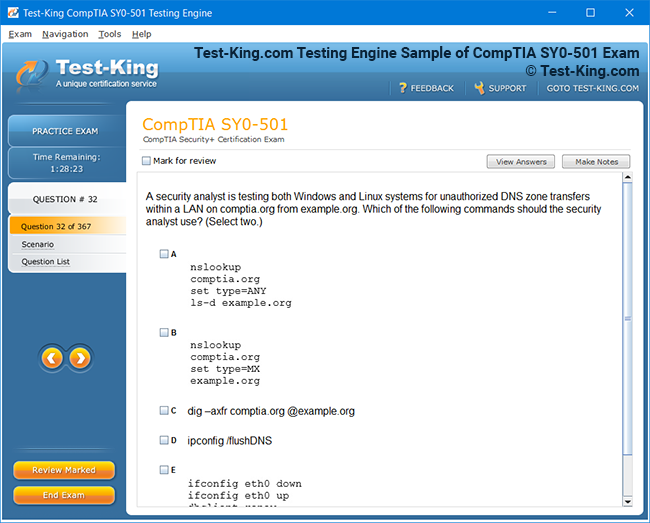
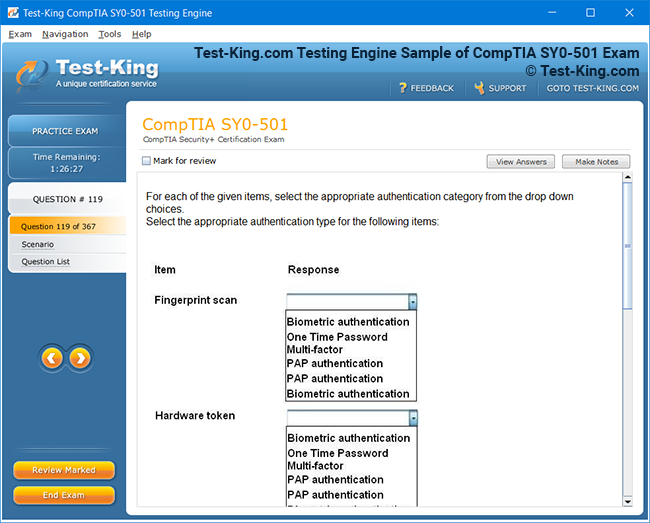
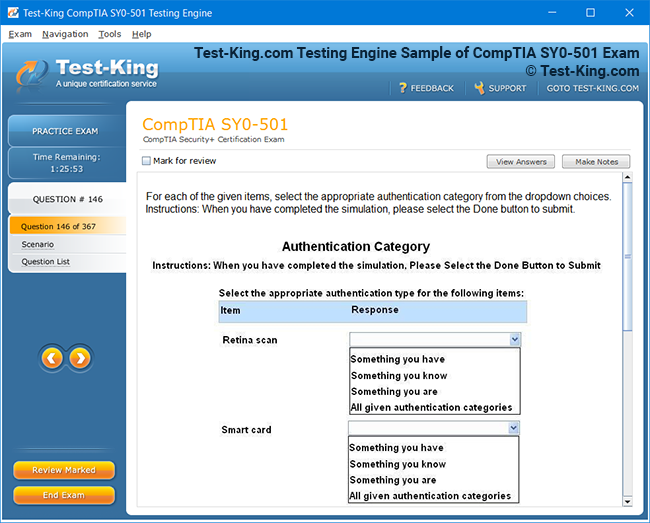
Product Screenshots
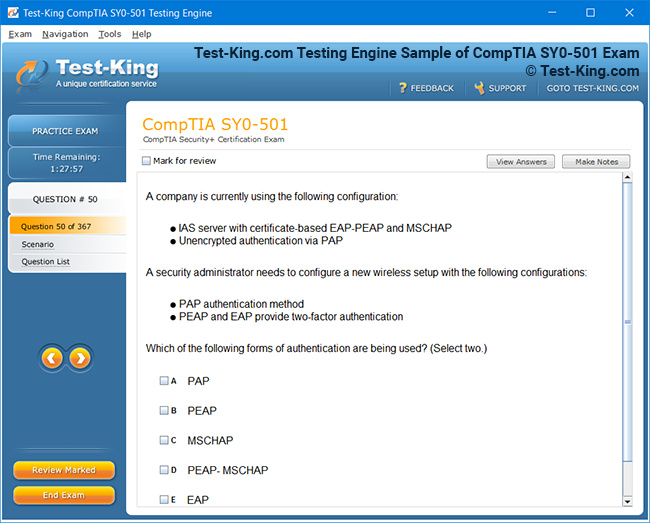
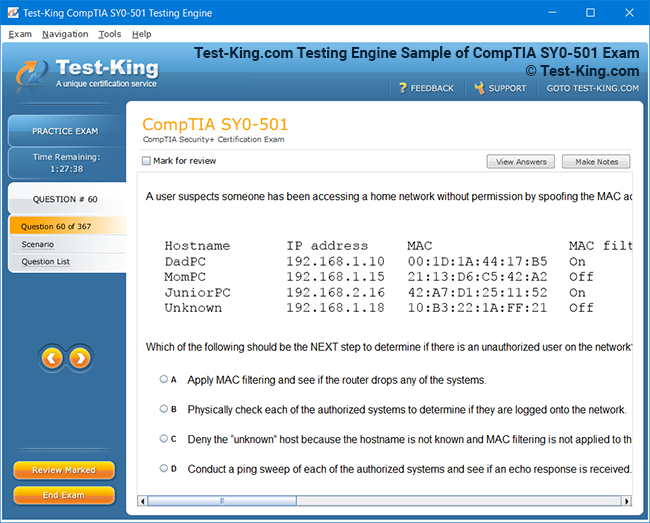
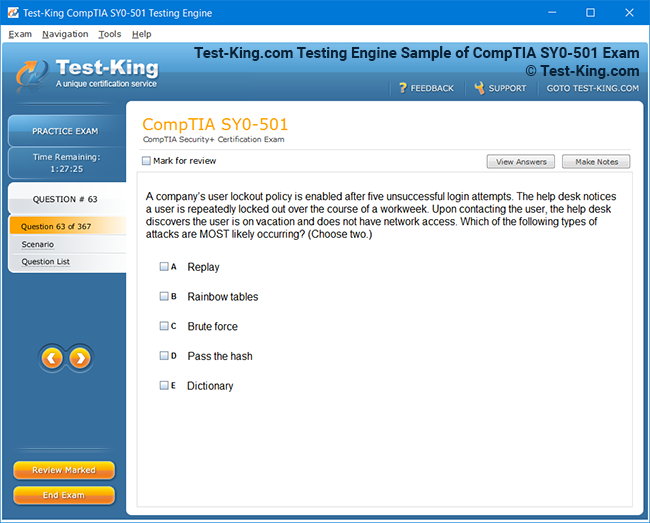
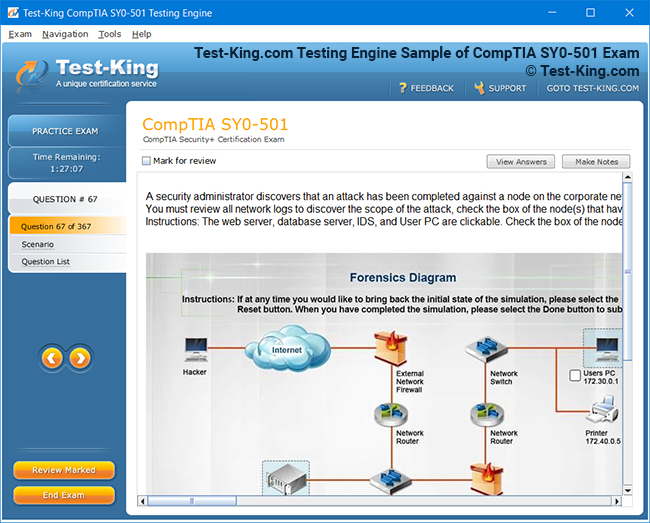
Frequently Asked Questions
How can I get the products after purchase?
All products are available for download immediately from your Member's Area. Once you have made the payment, you will be transferred to Member's Area where you can login and download the products you have purchased to your computer.
How long can I use my product? Will it be valid forever?
Test-King products have a validity of 90 days from the date of purchase. This means that any updates to the products, including but not limited to new questions, or updates and changes by our editing team, will be automatically downloaded on to computer to make sure that you get latest exam prep materials during those 90 days.
Can I renew my product if when it's expired?
Yes, when the 90 days of your product validity are over, you have the option of renewing your expired products with a 30% discount. This can be done in your Member's Area.
Please note that you will not be able to use the product after it has expired if you don't renew it.
How often are the questions updated?
We always try to provide the latest pool of questions, Updates in the questions depend on the changes in actual pool of questions by different vendors. As soon as we know about the change in the exam question pool we try our best to update the products as fast as possible.
How many computers I can download Test-King software on?
You can download the Test-King products on the maximum number of 2 (two) computers or devices. If you need to use the software on more than two machines, you can purchase this option separately. Please email support@test-king.com if you need to use more than 5 (five) computers.
What is a PDF Version?
PDF Version is a pdf document of Questions & Answers product. The document file has standart .pdf format, which can be easily read by any pdf reader application like Adobe Acrobat Reader, Foxit Reader, OpenOffice, Google Docs and many others.
Can I purchase PDF Version without the Testing Engine?
PDF Version cannot be purchased separately. It is only available as an add-on to main Question & Answer Testing Engine product.
What operating systems are supported by your Testing Engine software?
Our testing engine is supported by Windows. Andriod and IOS software is currently under development.
Top Genesys Exams
- GCP-GCX - Genesys Cloud CX Certified Professional - Consolidated
- GCX-GCD - Genesys Cloud CX: Developer
- GCP-GC-ARC - Genesys Cloud Architect Certified Specialist
- GC-AI-DB - Genesys Cloud: AI - Digital Bots & Knowledge
- GCP-GC-ADM - Genesys Cloud Certified Professional - Contact Center Admin
- GCP-GC-IMP - Genesys Cloud Certified Professional - Implementation
- GCP-GC-REP - Genesys Cloud Certified Professional - Reporting and Analytics
- GCX-ARC - Genesys Cloud CX: Architect
- GCX-WFM - Genesys Cloud CX: WEM - Workforce Management Certified Specialist
GE0-807 : Key Skills and Knowledge Areas for the Genesys Certified Professional 8 – Outbound Voice Exam
The realm of outbound voice solutions within Genesys presents a unique amalgam of technological sophistication and strategic orchestration. System consultants venturing into this environment must acquire a holistic comprehension of outbound voice architecture, its underlying principles, and the multifaceted roles it plays in business communications. Outbound voice campaigns rely on meticulous planning, seamless integration with customer relationship management systems, and intelligent routing mechanisms that optimize agent productivity and customer engagement. Knowledge of campaign management, from initial configuration to live execution, is paramount. Understanding the distinction between predictive, progressive, and preview dialing modes is crucial, as each mode caters to different operational objectives and influences agent workflow and contact efficiency.
Understanding the Outbound Voice Environment
An intricate understanding of call scripting and journey design also forms a vital part of this knowledge spectrum. System consultants must be adept at designing flows that anticipate customer behavior, manage exception handling, and comply with regulatory requirements. The ability to translate business requirements into logical call flows requires both technical acumen and strategic foresight. Additionally, familiarity with telephony protocols, signaling mechanisms, and network considerations ensures that the outbound infrastructure operates with minimal latency and maximum reliability. Candidates must cultivate the ability to troubleshoot complex call routing scenarios, optimize trunk utilization, and monitor real-time performance metrics to maintain consistent service quality.
Configuration and System Integration
The configuration of outbound voice solutions demands a meticulous approach to system setup and integration. Genesys professionals must be capable of configuring outbound campaigns, including the allocation of agent resources, scheduling of calls, and prioritization of contact lists. Integration with databases and CRM platforms is essential to ensure that customer information is accurate, actionable, and securely transmitted. This integration enables dynamic scripting, real-time data retrieval, and seamless logging of interaction history, all of which are fundamental to delivering personalized customer experiences.
Knowledge of application servers, load balancing, and failover strategies contributes significantly to system resilience. Consultants must understand how to configure redundancy mechanisms that prevent service disruption during peak call volumes or unexpected network events. Understanding server clustering, database replication, and session persistence is equally vital, as these components underpin the stability and performance of outbound voice solutions. Moreover, the ability to manage configuration changes, document modifications, and maintain version control enhances operational efficiency and reduces the risk of errors in live environments.
Reporting, Analytics, and Performance Optimization
A profound comprehension of reporting and analytics forms the backbone of effective outbound voice operations. System consultants are expected to generate insightful reports that measure key performance indicators such as call completion rates, agent efficiency, talk time, and abandonment rates. These reports inform strategic decisions, facilitate continuous improvement, and provide transparency to stakeholders. Knowledge of real-time dashboards and historical analytics allows consultants to monitor campaign health, detect anomalies, and make data-driven adjustments to call pacing, routing strategies, and agent allocation.
Performance optimization extends beyond simple monitoring; it involves proactive tuning of system parameters, predictive algorithms, and campaign strategies. Consultants must understand how to leverage advanced dialer settings, manage call throttling, and implement predictive models that maximize contact efficiency while maintaining compliance with regulatory constraints. Familiarity with statistical models, data segmentation, and customer behavior analysis empowers system consultants to design outbound campaigns that are both effective and efficient. The capacity to interpret analytics and translate insights into actionable improvements differentiates a proficient consultant from a merely competent one.
Compliance and Regulatory Awareness
Operating within the outbound voice landscape requires stringent adherence to regulatory and compliance standards. Genesys system consultants must possess a comprehensive understanding of telecommunication regulations, data privacy laws, and consent management practices. Knowledge of the Telephone Consumer Protection Act (TCPA), General Data Protection Regulation (GDPR), and other jurisdiction-specific legislation is critical to ensure that outbound campaigns do not expose the organization to legal liabilities. Compliance considerations extend to the management of call lists, opt-in and opt-out mechanisms, call recording protocols, and data retention policies.
Effective consultants implement safeguards that protect customer data while enabling efficient campaign execution. These safeguards include secure data transmission, encryption protocols, role-based access control, and audit logging. Understanding the balance between operational efficiency and regulatory compliance is essential, as overly restrictive measures may impair campaign performance, whereas insufficient controls risk non-compliance. By cultivating regulatory awareness and integrating compliance into system design, consultants contribute to both organizational integrity and customer trust.
Troubleshooting and Problem-Solving Skills
The ability to troubleshoot complex outbound voice scenarios is indispensable for system consultants. Issues may arise from network latency, telephony misconfigurations, database inconsistencies, or software defects, and consultants must identify root causes swiftly to minimize disruption. Effective troubleshooting begins with a methodical approach: analyzing logs, isolating variables, and reproducing issues in controlled environments. This systematic methodology reduces downtime and ensures that solutions are sustainable rather than temporary.
Beyond technical troubleshooting, problem-solving in the outbound voice environment often involves aligning technical solutions with business objectives. For example, addressing high abandonment rates may require a combination of system optimization, agent training, and campaign redesign. Consultants must leverage diagnostic tools, performance metrics, and historical data to formulate interventions that enhance both technical efficiency and customer satisfaction. Creativity and analytical rigor are equally necessary, as complex issues frequently demand novel approaches and cross-functional collaboration.
Communication and Collaboration
In addition to technical proficiency, effective communication and collaboration skills are pivotal for Genesys system consultants. Outbound voice implementations involve coordination between multiple stakeholders, including operations managers, call center supervisors, IT teams, and business analysts. Consultants must articulate technical concepts in accessible language, bridge gaps between business requirements and system capabilities, and foster a shared understanding of project goals. Documentation of configurations, workflows, and troubleshooting procedures ensures knowledge continuity and facilitates future enhancements.
Collaboration also extends to training and supporting end-users, including agents and supervisors. System consultants must provide guidance on best practices, campaign execution, and the interpretation of analytics. Empathy and clarity in communication enhance user adoption, reduce operational friction, and contribute to the overall success of outbound voice initiatives. By combining technical mastery with interpersonal acumen, consultants elevate the effectiveness of both systems and teams.
Advanced Technical Concepts
Proficiency in advanced technical concepts distinguishes exceptional system consultants from their peers. Topics such as call routing algorithms, agent skill-based assignment, voice platform integration, and session initiation protocol management require deep understanding and practical experience. Consultants must be conversant with network topologies, firewall configurations, SIP trunking, and quality-of-service considerations to ensure reliable and high-fidelity call delivery.
Furthermore, knowledge of automation frameworks, API integrations, and custom scripting enhances the adaptability of outbound voice solutions. Consultants who can extend system capabilities through programmable interfaces, automated reporting, and workflow customization provide significant value to their organizations. This technical versatility, coupled with strategic insight, empowers consultants to design solutions that are both innovative and resilient.
Continuous Learning and Professional Development
The Genesys Certified Professional 8 – Outbound Voice credential represents not only mastery of current technologies but also a commitment to ongoing professional growth. The outbound voice domain evolves rapidly, with emerging standards, new tools, and changing regulatory landscapes. System consultants must cultivate a habit of continuous learning, staying abreast of product updates, industry trends, and best practices. Participation in forums, training programs, and knowledge-sharing initiatives reinforces expertise and fosters a mindset of perpetual improvement.
Professional development also entails reflective practice, where consultants analyze completed campaigns, assess outcomes, and identify areas for enhancement. This iterative approach to learning ensures that expertise remains relevant, adaptive, and aligned with organizational goals. By embracing continuous development, consultants strengthen both their technical proficiency and their strategic impact within the outbound voice ecosystem.
Mastery of Campaign Design and Operational Strategies
Effective outbound voice campaigns demand more than a superficial understanding of call flows; they require deep mastery of campaign design, strategic orchestration, and operational foresight. System consultants must grasp the intricate interplay between dialing modes, agent capacity, contact prioritization, and campaign objectives. Predictive dialing offers optimized efficiency by using statistical models to anticipate agent availability, while progressive dialing provides controlled pacing suitable for high-value interactions. Preview dialing, on the other hand, allows agents to review information before initiating calls, enhancing personalization and engagement quality. A comprehensive understanding of these modes ensures that campaign configurations align with both organizational goals and customer expectations.
Designing campaigns also necessitates proficiency in managing contact lists, segmenting data for targeted outreach, and employing advanced filters to avoid redundant or non-compliant calls. Consultants should be capable of implementing complex scheduling algorithms that consider time zones, agent availability, and peak contact times. Awareness of resource allocation principles, including load balancing and dynamic assignment of agents, contributes significantly to operational efficiency. In addition, familiarity with exception handling, fallback routing, and escalation procedures ensures that campaigns can adapt to unforeseen circumstances without compromising service quality or compliance.
Telephony Architecture and Network Considerations
A profound comprehension of telephony architecture underpins every successful outbound voice deployment. System consultants must understand the intricacies of session initiation protocol, media gateway configurations, and trunking mechanisms to ensure seamless connectivity. Knowledge of voice over IP systems, network latency, jitter management, and packet loss mitigation is essential to maintaining call quality. Consultants should be adept at diagnosing network-related issues, optimizing bandwidth utilization, and configuring routers, switches, and firewalls to accommodate high-volume outbound traffic.
Integration with enterprise networks introduces additional complexities, including security considerations, firewall traversal, and secure media transport. Consultants must balance the technical demands of reliable call delivery with the operational need for flexibility and scalability. This includes managing redundant paths, failover mechanisms, and system resilience to minimize disruptions during peak calling periods. Understanding how telephony infrastructure interacts with application servers, databases, and CRM systems is critical to designing a robust outbound voice environment capable of sustaining high performance under variable conditions.
Call Scripting and Customer Interaction Management
Call scripting remains a cornerstone of effective outbound voice solutions. System consultants must design scripts that anticipate a wide range of customer responses, guide agents through structured interactions, and ensure consistent delivery of messaging. Scripts should incorporate dynamic content retrieved from databases, conditional branching based on customer behavior, and prompts for capturing feedback or additional information. Consultants must also ensure that scripts comply with regulatory mandates while maintaining conversational naturalness, avoiding robotic or mechanical tones that diminish engagement.
Beyond the structure of the script, understanding the nuances of human communication is vital. Consultants should provide guidance on tone modulation, objection handling, and escalation procedures to enhance agent effectiveness. Effective training, combined with well-designed scripts, empowers agents to respond adaptively to unexpected scenarios, fostering a positive customer experience. In addition, the integration of speech analytics and sentiment recognition tools allows consultants to refine scripts, identify recurring issues, and optimize interactions for both efficiency and satisfaction.
System Monitoring, Reporting, and Data Analytics
Monitoring and analyzing outbound campaigns is an ongoing necessity to ensure operational success. Consultants must implement real-time monitoring tools that track agent performance, call outcomes, queue status, and system health. Alerts and dashboards provide visibility into anomalies, such as sudden spikes in call abandonment, prolonged talk times, or system errors. The ability to interpret these metrics enables proactive adjustments, minimizing negative impacts on customer experience and campaign efficiency.
Data analytics extends beyond operational oversight to strategic decision-making. Consultants analyze historical performance data, segment contacts based on response behavior, and identify patterns that inform future campaign design. Understanding the relationships between call outcomes, agent proficiency, and customer demographics allows for data-driven enhancements. Predictive models, scoring algorithms, and statistical analysis of response rates empower consultants to optimize campaign effectiveness and maximize return on investment. The strategic application of analytics ensures that outbound voice efforts remain aligned with organizational goals while continuously evolving to meet emerging challenges.
Regulatory Compliance and Risk Mitigation
Navigating the complex landscape of telecommunication regulations is essential for any outbound voice professional. Consultants must be well-versed in jurisdiction-specific laws, including TCPA, GDPR, and other privacy regulations, to ensure campaigns operate within legal parameters. Compliance encompasses call consent management, proper documentation of opt-ins and opt-outs, and adherence to call frequency limits. Consultants must also implement measures for secure storage, transmission, and access to customer data, safeguarding sensitive information from unauthorized exposure.
Risk mitigation strategies extend to both operational and reputational domains. Ensuring adherence to compliance reduces the likelihood of legal action and maintains customer trust, while operational safeguards such as failover systems, redundant architectures, and system audits mitigate technical risk. Consultants must also be prepared to adapt campaigns rapidly in response to evolving regulations or customer feedback, embedding flexibility into system design and operational protocols. By integrating compliance considerations into every aspect of outbound voice planning, system consultants protect both organizational integrity and client relationships.
Troubleshooting, Diagnostics, and Issue Resolution
Troubleshooting is an integral skill for maintaining seamless outbound voice operations. System consultants must be capable of identifying and resolving a wide spectrum of issues, from agent interface errors to complex network anomalies. This requires systematic diagnostic approaches, including log analysis, performance monitoring, and replication of issues in controlled environments. Consultants must distinguish between user error, configuration anomalies, and underlying system defects to implement appropriate remedies.
Effective issue resolution often demands interdisciplinary collaboration. Consultants work alongside network engineers, database administrators, and call center managers to address multifaceted challenges. Proficiency in problem isolation, root cause analysis, and remedial planning ensures that solutions are both effective and sustainable. Beyond reactive troubleshooting, consultants anticipate potential failure points, conduct preventative maintenance, and optimize configurations to minimize recurrence. Mastery of these skills enables the sustained reliability and performance of outbound campaigns, preserving both operational continuity and customer satisfaction.
Technical Integration and Automation
Integration of outbound voice systems with ancillary technologies enhances operational capability and scalability. Consultants must be proficient in connecting call platforms with customer databases, CRM systems, and analytic tools, facilitating the seamless flow of information. This integration supports real-time data retrieval, dynamic scripting, and automated reporting, allowing campaigns to adapt instantly to evolving customer information or operational requirements.
Automation plays a pivotal role in optimizing outbound operations. Consultants should implement automated workflows for call scheduling, lead prioritization, and post-call follow-ups. Automation not only increases efficiency but also ensures consistency, reduces manual errors, and enables scalability during high-volume campaigns. Understanding APIs, web services, and scripting mechanisms allows consultants to extend platform capabilities, providing custom solutions tailored to unique business needs. This technical versatility empowers system consultants to deliver campaigns that are not only efficient but also highly adaptive to dynamic operational landscapes.
Communication, Leadership, and Stakeholder Engagement
Technical expertise alone is insufficient for successful outbound voice consulting; effective communication and leadership skills are equally essential. Consultants must convey complex technical concepts to non-technical stakeholders, ensuring alignment between business objectives and system capabilities. Clear articulation of workflow designs, performance metrics, and operational challenges fosters informed decision-making and supports strategic planning.
Leadership extends to collaboration with agents and supervisors, guiding best practices, monitoring performance, and providing training on both system usage and effective customer interaction techniques. Consultants act as liaisons between technical teams and operational staff, translating requirements, facilitating problem resolution, and maintaining alignment across diverse functions. The ability to motivate teams, resolve conflicts, and foster a culture of continuous improvement enhances the overall effectiveness of outbound voice initiatives, ensuring that both technological and human resources are fully optimized.
Continuous Professional Growth and Knowledge Expansion
The dynamic nature of outbound voice systems demands that consultants maintain a commitment to continuous learning. System capabilities evolve rapidly, and staying abreast of updates, new features, and emerging industry trends is critical to sustaining professional competence. Participation in professional communities, attending advanced training, and engaging with thought leadership materials contribute to an ongoing refinement of skills and knowledge.
Beyond formal learning, reflective practice allows consultants to evaluate past campaigns, identify areas for enhancement, and implement incremental improvements. This iterative approach strengthens both technical proficiency and strategic insight, ensuring that consultants remain capable of designing and managing outbound voice campaigns that are both innovative and effective. A commitment to lifelong learning not only enhances individual expertise but also contributes to the enduring success of organizational communication strategies.
In-Depth Understanding of Outbound Voice Campaign Architecture
The orchestration of outbound voice campaigns within the Genesys environment requires a sophisticated understanding of campaign architecture, operational flow, and system interactions. System consultants must navigate the intricate landscape of campaign setup, from defining contact lists and scheduling strategies to configuring agent workflows that maximize efficiency while maintaining customer satisfaction. Mastery of dialing modes—including predictive, progressive, and preview dialing—enables consultants to align campaign objectives with operational capabilities. Predictive dialing, leveraging statistical models and historical agent availability, allows for optimized contact rates, whereas progressive dialing emphasizes controlled pacing suitable for high-value or sensitive interactions. Preview dialing, in contrast, provides agents with advance information about each contact, fostering personalized engagement and increased customer satisfaction.
The consultant must also comprehend the integration of campaign logic with customer databases, ensuring that each interaction is informed by accurate and actionable information. Effective campaign architecture balances automation with human oversight, allowing for dynamic adjustments based on real-time performance metrics. Additionally, understanding exception handling, fallback routing, and escalation processes equips consultants to anticipate and manage unforeseen operational deviations. This holistic perspective ensures that outbound voice campaigns operate with reliability, compliance, and strategic alignment.
Advanced Telephony and Network Knowledge
A profound grasp of telephony systems is indispensable for ensuring high-quality outbound voice interactions. Consultants must be conversant with session initiation protocol configurations, trunking mechanisms, and media gateway architectures. Knowledge of voice over IP technologies, network latency considerations, jitter management, and packet loss mitigation is critical for sustaining call quality in high-volume environments. System consultants must also understand how to configure routers, firewalls, and switches to facilitate smooth voice traffic, while maintaining security and operational resilience.
Integration with enterprise IT infrastructure introduces additional complexity, requiring consultants to navigate secure connectivity, redundancy, and failover mechanisms. Awareness of network topologies, bandwidth optimization, and Quality of Service parameters ensures that outbound voice systems perform consistently even under heavy load conditions. Consultants must also be adept at diagnosing and resolving network-related anomalies, identifying bottlenecks, and implementing preventative measures to minimize downtime. This combination of technical expertise and strategic foresight allows consultants to design robust outbound voice platforms capable of sustaining operational efficiency.
Designing Dynamic Call Flows and Scripts
The construction of dynamic call flows represents a core competency for system consultants. Effective call flows anticipate varied customer responses, provide structured guidance for agents, and incorporate decision points that adapt based on interaction outcomes. Consultants must be able to design branching logic, conditional scripting, and automated prompts that facilitate seamless engagement. These call flows must integrate dynamically with databases, allowing agents to access real-time information and record interaction outcomes efficiently.
Script design also demands sensitivity to human communication patterns, ensuring that messages are clear, persuasive, and compliant with legal regulations. Consultants must consider tone, pacing, objection handling, and escalation strategies to optimize agent performance and customer satisfaction. The integration of sentiment analysis and speech analytics tools allows for continuous refinement, helping consultants to adjust scripts based on observed interaction patterns. By merging technical precision with behavioral insight, consultants create call flows that are both operationally efficient and customer-centric.
Performance Monitoring and Analytical Insights
Monitoring the performance of outbound voice campaigns is an ongoing responsibility that demands analytical acuity. Consultants must implement real-time dashboards to observe agent activity, call volumes, abandonment rates, and system health indicators. Immediate visibility into these metrics enables rapid interventions to prevent degradation in service quality or operational efficiency. Consultants are also responsible for generating comprehensive reports that reveal trends, anomalies, and opportunities for process optimization.
Analytical competencies extend to the interpretation of historical data, predictive modeling, and segmentation analysis. Understanding the interplay between contact behavior, agent performance, and campaign settings allows consultants to fine-tune dialing algorithms, call pacing, and resource allocation. Advanced analytical insight facilitates proactive adjustments, enabling campaigns to respond dynamically to fluctuating demand and customer responsiveness. By leveraging data-driven methodologies, consultants transform operational metrics into actionable strategies that enhance overall campaign effectiveness and organizational performance.
Compliance and Regulatory Expertise
The outbound voice landscape is governed by complex regulatory frameworks that demand rigorous adherence. System consultants must maintain comprehensive knowledge of telecommunication laws, privacy mandates, and consent management requirements relevant to their operational jurisdiction. Understanding regulations such as the Telephone Consumer Protection Act and the General Data Protection Regulation is essential to ensure lawful campaign execution. Compliance encompasses proper management of opt-in and opt-out lists, call recording policies, and secure storage of sensitive customer information.
Risk mitigation strategies extend to both operational and legal dimensions. Consultants must embed regulatory awareness into campaign design, ensuring that compliance does not impede operational efficiency while simultaneously protecting organizational integrity. This involves implementing robust access controls, encryption protocols, and audit mechanisms that safeguard data and provide traceable accountability. By integrating compliance considerations into technical design and operational workflows, consultants establish a balance between lawful operation and optimal campaign performance.
Troubleshooting and System Optimization
Troubleshooting in outbound voice environments requires both methodical analysis and creative problem-solving. System consultants must be capable of diagnosing issues spanning network anomalies, telephony misconfigurations, software glitches, and user-related errors. A structured approach—analyzing logs, isolating variables, and testing scenarios—is critical for effective resolution. Consultants must distinguish between transient issues and systemic faults, ensuring that corrective actions address root causes rather than superficial symptoms.
Optimization extends beyond problem resolution, encompassing proactive performance tuning. Consultants must adjust system parameters, fine-tune predictive algorithms, and refine campaign strategies to achieve peak efficiency. Understanding the interdependencies between dialing settings, agent availability, and contact prioritization allows for continuous enhancement of operational outcomes. The combination of technical dexterity, analytical reasoning, and strategic foresight equips consultants to maintain robust, high-performing outbound voice systems under varying operational conditions.
Technical Integration and Automation Capabilities
The integration of outbound voice systems with auxiliary platforms amplifies operational effectiveness. Consultants must be proficient in connecting voice platforms with CRM systems, databases, and analytical tools, enabling seamless data flow and enhanced automation. Automated workflows for lead prioritization, call scheduling, and follow-up management reduce manual intervention, ensure consistency, and increase scalability during high-volume campaigns.
Advanced consultants leverage APIs, scripting, and web services to extend platform capabilities and customize functionalities according to organizational needs. This technical agility enables adaptive solutions that respond dynamically to business requirements and evolving operational conditions. The ability to implement automation and integration strategies enhances efficiency, reduces errors, and positions the outbound voice system as a highly adaptable, intelligent communication platform.
Communication and Stakeholder Coordination
Effective communication remains a critical competency for system consultants, complementing technical expertise. Consultants must articulate complex concepts in accessible language to diverse stakeholders, including operations managers, IT personnel, and business leaders. Clear communication ensures alignment between strategic objectives and system capabilities, facilitates informed decision-making, and fosters collaborative problem-solving.
Stakeholder engagement also involves guiding agents and supervisors on best practices, interpreting analytics, and training teams on system functionalities. Consultants act as liaisons between technical and operational domains, translating requirements into actionable workflows and providing support for performance enhancement. By combining interpersonal skills with technical mastery, consultants cultivate an environment of collaboration, efficiency, and operational excellence.
Continuous Knowledge Advancement
The outbound voice domain evolves continuously, demanding that system consultants engage in lifelong learning. Staying current with platform updates, emerging technologies, and industry best practices is vital for sustaining professional competence. Participation in knowledge-sharing forums, training workshops, and advanced learning initiatives reinforces expertise and cultivates adaptability.
Reflective practice also strengthens professional growth, as consultants evaluate completed campaigns, identify optimization opportunities, and implement iterative improvements. By integrating continuous learning into professional routines, consultants maintain relevance, anticipate technological developments, and enhance the strategic impact of outbound voice operations. The commitment to ongoing knowledge advancement ensures that system consultants remain effective, innovative, and capable of navigating the complexities of evolving business communication landscapes.
Comprehensive Management of Outbound Voice Operations
The management of outbound voice campaigns in a Genesys environment demands a convergence of technical mastery, operational insight, and strategic acumen. System consultants must coordinate a diverse set of elements, including campaign configuration, agent workflow management, dialing strategy optimization, and real-time monitoring of operational metrics. Predictive dialing, which utilizes historical call data and agent availability patterns, enhances campaign efficiency by anticipating optimal call placement timing. Progressive dialing, by contrast, maintains controlled call pacing suitable for high-value interactions, while preview dialing allows agents to review contact information before initiating communication, fostering a more personalized experience for each customer.
Consultants are responsible for structuring campaigns to balance resource utilization, compliance, and engagement effectiveness. This involves prioritizing contacts, segmenting data for targeted outreach, and dynamically adjusting scheduling to accommodate variable agent availability and call volume peaks. Attention to exception handling, escalation protocols, and fallback mechanisms ensures campaigns remain resilient, even under unexpected operational conditions. A holistic understanding of these processes enables system consultants to design campaigns that operate with efficiency, compliance, and strategic precision.
Telephony Infrastructure and Network Optimization
Proficiency in telephony infrastructure is critical to ensuring high-quality outbound voice interactions. Consultants must have a thorough understanding of session initiation protocol, trunk configuration, and media gateway deployment. Expertise in voice over IP technologies, network latency management, jitter control, and packet loss mitigation ensures that calls maintain clarity and reliability across high-volume campaigns. Proper configuration of routers, firewalls, and switches is essential for smooth voice traffic flow, security, and operational resilience.
Integration with broader enterprise IT systems introduces additional complexity. Consultants must account for secure connectivity, failover mechanisms, and redundancy strategies to sustain service continuity during peak loads or system disruptions. Knowledge of network topologies, bandwidth allocation, and Quality of Service considerations enables system consultants to anticipate and address performance bottlenecks. Effective monitoring and troubleshooting of network and telephony interactions are vital for maintaining uninterrupted, high-fidelity communication.
Crafting Effective Call Flows and Dynamic Scripts
Designing dynamic call flows and scripts is a fundamental responsibility for outbound voice consultants. These scripts must guide agents through interactions in a structured yet adaptable manner, incorporating conditional logic, decision points, and real-time data retrieval from integrated databases. Well-constructed scripts support efficient information collection, dynamic prompting, and seamless navigation through complex customer scenarios. System consultants must balance automation and human judgment to ensure interactions remain both efficient and personalized.
Script effectiveness also depends on a deep understanding of customer behavior and communication patterns. Consultants provide guidance on conversational tone, objection handling, escalation procedures, and engagement strategies to enhance agent performance. The integration of analytics tools, including sentiment detection and speech pattern analysis, allows continuous refinement of scripts, identifying areas where adjustments can increase conversion rates and customer satisfaction. A combination of technical precision and behavioral insight enables the development of scripts that optimize campaign outcomes.
Monitoring, Analytics, and Performance Insights
Real-time monitoring and analysis are essential to maintaining operational excellence in outbound voice campaigns. Consultants deploy dashboards to track agent activity, call outcomes, abandonment rates, and system health, enabling rapid detection and resolution of anomalies. Continuous observation allows for proactive interventions, preventing service degradation and ensuring campaign objectives are consistently met. Consultants also produce comprehensive reports to evaluate performance trends, identify recurring issues, and inform strategic adjustments to campaign design.
Analytical capabilities extend to evaluating historical campaign data, segmenting contacts based on response behaviors, and using statistical models to anticipate trends. Understanding how dialing strategies, agent efficiency, and customer characteristics interact allows consultants to fine-tune system settings, optimize agent allocation, and improve campaign performance. By transforming operational data into actionable insights, consultants can continuously enhance contact rates, customer engagement, and organizational returns on outbound initiatives.
Compliance Management and Risk Awareness
Navigating regulatory requirements is an indispensable aspect of outbound voice operations. System consultants must ensure adherence to telecommunication regulations, privacy mandates, and consent management protocols. Understanding laws such as the Telephone Consumer Protection Act and the General Data Protection Regulation is critical to lawful campaign execution. Compliance encompasses management of opt-in and opt-out mechanisms, proper call recording procedures, and secure handling of sensitive customer data.
Consultants implement preventative measures to mitigate operational and legal risks, embedding compliance into campaign design and execution. Role-based access control, encrypted data transmission, and audit logging ensure both operational integrity and protection against potential regulatory violations. Awareness of compliance impacts on system performance allows consultants to maintain a balance between lawful operation and efficient campaign execution. By integrating these considerations into every operational process, system consultants safeguard organizational reputation and customer trust.
Troubleshooting and System Reliability
The ability to troubleshoot and optimize outbound voice systems is a core competency. Consultants must diagnose technical issues arising from network anomalies, misconfigured telephony components, software errors, or agent interface challenges. A systematic approach to problem-solving, including log analysis, replication of issues, and isolation of root causes, ensures that solutions are both effective and enduring.
System optimization extends beyond resolving immediate issues, encompassing proactive tuning of campaign parameters, dialing algorithms, and agent allocation strategies. Consultants evaluate the interplay of call pacing, predictive models, and contact prioritization to maintain peak operational efficiency. By anticipating potential points of failure and implementing preventative measures, consultants ensure sustained reliability, minimal downtime, and uninterrupted customer engagement.
Integration, Automation, and System Adaptability
Integration with ancillary systems enhances the capability and flexibility of outbound voice operations. Consultants connect voice platforms to CRM systems, databases, and reporting tools, enabling real-time data synchronization and automation of routine workflows. Automation of call scheduling, lead prioritization, and follow-up actions reduces manual intervention, increases efficiency, and ensures operational consistency.
Advanced system adaptability is achieved through API utilization, scripting, and customized workflows. Consultants who master these capabilities extend platform functionality, tailor operations to organizational needs, and enhance responsiveness to changing business requirements. By leveraging integration and automation, consultants create an outbound voice ecosystem that is resilient, efficient, and dynamically aligned with evolving operational demands.
Collaboration, Communication, and Stakeholder Engagement
Successful outbound voice operations rely not only on technical expertise but also on effective collaboration and communication. Consultants must convey complex technical information in clear, comprehensible terms to a wide range of stakeholders, including operational managers, IT personnel, and executive leadership. This ensures alignment of campaign objectives with system capabilities, supports informed decision-making, and fosters cooperative problem-solving.
Consultants also guide agents and supervisors, providing training on system usage, best practices, and performance interpretation. Acting as intermediaries between technical and operational teams, consultants translate requirements into actionable workflows, facilitate issue resolution, and maintain consistent communication. The integration of technical acumen with interpersonal skills enables consultants to cultivate productive, efficient, and cohesive outbound voice operations.
Continuous Learning and Professional Enhancement
The outbound voice environment evolves rapidly, necessitating an ongoing commitment to professional development. Consultants must maintain awareness of platform enhancements, emerging technologies, and industry best practices to remain effective. Engagement in training programs, professional forums, and knowledge-sharing opportunities enhances expertise and adaptability.
Reflective practice strengthens professional capabilities by allowing consultants to evaluate campaign outcomes, identify opportunities for improvement, and implement iterative changes. This continuous refinement process ensures that system consultants remain proficient, innovative, and strategically aligned with organizational objectives. By embracing ongoing learning, consultants sustain their ability to manage complex outbound voice operations with efficiency, precision, and foresight.
Strategic Planning and Management of Outbound Voice Campaigns
Operating outbound voice campaigns within the Genesys framework requires a sophisticated blend of strategic planning, operational oversight, and technical expertise. System consultants are responsible for designing campaigns that optimize agent productivity, maximize contact rates, and ensure compliance with industry regulations. This begins with a comprehensive understanding of dialing strategies. Predictive dialing employs statistical models to anticipate agent availability and dynamically pace outbound calls, enhancing efficiency for high-volume campaigns. Progressive dialing provides a controlled pace suitable for high-value interactions, while preview dialing grants agents access to contact information prior to initiating calls, supporting personalized customer engagement.
Effective campaign management also entails meticulous handling of contact lists, prioritization protocols, and scheduling mechanisms. Consultants segment contacts based on behavioral patterns, historical interaction data, and business objectives, ensuring that outreach is both targeted and impactful. They also develop fallback strategies, escalation procedures, and exception handling mechanisms, providing resilience against system anomalies or operational disruptions. By integrating strategic foresight with practical execution, consultants ensure campaigns achieve operational efficiency and customer satisfaction simultaneously.
Advanced Understanding of Telephony Systems
A deep understanding of telephony architecture is central to the successful execution of outbound voice initiatives. System consultants must be well-versed in session initiation protocol configurations, media gateway deployments, and trunking strategies. Knowledge of voice over IP technologies, network latency considerations, jitter management, and packet loss mitigation is critical for maintaining clarity and reliability during high-volume calling campaigns. Consultants must also configure and optimize network infrastructure, including routers, firewalls, and switches, to accommodate robust outbound voice traffic while maintaining security and operational resilience.
Integration with enterprise IT systems introduces additional layers of complexity. Consultants must consider secure connectivity, redundancy mechanisms, and failover configurations to ensure uninterrupted service. An in-depth understanding of network topologies, bandwidth management, and Quality of Service standards enables proactive mitigation of performance bottlenecks and the maintenance of high-fidelity voice transmission. The combination of telephony expertise and network acumen ensures that outbound systems remain both reliable and efficient under variable operational demands.
Designing Efficient Call Flows and Dynamic Scripts
Developing effective call flows and scripts is a cornerstone of outbound voice consulting. Consultants design interactions that anticipate customer responses, provide structured guidance for agents, and incorporate decision logic that adapts to varying scenarios. Scripts integrate dynamic content from databases, enable real-time data capture, and facilitate seamless navigation through complex interaction pathways. The consultant’s role is to ensure that scripts balance automation and human judgment, allowing agents to maintain responsiveness while executing structured engagements.
Effective script design also relies on a nuanced understanding of human behavior. Consultants provide guidance on tone modulation, objection management, and escalation protocols to enhance agent performance and customer experience. By incorporating analytics tools such as sentiment detection and speech pattern evaluation, consultants continuously refine scripts to improve response rates, conversion efficiency, and customer satisfaction. The synthesis of behavioral insight with technical precision ensures that outbound campaigns are both operationally effective and customer-centric.
Monitoring, Analytics, and Data-Driven Insights
Monitoring campaign performance and leveraging analytics are vital for sustaining high operational standards. System consultants deploy real-time dashboards to observe agent activity, call outcomes, queue status, and system health metrics. Immediate visibility into these parameters allows rapid intervention when issues arise, preserving service quality and ensuring campaign objectives are met. In addition, consultants generate detailed reports that illuminate trends, recurring challenges, and opportunities for process optimization.
Analytical expertise extends to historical data evaluation, predictive modeling, and segmentation analysis. Understanding the relationship between contact behavior, agent performance, and campaign settings allows consultants to refine dialing strategies, adjust agent allocation, and improve overall efficiency. Advanced data interpretation enables proactive decision-making, ensuring that campaigns remain agile and responsive to evolving customer behaviors and organizational priorities. By converting operational data into actionable insights, consultants enhance both performance and strategic alignment.
Compliance Awareness and Regulatory Management
Navigating the regulatory landscape is a critical responsibility for system consultants. Outbound voice campaigns are subject to stringent telecommunication laws and privacy requirements. Consultants must maintain comprehensive knowledge of applicable regulations, including the Telephone Consumer Protection Act, the General Data Protection Regulation, and other jurisdiction-specific mandates. Compliance encompasses the management of opt-in and opt-out lists, call recording practices, and secure handling of sensitive information.
Consultants embed compliance into campaign design, operational workflows, and system configurations. Implementing role-based access, encryption protocols, and audit mechanisms ensures protection of customer data while maintaining operational efficiency. Consultants also anticipate regulatory changes, adjusting workflows and scripts accordingly to sustain lawful operation. By integrating compliance with operational processes, consultants protect organizational integrity, preserve customer trust, and ensure campaign sustainability.
Troubleshooting, Diagnostics, and System Optimization
Troubleshooting outbound voice systems requires analytical rigor and practical experience. Consultants must address issues ranging from network disruptions and telephony misconfigurations to software anomalies and agent interface errors. A structured approach, incorporating log analysis, scenario replication, and root cause identification, ensures sustainable resolution of operational challenges.
Optimization extends beyond reactive measures, encompassing proactive tuning of campaign parameters, predictive algorithms, and agent distribution. Consultants analyze the interplay of dialing strategies, agent availability, and contact prioritization to sustain peak performance. Anticipating potential failure points, implementing preventative measures, and continuously refining system configurations enhance reliability, minimize downtime, and maintain consistent customer engagement.
System Integration and Automation
Integration with supporting platforms amplifies the efficiency and adaptability of outbound voice operations. Consultants connect voice systems with CRM databases, reporting tools, and analytics platforms to enable real-time data access, automated workflows, and dynamic decision-making. Automation reduces manual interventions, ensures consistency, and enhances scalability during periods of high call volume.
Consultants leverage APIs, scripting, and workflow customization to extend system capabilities, tailoring operations to meet organizational objectives. This technical flexibility facilitates adaptive solutions that respond to changing business requirements, providing robust, intelligent, and responsive outbound communication infrastructure.
Collaboration, Communication, and Stakeholder Coordination
Technical proficiency alone is insufficient for optimal performance; consultants must also excel in collaboration and communication. They articulate complex technical concepts clearly to diverse stakeholders, including operations teams, IT personnel, and business leaders. Effective communication ensures alignment between system capabilities and business objectives, supporting informed decision-making and cooperative problem-solving.
Consultants provide guidance and training to agents and supervisors, fostering understanding of system functionalities, operational best practices, and performance optimization strategies. Acting as intermediaries between technical and operational teams, consultants translate requirements into actionable workflows, facilitate issue resolution, and promote a cohesive operational environment. The combination of technical mastery and interpersonal acumen enhances both operational efficiency and organizational effectiveness.
Commitment to Continuous Learning and Expertise Enhancement
The outbound voice domain is continuously evolving, requiring consultants to maintain a commitment to professional growth. Awareness of platform enhancements, emerging technologies, and industry best practices is essential to sustain relevance and proficiency. Participation in professional development opportunities, training programs, and knowledge-sharing forums strengthens technical expertise and operational insight.
Reflective practice allows consultants to evaluate completed campaigns, identify improvement opportunities, and implement iterative enhancements. This ongoing refinement ensures that consultants remain capable of delivering innovative, efficient, and strategically aligned outbound voice solutions. By embracing lifelong learning, consultants enhance both personal expertise and organizational performance, positioning themselves as pivotal contributors to successful outbound voice operations.
Advanced Operational Management and Campaign Strategy
Successful execution of outbound voice initiatives within the Genesys environment requires a sophisticated blend of strategic insight, technical expertise, and operational foresight. System consultants must be adept at orchestrating campaigns that optimize agent utilization, maximize contact efficiency, and maintain regulatory compliance. Campaign design begins with a comprehensive understanding of dialing strategies. Predictive dialing leverages historical agent availability and call outcome patterns to enhance efficiency, enabling campaigns to reach a higher volume of contacts in less time. Progressive dialing maintains controlled pacing, which is advantageous for high-value interactions or sensitive communication scenarios, whereas preview dialing equips agents with contact information prior to engagement, enhancing personalization and overall customer experience.
Effective campaign management involves meticulous segmentation of contact lists, prioritization protocols, and dynamic scheduling that accounts for agent availability, time zones, and peak calling periods. Consultants develop exception handling strategies, fallback routing mechanisms, and escalation procedures to address unforeseen operational deviations. By integrating strategic foresight with operational execution, consultants ensure that campaigns achieve both efficiency and customer satisfaction. The capacity to balance automation with human intervention enables campaigns to remain adaptable while meeting organizational objectives.
Telephony Architecture and Network Expertise
A comprehensive understanding of telephony infrastructure is essential for sustaining high-quality outbound voice interactions. System consultants must possess expertise in session initiation protocol configurations, trunking strategies, and media gateway management. Voice over IP technologies, network latency management, jitter control, and packet loss mitigation are critical to maintaining clear and reliable communication. Consultants are responsible for configuring and optimizing network components, including routers, firewalls, and switches, to ensure seamless voice traffic, operational resilience, and security.
Integration with broader IT infrastructures introduces additional complexity. Consultants must manage secure connectivity, redundancy, and failover mechanisms to prevent service disruptions. An understanding of network topologies, bandwidth optimization, and Quality of Service parameters enables proactive resolution of potential performance bottlenecks. Monitoring, diagnostics, and preventive configuration management ensure that systems remain robust and capable of sustaining high-volume campaigns under variable operational conditions.
Crafting Dynamic Call Flows and Intelligent Scripts
Designing dynamic call flows and intelligent scripts constitutes a core competency for system consultants. Scripts guide agents through structured interactions, anticipate a wide range of customer responses, and incorporate decision logic that adapts to real-time conditions. Integration with customer databases allows for dynamic content retrieval, ensuring that interactions are personalized, accurate, and efficient. Consultants must balance automated flows with agent discretion, enabling adaptive responses without sacrificing consistency or compliance.
The behavioral dimension of script design is equally important. Consultants provide guidance on tone modulation, objection handling, escalation procedures, and conversational pacing to optimize engagement. Leveraging analytics tools such as sentiment analysis and voice pattern recognition enables continuous script refinement, enhancing conversion rates and customer satisfaction. This integration of technical, behavioral, and operational insight ensures that outbound campaigns remain both effective and customer-focused.
Performance Monitoring, Analytics, and Data-Driven Optimization
Monitoring campaign performance and leveraging data analytics is central to maintaining operational excellence. Consultants implement real-time dashboards to track agent activity, call outcomes, queue health, and system metrics. This visibility allows rapid identification of anomalies and immediate intervention to prevent service degradation. Comprehensive reporting provides insights into trends, recurring issues, and areas for operational improvement.
Advanced data analysis includes historical campaign evaluation, predictive modeling, and segmentation of contact behavior. Understanding how agent efficiency, dialing strategy, and customer interaction patterns intersect enables consultants to refine campaigns for higher efficiency and engagement. The strategic application of analytics empowers proactive adjustments, ensuring campaigns remain agile, responsive, and aligned with organizational goals.
Regulatory Compliance and Risk Management
Navigating complex regulatory frameworks is critical in outbound voice operations. Consultants must maintain knowledge of telecommunication laws, privacy mandates, and consent management regulations applicable to their jurisdiction. Compliance includes management of opt-in and opt-out mechanisms, adherence to call frequency limitations, call recording protocols, and secure handling of sensitive customer data.
Incorporating compliance into campaign design minimizes operational and legal risk. Role-based access controls, encryption, and audit logging safeguard sensitive information while enabling efficient operations. Awareness of evolving regulations ensures that campaigns remain compliant, protecting organizational integrity and customer trust. Consultants are responsible for embedding these practices into system workflows, balancing operational effectiveness with regulatory adherence.
Troubleshooting and System Optimization
Troubleshooting outbound voice systems requires methodical analysis and practical problem-solving. Consultants address technical challenges such as network anomalies, telephony misconfigurations, software errors, or user-related issues. Systematic approaches, including log review, scenario replication, and root cause analysis, ensure sustainable problem resolution.
Optimization extends beyond corrective measures, encompassing proactive adjustments to campaign parameters, predictive dialing algorithms, and agent allocation strategies. Understanding the interdependence between dialing configurations, agent availability, and contact prioritization allows consultants to maintain high-performance standards. Preventive measures, continuous system tuning, and monitoring mitigate disruptions, ensuring reliability and consistency in customer interactions.
Integration, Automation, and System Adaptability
Integration with CRM systems, databases, and analytics platforms enhances operational efficiency, enabling real-time data synchronization and automated workflows. Automation streamlines call scheduling, lead prioritization, follow-ups, and reporting, reducing manual intervention, improving consistency, and increasing scalability during high-volume periods.
Advanced consultants leverage APIs, scripting, and custom workflows to extend system capabilities and tailor functionality to organizational requirements. This flexibility allows for adaptive, intelligent outbound voice systems capable of responding to evolving business objectives. Automation and integration enhance operational efficiency, minimize error rates, and support seamless adaptation to dynamic operational conditions.
Collaboration, Communication, and Stakeholder Management
Effective communication and collaboration are as critical as technical proficiency. Consultants must articulate complex concepts to diverse stakeholders, including operations managers, IT personnel, and business leadership, ensuring alignment between system capabilities and organizational objectives. Clear communication fosters informed decision-making, effective problem-solving, and cooperative operational management.
Consultants also provide training, guidance, and support to agents and supervisors, facilitating proper system use, adoption of best practices, and performance optimization. Acting as intermediaries between technical and operational teams, consultants translate requirements into actionable workflows and maintain collaborative cohesion. This combination of technical mastery and interpersonal skill enhances operational effectiveness and organizational performance.
Commitment to Continuous Learning and Professional Growth
The outbound voice domain evolves rapidly, and system consultants must maintain an ongoing commitment to professional development. Awareness of platform updates, emerging technologies, and best practices is essential for sustained expertise. Participation in training, professional forums, and knowledge-sharing initiatives supports the development of adaptive, informed, and innovative practitioners.
Reflective practice strengthens professional acumen. Consultants evaluate campaign outcomes, identify areas for enhancement, and implement iterative improvements. This continuous process ensures sustained proficiency, strategic foresight, and operational effectiveness. By embracing lifelong learning, system consultants maintain relevance, enhance organizational impact, and remain at the forefront of outbound voice innovation.
Conclusion
Achieving mastery as a Genesys Certified Professional 8 in outbound voice requires an intricate balance of technical expertise, operational intelligence, regulatory awareness, and interpersonal skill. System consultants must be proficient in campaign design, telephony infrastructure, dynamic scripting, and data-driven optimization while ensuring strict compliance with evolving regulations. Advanced troubleshooting, system integration, and automation enhance operational resilience and scalability, while effective communication and collaboration foster organizational alignment and team efficacy. Commitment to continuous learning ensures that professionals remain agile, informed, and capable of navigating the complexities of modern outbound voice operations. The integration of these competencies equips consultants to deliver high-performance campaigns that meet business objectives, enhance customer satisfaction, and sustain long-term operational excellence.