Exam Code: H19-316
Exam Name: Huawei Certified Pre-sales Associate - ECC (HCPA-ECC)
Certification Provider: Huawei
Corresponding Certification: HCPA-ECC
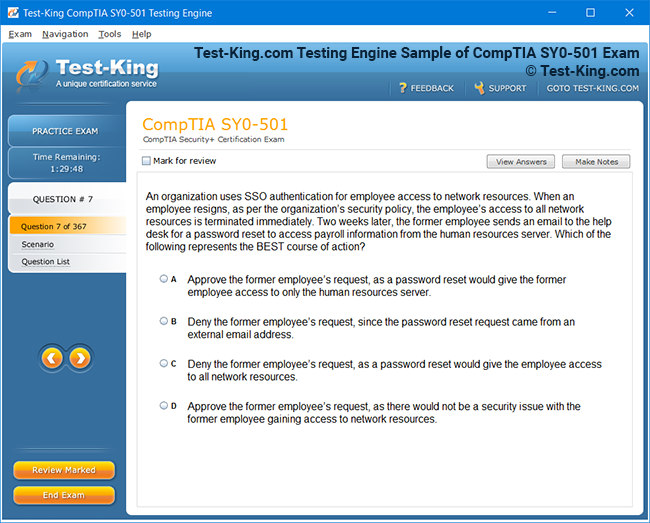
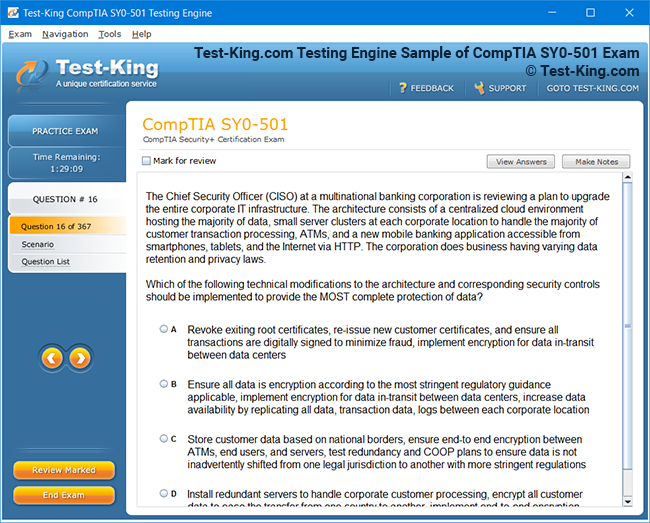
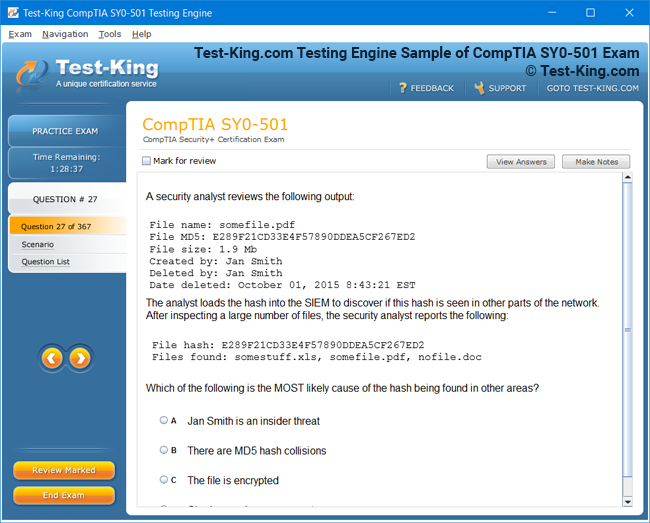
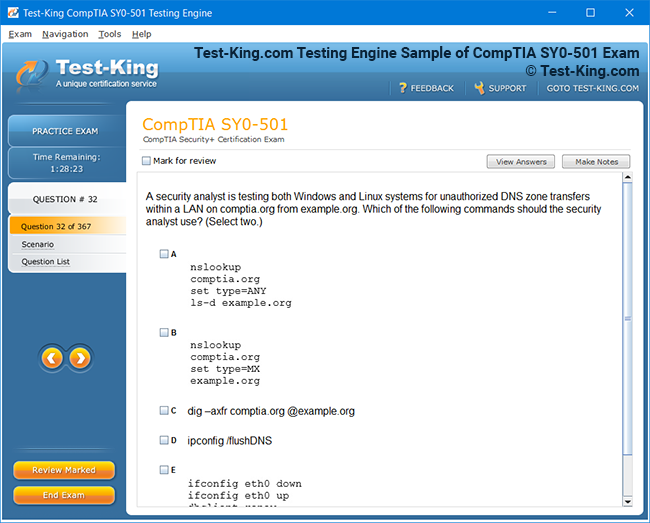
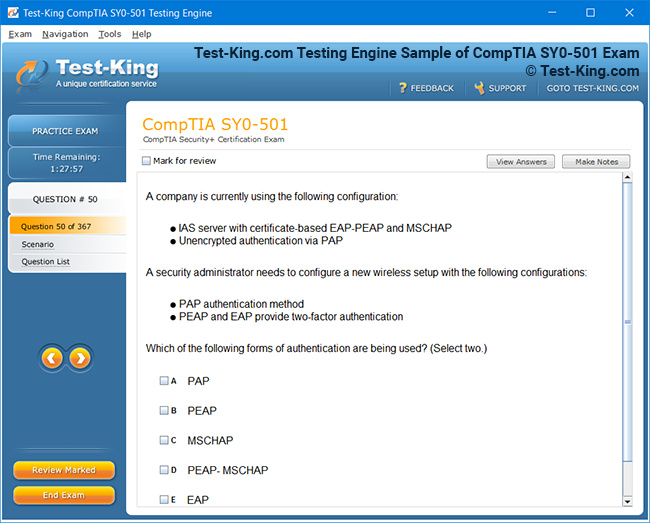
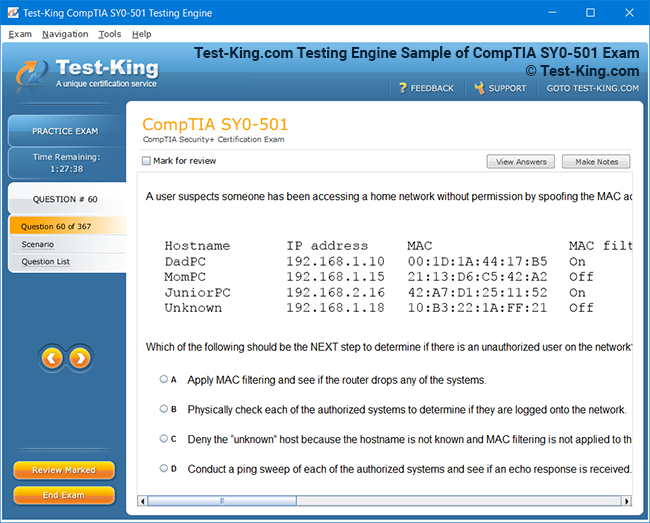
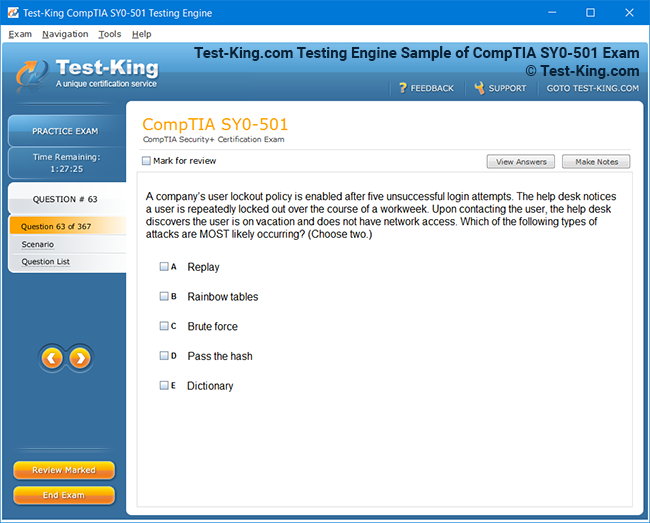
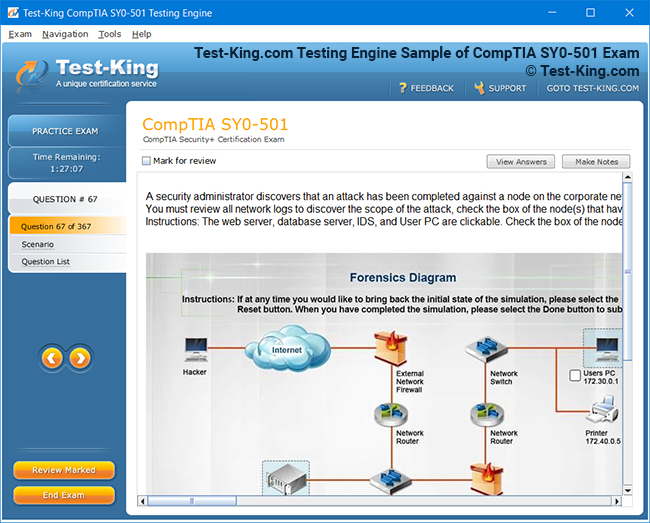
Product Screenshots
Frequently Asked Questions
How can I get the products after purchase?
All products are available for download immediately from your Member's Area. Once you have made the payment, you will be transferred to Member's Area where you can login and download the products you have purchased to your computer.
How long can I use my product? Will it be valid forever?
Test-King products have a validity of 90 days from the date of purchase. This means that any updates to the products, including but not limited to new questions, or updates and changes by our editing team, will be automatically downloaded on to computer to make sure that you get latest exam prep materials during those 90 days.
Can I renew my product if when it's expired?
Yes, when the 90 days of your product validity are over, you have the option of renewing your expired products with a 30% discount. This can be done in your Member's Area.
Please note that you will not be able to use the product after it has expired if you don't renew it.
How often are the questions updated?
We always try to provide the latest pool of questions, Updates in the questions depend on the changes in actual pool of questions by different vendors. As soon as we know about the change in the exam question pool we try our best to update the products as fast as possible.
How many computers I can download Test-King software on?
You can download the Test-King products on the maximum number of 2 (two) computers or devices. If you need to use the software on more than two machines, you can purchase this option separately. Please email support@test-king.com if you need to use more than 5 (five) computers.
What is a PDF Version?
PDF Version is a pdf document of Questions & Answers product. The document file has standart .pdf format, which can be easily read by any pdf reader application like Adobe Acrobat Reader, Foxit Reader, OpenOffice, Google Docs and many others.
Can I purchase PDF Version without the Testing Engine?
PDF Version cannot be purchased separately. It is only available as an add-on to main Question & Answer Testing Engine product.
What operating systems are supported by your Testing Engine software?
Our testing engine is supported by Windows. Andriod and IOS software is currently under development.
Top Huawei Exams
- H12-821 - HCIP-Datacom-Core Technology V1.0
- H12-811_V2.0 - HCIA-Datacom V2.0
- H12-811 - HCIA-Datacom V1.0
- H13-611 - HCIA-Storage
- H13-624_V5.5 - HCIP-Storage V5.5
- H19-308 - HCSA-Presales-Storage V4.0
- H19-301 - Huawei Certified Pre-sales Associate-IP Network(Datacom)-ENU
- H12-831 - HCIP-Datacom-Advanced Routing & Switching Technology
- H19-338_V3.0 - HCSP-Presales-Storage V3.0
- H19-101_V6.0 - HCSA-Sales-IP Network V6.0
- H35-210_V2.5 - HCIA-Access V2.5
- H12-711_V4.0 - HCIA-Security V4.0
- H13-629 - HCIE-Storage
- H19-401_V2.0 - HCSP-Presales-Campus Network Planning and Design V2.0
- H13-624 - HCIP-Storage V5.0
- H12-891 - HCIE-Datacom
- H19-110_V2.0 - HCSA-Sales-Storage V2.0
- H11-851 - HCNA-VC (Huawei Certified Network Associate - Video Conference)
- H12-841_V1.5 - HCIP-Datacom-Campus Network Planning and Deployment V1.5
- H19-461_V1.0 - HCSP-Presales-Transmission V1.0
- H13-811_V2.2 - HCIA-Cloud Service V2.2
- H12-323_V2.0 - HCIP-WLAN V2.0
- H13-821_V3.5 - HCIP-Cloud Service Solutions Architect V3.5
- H12-351 - HCIE-WLAN (Written) V1.0
- H35-651_V1.0 - HCIP-5G-Core V1.0
H19-316: Top Strategies to Pass the Huawei Certified Pre-sales Associate - ECC Exam on Your First Attempt
Embarking on the journey to attain the Huawei Certified Pre-sales Associate - ECC credential necessitates a meticulous understanding of its scope and objectives. The H19-316 exam is designed to evaluate a candidate's proficiency in Huawei's Enterprise Communication and Collaboration (ECC) solutions, requiring not only theoretical knowledge but also the ability to apply concepts pragmatically. The exam assesses competencies ranging from enterprise network design principles, collaboration tools integration, and pre-sales solution crafting, to customer interaction scenarios. Candidates are expected to navigate through questions that explore network topologies, call routing strategies, and solution deployment approaches, all while demonstrating an ability to align technical solutions with business requirements.
Understanding the Huawei HCPA-ECC Exam
The HCPA-ECC credential is particularly suited for professionals who aspire to establish themselves in pre-sales roles, where understanding customer needs and translating them into viable technical solutions is paramount. To approach this exam with confidence, candidates must familiarize themselves with Huawei’s ECC ecosystem, encompassing unified communication platforms, enterprise contact centers, and the nuanced protocols that govern digital collaboration. A deep acquaintance with these concepts allows candidates to anticipate the rationale behind exam questions, which often simulate real-world challenges faced by solution architects.
Core Knowledge Areas for Examination Readiness
The Huawei HCPA-ECC evaluation encompasses several critical domains that form the backbone of pre-sales expertise. Firstly, candidates must acquire a thorough understanding of Huawei's enterprise collaboration architecture. This involves not only the layout of network components but also the functional interplay between communication servers, endpoints, and data management systems. Understanding this architecture enables one to propose solutions that are both scalable and resilient, catering to diverse enterprise requirements.
Network integration and deployment constitute another pivotal area. Candidates should be conversant with the deployment strategies for unified communication systems, including configuring endpoints, ensuring secure data transmission, and troubleshooting interoperability challenges. Practical knowledge of Voice over IP protocols, session initiation, and call signaling processes provides a competitive edge, as questions often probe the subtleties of system behavior under different network conditions. Additionally, familiarity with contact center functionalities, such as intelligent call routing, interactive voice response mechanisms, and analytics-driven customer insights, is essential for excelling in scenario-based questions.
The pre-sales dimension of the exam emphasizes the ability to align technological solutions with enterprise objectives. Candidates must demonstrate skills in assessing client requirements, recommending appropriate collaboration suites, and articulating the benefits of Huawei’s ECC solutions convincingly. This includes understanding cost-efficiency considerations, scalability projections, and the impact of solution deployment on operational workflows. Being able to present a coherent proposal grounded in technical feasibility and business value is often a differentiator for top-performing candidates.
Effective Study Approaches
Successful preparation for the H19-316 exam involves a judicious blend of theoretical study and practical exposure. Candidates should commence with Huawei’s official learning resources, which delineate the framework and principles underlying ECC solutions. Engaging with detailed study guides allows candidates to internalize key terminologies, protocols, and system components. However, memorization alone is insufficient; it is vital to complement this knowledge with scenario-based practice that mirrors real-world deployments.
Hands-on experience with Huawei collaboration platforms can significantly enhance understanding. Simulating enterprise environments, configuring endpoints, and testing call routing strategies fosters a practical comprehension that purely theoretical study cannot achieve. For example, setting up a small-scale unified communication environment, experimenting with voice and video call flows, and analyzing system logs cultivates a nuanced awareness of system behavior. This approach also trains candidates to anticipate and troubleshoot potential issues, which is a common focus in exam questions.
Another effective strategy is methodical review and self-assessment. Regularly evaluating one’s comprehension through mock exercises and sample questions illuminates knowledge gaps and reinforces retention. Candidates should approach each question analytically, deciphering the underlying requirements rather than relying on superficial cues. Understanding why a particular solution fits a scenario, and why alternatives may be suboptimal, deepens mastery and prepares candidates to tackle the nuanced reasoning required in the Huawei Certified Pre-sales Associate - ECC exam.
Time Management and Exam Technique
Examination success hinges not solely on technical knowledge but also on strategic time management and question-handling acumen. Candidates are advised to cultivate a rhythm for answering questions efficiently without compromising accuracy. Prioritizing questions that align with one’s strengths, while earmarking complex scenarios for later review, optimizes scoring potential. Additionally, interpreting questions with precision is crucial; exam prompts may include subtle distinctions in terminology or context, which can dramatically influence the correct response.
Effective reading strategies include parsing each scenario carefully, identifying the core requirements, and mapping them to relevant ECC concepts. For instance, a question involving multi-site deployment may necessitate consideration of network latency, redundancy, and endpoint configuration. Recognizing these implicit requirements ensures that candidates do not overlook critical details that may affect the correctness of their answers. Practicing this analytical approach during study sessions conditions the mind to respond swiftly and accurately under exam conditions.
Leveraging Supplementary Learning Resources
Beyond official materials, candidates can benefit from a diverse array of supplementary learning tools. Online forums, professional communities, and case study repositories offer insights into real-world implementation challenges and resolutions. Engaging with these resources not only broadens conceptual understanding but also exposes candidates to unique problem-solving approaches that may appear in examination questions. Discussions with peers and mentors can reveal nuances in ECC deployment strategies, enriching one’s perspective and strengthening practical reasoning.
It is also beneficial to integrate visual learning methods, such as flow diagrams, system mapping, and process illustrations, into preparation. Visualizing network architectures, communication pathways, and contact center interactions enables a more intuitive grasp of system dynamics. This technique aids memory retention and facilitates rapid recall during examinations, particularly when questions require multi-step reasoning or scenario interpretation.
Psychological Preparedness and Mindset
Equally critical to technical preparation is cultivating a resilient and focused mindset. The Huawei Certified Pre-sales Associate - ECC examination demands sustained concentration and analytical reasoning, often under timed conditions. Candidates should practice stress management techniques, including deliberate pacing, mindfulness exercises, and strategic breaks during preparation. Maintaining a positive outlook and confidence in one’s abilities contributes to clarity of thought, which is indispensable for interpreting complex questions accurately.
Self-discipline is another indispensable component. Establishing a consistent study routine, balancing theoretical review with hands-on practice, and tracking progress methodically reinforces preparedness. Candidates should approach preparation with an inquisitive mindset, viewing challenges as opportunities to deepen understanding rather than obstacles. This intellectual curiosity fosters engagement with the material, facilitating long-term retention and proficiency that extends beyond exam requirements.
Addressing Common Pitfalls
Several recurrent pitfalls can impede success in the H19-316 exam. Overreliance on memorization without practical application is a common issue, as many questions assess problem-solving rather than rote knowledge. Candidates who neglect scenario-based practice may struggle with questions that simulate enterprise deployment or customer engagement. Similarly, insufficient attention to exam instructions or misinterpretation of question nuances can result in avoidable errors. Proactively identifying and mitigating these pitfalls through deliberate practice and critical self-review enhances overall performance.
Another potential challenge is underestimating the breadth of the exam. The HCPA-ECC assessment encompasses diverse topics, from network architecture to customer interaction protocols. Candidates who focus narrowly on one domain risk gaps in their overall competency. Comprehensive preparation, guided by the exam syllabus and informed by practical experience, ensures balanced expertise and readiness across all evaluated areas.
Deep Dive into Huawei Enterprise Collaboration Solutions
Understanding the intricate ecosystem of Huawei’s enterprise collaboration solutions is essential for success in the HCPA-ECC examination. The H19-316 assessment evaluates a candidate’s ability to interweave technical acumen with business-oriented pre-sales strategies, requiring knowledge that spans architecture, protocols, and deployment scenarios. Huawei ECC solutions are designed to unify communication channels across diverse enterprise environments, integrating voice, video, messaging, and conferencing systems into a seamless operational framework. This ecosystem extends beyond conventional communication, encompassing contact center functionalities, intelligent call routing, and analytics-driven operational insights.
A candidate preparing for the exam must grasp the interplay of these components. Unified communication servers orchestrate interactions between endpoints, managing signaling and data flow while ensuring security and reliability. Endpoints, ranging from IP phones to mobile devices, form the interface between users and the system, demanding careful configuration to maintain quality of service and interoperability. Furthermore, understanding the deployment topology, whether centralized, distributed, or hybrid, is crucial for designing solutions that meet both technical requirements and business objectives.
Enterprise Network Architecture and Design Principles
Network architecture forms the backbone of Huawei ECC solutions, and the exam tests the candidate’s ability to conceptualize and optimize these structures. Candidates should be familiar with LAN and WAN design considerations, redundancy strategies, and traffic prioritization mechanisms that support voice and video quality. For instance, implementing quality of service policies ensures that critical voice traffic is prioritized over nonessential data, reducing latency and packet loss. Redundant paths and failover mechanisms enhance system reliability, allowing enterprises to maintain continuous communication even during network disruptions.
Designing enterprise networks also involves integrating collaboration platforms with existing IT infrastructure. This includes configuring IP addressing schemes, subnet segmentation, and secure gateways to external networks. The HCPA-ECC exam often frames questions around real-world scenarios, such as extending collaboration services across multiple branch offices or integrating third-party applications into the communication environment. Understanding the principles of scalability, modular design, and resource allocation equips candidates to provide solutions that are both technically robust and operationally feasible.
Configuration and Deployment Practices
Practical expertise in configuring and deploying Huawei ECC solutions is a differentiator for examination success. Candidates must be comfortable with the initial setup of communication servers, registration of endpoints, and configuration of call routing policies. Deployment extends to integrating messaging, presence, and conferencing functionalities to enable seamless collaboration. The exam frequently explores how candidates would handle specific deployment challenges, such as network congestion, endpoint compatibility issues, or security compliance requirements.
A nuanced understanding of session initiation protocols and signaling mechanisms enhances a candidate’s ability to troubleshoot deployment anomalies. For example, recognizing the significance of SIP message flows allows one to pinpoint issues in call establishment or termination. Similarly, awareness of codec selection and bandwidth optimization can influence the perceived quality of audio and video streams, which is critical in designing user-centric collaboration solutions. Candidates should engage in hands-on exercises, simulating enterprise environments to internalize these deployment principles and to anticipate potential pitfalls.
Pre-sales Methodology and Customer Engagement
The pre-sales aspect of Huawei ECC solutions extends beyond technical deployment into the domain of client engagement and solution justification. Candidates must demonstrate proficiency in assessing enterprise requirements, translating business objectives into technical proposals, and articulating the benefits of Huawei’s ECC suite convincingly. This involves performing needs analysis, evaluating organizational workflows, and recommending solutions that optimize communication efficiency, reduce operational costs, and support digital transformation initiatives.
Effective pre-sales practice also entails addressing client concerns related to scalability, security, and integration. For example, when presenting a proposal for multi-site deployment, it is essential to highlight redundancy strategies, network optimization, and compliance with data protection standards. The HCPA-ECC exam often simulates these pre-sales scenarios, requiring candidates to propose solutions that balance technical precision with strategic insight. Developing this competency necessitates a blend of analytical thinking, technical knowledge, and interpersonal skills, fostering the ability to communicate complex solutions in a clear and persuasive manner.
Troubleshooting and Scenario Analysis
An essential component of the HCPA-ECC exam is evaluating a candidate’s ability to diagnose and resolve problems within Huawei ECC environments. Troubleshooting requires methodical investigation of symptoms, identification of root causes, and implementation of corrective measures. Candidates should be familiar with common issues such as registration failures, call drops, voice quality degradation, and endpoint connectivity errors. Understanding the diagnostic tools and logs available within Huawei ECC systems enhances the ability to pinpoint problems efficiently.
Scenario-based questions often present multi-layered challenges, where network, server, and endpoint factors interplay to produce a specific issue. For instance, a question may describe intermittent call failures across certain branches, requiring candidates to consider network latency, server capacity, firewall configurations, and endpoint compatibility. Crafting a systematic troubleshooting approach, documenting observations, and recommending solutions that mitigate recurrence is central to excelling in this component of the exam. Engaging with real-world case studies and simulated environments cultivates this problem-solving agility, reinforcing both technical and analytical capabilities.
Study Techniques and Resource Optimization
Effective study for the Huawei Certified Pre-sales Associate - ECC exam demands a blend of strategic planning and resource optimization. Candidates should begin with a detailed review of official Huawei training materials, which outline core concepts, solution architecture, and deployment methodologies. Complementing this with case studies, practical labs, and scenario exercises enables the reinforcement of knowledge in applied contexts. For example, configuring a simulated contact center with intelligent routing and analytics dashboards provides hands-on exposure that enhances comprehension and retention.
Integrating varied learning modalities, including visual aids, mind mapping, and interactive exercises, can accelerate understanding of complex topics. Visualizing network topologies, call flows, and system interactions facilitates rapid assimilation of concepts that may otherwise seem abstract. Furthermore, leveraging peer discussions, professional forums, and knowledge-sharing platforms exposes candidates to diverse perspectives and troubleshooting approaches, enriching their conceptual framework and preparing them for unexpected examination challenges.
Time Allocation and Exam Strategy
Mastering time allocation during the H19-316 exam is crucial for maximizing performance. Candidates should cultivate an approach that balances speed with accuracy, ensuring that all questions are addressed without compromising careful consideration. Prioritization of questions according to familiarity and difficulty, along with the practice of revisiting complex scenarios, optimizes scoring potential. Attentive reading of each question, identification of underlying requirements, and application of conceptual frameworks are strategies that distinguish successful candidates.
Scenario-based questions often require multi-step reasoning, where the candidate must evaluate network constraints, endpoint capabilities, and deployment options simultaneously. Developing a structured approach to dissect such questions ensures that no critical element is overlooked. Practicing this analytical methodology during preparation conditions the mind to respond effectively under timed examination conditions, enhancing both confidence and performance.
Cognitive Readiness and Mental Fortitude
Equally important to technical mastery is the cultivation of cognitive readiness and mental fortitude. Preparing for the Huawei Certified Pre-sales Associate - ECC exam involves sustained attention, analytical precision, and adaptive thinking. Candidates should integrate strategies for stress management, concentration enhancement, and cognitive endurance into their study regimen. Techniques such as focused meditation, deliberate pacing during practice sessions, and structured review cycles can fortify mental resilience, ensuring clarity of thought and effective decision-making under examination pressure.
Maintaining a proactive and inquisitive mindset fosters engagement with material and enhances retention. Candidates are encouraged to view each challenge as an opportunity to deepen understanding rather than as an impediment. This intellectual curiosity not only supports examination readiness but also cultivates the analytical and problem-solving skills required in professional pre-sales roles, extending the benefits of preparation well beyond the confines of the examination hall.
Common Mistakes and Preventive Measures
A recurring challenge among candidates is an overemphasis on memorization without application. The HCPA-ECC exam evaluates practical reasoning, scenario interpretation, and solution articulation, rendering superficial knowledge inadequate. Candidates who neglect hands-on practice, scenario simulations, and problem-solving exercises may struggle with complex questions that test both technical understanding and strategic application. To mitigate this, integrating practical labs and scenario-based exercises into study routines is essential.
Another common pitfall is underestimating the breadth of the exam. Huawei ECC encompasses multifaceted topics, including unified communication infrastructure, contact center optimization, network design, and pre-sales methodology. Focusing narrowly on isolated concepts risks leaving critical gaps in knowledge. A comprehensive study plan that interweaves theory, practical application, and scenario analysis ensures balanced preparedness, equipping candidates with the versatility needed to navigate the full spectrum of examination challenges.
In-depth Comprehension of Huawei ECC Ecosystem
Mastery of Huawei’s Enterprise Communication and Collaboration environment requires an immersive understanding of its architecture, protocols, and functional interdependencies. The HCPA-ECC examination evaluates not only theoretical knowledge but also the candidate’s capacity to apply concepts in real-world pre-sales scenarios. The H19-316 assessment examines competencies spanning network configuration, unified communication integration, and intelligent contact center operations. Candidates are expected to translate client requirements into technically feasible solutions while optimizing for scalability, reliability, and operational efficiency.
Huawei’s ECC solutions integrate voice, video, messaging, and conferencing services into a coherent platform that enhances enterprise collaboration. The system’s backbone comprises communication servers that manage signaling, endpoint registration, and message orchestration. Endpoints, whether IP phones, soft clients, or mobile devices, interface with these servers to provide seamless interaction experiences. Understanding the communication flows between these components allows candidates to anticipate system behavior under varying load and network conditions, a critical skill for scenario-based examination questions. Moreover, the interrelation of servers, endpoints, and contact center functionalities emphasizes the importance of holistic system comprehension.
Deployment Architecture and Network Design
A deep grasp of deployment architecture is crucial for both examination success and practical proficiency. Huawei ECC solutions can be deployed in centralized, distributed, or hybrid configurations depending on enterprise requirements. Candidates must be adept at evaluating these deployment models, considering factors such as redundancy, latency, bandwidth, and endpoint scalability. Questions in the H19-316 exam often simulate scenarios involving multi-site enterprises where communication continuity and efficiency are paramount.
Network design principles are integral to ECC performance. Candidates should be proficient in segmenting enterprise networks, implementing quality of service policies, and configuring security gateways to ensure seamless operation. Redundancy strategies, such as dual-homing servers and alternative call paths, safeguard against failures, maintaining high availability for critical communication services. Practical knowledge of routing protocols, VLAN segmentation, and IP addressing schemas enhances a candidate’s ability to propose robust solutions that align with business imperatives while adhering to technical best practices.
Endpoint Configuration and Integration
Endpoint configuration is a fundamental aspect of Huawei ECC solutions, directly impacting user experience and system reliability. Candidates preparing for the HCPA-ECC exam should understand how to register endpoints, configure profiles, and ensure interoperability with existing enterprise infrastructure. Endpoint management involves not only initial configuration but also ongoing monitoring, firmware updates, and troubleshooting to maintain optimal performance.
Integration of endpoints with communication servers and peripheral applications requires meticulous attention to detail. For example, configuring unified messaging, presence, and conferencing features demands an understanding of session initiation protocols, signaling flows, and bandwidth optimization techniques. Candidates are expected to anticipate compatibility issues and propose solutions that maintain system integrity across diverse device types and network environments. Hands-on experience with endpoint deployment cultivates practical knowledge that complements theoretical study, reinforcing the candidate’s readiness for complex examination scenarios.
Intelligent Contact Center Operations
Huawei’s contact center solutions exemplify the convergence of communication technology and operational intelligence. Candidates must comprehend call routing mechanisms, automatic call distribution, and interactive voice response functionalities. These features enable enterprises to handle high call volumes efficiently while providing personalized customer experiences. The H19-316 exam frequently evaluates a candidate’s ability to design contact center solutions that balance operational efficiency with service quality.
Analytics and reporting capabilities within the contact center provide actionable insights into call patterns, agent performance, and customer satisfaction. Candidates should understand how to leverage these insights to optimize resource allocation, refine routing strategies, and enhance service delivery. Scenario-based questions often present multi-faceted challenges, requiring candidates to synthesize data-driven insights with technical deployment considerations, demonstrating both strategic and operational competence.
Pre-sales Solution Design and Client Engagement
Pre-sales solution design extends beyond technical deployment into strategic client engagement. Candidates must demonstrate the ability to conduct needs assessments, map enterprise requirements to Huawei ECC solutions, and articulate the value proposition effectively. This involves presenting technical solutions in a manner that aligns with business objectives, highlighting scalability, cost efficiency, and operational impact. Questions often simulate client meetings where candidates must propose solutions addressing real-world constraints such as budget limitations, network capacity, or multi-site deployment.
Effective pre-sales engagement also involves addressing potential client concerns regarding security, integration, and future expansion. Candidates are expected to provide recommendations that balance immediate operational needs with long-term scalability, showcasing both technical expertise and strategic foresight. Developing this skill set requires practice in articulating complex solutions clearly and persuasively, reinforcing readiness for scenario-driven examination challenges.
Troubleshooting Complex Scenarios
Troubleshooting remains a critical competency for candidates seeking to excel in the HCPA-ECC examination. Questions may present multi-layered issues involving server performance, endpoint connectivity, and network reliability. Candidates must approach these scenarios methodically, identifying root causes, evaluating potential solutions, and recommending corrective actions. Familiarity with diagnostic tools, log analysis, and system monitoring enhances the candidate’s ability to resolve issues efficiently.
Scenario analysis often involves evaluating multiple contributing factors simultaneously. For example, intermittent call failures could stem from network congestion, misconfigured endpoints, or signaling anomalies. Candidates should employ a systematic approach, documenting observations and applying diagnostic reasoning to isolate and rectify the problem. Engaging with simulated troubleshooting exercises equips candidates with the practical skills required to address complex scenarios both in the examination and in professional practice.
Advanced Study Techniques and Retention Strategies
Preparation for the H19-316 exam demands a strategic approach to study, balancing theoretical comprehension with practical application. Candidates should engage with official Huawei training materials to establish a foundational understanding of ECC architecture, protocols, and deployment methodologies. Complementing these resources with hands-on labs, case studies, and scenario-based exercises enhances retention and practical readiness.
Integrating cognitive strategies such as visualization, mind mapping, and active recall can accelerate mastery of complex concepts. Visualizing communication flows, network topologies, and contact center operations provides an intuitive grasp of system interdependencies. Engaging in collaborative learning, discussion forums, and peer mentoring broadens understanding and exposes candidates to diverse problem-solving techniques. By employing these strategies, candidates can cultivate a holistic comprehension of Huawei ECC solutions, reinforcing readiness for both technical and pre-sales components of the exam.
Exam Day Strategies and Analytical Thinking
On the day of the HCPA-ECC examination, analytical thinking and strategic time management are paramount. Candidates should allocate time judiciously, prioritizing questions according to familiarity and complexity. Scenario-based questions require careful analysis, mapping problem statements to Huawei ECC principles, and identifying optimal solutions. Misinterpretation of subtle cues or terminology can lead to incorrect answers, making attentive reading essential.
Effective examination technique involves dissecting multi-step scenarios into component factors, evaluating constraints, and applying structured reasoning to derive solutions. Practicing this methodology during preparation familiarizes candidates with the cognitive demands of the exam, enhancing both speed and accuracy. Developing confidence in analytical approaches and decision-making under pressure contributes to a composed, systematic performance on examination day.
Cognitive Endurance and Focus Enhancement
Sustained cognitive endurance is crucial for navigating the HCPA-ECC exam effectively. Candidates must maintain concentration through complex technical scenarios, multi-layered deployment questions, and analytical problem-solving exercises. Techniques such as structured breaks, mental rehearsal, and mindfulness practices can fortify focus and reduce cognitive fatigue. Developing resilience under examination conditions ensures clarity of thought, precision in decision-making, and consistency in performance.
Adopting an inquisitive and proactive mindset encourages continuous engagement with material, fostering deeper understanding and long-term retention. Candidates are encouraged to approach challenges as opportunities for intellectual enrichment rather than obstacles. This perspective enhances both examination readiness and professional aptitude, reinforcing the capacity to address intricate enterprise communication scenarios with confidence and strategic insight.
Strategic Insights into Huawei ECC Deployment
Achieving mastery of Huawei’s Enterprise Communication and Collaboration solutions demands a profound understanding of its deployment methodologies, system architecture, and operational intricacies. The HCPA-ECC examination, identified by its H19-316 code, evaluates a candidate’s capability to translate technical knowledge into actionable pre-sales solutions while maintaining alignment with enterprise objectives. Huawei’s ECC ecosystem integrates voice, video, messaging, and conferencing services into a unified operational framework, designed to streamline communication and enhance productivity across multiple organizational tiers.
Candidates preparing for the examination must comprehend the interplay between communication servers, endpoints, and auxiliary modules such as contact centers. Communication servers coordinate call signaling, message routing, and system authentication, ensuring seamless connectivity and high availability. Endpoints, encompassing IP phones, soft clients, and mobile devices, interface with these servers, providing the end-user experience. Understanding the dynamics of this interaction, including protocol flows and session management, is crucial for accurately anticipating system behavior and resolving potential deployment issues during scenario-based questions.
Network Architecture and Multi-Site Integration
A pivotal component of examination readiness involves understanding enterprise network architecture and the considerations for multi-site deployment. Huawei ECC solutions can be deployed in centralized, distributed, or hybrid configurations, each presenting unique advantages and challenges. Candidates must evaluate factors such as latency, bandwidth allocation, redundancy mechanisms, and endpoint scalability. The H19-316 assessment frequently simulates real-world scenarios where multiple offices or remote locations must be connected without compromising communication integrity or operational efficiency.
Designing robust networks requires knowledge of routing protocols, VLAN segmentation, and security measures, ensuring data integrity and minimal disruption to communication channels. Quality of service policies prioritize critical voice and video traffic, reducing latency and packet loss. Redundant pathways and failover strategies mitigate service interruptions, maintaining uninterrupted enterprise operations. Candidates must develop the ability to integrate these architectural considerations with practical deployment plans that satisfy both technical and business requirements.
Endpoint Management and Optimization
Effective endpoint management is central to Huawei ECC solutions and constitutes a significant portion of examination content. Candidates must understand the registration process, configuration protocols, and firmware management across diverse endpoint types. Integration extends beyond initial setup, requiring ongoing monitoring and optimization to ensure consistent performance and user satisfaction.
Configuring endpoints to support unified messaging, video conferencing, and presence management necessitates familiarity with session initiation protocols and signaling flows. Bandwidth allocation, codec selection, and device compatibility are essential considerations that influence call quality and system reliability. The examination may present scenarios in which endpoint misconfigurations lead to degraded service, requiring candidates to employ analytical skills to identify causes and implement corrective measures. Hands-on experience and practical exercises reinforce theoretical understanding, enabling candidates to navigate these challenges with confidence.
Intelligent Contact Center Functionality
Huawei’s contact center solutions exemplify the convergence of technical capability and operational intelligence. Candidates are expected to understand intelligent call routing, automatic distribution mechanisms, and interactive voice response systems. These features allow enterprises to manage high volumes of calls efficiently while providing personalized service to clients. The examination often includes questions that simulate high-demand scenarios, testing the candidate’s ability to design contact center solutions that optimize operational performance and customer satisfaction.
Analytical tools and reporting mechanisms within the contact center provide actionable insights into agent performance, call trends, and customer behavior. Candidates must demonstrate the ability to utilize these insights to adjust routing strategies, enhance resource allocation, and improve service delivery. Scenario-based questions may challenge candidates to propose solutions that address fluctuating call volumes, multi-language support, or compliance with industry regulations, requiring both technical acumen and strategic foresight.
Pre-sales Solution Formulation
The pre-sales aspect of Huawei ECC solutions requires candidates to translate technical knowledge into persuasive, business-aligned proposals. Understanding enterprise objectives, operational workflows, and potential challenges allows candidates to recommend solutions that maximize efficiency, scalability, and cost-effectiveness. The examination may present client scenarios where constraints such as budget limitations, geographic distribution, or legacy system integration must be considered.
Candidates must articulate the advantages of Huawei ECC solutions, including streamlined communication, operational resilience, and enhanced collaboration capabilities. Proposals should demonstrate both immediate value and long-term adaptability, highlighting redundancy mechanisms, network optimization strategies, and system security measures. Developing proficiency in this skill requires practice in scenario analysis, effective communication, and strategic thinking, ensuring candidates can address multifaceted client needs while aligning technical recommendations with business priorities.
Troubleshooting and Scenario Resolution
Proficiency in troubleshooting is a crucial competency evaluated in the HCPA-ECC exam. Candidates may encounter scenarios involving call drops, endpoint registration failures, network congestion, or server performance issues. A systematic approach to problem-solving, involving symptom analysis, root cause identification, and corrective action planning, is essential for success.
Scenario-based questions may incorporate multiple contributing factors, challenging candidates to consider network topology, endpoint behavior, and server configurations simultaneously. For instance, intermittent call failures may arise from bandwidth limitations, misconfigured session parameters, or firewall restrictions. Developing a methodical troubleshooting process, combined with familiarity with Huawei diagnostic tools and logs, enables candidates to resolve complex issues efficiently. Engaging in simulated troubleshooting exercises reinforces practical expertise and prepares candidates for real-world problem-solving situations.
Advanced Study Techniques and Knowledge Retention
Preparation for the H19-316 examination benefits from a strategic approach to study that emphasizes both theoretical comprehension and applied knowledge. Official Huawei resources provide foundational understanding of ECC architecture, protocols, and deployment methods. Supplementing these materials with practical labs, scenario exercises, and case studies fosters deeper retention and enhances problem-solving capabilities.
Cognitive techniques such as visualization, mind mapping, and active recall aid in mastering complex concepts. Visualizing network topologies, communication flows, and contact center operations enables candidates to internalize interdependencies and system dynamics. Collaborative learning through forums, mentorship, and peer discussions exposes candidates to diverse perspectives and troubleshooting approaches, enriching conceptual understanding and reinforcing readiness for multifaceted examination questions.
Exam Day Strategies and Analytical Acumen
Successful navigation of the HCPA-ECC exam relies on analytical thinking and strategic time management. Candidates should allocate time effectively, prioritizing questions based on familiarity and complexity while allowing sufficient attention for scenario-based challenges. Careful reading of each question, identification of core requirements, and alignment with Huawei ECC principles are crucial for accurate responses.
Scenario questions often require multi-step reasoning and consideration of multiple constraints. Developing a structured analytical approach, practiced during preparation, ensures candidates can evaluate problem statements methodically, derive solutions efficiently, and avoid overlooking critical details. Confidence in analytical processes, combined with familiarity with practical scenarios, equips candidates to perform consistently under examination conditions.
Cognitive Resilience and Focus Strategies
Sustained concentration and mental resilience are essential for effective examination performance. Candidates must maintain focus through complex technical scenarios, analytical problem-solving exercises, and multi-layered deployment questions. Techniques such as structured breaks, mental rehearsal, and mindfulness practices support cognitive endurance, enabling clear and precise decision-making.
Adopting an inquisitive and proactive mindset enhances engagement with study material and strengthens long-term retention. Viewing challenges as opportunities to refine skills rather than obstacles fosters intellectual curiosity and analytical dexterity. This perspective not only supports examination readiness but also cultivates the professional acumen necessary for pre-sales roles, allowing candidates to navigate intricate enterprise communication environments with confidence and strategic insight.
Comprehensive Understanding of Huawei ECC Solutions
Achieving proficiency in Huawei’s Enterprise Communication and Collaboration solutions requires an immersive exploration of its architectural nuances, deployment methodologies, and operational intricacies. The HCPA-ECC exam, designated as H19-316, evaluates candidates on their ability to combine technical knowledge with practical pre-sales acumen, focusing on unified communication, contact center operations, and enterprise collaboration strategies. Huawei ECC integrates voice, video, messaging, and conferencing services into a consolidated operational ecosystem, designed to optimize organizational communication while enhancing productivity across distributed teams.
Candidates must comprehend the interaction between communication servers, endpoints, and contact center modules, understanding how each component contributes to a seamless operational experience. Communication servers manage signaling, message routing, and endpoint registration, ensuring reliable connectivity and high availability. Endpoints, encompassing IP phones, soft clients, and mobile interfaces, serve as the primary access points for users, interfacing directly with servers to deliver communication services. Understanding the dynamics of these interactions, including session management, protocol flows, and security considerations, is critical for tackling scenario-based questions effectively.
Network Design and Multi-Site Deployment
A core element of examination preparedness involves understanding network design principles and multi-site deployment strategies. Huawei ECC solutions can be implemented in centralized, distributed, or hybrid configurations depending on enterprise size, operational requirements, and geographic distribution. Candidates are expected to evaluate deployment options, considering latency, redundancy, bandwidth allocation, and endpoint scalability. The H19-316 examination often presents complex scenarios where multiple branch offices must maintain synchronized communication without sacrificing service quality or reliability.
Designing resilient networks requires familiarity with routing protocols, VLAN configurations, and security policies that protect sensitive communication data. Implementing quality of service strategies ensures voice and video traffic is prioritized, minimizing latency and packet loss. Redundant paths, failover mechanisms, and load balancing are essential to maintain operational continuity. Candidates must learn to integrate these architectural considerations with practical deployment strategies, ensuring that technical solutions are aligned with enterprise objectives and operational feasibility.
Endpoint Configuration and Optimization
Endpoint management is a critical aspect of Huawei ECC deployment and is heavily emphasized in the HCPA-ECC exam. Candidates need to understand endpoint registration processes, configuration procedures, and ongoing management tasks, including firmware updates, monitoring, and performance optimization. Endpoint functionality encompasses unified messaging, video conferencing, presence management, and device interoperability, all of which contribute to the overall communication experience.
Proficiency in session initiation protocols, codec selection, and bandwidth management enhances the candidate’s ability to optimize endpoint performance and troubleshoot potential issues. Scenario-based questions may present situations where endpoints fail to register correctly or experience degraded call quality. Candidates must employ analytical reasoning to identify root causes, assess potential solutions, and implement corrective actions. Hands-on practice with various endpoint types cultivates practical knowledge and reinforces theoretical understanding, equipping candidates to handle complex examination scenarios confidently.
Intelligent Contact Center Operations
Huawei’s contact center solutions exemplify the integration of operational intelligence with advanced communication technology. Candidates are expected to understand automatic call distribution, intelligent routing, and interactive voice response mechanisms. These capabilities enable enterprises to manage high volumes of calls efficiently while maintaining personalized customer interactions. Examination questions frequently simulate dynamic operational environments where candidates must design contact center strategies that maximize efficiency and service quality.
Analytics and reporting within the contact center provide insights into call trends, agent performance, and customer behavior. Candidates should demonstrate the ability to leverage these insights to optimize routing strategies, resource allocation, and service delivery. Scenario-based questions may require candidates to address fluctuating call volumes, multi-language support, and regulatory compliance, necessitating both technical skill and strategic foresight. Developing expertise in this area requires repeated engagement with operational simulations and practical exercises that reflect real-world enterprise challenges.
Pre-sales Solution Development
Pre-sales solution development demands the ability to translate technical knowledge into persuasive and business-aligned proposals. Candidates must assess enterprise needs, evaluate operational constraints, and recommend Huawei ECC solutions that enhance communication efficiency, scalability, and cost-effectiveness. The examination may simulate client scenarios in which constraints such as budget limitations, multi-site integration, or existing legacy systems must be addressed.
Candidates are expected to present the benefits of Huawei ECC solutions, including operational resilience, enhanced collaboration, and seamless integration with existing infrastructure. Proposals should account for long-term scalability, redundancy strategies, network optimization, and security measures. Developing proficiency in this area requires practice in scenario analysis, effective communication, and strategic solution framing, ensuring candidates can address complex enterprise requirements while articulating the value proposition convincingly.
Troubleshooting Advanced Scenarios
Troubleshooting forms a central aspect of the HCPA-ECC examination. Candidates may encounter complex scenarios involving call drops, server performance issues, endpoint connectivity failures, or network congestion. A structured approach to problem-solving, involving symptom identification, root cause analysis, and corrective action planning, is essential for examination success.
Multi-layered scenarios often require consideration of server configurations, network behavior, and endpoint performance concurrently. For instance, intermittent video call failures may result from bandwidth limitations, misconfigured session parameters, or firewall restrictions. Candidates must apply diagnostic reasoning, utilize available logs and monitoring tools, and propose solutions that restore optimal system functionality. Engaging in simulated troubleshooting exercises provides practical experience, reinforcing theoretical knowledge and enhancing readiness for scenario-based questions.
Study Techniques for Effective Knowledge Retention
Preparation for the H19-316 examination benefits from a structured study approach that integrates theoretical comprehension with hands-on practice. Official Huawei resources provide foundational knowledge on ECC architecture, deployment methodologies, and solution design principles. Supplementing these materials with scenario-based exercises, case studies, and practical labs ensures candidates develop the analytical skills necessary to address complex examination questions.
Cognitive strategies such as visualization, mind mapping, and active recall improve retention and understanding of intricate concepts. Visualizing network topologies, communication flows, and contact center operations aids in grasping interdependencies and operational dynamics. Collaborative learning through forums, mentorship, and professional discussions exposes candidates to alternative problem-solving methods and enriches conceptual understanding, reinforcing preparedness for multifaceted examination challenges.
Exam Day Preparation and Analytical Strategies
Success in the HCPA-ECC exam requires strategic thinking, time management, and analytical acuity. Candidates should allocate time effectively, prioritizing familiar questions while ensuring adequate attention is given to scenario-based challenges. Close reading of question prompts, identification of underlying requirements, and alignment with Huawei ECC principles are critical for accurate responses.
Scenario questions often demand multi-step reasoning, where candidates must evaluate multiple constraints simultaneously, such as network limitations, endpoint compatibility, and server capacity. Developing structured analytical techniques during preparation ensures candidates can deconstruct complex scenarios, identify optimal solutions, and avoid overlooking critical details. Confidence in analytical reasoning and familiarity with practical deployment scenarios enables consistent performance under examination conditions.
Mental Resilience and Cognitive Focus
Sustaining concentration and mental resilience is vital during the HCPA-ECC exam. Candidates must maintain focus through extended periods of complex problem-solving, multi-layered scenario evaluation, and analytical decision-making. Techniques such as deliberate practice, mental rehearsal, structured breaks, and mindfulness can enhance cognitive endurance, ensuring clear, precise reasoning throughout the examination.
Adopting a proactive and inquisitive mindset fosters continuous engagement with study materials, enhancing comprehension and long-term retention. Candidates who approach challenges as opportunities for intellectual growth rather than obstacles cultivate analytical agility and problem-solving acumen. This mindset not only supports examination performance but also strengthens professional capabilities, enabling candidates to navigate intricate enterprise communication environments with strategic insight and confidence.
Mastering Huawei ECC Solutions for Practical and Strategic Success
Attaining mastery over Huawei’s Enterprise Communication and Collaboration ecosystem demands an intricate understanding of its architecture, deployment strategies, and operational intricacies. The HCPA-ECC examination, identified as H19-316, evaluates candidates on their ability to blend technical expertise with pre-sales acumen, encompassing unified communication, intelligent contact center functionalities, and enterprise collaboration strategies. Huawei ECC integrates voice, video, messaging, and conferencing services into a cohesive platform designed to enhance organizational productivity, streamline workflows, and facilitate seamless interaction across distributed environments.
Candidates preparing for the examination must understand the interaction between communication servers, endpoints, and auxiliary modules such as contact centers. Communication servers orchestrate signaling, message routing, and endpoint authentication, ensuring high availability and operational continuity. Endpoints, including IP phones, soft clients, and mobile devices, provide the user interface and must be configured meticulously to ensure seamless interoperability. Grasping the dynamics of session management, signaling protocols, and network interactions enables candidates to anticipate potential system anomalies and address them efficiently during scenario-driven examination questions.
Advanced Network Architecture and Multi-Site Optimization
A critical aspect of examination preparation involves mastering network architecture and the considerations for multi-site deployment. Huawei ECC solutions can be deployed in centralized, distributed, or hybrid topologies based on enterprise scale, operational complexity, and geographic distribution. Candidates must assess deployment options with regard to latency, bandwidth optimization, redundancy, and endpoint scalability. The H19-316 examination frequently presents complex scenarios requiring synchronized communication across multiple offices, challenging candidates to maintain operational integrity and service quality simultaneously.
Designing resilient enterprise networks necessitates familiarity with routing protocols, VLAN configurations, and security policies to safeguard communication integrity. Quality of service mechanisms ensure that voice and video traffic are prioritized, minimizing latency and packet loss. Redundant pathways, load balancing, and failover mechanisms ensure service continuity even under network stress or hardware failures. Candidates are expected to integrate these considerations into practical deployment plans, delivering solutions that satisfy both technical robustness and business objectives.
Endpoint Management, Configuration, and Optimization
Endpoint management forms the bedrock of Huawei ECC implementation and is a core focus of the HCPA-ECC exam. Candidates must understand the registration process, configuration nuances, and ongoing management of diverse endpoint types, encompassing IP phones, soft clients, and mobile interfaces. Proper endpoint management includes firmware updates, performance monitoring, troubleshooting, and optimization to maintain consistent communication quality and user satisfaction.
Configuring endpoints to support unified messaging, presence management, and video conferencing requires proficiency in session initiation protocols, signaling flows, and codec optimization. The examination may present scenarios where endpoints experience registration failures, degraded voice quality, or incompatibility issues. Candidates must analyze symptoms systematically, identify root causes, and implement effective corrective measures. Hands-on exercises and simulated deployments are indispensable for reinforcing practical understanding and enhancing readiness for complex examination scenarios.
Intelligent Contact Center Design and Operations
Huawei’s contact center solutions exemplify the integration of operational intelligence with communication technology. Candidates are expected to understand automatic call distribution, intelligent routing, interactive voice response, and analytics-based performance monitoring. These features empower enterprises to handle high call volumes efficiently while delivering personalized service experiences. Scenario-based examination questions often simulate dynamic operational conditions, testing candidates’ ability to design contact center strategies that optimize both operational efficiency and customer satisfaction.
Analytics within the contact center provide insights into call patterns, agent productivity, and client engagement. Candidates must be able to leverage these insights to adjust routing strategies, optimize resource allocation, and enhance service delivery. Scenarios may involve fluctuating call volumes, multi-language support, or regulatory compliance, necessitating the simultaneous application of technical knowledge and strategic thinking. Regular engagement with simulated operations and real-world case studies reinforces practical skills and sharpens analytical reasoning.
Pre-sales Solution Crafting and Client Consultation
Effective pre-sales solution development requires the ability to translate technical understanding into compelling, business-aligned proposals. Candidates must assess enterprise objectives, evaluate operational constraints, and recommend Huawei ECC solutions that improve collaboration efficiency, scalability, and cost-effectiveness. Examination scenarios may simulate client environments with complex requirements, including budget limitations, multi-site integration, and legacy system compatibility.
Candidates are expected to present solutions emphasizing the advantages of Huawei ECC, including operational resilience, streamlined communication, and seamless integration with existing IT infrastructure. Proposals should incorporate considerations for long-term scalability, redundancy, network optimization, and security. Developing proficiency in pre-sales solution crafting requires repeated scenario analysis, persuasive communication, and strategic framing, ensuring candidates can address multifaceted client needs while articulating technical benefits clearly.
Troubleshooting and Problem-Solving in Complex Environments
Troubleshooting forms a central component of the HCPA-ECC examination. Candidates must approach issues methodically, evaluating symptoms, identifying root causes, and implementing corrective actions. Scenarios may involve call drops, server performance issues, endpoint connectivity failures, or network congestion. Multi-layered problems often require consideration of server configuration, network behavior, and endpoint interaction concurrently.
For instance, intermittent video call failures could result from insufficient bandwidth, misconfigured signaling parameters, or firewall constraints. Candidates must apply diagnostic reasoning, analyze system logs, and propose solutions that restore functionality while preventing recurrence. Simulated troubleshooting exercises provide practical exposure, reinforcing theoretical knowledge and building confidence for scenario-based examination questions.
Effective Study Strategies and Knowledge Retention
Preparation for the H19-316 exam benefits from a balanced combination of theory and practice. Official Huawei resources provide comprehensive coverage of ECC architecture, deployment strategies, and solution design. Supplementary materials, including scenario exercises, practical labs, and case studies, deepen understanding and enhance analytical capabilities.
Cognitive techniques such as visualization, mind mapping, and active recall improve comprehension of complex concepts. Visualizing network topologies, communication flows, and contact center operations enables candidates to internalize interdependencies and anticipate potential operational issues. Engaging with peers, professional forums, and mentorship opportunities provides exposure to diverse problem-solving approaches, enhancing conceptual understanding and readiness for multifaceted questions.
Exam Day Approach and Analytical Thinking
On examination day, strategic time management and analytical precision are paramount. Candidates should allocate time according to familiarity and complexity of questions, ensuring sufficient focus on scenario-based challenges. Careful reading of question prompts, identification of implicit requirements, and alignment with Huawei ECC principles are essential for accurate responses.
Scenario questions often require multi-step reasoning involving multiple constraints such as network performance, endpoint configuration, and server capacity. Developing structured analytical methods during preparation allows candidates to dissect complex problems, evaluate alternative solutions, and implement optimal strategies efficiently. Confidence in analytical reasoning and practical scenario familiarity ensures consistent performance under examination conditions.
Cognitive Endurance and Focus Enhancement
Maintaining cognitive endurance and mental resilience is vital for examination success. Candidates must sustain focus through prolonged problem-solving, multi-layered scenario evaluation, and analytical decision-making. Techniques such as deliberate practice, mental rehearsal, structured breaks, and mindfulness support concentration and mitigate fatigue.
Adopting an inquisitive mindset enhances engagement with study materials and strengthens long-term retention. Candidates who view challenges as opportunities for intellectual growth cultivate analytical dexterity and problem-solving acumen. This approach reinforces both examination readiness and professional competence, enabling candidates to navigate intricate enterprise communication environments with confidence and strategic insight.
Conclusion
Excelling in the Huawei Certified Pre-sales Associate - ECC examination requires a harmonious integration of technical mastery, practical deployment experience, analytical reasoning, and strategic pre-sales acumen. Understanding the interactions between communication servers, endpoints, and contact center modules, alongside mastery of network design, endpoint management, and troubleshooting methodologies, is fundamental to success. Effective study strategies, scenario-based practice, and cognitive preparedness fortify the candidate’s capacity to address complex problems and craft business-aligned solutions. Ultimately, the credential signifies not only technical competence but also the ability to translate knowledge into strategic enterprise value, equipping professionals to thrive in dynamic pre-sales roles and advance their careers within the Huawei ecosystem.