Exam Code: H19-301
Exam Name: Huawei Certified Pre-sales Associate-IP Network(Datacom)-ENU
Certification Provider: Huawei
Corresponding Certification: HCPA-IP Network
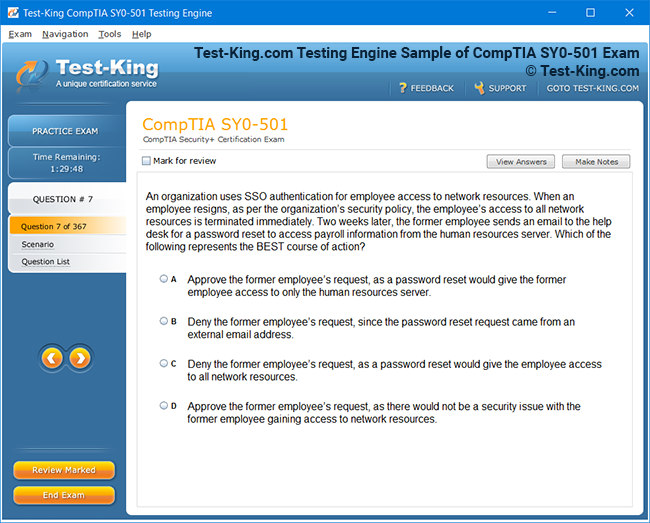
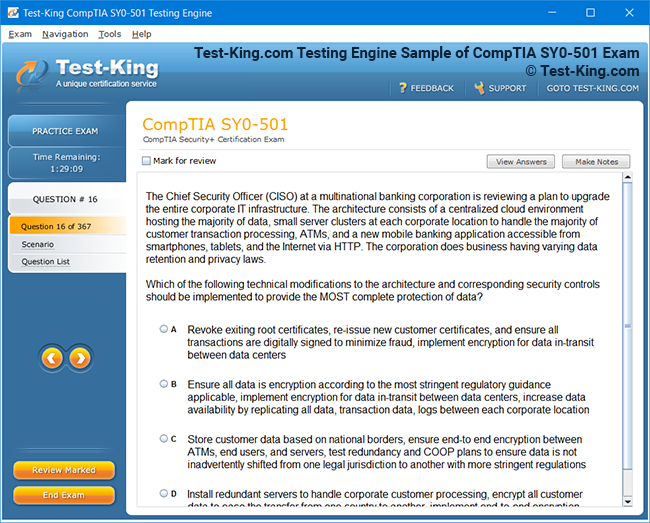
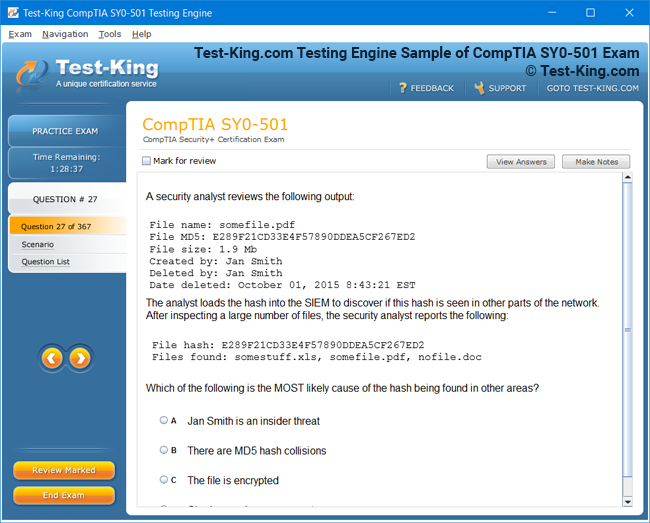
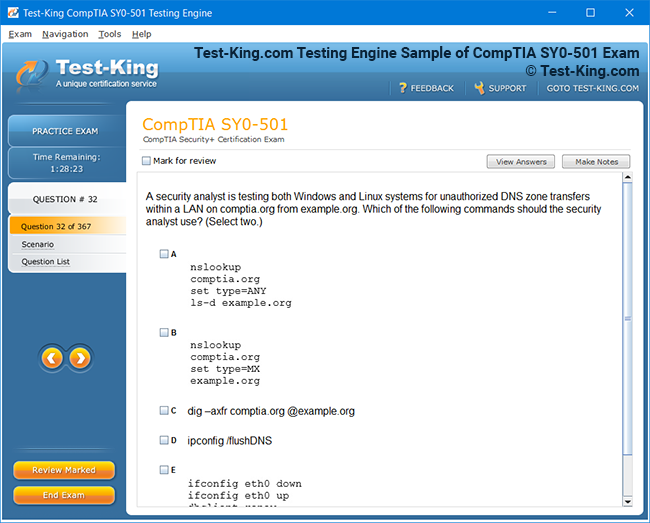
Product Screenshots
Frequently Asked Questions
How can I get the products after purchase?
All products are available for download immediately from your Member's Area. Once you have made the payment, you will be transferred to Member's Area where you can login and download the products you have purchased to your computer.
How long can I use my product? Will it be valid forever?
Test-King products have a validity of 90 days from the date of purchase. This means that any updates to the products, including but not limited to new questions, or updates and changes by our editing team, will be automatically downloaded on to computer to make sure that you get latest exam prep materials during those 90 days.
Can I renew my product if when it's expired?
Yes, when the 90 days of your product validity are over, you have the option of renewing your expired products with a 30% discount. This can be done in your Member's Area.
Please note that you will not be able to use the product after it has expired if you don't renew it.
How often are the questions updated?
We always try to provide the latest pool of questions, Updates in the questions depend on the changes in actual pool of questions by different vendors. As soon as we know about the change in the exam question pool we try our best to update the products as fast as possible.
How many computers I can download Test-King software on?
You can download the Test-King products on the maximum number of 2 (two) computers or devices. If you need to use the software on more than two machines, you can purchase this option separately. Please email support@test-king.com if you need to use more than 5 (five) computers.
What is a PDF Version?
PDF Version is a pdf document of Questions & Answers product. The document file has standart .pdf format, which can be easily read by any pdf reader application like Adobe Acrobat Reader, Foxit Reader, OpenOffice, Google Docs and many others.
Can I purchase PDF Version without the Testing Engine?
PDF Version cannot be purchased separately. It is only available as an add-on to main Question & Answer Testing Engine product.
What operating systems are supported by your Testing Engine software?
Our testing engine is supported by Windows. Andriod and IOS software is currently under development.
Top Huawei Exams
- H12-811_V2.0 - HCIA-Datacom V2.0
- H12-821 - HCIP-Datacom-Core Technology V1.0
- H12-811 - HCIA-Datacom V1.0
- H13-624_V5.5 - HCIP-Storage V5.5
- H13-611 - HCIA-Storage
- H19-301 - Huawei Certified Pre-sales Associate-IP Network(Datacom)-ENU
- H12-831 - HCIP-Datacom-Advanced Routing & Switching Technology
- H19-101_V6.0 - HCSA-Sales-IP Network V6.0
- H19-308 - HCSA-Presales-Storage V4.0
- H35-210_V2.5 - HCIA-Access V2.5
- H19-338_V3.0 - HCSP-Presales-Storage V3.0
- H19-401_V2.0 - HCSP-Presales-Campus Network Planning and Design V2.0
- H13-821_V3.5 - HCIP-Cloud Service Solutions Architect V3.5
- H13-624 - HCIP-Storage V5.0
- H12-891 - HCIE-Datacom
- H12-711_V4.0 - HCIA-Security V4.0
- H19-110_V2.0 - HCSA-Sales-Storage V2.0
- H11-851 - HCNA-VC (Huawei Certified Network Associate - Video Conference)
- H13-629 - HCIE-Storage
- H13-811_V2.2 - HCIA-Cloud Service V2.2
- H11-851_V4.0 - HCIA-Collaboration V4.0
- H35-651_V1.0 - HCIP-5G-Core V1.0
- H12-351 - HCIE-WLAN (Written) V1.0
Huawei H19-301 Exam: Key Concepts in IP Networking You Must Master
IP networking forms the backbone of modern communication, enabling devices to exchange information seamlessly. For candidates preparing for the Huawei H19-301 exam, mastering the basic concepts of IP addressing, subnetting, and routing is critical. IP addresses provide unique identification for devices on a network, and understanding their structure, including IPv4 and IPv6, is fundamental. IPv4 addresses are 32-bit numbers divided into four octets, while IPv6 extends to 128 bits, accommodating the growing demand for address space. Grasping the significance of subnet masks, network and host portions, and default gateways allows candidates to visualize how traffic flows in both local and wide-area networks.
Understanding the Foundation of IP Networking
Understanding routing principles is equally important. Routing determines how packets travel from source to destination across multiple networks. Static routing involves manually configuring routes, while dynamic routing protocols like OSPF, RIP, and BGP adjust paths automatically based on network conditions. For H19-301 aspirants, recognizing the differences between interior and exterior gateway protocols, as well as the role of routing tables and metrics, is essential. The concept of route summarization and default routes further helps in optimizing network performance.
Switching Technologies and VLANs
Switching technologies form another pillar of IP networking knowledge. Switches operate at the data link layer, forwarding frames based on MAC addresses. Understanding the role of MAC address tables, frame flooding, and loop prevention is crucial. H19-301 candidates should also be familiar with Spanning Tree Protocol, which prevents network loops in redundant topologies, ensuring reliable communication.
Virtual Local Area Networks provide logical segmentation of networks, enhancing security and performance. VLANs allow multiple networks to coexist on the same physical infrastructure. Mastery of VLAN tagging, trunk links, and inter-VLAN routing prepares candidates to design scalable and efficient network topologies. Additionally, understanding the differences between access and trunk ports, native VLANs, and the implications of misconfigured VLANs helps in troubleshooting real-world scenarios.
IP Network Security Concepts
Securing an IP network is a fundamental skill tested in the H19-301 exam. Network security involves protecting devices, data, and traffic from unauthorized access and attacks. Firewalls, access control lists, and intrusion prevention mechanisms are commonly deployed to regulate traffic. Understanding how packets are filtered, logged, and managed is vital for pre-sales associates, as they often propose solutions to clients.
Encryption plays a significant role in protecting data in transit. Protocols like IPsec and SSL/TLS ensure that communication remains confidential and tamper-proof. H19-301 candidates should also recognize the importance of authentication, authorization, and accounting in maintaining network integrity. Awareness of common attack vectors such as Denial of Service, spoofing, and phishing equips professionals to design networks that are resilient and compliant with industry standards.
IP Addressing and Subnetting Techniques
Efficient IP address planning is crucial for network scalability. Candidates must understand subnetting, which divides larger networks into smaller, manageable segments. By calculating subnet masks, network IDs, and host ranges, professionals ensure optimal utilization of IP addresses. Variable Length Subnet Masking allows for flexible allocation according to specific network requirements.
Additionally, candidates should grasp the concept of CIDR notation, which simplifies address representation and route aggregation. Recognizing private and public address spaces, along with network address translation techniques, is essential for connecting internal networks to external resources securely. IP addressing knowledge is also crucial for troubleshooting, as misconfigured addresses can result in connectivity issues and service disruption.
Routing Protocols and Path Determination
Routing protocols are a central theme for H19-301 aspirants. Static routing requires explicit configuration but offers simplicity for small networks. Dynamic routing protocols, however, adapt to changes automatically, improving network resilience. OSPF, a link-state protocol, calculates the shortest path based on cost metrics, while RIP uses hop count as its primary metric. BGP, typically used in larger networks, manages inter-domain routing with policy control, influencing traffic flow between autonomous systems.
Understanding route redistribution, convergence time, and protocol preference allows candidates to predict how networks respond to topology changes. Additionally, concepts such as route summarization and route filtering enhance performance and security. Mastery of these topics enables professionals to design networks that are both efficient and reliable, meeting the requirements of diverse clients.
Network Troubleshooting and Problem Solving
Troubleshooting skills are indispensable for pre-sales associates. Candidates should be able to identify common issues such as IP conflicts, misconfigured routes, and VLAN misassignments. Tools like ping, traceroute, and protocol analyzers help in diagnosing connectivity problems. Understanding how to interpret network logs, interface statistics, and error messages empowers candidates to resolve issues swiftly and accurately.
Effective troubleshooting also requires a methodical approach. By isolating the problem, verifying configurations, and testing connectivity step by step, professionals minimize downtime and ensure service continuity. Additionally, being familiar with failover mechanisms, redundancy strategies, and backup configurations prepares candidates to handle complex network environments with confidence.
Advanced Concepts and Emerging Trends
While foundational knowledge is essential, awareness of advanced topics gives candidates an edge. Software-defined networking allows for centralized control of network behavior, while network function virtualization enables flexible deployment of services. Cloud networking and hybrid architectures are increasingly relevant, as organizations migrate workloads to cloud environments. Candidates should understand the implications of these trends on IP networking design and management.
Moreover, emerging security frameworks, automation tools, and analytics platforms are reshaping the way networks are monitored and maintained. Pre-sales associates who are conversant with these innovations can provide clients with solutions that are not only current but also future-proof, demonstrating technical competence and strategic vision.
IP Network Architecture and Hierarchy
A comprehensive understanding of IP network architecture is fundamental for candidates preparing for the Huawei H19-301 exam. Networks are typically structured in hierarchical layers that optimize performance, scalability, and manageability. The core layer serves as the backbone, providing high-speed and reliable data transport. The distribution layer aggregates multiple access layer devices, enforcing policies and facilitating routing between segments. The access layer connects end devices, such as computers and servers, and enforces security and traffic controls. Recognizing this hierarchy enables candidates to design networks that balance redundancy, efficiency, and cost-effectiveness.
Within each layer, devices perform distinct functions. Core routers prioritize high throughput and low latency, while access switches manage endpoint connectivity. Understanding the interaction between these layers, along with path selection and redundancy mechanisms, is crucial for ensuring continuous service availability and predictable network behavior. Network designers also leverage hierarchical architecture to isolate faults, simplify troubleshooting, and implement policies consistently across large deployments.
Address Resolution and IP Communication
For H19-301 aspirants, mastering address resolution and the mechanisms that facilitate IP communication is essential. Every IP packet relies on a corresponding hardware address to reach its destination within a local network. The Address Resolution Protocol (ARP) translates IP addresses into MAC addresses, ensuring that devices can communicate effectively. Candidates must understand how ARP requests and replies function, how devices cache MAC addresses, and the impact of ARP conflicts on connectivity.
In addition to local communication, IP packets traverse routers to reach remote networks. Routing tables store paths to various network destinations, and routers determine the optimal path using metrics and administrative policies. Knowledge of default gateways, next-hop devices, and route prioritization allows pre-sales associates to predict traffic flow accurately and recommend appropriate network designs to clients.
Subnet Design and Optimization
Efficient subnetting is central to network design, as it divides larger networks into smaller, manageable segments. Candidates should be able to calculate network IDs, broadcast addresses, and usable host ranges. Understanding variable length subnet masks allows professionals to allocate IP addresses flexibly according to actual needs, minimizing waste. Proper subnetting enhances security, as each segment can be isolated and monitored individually, and improves performance by reducing broadcast domains.
CIDR notation is often used to represent network addresses concisely and to facilitate route aggregation. Candidates should also grasp the distinctions between private and public address spaces and know how to employ NAT techniques for secure and efficient connectivity between internal and external networks. Recognizing these principles ensures that networks are scalable, manageable, and compatible with modern IP addressing requirements.
Routing Principles and Protocol Mechanics
Routing remains a critical concept for the H19-301 exam. Static routing provides deterministic paths and is suitable for simple or stable networks, whereas dynamic routing protocols adapt to changes automatically. Link-state protocols, such as OSPF, calculate routes based on topology information and link costs, while distance-vector protocols, like RIP, rely on hop counts to determine optimal paths. BGP governs routing between autonomous systems, incorporating policies that influence traffic selection and failover strategies.
Understanding how routers exchange information, update routing tables, and handle convergence is essential for network stability. Candidates should be familiar with concepts such as route redistribution, summarization, and filtering, which improve network efficiency and security. These principles enable professionals to design networks that maintain performance and reliability even as the topology evolves or traffic patterns shift.
Switching Operations and VLAN Management
Switching technology underpins IP networking, connecting devices within local networks and forwarding data efficiently. Switches rely on MAC address tables to direct frames to their intended destinations, reducing unnecessary traffic. Spanning Tree Protocol ensures loop-free topologies in networks with redundant links, preventing broadcast storms and ensuring uninterrupted communication. Candidates must understand how STP states, root bridges, and port priorities influence network stability.
Virtual LANs further enhance network design by segmenting traffic logically, regardless of physical layout. VLAN tagging and trunking allow multiple VLANs to share the same physical link while preserving separation. Access ports connect individual devices to a specific VLAN, while trunk ports carry multiple VLANs between switches. Proper VLAN configuration prevents broadcast congestion, enhances security, and supports efficient inter-VLAN routing, enabling networks to scale effectively without compromising performance.
Network Security Practices in IP Environments
Security is an indispensable aspect of modern IP networks. Firewalls, access control lists, and intrusion prevention systems filter traffic to protect resources from unauthorized access. Encryption protocols such as IPsec and SSL/TLS ensure confidentiality and integrity for data in transit. Candidates should understand how authentication, authorization, and accounting mechanisms regulate access and maintain compliance with organizational policies.
Common threats, including Denial of Service attacks, spoofing, and phishing, highlight the need for proactive defense measures. Pre-sales associates must be able to advise clients on security architectures that mitigate risks while preserving network efficiency. Awareness of evolving security technologies and best practices equips professionals to design robust, resilient networks that meet both operational and regulatory requirements.
Troubleshooting Techniques and Methodologies
Troubleshooting forms a vital component of network management and is often tested in the H19-301 exam. Candidates should develop systematic approaches to diagnosing connectivity problems, misconfigured routes, and VLAN errors. Tools such as ping, traceroute, and protocol analyzers aid in identifying the source of issues, while interface statistics and log analysis provide insight into network performance and potential faults.
Effective troubleshooting requires isolating variables, verifying configurations, and testing each segment methodically. Knowledge of redundancy mechanisms, backup paths, and failover strategies allows professionals to maintain continuity during unexpected disruptions. Being able to anticipate potential points of failure and preemptively address them enhances network reliability and ensures that client environments remain operational under diverse conditions.
Emerging IP Network Technologies
The field of IP networking continues to evolve rapidly, making familiarity with advanced technologies essential. Software-defined networking allows centralized control and dynamic adjustment of network behavior, while network function virtualization enables flexible deployment of services without dependence on specific hardware. Cloud networking and hybrid environments are increasingly prevalent, requiring pre-sales associates to understand connectivity between on-premises and cloud resources.
Automation tools and network analytics platforms are transforming monitoring and management practices. Candidates who comprehend these innovations can recommend solutions that are adaptable, efficient, and forward-looking. Staying abreast of emerging trends ensures that network designs remain relevant and capable of meeting evolving client demands, positioning certified professionals as knowledgeable and strategic advisors in the networking domain.
Core Networking Devices and Their Functions
Understanding the fundamental devices that form an IP network is crucial for candidates preparing for the Huawei H19-301 exam. Routers, switches, firewalls, and access points each play a specific role in directing and securing traffic. Routers determine the most efficient paths between networks, while switches manage communication within local networks by forwarding frames based on MAC addresses. Firewalls filter traffic and enforce policies to prevent unauthorized access, and access points provide wireless connectivity to devices. Knowledge of these devices, their operational characteristics, and their interactions allows professionals to design networks that are both resilient and efficient.
Each device’s configuration and placement impact overall network performance. Core routers are typically placed at the backbone to handle high-volume traffic, whereas access switches connect end devices, segmenting networks and managing local traffic efficiently. Firewalls often sit at network boundaries, ensuring only legitimate traffic passes through. Candidates should also understand how redundant devices, link aggregation, and failover mechanisms contribute to reliability and uninterrupted service.
IP Addressing Schemes and Hierarchies
IP addressing forms the foundation of network communication. Candidates must understand the structure of IPv4 addresses, including network and host portions, subnet masks, and broadcast addresses. IPv6 addresses extend this structure with 128 bits, accommodating the increasing demand for unique identifiers. Proper address planning ensures that devices can communicate without conflicts and that networks are scalable.
Subnetting allows large networks to be divided into smaller, manageable segments. Candidates should be able to calculate subnet ranges, usable host addresses, and the implications of subnet masks on network design. Variable Length Subnet Masking enables flexible allocation of addresses according to specific requirements. Understanding hierarchical IP addressing, combined with concepts like CIDR and private versus public addresses, ensures optimal utilization of available space and facilitates routing efficiency.
Routing Mechanisms and Traffic Flow
Routing principles are central to IP networking knowledge for H19-301 candidates. Static routing involves manually defining paths to specific networks, offering predictability but limited flexibility. Dynamic routing protocols adjust paths automatically in response to changes in network topology. Link-state protocols, such as OSPF, calculate optimal routes based on link costs and the overall network map, while distance-vector protocols like RIP rely on hop counts. BGP is used for routing between autonomous systems, incorporating policies that influence traffic selection and redundancy.
Understanding routing tables, metrics, and administrative distances is critical. Candidates should also be familiar with route summarization, which reduces the size of routing tables and improves convergence. Knowledge of default routes and next-hop devices allows for effective design of network topologies that balance redundancy, performance, and simplicity.
Switching Techniques and VLAN Implementation
Switching technology is vital for connecting devices within local networks. Switches forward frames based on MAC addresses, maintaining tables that map devices to ports. Spanning Tree Protocol ensures loop-free topologies, preventing broadcast storms in networks with redundant links. Candidates must grasp how STP elects root bridges, assigns port priorities, and handles blocked or forwarding states.
Virtual Local Area Networks provide logical segmentation within a single physical infrastructure. VLAN tagging allows multiple networks to coexist while maintaining isolation, and trunk links carry traffic for multiple VLANs between switches. Proper configuration of access and trunk ports, understanding of native VLANs, and inter-VLAN routing concepts are essential for designing efficient, secure, and scalable networks.
Network Security Fundamentals
Security is an indispensable aspect of IP networking. Firewalls, intrusion prevention systems, and access control lists manage traffic, preventing unauthorized access and mitigating potential threats. Candidates should understand how security devices inspect traffic, enforce policies, and log activities. Encryption technologies, including IPsec and SSL/TLS, protect data in transit, ensuring confidentiality and integrity.
Authentication, authorization, and accounting mechanisms verify user identities, determine access levels, and track activities. Knowledge of common attack types, such as Denial of Service, spoofing, and phishing, prepares candidates to design networks with proactive defense measures. Incorporating security at both the device and network architecture level ensures resilient and reliable communication.
Troubleshooting Methodologies
Effective troubleshooting is a core competency for network professionals. Candidates must be able to identify common connectivity issues, misconfigured routes, and VLAN problems. Diagnostic tools, including ping, traceroute, and protocol analyzers, assist in detecting faults and verifying network behavior. Interface statistics, error logs, and packet captures provide insight into the root cause of problems.
A structured approach to troubleshooting involves isolating the affected network segment, verifying configurations, and testing connectivity systematically. Understanding redundancy mechanisms, backup paths, and failover strategies ensures minimal disruption during failures. Candidates should also recognize patterns of recurring issues, allowing them to implement long-term solutions that enhance network stability and performance.
Advanced Networking Concepts
Emerging technologies are reshaping the IP networking landscape. Software-defined networking allows centralized control of network behavior, while network function virtualization decouples services from specific hardware. Cloud and hybrid environments demand knowledge of connectivity between on-premises and cloud resources, including security, traffic optimization, and monitoring considerations.
Automation tools and analytics platforms enhance monitoring, management, and optimization of networks. Professionals who understand these advancements can recommend solutions that are adaptable and future-proof. Familiarity with network orchestration, policy-based management, and intelligent analytics provides an edge in designing innovative and efficient infrastructures that meet diverse client requirements.
IP Network Performance and Optimization
Optimizing network performance is essential for reliability and user experience. Candidates should understand traffic prioritization, Quality of Service mechanisms, and congestion management techniques. Effective load balancing distributes traffic across multiple paths or devices to prevent bottlenecks and maximize resource utilization.
Monitoring bandwidth utilization, latency, and packet loss provides insight into network health, enabling proactive adjustments. Techniques such as route optimization, hierarchical addressing, and VLAN segmentation contribute to efficient data delivery. Professionals who master these practices can ensure networks operate smoothly even under high-demand conditions, supporting the operational needs of organizations.
Troubleshooting Complex Network Topologies
Complex topologies, often involving multiple routers, switches, and VLANs, require advanced troubleshooting skills. Candidates should be able to trace packet flows, analyze route selections, and verify VLAN assignments to identify misconfigurations or failures. Understanding interdependencies between devices and the impact of protocol interactions is critical.
Documenting network behavior, analyzing logs, and leveraging diagnostic tools allow candidates to pinpoint issues quickly. Knowledge of redundancy, failover protocols, and backup strategies ensures that networks continue to function during unexpected disruptions. Developing these skills prepares professionals to handle real-world challenges efficiently and maintain high levels of network availability.
IP Network Design Principles
A solid grasp of network design principles is essential for candidates preparing for the Huawei H19-301 exam. Network design begins with assessing organizational requirements, including performance, scalability, security, and redundancy. Hierarchical network design improves manageability and fault isolation by dividing networks into core, distribution, and access layers. Core layers handle high-speed backbone traffic, distribution layers manage aggregation and policy enforcement, and access layers connect end devices while maintaining security and segmentation. Understanding how these layers interact enables professionals to design robust networks that meet operational needs efficiently.
Scalability and modularity are critical design considerations. Using modular network components allows easy expansion and simplifies troubleshooting. Redundant paths and failover mechanisms improve reliability, while hierarchical addressing supports efficient routing and optimized traffic flow. Awareness of these principles allows candidates to propose designs that balance cost, performance, and resilience, aligning with client expectations and industry best practices.
Advanced IP Addressing Techniques
IP addressing lies at the heart of communication in any network. Candidates should understand the structure of IPv4 and IPv6 addresses, including the delineation between network and host portions. Efficient IP allocation requires knowledge of subnetting, subnet masks, and broadcast addresses. Variable Length Subnet Masking allows for flexible use of address space according to the needs of specific network segments.
CIDR notation streamlines address representation and enables route aggregation, reducing the size of routing tables and enhancing network efficiency. Distinguishing between public and private address spaces and employing network address translation are fundamental skills for connecting internal networks securely to external environments. Mastery of these techniques ensures seamless communication, optimized resource utilization, and scalable network infrastructure.
Routing Strategies and Protocol Operation
Routing is a pivotal element of IP networking and is emphasized in the H19-301 exam. Static routing offers simplicity and predictability, whereas dynamic routing adapts to topology changes automatically. Link-state protocols such as OSPF calculate the shortest path using a topology map and cost metrics, while distance-vector protocols like RIP rely on hop counts. BGP governs inter-domain routing between autonomous systems, allowing policy-based traffic control and efficient path selection.
Candidates should understand routing tables, administrative distances, and metrics, as these elements determine how routers prioritize paths. Route summarization, redistribution, and filtering are advanced techniques that improve network efficiency and security. Mastery of these principles enables candidates to design resilient networks that maintain consistent performance under changing conditions.
Switching Operations and Traffic Segmentation
Switching technologies connect devices within local networks and manage data flow efficiently. Switches forward frames based on MAC addresses, maintaining tables that map devices to physical ports. Spanning Tree Protocol prevents loops in networks with redundant links, ensuring stable communication. Candidates should understand how STP elects root bridges, assigns port priorities, and handles forwarding or blocked states.
Virtual Local Area Networks enhance network design by creating logical segmentation within a single physical infrastructure. VLAN tagging and trunking allow multiple networks to coexist while maintaining separation. Access ports connect devices to specific VLANs, while trunk ports carry multiple VLANs between switches. Proper VLAN implementation improves network performance, enhances security, and supports scalable network designs that accommodate growing organizational demands.
Network Security Essentials
Security is an indispensable aspect of IP networking. Firewalls, intrusion prevention systems, and access control lists regulate traffic, preventing unauthorized access and mitigating potential threats. Candidates should understand how security devices inspect packets, enforce policies, and maintain logs. Encryption technologies such as IPsec and SSL/TLS safeguard data in transit, ensuring confidentiality and integrity.
Authentication, authorization, and accounting frameworks control access, verify user identities, and track network activity. Recognizing common threats like Denial of Service attacks, spoofing, and phishing equips candidates to design networks with proactive defenses. By incorporating security measures into both devices and network architecture, professionals ensure resilient and compliant environments suitable for diverse operational needs.
Troubleshooting and Network Diagnostics
Troubleshooting is an essential competency for network professionals. Candidates must be capable of identifying connectivity problems, misconfigured routes, and VLAN errors. Tools such as ping, traceroute, and protocol analyzers provide insights into network behavior, while interface statistics and logs help locate faults.
A methodical troubleshooting approach involves isolating affected segments, verifying configurations, and testing connectivity step by step. Understanding redundancy mechanisms, backup paths, and failover strategies ensures minimal service disruption during failures. Professionals who can anticipate and address recurring issues enhance network reliability and maintain optimal operational performance for clients.
Emerging Trends and Automation
Modern IP networking is evolving rapidly, and familiarity with emerging trends is crucial. Software-defined networking allows centralized control of traffic, while network function virtualization separates services from specific hardware, providing flexibility. Cloud networking and hybrid architectures require understanding connectivity between on-premises and cloud resources, including security, performance, and monitoring considerations.
Automation and network analytics are transforming operations. Automated configuration, monitoring, and policy enforcement reduce human error and improve efficiency. Analytics platforms provide insights into traffic patterns, potential issues, and performance optimization opportunities. Professionals who understand these technologies can design networks that are adaptive, efficient, and future-ready, providing clients with solutions that are both innovative and resilient.
Performance Management and Optimization
Optimizing network performance ensures reliability and enhances user experience. Candidates should understand traffic prioritization, Quality of Service mechanisms, and congestion management techniques. Load balancing across devices or paths prevents bottlenecks and maximizes resource utilization.
Monitoring latency, bandwidth, and packet loss offers insights into network health and guides adjustments to improve efficiency. Techniques such as hierarchical addressing, VLAN segmentation, and optimized routing contribute to seamless data delivery. Professionals who master performance management strategies ensure networks operate effectively even under high-demand conditions, supporting the operational requirements of modern organizations.
Complex Topology Troubleshooting
Complex networks with multiple routers, switches, and VLANs require advanced troubleshooting skills. Candidates must trace packet flows, verify routing decisions, and ensure correct VLAN assignments to resolve misconfigurations or failures. Understanding the interaction between devices and the effects of protocol dynamics is crucial for accurate problem resolution.
Documentation, log analysis, and diagnostic tools are instrumental in pinpointing issues quickly. Awareness of redundancy, failover mechanisms, and backup strategies allows professionals to maintain network continuity during unexpected disruptions. Developing these skills prepares candidates to manage real-world challenges efficiently and ensure high availability for organizational networks.
Network Topologies and Their Impact
A clear understanding of network topologies is vital for candidates preparing for the Huawei H19-301 exam. Topologies determine how devices are interconnected, influencing performance, fault tolerance, and scalability. Common designs include star, bus, ring, and mesh topologies, each with unique advantages and limitations. Star topology centralizes connectivity through a single hub or switch, simplifying troubleshooting but creating a potential single point of failure. Bus topology is linear and simple but suffers from scalability issues and collision domains. Ring topology circulates data through each node sequentially, offering predictable paths but vulnerability if a single link fails. Mesh topology provides redundancy through multiple paths, ensuring high availability but requiring complex management. Understanding these designs enables candidates to select appropriate structures based on client requirements and operational constraints.
The choice of topology directly affects routing efficiency, fault isolation, and overall network resilience. Professionals must assess traffic patterns, redundancy needs, and cost considerations to design networks that maintain high performance and reliability under varying conditions. Knowledge of hybrid topologies, which combine elements of basic designs, allows for tailored solutions that optimize resource utilization and minimize downtime.
IP Address Planning and Allocation
IP address planning is a foundational skill for networking professionals. Candidates must understand both IPv4 and IPv6 structures and the role of subnetting in organizing network resources. IPv4 addresses consist of 32 bits divided into network and host portions, while IPv6 expands this to 128 bits, addressing the growing demand for unique identifiers. Proper address planning ensures devices communicate effectively without conflicts and supports scalable network architecture.
Subnetting allows large networks to be partitioned into smaller, manageable units, optimizing traffic flow and improving security. Variable Length Subnet Masks allow for tailored allocation, reducing wasted address space. CIDR notation simplifies representation and facilitates route aggregation, enhancing routing efficiency. Professionals should also be adept at identifying private and public address spaces and applying NAT techniques to enable secure communication between internal and external networks.
Routing Fundamentals and Protocol Selection
Routing is a crucial aspect of IP networking, shaping how data moves across networks. Static routing provides explicit paths and predictable behavior, suitable for small or stable networks. Dynamic routing protocols automatically adjust routes in response to topology changes, improving resilience and scalability. Link-state protocols such as OSPF calculate the shortest path using comprehensive topology knowledge and link metrics, while distance-vector protocols like RIP rely on hop counts to determine routes. BGP manages inter-domain routing between autonomous systems, using policies to influence traffic selection and ensure redundancy.
Candidates should understand how routers maintain routing tables, assess metrics, and prioritize paths. Route summarization and redistribution optimize table size and convergence, improving network efficiency. Advanced concepts such as route filtering and policy-based routing enable professionals to control traffic flow strategically. Mastery of these topics ensures networks remain responsive, reliable, and capable of supporting diverse operational needs.
Switching Principles and VLAN Configuration
Switches are the cornerstone of local network communication. They forward frames based on MAC addresses, maintaining tables that map devices to specific ports. Spanning Tree Protocol ensures loop-free topologies, preventing broadcast storms and maintaining stable communication in networks with redundant links. Candidates should understand STP operations, including root bridge election, port priority, and state transitions, to design robust networks.
Virtual Local Area Networks allow logical segmentation within a physical network, improving security and performance. VLAN tagging enables multiple networks to coexist on the same infrastructure, while trunk ports carry multiple VLANs between switches. Access ports connect devices to individual VLANs. Proper VLAN implementation reduces broadcast traffic, isolates sensitive data, and supports scalable network designs that adapt to organizational growth.
Security Considerations in IP Networks
Security is integral to reliable network operation. Firewalls, access control lists, and intrusion prevention systems regulate traffic, protect resources, and monitor activity. Candidates should understand how these mechanisms inspect packets, enforce policies, and log events to detect anomalies. Encryption protocols like IPsec and SSL/TLS protect data integrity and confidentiality, ensuring secure transmission across networks.
Authentication, authorization, and accounting frameworks control access, verify user identities, and maintain accountability. Knowledge of common threats, including Denial of Service attacks, spoofing, and phishing, equips candidates to implement proactive defenses. Integrating security into device configuration and network design ensures networks are resilient, compliant, and capable of sustaining operational requirements under various conditions.
Troubleshooting Techniques for Connectivity Issues
Troubleshooting is a vital skill for networking professionals. Candidates must be able to identify common issues such as IP conflicts, routing misconfigurations, and VLAN errors. Tools like ping, traceroute, and protocol analyzers help diagnose network problems. Interface statistics and log analysis provide insight into network performance, enabling precise fault identification.
A systematic approach involves isolating the affected area, verifying configurations, and testing connectivity sequentially. Understanding redundancy, backup paths, and failover mechanisms ensures minimal service disruption during failures. Professionals who can anticipate recurring issues and implement preventative measures contribute to network stability and operational continuity.
Advanced Network Technologies and Innovation
Emerging networking technologies are reshaping IP infrastructure design and management. Software-defined networking allows centralized control, dynamic path adjustments, and simplified administration. Network function virtualization decouples services from hardware, enabling flexible deployment. Cloud and hybrid networks demand knowledge of connectivity between on-premises and cloud resources, with considerations for security, traffic optimization, and monitoring.
Automation and analytics are transforming network management, allowing real-time monitoring, predictive maintenance, and policy enforcement. Candidates who are familiar with these tools can design networks that are adaptive, efficient, and future-ready. Awareness of technological innovations positions professionals to offer advanced solutions that align with client expectations and evolving industry standards.
Performance Optimization and Monitoring
Maintaining high network performance is essential for operational efficiency. Candidates should understand techniques such as traffic prioritization, Quality of Service management, and congestion mitigation. Load balancing distributes traffic across multiple paths or devices, preventing bottlenecks and maximizing utilization.
Monitoring bandwidth, latency, and packet loss provides insight into network health and guides adjustments to enhance performance. Hierarchical addressing, VLAN segmentation, and optimized routing contribute to efficient data flow. Professionals who master these methods can ensure that networks operate reliably under high traffic loads, supporting organizational operations without interruption.
Troubleshooting Complex Environments
Complex networks with multiple routers, switches, and VLANs demand advanced troubleshooting expertise. Candidates should be able to trace packet paths, verify routing decisions, and confirm VLAN assignments. Understanding device interdependencies and protocol interactions is critical for identifying misconfigurations or failures accurately.
Documentation, log analysis, and diagnostic tools are invaluable for isolating problems efficiently. Awareness of redundancy and failover mechanisms ensures network continuity during unexpected disruptions. Developing these troubleshooting skills equips professionals to manage intricate environments effectively, providing reliable and consistent network performance.
IP Networking Fundamentals and Device Functions
A thorough comprehension of IP networking fundamentals is essential for success in the Huawei H19-301 exam. IP networks rely on devices such as routers, switches, firewalls, and access points to enable seamless communication. Routers determine optimal paths between networks, while switches manage local traffic using MAC addresses. Firewalls regulate traffic, preventing unauthorized access, and access points provide wireless connectivity. Understanding how these devices function individually and collectively allows professionals to design networks that are efficient, resilient, and secure.
Network design often incorporates redundancy, failover mechanisms, and scalable topologies to enhance reliability. Core routers handle backbone traffic, distribution switches enforce policies and aggregate access networks, and access switches connect endpoints while maintaining security. Awareness of these roles and interactions helps professionals anticipate potential bottlenecks and optimize data flow, ensuring uninterrupted service and simplified troubleshooting in complex environments.
IP Addressing and Subnet Management
IP addressing forms the backbone of network communication. IPv4 addresses consist of 32 bits divided into network and host portions, while IPv6 expands this to 128 bits, accommodating the growing need for unique identifiers. Subnetting divides networks into smaller segments, improving manageability, security, and performance. Candidates must be proficient in calculating subnet ranges, usable host addresses, and network IDs.
Variable Length Subnet Masking allows flexible allocation of addresses to match specific requirements, reducing waste and optimizing utilization. CIDR notation simplifies address representation and facilitates route aggregation, reducing routing table sizes. Understanding private and public address spaces and implementing NAT ensures secure communication between internal and external networks. Efficient address planning and management are crucial for network scalability and reliability.
Routing Principles and Protocols
Routing is a critical component of IP networking. Static routing provides explicit paths for data and is suitable for small or stable networks. Dynamic routing protocols automatically adjust paths in response to network topology changes. Link-state protocols like OSPF calculate optimal paths based on comprehensive topology knowledge and link metrics, while distance-vector protocols such as RIP rely on hop counts. BGP manages inter-domain routing between autonomous systems and uses policy control to influence traffic selection.
Candidates should understand routing tables, administrative distances, metrics, and path selection. Advanced techniques such as route summarization, redistribution, and filtering optimize network efficiency, enhance convergence, and improve security. Mastery of routing principles enables professionals to design networks that are both resilient and adaptable to changes, ensuring reliable connectivity under diverse conditions.
Switching Operations and VLAN Concepts
Switches are essential for forwarding data within local networks. They operate based on MAC address tables, directing frames to the correct ports and reducing unnecessary traffic. Spanning Tree Protocol prevents loops in networks with redundant links, maintaining stable communication. Candidates should understand root bridge election, port priority, and STP state transitions, which influence network stability.
Virtual Local Area Networks provide logical segmentation, improving performance and security. VLAN tagging allows multiple networks to coexist on the same physical infrastructure, while trunk ports carry multiple VLANs between switches. Access ports connect devices to specific VLANs. Proper VLAN configuration enhances traffic efficiency, isolates sensitive data, and supports scalable networks capable of accommodating future growth.
Security Practices and Protocols
Security is integral to modern IP networking. Firewalls, access control lists, and intrusion prevention systems regulate traffic and protect network resources. Candidates should understand how these devices inspect packets, enforce policies, and log events. Encryption protocols such as IPsec and SSL/TLS protect data in transit, ensuring confidentiality and integrity.
Authentication, authorization, and accounting frameworks verify identities, control access, and maintain accountability. Familiarity with common threats such as Denial of Service attacks, spoofing, and phishing prepares candidates to design networks with robust defenses. Integrating security practices at both the device and network architecture level ensures reliable, compliant, and resilient networks capable of sustaining operational requirements.
Troubleshooting Methodologies
Troubleshooting is a key skill for networking professionals. Candidates must be able to identify connectivity issues, misconfigured routes, and VLAN errors. Tools such as ping, traceroute, and protocol analyzers provide insight into network behavior, while interface statistics and logs help isolate problems.
A structured approach involves identifying the affected network segment, verifying configurations, and systematically testing connectivity. Understanding redundancy, backup paths, and failover strategies ensures minimal service disruption during failures. Advanced troubleshooting skills, combined with documentation and analysis, allow professionals to resolve issues efficiently and maintain high network availability.
Advanced Networking Technologies
Emerging technologies are shaping the future of IP networking. Software-defined networking enables centralized control and dynamic path adjustment, while network function virtualization separates services from hardware, allowing flexible deployment. Cloud networking and hybrid architectures require knowledge of connectivity between on-premises and cloud environments, with attention to security, performance, and monitoring.
Automation and network analytics provide real-time monitoring, predictive maintenance, and policy enforcement. Candidates familiar with these technologies can design adaptive, efficient, and future-proof networks. Awareness of innovations in orchestration, intelligent traffic management, and policy-based administration equips professionals to deliver cutting-edge solutions that meet client needs while maintaining operational reliability.
Network Performance and Optimization
Maintaining high network performance ensures operational efficiency and user satisfaction. Candidates should understand traffic prioritization, Quality of Service, congestion management, and load balancing. Distributing traffic across multiple paths or devices prevents bottlenecks and maximizes resource utilization.
Monitoring latency, bandwidth, and packet loss provides insight into network health and guides optimization. Hierarchical addressing, VLAN segmentation, and optimized routing contribute to efficient data delivery. Mastering performance management techniques enables professionals to maintain seamless operations, even under high-demand conditions, ensuring networks meet organizational needs consistently.
Complex Topology Troubleshooting
Complex network environments require advanced troubleshooting expertise. Candidates should be able to trace packet flows, verify routing decisions, and ensure correct VLAN assignments. Understanding interactions between devices and protocols is critical for identifying misconfigurations or failures.
Documentation, log analysis, and diagnostic tools assist in isolating problems efficiently. Awareness of redundancy and failover mechanisms ensures network continuity during unexpected disruptions. Developing these troubleshooting skills equips professionals to manage intricate environments effectively, guaranteeing high availability and reliability for client networks.
Conclusion
Mastering the key concepts of IP networking is vital for candidates pursuing the Huawei H19-301 certification. From understanding network devices and topologies to implementing IP addressing, routing, switching, and security measures, proficiency in these areas equips professionals to design, maintain, and optimize reliable networks. Advanced knowledge of emerging technologies, automation, and troubleshooting methodologies ensures readiness for real-world challenges. By integrating these skills, candidates can enhance network performance, provide secure communication, and deliver scalable solutions that align with organizational and client needs. Achieving this expertise demonstrates technical competence and positions professionals as capable pre-sales associates capable of supporting complex network environments.