

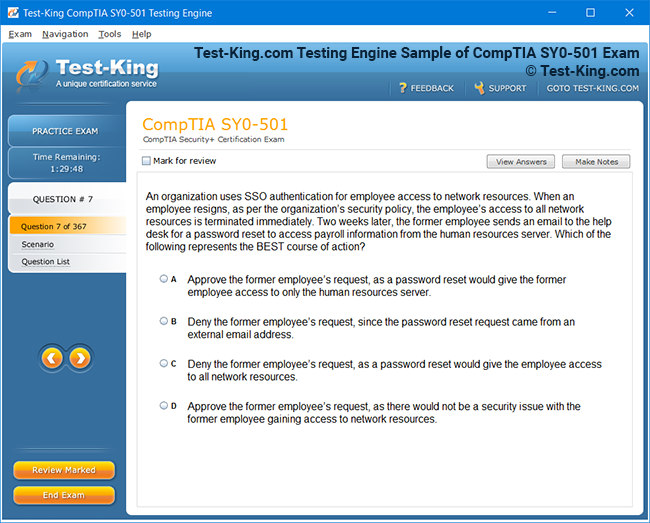
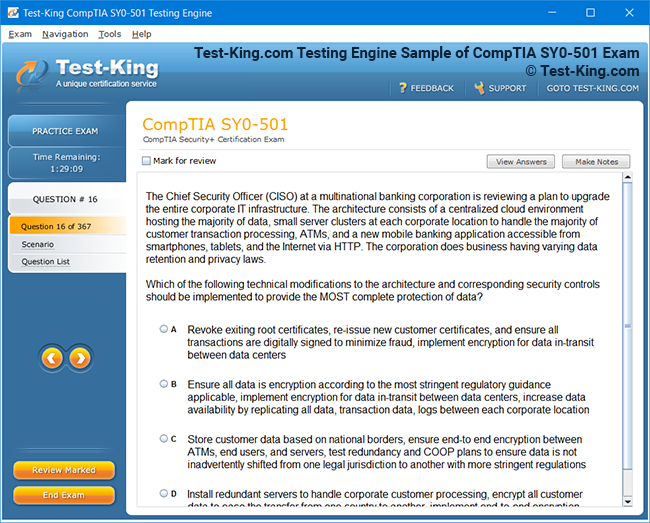
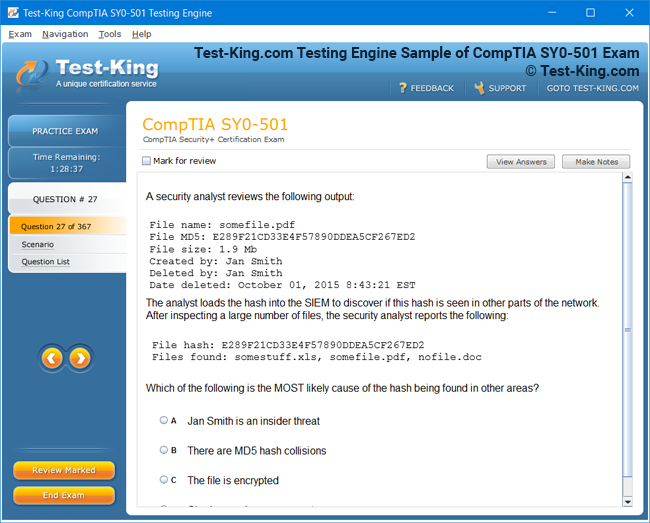
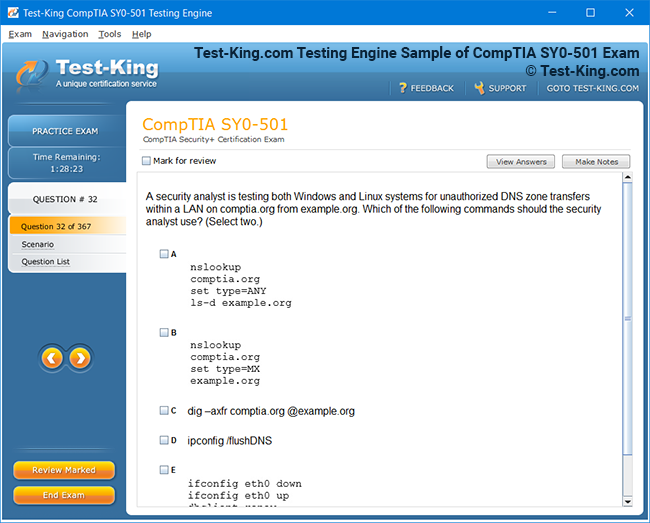
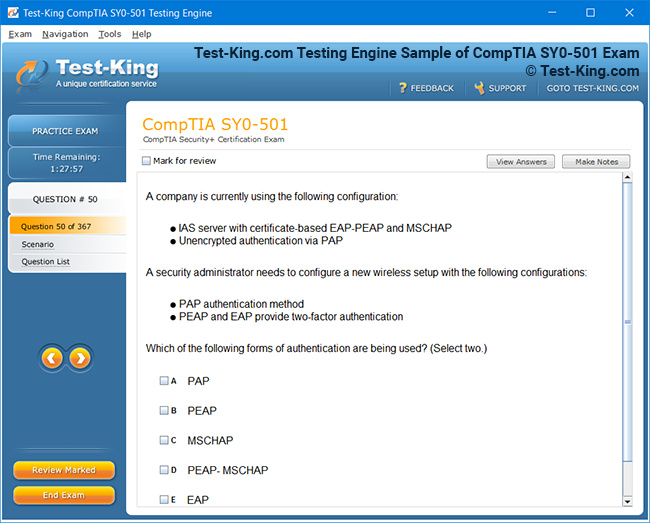
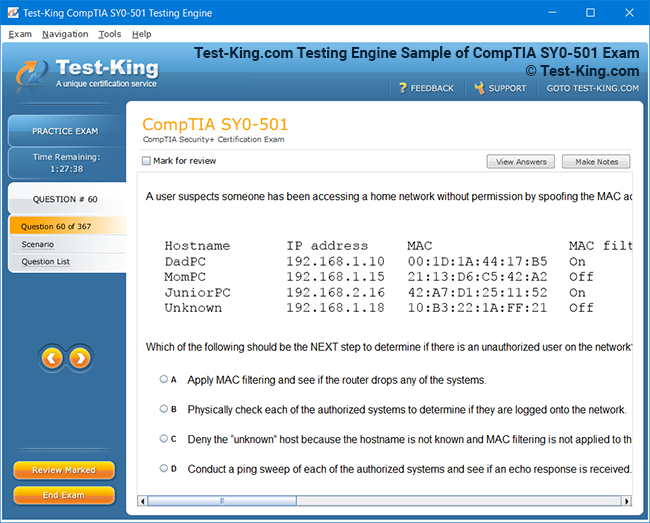
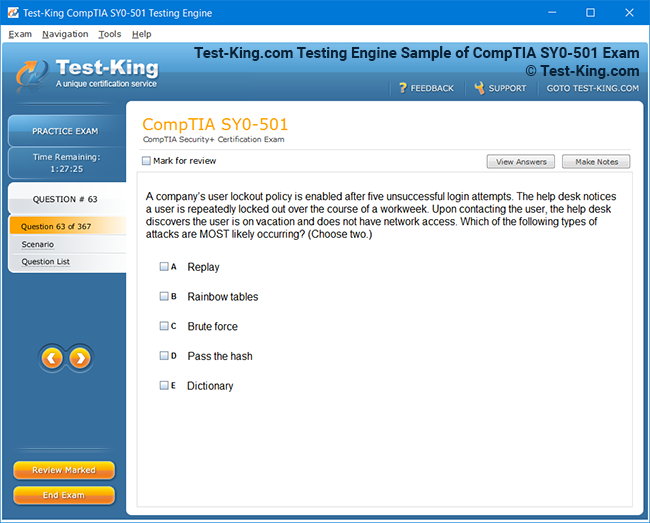
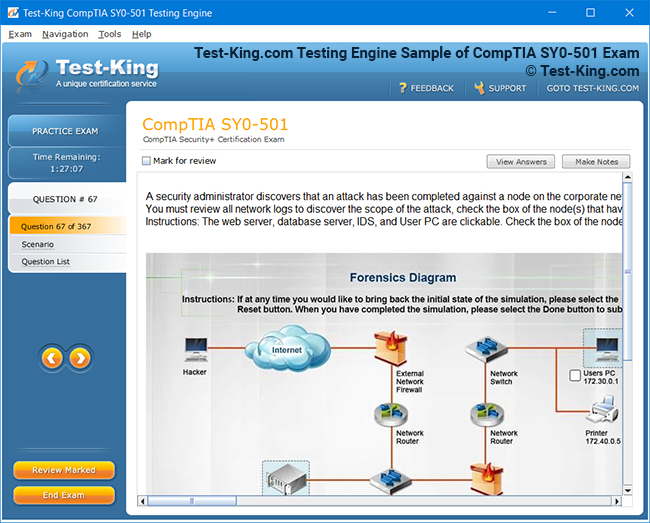
Product Screenshots
Frequently Asked Questions
How can I get the products after purchase?
All products are available for download immediately from your Member's Area. Once you have made the payment, you will be transferred to Member's Area where you can login and download the products you have purchased to your computer.
How long can I use my product? Will it be valid forever?
Test-King products have a validity of 90 days from the date of purchase. This means that any updates to the products, including but not limited to new questions, or updates and changes by our editing team, will be automatically downloaded on to computer to make sure that you get latest exam prep materials during those 90 days.
Can I renew my product if when it's expired?
Yes, when the 90 days of your product validity are over, you have the option of renewing your expired products with a 30% discount. This can be done in your Member's Area.
Please note that you will not be able to use the product after it has expired if you don't renew it.
How often are the questions updated?
We always try to provide the latest pool of questions, Updates in the questions depend on the changes in actual pool of questions by different vendors. As soon as we know about the change in the exam question pool we try our best to update the products as fast as possible.
How many computers I can download Test-King software on?
You can download the Test-King products on the maximum number of 2 (two) computers or devices. If you need to use the software on more than two machines, you can purchase this option separately. Please email support@test-king.com if you need to use more than 5 (five) computers.
What is a PDF Version?
PDF Version is a pdf document of Questions & Answers product. The document file has standart .pdf format, which can be easily read by any pdf reader application like Adobe Acrobat Reader, Foxit Reader, OpenOffice, Google Docs and many others.
Can I purchase PDF Version without the Testing Engine?
PDF Version cannot be purchased separately. It is only available as an add-on to main Question & Answer Testing Engine product.
What operating systems are supported by your Testing Engine software?
Our testing engine is supported by Windows. Andriod and IOS software is currently under development.
Top Huawei Exams
- H12-811_V2.0 - HCIA-Datacom V2.0
- H12-821 - HCIP-Datacom-Core Technology V1.0
- H13-611 - HCIA-Storage
- H19-301 - Huawei Certified Pre-sales Associate-IP Network(Datacom)-ENU
- H19-101_V6.0 - HCSA-Sales-IP Network V6.0
- H12-811 - HCIA-Datacom V1.0
- H13-624_V5.5 - HCIP-Storage V5.5
- H12-831 - HCIP-Datacom-Advanced Routing & Switching Technology
- H19-338_V3.0 - HCSP-Presales-Storage V3.0
- H13-624 - HCIP-Storage V5.0
- H12-891 - HCIE-Datacom
- H19-308 - HCSA-Presales-Storage V4.0
- H12-841_V1.5 - HCIP-Datacom-Campus Network Planning and Deployment V1.5
- H13-629 - HCIE-Storage
- H19-401_V2.0 - HCSP-Presales-Campus Network Planning and Design V2.0
- H13-821_V3.5 - HCIP-Cloud Service Solutions Architect V3.5
- H19-110_V2.0 - HCSA-Sales-Storage V2.0
- H11-851 - HCNA-VC (Huawei Certified Network Associate - Video Conference)
- H12-725_V4.0 - HCIP-Security V4.0
- H35-211_V2.5 - HCIP-Access V2.5
- H13-811_V2.2 - HCIA-Cloud Service V2.2
- H35-660_V2.0 - HCIA-5G V2.0
- H12-351 - HCIE-WLAN (Written) V1.0
- H11-851_V4.0 - HCIA-Collaboration V4.0
- H35-651_V1.0 - HCIP-5G-Core V1.0
- H21-282_V2.0 - HCSP-Presales-Service V2.0
- H12-711_V4.0 - HCIA-Security V4.0
H31-341_V2.5: Huawei HCIP-Transmission V2.5: Exam Pattern, Question Types, and Preparation Plan
Huawei HCIP-Transmission V2.5 represents a pivotal milestone for professionals aspiring to master the intricacies of optical transport networks and transmission technologies. The certification embodies a synthesis of theoretical comprehension and practical acumen, emphasizing not only the foundational aspects of network architecture but also the nuanced interplay of protocols, topologies, and signal transmission mechanisms. In an era where telecommunication infrastructures are exponentially evolving, professionals equipped with this knowledge are uniquely positioned to manage, optimize, and troubleshoot complex network environments.
The certification delineates a progressive path for engineers who wish to transition from basic understanding to specialized expertise. Unlike elementary networking qualifications, this credential demands an intimate acquaintance with transmission systems, encompassing optical transport networks (OTN), wavelength-division multiplexing, synchronous digital hierarchy frameworks, and advanced routing techniques. The examination assesses both analytical reasoning and operational dexterity, compelling candidates to synthesize knowledge from multiple domains into practical solutions.
Understanding Huawei HCIP-Transmission V2.5 and Its Importance
Professionals undertaking the Huawei HCIP-Transmission V2.5 examination must internalize the functional components of network transmission. This includes understanding the hierarchy of layers within OTN, mechanisms for error detection and correction, and the synchronization strategies that ensure seamless data flow across heterogeneous devices. Furthermore, knowledge of network redundancy protocols, dynamic protection schemes, and failure recovery techniques is indispensable. By mastering these competencies, candidates not only prepare for the examination but also acquire the skill set essential for real-world scenarios where service continuity and latency minimization are critical.
The examination is meticulously structured to evaluate both conceptual clarity and applied expertise. Candidates encounter multifaceted questions that simulate operational challenges, requiring them to diagnose network anomalies, select appropriate protection mechanisms, and configure transmission devices effectively. Such problem-solving exercises are reflective of authentic workplace situations, where engineers must balance performance optimization with cost-efficiency and scalability considerations.
Understanding the spectrum of network devices and their interconnectivity forms a substantial portion of the curriculum. For instance, knowledge of optical cross-connects, reconfigurable optical add-drop multiplexers, and dense wavelength-division multiplexing systems is central to this certification. Candidates are expected to discern the operational parameters of these devices, analyze traffic distribution, and implement configuration adjustments that enhance throughput while mitigating potential points of failure. This comprehensive approach ensures that successful professionals can navigate both theoretical and practical complexities inherent in modern telecommunications networks.
The examination further emphasizes the integration of transmission networks with broader IT infrastructures. Engineers are encouraged to explore the convergence of data, voice, and video streams across high-capacity transport channels, understanding how protocol selection and modulation techniques impact overall network efficiency. Mastery of optical fiber characteristics, signal attenuation, chromatic dispersion, and polarization mode dispersion is critical to designing robust systems capable of handling escalating data demands.
For candidates preparing for this credential, cultivating a methodical approach to study is paramount. The examination assesses knowledge spanning multiple disciplines, from physical layer considerations to advanced network management protocols. A disciplined study plan that incorporates both conceptual review and hands-on experimentation can significantly enhance performance. Engaging with simulation tools, laboratory exercises, and real-device configuration scenarios enables aspirants to translate theoretical knowledge into operational competence, fostering confidence and adaptability during the examination.
Exam Pattern and Structural Overview
The Huawei HCIP-Transmission V2.5 examination is composed of a well-defined pattern designed to test comprehensive knowledge and applied skills. Candidates face a series of questions that vary in format, encompassing multiple-choice inquiries, scenario-based problem solving, and analytical evaluations. Each question is constructed to evaluate understanding of network design, configuration, and troubleshooting, rather than rote memorization.
The multiple-choice questions often present candidates with a scenario involving a network configuration or performance anomaly, requiring identification of the optimal solution based on best practices. For instance, a question might describe an optical network experiencing signal degradation across certain wavelengths, and candidates must determine whether the issue stems from chromatic dispersion, equipment misalignment, or attenuation. The correct response necessitates integrating knowledge of fiber characteristics, device configurations, and error-correction protocols, illustrating the exam’s focus on analytical application.
Scenario-based questions are structured to simulate operational decision-making. Candidates may encounter situations involving traffic optimization in an optical transport network or implementing protection schemes to safeguard critical data channels. These questions assess the ability to synthesize information, weigh alternatives, and propose configurations that balance performance, reliability, and cost-effectiveness. An effective approach involves breaking down each scenario into its fundamental components, identifying the primary objectives, and methodically evaluating potential solutions against known transmission principles.
Analytical evaluations require deeper cognitive engagement, often presenting partial network data or performance metrics and asking candidates to predict outcomes, identify anomalies, or suggest corrective measures. For example, a candidate might be given a scenario where network throughput is suboptimal despite adherence to standard configuration protocols. The challenge is to analyze the metrics, determine whether issues relate to equipment capacity, wavelength interference, or protocol mismatches, and recommend corrective actions. This type of question reinforces the importance of practical familiarity with devices and signals, along with the ability to interpret operational data.
Time management is an essential consideration given the breadth of topics covered. Candidates are encouraged to allocate study time across theoretical concepts, practical exercises, and scenario analysis. The examination demands a holistic understanding of optical transport networks, including physical layer characteristics, network architecture, protection mechanisms, and service quality management. Mastery in each area not only supports exam performance but also equips engineers with the skills necessary for real-world deployment, maintenance, and troubleshooting of high-capacity networks.
Preparation Strategies and Knowledge Integration
Effective preparation for Huawei HCIP-Transmission V2.5 involves a blend of theoretical study, hands-on practice, and analytical reasoning exercises. Candidates are advised to thoroughly review Huawei’s official documentation, focusing on transmission principles, device specifications, and network management protocols. Engaging with lab environments, whether virtual or physical, allows aspirants to configure devices, simulate traffic flows, and observe the impact of various protection schemes, error correction methods, and configuration adjustments.
Understanding optical transport network hierarchies is fundamental. Candidates should examine the interrelation between client signals and OTN frames, mechanisms for multiplexing lower-order signals into higher-order transport structures, and techniques for error monitoring and correction. This knowledge underpins the ability to answer scenario-based questions effectively, as candidates can draw upon a clear conceptual framework to diagnose and resolve network anomalies.
Familiarity with network protection schemes is also critical. Engineers must grasp the distinctions between 1+1 protection, shared protection, and dynamic rerouting strategies, comprehending how each impacts network resilience, latency, and resource utilization. Questions related to failure recovery often require candidates to analyze a network scenario, anticipate potential points of failure, and implement protection configurations that maximize service continuity while minimizing redundant resource consumption.
Signal transmission principles form another essential domain. Candidates must understand how factors such as chromatic dispersion, polarization mode dispersion, and nonlinear optical effects influence signal integrity. Awareness of modulation formats, forward error correction techniques, and wavelength assignment strategies empowers candidates to propose solutions that maintain high throughput and low error rates, aligning with best practices for network optimization.
Integration of theoretical knowledge with practical experimentation is paramount. Candidates are encouraged to perform configuration exercises, simulate failure scenarios, and evaluate network performance metrics. This experiential learning fosters cognitive agility, enabling engineers to respond adeptly to unforeseen challenges both in the examination and in operational environments.
The examination also emphasizes operational decision-making in complex network topologies. Engineers may be presented with scenarios involving multi-node networks, dense wavelength-division multiplexing systems, or integrated data and voice services. Successful candidates demonstrate the ability to analyze each component, assess interdependencies, and implement configurations that maintain efficiency, minimize latency, and ensure reliable service delivery.
Finally, cultivating a systematic problem-solving approach is critical. Candidates should practice decomposing complex scenarios into manageable elements, identifying key variables, and applying established principles to derive solutions. By internalizing a structured methodology, engineers can navigate intricate questions, balance competing constraints, and exhibit a thorough understanding of transmission networks.
Exam Pattern and Structural Overview
The Huawei HCIP-Transmission V2.5 examination is designed as a rigorous evaluation of both conceptual mastery and applied proficiency in optical transport networks. This credential tests the candidate’s ability to comprehend intricate network structures, analyze operational challenges, and implement appropriate configurations with precision. Unlike conventional assessments that prioritize rote memorization, this examination emphasizes critical thinking, practical acumen, and adaptive problem-solving, simulating scenarios that engineers encounter in real-world transmission networks.
Candidates undertaking the examination face a comprehensive framework that blends multiple question types, each meticulously constructed to probe understanding, analytical reasoning, and practical skills. The number of questions is substantial, designed to cover the breadth of topics essential for competent transmission network management. Each query demands careful consideration, often requiring candidates to synthesize data, interpret metrics, and identify the most effective solution. The time allocation, though sufficient for thorough evaluation, necessitates disciplined pacing and strategic prioritization, ensuring candidates maintain accuracy without sacrificing coverage.
Multiple-choice questions constitute a significant portion of the examination. These questions frequently present a scenario in which a network anomaly or configuration challenge must be addressed. Candidates are asked to select the correct solution from several options, each designed to test specific aspects of transmission knowledge. For instance, a question may describe a network experiencing latency inconsistencies across different optical channels, requiring the candidate to determine whether the root cause stems from fiber attenuation, chromatic dispersion, or misconfiguration of a multiplexing device. The correct response demands not only theoretical understanding but also the ability to correlate multiple variables and anticipate operational outcomes.
Scenario-based inquiries are another prominent element, crafted to mimic real-life decision-making processes. Candidates may be given a complex network topology involving multiple nodes, integrated services, or varying traffic patterns. The challenge is to propose an optimal configuration, select appropriate protection mechanisms, or troubleshoot emergent issues. An illustrative example could involve a dense wavelength-division multiplexing system where certain wavelengths suffer degradation due to nonlinear optical effects. Candidates must analyze the scenario, identify contributing factors, and suggest adjustments that ensure continuity, minimize error rates, and maintain throughput.
Analytical evaluations form a critical aspect of the examination. These questions provide partial network data or performance metrics and ask candidates to interpret results, identify anomalies, or forecast operational impacts. For example, a candidate might be presented with performance data showing unexpected jitter or packet loss in an optical network. Through systematic analysis, considering physical layer characteristics, device capacity, and protocol interactions, the candidate determines the source of the problem and recommends appropriate corrective measures. These evaluations test the ability to integrate theory with practical observation, reflecting the real-world demands of network management.
Time management during the examination is essential. Given the diverse question types and the depth of knowledge required, candidates must allocate their focus efficiently. Multiple-choice questions, though sometimes straightforward, may contain subtle traps that require careful reading. Scenario-based problems often demand extensive analysis, requiring candidates to mentally simulate network behavior before selecting a solution. Analytical evaluations necessitate detailed examination of metrics and parameters, testing both speed and accuracy. By cultivating a disciplined approach to pacing, candidates can maximize their effectiveness and ensure comprehensive coverage of the examination content.
Understanding the structural framework of the exam is paramount. Each domain within the examination carries specific weight, reflecting its relative importance in professional practice. Candidates are expected to demonstrate expertise across physical layer principles, network architecture, protection and recovery mechanisms, signal modulation, and service quality management. The examination structure ensures that successful candidates possess a balanced proficiency, capable of designing, deploying, and maintaining optical transport networks with confidence and precision.
Multiple-Choice Question Dynamics
Within the multiple-choice segment, questions often present intricate scenarios that demand careful deduction. One example may involve identifying the optimal protection scheme for a network segment experiencing intermittent fiber faults. Candidates are expected to evaluate options such as 1+1 protection, shared protection, or dynamic rerouting, considering the impact on latency, redundancy, and resource utilization. Correct responses hinge upon understanding the nuanced trade-offs between reliability and efficiency, highlighting the examination’s emphasis on applied reasoning rather than memorized answers.
Another type of multiple-choice question may focus on optical signal characteristics, such as the effects of chromatic dispersion, polarization mode dispersion, or nonlinear phenomena on data integrity. Candidates are asked to determine which mitigation strategy—forward error correction, wavelength reassignment, or optical amplification—would most effectively restore network performance. Such questions compel candidates to connect theory with operational insight, reinforcing the principle that mastery of transmission technologies entails both knowledge and practical judgment.
Questions may also explore device configuration and interoperability. A scenario could describe a network with multiple optical cross-connects, reconfigurable add-drop multiplexers, and high-capacity routers, where traffic distribution is uneven. Candidates are required to identify the optimal configuration adjustments to balance load, minimize bottlenecks, and ensure continuity of service. This testing format evaluates the ability to analyze interdependencies, anticipate the ramifications of configuration changes, and make decisions aligned with best practices in network engineering.
Scenario-Based Evaluations
Scenario-based questions often present a narrative describing operational challenges, requiring candidates to craft solutions as they would in the field. For example, a scenario may depict a metropolitan network segment with fluctuating traffic demands and varying latency requirements. Candidates must decide how to allocate bandwidth, implement protection mechanisms, and optimize routing paths. These questions evaluate comprehension of both individual components and system-wide interactions, reflecting the complex reality of modern optical networks.
Another scenario might involve integrating multiple client signals into an OTN framework while maintaining service-level agreements. Candidates are expected to identify the appropriate multiplexing hierarchy, ensure accurate framing, and select suitable error correction strategies. This type of evaluation reinforces the examination’s objective: to assess the candidate’s capacity to merge theoretical understanding with operational competence in a dynamic environment.
Scenarios may also address troubleshooting. For instance, a network experiencing high packet loss or jitter may prompt candidates to analyze physical layer parameters, assess device performance, and recommend reconfiguration or maintenance actions. Correctly navigating these situations requires familiarity with fiber characteristics, equipment specifications, and protocol interactions. Candidates must demonstrate both analytical reasoning and hands-on knowledge, highlighting the examination’s dual emphasis on theory and practice.
Analytical Reasoning Challenges
Analytical reasoning questions provide partial datasets or performance metrics, challenging candidates to interpret information accurately. An example might include a dataset indicating unexpected latency spikes across several nodes in a multi-hop network. Candidates must evaluate potential causes, considering factors such as optical attenuation, modulation format selection, and routing inefficiencies. The objective is not merely to identify a single cause but to understand how multiple variables interact to influence network behavior.
Other analytical challenges may involve failure prediction or optimization. For instance, candidates could be asked to assess the impact of upgrading a network segment with higher-capacity devices on overall performance. This requires understanding device capabilities, protocol compatibility, and traffic patterns, ensuring that decisions align with operational objectives. These questions cultivate critical thinking, enabling engineers to anticipate challenges and design resilient, efficient networks.
Practical Implications of the Exam Pattern
The examination’s design mirrors real-world professional responsibilities. Engineers managing transmission networks routinely confront scenarios analogous to those tested in the examination, from latency inconsistencies to device configuration complexities and multi-layered network optimization. By preparing for the Huawei HCIP-Transmission V2.5 examination, candidates develop an intuitive understanding of network dynamics, a systematic approach to troubleshooting, and the ability to implement effective solutions under pressure.
Preparation for this examination entails more than passive study. Engaging with simulation tools, performing lab exercises, and analyzing hypothetical network scenarios cultivates a problem-solving mindset. Candidates become adept at interpreting network data, predicting outcomes, and applying corrective measures. This experiential learning is invaluable, as it reinforces the connection between theoretical knowledge and operational application, ensuring candidates are not only exam-ready but also workplace-ready.
Effective preparation also involves understanding the interrelationship between network layers, protocols, and services. Candidates must analyze how decisions at the physical layer influence higher-order services, such as voice, video, and data transmission. For instance, a misconfiguration in wavelength assignment could cascade into latency or jitter issues affecting end-user experience. By internalizing these interdependencies, candidates enhance their ability to devise holistic solutions, an essential skill for both the examination and professional practice.
Key Strategies for Navigating the Exam Pattern
To succeed within the Huawei HCIP-Transmission V2.5 examination structure, candidates benefit from a structured approach. Initially, dedicating time to understanding the physical layer, network architecture, and optical device functionalities provides a solid foundation. Progressing to scenario analysis and analytical reasoning exercises allows candidates to apply this knowledge practically. Integrating hands-on experimentation, such as configuring optical devices or simulating network anomalies, further strengthens comprehension and operational readiness.
Time management during the examination is paramount. Candidates should allocate sufficient focus to multiple-choice questions, ensuring accuracy, while dedicating proportional attention to scenario-based and analytical evaluations, which require deeper analysis. Practicing sample scenarios, reviewing metrics interpretation, and simulating decision-making under timed conditions develops both speed and precision.
A holistic understanding of network protection schemes, error correction methodologies, and signal optimization strategies is indispensable. Candidates who can anticipate potential points of failure, select suitable mitigation techniques, and balance performance with reliability are better equipped to navigate the diverse challenges presented within the examination pattern.
Exam Structure Insights
The Huawei HCIP-Transmission V2.5 examination pattern is a comprehensive reflection of the demands faced by transmission network engineers. It integrates multiple-choice questions, scenario-based evaluations, and analytical reasoning exercises to ensure that successful candidates possess a balanced proficiency in theory and practice. By understanding the examination’s structure, preparing through hands-on experimentation, and cultivating strategic analytical skills, candidates enhance both their examination performance and professional capability, establishing a foundation for long-term success in optical transport networks.
Question Types and How to Approach Them
The Huawei HCIP-Transmission V2.5 examination is designed to evaluate a candidate’s ability to understand, analyze, and apply knowledge in optical transport networks with meticulous precision. The assessment is not confined to memorization; instead, it emphasizes cognitive agility, practical understanding, and analytical reasoning. Candidates encounter a variety of question types, each intended to probe different facets of transmission expertise, from device configuration to network optimization, from troubleshooting to strategic planning.
Multiple-choice questions are a fundamental element of the examination. These questions often present intricate scenarios that require the candidate to evaluate several potential solutions and identify the most appropriate one. For example, a question might describe a metropolitan optical transport network experiencing intermittent latency across certain channels. Candidates are expected to analyze the contributing factors, such as chromatic dispersion, nonlinear optical effects, and device misalignment. The correct answer is derived not from rote knowledge but from synthesizing principles of optical signal behavior, network topology, and error mitigation techniques. In approaching these questions, candidates should focus on isolating key variables, understanding causal relationships, and eliminating options that conflict with established transmission principles.
Scenario-based questions are designed to replicate real-world operational challenges. A typical scenario may involve integrating multiple client signals into a high-capacity optical transport network while maintaining service-level agreements. Candidates must determine the appropriate multiplexing hierarchy, configure devices to ensure signal integrity, and implement error correction strategies. Another scenario could present a network where certain wavelengths suffer from excessive attenuation, prompting candidates to propose solutions involving wavelength reassignment, optical amplification, or reconfiguration of protection mechanisms. The essential approach is to deconstruct the scenario into fundamental components, identify the primary objectives, and systematically evaluate potential solutions. This process cultivates a methodical mindset, which is invaluable both for examination performance and professional practice.
Analytical reasoning questions further test a candidate’s ability to interpret operational data. For instance, a candidate may be presented with network performance metrics showing irregular throughput or unexpected jitter across a series of nodes. The task is to analyze these metrics, identify underlying issues such as device capacity limitations, improper wavelength allocation, or physical layer degradation, and recommend corrective actions. These questions demand not only familiarity with network principles but also the ability to synthesize disparate information into coherent conclusions. Approaching analytical reasoning requires attentiveness to detail, logical sequencing, and a disciplined method for correlating observed anomalies with theoretical knowledge.
Troubleshooting questions are another critical element. Candidates might be asked to diagnose a fault in a dense wavelength-division multiplexing system where certain channels intermittently drop signals. The examination may provide a description of network symptoms, device logs, and performance readings. Candidates must interpret this information, isolate potential causes, and propose remedial measures, such as recalibrating optical amplifiers, adjusting channel spacing, or replacing faulty transponders. Successfully addressing these questions necessitates both conceptual understanding and hands-on experience, highlighting the examination’s focus on applied competence.
Configuration-based questions simulate the real operational tasks of network engineers. For example, a candidate may be asked how to implement a 1+1 protection scheme in an optical transport network to ensure service continuity during fiber faults. The solution involves understanding the interaction between primary and backup paths, assessing resource allocation, and predicting network behavior under failure conditions. Another configuration question may concern load balancing across multiple network paths to optimize throughput and minimize latency. Candidates should approach such questions by visualizing network topology, applying best practices in device configuration, and evaluating the consequences of their choices.
Questions related to network optimization often combine scenario and analytical elements. Candidates might be given traffic distribution data across a multi-node optical network and asked to propose strategies for maximizing efficiency. This could involve adjusting wavelength assignment, modifying protection schemes, or recalibrating network parameters. The challenge is to maintain a balance between throughput, reliability, and resource utilization. Approaching these questions successfully requires both an understanding of theoretical principles and the ability to apply them pragmatically, taking into account the interdependencies among network components.
Some questions focus on the physical layer, requiring detailed knowledge of optical fibers, signal characteristics, and device functionalities. A candidate may be asked to determine the impact of chromatic dispersion, polarization mode dispersion, or nonlinear effects on network performance. The solution could involve selecting appropriate modulation techniques, deploying dispersion compensation modules, or configuring optical amplifiers. Effective preparation for such questions entails hands-on familiarity with device operations, coupled with a conceptual grasp of physical phenomena affecting signal integrity.
Network management and protocol questions test the candidate’s awareness of operational strategies and control mechanisms. For instance, a question might describe a multi-node network where synchronization issues cause intermittent data loss. Candidates are expected to identify the root cause, possibly involving misalignment in synchronization protocols, incorrect timing configurations, or device firmware discrepancies, and suggest appropriate corrective actions. Successfully navigating these questions requires both analytical acumen and operational intuition, highlighting the importance of holistic understanding in Huawei HCIP-Transmission V2.5 preparation.
Time management is crucial when approaching any question type. Multiple-choice questions may appear straightforward but often include subtle nuances designed to test depth of understanding. Scenario-based and analytical questions require extended deliberation, as candidates must mentally simulate network behavior, weigh alternatives, and consider potential outcomes. Developing a disciplined approach to pacing ensures that candidates allocate sufficient time to complex evaluations while maintaining accuracy in simpler queries.
To effectively approach all question types, candidates should adopt a structured study methodology. First, building a strong theoretical foundation in optical transport networks is essential. Understanding device functionalities, signal characteristics, network topologies, and protection mechanisms forms the basis for tackling scenario-based and analytical questions. Second, integrating practical exercises, including configuration tasks, lab simulations, and troubleshooting drills, develops operational fluency. This experiential learning bridges the gap between theory and application, enabling candidates to respond confidently to complex examination scenarios.
Familiarity with past examination questions and realistic scenarios enhances preparedness. Candidates who practice interpreting network metrics, configuring devices, and diagnosing faults develop the cognitive agility required for success. Additionally, mental rehearsal of scenario-based problem-solving helps cultivate rapid pattern recognition and decision-making under time constraints. This approach fosters a sense of intuition, allowing candidates to quickly identify key variables and anticipate the implications of their choices.
Another key strategy involves understanding the interdependence of network layers and services. Decisions at the physical layer, such as wavelength allocation or amplifier placement, directly influence higher-level services including data, voice, and video transmission. Candidates should consider these relationships when evaluating scenarios, ensuring that proposed solutions maintain service quality and align with operational objectives. This holistic perspective is critical for answering questions accurately and effectively.
Candidates must also develop a mindset attuned to operational priorities. For example, when presented with a fault scenario, the immediate goal is often to restore service continuity while minimizing data loss and latency. Longer-term objectives may involve optimizing network performance or implementing preventive measures. Approaching questions with this dual perspective—immediate resolution and strategic improvement—mirrors real-world engineering practices and aligns with the examination’s evaluative intent.
Analytical reasoning skills are further enhanced by systematic problem-solving techniques. Candidates should practice decomposing complex scenarios into manageable elements, identifying primary and secondary issues, and methodically evaluating potential interventions. This approach reduces cognitive overload, increases accuracy, and ensures that solutions are grounded in a clear understanding of transmission principles. For example, when troubleshooting unexpected packet loss, a candidate may first isolate physical layer issues, then examine device configurations, and finally assess protocol interactions before proposing a solution.
Integration of hands-on experimentation with theoretical knowledge is indispensable. Lab simulations of optical transport networks, including device configuration, traffic simulation, and failure scenario testing, allow candidates to observe cause-and-effect relationships firsthand. This experiential learning reinforces conceptual understanding, strengthens intuition, and builds confidence in problem-solving under examination conditions.
Attention to detail is paramount. Scenario-based and analytical questions often include subtle clues indicating the root cause of a problem or the most appropriate solution. Candidates should carefully review all provided information, recognize patterns, and cross-reference observations with established principles of network design and operation. Such meticulous analysis ensures accuracy and prevents errors stemming from oversight or assumptions.
Finally, cultivating adaptive thinking is crucial. Each examination question presents unique variables, and candidates must adjust their approach accordingly. Flexibility in thinking enables rapid evaluation of alternatives, consideration of multiple outcomes, and selection of solutions that optimize network performance while adhering to best practices. This adaptive mindset is essential not only for examination success but also for professional competence in managing complex transmission networks.
Detailed Preparation Plan for HCIP-Transmission V2.5
Preparing for the Huawei HCIP-Transmission V2.5 examination requires an immersive and methodical approach, combining theoretical understanding with practical application. The examination evaluates not only the knowledge of optical transport networks and transmission principles but also the ability to implement configurations, troubleshoot anomalies, and optimize network performance. Aspiring candidates must develop a preparation methodology that integrates conceptual study, hands-on exercises, scenario analysis, and analytical reasoning.
A foundational step in preparation is building an extensive comprehension of optical transport network structures. Candidates should examine the hierarchy of client signals, understanding how lower-order signals are multiplexed into higher-order transport units. This includes studying frame structures, error correction schemes, and synchronization protocols. By internalizing these principles, candidates gain the capacity to navigate complex scenarios involving signal degradation, latency fluctuations, or multi-node network configurations. The ability to map theoretical knowledge onto practical situations is a hallmark of successful performance.
Device familiarity is another cornerstone of preparation. Engineers are expected to understand the operational characteristics of optical cross-connects, reconfigurable add-drop multiplexers, dense wavelength-division multiplexing systems, and high-capacity routers. Knowledge of device specifications, configuration parameters, and interoperability constraints is critical. For instance, understanding how optical amplifiers influence signal quality, or how wavelength allocation impacts network throughput, allows candidates to address questions that simulate real-world network optimization and troubleshooting challenges.
Practical exercises play an indispensable role in the preparation process. Candidates should engage with laboratory environments, either physical or virtual, to simulate network scenarios and perform configuration tasks. Exercises may include implementing protection schemes, adjusting wavelength assignments, or observing the effects of chromatic dispersion on signal quality. Hands-on experimentation reinforces theoretical understanding, cultivates problem-solving agility, and builds the confidence required to navigate complex examination scenarios.
Developing analytical reasoning skills is equally crucial. The examination frequently presents performance metrics, network logs, or partial configuration data, requiring candidates to interpret information accurately and propose effective solutions. Practicing the analysis of latency patterns, throughput variations, and signal integrity metrics enables candidates to identify root causes of network anomalies. This approach strengthens cognitive agility, enhancing the ability to synthesize multiple variables into coherent and actionable conclusions.
Scenario-based preparation is another essential component. Candidates should simulate complex network environments, considering variables such as traffic distribution, device configuration, service-level agreements, and protection requirements. For instance, a scenario might involve integrating multiple client signals with different bandwidth demands into an optical transport network. Candidates would need to select appropriate multiplexing strategies, ensure synchronization, and implement error correction methods. By practicing such scenarios, aspirants develop an intuitive understanding of operational priorities, interdependencies, and potential trade-offs between efficiency, reliability, and cost.
Time management is a critical aspect of preparation. Candidates must develop the ability to pace themselves while analyzing multiple-choice questions, scenario-based problems, and analytical evaluations. Practicing under timed conditions helps cultivate decision-making efficiency, ensuring that sufficient attention is given to complex scenarios without compromising accuracy on simpler questions. Understanding the examination’s structure and relative emphasis on various topics allows candidates to allocate preparation time effectively, emphasizing areas that are both challenging and heavily weighted.
Integrating theoretical study with practical exercises enhances retention and applicability. Candidates should begin by thoroughly reviewing Huawei’s official documentation, including transmission principles, device specifications, and network management protocols. This foundational knowledge should be reinforced through exercises that simulate device configuration, traffic monitoring, and fault analysis. For example, implementing a 1+1 protection scheme in a lab environment helps internalize the procedural steps and operational implications of such configurations, making it easier to answer related examination questions.
Preparation should also address the nuances of physical layer characteristics. Candidates must understand the effects of chromatic dispersion, polarization mode dispersion, fiber attenuation, and nonlinear optical phenomena on signal quality. Practicing adjustments, such as deploying dispersion compensation modules, recalibrating optical amplifiers, or reassigning wavelengths, allows candidates to observe the tangible effects of these factors, linking theory with practical consequences. Mastery of these elements is essential for troubleshooting and optimization questions, which often form a significant portion of the examination.
Candidates are advised to develop a systematic approach to question analysis. Multiple-choice questions often contain subtle nuances or distractors that test depth of understanding. By carefully identifying the key variables, eliminating implausible options, and aligning choices with established transmission principles, candidates can improve accuracy and efficiency. Scenario-based and analytical questions require more extensive deliberation, necessitating the decomposition of complex situations into manageable elements and the sequential evaluation of potential solutions.
Engaging with simulation tools and network emulators can significantly enhance preparation. These platforms allow candidates to model multi-node networks, configure optical devices, simulate traffic flows, and observe the impact of various protection and optimization strategies. By experimenting in a controlled environment, candidates gain experiential insight, reinforcing their theoretical knowledge and enhancing their ability to address examination scenarios involving operational decision-making, fault diagnosis, and network optimization.
Developing mnemonic and cognitive reinforcement techniques can aid in retaining complex information. For example, creating associations between device functionalities and their operational implications or visualizing network topologies when analyzing protection schemes can strengthen memory recall and analytical clarity. Such methods are particularly useful when preparing for scenario-based and analytical questions, which require rapid synthesis of information and decisive judgment under time constraints.
Preparation should also incorporate review of common failure scenarios and troubleshooting methodologies. Candidates may practice identifying causes of signal degradation, unexpected latency, or packet loss, considering factors such as device configuration, fiber characteristics, and protocol interactions. By repeatedly simulating and resolving these issues, candidates cultivate an intuitive understanding of network dynamics, which translates into enhanced performance during examination scenarios that test operational proficiency.
An effective preparation plan also emphasizes the importance of integration between network layers. Candidates should consider how physical layer decisions, such as wavelength assignment or amplifier placement, influence higher-level services, including voice, video, and data transmission. Recognizing these interdependencies allows candidates to devise solutions that optimize overall network performance while maintaining service quality, reflecting the holistic perspective evaluated by the Huawei HCIP-Transmission V2.5 examination.
Adaptive thinking and flexibility are essential throughout preparation. Each examination scenario presents unique variables and constraints, requiring candidates to evaluate alternatives, anticipate outcomes, and select the most effective solution. Practicing diverse scenarios, including both typical and atypical network conditions, cultivates this adaptability. Candidates learn to approach questions with a balance of analytical rigor and operational intuition, enhancing both accuracy and efficiency.
Collaborative learning can also enhance preparation. Discussing complex network scenarios, configuration strategies, and troubleshooting techniques with peers or mentors exposes candidates to alternative perspectives and problem-solving approaches. This collaborative engagement fosters critical thinking, encourages exploration of edge cases, and provides additional insight into practical applications of theoretical principles.
Regular assessment and self-evaluation are valuable in refining preparation strategies. Candidates should periodically attempt full-length practice exercises under timed conditions, analyze performance, and identify areas of weakness. Focused revision of challenging topics, coupled with targeted hands-on practice, reinforces knowledge retention and improves examination readiness. For example, if a candidate struggles with scenario-based protection configuration questions, repeated simulation and review of protection schemes can build confidence and proficiency.
Attention to emerging transmission technologies can further enhance preparation. Understanding advancements such as flexible-grid optical networks, software-defined networking integration, and enhanced modulation techniques provides candidates with contextual insight, enabling more informed decision-making in analytical and scenario-based questions. While the examination primarily tests current industry standards, familiarity with evolving practices reflects a deeper grasp of network principles and operational foresight.
Preparation should maintain a balance between breadth and depth. Candidates must ensure coverage of all examination topics, including optical transport hierarchy, device operations, protection mechanisms, network optimization, and signal integrity considerations. Simultaneously, deep exploration of critical areas, such as fault diagnosis, scenario analysis, and analytical reasoning, ensures that candidates possess the skills necessary to address complex and high-stakes questions.
Mindful integration of theory, practice, and strategy forms the foundation of a robust preparation plan. By cultivating conceptual clarity, operational fluency, analytical reasoning, and adaptive thinking, candidates develop a comprehensive skill set aligned with the demands of the Huawei HCIP-Transmission V2.5 examination. This approach not only enhances examination performance but also equips professionals with the competence and confidence required for managing complex optical transport networks in real-world environments.
Practical Tips, Common Pitfalls, and Time Management
Success in the Huawei HCIP-Transmission V2.5 examination is not solely dependent on theoretical knowledge or device familiarity. While understanding optical transport networks, transmission principles, and network configurations is essential, a candidate’s approach to practical problem-solving, awareness of common pitfalls, and strategic time management play an equally significant role in achieving high performance. The examination is designed to simulate real-world operational challenges, requiring candidates to integrate analytical reasoning, hands-on expertise, and cognitive agility under time constraints.
One practical tip for candidates is to cultivate a methodical problem-solving mindset. When presented with a complex scenario, it is advantageous to first delineate the network components involved, understand the primary objectives, and identify constraints or anomalies described in the question. For example, if a network segment shows intermittent packet loss across specific nodes, the candidate should mentally segregate potential physical layer issues, device misconfigurations, and protocol-level anomalies. Approaching each question in a structured manner prevents hasty decisions and ensures that responses are logically grounded.
Another essential strategy is to familiarize oneself with the intricacies of optical transport network devices. Candidates should understand the operational nuances of optical cross-connects, dense wavelength-division multiplexing systems, reconfigurable add-drop multiplexers, and high-capacity routers. Recognizing how each device interacts with others within a network topology enables candidates to anticipate potential sources of degradation or failure and propose effective corrective measures. This insight is particularly valuable in scenario-based questions that simulate multi-node networks under varying traffic loads.
A common pitfall among candidates is overemphasis on memorization without contextual application. While foundational knowledge of transmission hierarchies, protection schemes, and modulation techniques is crucial, the examination often demands the application of these principles to dynamic situations. For instance, knowing the theoretical mechanism of a 1+1 protection scheme is insufficient if a candidate cannot configure it appropriately within a scenario requiring optimal resource utilization. Candidates should practice translating theoretical constructs into operational decisions, bridging the gap between understanding and execution.
Time management is a critical factor during the examination. Multiple-choice questions may appear straightforward but can include subtle intricacies that test analytical depth. Candidates are encouraged to read each question carefully, identify key variables, and prioritize based on complexity and weight. Scenario-based and analytical questions demand more extensive deliberation, often requiring mental simulation of network behavior, evaluation of multiple alternatives, and consideration of potential impacts. Practicing under timed conditions familiarizes candidates with pacing, ensuring adequate attention is given to complex problems without compromising accuracy on simpler queries.
Handling scenario-based questions effectively requires a blend of conceptual understanding and experiential knowledge. Consider a scenario involving a metropolitan network segment with fluctuating traffic and varying latency demands. Candidates must analyze traffic distribution, configure appropriate multiplexing hierarchies, implement protection schemes, and ensure end-to-end service quality. Approaching the scenario stepwise—assessing objectives, identifying constraints, and evaluating alternatives—facilitates precise decision-making. Regular practice of such exercises cultivates an intuitive understanding of network interdependencies, enhancing the candidate’s ability to respond efficiently during the examination.
Analytical reasoning questions often involve interpreting network performance metrics, logs, or partial configuration data. For example, a dataset may indicate sudden latency spikes or sporadic signal attenuation in an optical network. Candidates are required to correlate these anomalies with potential causes, such as fiber characteristics, device misalignment, or protocol conflicts, and recommend corrective actions. Effective preparation involves repeated practice with metric analysis, cultivating the ability to discern patterns, prioritize potential causes, and apply appropriate solutions with confidence.
Troubleshooting questions necessitate both theoretical knowledge and operational dexterity. Candidates may encounter scenarios in which a dense wavelength-division multiplexing system exhibits intermittent signal degradation. Successful resolution involves evaluating the physical layer, assessing device configurations, and determining whether factors such as wavelength interference, amplifier misalignment, or channel crosstalk are responsible. Developing proficiency in troubleshooting through hands-on experimentation enhances problem-solving speed and accuracy, preparing candidates to tackle such questions efficiently under examination conditions.
Configuration-focused questions test the ability to implement practical solutions within operational constraints. Candidates might be asked to design or optimize protection schemes, such as shared or dynamic rerouting strategies, across a multi-node network. The correct response requires understanding both theoretical principles and the practical implications of configuration decisions. Candidates should mentally visualize network topologies, simulate possible failure scenarios, and evaluate the impact of configuration adjustments on service continuity and resource allocation. This cognitive rehearsal strengthens adaptability, reduces errors, and improves overall examination performance.
Maintaining awareness of the interrelationship between physical layer characteristics and higher-level services is crucial. Decisions made at the physical layer, such as wavelength selection or amplifier placement, directly influence latency, jitter, and throughput in voice, data, and video services. Candidates must consider these interactions when evaluating scenarios, ensuring that proposed solutions uphold service quality while adhering to best practices in transmission network design. Neglecting these interdependencies is a common pitfall that can result in suboptimal or incorrect responses.
An often-overlooked strategy is the use of mental simulation. By visualizing the effects of configuration changes, protection mechanisms, or traffic distribution adjustments, candidates can anticipate potential consequences before selecting a solution. For instance, predicting how rerouting traffic in response to a fiber cut affects overall network latency or throughput allows for more informed decision-making. Practicing mental simulation of complex network operations improves cognitive agility, enabling faster, more accurate responses during examination scenarios.
Prioritization during the examination is another key consideration. Multiple-choice questions, while simpler, can consume valuable time if overanalyzed. Candidates should quickly identify straightforward queries, answer them efficiently, and allocate the remaining time to more complex scenario-based or analytical questions. This approach ensures comprehensive coverage, reduces the risk of incomplete responses, and improves overall time utilization.
Reinforcing knowledge through repeated scenario analysis is highly effective. Candidates should engage with exercises that replicate realistic network challenges, such as bandwidth optimization, failure recovery, or multi-service integration. By repeatedly solving such scenarios, candidates internalize patterns, develop heuristic strategies, and enhance their ability to respond swiftly under time constraints. This practice builds both confidence and competence, essential for managing high-pressure examination conditions.
Another practical tip is maintaining meticulous attention to detail. Scenario-based and analytical questions often contain subtle cues or constraints that indicate the optimal approach. Overlooking these details can lead to incorrect conclusions despite a sound understanding of transmission principles. Candidates should train themselves to carefully evaluate all provided information, cross-reference metrics, and verify consistency with network theory before finalizing responses.
Candidates are also encouraged to cultivate adaptive thinking. Each examination question presents unique challenges, requiring flexibility in approach and creative problem-solving. For example, a sudden fault in a high-capacity network may have multiple plausible causes, including fiber degradation, device misconfiguration, or protocol mismatches. Adaptive thinking enables candidates to quickly assess alternatives, anticipate outcomes, and select the most effective solution, reflecting the operational reality of managing complex optical transport networks.
Stress management during the examination plays a significant role in performance. Candidates should practice relaxation techniques, controlled breathing, and brief mental breaks to maintain focus and clarity. High-pressure situations can impair judgment and slow cognitive processing, making stress management an essential component of examination preparation. Combined with disciplined time management and structured problem-solving, these techniques enhance decision-making efficiency and accuracy.
Practical exercises involving device configuration, traffic simulation, and failure scenario testing reinforce knowledge retention. Candidates should regularly configure optical cross-connects, implement protection schemes, monitor network performance, and simulate faults to observe the effects on throughput, latency, and signal integrity. This experiential learning bridges the gap between theoretical understanding and operational competence, preparing candidates to handle real-world challenges and examination questions with confidence.
Engaging with collaborative learning environments can provide additional insight. Discussing scenarios, configuration strategies, and troubleshooting methodologies with peers or mentors exposes candidates to alternative approaches and enhances analytical reasoning. Such interactions encourage critical thinking, expand problem-solving repertoires, and deepen understanding of complex network dynamics, enriching preparation for both scenario-based and analytical questions.
Finally, integrating review sessions and self-assessment strengthens preparedness. Candidates should periodically evaluate their performance on practice exercises, identify weaknesses, and target revision accordingly. This iterative process ensures that gaps in knowledge are addressed, problem-solving skills are refined, and readiness for the Huawei HCIP-Transmission V2.5 examination is continuously enhanced.
Post-Exam Guidance, Career Implications, and Advanced Insights
Completing the Huawei HCIP-Transmission V2.5 examination marks a pivotal juncture in a professional’s journey toward mastering optical transport networks and transmission technologies. While passing the examination demonstrates proficiency in network configuration, troubleshooting, and optimization, the insights gained extend far beyond the immediate credential. Candidates who have navigated the complexities of multi-node networks, dense wavelength-division multiplexing systems, and signal integrity challenges possess a cognitive toolkit essential for operational excellence in contemporary telecommunications environments.
Understanding post-exam guidance begins with the interpretation of results. Successful candidates typically receive detailed feedback on their performance across various domains, such as physical layer principles, network architecture, protection mechanisms, and analytical reasoning. Evaluating this feedback enables professionals to identify areas of strength and aspects requiring reinforcement. Even for those who achieve high marks, reflecting on challenging questions—particularly scenario-based and analytical evaluations—provides valuable learning opportunities. These reflections solidify knowledge, reveal nuances of network behavior, and cultivate a mindset attuned to continuous improvement.
Professionals who have cleared the Huawei HCIP-Transmission V2.5 examination are positioned to capitalize on a range of career opportunities within the telecommunications sector. The credential signifies expertise in managing, optimizing, and troubleshooting complex transmission networks, qualities that are increasingly in demand as networks evolve to accommodate 5G, cloud integration, and converged services. Certified engineers can pursue roles in network design, operations management, technical consulting, and project leadership, with responsibilities that often include implementing optical transport solutions, orchestrating network protection schemes, and ensuring service-level adherence.
Post-certification guidance emphasizes the integration of advanced insights into practical workflows. Engineers are encouraged to engage with emerging technologies, such as flexible-grid optical networks, software-defined networking orchestration, and high-order modulation formats. Understanding the operational implications of these advancements allows professionals to enhance network efficiency, predict potential bottlenecks, and implement proactive optimization strategies. Continuous engagement with these technologies ensures that the expertise demonstrated by the certification remains relevant and impactful in dynamic industry environments.
Scenario-based reflections after the examination are particularly valuable. For instance, a candidate may recall a complex scenario involving traffic surges across multiple nodes in an optical network. Analyzing how their chosen solutions—such as adjusting wavelength allocation, reconfiguring protection paths, or optimizing device parameters—impacted network performance provides insights into effective operational decision-making. Such reflective exercises reinforce both theoretical understanding and practical intuition, enabling certified professionals to refine strategies for real-world applications.
Analytical reasoning skills honed during preparation and examination execution remain critical post-certification. Professionals frequently interpret network metrics, monitor traffic flows, and assess device performance in operational environments. Mastery in analyzing throughput data, latency variations, and error rates ensures timely detection of anomalies, precise diagnosis of root causes, and effective deployment of corrective measures. Engineers who have successfully navigated the Huawei HCIP-Transmission V2.5 examination possess the cognitive frameworks to approach these tasks systematically, integrating empirical observations with conceptual knowledge.
Practical application extends to the deployment and management of protection schemes. Certified engineers understand the subtleties of 1+1 protection, shared protection, and dynamic rerouting strategies, enabling rapid response to network failures while maintaining service continuity. Post-exam reflection enhances this competency by allowing professionals to review hypothetical scenarios encountered during the examination, consider alternative solutions, and internalize best practices for real-time operational decisions. This continual refinement fosters resilience and confidence when managing live optical transport networks.
Career implications of the certification also involve strategic contributions to network planning and optimization. Professionals are often called upon to evaluate network expansion proposals, integrate emerging technologies, and align transmission infrastructure with organizational objectives. Understanding device capabilities, inter-node dependencies, and protocol interactions enables certified engineers to design networks that balance performance, reliability, and cost efficiency. Such expertise distinguishes Huawei HCIP-Transmission V2.5 certified professionals as strategic assets in their organizations, capable of influencing both technical and operational decision-making.
Post-exam development may include advanced study in adjacent areas, such as multi-service transport, packet-optical integration, and network virtualization. Expanding knowledge in these domains enhances the ability to address complex, cross-layer challenges in modern networks. For example, understanding the interaction between optical transport systems and software-defined network controllers allows professionals to implement adaptive routing, dynamic bandwidth allocation, and real-time service quality monitoring. Such integration of knowledge reflects the evolving demands of contemporary telecommunications infrastructure.
Troubleshooting remains a core competency reinforced by certification. Engineers are expected to diagnose and resolve complex network anomalies involving signal degradation, latency spikes, or channel interference. Post-exam reflection encourages analysis of scenarios encountered during the examination, identifying subtle patterns or causal relationships that may have been overlooked initially. This process strengthens diagnostic acumen, enhances operational foresight, and supports proactive management of network reliability and performance.
Advanced insights also encompass awareness of emerging challenges and opportunities in optical transport networks. Certified professionals benefit from understanding trends such as ultra-high-capacity networks, coherent optical transmission, and integration with 5G backhaul systems. Evaluating these developments in conjunction with existing operational knowledge allows for anticipatory planning, informed decision-making, and strategic network enhancement. The ability to synthesize emerging trends with foundational expertise ensures that professionals remain at the forefront of technological evolution.
Engaging with professional communities and forums provides additional post-exam enrichment. Sharing experiences, discussing complex scenarios, and exploring innovative solutions with peers cultivates intellectual exchange and deepens understanding. Certified engineers who actively participate in such knowledge networks gain exposure to diverse problem-solving approaches, real-world case studies, and evolving industry standards, enhancing both technical competence and strategic vision.
Reflection on examination scenarios also aids in refining mental models for network behavior. For instance, analyzing how a misconfigured wavelength in a dense wavelength-division multiplexing system affects multiple downstream services fosters a comprehensive understanding of interdependencies, cascading effects, and mitigation strategies. This reflective practice sharpens cognitive flexibility, ensuring that certified professionals are equipped to handle multifaceted operational challenges with precision and confidence.
Time management skills developed during examination preparation carry over into professional practice. The ability to prioritize tasks, allocate attention efficiently, and balance multiple operational demands is invaluable when managing high-capacity networks with dynamic traffic patterns. Certified engineers can apply these skills to orchestrate maintenance, implement upgrades, or respond to emergent faults without compromising overall network performance.
Integration of hands-on experience with strategic reflection enhances operational judgment. Post-exam, engineers are encouraged to revisit practical exercises, such as configuring protection paths, analyzing traffic flows, or simulating failure recovery, and consider alternative approaches or optimizations. This iterative practice consolidates knowledge, strengthens problem-solving frameworks, and cultivates a mindset attuned to continuous improvement.
Professionals should also focus on cultivating adaptive thinking in response to technological evolution. Optical transport networks are increasingly intertwined with software-defined networking, automation tools, and real-time monitoring platforms. Certified engineers who integrate their examination-acquired expertise with these advanced capabilities can implement predictive maintenance, optimize routing dynamically, and enhance service reliability in ways that reflect both operational excellence and innovative foresight.
The long-term career impact of achieving Huawei HCIP-Transmission V2.5 certification is substantial. Professionals equipped with this credential are recognized for their technical competence, strategic insight, and ability to manage complex optical transport networks effectively. Career trajectories may include senior engineering roles, network architecture leadership, technical consultancy, and project management positions in large-scale telecommunications deployments. The certification also serves as a foundation for further advancement into specialized areas, such as optical network design, packet-optical convergence, and high-capacity transport optimization.
Finally, reflecting on the journey through preparation, examination, and post-exam application reinforces the value of continuous learning. Candidates who approach the Huawei HCIP-Transmission V2.5 credential as a catalyst for ongoing professional development gain not only recognition but also practical mastery, strategic insight, and a robust framework for navigating the evolving landscape of transmission technologies. By integrating theoretical knowledge, hands-on experience, and reflective practice, certified professionals ensure their expertise remains relevant, impactful, and aligned with the demands of modern telecommunications networks.
Conclusion
The Huawei HCIP-Transmission V2.5 examination represents a rigorous and comprehensive assessment of a professional’s knowledge, skills, and operational acumen in optical transport networks. Beyond achieving the credential, candidates gain practical expertise, analytical proficiency, and strategic insight that are invaluable in real-world network management. Post-exam guidance emphasizes reflection, continued learning, and application of advanced concepts, reinforcing both technical competence and professional confidence. The career implications of certification are significant, opening opportunities for leadership, technical innovation, and strategic influence within the telecommunications industry. By integrating examination experience with ongoing professional development, Huawei HCIP-Transmission V2.5 certified engineers are well-positioned to excel in managing, optimizing, and evolving complex transmission networks in an era of rapid technological advancement.