

Exam Code: ISMP
Exam Name: Information Security Management Professional based on ISO/IEC 27001
Certification Provider: Exin
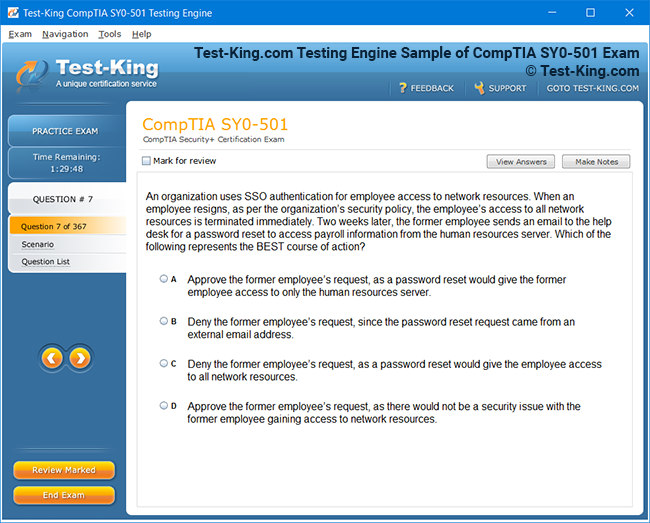
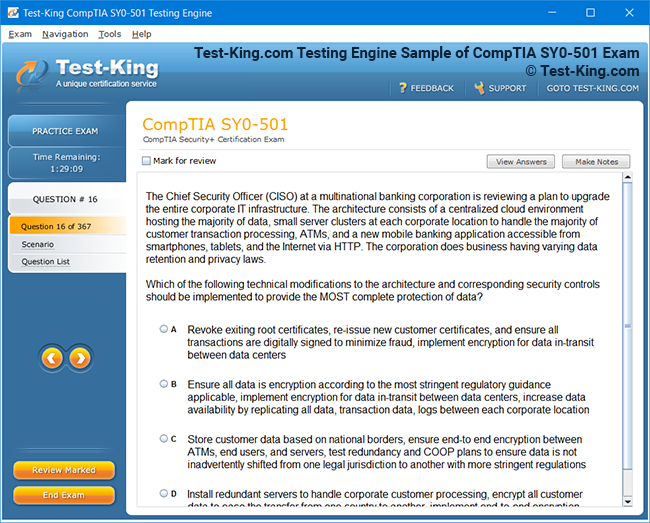
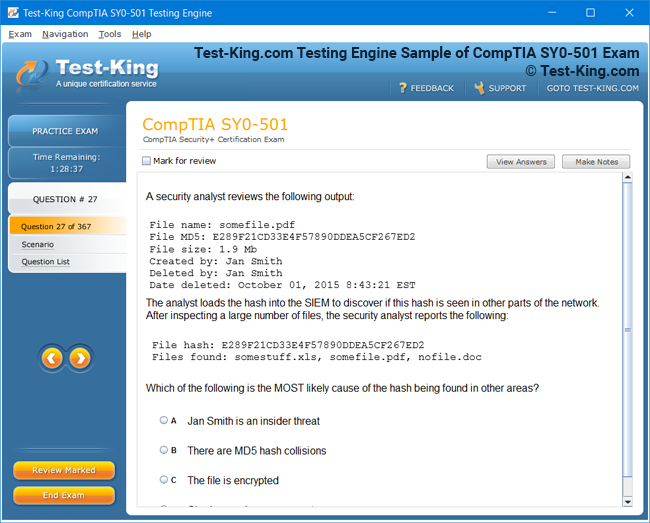
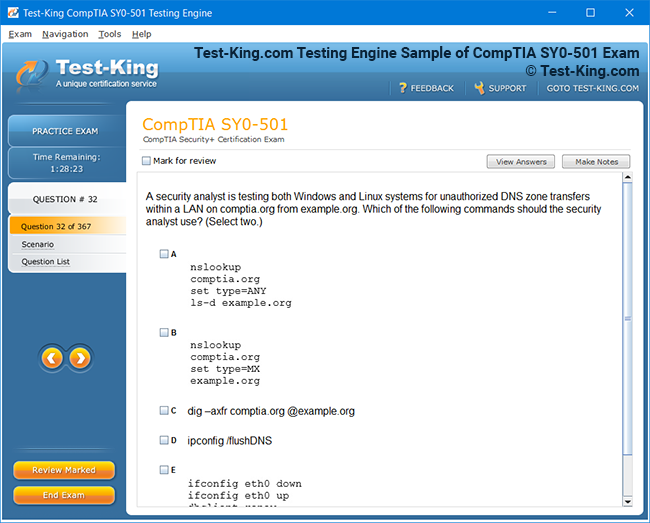
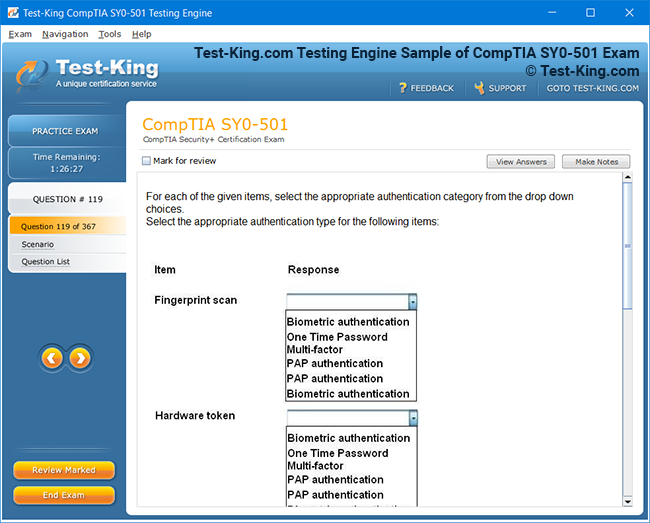
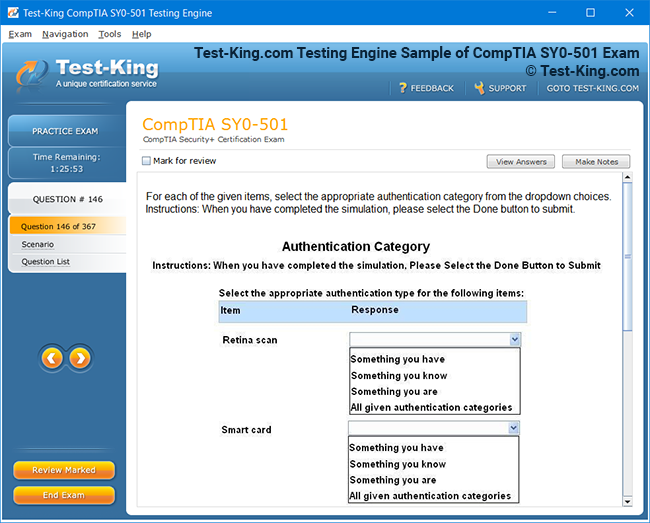
Product Screenshots
Frequently Asked Questions
How can I get the products after purchase?
All products are available for download immediately from your Member's Area. Once you have made the payment, you will be transferred to Member's Area where you can login and download the products you have purchased to your computer.
How long can I use my product? Will it be valid forever?
Test-King products have a validity of 90 days from the date of purchase. This means that any updates to the products, including but not limited to new questions, or updates and changes by our editing team, will be automatically downloaded on to computer to make sure that you get latest exam prep materials during those 90 days.
Can I renew my product if when it's expired?
Yes, when the 90 days of your product validity are over, you have the option of renewing your expired products with a 30% discount. This can be done in your Member's Area.
Please note that you will not be able to use the product after it has expired if you don't renew it.
How often are the questions updated?
We always try to provide the latest pool of questions, Updates in the questions depend on the changes in actual pool of questions by different vendors. As soon as we know about the change in the exam question pool we try our best to update the products as fast as possible.
How many computers I can download Test-King software on?
You can download the Test-King products on the maximum number of 2 (two) computers or devices. If you need to use the software on more than two machines, you can purchase this option separately. Please email support@test-king.com if you need to use more than 5 (five) computers.
What is a PDF Version?
PDF Version is a pdf document of Questions & Answers product. The document file has standart .pdf format, which can be easily read by any pdf reader application like Adobe Acrobat Reader, Foxit Reader, OpenOffice, Google Docs and many others.
Can I purchase PDF Version without the Testing Engine?
PDF Version cannot be purchased separately. It is only available as an add-on to main Question & Answer Testing Engine product.
What operating systems are supported by your Testing Engine software?
Our testing engine is supported by Windows. Andriod and IOS software is currently under development.
Top Exin Exams
How the EXIN ISMP Exam Strengthens Your ISO/IEC 27001 Expertise
The realm of information security has evolved into an indispensable component of organizational strategy, particularly as enterprises increasingly rely on digital infrastructures and data-driven processes. In this environment, professional recognition of skills aligned with ISO/IEC 27001, the globally acknowledged standard for information security management systems, is paramount. The EXIN Information Security Management Professional credential is designed to not only validate proficiency in implementing and managing an ISMS but also to deepen the practitioner's conceptual and practical understanding of risk mitigation, compliance, and organizational governance.
Elevating Information Security Management Knowledge
Acquiring this certification demands a rigorous comprehension of how information security integrates with overarching business objectives. Candidates are immersed in the nuances of ISO/IEC 27001, exploring its clauses, control sets, and the relationships between policy, procedural frameworks, and operational realities. The examination does not merely test memorization of standard requirements but emphasizes the application of theoretical knowledge in practical contexts. This ensures that certified professionals are capable of advising senior management, assessing security landscapes, and implementing policies that are both compliant and strategically advantageous.
The examination process itself fortifies one’s expertise by compelling candidates to engage with multifaceted scenarios. For instance, understanding risk assessment methodologies—qualitative and quantitative—becomes crucial when evaluating vulnerabilities and threats across varied organizational structures. Candidates must not only recognize potential threats but also prioritize them according to likelihood and impact, aligning mitigation strategies with business continuity objectives. Through this analytical rigor, the EXIN ISMP credential molds professionals capable of integrating information security seamlessly into enterprise operations, rather than treating it as an isolated function.
Developing Risk Awareness and Analytical Acumen
A profound aspect of the EXIN ISMP examination lies in its focus on risk management. ISO/IEC 27001 mandates that organizations identify, assess, and treat risks in a systematic manner. Candidates are therefore required to internalize risk assessment techniques, including threat modeling, vulnerability analysis, and residual risk calculation. These practices compel professionals to consider not only the technological dimensions of security but also the human, procedural, and strategic elements that contribute to an organization's risk posture.
Furthermore, the exam challenges aspirants to evaluate the efficacy of controls and propose enhancements based on contextual business requirements. For example, when presented with a scenario involving a multi-site organization with varying levels of access control, candidates must determine the most appropriate safeguards, balancing operational efficiency with stringent security measures. This process strengthens analytical acumen, enabling professionals to make informed decisions that reduce exposure while supporting organizational agility.
Through repeated exposure to scenario-based questions, the examination cultivates a mindset that prioritizes proactive rather than reactive security management. Candidates learn to anticipate potential breaches, identify latent vulnerabilities, and formulate comprehensive mitigation plans. This anticipatory approach is invaluable in a digital landscape characterized by rapidly evolving threats, where reactive measures often result in significant financial and reputational damage. The ISMP credential thus equips professionals with both strategic insight and operational foresight, enhancing their capacity to safeguard information assets effectively.
Integration of Policy and Operational Controls
Understanding the interplay between policy formulation and operational controls is a critical outcome of preparing for the EXIN ISMP exam. ISO/IEC 27001 emphasizes that the mere existence of a security policy is insufficient unless it is supported by operationalized controls that ensure adherence and measurable effectiveness. Candidates are guided to examine how policies translate into actionable procedures, encompassing areas such as access management, cryptography, incident response, and physical security.
The examination emphasizes practical application through scenarios where professionals must evaluate policy implementation. For instance, a candidate may be asked to assess whether an organization’s incident response procedures align with stated objectives in its security policy and comply with regulatory requirements. This encourages a holistic perspective, where the effectiveness of an ISMS is judged not only by documented policies but also by its operational rigor. Preparing for such challenges strengthens one’s capacity to bridge the gap between strategic intent and operational execution.
Moreover, this integration fosters a culture of continuous improvement. Candidates learn to conduct internal audits, monitor performance metrics, and adjust controls based on evolving threats and organizational changes. The knowledge gained through this process extends beyond examination preparation, instilling a mindset geared towards sustainability, adaptability, and resilience in information security practices.
Advancing Compliance Competence and Governance Insight
Another significant dimension addressed by the EXIN ISMP credential is compliance management and governance. Modern enterprises must navigate a complex landscape of legal, regulatory, and contractual obligations. ISO/IEC 27001 provides a structured framework for establishing compliance mechanisms, yet understanding how to operationalize these requirements requires both conceptual clarity and practical judgment.
Candidates preparing for the exam explore governance structures, accountability mechanisms, and reporting protocols. They learn to delineate roles and responsibilities for information security, ensuring that decision-making authority is appropriately aligned with risk exposure. Furthermore, they are trained to communicate security policies and risk assessments effectively to executives and stakeholders, enhancing organizational transparency and accountability.
The examination’s emphasis on governance equips professionals with the skills to evaluate not only the technical robustness of an ISMS but also its alignment with organizational objectives. Candidates become adept at ensuring that information security initiatives support business strategy, mitigate legal and regulatory risks, and maintain stakeholder confidence. This comprehensive perspective strengthens ISO/IEC 27001 expertise by combining technical know-how with governance proficiency.
Enhancing Strategic Decision-Making Capabilities
Preparing for the EXIN ISMP exam also nurtures strategic thinking. Beyond operational tasks and compliance obligations, information security management demands foresight and decision-making that influence long-term business outcomes. Candidates are trained to analyze complex scenarios, weigh competing priorities, and recommend solutions that balance risk, cost, and operational impact.
For example, a scenario may require determining whether to invest in a new encryption protocol or enhance existing access control mechanisms. Candidates must consider the organization’s risk tolerance, resource availability, regulatory mandates, and potential consequences of a breach. This process of evaluation and prioritization develops strategic acuity, enabling professionals to advise leadership on investment decisions, policy adjustments, and risk mitigation strategies that are both pragmatic and aligned with business objectives.
Additionally, this strategic dimension reinforces the conceptual understanding of ISO/IEC 27001 by demonstrating how information security initiatives contribute to overall organizational resilience. Candidates gain insight into how a mature ISMS not only protects data but also fosters operational efficiency, stakeholder trust, and sustainable growth. The exam thus functions as a crucible in which technical competence, analytical rigor, and strategic vision converge.
Building Practical Implementation Expertise
Finally, the EXIN ISMP exam strengthens hands-on expertise in implementing ISO/IEC 27001 controls and frameworks. While conceptual knowledge is essential, the ability to translate theory into practice distinguishes competent professionals from mere certificate holders. Preparing for the examination immerses candidates in real-world scenarios where they must plan, execute, and evaluate information security initiatives.
Tasks may include drafting risk treatment plans, configuring access controls, designing audit programs, or advising on incident management strategies. Candidates must also assess the effectiveness of existing controls, recommend enhancements, and ensure that all measures comply with both the standard and organizational objectives. This practical emphasis ensures that certified professionals emerge not only with knowledge of ISO/IEC 27001 clauses but with the capability to implement and sustain robust information security programs.
Moreover, the preparation process encourages critical reflection and iterative learning. Candidates learn to review outcomes, identify deficiencies, and adjust approaches, mirroring the continuous improvement cycle mandated by ISO/IEC 27001. This iterative practice enhances both proficiency and confidence, producing professionals who can navigate complex organizational contexts and reinforce a culture of security awareness and compliance.
Strengthening Organizational Security Strategy
In the contemporary digital landscape, the safeguarding of information assets is no longer a peripheral concern; it is a central component of organizational resilience and strategic planning. The EXIN Information Security Management Professional certification provides an essential conduit for professionals seeking to translate ISO/IEC 27001 principles into actionable strategies. Candidates preparing for this credential are immersed in the intricate layers of security governance, risk assessment, and operational control, fostering an understanding that extends well beyond theoretical compliance.
The certification emphasizes the strategic integration of information security into organizational processes, highlighting the necessity of aligning security measures with business objectives. Professionals learn to craft security policies that are coherent with operational realities while maintaining adherence to the internationally recognized ISO/IEC 27001 standard. This dual focus ensures that security frameworks are both practical and compliant, strengthening the organization’s capacity to withstand threats and minimize exposure.
Through exam preparation, candidates explore the interaction between organizational structure and security controls. They learn to identify how business units, workflows, and digital infrastructures can influence risk landscapes and how to design interventions that mitigate potential breaches. This exploration cultivates a comprehensive perspective, enabling professionals to evaluate security from both tactical and strategic viewpoints.
Enhancing Risk Identification and Mitigation Competence
A cornerstone of ISO/IEC 27001 is the systematic approach to risk management, and the EXIN ISMP exam rigorously tests a candidate’s ability to operationalize this framework. Risk identification extends beyond mere cataloging of potential threats; it involves scrutinizing technological, human, and procedural dimensions to ascertain vulnerabilities that could compromise information assets. Candidates are trained to analyze complex scenarios, recognize patterns of exposure, and forecast the potential impact of various risk vectors.
Once risks are identified, mitigation strategies must be devised with precision. Exam preparation familiarizes candidates with an array of control measures, including preventive, detective, and corrective mechanisms, each evaluated for appropriateness and efficacy. For example, professionals may be presented with a situation involving data transfer across geographically dispersed systems and must determine suitable encryption protocols, access restrictions, and monitoring strategies. This evaluative process cultivates analytical rigor, enabling candidates to recommend solutions that optimize both security and operational efficiency.
The assessment methodology reinforces the need for continuous risk evaluation, ensuring that professionals remain vigilant in adapting to emerging threats. By emphasizing proactive measures, the EXIN ISMP exam fosters a mindset oriented toward anticipation rather than reaction, which is essential for the sustainability of any information security management system.
Bridging Policy Formulation and Operational Execution
An essential aspect of mastering ISO/IEC 27001 is understanding the symbiotic relationship between policy formulation and operational implementation. Policies articulate organizational intent, but their efficacy is measured through the practical application of controls and procedures. Candidates preparing for the EXIN ISMP exam explore this dynamic, learning to translate abstract principles into concrete actions that safeguard information while maintaining functional workflow.
For instance, establishing an access control policy requires defining user roles, permissions, and authentication mechanisms, while ensuring compliance with regulatory requirements. Candidates must consider operational realities such as system interoperability, user behavior, and audit trails to ensure that policy objectives are effectively realized. This bridging of theoretical frameworks and pragmatic execution enhances a professional’s ability to manage an ISMS comprehensively, ensuring both regulatory compliance and operational resilience.
Moreover, preparation for the examination instills an appreciation for continuous improvement mechanisms. Candidates learn to design internal audits, monitor key performance indicators, and refine operational procedures based on findings. This iterative approach aligns with the ISO/IEC 27001 mandate for ongoing enhancement, reinforcing the integration of security management into the organizational culture.
Deepening Understanding of Compliance Requirements
In addition to technical proficiency, the EXIN ISMP credential emphasizes the importance of regulatory and legal compliance. Organizations operate within a complex ecosystem of national and international laws, contractual obligations, and industry standards, all of which influence how information security must be implemented. Candidates are trained to interpret these requirements in the context of ISO/IEC 27001, developing the ability to design systems that satisfy both regulatory expectations and internal policies.
This training includes understanding the governance structures necessary to enforce compliance, delineating responsibilities, and establishing reporting channels. Professionals learn to communicate risks, policies, and audit findings to stakeholders, ensuring that executive decision-makers are well-informed. The exam scenarios simulate situations where compliance challenges intersect with operational imperatives, compelling candidates to develop solutions that maintain alignment with both legal mandates and business objectives.
By engaging with these multifaceted compliance scenarios, candidates cultivate judgment that combines technical understanding, ethical consideration, and strategic insight. This capacity to navigate complex regulatory landscapes reinforces ISO/IEC 27001 mastery, as professionals learn to reconcile operational constraints with rigorous security standards.
Fostering Strategic Risk Communication
Effective information security management is as much about communication as it is about technical control. The EXIN ISMP exam emphasizes the ability to articulate risk, mitigation strategies, and security policies clearly and persuasively to a variety of audiences. Candidates develop skills to translate complex technical findings into actionable recommendations for management, ensuring that strategic decisions are informed by accurate assessments of risk exposure and control efficacy.
This emphasis on communication strengthens professional competence by promoting clarity, precision, and credibility. Candidates learn to produce reports, briefing documents, and presentations that synthesize audit results, risk analyses, and control recommendations, bridging the gap between technical detail and executive understanding. Through these exercises, the examination reinforces the concept that a proficient information security manager must operate at the intersection of technical expertise and organizational influence.
Furthermore, by simulating high-stakes scenarios where miscommunication can exacerbate vulnerabilities, the exam prepares professionals to anticipate challenges and tailor messaging appropriately. This capability ensures that ISO/IEC 27001 principles are not only understood internally but also championed effectively across the enterprise, promoting a culture of security awareness and accountability.
Applying Practical Implementation Skills
While conceptual knowledge forms the foundation, the EXIN ISMP exam also prioritizes practical application. Candidates are required to demonstrate competence in implementing, monitoring, and refining controls within an ISMS. Preparation involves engaging with scenarios that replicate real-world operational challenges, including incident response planning, vulnerability management, and access control configuration.
Candidates learn to evaluate existing controls for effectiveness, identify gaps, and recommend corrective measures that are aligned with ISO/IEC 27001. They also develop the ability to prioritize interventions based on risk exposure, resource constraints, and organizational objectives. This practical emphasis ensures that certification holders possess the capability to not only advise but also implement robust information security measures that withstand scrutiny and sustain resilience.
Exam preparation encourages iterative thinking, where solutions are continuously assessed, refined, and optimized. Candidates become adept at conducting internal audits, tracking performance indicators, and fostering continuous improvement. This experiential knowledge complements theoretical understanding, resulting in a holistic grasp of information security management that is both strategic and operationally grounded.
Enhancing Leadership and Decision-Making Abilities
Finally, the preparation process for the EXIN ISMP credential enhances leadership qualities. Professionals are encouraged to assume responsibility for shaping security strategy, guiding teams, and influencing decision-making at the organizational level. Candidates explore scenarios that require balancing technical recommendations with business priorities, ensuring that security initiatives contribute to broader organizational goals without imposing undue operational burden.
This aspect of preparation underscores the multidimensional role of an information security manager, blending analytical skills, risk awareness, and strategic foresight. Candidates emerge capable of advising executive management, guiding operational teams, and ensuring that ISO/IEC 27001 principles are embedded in organizational culture. The certification thus fortifies expertise not merely in the technical deployment of security controls but in the broader orchestration of an effective, resilient, and sustainable information security management system.
Advancing Operational Competence in Information Security
The landscape of information security demands not only conceptual understanding but also a deep capacity to translate principles into tangible operational measures. The EXIN Information Security Management Professional credential cultivates this expertise by emphasizing the practical application of ISO/IEC 27001 standards within organizational environments. Candidates preparing for the examination are immersed in scenarios that mirror real-world challenges, compelling them to navigate complexities related to risk assessment, policy implementation, and compliance enforcement.
The preparation process develops a comprehensive operational mindset. Professionals learn to map information assets, identify potential vulnerabilities, and implement appropriate control measures that align with both organizational objectives and regulatory obligations. This hands-on approach strengthens proficiency in critical areas such as access management, cryptography, business continuity planning, and incident response. By engaging with these domains in a practical context, candidates acquire the ability to ensure that an ISMS is not merely theoretical but actively protects organizational information and supports business continuity.
Strengthening Risk Assessment and Treatment Skills
A pivotal component of mastering ISO/IEC 27001 is the systematic identification and treatment of risks, a competency rigorously reinforced through the EXIN ISMP examination. Candidates are trained to perform in-depth risk assessments that evaluate threats, vulnerabilities, and potential impacts across the technological, human, and procedural dimensions of an organization. They develop the ability to prioritize risks based on both probability and consequence, ensuring that mitigation strategies are proportionate and effective.
Preparing for the exam exposes candidates to complex scenarios where they must propose and justify risk treatment plans. For example, a candidate may evaluate whether implementing advanced encryption or multi-factor authentication provides the optimal balance of security and operational feasibility. This analytical exercise enhances judgment and decision-making, cultivating professionals capable of designing controls that are both compliant with ISO/IEC 27001 and pragmatically suited to organizational realities.
Furthermore, candidates learn to continuously monitor risk landscapes, adapting strategies as new threats emerge and organizational contexts evolve. This iterative process embeds a culture of vigilance, reinforcing the notion that risk management is not a static task but an ongoing commitment to preserving information integrity, availability, and confidentiality.
Integrating Policy with Operational Execution
The EXIN ISMP examination underscores the necessity of translating information security policies into operationalized practices. Policies serve as the blueprint for security initiatives, but their true value is realized only when effectively executed through tangible controls and procedural enforcement. Candidates are trained to bridge this gap by designing mechanisms that implement policy requirements while ensuring adherence and measurable effectiveness.
For instance, implementing an access control policy involves not only defining permissions but also configuring systems to enforce these rules, monitoring adherence, and adjusting as necessary based on audit findings. Candidates also examine incident management processes, evaluating whether response protocols reflect policy directives and comply with legal or regulatory expectations. This integration of policy and execution strengthens the professional’s ability to ensure that information security is consistently operationalized and aligned with ISO/IEC 27001 objectives.
Exam preparation reinforces the principle of continuous improvement. Candidates learn to assess control effectiveness, identify deficiencies, and implement corrective measures, aligning with the standard’s mandate for ongoing enhancement of the ISMS. This approach ensures that operational practices evolve in tandem with emerging threats, technological advancements, and organizational transformations.
Enhancing Compliance and Governance Expertise
A distinguishing aspect of the EXIN ISMP certification is its emphasis on compliance and governance. Organizations are increasingly subject to a complex web of regulatory mandates, contractual obligations, and industry standards. Candidates preparing for the examination acquire the skills to interpret and operationalize these requirements within the framework of ISO/IEC 27001.
This training encompasses the delineation of roles and responsibilities, the establishment of reporting mechanisms, and the creation of governance structures that ensure accountability. Professionals learn to communicate findings, risks, and recommendations to executives and stakeholders, fostering informed decision-making and organizational transparency. By navigating scenarios where compliance intersects with operational imperatives, candidates develop the judgment necessary to reconcile legal requirements with practical business constraints.
Through this process, candidates gain an appreciation for the strategic value of governance in information security. They learn to evaluate the effectiveness of security controls not only through technical audits but also by assessing their alignment with organizational goals, risk appetite, and regulatory compliance. This dual focus reinforces mastery of ISO/IEC 27001 by demonstrating how a mature ISMS supports both operational resilience and ethical responsibility.
Cultivating Strategic Thinking and Decision-Making
The EXIN ISMP examination fosters strategic acumen, preparing candidates to navigate complex organizational environments where security decisions carry significant operational and financial implications. Candidates are exposed to scenarios requiring evaluation of multiple courses of action, consideration of trade-offs, and formulation of recommendations that optimize security outcomes while respecting business priorities.
For example, a scenario may involve deciding between upgrading existing security controls or implementing a new monitoring system, requiring an assessment of cost, risk reduction potential, and operational impact. This exercise cultivates strategic judgment, enabling professionals to make informed recommendations that balance technical efficacy with organizational feasibility. Candidates emerge capable of advising senior management, guiding teams, and aligning security initiatives with enterprise objectives, thereby reinforcing the strategic value of ISO/IEC 27001 implementation.
By integrating analytical reasoning, risk awareness, and business insight, the examination equips candidates with the ability to anticipate emerging challenges, allocate resources judiciously, and ensure that security measures are sustainable and adaptable. This strategic orientation enhances the professional’s capacity to foster organizational resilience in an evolving threat landscape.
Developing Practical Implementation Expertise
While conceptual understanding forms the foundation, the EXIN ISMP exam places considerable emphasis on hands-on expertise. Candidates engage with realistic scenarios that replicate operational challenges, including audit preparation, incident response, access control configuration, and continuous monitoring. This practical orientation ensures that certified professionals are capable of implementing ISO/IEC 27001 controls effectively and sustaining their operation over time.
Preparation encourages iterative assessment, where candidates evaluate control effectiveness, identify weaknesses, and implement enhancements. This cycle of reflection and refinement mirrors the continuous improvement ethos mandated by ISO/IEC 27001, ensuring that the ISMS evolves in response to organizational needs and emerging threats. Candidates develop proficiency in managing resources, coordinating teams, and overseeing the deployment of security initiatives, equipping them with the operational competence necessary for real-world application.
Additionally, the exam experience cultivates confidence in decision-making under uncertain or high-pressure conditions. By simulating scenarios that demand timely judgments and judicious prioritization, candidates build resilience and adaptability. This practical mastery complements theoretical knowledge, producing professionals who are not only proficient in ISO/IEC 27001 principles but capable of translating them into effective, sustainable practices.
Strengthening Leadership and Influence in Security Management
An essential dimension reinforced by the EXIN ISMP credential is the development of leadership skills. Professionals are prepared to guide teams, influence organizational policy, and advocate for information security initiatives at executive levels. Candidates explore scenarios where strategic guidance, persuasive communication, and authoritative decision-making intersect with operational and regulatory requirements.
This focus on leadership ensures that candidates emerge not merely as implementers of controls but as influential stewards of security strategy. They gain the ability to foster a culture of security awareness, integrate security objectives with organizational priorities, and advise stakeholders on risk, compliance, and operational improvement. The combination of strategic insight, practical expertise, and governance proficiency positions certified professionals as key contributors to the sustained resilience and effectiveness of an organization’s information security management system.
Advancing Information Security Competence
In the contemporary organizational landscape, the safeguarding of information assets is a strategic imperative. The EXIN Information Security Management Professional credential serves as a crucial instrument for professionals seeking to translate ISO/IEC 27001 principles into actionable and resilient security practices. Candidates preparing for this examination are immersed in scenarios that replicate operational complexities, risk assessment challenges, and governance dilemmas, ensuring that their expertise extends beyond theoretical understanding to practical mastery.
The certification emphasizes the integration of security into organizational strategy. Professionals learn to formulate policies that are coherent with operational realities, balancing regulatory compliance with business objectives. This alignment ensures that information security is not treated as an isolated function but is embedded into the organizational fabric, supporting both operational efficiency and strategic resilience. Candidates are trained to evaluate the interplay between technological infrastructures, human factors, and procedural workflows, enabling them to design solutions that mitigate risks while maintaining functional agility.
Through exposure to scenario-driven questions, candidates develop analytical acumen, learning to anticipate potential vulnerabilities and recommend proactive measures. This approach strengthens ISO/IEC 27001 mastery by emphasizing the importance of foresight, continuous evaluation, and adaptation in an environment where threats evolve rapidly and unpredictably.
Strengthening Risk Management Expertise
A central tenet of ISO/IEC 27001 is systematic risk management, and the EXIN ISMP examination reinforces this competency through rigorous scenario-based assessment. Candidates are trained to identify and analyze risks across technological, human, and procedural dimensions. They learn to quantify potential impacts, prioritize threats, and select mitigation strategies that optimize security while preserving operational continuity.
Exam preparation cultivates proficiency in developing comprehensive risk treatment plans. Professionals are exposed to diverse scenarios, such as multi-site operations with complex data flows, requiring nuanced decisions about access control, encryption, monitoring, and procedural safeguards. These exercises enhance critical thinking, decision-making, and the ability to justify interventions based on strategic and operational considerations.
Candidates also internalize the importance of continuous monitoring and iterative risk assessment. By learning to adapt mitigation measures to emerging threats and evolving organizational contexts, they develop a proactive mindset essential for sustaining a resilient information security management system. This competence extends beyond exam preparation, positioning professionals to contribute meaningfully to organizational security governance and strategic planning.
Bridging Policy with Operational Practice
The examination emphasizes the transformation of policy into operational practice, highlighting the necessity of embedding ISO/IEC 27001 principles into daily organizational processes. Policies serve as the blueprint for security management, but their effectiveness is measured through tangible implementation, monitoring, and refinement. Candidates learn to design and enforce operational controls that align with policy objectives, ensuring measurable efficacy and compliance.
For instance, an access control policy requires careful definition of roles, permissions, authentication protocols, and audit mechanisms. Candidates are trained to evaluate whether these operational controls are consistently applied, effective, and aligned with organizational goals. Incident response procedures, monitoring frameworks, and procedural enforcement are also scrutinized, emphasizing the interdependence of strategic intent and practical execution.
The preparation process reinforces the principle of continuous improvement. Candidates are encouraged to conduct internal reviews, analyze performance metrics, and implement corrective measures where necessary. This iterative approach ensures that an organization’s ISMS evolves in response to changing threats, regulatory requirements, and operational dynamics, reinforcing both compliance and resilience.
Enhancing Governance and Compliance Understanding
Compliance and governance are integral to effective information security management, and the EXIN ISMP examination addresses these dimensions comprehensively. Organizations operate within a multifaceted regulatory ecosystem, encompassing national laws, industry standards, and contractual obligations. Candidates preparing for the credential acquire the knowledge and skills to interpret these requirements, integrate them into the ISMS, and ensure sustained adherence.
Candidates explore governance structures, delineating responsibilities for information security and establishing clear reporting mechanisms. They learn to communicate effectively with executives and stakeholders, presenting risk assessments, audit findings, and recommendations in a manner that supports informed decision-making. Through scenario-based exercises, candidates gain the ability to reconcile compliance obligations with operational priorities, demonstrating both technical expertise and strategic judgment.
This exposure strengthens professional insight into how governance structures support ISO/IEC 27001 implementation. By evaluating control efficacy, accountability mechanisms, and reporting protocols, candidates develop the capacity to guide organizations in maintaining compliance while fostering a culture of transparency, accountability, and continuous improvement.
Developing Strategic and Analytical Thinking
The EXIN ISMP credential cultivates strategic thinking by challenging candidates to evaluate complex scenarios and make informed decisions that balance risk, cost, and operational impact. Professionals learn to analyze multiple courses of action, assess their consequences, and recommend solutions that optimize security outcomes while supporting organizational objectives.
For example, candidates may encounter situations requiring prioritization of competing security initiatives, where they must weigh the benefits of technological upgrades against operational constraints and budgetary limitations. This analytical exercise strengthens judgment, enabling professionals to provide actionable recommendations that are both practical and strategically aligned.
Through such scenario-based preparation, candidates develop foresight, resource allocation skills, and the ability to anticipate emerging risks. This strategic competence complements operational expertise, reinforcing the professional’s capacity to implement ISO/IEC 27001 standards in a manner that advances organizational resilience, efficiency, and risk mitigation.
Enhancing Practical Implementation Skills
A significant aspect of the EXIN ISMP examination is its focus on practical implementation. Candidates are required to demonstrate proficiency in deploying, monitoring, and refining controls within an ISMS. Preparation involves engagement with realistic operational challenges, including audit preparation, incident response planning, access control configuration, and continuous monitoring.
Candidates develop the capability to evaluate existing controls, identify weaknesses, and implement corrective measures in alignment with ISO/IEC 27001 requirements. They learn to prioritize interventions based on risk assessment, resource availability, and organizational objectives, ensuring that security measures are both effective and sustainable. This practical experience reinforces conceptual understanding, producing professionals capable of translating theory into actionable results.
Preparation also emphasizes iterative assessment, where controls are continuously evaluated and refined to adapt to evolving threats and organizational contexts. This process cultivates a mindset of vigilance, continuous learning, and adaptability, essential traits for any information security professional seeking to maintain organizational resilience and compliance.
Strengthening Leadership and Influence
Finally, the EXIN ISMP examination reinforces leadership and influence within the domain of information security management. Candidates are trained to guide teams, advocate for strategic initiatives, and communicate effectively with executives and stakeholders. They learn to balance technical recommendations with organizational priorities, ensuring that security initiatives align with both operational realities and strategic objectives.
This leadership dimension ensures that certified professionals are not merely implementers but influential contributors to organizational security strategy. They gain the ability to foster a culture of security awareness, mentor teams, and integrate ISO/IEC 27001 principles into the organizational ethos. The examination thus strengthens both technical competence and executive influence, producing professionals capable of driving sustained improvements in information security management and organizational resilience.
Enhancing Organizational Information Security Strategy
In today’s increasingly digitized business environment, information security is not merely a technical obligation but a fundamental strategic concern. The EXIN Information Security Management Professional certification empowers professionals to translate ISO/IEC 27001 standards into actionable strategies that enhance organizational resilience and operational integrity. Candidates preparing for this examination engage with scenarios that reflect real-world operational, strategic, and regulatory challenges, fostering expertise that is both conceptual and practical.
The preparation process emphasizes alignment of security initiatives with business objectives. Professionals learn to craft policies that are coherent with organizational priorities while adhering to ISO/IEC 27001 requirements. They explore the interplay between technological infrastructure, human behavior, and procedural workflows, enabling them to implement security measures that protect critical assets without hampering operational efficiency. This holistic approach cultivates a nuanced understanding of how security management contributes to overall organizational strategy, positioning professionals to influence decision-making at executive levels.
Through engagement with scenario-driven exercises, candidates develop analytical and anticipatory skills, learning to identify vulnerabilities, assess risk impact, and implement preventive measures. This reinforces the practical application of ISO/IEC 27001, emphasizing foresight and continuous improvement as integral to effective information security management.
Strengthening Risk Assessment and Mitigation Expertise
Risk management is a central pillar of ISO/IEC 27001, and the EXIN ISMP examination rigorously evaluates a candidate’s ability to identify, analyze, and mitigate threats. Preparation involves in-depth engagement with risk assessment methodologies that encompass technological, human, and procedural dimensions. Candidates learn to evaluate risk likelihood, potential impact, and organizational exposure, ensuring that mitigation strategies are proportionate and effective.
Exam scenarios often present complex organizational environments requiring nuanced decision-making. For instance, a candidate may assess the adequacy of encryption protocols, network segmentation, or multi-factor authentication measures in protecting sensitive data. These exercises cultivate critical thinking, analytical judgment, and the ability to balance security needs with operational constraints.
Candidates are also trained to maintain continuous vigilance, adapting mitigation strategies as threats evolve and organizational contexts change. This proactive approach ensures that the ISMS remains effective over time, reinforcing ISO/IEC 27001 principles while enhancing the organization’s capacity to withstand emerging threats.
Integrating Policy into Operational Practice
A significant dimension of the EXIN ISMP certification is the translation of policy into operational practice. Policies articulate organizational intent, but their value is realized only when implemented effectively through controls and procedures. Candidates are trained to design mechanisms that operationalize policy objectives, ensuring measurable compliance and effectiveness.
For example, implementing an access control policy involves defining user roles, configuring authentication mechanisms, monitoring adherence, and refining procedures based on audit outcomes. Candidates are also exposed to incident management, continuity planning, and procedural enforcement, emphasizing the interconnection between strategy and practice.
The preparation process reinforces continuous improvement. Candidates learn to monitor performance indicators, evaluate control effectiveness, and implement enhancements where necessary. This iterative process ensures that organizational security measures remain adaptive, resilient, and aligned with ISO/IEC 27001 standards, creating a culture of vigilance and responsiveness.
Advancing Governance and Compliance Competence
Governance and compliance are central to effective information security management, and the EXIN ISMP examination strengthens competence in these domains. Organizations operate within a complex regulatory environment encompassing legal obligations, industry standards, and contractual requirements. Candidates are trained to interpret these requirements, implement compliant processes, and monitor adherence to ISO/IEC 27001.
Preparation emphasizes the creation of governance structures that define roles, responsibilities, and reporting mechanisms. Professionals learn to communicate findings, risk assessments, and recommendations to executives and stakeholders in a manner that supports informed decision-making. Scenario-based exercises illustrate how compliance considerations intersect with operational imperatives, requiring candidates to reconcile regulatory demands with practical constraints.
Through this engagement, candidates develop a sophisticated understanding of how governance frameworks reinforce ISO/IEC 27001 implementation. They gain the ability to evaluate control effectiveness, foster accountability, and guide organizations in maintaining transparency, compliance, and continuous improvement within their information security management systems.
Fostering Strategic Thinking and Decision-Making
Strategic thinking is a critical competency reinforced by the EXIN ISMP exam. Candidates are challenged to analyze complex situations, evaluate alternative actions, and recommend solutions that optimize security outcomes while supporting organizational objectives.
For example, a scenario may require prioritizing competing security initiatives, where candidates must weigh the operational benefits of implementing advanced monitoring tools against budgetary limitations and potential workflow disruptions. This process cultivates judgment, foresight, and analytical acumen, equipping professionals to provide actionable recommendations that balance risk, cost, and operational effectiveness.
By integrating strategic analysis with practical implementation, candidates learn to anticipate emerging threats, allocate resources judiciously, and develop resilient security frameworks. This dimension reinforces the professional’s ability to embed ISO/IEC 27001 principles into organizational strategy, ensuring that security initiatives support long-term business goals.
Enhancing Practical Implementation Skills
The EXIN ISMP examination emphasizes practical competence in deploying and sustaining ISO/IEC 27001 controls. Candidates engage with scenarios that replicate operational challenges, including audit preparation, incident response, access control configuration, and continuous monitoring. This hands-on orientation ensures that certified professionals possess the skills necessary to implement, monitor, and refine security measures effectively.
Preparation encourages iterative assessment, where candidates evaluate control effectiveness, identify deficiencies, and implement corrective measures. This process aligns with ISO/IEC 27001’s continuous improvement mandate, ensuring that the ISMS evolves in response to organizational changes, emerging threats, and technological advancements. Candidates develop proficiency in coordinating teams, managing resources, and overseeing security operations, reinforcing both operational and strategic competence.
Additionally, the exam cultivates confidence in decision-making under uncertain or high-pressure conditions. Scenario-based preparation allows candidates to practice timely judgment, risk prioritization, and solution implementation, producing professionals capable of safeguarding information assets while ensuring organizational continuity and compliance.
Strengthening Leadership and Influence
An integral aspect of the EXIN ISMP certification is the development of leadership and influence within information security management. Candidates are prepared to guide teams, advocate for security initiatives, and communicate effectively with executive management and stakeholders. They learn to balance technical recommendations with business priorities, ensuring that security strategies are both feasible and strategically aligned.
This leadership focus equips candidates to foster a culture of security awareness, integrate ISO/IEC 27001 principles into organizational practices, and mentor operational teams. Certified professionals are positioned to influence organizational policy, guide strategic decision-making, and ensure that information security remains a priority across all levels of the enterprise. The combination of practical expertise, strategic insight, and governance proficiency produced through EXIN ISMP preparation reinforces the professional’s ability to implement ISO/IEC 27001 standards effectively and sustainably.
Mastering Strategic and Operational Information Security
In today’s rapidly evolving digital environment, the safeguarding of information assets is both a strategic imperative and an operational necessity. The EXIN Information Security Management Professional credential empowers professionals to deepen their mastery of ISO/IEC 27001 principles while translating them into actionable strategies that strengthen organizational resilience. Candidates preparing for this examination engage with complex scenarios that reflect real-world operational, governance, and compliance challenges, cultivating a blend of theoretical understanding, practical skills, and strategic insight.
Preparation for the credential emphasizes aligning security initiatives with overarching business objectives. Professionals learn to craft policies that integrate seamlessly with operational workflows while complying with the ISO/IEC 27001 framework. This dual emphasis ensures that security measures support organizational efficiency, protect critical assets, and mitigate risk exposure without creating operational bottlenecks. Candidates explore the interrelationship between technological infrastructure, human behavior, and procedural frameworks, enabling them to implement controls that are both effective and sustainable.
Scenario-based exercises expose candidates to challenges that require anticipatory thinking. They learn to identify vulnerabilities, assess the impact of potential threats, and develop preventive strategies. This engagement reinforces ISO/IEC 27001 expertise by highlighting the importance of foresight, continuous evaluation, and adaptive improvement in sustaining a robust information security management system.
Strengthening Risk Management and Analytical Capabilities
A fundamental element of ISO/IEC 27001 is systematic risk management, and the EXIN ISMP examination rigorously tests a candidate’s ability to evaluate, prioritize, and mitigate risks. Preparation involves deep engagement with risk assessment methodologies that encompass technological, human, and procedural dimensions. Candidates learn to assess likelihood, potential impact, and residual risk to ensure that mitigation strategies are both proportionate and effective.
Exam scenarios often present complex, multi-faceted organizational contexts. Candidates may be required to determine the optimal balance between technological safeguards, procedural controls, and human factors to reduce organizational exposure. This cultivates analytical acumen and strategic judgment, enabling professionals to make informed decisions that protect sensitive information while supporting operational continuity.
Continuous monitoring and adaptation are reinforced throughout the preparation process. Candidates learn to evaluate emerging threats, adjust mitigation measures, and anticipate potential vulnerabilities, fostering a proactive mindset essential for sustaining a resilient ISMS. By mastering these skills, professionals emerge capable of applying ISO/IEC 27001 principles with precision, foresight, and operational impact.
Translating Policy into Operational Excellence
A core focus of the EXIN ISMP examination is the translation of policy into actionable, measurable operations. Policies articulate organizational intent, but their effectiveness depends on practical implementation, enforcement, and continuous assessment. Candidates are trained to design and execute controls that operationalize policy objectives, ensuring alignment with ISO/IEC 27001 and organizational priorities.
For instance, implementing an access control policy involves defining user roles, configuring authentication systems, monitoring adherence, and refining processes based on audit outcomes. Candidates also explore incident response, continuity planning, and procedural enforcement to understand how policy objectives materialize in practice. This integration reinforces operational competence and ensures that ISO/IEC 27001 principles are consistently realized across organizational processes.
The preparation emphasizes iterative evaluation and continuous improvement. Candidates learn to analyze performance metrics, identify gaps, and implement corrective measures, fostering a culture of vigilance, adaptability, and resilience. This practical approach ensures that organizational security measures remain responsive to evolving threats, regulatory shifts, and operational changes.
Enhancing Compliance and Governance Proficiency
Governance and compliance are integral to effective information security management, and the EXIN ISMP exam strengthens professional capability in these areas. Organizations operate under intricate legal, regulatory, and contractual frameworks. Candidates acquire the knowledge and skill to interpret these requirements and embed them within ISO/IEC 27001-compliant systems.
Preparation emphasizes the establishment of governance structures, the delineation of roles and responsibilities, and the creation of reporting mechanisms to ensure accountability. Candidates learn to communicate risk assessments, audit findings, and recommendations to executives and stakeholders effectively, supporting informed decision-making. Scenario-based exercises demonstrate how compliance imperatives intersect with operational realities, requiring candidates to navigate trade-offs and reconcile regulatory requirements with practical constraints.
By mastering these competencies, professionals gain insight into the strategic role of governance. They evaluate control effectiveness, foster transparency, and guide organizations in maintaining compliance while cultivating a culture of accountability and continuous improvement. This holistic perspective strengthens ISO/IEC 27001 expertise by integrating technical knowledge with organizational insight.
Cultivating Strategic Decision-Making and Leadership
The EXIN ISMP credential also hones strategic thinking and leadership capabilities. Candidates are challenged to analyze complex situations, weigh competing priorities, and recommend solutions that optimize security outcomes while aligning with organizational objectives.
For instance, a scenario may involve selecting between multiple security enhancements, each with differing operational, financial, and risk implications. Candidates must evaluate the trade-offs and justify recommendations based on strategic, technical, and operational considerations. This fosters judgment, foresight, and analytical acumen, equipping professionals to guide organizational decision-making in alignment with ISO/IEC 27001 standards.
Leadership development is reinforced throughout preparation. Candidates learn to influence teams, advocate for security initiatives, and communicate persuasively with management and stakeholders. They gain the ability to foster a culture of security awareness, integrate ISO/IEC 27001 principles into organizational practices, and mentor operational staff. This combination of strategic insight, practical expertise, and governance proficiency ensures that certified professionals emerge as influential leaders capable of sustaining resilient information security management systems.
Reinforcing Practical Implementation Capabilities
Hands-on proficiency is a central dimension of the EXIN ISMP examination. Candidates engage with scenarios simulating real-world operational challenges, including audit readiness, access control implementation, incident response planning, and continuous monitoring. This practical focus ensures that professionals can not only design and advise on security measures but also implement and maintain them effectively.
Candidates learn to evaluate existing controls, identify deficiencies, and implement corrective actions in accordance with ISO/IEC 27001. They develop skills in prioritizing interventions based on risk exposure, organizational objectives, and resource constraints. Iterative assessment and improvement processes cultivate adaptability, resilience, and a proactive approach to information security management, ensuring that the ISMS evolves with changing technological and organizational landscapes.
Preparation also instills confidence in decision-making under pressure. Candidates practice responding to complex scenarios with timely, informed judgments, reinforcing operational proficiency, strategic reasoning, and governance insight. This comprehensive experience ensures that professionals are fully capable of safeguarding information assets while sustaining organizational efficiency and compliance.
Conclusion
The EXIN Information Security Management Professional credential consolidates expertise in ISO/IEC 27001 by blending theoretical knowledge, operational proficiency, strategic insight, and leadership development. Candidates emerge equipped to assess risks comprehensively, implement robust controls, and ensure organizational compliance with international standards. The examination fosters a proactive and analytical mindset, enabling professionals to anticipate vulnerabilities, design effective mitigation strategies, and integrate information security seamlessly into organizational strategy.
Moreover, the credential enhances governance and communication skills, empowering certified professionals to influence decision-making, guide teams, and cultivate a culture of security awareness and accountability. Practical scenario-based preparation reinforces hands-on expertise, ensuring that ISO/IEC 27001 principles are applied effectively in diverse organizational contexts.
Ultimately, the EXIN ISMP examination strengthens the capacity of information security managers to operate as strategic, influential, and operationally proficient leaders. It equips professionals with the knowledge, skills, and judgment necessary to safeguard organizational information assets, drive continuous improvement, and maintain resilient and compliant information security management systems. The credential embodies a comprehensive approach to mastering ISO/IEC 27001, producing professionals capable of navigating the complexities of modern information security management with confidence, expertise, and foresight.