

Exam Code: OGB-001
Exam Name: TOGAF Business Architecture Part 1
Certification Provider: The Open Group
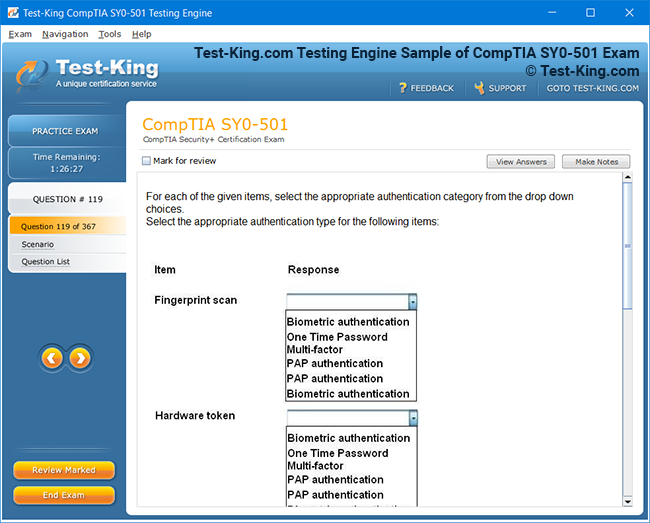
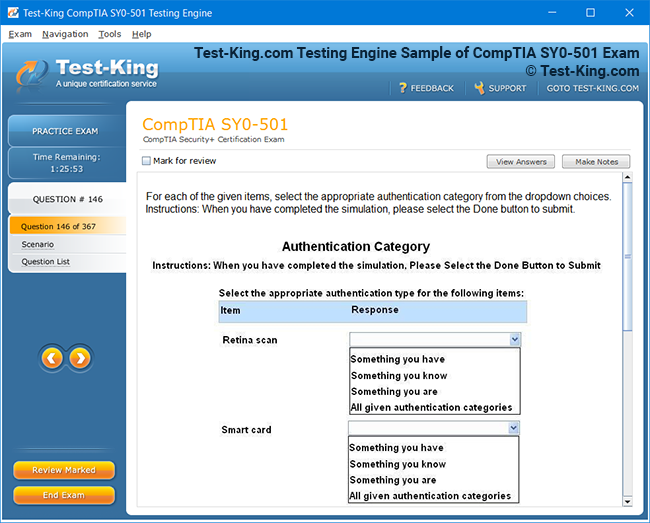
Product Screenshots
Frequently Asked Questions
How can I get the products after purchase?
All products are available for download immediately from your Member's Area. Once you have made the payment, you will be transferred to Member's Area where you can login and download the products you have purchased to your computer.
How long can I use my product? Will it be valid forever?
Test-King products have a validity of 90 days from the date of purchase. This means that any updates to the products, including but not limited to new questions, or updates and changes by our editing team, will be automatically downloaded on to computer to make sure that you get latest exam prep materials during those 90 days.
Can I renew my product if when it's expired?
Yes, when the 90 days of your product validity are over, you have the option of renewing your expired products with a 30% discount. This can be done in your Member's Area.
Please note that you will not be able to use the product after it has expired if you don't renew it.
How often are the questions updated?
We always try to provide the latest pool of questions, Updates in the questions depend on the changes in actual pool of questions by different vendors. As soon as we know about the change in the exam question pool we try our best to update the products as fast as possible.
How many computers I can download Test-King software on?
You can download the Test-King products on the maximum number of 2 (two) computers or devices. If you need to use the software on more than two machines, you can purchase this option separately. Please email support@test-king.com if you need to use more than 5 (five) computers.
What is a PDF Version?
PDF Version is a pdf document of Questions & Answers product. The document file has standart .pdf format, which can be easily read by any pdf reader application like Adobe Acrobat Reader, Foxit Reader, OpenOffice, Google Docs and many others.
Can I purchase PDF Version without the Testing Engine?
PDF Version cannot be purchased separately. It is only available as an add-on to main Question & Answer Testing Engine product.
What operating systems are supported by your Testing Engine software?
Our testing engine is supported by Windows. Andriod and IOS software is currently under development.
Top The Open Group Exams
How to Prepare for the OGB-001 Exam: Tips and Strategies
The TOGAF Business Architecture Part 1 examination, identified by the code OGB-001, presents a significant opportunity for enterprise architects and business professionals seeking to deepen their understanding of the intricacies of organizational structures and strategic frameworks. Preparing for this examination requires a meticulous blend of theoretical comprehension and practical familiarity with enterprise modeling concepts. The study process is not merely about memorization but about cultivating a nuanced grasp of how business capabilities, value streams, and organizational governance interlace to support holistic enterprise architecture.
Mastering TOGAF Business Architecture for Successful Certification
Aspiring candidates must first internalize the core principles of TOGAF, appreciating it as a comprehensive framework that harmonizes business processes with technological infrastructure. Business architecture, within this context, is more than a structural depiction of organizational units; it embodies the articulation of capabilities that enable strategic objectives and operational efficiency. Candidates often encounter conceptual challenges in distinguishing between capability mapping, value stream analysis, and stakeholder management, all of which are pivotal components of the exam. The preparation strategy, therefore, must involve rigorous engagement with these concepts, visualizing their interrelationships and potential impacts on business outcomes.
To initiate effective preparation, candidates should begin with a thorough exploration of the TOGAF standard, paying particular attention to the Architecture Development Method and its applicability to business architecture. This method delineates a systematic approach to developing enterprise architecture, emphasizing iterative development, stakeholder collaboration, and alignment with strategic intent. Understanding the nuances of architecture principles and their application in business contexts is paramount. Aspiring professionals are encouraged to create detailed diagrams illustrating business capabilities, mapping them against organizational objectives and identifying dependencies, redundancies, and potential areas for optimization. Such exercises enhance cognitive assimilation and mirror the practical scenarios presented in the examination.
In addition to theoretical study, immersing oneself in practical scenarios enriches comprehension. For example, constructing hypothetical organizational models based on real-world industries can elucidate the dynamics between business functions, processes, and stakeholders. Candidates can analyze the role of value streams in delivering organizational outcomes, investigating how resources are allocated across different operational domains. This reflective practice not only reinforces memory retention but cultivates the ability to apply concepts analytically, a skill that the examination assesses implicitly through scenario-based questions.
Another critical aspect of preparation involves understanding stakeholder management and its intersection with business architecture. Candidates must appreciate how the interests and influences of diverse stakeholders can shape architectural decisions, impact prioritization, and affect the alignment of business capabilities with enterprise strategy. Engaging in exercises where stakeholders are simulated, and their requirements assessed, can provide deep insights into balancing competing demands, negotiating architectural trade-offs, and achieving consensus in complex organizational environments. This experiential approach strengthens decision-making acumen, which is often tested through situational questions in the OGB-001 examination.
A distinctive feature of the TOGAF Business Architecture Part 1 examination is the emphasis on conceptual frameworks rather than technical implementation. Candidates are frequently evaluated on their ability to identify and articulate business capabilities, map them to value streams, and understand governance structures within an enterprise. This necessitates a focus on cognitive abstraction and analytical reasoning. Preparation materials such as case studies, whitepapers, and TOGAF-aligned guides provide candidates with the context to bridge theoretical knowledge and practical application. Engaging deeply with these resources fosters familiarity with terminologies, methodologies, and standard practices, which can significantly enhance performance in the examination.
Time management emerges as a pivotal factor during preparation. Constructing a structured timetable that allocates ample periods for conceptual review, scenario analysis, and self-assessment ensures comprehensive coverage of the examination syllabus. Candidates are advised to intersperse reading with active recall exercises, such as summarizing key concepts in their own words, drawing capability maps from memory, or explaining architecture principles to peers. These techniques reinforce long-term retention and improve the ability to navigate complex examination questions with clarity and precision.
Frequently asked questions about the OGB-001 exam often revolve around the format, content scope, and best preparation strategies. Understanding that the examination predominantly evaluates knowledge of business architecture concepts within TOGAF helps candidates focus their study on areas of highest relevance. Topics such as enterprise capability modeling, value stream mapping, stakeholder engagement, and governance frameworks constitute the backbone of the syllabus. Candidates are encouraged to explore variations of these topics across industries, noting how organizational context can influence architectural priorities and decision-making processes.
Effective preparation also involves cultivating a reflective mindset, where candidates continuously evaluate their comprehension and identify gaps in knowledge. This can be achieved through self-assessment quizzes, scenario-based exercises, and peer discussions. By simulating examination conditions, aspirants can develop familiarity with the cognitive demands of the test and refine their analytical approach. Reflection further aids in internalizing the principles of TOGAF and applying them intuitively when faced with novel scenarios, a skill that differentiates proficient candidates from those who rely solely on rote memorization.
The integration of rare and sophisticated terms into study material can also enhance conceptual depth. Words like “heuristics,” “synergistic alignment,” “ontological frameworks,” and “epistemic mapping” may initially appear esoteric, but their application in discussing enterprise architecture principles enriches understanding. For example, heuristics can guide decision-making when evaluating capability redundancies, while synergistic alignment emphasizes the interconnection between organizational functions and strategic goals. Ontological frameworks provide structure to business capability definitions, and epistemic mapping facilitates comprehension of knowledge flows within an enterprise. Familiarity with such vocabulary allows candidates to articulate concepts with precision and sophistication, which can be advantageous during scenario-based assessments.
Understanding the dynamics of value streams and their relationship with business capabilities is another essential aspect of preparation. Value streams represent the flow of activities required to deliver products or services to stakeholders, and their alignment with capabilities ensures organizational effectiveness. Candidates should practice constructing value stream maps, identifying inputs, outputs, and resource dependencies, and evaluating how capabilities support or constrain these flows. By engaging in such exercises, aspirants develop the ability to interpret complex organizational processes, an analytical skill that the OGB-001 examination tests extensively.
Stakeholder analysis within the context of business architecture demands careful consideration. Different stakeholders bring varying perspectives, priorities, and levels of influence. Understanding how to categorize stakeholders, anticipate their expectations, and address potential conflicts is a critical competency. Candidates should practice scenario exercises that require balancing stakeholder needs while ensuring alignment with enterprise strategy. This exercise strengthens negotiation, communication, and analytical skills, enabling candidates to approach questions in the examination with clarity and confidence.
The governance aspect of business architecture cannot be overlooked during preparation. Candidates must understand the principles of decision-making frameworks, compliance requirements, and accountability structures within enterprises. Governance ensures that business capabilities are developed, utilized, and evolved in a manner consistent with strategic objectives. Studying governance models, reviewing case examples of successful architectural oversight, and simulating decision-making scenarios help candidates internalize these principles. Such preparation ensures they can navigate examination questions that probe understanding of architectural governance without relying solely on memorization.
Effective use of learning resources is pivotal in mastering the OGB-001 examination. Authoritative TOGAF guides, industry case studies, and curated online materials provide the foundational knowledge required for conceptual mastery. Candidates should prioritize resources that emphasize understanding over memorization, focusing on analytical exercises that simulate real-world scenarios. Participating in discussion forums, engaging in peer review, and accessing knowledge repositories can further enhance comprehension, providing exposure to diverse interpretations and applications of business architecture concepts.
Candidates often wonder about the role of repetition in exam preparation. Repetition, when combined with reflective analysis, solidifies understanding and improves recall. Revisiting key concepts, reworking scenario exercises, and re-examining capability and value stream maps periodically reinforces memory and allows candidates to identify subtle nuances they may have missed previously. This iterative learning process cultivates a deeper appreciation of enterprise architecture principles and their practical applications, which is essential for excelling in the examination.
Finally, integrating analytical thinking with conceptual understanding distinguishes high-performing candidates. It is not sufficient to know what business capabilities exist; candidates must also understand why they exist, how they interact, and how they support organizational objectives. Scenario-based practice, reflective exercises, and simulated assessments encourage candidates to think critically and apply concepts dynamically, ensuring readiness for the variety of questions encountered in the OGB-001 examination.
Deepening Knowledge and Applying TOGAF Business Architecture Concepts
Preparing for the TOGAF Business Architecture Part 1 examination with the code OGB-001 requires a multidimensional approach that combines meticulous theoretical understanding with practical application. Mastery of this examination involves developing a profound comprehension of enterprise architecture principles, particularly those that relate to business capabilities, value streams, stakeholder engagement, and governance. Successful candidates often find that immersion in both conceptual frameworks and real-world scenarios significantly enhances their ability to navigate the nuanced questions posed in the exam.
The first step in cultivating a deeper understanding is to explore the intricate relationships between business architecture components. Business capabilities serve as the foundation, representing the core functions and competencies that an organization needs to achieve strategic objectives. Candidates must learn to identify these capabilities, map them to organizational goals, and analyze dependencies that may influence operational efficiency. This process goes beyond rote memorization; it demands analytical thinking and the capacity to synthesize information from diverse organizational contexts. Creating mental models of capability interconnections and reflecting on their strategic significance sharpens cognitive clarity and prepares aspirants for the scenario-based nature of the examination.
Value streams, a critical element within TOGAF business architecture, represent the flow of activities that deliver value to stakeholders. Understanding how capabilities support these flows is paramount. Candidates should practice constructing detailed maps that depict inputs, outputs, and interactions among organizational functions. Through repetitive engagement with value stream exercises, aspirants gain the ability to evaluate how changes in one capability can affect the broader organizational performance. These exercises also foster awareness of optimization opportunities, enabling candidates to propose enhancements that align with enterprise strategy, a skill often tested through analytical questions in the OGB-001 exam.
Another essential component is stakeholder analysis, which examines the diverse interests, influences, and expectations of individuals or groups involved in organizational decision-making. Candidates need to appreciate how stakeholder priorities can shape architecture choices and impact the alignment of capabilities with strategic objectives. Simulated exercises that place the candidate in scenarios requiring negotiation, prioritization, and consensus-building cultivate practical skills that transcend theoretical knowledge. By engaging with these situations, aspirants internalize the complexities of organizational dynamics and develop the ability to anticipate challenges that may arise when aligning business architecture with enterprise goals.
Governance, within the context of business architecture, entails the establishment of structures, processes, and rules that guide decision-making and ensure compliance with strategic objectives. Candidates should explore the mechanisms through which governance influences capability development and deployment. Understanding the intricacies of accountability frameworks, decision hierarchies, and oversight practices equips aspirants to evaluate architectural proposals critically. Reviewing case studies where governance practices either succeeded or faltered offers a practical lens for analyzing potential risks and identifying best practices. This analytical perspective strengthens both conceptual understanding and practical readiness for examination questions.
Time management and disciplined study routines are pivotal for effective preparation. Candidates are encouraged to design schedules that allocate sufficient periods for conceptual review, scenario exercises, and reflective practice. Repetition combined with active engagement, such as summarizing key concepts, drawing architecture diagrams, and explaining principles in one's own words, solidifies retention and fosters cognitive agility. Aspirants benefit from integrating varied study techniques, including self-assessment quizzes, peer discussions, and reflective journaling, all of which reinforce learning and cultivate deeper insight into business architecture principles.
The integration of rare and sophisticated vocabulary enriches conceptual comprehension and analytical capability. Terms such as “heuristics,” “ontological delineation,” “synergistic orchestration,” and “epistemic assessment” provide nuanced ways to articulate complex architectural relationships. For instance, heuristics can guide decision-making when evaluating capability redundancies, while ontological delineation clarifies the categorization and scope of organizational competencies. Synergistic orchestration emphasizes the interconnectedness of functions across departments, and epistemic assessment highlights the evaluation of knowledge flow and decision-making efficacy within an enterprise. Familiarity with such language enables candidates to approach examination questions with clarity, sophistication, and precision.
Scenario-based exercises form the backbone of practical preparation. Candidates are encouraged to construct hypothetical organizations across various industries, mapping capabilities, value streams, and governance structures. This exercise fosters an understanding of how organizational context, culture, and resource allocation influence business architecture outcomes. By analyzing these models, aspirants can anticipate potential conflicts, inefficiencies, or misalignments, and develop strategies to mitigate them. Such analytical thinking is integral to the OGB-001 examination, where situational questions often require both conceptual knowledge and practical reasoning.
Understanding the relationship between strategic objectives and operational capabilities is central to TOGAF business architecture. Candidates should engage in exercises that trace how strategic goals cascade into specific capabilities, processes, and activities. This alignment ensures that enterprise architecture efforts directly support organizational priorities, optimizing resource utilization and enhancing operational effectiveness. Reflecting on this alignment across multiple organizational levels, including departmental and enterprise-wide perspectives, strengthens the candidate’s ability to analyze complex structures and respond effectively to examination scenarios.
The examination often tests the ability to distinguish between different layers of architecture and their interactions. For example, business architecture is distinct from information systems or technology architecture but maintains interdependencies with both. Candidates must understand how changes in business capabilities impact information flows, system requirements, and technological support. Practical exercises that simulate cross-layer interactions cultivate analytical skills, enabling candidates to identify ripple effects, propose informed adjustments, and anticipate potential challenges. Mastery of these concepts positions aspirants to respond adeptly to comprehensive examination questions that integrate multiple architectural dimensions.
Continuous self-assessment enhances preparation quality. Candidates are encouraged to engage in reflective practices, such as revisiting challenging concepts, evaluating the accuracy of capability maps, and critiquing stakeholder engagement strategies. Self-assessment not only reveals knowledge gaps but also provides insight into cognitive patterns, decision-making tendencies, and analytical approaches. By iteratively refining understanding through such exercises, candidates develop both confidence and competence, ensuring they can approach examination questions with clarity, precision, and strategic insight.
The use of authentic TOGAF resources is invaluable. Guides, reference models, case studies, and whitepapers provide context, exemplify best practices, and illustrate the practical application of concepts. Candidates should engage deeply with these materials, seeking to understand the rationale behind architectural principles, the strategic intent of frameworks, and the implications of governance choices. Exposure to diverse organizational examples enhances adaptability, equipping aspirants to navigate novel or unexpected scenarios presented in the examination. Discussion forums and peer collaboration further augment learning by providing multiple perspectives, challenging assumptions, and encouraging analytical rigor.
Conceptual clarity is reinforced through the practice of mental modeling. Candidates can visualize organizational structures, capability interdependencies, and value stream flows in their minds, simulating changes and assessing outcomes without reliance on diagrams. This cognitive exercise fosters agility in thinking, enabling candidates to respond effectively to scenario-based questions that require rapid evaluation and synthesis of complex information. Mental modeling also encourages deeper understanding, as it necessitates considering both explicit structures and implicit relationships within the enterprise architecture.
Exam preparation benefits from iterative exposure to scenario-based questions. Candidates should practice analyzing hypothetical organizational dilemmas, evaluating architectural options, and selecting optimal solutions based on strategic alignment, resource efficiency, and governance compliance. By repeatedly engaging with such questions, aspirants internalize evaluation criteria, refine problem-solving approaches, and develop confidence in articulating rationale. This repeated exposure enhances readiness, ensuring that candidates can navigate the diverse challenges presented in the OGB-001 examination with both analytical depth and conceptual clarity.
Developing a holistic perspective on enterprise architecture is crucial. Candidates must appreciate that business architecture exists within a broader ecosystem of strategy, technology, and operational management. Recognizing interdependencies between business capabilities, information systems, and technology infrastructure allows for informed decision-making and anticipatory planning. Reflecting on these interactions through case studies, scenario analysis, and cross-functional exercises cultivates a systemic mindset, which is often implicitly assessed in examination questions that require integration across multiple domains.
Effective retention of knowledge is facilitated by active engagement techniques. Summarizing key concepts, teaching principles to peers, or engaging in reflective journaling helps consolidate understanding and reinforces analytical skills. Candidates who apply these methods consistently develop both recall and application abilities, essential for responding accurately to scenario-based examination questions. By embedding conceptual learning in practical exercises, aspirants move beyond superficial familiarity to deep, functional mastery of business architecture principles.
The examination also evaluates the ability to recognize architectural risks and propose mitigation strategies. Candidates should practice identifying vulnerabilities in organizational capabilities, gaps in governance, or inefficiencies in value stream flows. Scenario exercises that involve risk assessment, contingency planning, and prioritization enhance both analytical reasoning and practical foresight. Developing proficiency in these areas ensures that candidates can address examination questions that challenge their understanding of real-world enterprise architecture dynamics.
Finally, integrating analytical reasoning with conceptual understanding strengthens readiness for the OGB-001 examination. Candidates who cultivate a reflective, iterative, and practical approach to studying are better equipped to navigate complex questions. By continuously evaluating understanding, practicing scenario exercises, and exploring the interplay of capabilities, value streams, and governance, aspirants develop a robust foundation that supports both knowledge retention and practical application.
Enhancing Understanding and Practical Skills for TOGAF Business Architecture
The OGB-001 examination, known as TOGAF Business Architecture Part 1, requires candidates to develop a profound understanding of the principles, methodologies, and practical applications of business architecture within an enterprise context. Preparation for this examination is not merely an exercise in memorization but a deliberate process of internalizing conceptual frameworks and applying them to practical scenarios. Success in this endeavor depends on the ability to think critically about business capabilities, value streams, stakeholder dynamics, and governance, while maintaining a strategic perspective that aligns organizational objectives with architectural outcomes.
A fundamental aspect of preparation is gaining clarity on business capabilities and their role in enterprise architecture. Capabilities represent the distinct competencies an organization requires to execute its strategy and deliver value to stakeholders. Candidates must practice identifying these capabilities, understanding their interdependencies, and evaluating how they contribute to strategic objectives. Engaging in exercises that involve mapping capabilities to organizational goals and exploring how enhancements or constraints affect operational efficiency fosters a deeper comprehension. This analytical process strengthens the ability to apply conceptual knowledge in the scenario-based questions commonly encountered in the OGB-001 examination.
Value streams are a critical element of business architecture and are central to understanding how capabilities generate outcomes. A value stream represents the sequence of activities necessary to produce goods or services and deliver value to stakeholders. Candidates should practice constructing detailed mappings of value streams, analyzing inputs, outputs, and interconnections between capabilities and processes. This approach provides insight into how resource allocation, process efficiency, and capability alignment influence organizational performance. Reflecting on these dynamics allows candidates to anticipate challenges and identify opportunities for optimization, a skill essential for success in the examination.
Effective preparation also involves mastering stakeholder engagement and understanding how stakeholder priorities influence business architecture. Different stakeholders bring varying levels of influence, expectations, and perspectives that must be balanced when making architectural decisions. Candidates should engage in simulated exercises where they analyze stakeholder interests, anticipate conflicts, and develop strategies for achieving consensus. By practicing these scenarios, aspirants cultivate negotiation skills, analytical reasoning, and the ability to prioritize decisions, all of which are crucial for responding to situational questions on the OGB-001 examination.
Governance within business architecture provides the framework for decision-making, accountability, and compliance with strategic objectives. Candidates must understand governance principles, including oversight structures, decision hierarchies, and mechanisms for ensuring that capabilities are effectively utilized and developed. Engaging with case studies that illustrate both successful and failed governance practices helps candidates appreciate the practical implications of these structures. By analyzing governance outcomes, aspirants develop the ability to critically assess architectural decisions and propose solutions that maintain alignment with enterprise strategy, an analytical skill frequently tested in the examination.
Time management is a vital component of effective preparation. Candidates are encouraged to develop structured study schedules that include time for conceptual review, practical exercises, reflective analysis, and self-assessment. Active engagement methods, such as summarizing key concepts, drawing capability and value stream maps, and teaching concepts to peers, enhance retention and cognitive agility. Integrating these techniques ensures that aspirants not only understand the theoretical underpinnings of TOGAF business architecture but also develop the analytical and problem-solving skills required for examination success.
An advanced understanding of TOGAF business architecture is supported by the deliberate use of rare and sophisticated terminology. Words such as “synergistic orchestration,” “heuristic evaluation,” “ontological mapping,” and “epistemic analysis” provide nuanced ways to conceptualize complex relationships within an organization. For instance, heuristic evaluation can guide decision-making when analyzing capability redundancies or inefficiencies, while synergistic orchestration highlights the interdependent nature of functions across organizational units. Ontological mapping clarifies categorization and scope, and epistemic analysis evaluates the flow of knowledge and decision-making efficacy. Familiarity with these terms enables candidates to articulate concepts precisely, a valuable skill when responding to nuanced scenario-based questions.
Scenario-based exercises form the core of practical preparation. Candidates benefit from constructing hypothetical organizational models that incorporate various business capabilities, value streams, and governance structures. These exercises allow aspirants to analyze how different organizational designs influence efficiency, effectiveness, and strategic alignment. By evaluating potential conflicts, redundancies, and dependencies within these models, candidates cultivate a reflective and analytical mindset. This practice also reinforces understanding of the practical applications of TOGAF principles, ensuring readiness for the variety of situations presented in the OGB-001 examination.
A key aspect of preparation is recognizing the relationship between strategic objectives and operational capabilities. Candidates should engage in exercises that trace how enterprise goals cascade into specific capabilities, processes, and activities. Understanding this alignment ensures that architecture efforts directly support organizational priorities and optimize the use of resources. Reflecting on this relationship across multiple organizational levels deepens comprehension and strengthens analytical thinking, enabling candidates to respond effectively to complex examination scenarios that require both conceptual understanding and practical reasoning.
Candidates must also develop the ability to differentiate between layers of enterprise architecture and understand their interdependencies. While business architecture is distinct from information systems and technology architecture, it maintains critical linkages with both. Understanding how changes in business capabilities affect information flows, technological requirements, and operational processes is essential. Engaging in exercises that simulate cross-layer interactions fosters analytical insight, enabling candidates to evaluate the ripple effects of architectural decisions and anticipate challenges. This ability to integrate knowledge across multiple domains is frequently assessed in the OGB-001 examination through scenario-based questions.
Reflective practice enhances comprehension and retention. Candidates are encouraged to revisit challenging concepts, analyze the accuracy of capability maps, and critique stakeholder engagement approaches. This reflective process allows aspirants to identify gaps in understanding, refine analytical reasoning, and develop practical strategies for addressing complex architectural problems. By iteratively evaluating their knowledge, candidates cultivate both confidence and competence, equipping them to respond effectively to examination questions that test critical thinking and applied knowledge.
Authentic TOGAF resources are indispensable for thorough preparation. Reference guides, case studies, whitepapers, and industry examples provide candidates with insights into best practices, the rationale behind architectural principles, and the application of governance frameworks. Engaging deeply with these materials facilitates the understanding of both conceptual and practical dimensions of business architecture. Candidates benefit from analyzing multiple organizational contexts, noting variations in capability design, value stream configuration, and governance practices. Exposure to diverse examples fosters adaptability and strengthens the ability to approach examination scenarios with analytical precision and strategic insight.
Mental modeling is an effective technique for internalizing complex concepts. Candidates can visualize organizational structures, interdependencies among capabilities, and the flow of value streams without relying solely on diagrams. Simulating changes and evaluating potential outcomes mentally enhances cognitive flexibility and problem-solving skills. This practice encourages deeper conceptual understanding, enabling candidates to navigate examination questions that demand rapid synthesis of complex information and thoughtful analysis of organizational dynamics.
Scenario-based question practice is crucial for consolidating knowledge. Candidates should engage with exercises that involve evaluating hypothetical organizational dilemmas, identifying optimal solutions, and justifying architectural decisions based on strategic alignment, efficiency, and governance principles. This iterative engagement cultivates analytical acumen and practical reasoning skills. By repeatedly practicing these exercises, candidates internalize evaluation criteria, refine decision-making approaches, and build confidence in responding to diverse and challenging examination scenarios.
Developing a systemic perspective is essential for mastering business architecture concepts. Candidates must appreciate that business architecture operates within a broader enterprise ecosystem encompassing strategy, technology, and operational processes. Understanding interdependencies between capabilities, processes, and technological infrastructure supports informed decision-making and proactive planning. Engaging with case studies and cross-functional exercises reinforces systemic thinking and prepares candidates to address examination questions that require integration across multiple architectural domains.
Retention of knowledge is enhanced through active engagement methods. Summarizing concepts, explaining principles to peers, and reflective journaling reinforce understanding and strengthen analytical skills. Candidates who consistently apply these techniques develop both recall and application abilities, enabling them to respond accurately and confidently to scenario-based examination questions. Embedding conceptual learning within practical exercises ensures a deep, functional grasp of business architecture principles and their application in organizational contexts.
Recognizing architectural risks and proposing mitigation strategies is a critical component of examination readiness. Candidates should practice identifying vulnerabilities in capabilities, inefficiencies in value streams, and gaps in governance frameworks. Exercises that involve risk assessment, prioritization, and contingency planning foster both analytical reasoning and practical foresight. Developing proficiency in evaluating and mitigating risks equips candidates to address examination questions that challenge their understanding of real-world organizational dynamics.
Integrating analytical reasoning with conceptual understanding is essential for comprehensive preparation. Candidates who cultivate a reflective, iterative, and applied approach to studying develop the skills necessary to navigate complex questions with clarity and precision. By continuously evaluating knowledge, engaging in scenario exercises, and analyzing the interplay of capabilities, value streams, and governance structures, aspirants build a robust foundation for responding effectively to the diverse challenges presented in the OGB-001 examination.
Advancing Mastery and Analytical Skills in TOGAF Business Architecture
Preparing for the OGB-001 examination requires a profound understanding of the principles, methodologies, and practical applications of business architecture within the context of TOGAF. Candidates must go beyond superficial knowledge and develop the capacity to synthesize complex concepts, analyze organizational structures, and anticipate the effects of architectural decisions on enterprise objectives. The examination tests both conceptual comprehension and practical reasoning, requiring aspirants to balance strategic thinking with detailed understanding of business capabilities, value streams, stakeholder engagement, and governance frameworks.
A crucial element of preparation involves grasping the essence of business capabilities and understanding their role as foundational elements in enterprise architecture. Capabilities represent the competencies an organization requires to achieve its strategic goals and deliver value effectively. Candidates are encouraged to practice identifying capabilities, mapping them to organizational objectives, and analyzing interdependencies that may affect operational efficiency. Through repeated exercises, aspirants develop the ability to assess how changes in one capability can influence the performance of others, thereby enhancing their analytical reasoning skills and readiness for scenario-based examination questions.
Value streams form the connective tissue between capabilities and organizational outcomes. Understanding the flow of activities that deliver value to stakeholders is central to mastering business architecture concepts. Candidates should engage in constructing value stream maps, analyzing the inputs, outputs, and interrelationships among different functions. This approach fosters an understanding of how resource allocation, process optimization, and capability alignment affect organizational performance. Evaluating value streams across multiple hypothetical scenarios allows candidates to develop foresight, anticipate challenges, and propose improvements, skills that are frequently tested in the OGB-001 examination through situational analysis.
Stakeholder management is another indispensable component of preparation. Different stakeholders bring diverse expectations, influences, and priorities that must be considered when making architectural decisions. Candidates are advised to engage in exercises that simulate real-world organizational dynamics, analyzing stakeholder requirements, anticipating conflicts, and developing strategies to achieve alignment. This practice enhances negotiation, communication, and analytical skills, equipping candidates to approach examination questions with both precision and strategic insight. Understanding the impact of stakeholder priorities on capability development and value stream optimization is central to effective business architecture.
Governance within business architecture ensures that capabilities are developed, utilized, and evolved in alignment with organizational strategy. Candidates must study the principles of governance, including decision-making hierarchies, accountability structures, and oversight mechanisms. Case studies highlighting successful and unsuccessful governance practices provide insights into practical challenges and opportunities for improvement. Engaging in exercises that simulate governance decisions allows aspirants to develop evaluative skills, anticipate potential pitfalls, and propose solutions that maintain strategic alignment. These analytical abilities are essential for responding to scenario-based questions that assess understanding of organizational control and decision-making frameworks.
Time management and disciplined study routines are fundamental to effective preparation. Candidates are encouraged to construct study schedules that balance conceptual review, scenario analysis, reflective exercises, and self-assessment. Active engagement techniques, such as summarizing key concepts, constructing capability and value stream maps, and explaining principles to peers, enhance retention and analytical capacity. Integrating varied approaches ensures that candidates internalize both theoretical principles and practical applications, fostering the cognitive agility necessary to excel in the examination.
Incorporating sophisticated and rare terminology into study practice enhances conceptual clarity and analytical expression. Terms such as “heuristic assessment,” “synergistic orchestration,” “ontological delineation,” and “epistemic mapping” provide nuanced ways to articulate relationships and processes within enterprise architecture. Heuristic assessment facilitates decision-making in evaluating capability redundancies, while synergistic orchestration emphasizes the interplay between organizational functions. Ontological delineation clarifies categorization and scope, and epistemic mapping provides insights into knowledge flows and decision-making efficacy. Familiarity with these terms allows candidates to communicate complex ideas effectively and navigate examination questions with precision.
Scenario-based exercises form a critical component of practical preparation. Candidates should construct hypothetical organizational models encompassing various capabilities, value streams, and governance structures. Analyzing these models allows aspirants to explore interdependencies, identify potential conflicts, and evaluate optimization opportunities. Engaging with such exercises cultivates a reflective and analytical mindset, enabling candidates to anticipate challenges and apply theoretical concepts in practical contexts. These skills are directly relevant to the OGB-001 examination, where scenario-based questions require both conceptual knowledge and analytical reasoning.
Understanding the relationship between strategic objectives and operational capabilities is essential. Candidates should examine how organizational goals cascade into specific capabilities, processes, and activities. This alignment ensures that architectural efforts support organizational priorities and optimize resource utilization. Reflecting on the connection between strategy and capabilities across different organizational levels strengthens analytical thinking and prepares candidates for complex examination questions that demand both conceptual understanding and applied reasoning.
Differentiating between layers of enterprise architecture and understanding their interdependencies is another key aspect of preparation. While business architecture is distinct from information systems and technology architecture, it maintains critical connections with both. Candidates must comprehend how changes in business capabilities influence information flows, technological requirements, and operational processes. Exercises simulating cross-layer interactions develop analytical insight, enabling candidates to evaluate ripple effects and anticipate potential challenges. Mastery of these concepts equips candidates to respond effectively to comprehensive scenario-based questions in the OGB-001 examination.
Reflective practice enhances comprehension and retention. Candidates are encouraged to revisit challenging concepts, critique capability and value stream mappings, and evaluate stakeholder engagement strategies. This reflective process allows aspirants to identify gaps in understanding, refine analytical approaches, and develop practical strategies for addressing complex architectural problems. Iterative evaluation fosters both competence and confidence, preparing candidates to navigate the analytical and conceptual demands of the examination.
Authentic TOGAF resources, including guides, reference models, whitepapers, and case studies, provide essential insights for preparation. Engaging deeply with these materials helps candidates understand both theoretical frameworks and practical applications. Analyzing organizational examples from diverse industries highlights variations in capability design, value stream configuration, and governance practices. Exposure to multiple contexts fosters adaptability, enabling candidates to approach examination scenarios with analytical rigor and strategic insight.
Mental modeling is an effective technique for internalizing complex concepts. Candidates can visualize organizational structures, interdependencies among capabilities, and value stream flows without relying solely on diagrams. This practice enhances cognitive flexibility, problem-solving skills, and the ability to rapidly synthesize complex information. Mental modeling also reinforces conceptual understanding, enabling candidates to navigate examination questions that require dynamic reasoning and thoughtful analysis of organizational dynamics.
Scenario-based question practice is indispensable for consolidating knowledge. Candidates should engage with exercises that involve evaluating hypothetical organizational dilemmas, identifying optimal solutions, and justifying architectural decisions based on strategic alignment, efficiency, and governance principles. Iterative engagement with such questions develops analytical acumen and practical reasoning skills, while repeated exposure to complex scenarios enhances confidence and preparedness. Candidates who practice extensively are better positioned to respond accurately and thoughtfully to the diverse challenges presented in the OGB-001 examination.
Developing a holistic perspective on enterprise architecture is crucial. Candidates must appreciate that business architecture exists within an integrated ecosystem encompassing strategy, technology, and operational processes. Understanding interdependencies between capabilities, processes, and infrastructure informs decision-making and supports anticipatory planning. Engaging with case studies and cross-functional exercises strengthens systemic thinking, enabling candidates to approach examination questions that require integration across multiple architectural domains with clarity and insight.
Retention is enhanced through active learning techniques. Summarizing key concepts, teaching principles to peers, and reflective journaling reinforce understanding and strengthen analytical capacity. Candidates who apply these techniques consistently develop recall and application skills essential for accurately responding to scenario-based examination questions. Embedding conceptual learning within practical exercises ensures mastery of business architecture principles and their application in organizational contexts.
Recognizing and addressing architectural risks is a vital component of preparation. Candidates should practice identifying vulnerabilities in capabilities, inefficiencies in value streams, and gaps in governance frameworks. Exercises that involve risk assessment, prioritization, and contingency planning develop analytical reasoning and practical foresight. Mastery of these skills enables candidates to address examination questions that challenge their ability to evaluate real-world organizational dynamics and propose effective mitigation strategies.
Integrating analytical reasoning with conceptual understanding underpins successful preparation. Candidates who cultivate a reflective, iterative, and applied approach to studying develop the skills required to navigate complex examination questions with clarity and precision. By continuously evaluating knowledge, engaging in scenario exercises, and analyzing the interplay of capabilities, value streams, and governance structures, aspirants build a robust foundation for achieving success in the OGB-001 examination.
Strengthening Analytical Skills and Practical Application for TOGAF Business Architecture
The OGB-001 examination demands a meticulous understanding of business architecture as framed by TOGAF. Success is predicated not only on theoretical knowledge but also on the ability to apply principles in complex organizational scenarios. Aspirants must develop cognitive dexterity to synthesize insights on business capabilities, value streams, stakeholder influence, and governance mechanisms. Preparation strategies are most effective when they cultivate both conceptual mastery and the capacity to interpret real-world organizational dynamics.
Central to preparation is an in-depth understanding of business capabilities. These capabilities constitute the competencies that empower an organization to achieve strategic objectives and deliver stakeholder value. Candidates should engage in exercises to identify, categorize, and analyze capabilities, paying close attention to dependencies and redundancies that may affect performance. Creating hypothetical organizational models facilitates recognition of how capabilities interrelate and how changes can cascade through processes and value streams. Such exercises enhance analytical thinking and readiness for scenario-based questions in the OGB-001 examination.
Value streams constitute a critical lens through which to view the practical impact of capabilities. Mapping the flow of activities that deliver products or services helps candidates discern how organizational outcomes are achieved. Detailed exploration of inputs, outputs, and resource allocations within value streams allows candidates to anticipate operational bottlenecks and optimization opportunities. By practicing scenario-based exercises, aspirants gain the ability to analyze complex organizational processes and develop strategic recommendations, a skill essential for examination success.
Stakeholder analysis is indispensable in understanding the context in which business architecture operates. Different stakeholders possess varying degrees of influence, conflicting priorities, and unique expectations. Candidates should simulate real-world stakeholder interactions, examining how decisions impact alignment, resource allocation, and capability prioritization. This analytical exercise cultivates the ability to negotiate trade-offs, balance competing interests, and make informed architectural decisions. Such practical engagement enhances conceptual comprehension and equips candidates to navigate situational questions in the OGB-001 examination.
Governance frameworks underpin the discipline of business architecture. They establish the structures, accountability, and oversight necessary to ensure that capabilities are developed and utilized effectively. Candidates should study governance mechanisms, decision-making hierarchies, and compliance frameworks to appreciate how strategic alignment is maintained. Exploring case studies of successful and deficient governance models enriches understanding and hones evaluative skills. By engaging in exercises that simulate governance decision-making, candidates build analytical capacity to address examination questions involving accountability and architectural oversight.
Time management is essential in balancing preparation across theoretical review, scenario practice, and reflective exercises. Developing a structured timetable allows candidates to systematically revisit key concepts, practice value stream and capability mapping, and engage in reflective journaling. Active learning techniques such as summarizing principles in one’s own words, teaching concepts to peers, and simulating decision-making exercises reinforce comprehension and cultivate cognitive flexibility. These methods ensure that aspirants internalize both theoretical and practical aspects of TOGAF business architecture.
Integrating rare and sophisticated vocabulary enhances clarity and analytical depth. Terms such as “heuristic evaluation,” “synergistic orchestration,” “ontological delineation,” and “epistemic analysis” provide nuanced ways to discuss organizational dynamics. Heuristic evaluation guides decision-making in capability assessment, synergistic orchestration emphasizes interconnected functions, ontological delineation clarifies structure and scope, and epistemic analysis illuminates knowledge flows within the enterprise. Mastery of this language empowers candidates to express insights with precision and interpret examination scenarios effectively.
Scenario-based exercises form the foundation of practical learning. Candidates should construct detailed hypothetical organizational models, incorporating capabilities, value streams, and governance mechanisms. Evaluating interdependencies, identifying conflicts, and proposing optimizations reinforce analytical reasoning. These exercises mirror the situational questions encountered in the OGB-001 examination and cultivate a mindset that integrates theory with practical application. By repeatedly engaging with scenarios, candidates enhance both confidence and competence in navigating complex organizational challenges.
Understanding the strategic alignment of capabilities is pivotal. Candidates must trace how enterprise objectives cascade into specific capabilities, processes, and operational activities. This alignment ensures that architecture supports organizational priorities and optimizes resource deployment. Exercises examining cascading effects across organizational layers strengthen analytical thinking and prepare candidates to answer examination questions that require applied reasoning and strategic insight.
Differentiating layers of enterprise architecture is equally crucial. Business architecture, while distinct from technology and information system architectures, interacts extensively with these layers. Candidates should analyze how adjustments in capabilities influence information flows, technological dependencies, and operational processes. Cross-layer exercises develop the ability to anticipate ripple effects and address complex interactions, enhancing readiness for examination questions that integrate multiple architectural dimensions.
Reflective practice enhances comprehension and retention. Candidates are encouraged to revisit challenging concepts, assess the quality of capability and value stream maps, and evaluate stakeholder engagement strategies. Reflection identifies gaps in understanding and fosters iterative improvement in analytical approaches. Repeated practice in this manner strengthens both practical judgment and conceptual clarity, preparing candidates for diverse question formats in the examination.
Using authentic TOGAF resources is essential. Reference guides, whitepapers, case studies, and industry examples provide contextual insight and illustrate practical applications. Engaging with these materials allows candidates to understand best practices, variations across industries, and nuances in governance and value stream configuration. Exposure to diverse organizational examples fosters adaptability and equips candidates to interpret and respond to examination scenarios with analytical precision.
Mental modeling is a powerful technique for internalizing complex relationships. Visualizing organizational structures, capability interdependencies, and value stream dynamics without relying on diagrams enhances cognitive flexibility and problem-solving skills. Mental simulations encourage reflective reasoning and prepare candidates for questions that require rapid evaluation of intricate organizational scenarios, enhancing both analytical acumen and conceptual understanding.
Engaging in scenario-based question practice is indispensable. Candidates should simulate organizational dilemmas, identify optimal solutions, and justify architectural decisions based on strategic alignment, efficiency, and governance principles. Iterative exposure to such exercises improves analytical reasoning, reinforces applied knowledge, and cultivates confidence in responding to diverse examination questions. Repetition with reflection deepens understanding and ensures readiness for complex problem-solving scenarios.
Developing a holistic view of enterprise architecture is fundamental. Candidates must recognize that business architecture operates within a broader ecosystem encompassing strategy, technology, and operational processes. Understanding interdependencies between capabilities, processes, and infrastructure informs decision-making and supports anticipatory planning. Cross-functional exercises and case studies reinforce systemic thinking, enabling candidates to approach examination questions requiring integration across multiple domains effectively.
Retention is strengthened through active learning. Summarizing concepts, teaching principles to peers, and engaging in reflective journaling consolidate understanding and enhance analytical capability. Candidates who employ these strategies consistently develop recall and application skills critical for accurately responding to scenario-based examination questions. Embedding theoretical learning within practical exercises ensures mastery of business architecture principles in organizational contexts.
Addressing architectural risks and proposing mitigation strategies is vital. Candidates should identify vulnerabilities in capabilities, inefficiencies in value streams, and gaps in governance frameworks. Engaging in exercises focused on risk assessment, prioritization, and contingency planning enhances practical foresight and analytical reasoning. Proficiency in these areas equips candidates to handle examination questions evaluating real-world organizational dynamics and the application of architectural safeguards.
Integrating conceptual understanding with analytical reasoning is central to success. Candidates who adopt a reflective, iterative, and applied approach cultivate the skills needed to navigate complex questions with clarity. Continuous evaluation of knowledge, scenario-based practice, and analysis of interrelationships among capabilities, value streams, and governance structures create a robust foundation for examination readiness.
Candidates who follow a disciplined, multifaceted preparation strategy combining conceptual study, scenario exercises, reflective practice, and risk analysis demonstrate higher proficiency. The OGB-001 examination evaluates not only theoretical understanding but also the practical application of business architecture principles within dynamic enterprise environments. By developing both analytical acuity and conceptual depth, candidates are equipped to achieve superior performance.
Conclusion
Preparing for the OGB-001 examination requires a deliberate balance between theoretical mastery and practical application. Candidates who engage deeply with business capabilities, value streams, governance frameworks, and stakeholder dynamics develop the analytical insight necessary to navigate complex organizational scenarios. Combining reflective practice, scenario-based exercises, mental modeling, and active learning strategies ensures comprehensive readiness. Integrating conceptual clarity with applied reasoning fosters the confidence and competence needed to succeed, demonstrating a robust grasp of TOGAF business architecture principles in the examination context.