

Exam Code: P_S4FIN_2021
Exam Name: SAP Certified Application Professional - Financials in SAP S/4HANA for SAP ERP Finance Experts (SAP S/4HANA 2021)
Certification Provider: SAP
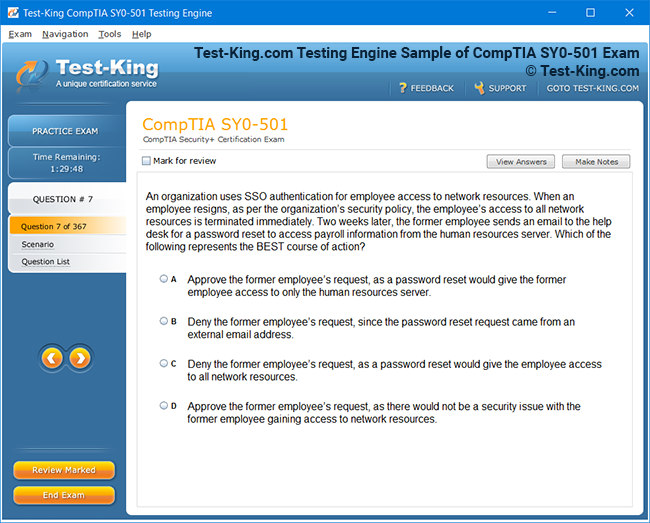
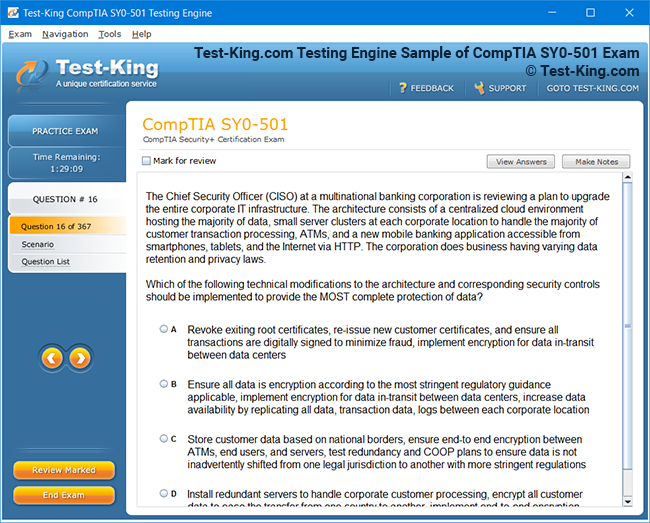
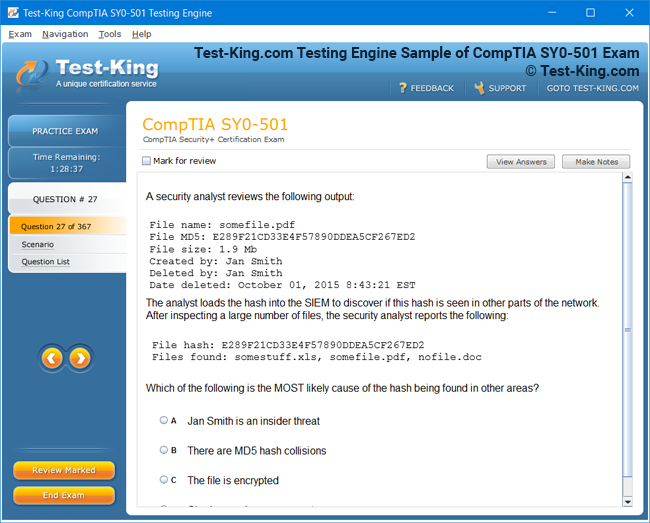
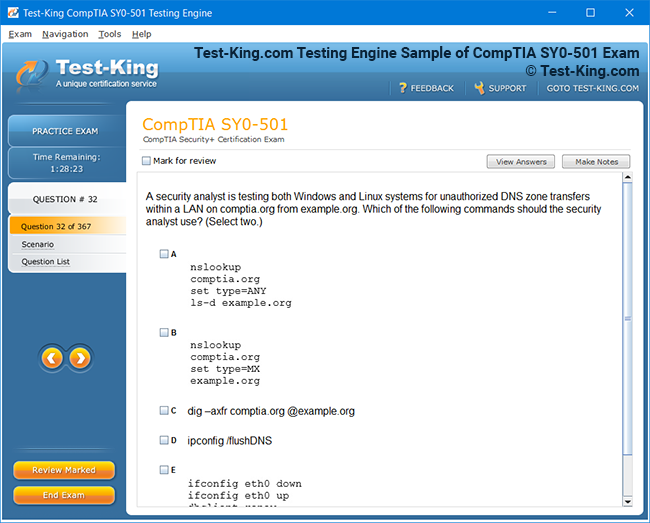
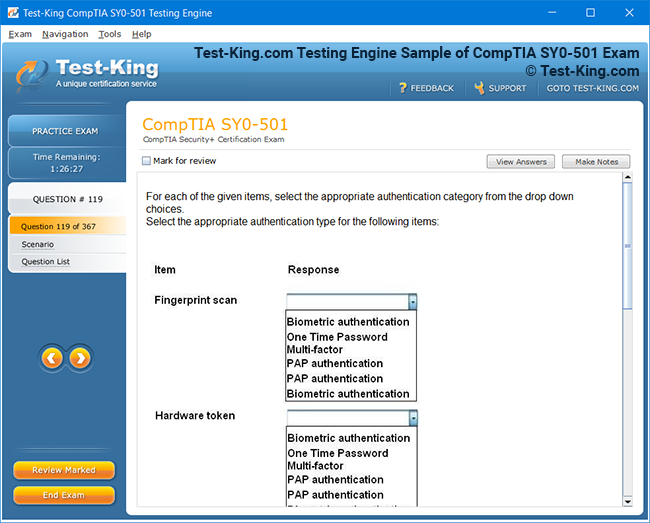
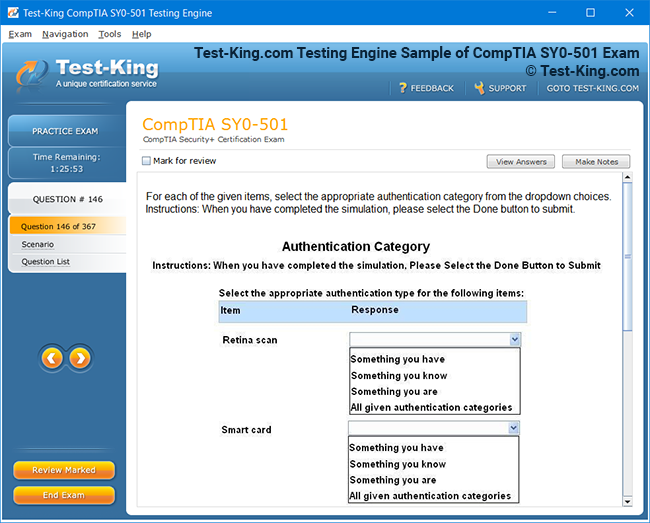
Product Screenshots
Frequently Asked Questions
How can I get the products after purchase?
All products are available for download immediately from your Member's Area. Once you have made the payment, you will be transferred to Member's Area where you can login and download the products you have purchased to your computer.
How long can I use my product? Will it be valid forever?
Test-King products have a validity of 90 days from the date of purchase. This means that any updates to the products, including but not limited to new questions, or updates and changes by our editing team, will be automatically downloaded on to computer to make sure that you get latest exam prep materials during those 90 days.
Can I renew my product if when it's expired?
Yes, when the 90 days of your product validity are over, you have the option of renewing your expired products with a 30% discount. This can be done in your Member's Area.
Please note that you will not be able to use the product after it has expired if you don't renew it.
How often are the questions updated?
We always try to provide the latest pool of questions, Updates in the questions depend on the changes in actual pool of questions by different vendors. As soon as we know about the change in the exam question pool we try our best to update the products as fast as possible.
How many computers I can download Test-King software on?
You can download the Test-King products on the maximum number of 2 (two) computers or devices. If you need to use the software on more than two machines, you can purchase this option separately. Please email support@test-king.com if you need to use more than 5 (five) computers.
What is a PDF Version?
PDF Version is a pdf document of Questions & Answers product. The document file has standart .pdf format, which can be easily read by any pdf reader application like Adobe Acrobat Reader, Foxit Reader, OpenOffice, Google Docs and many others.
Can I purchase PDF Version without the Testing Engine?
PDF Version cannot be purchased separately. It is only available as an add-on to main Question & Answer Testing Engine product.
What operating systems are supported by your Testing Engine software?
Our testing engine is supported by Windows. Andriod and IOS software is currently under development.
P_S4FIN_2021 : Core Financial Accounting Innovations Exam
The movement from traditional financial systems toward an integrated environment in SAP S/4HANA introduced a transformative shift in how financial accounting, controlling, asset management, and reporting coexist. The 2021 release carries forward the strategic objective of unification, collapsing previously scattered ledgers and data repositories into a single, harmonized structure known as the Universal Journal. This change not only rationalizes the underlying architecture but also introduces a more elegant, coherent, and accessible form of financial insight. Organizations that previously wrestled with data reconciliation across multiple modules now experience a form of symbiosis among financial components, where one source of truth supports both strategic and operational decision-making.
The Evolution of the Universal Journal and the Integrated Financial Data Model
The Universal Journal is represented by the ACDOCA line-item table, though it is not merely a table; it is a conceptual model guiding the very flow of data. Historically, financial accounting and controlling were maintained in distinct silos. Financial Accounting focused on general ledger, accounts receivable, accounts payable, and external reporting, while Controlling supported internal decision processes. These two realms interacted but did not operate from a shared ledger. This lack of unification created duplications and frequent reconciliation activities, increasing workload and delaying real-time visibility. The unification in SAP S/4HANA removes these barriers and consolidates data structures, offering verified consistency between financial and managerial reporting.
Through this consolidation, organizations gain immediate accessibility to granular financial information. Instead of depending on periodic reconciliations or aggregate postings, every posting in financial accounting, controlling, asset accounting, and material ledger flows into the Universal Journal. The architecture transforms the way enterprises engage with data, converting what was once static and delayed into dynamic insight. Decision-makers can examine profitability characteristics, cost object details, and ledger results from the same transactional record. The framework not only improves accuracy but introduces a sophisticated platform for analytic refinement and financial forecast modeling.
This evolution has also influenced the way reporting is conceptualized. Instead of preparing reports by drawing data from multiple modules, users can now rely on embedded analytics directly integrated within financial operations. The Universal Journal supports drill-down capabilities that allow users to traverse from high-level overviews to the finest transaction-level detail. This shift reduces dependence on external databases or separate reporting cubes. With data residing in a unified ledger, real-time reporting becomes a tangible reality rather than an aspirational goal. Organizations can generate profit center reports, cost center analyses, and legal entity statements without waiting for end-of-period synchronization.
Additionally, the Universal Journal enables extensibility. Enterprises operating across diverse industries may require capturing more complex financial attributes. The architecture supports customer-specific fields without requiring custom coding layers or fragmented extensions. These custom fields are stored in the same record, ensuring consistency and traceability. This adaptive capability is significant for industries with regulatory or operational data requirements beyond standard accounting fields. Whether the need concerns insurance risk dimensions, manufacturing batch identifiers, or global logistics classifications, the Universal Journal accommodates them in a unified and accessible form.
The adoption of this architecture also changes how financial closing activities are conducted. Traditional financial closing involved reconciliation cycles, cross-module matching, manual journal adjustments, and validation verifications. With the integrated data model, many of these reconciliation steps are inherently eliminated. Since the same posting impacts both financial accounting and controlling dimensions simultaneously, the system ensures intrinsic alignment. Period-end activities become more streamlined, often shifting the workforce from repetitive reconciliation tasks to analytical evaluations and strategic planning. This transformation has practical implications for staffing, workload distribution, and efficiency gains.
Another profound innovation can be observed in the treatment of asset accounting. In earlier system landscapes, asset accounting operated in a separate ledger with periodic transfers and alignments required for synchronization. In the SAP S/4HANA model, asset accounting is directly recorded in the Universal Journal. This integration eliminates the specialized reconciliation steps that were once necessary. Depreciation postings, asset acquisition values, scrap adjustments, and revaluations all reflect instantly in both financial statements and cost allocations. This direct representation improves transparency and ensures real-time visibility into the fixed asset portfolio.
The architecture also extends to controlling functionalities. Instead of having parallel postings in financial accounting and controlling, the system records profitability and cost information in the same structure. Cost elements in controlling become account types in the general ledger, dissolving historical distribution between financial and managerial accounting. This transformation not only simplifies configuration but enhances analytical clarity. Instead of mapping cost structures or creating bridging accounts, financial insights become part of a unified continuum. Users can evaluate cost flows alongside revenue without traversing multiple systems or reports.
The Universal Journal also supports multi-ledger capabilities, enabling organizations to operate under multiple accounting principles. Businesses operating in global environments may require different reporting standards such as IFRS, local GAAP, or taxation frameworks. Instead of maintaining duplicated postings across separate ledgers, the system allows postings to flow into multiple ledgers with shared details and selective differentiations. The resulting structure reduces redundancy, supports compliance requirements, and offers agility for governance-driven changes. Organizations can adapt to evolving regulatory landscapes without reengineering their financial core.
The data model's foundational integration also unlocks the potential for predictive analytics. The strength of the Universal Journal lies in its detailed transaction-level granularity. With every cost and revenue attribute stored in line-item format, predictive models can evaluate trends more accurately. Rather than depending on averaged financial summaries, analysts can evaluate time-sensitive patterns, behavioral variances, and operational anomalies directly from the core financial records. This produces more sophisticated forecasting models that adjust dynamically as new transactions occur.
Moreover, the presence of real-time data supports continuous accounting. The traditional pattern of waiting until period-end to finalize adjustments is replaced by ongoing validation and refinement. Teams can monitor financial performance continuously, identify irregular trends earlier, and rectify data alignment before end-of-period crunch time. This cadence promotes stability, reduces last-minute errors, and enhances organizational confidence in reported results.
The Universal Journal also reinforces operational efficiency through simplification. For instance, the previous need for multiple material ledger valuations is now harmonized with the core model, reducing the configuration complexity. For manufacturing organizations, inventory valuation and cost of goods sold calculations benefit significantly from this clarity. Financial statements become more synchronized with operational costing, eliminating inaccuracies caused by time lag in cost transfers or valuation adjustments.
Another notable dimension is the alignment with embedded FIORI applications. The financial workflows, approvals, and reporting dashboards use a role-based interface that enhances accessibility. Instead of navigating intricate menu paths, users can access critical financial tasks through intuitive screens that emphasize analytical clarity. When financial data is integrated in the Universal Journal, the interface becomes a natural extension of the data logic, enabling employees at all organizational levels to interact with financial information effortlessly.
The Universal Journal also encourages an environment of traceability. Every posting carries detailed attributes regarding origin, associated cost elements, organizational dimensions, and linked operational objects. This transparency supports audit processes by reducing investigative work. Auditors can trace financial implications back to operational activities without requiring manual reconciliations or additional mapping. The architecture minimizes ambiguity and supports a strong control environment, enhancing internal governance.
Furthermore, the integrated data model supports improved performance. By storing financial records in a harmonized structure, queries and reporting processes require fewer complex joins and aggregations. This performance optimization is particularly significant for enterprises with high transaction volumes across global operations. Large-scale organizations operating in retail, logistics, manufacturing, energy, and finance sectors benefit from a robust system that can handle extensive datasets while maintaining responsiveness.
The shift toward this integrated financial model also signals a broader transformation in organizational behavior. Finance teams are positioned not only as custodians of accounting accuracy but also as strategic advisors. With the system providing reliable real-time insights, financial professionals can allocate their time toward evaluating performance trajectories, understanding cost behavior, and supporting scenario planning. The technological innovation becomes a catalyst for elevating the role of finance across the enterprise landscape.
This unified structure also promotes cross-departmental synergy. Operational units often require financial validation when planning expansions, evaluating pricing decisions, or designing supply chain strategies. The integration within SAP S/4HANA allows operational units to interact with financial insights without requiring external data interpretation. Finance becomes a natural partner in operational conversations, bridging the gap between resource allocation and strategic execution.
In essence, the Universal Journal and integrated financial data model form the core foundation of SAP S/4HANA Financial Accounting innovations. They represent a philosophical and structural shift from fragmented accounting landscapes toward unified, real-time financial intelligence. This evolution elevates the financial function into a dynamic, analytical, and strategically influential domain within the organization.
Streamlined Financial Closing and Real-Time Period-End Processing
The transformation introduced in SAP S/4HANA changes how financial closing activities are executed, monitored, and governed across organizations of various sizes. Traditional financial closing was characterized by extensive reconciliation, sequential processing steps, delayed access to data, and fragmented visibility. Teams often worked under significant pressure as deadlines approached, and the closing cycle could extend for weeks. The 2021 release advances a new paradigm for financial closing that emphasizes continuous accounting, real-time alignment, and synchronized reporting across cost and revenue structures.
The shift begins with the integrated financial data model. Instead of dependent ledgers and modular substructures, transactions across general ledger, controlling, material management, asset accounting, and revenue accounting flow into the Universal Journal simultaneously. This real-time alignment inherently reduces the need for manual reconciliation steps. Since financial accounting and controlling draw from a shared foundation, there is no gap between managerial and statutory reporting figures. This integrated structure ensures that period-end activities are no longer dominated by adjustments designed to match internal and external views. Instead, the focus shifts toward strategic review and assessment.
Closing operations are further supported through embedded workflow automation tools. In the legacy system landscape, period-end required financial teams to track task execution manually, relying on emails, spreadsheets, and paper-based sign-off structures. SAP S/4HANA introduces guided closing activities that offer a structured pathway for preparatory tasks, validation tasks, and approval tasks. The system allows real-time monitoring of closing progress, highlighting bottlenecks, pending tasks, and deviations. This level of transparency enables financial managers to distribute work effectively, foresee delays, and maintain consistency across reporting periods.
The financial closing cockpit plays a crucial role in shaping the closing cycle workflow. It offers a harmonized interface where tasks can be sequenced, assigned, and tracked. Instead of dependent personal schedules or isolated working lists, the entire organization can monitor progress through a unified dashboard. This allows global finance teams across multiple time zones to collaborate with clarity. If a particular subsidiary or business unit faces delays, the system provides immediate visibility. This transparency promotes early intervention rather than end-point corrective reactions.
Real-time data execution also changes the nature of accrual postings. Historically, accruals required manual journal entries and repeated validation to ensure that estimated expenses or revenues aligned with business operations. In the integrated model, accruals can be automated based on historical patterns, operational movement, or pre-defined cost behaviors. The system calculates estimates directly from transaction-level data stored within the Universal Journal. This reduces reliance on subjective estimations while improving accuracy and predictability. When actual figures are recorded, the system updates accrual postings to reflect reality without extensive manual effort.
Another evolution lies in how intercompany transactions are managed. Previously, intercompany balances required continuous matching and reconciliation, often leading to lengthy delays during closing periods. SAP S/4HANA introduces automated alignment and elimination processes that recognize intercompany flows and harmonize them across ledger views. This ensures that intercompany matching does not become a separate, time-consuming workstream. The closing environment benefits from decreased complexity and fewer transactional discrepancies across business units.
Asset accounting also plays a significant role in period-end operations. By integrating asset postings directly into the Universal Journal, depreciation runs, asset acquisitions, revaluations, retirements, and transfers are immediately visible in both financial and managerial reporting. This integration removes the need for reconciliation between general ledger and asset subsidiary ledgers. As soon as asset-related activities are executed, they reflect twofold impacts without delay. This approach ensures that period-end reflects actual value states and asset book alignment with exceptional clarity.
Inventory valuation and cost of goods sold calculations benefit similarly from alignment with the controlling and material ledger frameworks. Historically, organizations with manufacturing or supply chain operations faced latency between production cost changes and financial representation. The real-time environment allows cost roll-ups and valuation differences to be represented seamlessly within the closing cycle. This supports organizations in industries characterized by volatile pricing environments or fluctuating cost structures, where accuracy in valuation impacts profit transparency.
Revenue recognition activities also evolve under the SAP S/4HANA structure. Instead of relying on disconnected revenue systems or manual adjustments to recognize deferred and realized revenue, revenue accounting integrates with the Universal Journal. The recognition engine applies rules that align with contractual, performance-based, or delivery-based obligations. This ensures synchronization between operational milestones and financial representation. When obligations are fulfilled, revenue is recognized automatically, eliminating the necessity for batch or sequential reclassification postings during period-end.
Financial closing under SAP S/4HANA introduces a concept known as continuous accounting. This approach distributes closing tasks across the entire accounting period rather than concentrating them in the final days. Teams can validate transactional accuracy continuously, monitor allocations, and verify balances through embedded reporting tools. If discrepancies appear, financial analysts can intervene immediately rather than waiting for period-end review. This structure reduces pressure during peak workloads and leads to smoother closing cycles that promote organizational stability.
Embedded analytics play a vital role in supporting continuous accounting. Instead of relying on after-the-fact reporting extracts or external data warehouses, users interact directly with analytical views that draw from real-time journal entries. Dashboards, key performance indicator tiles, and drill-down analytics empower financial professionals to evaluate trends, detect anomalies, and guide corrective interventions proactively. Analytics no longer represent a retrospective diagnostic function; they become a continuous analytical environment embedded within transactional workflows.
Another innovation supporting financial closing is predictive forecasting. Predictive models assess historical data behavior patterns, seasonal fluctuations, and business cycles to project future closing outcomes. Finance teams can evaluate anticipated financial positions before the closing period begins. If results deviate significantly from expectations, business units can investigate operational factors that contribute to abnormalities. This forward-looking capability transforms the financial closing cycle from a static historical representation into a dynamic, anticipatory performance oversight mechanism.
The digitalization of audit trails is another crucial transformation. In traditional systems, auditors often required separate access to multiple ledgers, reconciliation reports, and working documents to verify financial integrity. The integrated data model consolidates source, logic, and outcome in a single traceable flow. When auditors conduct verification, they can observe the origin of transactions and how they interact with controlling structures, asset accounting values, and profitability elements. This transparency reduces the workload required for audit preparation and accelerates audit sign-off timelines.
The financial closing environment in SAP S/4HANA also supports collaborative workflows across departments. Operational teams can participate directly in closing through guided workflows that request clarification, approval, or validation. This removes communication bottlenecks and ensures that financial accuracy does not depend solely on accounting teams. Business units across sales, procurement, production, logistics, and project management can engage in closing activities seamlessly. This cross-functional collaboration promotes collective accountability and improves organizational financial literacy.
An equally significant component of closing efficiency lies in standardization. SAP S/4HANA promotes the use of consistent processes across the enterprise, which reduces variability and complexity during closing. With harmonized charts of accounts, aligned document structures, and unified cost models, the system ensures that financial data behaves predictably across subsidiaries, divisions, or regional operations. Multinational organizations particularly benefit from this standardization because financial transformation becomes scalable and sustainable across global footprints.
Master data governance plays an important role here. Clean master data ensures that financial closing proceeds without errors related to account structures, cost centers, profit centers, or ledger views. The system encourages governance practices that maintain data consistency across operational processes. Real-time data validation tools flag inconsistencies automatically. These proactive alerts help organizations maintain a high degree of data reliability before closing windows begin.
Finally, the evolution of closing processes in SAP S/4HANA underscores a shift in the role of financial professionals. Instead of focusing primarily on transactional validation and reconciliation, financial experts now emphasize analytical understanding, forecasting insight, performance explanation, and strategic alignment. The framework encourages finance teams to become proactive stewards of organizational value rather than reactive record keepers. The continuous visibility of financial performance empowers finance to act as a strategic advisor, shaping decision-making processes at both executive and operational levels.
This renewed experience of financial closing represents a unification of technological sophistication, organizational process refinement, and human capability elevation. It replaces procedural burden with analytical clarity, eliminates fragmentation, and encourages a steady stream of insight-driven activities rather than deadline-driven pressures. The innovations within SAP S/4HANA redefine financial closing from a period-bound procedural obligation into a continuous, precise, and highly visible operational cadence that supports transparent governance and informed enterprise leadership.
Advanced Capabilities in General Ledger Accounting
SAP S/4HANA 2021 introduces an unparalleled transformation in general ledger accounting, bringing real-time processing and seamless integration across all financial modules. Unlike traditional ERP systems, the general ledger in S/4HANA is no longer constrained by data redundancy or delayed reconciliation. With the Universal Journal as its cornerstone, organizations can consolidate financial and managerial accounting into a single source of truth. Every transaction, whether originating from accounts payable, accounts receivable, asset accounting, or controlling, is immediately reflected in the ledger, ensuring transparency and reducing reconciliation efforts. This universal approach eradicates data duplication, allowing financial analysts to focus on value-added activities rather than mundane reconciliations.
Embedded analytics within the general ledger further empowers finance professionals by providing instant insights into cash flows, profit margins, and cost allocations. Advanced features like document splitting enable precise tracking of financial transactions across multiple dimensions, supporting regulatory compliance and internal reporting. By incorporating predictive accounting capabilities, S/4HANA allows forecasting of future financial scenarios based on historical patterns, enhancing strategic decision-making. In addition, the system supports parallel valuation and multi-GAAP accounting, allowing multinational enterprises to maintain compliance with varying statutory requirements without compromising on efficiency.
Integration with central finance functions enhances the visibility of financial operations across the enterprise. For example, transactions originating in decentralized ERP systems can be replicated to a central S/4HANA ledger, allowing a consolidated view of financial health in real time. The ability to handle high volumes of transactions efficiently is facilitated by the in-memory HANA database, which reduces latency and accelerates period-end closing. This innovation ensures that enterprises can respond rapidly to market fluctuations, regulatory changes, and strategic imperatives with accurate and timely financial data.
Innovations in Accounts Payable and Receivable
The accounts payable module in SAP S/4HANA 2021 has been reengineered to provide unprecedented automation and intelligence. Invoice management now integrates seamlessly with machine learning algorithms that can automatically recognize invoice content, match it with purchase orders, and propose payment postings. This drastically reduces human error and accelerates processing cycles. Payment runs can be optimized using cash management tools, which evaluate liquidity positions and schedule payments to minimize interest costs and maximize working capital efficiency.
On the accounts receivable side, S/4HANA enables dynamic credit management that evaluates customer risk in real time and adjusts credit limits accordingly. The integration of predictive analytics helps anticipate overdue payments and enables proactive engagement with customers. Enhanced dunning processes allow organizations to automate reminders while maintaining a personalized approach to communication, ensuring both compliance and customer satisfaction. Financial teams can access a consolidated view of outstanding receivables across all business units, supporting strategic collection decisions and improving cash conversion cycles.
Furthermore, electronic invoicing has been enhanced to comply with global digital invoicing standards, allowing companies to automate submission to tax authorities in various countries. Integration with SAP Fiori provides a user-friendly interface for both vendors and internal staff, making financial interactions more transparent and efficient. By combining automation, predictive insights, and real-time visibility, SAP S/4HANA transforms accounts payable and receivable into strategic functions that drive operational efficiency and profitability.
Asset Accounting Enhancements
Asset accounting in S/4HANA 2021 has been modernized to address the complexities of contemporary enterprise asset management. Organizations can manage tangible and intangible assets with greater precision, automating depreciation calculations and asset postings in real time. The Universal Journal ensures that asset transactions are immediately reflected in the general ledger, providing a single source of truth for asset values and movements.
Advanced asset lifecycle management features allow enterprises to track assets from acquisition through retirement, including revaluation, impairment, and transfer processes. Integration with maintenance and procurement systems ensures that asset-related expenditures are automatically captured, reducing manual effort and enhancing financial accuracy. In addition, S/4HANA supports multiple accounting principles simultaneously, enabling global organizations to comply with local statutory requirements without creating redundant systems.
The reporting capabilities in asset accounting have also been enhanced. Financial analysts can generate detailed asset reports that combine transactional, operational, and historical data. Real-time insights into asset utilization, book values, and depreciation schedules allow better capital expenditure planning and support strategic decisions regarding investment, divestment, or reallocation of assets. The integration of predictive analytics enables forecasting of future depreciation trends and residual values, facilitating more informed long-term financial planning.
Integration of Financial Closing Processes
SAP S/4HANA 2021 revolutionizes financial closing activities, reducing the time and complexity traditionally associated with period-end processes. The system enables continuous accounting, where financial postings are reviewed and reconciled in real time throughout the fiscal period rather than waiting for month-end. This shift transforms closing from a periodic, labor-intensive exercise into a continuous, integrated process that enhances accuracy and accelerates reporting cycles.
Intercompany reconciliation has been streamlined, with automated matching of intercompany invoices and postings, minimizing manual intervention. The system supports central finance scenarios, allowing transactions from multiple decentralized systems to be consolidated and reconciled centrally. Real-time validations, automated workflow approvals, and audit-ready documentation reduce errors and ensure compliance with internal and external audit requirements.
The use of embedded analytics and predictive simulations allows finance teams to model various closing scenarios, anticipate bottlenecks, and optimize resource allocation. This proactive approach enhances decision-making and ensures that financial statements are both timely and accurate. By integrating these advanced closing capabilities with general ledger, accounts payable, and accounts receivable functions, SAP S/4HANA provides a cohesive, efficient, and transparent financial environment.
Taxation and Compliance Innovations
In the 2021 release, SAP S/4HANA introduces significant enhancements in taxation and compliance management, helping enterprises navigate increasingly complex regulatory landscapes. Tax calculation engines are fully integrated into the transactional processes, ensuring accurate tax postings at the point of entry. Real-time tax reporting and compliance dashboards provide finance professionals with immediate insights into tax liabilities, filing deadlines, and audit readiness.
Indirect tax management has been particularly enhanced, supporting multiple tax types, rates, and jurisdictions simultaneously. Advanced rules-based engines can automatically determine the correct tax treatment for complex transactions, reducing compliance risk. Electronic tax reporting is automated in accordance with global e-invoicing standards, and integration with government portals allows real-time submission and reconciliation.
S/4HANA also facilitates audit and regulatory reporting by maintaining a complete digital trail of financial transactions. Document archiving, versioning, and instant retrieval support internal controls and external audits. The system’s embedded analytics enable trend analysis and anomaly detection, allowing finance teams to identify potential compliance issues before they escalate. These innovations make taxation and regulatory compliance more efficient, transparent, and reliable, freeing finance professionals to focus on strategic financial management.
Real-Time Analytics and Embedded Intelligence
A defining feature of SAP S/4HANA 2021 is the extensive integration of real-time analytics and embedded intelligence throughout financial operations. Every financial transaction is instantly available for reporting and analysis, allowing organizations to make data-driven decisions without waiting for batch processing or reconciliation. The embedded analytics tools provide interactive dashboards, predictive insights, and simulation capabilities, enhancing the decision-making process at every level.
Machine learning algorithms within the financial modules identify patterns, detect anomalies, and suggest corrective actions, reducing human intervention and improving accuracy. Predictive accounting models allow organizations to simulate future financial outcomes based on historical and transactional data, enhancing scenario planning and risk management. Real-time cash management tools monitor liquidity positions continuously, allowing businesses to optimize cash flow and working capital.
The integration of artificial intelligence extends to process automation, with capabilities to automate routine tasks such as invoice posting, payment matching, and expense categorization. These innovations increase operational efficiency while reducing errors and freeing finance professionals to focus on strategic activities. The user experience is further enhanced by the SAP Fiori interface, which provides intuitive access to analytics, workflows, and operational insights on desktop and mobile devices, making financial intelligence both accessible and actionable across the organization.
The combination of real-time visibility, embedded intelligence, and predictive insights positions SAP S/4HANA 2021 as a transformative platform for modern finance functions. Organizations can now operate with unprecedented transparency, agility, and precision, enabling finance teams to support strategic objectives and drive enterprise growth in an increasingly complex business environment.
Transforming Financial Accounting with SAP S/4HANA
SAP S/4HANA 2021 continues to redefine the landscape of financial accounting, providing organizations with a platform that merges efficiency, transparency, and real-time insight. The Universal Journal remains the central pillar of this innovation, integrating transactional and analytical data in a single source of truth. This eliminates data redundancy and provides a consolidated view of all financial operations, enabling more agile and informed decision-making. Transactions from accounts payable, accounts receivable, asset accounting, and controlling flow seamlessly into the general ledger, allowing immediate reflection of financial events and reducing reconciliation efforts.
The system supports parallel accounting principles, making it suitable for multinational enterprises that operate under diverse regulatory frameworks. It allows for simultaneous valuation under multiple standards, ensuring compliance without the overhead of maintaining separate ledgers. Document splitting and advanced cost allocation techniques enhance precision in financial reporting, enabling businesses to track revenues, expenses, and profitability across various dimensions such as business units, profit centers, and geographic locations. By combining these capabilities, SAP S/4HANA ensures financial data is accurate, auditable, and strategically relevant.
Streamlined Accounts Payable and Receivable
Accounts payable processes have evolved significantly in SAP S/4HANA 2021, with intelligent automation reducing manual intervention and accelerating transaction cycles. Invoice recognition leverages machine learning to identify and process invoices efficiently, match them with purchase orders, and suggest payment postings. This not only minimizes errors but also enhances processing speed, allowing organizations to manage vendor relationships more effectively. Payment scheduling and cash management are optimized through real-time liquidity analysis, ensuring strategic deployment of working capital.
Accounts receivable functions benefit from predictive analytics that assess customer credit risk and forecast potential late payments. Dynamic credit management enables automatic adjustment of credit limits based on real-time data, reducing exposure while maintaining customer satisfaction. Enhanced dunning processes automate reminders and escalate communications where necessary, all while preserving personalized interactions. Real-time visibility into outstanding receivables across multiple subsidiaries or business units allows finance teams to optimize collection strategies, improve cash conversion cycles, and make informed decisions on credit policies.
The integration of electronic invoicing and global digital compliance ensures that businesses can automatically submit invoices to relevant authorities, meeting regional requirements with minimal effort. With the SAP Fiori interface, users experience intuitive workflows that streamline the management of both payables and receivables, transforming these processes into strategic tools that enhance efficiency and financial performance.
Advanced Asset Accounting
Asset accounting within SAP S/4HANA 2021 is built to handle the complexities of modern enterprise asset management. The system manages both tangible and intangible assets, automating depreciation, revaluation, and retirement processes while ensuring real-time posting to the general ledger. This integrated approach guarantees a single source of truth for asset-related financial data and reduces manual intervention.
Organizations can track the full lifecycle of assets, from acquisition through utilization to disposal, while capturing all financial implications automatically. Integration with procurement and maintenance modules ensures that expenditures and adjustments related to asset management are accurately reflected in financial statements. Multi-GAAP support allows businesses operating across borders to comply with different statutory requirements seamlessly, eliminating redundant systems. Advanced reporting capabilities provide detailed insights into asset utilization, book values, and future depreciation trends, aiding in strategic planning, capital allocation, and investment decisions. Predictive analytics further enhance asset management by forecasting residual values and enabling proactive adjustments to financial plans.
Optimized Financial Closing
Financial closing processes in SAP S/4HANA 2021 have been optimized to reduce time and complexity while improving accuracy. Continuous accounting enables transactions to be reviewed and reconciled in real time, transforming the closing from a period-end exercise into an ongoing, integrated process. This approach minimizes bottlenecks and ensures that financial statements are both timely and reliable.
Intercompany reconciliation is automated, matching invoices and postings across subsidiaries to reduce manual effort and errors. Central finance integration allows organizations with multiple ERP landscapes to consolidate financial information centrally, providing a unified view of financial health. Embedded analytics and real-time simulations enable finance teams to anticipate closing issues, allocate resources efficiently, and streamline approvals. Audit-ready documentation, versioning, and traceability support regulatory compliance and internal control requirements. By integrating general ledger, accounts payable, and accounts receivable processes into a cohesive workflow, SAP S/4HANA ensures that financial closing is efficient, accurate, and strategically aligned with organizational goals.
Taxation and Regulatory Compliance
The 2021 release of SAP S/4HANA introduces enhanced capabilities for taxation and regulatory compliance. Tax calculations are fully integrated into transactional processes, ensuring correct postings at the point of entry. Real-time dashboards provide visibility into tax liabilities, filing deadlines, and compliance status, enabling proactive management of obligations.
Indirect tax management supports multiple tax types, rates, and jurisdictions, applying rules-based logic to complex transactions to reduce compliance risk. Automation of electronic tax reporting allows businesses to meet global e-invoicing requirements, submitting accurate information directly to tax authorities. Audit trails, document archiving, and versioning ensure complete traceability, supporting both internal and external audits. Embedded analytics facilitate anomaly detection and trend analysis, helping finance teams identify and address potential issues early. These innovations make tax management and regulatory compliance more efficient, transparent, and strategic.
Embedded Intelligence and Predictive Financial Management
SAP S/4HANA 2021 leverages embedded intelligence to deliver advanced analytics and predictive insights across financial operations. Real-time access to transactional and analytical data allows organizations to make decisions based on current, accurate information rather than relying on historical reports. Machine learning models identify patterns, detect irregularities, and recommend corrective actions, enhancing accuracy and reducing manual effort.
Predictive accounting enables simulation of various financial scenarios, allowing organizations to anticipate outcomes and plan accordingly. Cash management tools continuously monitor liquidity, helping optimize cash flow and working capital. Automation extends to repetitive tasks, such as invoice processing, payment matching, and expense categorization, freeing finance teams to focus on strategic activities. The SAP Fiori interface provides a seamless user experience, enabling interactive reporting, operational insights, and workflow management across desktop and mobile devices. This fusion of real-time analytics, embedded intelligence, and predictive capabilities transforms finance functions into strategic enablers of business growth, operational efficiency, and regulatory compliance.
Transforming Enterprise Finance with SAP S/4HANA
SAP S/4HANA 2021 continues to reshape the domain of financial accounting by introducing advanced capabilities that integrate efficiency, transparency, and predictive intelligence into daily operations. At the heart of this transformation lies the Universal Journal, a revolutionary concept that consolidates all transactional and analytical financial data into a singular repository. By merging general ledger, accounts payable, accounts receivable, and asset accounting into one unified structure, organizations eliminate data redundancy and reduce reconciliation efforts, fostering an environment where financial data is accurate, auditable, and immediately actionable. The integration of parallel accounting principles allows multinational enterprises to adhere to multiple regulatory frameworks without maintaining redundant systems, supporting a global and compliant financial strategy.
Real-time processing in SAP S/4HANA ensures that every transaction, whether originating from vendor invoices, customer payments, or internal cost allocations, is instantly reflected across all relevant financial components. Document splitting, advanced cost allocations, and segment reporting enhance the precision of financial insights, allowing enterprises to evaluate profitability across multiple dimensions such as divisions, product lines, and geographies. By providing continuous visibility into financial operations, the system empowers decision-makers to act swiftly, optimize resource allocation, and enhance overall financial performance.
Revolutionizing Accounts Payable and Receivable
The accounts payable module in SAP S/4HANA 2021 introduces intelligent automation designed to reduce manual effort while accelerating payment cycles. Machine learning capabilities recognize invoice details, match them with purchase orders, and propose optimal payment postings, minimizing errors and streamlining workflow. Cash management tools analyze liquidity in real time, enabling organizations to schedule payments strategically to improve working capital efficiency and reduce interest costs.
Accounts receivable processes are enhanced through predictive analytics that anticipate late payments and assess customer credit risk dynamically. Credit limits are automatically adjusted based on real-time assessments, reducing financial exposure while maintaining customer satisfaction. Automated dunning processes ensure timely reminders are sent to customers, and escalation rules maintain a personalized approach to communication. Finance teams can access a comprehensive view of outstanding receivables across all subsidiaries, facilitating optimized collection strategies and improved cash conversion cycles. Electronic invoicing integration allows organizations to comply with global digital invoicing mandates, submitting documents directly to relevant tax authorities while maintaining transparency and accuracy.
Modernized Asset Accounting
SAP S/4HANA 2021 introduces significant innovations in asset accounting, enabling enterprises to manage both tangible and intangible assets with unprecedented precision. Depreciation, revaluation, transfer, and retirement processes are automated and immediately posted to the general ledger, providing a complete and real-time view of asset-related financial data. Integration with procurement and maintenance ensures that expenditures and adjustments are captured automatically, reducing errors and improving operational efficiency.
The system supports multiple accounting principles, enabling multinational organizations to maintain compliance across different jurisdictions without additional overhead. Asset lifecycle management features allow businesses to monitor assets from acquisition to disposal, providing detailed insights into utilization, book values, and depreciation trends. Predictive analytics forecast future residual values and depreciation expenses, facilitating informed capital planning and investment strategies. These capabilities empower organizations to optimize asset utilization, enhance financial transparency, and support strategic decision-making.
Optimized Financial Closing
The financial closing processes in SAP S/4HANA 2021 have been reimagined to deliver speed, accuracy, and efficiency. Continuous accounting allows financial transactions to be reconciled throughout the fiscal period, minimizing bottlenecks and reducing the time required for period-end activities. Automated intercompany reconciliation ensures that cross-entity transactions are matched without manual intervention, improving accuracy and operational efficiency.
Central finance integration allows organizations with decentralized ERP landscapes to consolidate financial information seamlessly, providing a unified view of enterprise-wide financial health. Embedded analytics enable proactive identification of potential closing issues, optimization of resource allocation, and streamlined workflow approvals. Audit-ready documentation, versioning, and comprehensive traceability support regulatory compliance, ensuring that financial reporting adheres to both internal controls and external audit requirements. By linking general ledger, accounts payable, and accounts receivable processes into a cohesive workflow, SAP S/4HANA transforms financial closing into a continuous, efficient, and strategic activity.
Taxation and Compliance Advancements
SAP S/4HANA 2021 enhances taxation and compliance capabilities, supporting organizations in navigating complex regulatory environments. Tax calculation is integrated directly into transactional processes, ensuring accurate postings at the time of entry. Real-time dashboards provide visibility into tax liabilities, deadlines, and compliance statuses, allowing finance teams to proactively manage obligations.
Indirect tax management can handle multiple tax types, rates, and jurisdictions simultaneously, applying rules-based logic to complex transactions to mitigate compliance risks. Automation of electronic tax reporting ensures adherence to global e-invoicing standards, allowing organizations to submit accurate tax information directly to relevant authorities. Embedded analytics facilitate anomaly detection and trend analysis, enabling finance teams to identify potential compliance issues before they escalate. Document archiving, traceability, and versioning create an audit-ready environment, streamlining both internal and external audit processes and enhancing transparency across all financial operations.
Embedded Intelligence and Predictive Capabilities
One of the most transformative aspects of SAP S/4HANA 2021 is the integration of embedded intelligence and predictive capabilities throughout financial processes. Machine learning algorithms analyze transactional data to identify patterns, detect anomalies, and recommend corrective actions. Predictive accounting allows organizations to simulate various financial scenarios, providing insights into potential outcomes and informing strategic planning.
Real-time cash management continuously monitors liquidity, enabling organizations to optimize cash flow and manage working capital effectively. Automation extends to repetitive tasks such as invoice processing, payment matching, and expense categorization, freeing finance teams to concentrate on strategic decision-making. The SAP Fiori interface provides intuitive access to workflows, analytics, and operational insights across desktop and mobile platforms, enhancing user experience and promoting timely decision-making. By combining real-time analytics, predictive intelligence, and automation, S/4HANA transforms finance into a proactive, strategic function that drives enterprise growth, efficiency, and compliance.
Conclusion
SAP S/4HANA 2021 represents a monumental evolution in financial accounting, integrating transactional efficiency, real-time visibility, and predictive intelligence into a unified platform. Through innovations in the general ledger, accounts payable and receivable, asset accounting, financial closing, taxation, and compliance, organizations gain unprecedented control over their financial operations. Embedded analytics and machine learning empower finance teams with actionable insights, enabling data-driven decision-making and proactive management of risks. The continuous integration of processes and the elimination of data redundancy create a transparent, agile, and strategically aligned financial environment. Organizations leveraging SAP S/4HANA can achieve enhanced operational efficiency, regulatory compliance, and informed strategic planning, positioning finance as a central enabler of sustainable business growth and long-term success.